2027 Fastest Online Logistics Degree Programs Ranking in the Midwest

Co-Founder and Chief Data Scientist
Choosing the right logistics degree can be challenging, especially when you want to balance speed and quality. This article introduces the 2027 Fastest Online Logistics Degree Programs Ranking in the Midwest, carefully crafted by the Research.com team of data scientists to guide you through your options.
By exploring this ranking, you'll discover programs designed to help you launch or advance your career quickly without sacrificing education quality. Earning a logistics degree opens doors to exciting opportunities in a growing industry, making your future brighter and more secure.
Take a confident step toward your goals with insights tailored for Midwest students like you.
Key benefits of getting online logistics degree in the Midwest
- Logistics degree graduates in the Midwest can earn competitive salaries, with roles like Logistics Coordinator and Logistics Specialist paying around $84,640 annually, while positions such as Transportation Planner and Supply Chain Coordinator offer about $46,690 per year.
- Graduates from Midwestern universities often find diverse career paths in supply chain management, transportation planning, and customs brokerage, allowing for flexible and rewarding job opportunities.
- Completing a logistics degree online offers convenience and flexibility, enabling students to balance work and study while gaining the same respected credentials as traditional programs.
- Key benefits of getting online logistics degree in the Midwest
- What can I expect from online logistics degree in the Midwest?
- Where can I work with online logistics degree in the Midwest?
- How much can I make with online logistics degree in the Midwest?
- 2027 Fastest Online Logistics Degree Programs Ranking in the Midwest
- Key Findings
- How long does it take to complete online logistics degree in the Midwest?
- What's the difference between online and on-campus logistics degree?
- What is the average cost of online logistics degree in the Midwest?
- Industry Trends and Future Opportunities
- What financial aid is available to online logistics degree students in the Midwest?
- Professional Certifications to Enhance Your Logistics Career
- What are the prerequisites for enrolling in online logistics degree program in the Midwest?
- What courses are typically in online logistics degree programs in the Midwest?
- What types of specializations are available in online logistics degree programs in the Midwest?
- How do you choose the best online logistics degree in the Midwest?
- What career paths are available for online logistics degree students in the Midwest?
- What is the job market for online logistics degree in the Midwest?
- Top Trending Logistics Rankings
What can I expect from online logistics degree in the Midwest?
The average cost of an online logistics degree in the Midwest often feels like a breath of fresh air amid the sky-high tuition headlines. Many students at respected institutions such as Purdue University or Ohio State University find themselves enjoying surprisingly manageable tuition fees, often much lower than coastal alternatives. Public universities here frequently offer in-state rates even to neighboring state residents, transforming affordability from a dream into an accessible reality.
Imagine balancing your coursework asynchronously, sipping coffee while negotiating a supply chain simulation from your favorite chair, all without the crushing weight of massive debt looming. Graduates talk about how this financial approach lets them focus fully on mastering inventory control or transportation management instead of fretting over bills.
Financial aid and scholarships tailored for logistics students add another layer of relief, turning rigorous education into a financially viable adventure. This practical cost framework embodies the Midwest's no-nonsense spirit, making career advancement in logistics not just possible but genuinely inviting.
Where can I work with online logistics degree in the Midwest?
Landing a job with an online logistics degree from a Midwestern university, like those offered at Michigan State or Indiana State, feels like stepping into the command center of America's supply chain. Graduates find themselves orchestrating the flow of goods in bustling hubs such as Chicago's freight corridors or Minneapolis' sprawling distribution networks.
Picture a recent graduate coordinating routes for UPS trucks weaving through the intricate highways of Ohio or optimizing inventory for local retail giants. These roles transform theory into action as logisticians become the invisible architects behind seamless deliveries and efficient warehousing.
From supply chain analysts predicting stock needs to operations managers steering teams in automotive plants around Detroit, the Midwest's logistics landscape is vast and vibrant. Graduates often share a sense of pride, knowing their work has tangible impact-fueling everything from fresh groceries on your table to parts rolling off assembly lines.
Working here means joining a community where logistics isn't just a career, but a vital pulse powering Midwest economies, with wages and growth reflecting its rising importance.
How much can I make with online logistics degree in the Midwest?
Graduates from online logistics programs at Midwestern universities often see their efforts translate into solid financial rewards. Picture a graduate from a well-known state university landing a role as a Logistics Coordinator, where the mean annual wage can reach $84,640. That's not just a paycheck-it's the price of freedom and opportunity in thriving hubs like Chicago or Detroit.
Starting roles such as Transportation Planner or Supply Chain Coordinator typically offer mean salaries around $46,690, a friendly launchpad for those just stepping into the Midwest's bustling logistics networks. Imagine the satisfaction of a fresh graduate mapping routes and coordinating shipments with an hourly rate of roughly $22.45, fueling local industries from automotive to retail.
For those with a knack for negotiation and compliance, becoming a Customs Broker brings a mean annual wage near $63,130. Graduates embracing this path find themselves perfectly poised at the intersection of global trade and Midwest manufacturing, crafting careers with both challenge and stability.
In the Midwest's logistics landscape, every paycheck is a mark of growing mastery and connection to a region that truly values supply chain smarts.
2027 Fastest Online Logistics Degree Programs Ranking in the Midwest
How do we rank schools?
Investing in your education is a significant decision that can shape your future, and the Research.com team understands the importance of making informed choices. To assist prospective students exploring logistics degree programs in the Midwest, we have carefully developed the "2027 Fastest Online Logistics Degree Programs Ranking in the Midwest." Our dedication to quality, credibility, and accuracy is demonstrated through rigorous research and thorough analysis conducted to produce this ranking.
We utilized the following reputable data sources to ensure a comprehensive evaluation of logistics programs:
By reviewing this ranking, readers will receive valuable insights to identify the fastest and most effective online logistics degree options, enabling well-informed educational decisions. For a detailed explanation of how this ranking was created, please visit our Research.com methodology page.


Key Findings
- Tuition for online logistics bachelor's degrees in the Midwest ranges from $12,000 to $25,000, which is below the national average.
- The Midwest has a strong logistics job market due to its access to major transportation routes like railroads, highways, and airports.
- Early-career logistics graduates earn between $50,000 and $60,000 annually, with mid-career salaries rising to $75,000-$90,000 and senior roles exceeding $100,000.
- Programs often include courses in supply chain management, transportation, inventory control, and data analytics, and prepare students for certifications like CSCP and CLP.
- Many online logistics degrees in the Midwest are accredited by bodies such as ACBSP or AACSB, ensuring recognized quality and acceptance in the job market.
How long does it take to complete online logistics degree in the Midwest?
Picture a logistics student at a well-known Midwestern university, juggling a full-time job while completing their Bachelor of Science in Logistics online. For them, the usual four-year timeline can shrink to three or even two years, thanks to accelerated programs offering year-round courses and generous transfer credits. This mix of hustle and flexibility paints a vivid picture of possibility in the heartland.
Another graduate might be balancing family responsibilities, opting for part-time enrollment, which stretches their journey to a rewarding five or six years. They find comfort in the steady, manageable pace the Midwest's top online logistics programs provide, transforming challenges into milestones with every completed course.
Meanwhile, associate degree seekers often find their path efficiently mapped out over two years, opening doors to entry-level positions or bachelor's programs without the intense time crunch. The blend of affordable tuition-typically between $8,000 and $12,000 per year-and adaptable schedules creates a uniquely supportive atmosphere for Midwest students pursuing logistics from their kitchen tables or local cafes.
What's the difference between online and on-campus logistics degree?
Imagine juggling your full-time warehouse job while attending a top Midwest school like Purdue or Illinois State-online logistics degrees turn this balancing act into a reality. Graduates often talk about the freedom to tune into virtual lectures from evenings at home, trading campus commutes for coffee breaks on their own couch. For many, this flexibility means no sacrificing family time or work hours, a lifeline for those living miles from Chicago or Indianapolis logistics hubs.
On campus, students dive into hands-on labs and face-to-face networking events that fuel immediate connections with professors and local supply chain leaders. Graduates recall grabbing lunch between classes at Indiana State, then heading out for internships bolstered by university ties to Midwest logistics firms-a tangible advantage online programs can't fully replicate.
Meanwhile, online learners cherish digital collaboration tools that bring experts from across multiple schools straight to their screens. Tuition savings from avoiding housing and campus fees add to the appeal, proving that Midwest logistics education doesn't have to be bound by geography or rigid schedules.
What is the average cost of online logistics degree in the Midwest?
The average cost of an online logistics degree in the Midwest paints a promising picture for ambitious students. On average, obtaining such a degree typically lands near $39,222 in total tuition, with in-state students often enjoying a more wallet-friendly figure close to $34,800. Graduates from public universities in the region often share stories of balancing work and study without breaking the bank, highlighting how these costs reflect a reasonable investment in their futures. When considering Midwest online logistics degree tuition fees, the appeal grows stronger for those seeking value without sacrificing quality.
Imagine a student enrolled at a renowned Midwestern university, drawn to the flexible online Bachelor's programs tailored for logistics careers. This student marvels at how tuition around $12,000 a year can be far less daunting than similar programs elsewhere, allowing budget-conscious learners to build skills without overwhelming debt. Many graduates appreciate how these manageable costs enable them to focus on mastering supply chain strategies rather than stressing finances.
Private institutions in the Midwest might stretch budgets further, with tuition sometimes climbing near $61,200 for out-of-state students, but they often promise immersive experiences and extensive industry connections. Public universities, by contrast, remain the go-to for many, balancing cost and quality, especially when coupled with financial aid or scholarships.
For those exploring the spectrum of affordable logistics education, resources like the rankings of valuable logistics programs in missouri can guide choices tailored to personal ambitions and financial realities.
Industry Trends and Future Opportunities
The logistics industry is continually evolving, with cutting-edge technologies and shifting global dynamics reshaping traditional practices. Emerging trends such as automation, sustainable supply chain strategies, and digital transformation are driving the need for professionals who are not only adept at handling daily operations but also innovative in their approach. Today's leaders in logistics are leveraging AI for predictive analysis and blockchain to increase transparency across complex supply chains. This evolution offers exciting prospects for students and professionals alike, as curricula are increasingly incorporating hands-on experiences with these modern tools. In light of these developments, it is crucial to choose educational programs that prepare graduates for the industry’s future. Many top institutions are now revising their courses to emphasize environmental sustainability, real-time data analytics, and adaptive project management-skills that ensure graduates can meet industry demands head-on. For instance, consider exploring the valuable logistics programs in missouri, which integrate traditional knowledge with innovative approaches to logistics education. Staying informed about industry trends, regulatory shifts, and technological breakthroughs can empower you to make strategic decisions for your career. Whether you are entering the job market or seeking to advance within your current role, understanding these trends is essential for staying competitive in this fast-paced and rapidly changing field.
What financial aid is available to online logistics degree students in the Midwest?
Imagine unlocking doors to your online logistics degree with the magic key of financial aid tailored for Midwest dreamers. Graduates from Ohio State University often share how federal aid transformed their path-grants like the Pell Grant helping to lighten the tuition load by up to $7,395 annually, making serious study feel surprisingly doable. Completing the FAFSA becomes less a chore and more a gateway to grants, loans, and work-study gigs that cover real costs without the stress.
Then there's the homegrown generosity of state grants. Picture Illinois students lifting their spirits and wallets thanks to the Monetary Award Program (MAP) Grant-often a $4,000+ lifeline that breathes possibility into public university dreams. Midwest universities sprinkle institutional scholarships like sparks, rewarding grit and passion in logistics; many who chased supply chain management degrees at schools like Ohio State found these treasures that recognized their hard work.
Working professionals juggle life and learning with employer scholarships and support from organizations like the Council of Supply Chain Management Professionals. This blend of support feels like a community cheer, acknowledging futures built on logistics expertise in a region bustling with over 1.5 million related jobs.
When grants and scholarships are all strained dry, federal loans step in with friendlier terms than private options-offering a safety net rather than a trap. For Midwest students, these aids together craft a rich mosaic, turning online logistics education from a distant dream into a reachable reality.
Professional Certifications to Enhance Your Logistics Career
Adding industry-recognized certifications to your online logistics degree can demonstrate expertise, boost your resume, and increase earning potential. Many certification programs require a bachelor’s degree that meets specific logistics degree requirements, ensuring you have the foundational knowledge to excel. Key certifications to consider:
- APICS Certified in Planning and Inventory Management (CPIM): Focuses on internal operations and inventory control best practices.
- APICS Certified Supply Chain Professional (CSCP): Covers end-to-end supply chain design, implementation, and improvement.
- APICS Certified in Logistics, Transportation and Distribution (CLTD): Emphasizes transportation modes, warehouse management, and global logistics.
- Lean Six Sigma Green Belt/Black Belt: Teaches process-improvement methodologies that reduce waste and enhance efficiency.
- Chartered Institute of Logistics and Transport (CILT) Membership: Offers professional credentials and networking in global logistics. Benefits of certification:
- Credibility: Validates your skills in specific logistics domains and aligns you with industry standards.
- Career Advancement: Certified professionals often qualify for management roles and higher salary bands.
- Networking: Access to professional communities, conferences, and job boards exclusive to certification holders.
- Continuous Learning: Many programs require continuing education credits, keeping you current with emerging trends and technologies. Preparation tips: 1. Review syllabus and exam requirements from certifying bodies. 2. Create a study plan aligning with your online coursework to reinforce key concepts. 3. Join study groups or online forums for peer support. 4. Schedule exams during breaks between semesters to minimize study conflicts. By integrating these certifications into your educational journey, you’ll reinforce competencies, stand out in a competitive job market, and maximize the ROI of your online logistics degree.
What are the prerequisites for enrolling in online logistics degree program in the Midwest?
Diving into an online logistics degree in the Midwest means stepping up with a solid academic foundation, much like graduates from universities in Ohio or Michigan often recall. Picture yourself prepping for a complex supply chain puzzle: you'll need more than enthusiasm. A high school diploma or GED is the ticket, paired with a GPA around 2.5 to 3.0, setting the stage for success. Many peers from Illinois colleges found that having college algebra or statistics courses under their belt transformed challenging concepts into manageable real-world strategies.
The journey also leans on sharpened English skills-clear communication is vital when coordinating global shipments from your laptop. Those aiming for master's programs remember needing a bachelor's in business or engineering and some hands-on logistics experience, adding depth to their online classrooms.
Midwest students share how accessible tech and reliable internet became their unsung heroes, powering lectures and group projects from kitchens, coffee shops, or dorm rooms. Financially, many felt reassured knowing public universities here often keep tuition between $9,000 and $12,000, with scholarships smoothing the path.
What courses are typically in online logistics degree programs in the Midwest?
Imagine diving into a course like Transportation Management at a well-known Midwest online program, where graduates describe feeling empowered as they learn to optimize freight routes through the very highways that thread their home states. The sense of connecting classroom theory to the buzzing logistics hubs nearby makes the learning electrifying.
Core classes such as Introduction to Logistics and Supply Chain Management drop you right into the heart of how goods flow from manufacturers in Illinois to retailers across Ohio, helping you picture the entire supply chain as a living, breathing entity.
- Inventory Control and Warehouse Management offers hands-on lessons in balancing stock with demand, something graduates recall as pivotal when they later managed Midwest distribution centers efficiently.
- Procurement and Vendor Relations teaches the art of negotiation rooted in real-world Midwest supplier networks, making cost-saving strategies feel tangible and rewarding.
- Operations Management sets the stage for running production and service logistics like a smoothly choreographed dance across states.
- Logistics Information Systems brings tech-savvy students up to speed using software that tracks shipments, creating a heartbeat for logistics operations.
- Global Logistics and Trade expands your horizon beyond cornfields and factories to international ports, a reflection of Midwest companies embracing worldwide markets.
Many graduates mention how business analytics courses transformed their perspective-turning raw data into clear logistics strategies-an essential skill in the Midwest's fast-paced freight scene where numbers tell the story.
What types of specializations are available in online logistics degree programs in the Midwest?
Imagine diving into a Midwest online logistics degree where your journey is guided by vibrant specializations like Supply Chain Analytics, turning raw data into compelling supply solutions. Graduates from institutions such as Michigan State University often describe it as unraveling the mysteries behind every shipment and decision-a thrilling blend of numbers and real-world impact that energizes their careers.
Others passionate about Transportation and Distribution Management find themselves orchestrating the flow of goods across interstate highways, mastering the art of freight logistics amidst the hustle of Chicago's and Indianapolis's transport hubs. For these students, studying logistics degree requirements online offers access to tailored knowledge that feels immediately relevant, as seen in programs at the University of Wisconsin-Madison.
Procurement and Sourcing specialization excites those who relish strategic negotiations and vendor dynamics, turning supplier relationships into symphonies of efficiency. Warehouse and Inventory Management, on the other hand, appeals to the detail-driven learners who thrive on optimizing storage systems and reducing costs-skills honed through hands-on virtual simulations.
These Midwest logistics management degree options create a tapestry of expertise that connects the heartland's industrial pulse with your own career aspirations.
How do you choose the best online logistics degree in the Midwest?
Choosing the best online logistics degree Midwest means envisioning yourself navigating the bustling ports of Chicago or directing supply routes through Ohio's industrial corridors-all from your living room. Graduates from popular Midwest universities often rave about programs combining robust curricula with real-world insight, spotlighting courses in supply chain agility and data analytics shaped by Midwest logistics giants. Imagine mastering inventory control while interning virtually at a local freight hub, blending academic rigor with hands-on experience that makes job hunting feel less daunting and more thrilling.
Affordability feels like a breath of fresh air amid financial stress. Many students find peace of mind by weighing programs' tuition and fees carefully; some Midwest schools offer flat-rate tuition or per-credit models friendly to your wallet. For a savvy comparison, check out the Cheapest Logistics Degree Programs Ranking in Florida to get a sense of pricing approaches elsewhere, helping you find affordable logistics degree programs Midwest families cherish.
Don't overlook the magic of flexibility. Online programs with asynchronous classes let you absorb complex topics on your own timeline, whether you're a night owl or early riser juggling work and study. Student support shines when tutoring and career advising feel like a friendly hand guiding your journey to a booming logistics career. Peers who succeeded found strong regional connections crucial-internships at Midwest logistics hubs add zest to résumés and confidence to futures.

What career paths are available for online logistics degree students in the Midwest?
Graduates with an online logistics degree careers Midwest find themselves navigating a vibrant network of opportunities that feel both grounded and expansive. Imagine coordinating the flow of goods through Chicago's bustling transport hubs or optimizing inventory stacks in a Minneapolis warehouse-these roles touch every corner of the supply chain. Alumni from institutions like Michigan State University often describe their transition into roles such as supply chain analyst or transportation manager as empowering, blending hands-on logistics with strategic innovation.
For those envisioning Midwest logistics degree job opportunities, the story expands beyond routine tasks. Some graduates vividly recall leading projects that integrate cutting-edge data analytics to reduce costs and enhance delivery speeds in Illinois or Wisconsin. The ability to orchestrate these complex operations fuels a sense of accomplishment and elevates career trajectories toward management roles like director of logistics or operations manager.
Exploring what is the easiest degree to get? often nudges curious learners toward logistics for its blend of practical skills and dynamic job prospects within the Midwest's logistical heartbeat.
What is the job market for online logistics degree in the Midwest?
The job market for graduates with an online logistics degree in the Midwest crackles with opportunity, fueled by bustling hubs like Chicago and Indianapolis that serve as nerve centers for commerce. Graduates from well-known Midwestern universities often share stories of landing roles at Amazon's sprawling distribution centers, where the pulse of supply chain operations beats fast and smart. The Midwest supply chain management career opportunities are bright because e-commerce growth continues to light up warehouses and fleets, creating a demand for savvy logisticians who can orchestrate complex distribution like a conductor leading an orchestra.
Many graduates find themselves thriving while juggling coursework through online programs, appreciating the flexibility these bring-a crucial advantage for those balancing work and study. Salaries typically range reflect the region's competitive market, offering comfort and career momentum in states like Illinois and Indiana. For students seeking cost-effective paths, a cheap master degree online is often the stepping stone to unlock these Midwest-centric opportunities, fitting seamlessly into their lives and aspirations.
Frequently Asked Questions About logistics
Online logistics degree students in the Midwest can maximize their learning by actively engaging with virtual resources and industry networks. According to the Bureau of Labor Statistics, the Midwest hosts a significant logistics industry hub, offering internship and remote work opportunities that enhance practical skills. Students should leverage university partnerships with regional companies to gain real-world experience. Additionally, utilizing interactive online tools such as simulation software and virtual supply chain management labs can deepen understanding. Time management and regular communication with instructors promote academic success. Joining regional logistics associations like the Council of Supply Chain Management Professionals adds networking and professional growth benefits.
The logistics field is evolving rapidly, with new niches emerging that offer promising career opportunities for students in the Midwest. One notable area is supply chain sustainability, which focuses on reducing environmental impact and increasing efficiency. Midwest companies are increasingly adopting green logistics practices due to regional emphasis on sustainability and agriculture sectors.
Another fast-growing niche is e-commerce fulfillment and last-mile delivery. With online shopping booming, Midwest firms are investing in technologies that optimize delivery routes and reduce costs. According to the Council of Supply Chain Management Professionals (CSCMP), last-mile delivery solutions are expected to grow by over 15% nationally through 2027.
Data analytics and logistics technology also continue to expand. The use of AI, IoT devices, and blockchain in logistics provides enhanced tracking and transparency, especially important in Midwest manufacturing and agricultural supply chains. These emerging areas are shaping the future of logistics education and careers.
After earning an online logistics degree in the Midwest, preparing for the job market involves strategic steps. Nearly 18% of U.S. logistics jobs are concentrated in Midwest states like Illinois, Ohio, and Michigan, according to the Bureau of Labor Statistics 2023 data. Graduates should gain relevant internships or certifications, such as the Certified Supply Chain Professional (CSCP) to enhance their resumes.
Networking through regional trade groups and online platforms like LinkedIn is essential. Midwest-based logistics hubs, including Chicago and Indianapolis, offer strong employment opportunities in transportation and warehousing sectors. Tailoring your job search toward these areas improves placement chances.
Employers in the Midwest highly value logistics degree graduates with strong analytical and problem-solving skills. These abilities help manage complex supply chains efficiently, a key factor in the region's large manufacturing and agricultural sectors. According to the Council of Supply Chain Management Professionals (CSCMP), demand for graduates proficient in data analysis and inventory management is growing rapidly.
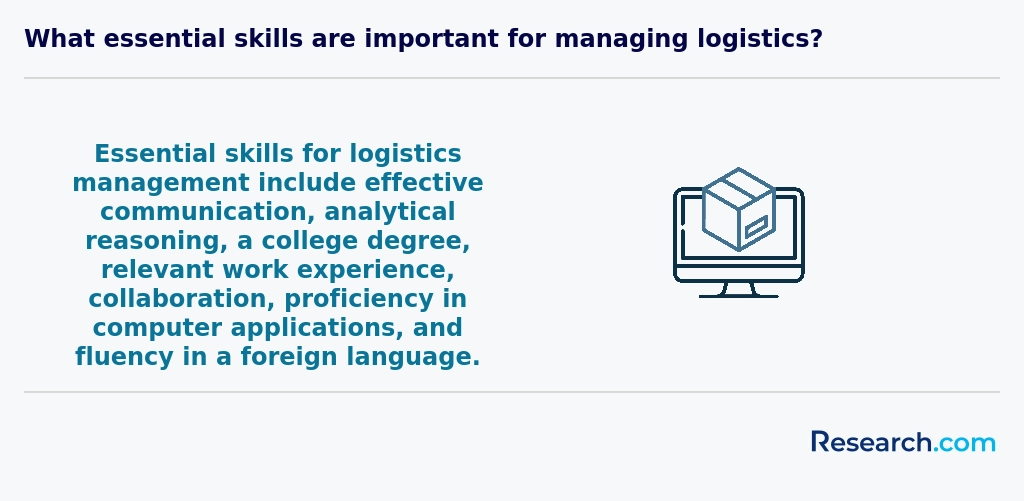
Technical skills, such as understanding enterprise resource planning (ERP) software and transportation management systems, are also essential. Communication skills rank high since coordinating between suppliers, manufacturers, and distributors is a daily task.
Additionally, adaptability and knowledge of regulatory compliance improve job prospects, considering Midwest logistics often involves navigating federal and state transportation laws.
Finding internships in the Midwest relevant to a logistics degree involves strategic planning and resourcefulness. Start by exploring partnerships between online programs and regional companies in transportation hubs like Chicago, Indianapolis, and St. Louis. These cities are major logistics centers, offering abundant opportunities.
Utilize university career services, which often maintain local employer connections and post internship listings specific to the logistics field. Websites such as the Midwest Logistics Association and industry-specific job boards provide targeted openings.
Networking through professional groups like the Council of Supply Chain Management Professionals can boost your chances significantly. According to the Bureau of Labor Statistics, logistics employment in the Midwest grew 5% annually between 2018 and 2022, showing increasing demand for internships and entry-level roles.
An online logistics degree in the Midwest significantly enhances career mobility and advancement by addressing the region's growing demand for supply chain professionals. According to the Bureau of Labor Statistics, employment for logisticians is projected to grow 11% from 2022 to 2032 nationally, with Midwest states like Illinois and Ohio showing higher-than-average job openings due to extensive manufacturing and transportation hubs.
Online programs provide flexibility, allowing students to gain relevant skills while working. This helps professionals quickly climb to roles such as supply chain analyst, logistics manager, or operations coordinator.
Employers in the Midwest increasingly value logistics degrees for their focus on technology integration and data analysis, vital for efficient supply chains.
Studying for a logistics degree in the Midwest equips students with skills across multiple disciplines, preparing them for diverse roles in supply chain management, transportation, and operations. Many programs integrate coursework in business, information technology, and analytics, reflecting the interdisciplinary nature of modern logistics.
The Midwest is home to major logistics hubs, including Chicago, a top national rail and air cargo center, providing students access to practical insights and industry connections. According to the Bureau of Labor Statistics, the region sees growing demand for logistics managers skilled in technology and strategic planning.
Students also gain exposure to problem-solving and data-driven decision-making, essential for managing complex global supply chains. This approach ensures graduates can collaborate effectively across departments and industries.
Choosing between a thesis and a non-thesis online logistics degree in the Midwest depends on your career goals and learning style. Thesis programs usually require original research and are ideal for students aiming for advanced study or research roles in supply chain management.
Non-thesis options focus on practical skills and coursework, suiting professionals seeking immediate career advancement. According to the Bureau of Labor Statistics (2023), the Midwest shows strong growth in logistics jobs, especially in states like Illinois and Ohio, where firms prioritize hands-on experience.
Consider your available time, interest in research, and desired job outcomes when deciding between these formats.
Students in the Midwest interested in studying logistics abroad through online degrees have several noteworthy options. Many Midwestern universities offer fully online logistics programs with opportunities to participate in international study components or virtual exchanges. For example, some schools partner with foreign institutions to provide global case studies and internships tailored to worldwide supply chain management.
The Midwest, home to major logistics hubs like Chicago and Indianapolis, emphasizes programs that integrate global trade with local industry needs. According to the Council of Supply Chain Management Professionals (CSCMP), over 20% of logistics jobs in the region involve international operations, making these programs highly relevant.
While direct overseas degrees are rare, these combined online and international components help students gain valuable global perspectives without leaving their home states or countries.
Part-time jobs can greatly enhance your logistics degree experience by offering practical skills directly applicable to the field. In the Midwest, common opportunities include roles in warehouse operations, inventory management, and transportation coordination. According to the Bureau of Labor Statistics, the Chicago metropolitan area leads in warehousing and storage employment, with over 35,000 workers in 2023. These positions help students understand supply chain processes and technology.
Many companies seek part-time assistants for order fulfillment and shipping logistics, providing students with hands-on exposure. Additionally, internships with regional distribution centers or freight companies-abundant in states like Ohio and Indiana-offer valuable networking connections essential for career growth.
Online logistics students in the Midwest benefit from a variety of networking opportunities designed to connect them with industry professionals and peers. Many universities partner with regional logistics organizations such as the Council of Supply Chain Management Professionals (CSCMP) Midwest Roundtable, hosting virtual events and webinars.
Additionally, states like Illinois, Michigan, and Ohio are hubs for logistics and manufacturing companies, providing numerous internship and mentorship programs accessible to online students. According to the Bureau of Labor Statistics, the Midwest employs over 200,000 logistics professionals, creating a robust regional network.
Students often access alumni groups and LinkedIn communities specifically focused on Midwest logistics, further enhancing networking options.
Alumni networks provide significant benefits to online logistics degree students in the Midwest. These networks connect current students with experienced professionals working in key regional hubs such as Chicago, Indianapolis, and Minneapolis. According to the Council of Supply Chain Management Professionals, the Midwest hosts more logistics-related jobs than any other U.S. region, making alumni connections essential for career advancement.
Through mentoring programs and job referrals, alumni help students navigate the competitive logistics job market. Many universities in the region maintain active online platforms where graduates share industry insights and internship opportunities. This ongoing support helps students build valuable professional relationships before graduation.
Customizing an online logistics degree program in the Midwest allows students to align their education with specific career goals. Many Midwestern institutions offer flexible curricula with elective courses in supply chain management, transportation, or warehouse operations. This flexibility helps tailor learning to industries prominent in the region, such as manufacturing and agriculture logistics.
Students can often choose internships or capstone projects focused on Midwestern logistics hubs like Chicago or Indianapolis, gaining relevant hands-on experience. According to the Council of Supply Chain Management Professionals (CSCMP), these cities are top logistics centers, providing excellent career opportunities.
Additionally, some programs provide certifications such as APICS CPIM or CSCP, enhancing employability. By selecting relevant specializations and practical experiences, students can effectively prepare for roles in transportation, inventory control, or distribution within the Midwest's robust logistics sector.
Online logistics students in the Midwest often face unique challenges stemming from regional industry dynamics and educational resources. One common issue is aligning coursework with the rapidly evolving logistics sector, which includes major hubs like Chicago and Indianapolis. Students must stay updated on technologies such as supply chain automation and data analytics to remain competitive.
Another challenge involves balancing studies with work, as many students pursue these degrees part-time while employed in logistics roles. Reliable internet access can be inconsistent in rural areas, impacting participation in synchronous classes. According to the Midwest Logistics Association, 42% of students report difficulty accessing timely academic support.
Finally, online learners may struggle with limited networking opportunities compared to on-campus peers, despite industry growth in the region. Developing professional connections is essential for career advancement in this field.
With an online logistics degree from a Midwest institution, you can pursue several key professional certifications to boost your career. The Certified Supply Chain Professional (CSCP) by APICS is highly valued; it demonstrates expertise in supply chain management and is widely recognized across industries. According to APICS, candidates with CSCP certification often see salary improvements above 20%.
Another option is the Certified Logistics, Transportation, and Distribution (CLTD) certification, also from APICS, which focuses more specifically on distribution and transportation logistics. The Midwest's strong manufacturing and transportation sectors make this credential especially relevant.
The Six Sigma Green Belt certification is also popular among logistics professionals, emphasizing process improvement skills. According to the Council of Supply Chain Management Professionals (CSCMP), logistics roles in the Midwest are growing by 7% annually, increasing the importance of such certifications.
Applying to an online logistics program in the Midwest requires a clear, focused approach. Start by researching schools accredited by bodies like the Accreditation Council for Business Schools and Programs (ACBSP) to ensure quality education. Highlight relevant work experience or internships, especially in Midwest logistics hubs like Chicago or Indianapolis, where demand for skilled professionals is high according to the Council of Supply Chain Management Professionals (CSCMP).
Craft a strong personal statement outlining your career goals and how the program aligns with Midwest industry needs. Including familiarity with regional supply chain challenges can strengthen your case. Finally, meet all application deadlines and provide accurate transcripts and recommendation letters from supervisors or educators who know your logistical aptitude.
Logistics careers have increasingly global importance as supply chains span continents, impacting the Midwest's economy significantly. According to the Council of Supply Chain Management Professionals, companies in the Midwest rely heavily on efficient logistics to connect manufacturing hubs to global markets. This has created demand for professionals who understand international trade regulations and cross-border transportation.
Globally, logistics roles emphasize technology and sustainability, skills Midwest programs integrate into their curricula. The U.S. Bureau of Labor Statistics projects a 19% growth in logisticians' jobs from 2021 to 2031, faster than average, highlighting expanding opportunities both domestically and abroad.
For students pursuing online logistics degrees in the Midwest, understanding these global trends is essential as employers value adaptable, knowledgeable graduates who can navigate complex international logistics networks.
Gaining practical experience while studying an online logistics degree in the Midwest is essential for workforce readiness. Many universities encourage internships with regional companies in supply chain hubs such as Chicago and Indianapolis, where logistics jobs grew by 8.5% from 2019 to 2023 (Bureau of Labor Statistics). Students can also participate in virtual simulations and case studies provided by programs accredited by the Council on Supply Chain Management Professionals (CSCMP).
Networking with local logistics firms through online career fairs or Midwest supply chain organizations helps students connect with mentors and employers. Additionally, some programs offer cooperative education options that combine coursework with paid work experience.
Choosing the right concentration within an online logistics degree program in the Midwest begins with assessing your career goals and local industry demands. The Midwest, home to major transportation hubs like Chicago and Indianapolis, offers strong opportunities in supply chain management, transportation logistics, and inventory control. According to the Bureau of Labor Statistics, employment in logistics-related fields in this region is projected to grow by 7% through 2031, aligning with national trends.
Students should also consider programs offering concentrations aligned with regional strengths such as manufacturing logistics or e-commerce fulfillment, which are expanding in states like Ohio and Michigan. Evaluating course content, faculty expertise, and connections to local employers can help ensure practical relevance and job placement support.
Top Trending Logistics Rankings
References
- Developments & Logistics Concepts of the Future https://transportlogistic.de/en/industry-insights/detail/logistic-concepts-of-the-future.html
- Logistics Distance Learning Master’s Degree Program Without Thesis | IKU Graduate School http://enstitu.iku.edu.tr/en/masters-degree/logistics-distance-education-non-thesis-master-program
- Student Life - Master in Logistics and Supply Chain Management - FSTM I University of Luxembourg https://www.uni.lu/fdef-en/study-programs/master-in-logistics-and-supply-chain-management/student-life/
- Business Administration (BBA) - Logistics and Supply Chain Management Concentration https://www.uagrantham.edu/online-degrees/business-administration-bba-logistics-and-supply-chain-management-concentration/
- Advance Your Career in Logistics and Supply Chain Management | CCU Online https://www.ccu.edu/blogs/cags/category/business/advance-your-career-in-logistics-and-supply-chain-management/
- Study Logistics Abroad - Top Universities for Masters, MBA, PhD Degree Programs https://studee.com/degree/abroad/logistics
- Trends Driving Growth in Logistics and Supply Chain Roles https://www.jusdaglobal.com/en/article/trends-in-logistics-occupations-careers/
- Events and networking https://logistics.org.uk/executivemembership/events-and-networking
- Global Supply Chain Management in a BBA: Preparing for a Career in Logistics and Operations - UE Amsterdam https://www.ue-amsterdam.com/blog/global-supply-chain-management-in-a-bba-preparing-for-a-career-in-logistics-and-operations
- 4 Reasons Why Supply Chain Management is a Good Career Path https://www.michiganstateuniversityonline.com/resources/supply-chain/4-reasons-to-choose-career-in-supply-chain/