2027 Best Online Human Services Degree Programs Ranking in Connecticut

Co-Founder and Chief Data Scientist
Choosing the right human services degree program in Connecticut can feel overwhelming. To help you navigate this important decision, the 2027 Best Online Human Services Degree Programs Ranking in Connecticut offers a clear guide created by the Research.com team of data scientists. This ranking highlights quality programs designed to meet your educational and career goals.
By exploring this article, you'll discover valuable insights that make pursuing a human services degree easier and more rewarding. A degree in this field opens doors to meaningful work supporting communities and individuals, making a positive impact around you.
Key benefits of getting online human services degree in Connecticut
- Human services degree graduates in Connecticut often pursue fulfilling roles in social work or counseling, where national salaries typically range from $35,000 to $50,000 annually, offering a stable career with meaningful impact.
- Graduates from popular Connecticut universities like Southern Connecticut State University find diverse career paths in community outreach, mental health services, and nonprofit management, enabling rewarding work that supports local communities.
- Online human services degrees provide flexibility for working adults, as demonstrated by graduates from the University of New Haven's online program, allowing students to balance studies with life commitments while gaining valuable skills.
- 2027 Best Online Human Services Degree Programs Ranking in Connecticut
- What can I expect from online human services degree in Connecticut?
- Where can I work with online human services degree in Connecticut?
What can I expect from online human services degree in Connecticut?
The average cost of an online human services degree in Connecticut varies by institution and degree level, but public universities commonly offer competitive tuition rates for in-state students. Graduates from well-known Connecticut colleges often share that the affordability of these programs made pursuing their degrees manageable alongside personal and professional responsibilities. For example, many programs charge tuition in the range of $6,000 to $10,000 per year for undergraduate studies, while graduate programs can range from $8,000 to $15,000 annually.
These pricing structures enable students to invest in their education without excessive financial strain. Several learners highlight that financial aid and scholarships targeted toward human services fields helped reduce costs further, making the programs accessible and sustainable. Students appreciate that in-state tuition rates are particularly favorable at institutions recognized for their quality human services curriculum in Connecticut, which balance cost with comprehensive training.
Overall, the cost-effectiveness combined with the quality of online human services education in Connecticut contributes to positive student experiences and successful career pathways in a growing sector.
Where can I work with online human services degree in Connecticut?
Graduates with an online human services degree in Connecticut often find rewarding careers in state and local government agencies, such as the Department of Social Services and the Department of Mental Health and Addiction Services. These roles, including case managers and community outreach coordinators, allow professionals to directly impact vulnerable populations by facilitating access to public aid and rehabilitation.
Those studying at institutions like the University of Connecticut or Central Connecticut State University frequently secure positions within well-established nonprofit organizations, including United Way of Connecticut and the Salvation Army. Working as client advocates or youth counselors, graduates experience fulfillment in supporting equity, family welfare, and housing assistance.
Healthcare organizations such as Yale New Haven Health and Hartford HealthCare employ human services graduates as patient advocates and social workers, helping improve patient care and resource access. Educational settings also value human services professionals to address student behavioral and socioeconomic challenges, often hiring graduates as school counselors or community liaisons.
This diverse range of opportunities in Connecticut's public, nonprofit, healthcare, and educational sectors offers graduates meaningful work that positively changes lives.
Graduates holding an online human services degree in Connecticut can typically expect entry-level salaries around $38,000 annually, particularly when working as human services assistants. These roles involve critical support functions such as case management and community outreach, offering graduates a fulfilling start to their careers. Many alumni from prominent Connecticut institutions, including the University of Connecticut and Central Connecticut State University, report rewarding experiences balancing the theoretical knowledge gained online with hands-on fieldwork in diverse urban and rural settings.
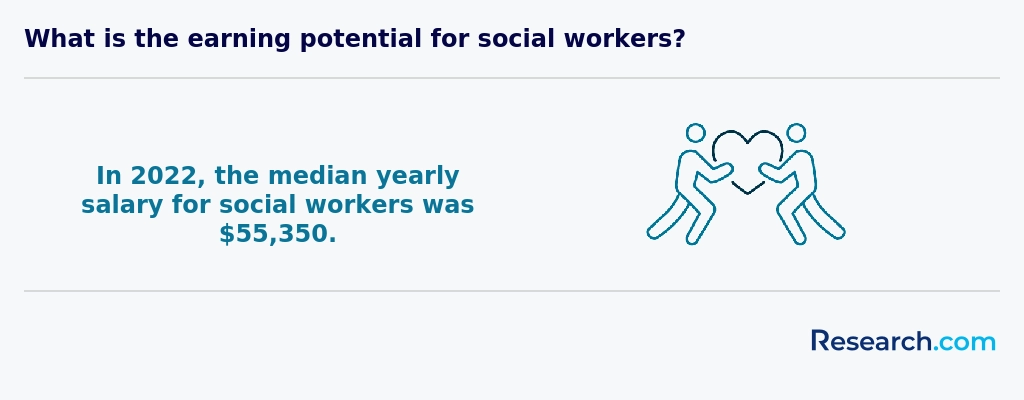
With increased experience and credentials, professionals often advance to managerial roles, where salaries rise substantially closer to $75,000 per year, reflecting the responsibility and leadership involved. Social workers in Connecticut generally earn between $60,000 and $65,000 annually, with clinical social workers-especially those licensed and employed in specialized healthcare environments-commanding salaries near or above $80,000. These figures illustrate the financial growth potential within the field, encouraging many graduates to pursue licensure and advanced training to increase career stability and earnings.
Overall, Connecticut's varied geographic landscape also influences salary ranges, with metropolitan areas like Hartford and New Haven offering higher wages and numerous opportunities for hands-on community impact, greatly enhancing graduate satisfaction and professional growth.
- The average tuition cost for an online human services bachelor's degree in Connecticut ranges from $12,000 to $24,000 per year for in-state students.
- Graduates can expect a starting salary between $37,000 and $45,000 annually, with potential to earn $50,000 to $65,000 or more after five years of experience.
- Employment for social and human services assistants in Connecticut is projected to grow by about 7% over the next ten years.
- Many programs include practicums or internships to provide hands-on experience and help build professional networks.
- Some online degrees prepare students for certification exams relevant to human services careers within Connecticut's state regulations.
Completing an online human services degree in Connecticut generally takes about four years for a full-time bachelor's student, mirroring the typical duration at institutions such as Southern Connecticut State University and Central Connecticut State University. Graduates often recall balancing coursework with personal responsibilities, finding the flexibility of these online programs essential in maintaining steady progress while managing work or family life.
Part-time enrollment or extending study due to financial considerations can lengthen completion time, something many students at Charter Oak State College have experienced positively, appreciating the ability to tailor their pace. Accelerated options are also available, enabling motivated students to finish in as little as two to three years by taking heavier course loads and leveraging prior credits from community colleges like Norwalk Community College.
Associate degree programs, commonly completed in two years at Connecticut community colleges, serve as a valuable springboard toward bachelor's studies, often facilitating a smooth transfer pathway. Internships and practicum requirements add practical experience but might affect scheduling, a factor students embrace to enhance career readiness.
Online and on-campus human services degree programs in Connecticut differ primarily in delivery and flexibility. Graduates from the University of Connecticut's online program often remark on the convenience of balancing coursework with family or work responsibilities, as all lectures and assignments are accessed digitally. This format suits those managing busy schedules or facing long commutes in Connecticut's varied weather. Conversely, on-campus students at Central Connecticut State University value the direct engagement with faculty and peers, highlighting the energizing classroom discussions and immediate access to university-affiliated fieldwork sites.
Fieldwork remains essential in both formats, but online students typically arrange placements locally, allowing them to impact their own communities while maintaining program flexibility. Tuition tends to be lower online, avoiding campus fees and commuting costs, which many find financially reassuring. While on-campus attendees benefit from in-person networking events, online learners often praise virtual forums that foster a supportive community despite physical distance.
The average cost of an online human services degree in Connecticut typically centers around a median total cost of $45,000. Students pursuing this path often find that public universities like the University of Connecticut or Central Connecticut State University provide more affordable options, with annual tuition ranging between $5,000 and $8,000 for in-state learners. These institutions offer a balance of quality and cost-effectiveness, appealing to many graduates who value both academic rigor and manageable expenses. Many students describe their experience as rewarding, noting that the reasonable tuition allows them to focus on gaining practical skills without overwhelming financial stress.
Tuition and fees for human services degree Connecticut online programs can vary widely, especially when comparing public and private schools. Private institutions often exceed $20,000 annually, a figure that some prospective students consider carefully against expected career benefits. In addition to tuition, technology fees and materials add approximately $300 to $600 per year. However, students frequently highlight the accessibility of financial aid and scholarships offered by state and community resources, which greatly ease these costs and contribute to a positive overall investment in their education.
The decision to invest in a human services degree is further strengthened by Connecticut's strong labor market demand, ensuring graduates feel confident in the value of their degree. Those exploring their options should consult reliable sources such as best online human services degree programs to identify accredited programs that align with their financial and career goals.
Students pursuing an online human services degree in Connecticut have access to several financial aid options that ease the burden of tuition costs. Graduates from institutions like the University of Connecticut and Gateway Community College often highlight the importance of federal aid, especially Pell Grants obtained through the FAFSA, which can award up to $7,395 to eligible students each year. This non-repayable support makes a tangible difference in managing expenses while studying.
State-specific programs such as the Roberta B. Willis Scholarship further assist Connecticut residents by targeting human services students enrolled in accredited in-state programs. Many local colleges also offer merit- and need-based scholarships, enabling learners balancing work and family commitments to receive essential financial backing.
Positive experiences reported by students emphasize how employer tuition assistance and institutional payment plans create flexible pathways for working professionals in social work or counseling to advance their careers without overwhelming debt. Exploring these resources early can transform the challenge of funding online education into an empowering opportunity.
Prospective students seeking enrollment in online human services degree programs in Connecticut must generally hold a high school diploma or equivalent, such as a GED. Many institutions, including well-regarded universities in Connecticut, require submission of official transcripts reflecting satisfactory completion of secondary education, often accompanied by a minimum GPA around 2.0 to 2.5.
While some programs might request standardized test scores like the SAT or ACT, many have embraced test-optional policies to accommodate working adults and non-traditional learners who balance education with family and career responsibilities. This flexibility has been praised by graduates who appreciated how it reduced barriers to admission.
Core prerequisite courses such as introductory psychology, sociology, or communication are commonly recommended or required, ensuring applicants possess foundational knowledge crucial for success. Applicants must also submit a personal statement or essay, enabling admissions committees to evaluate motivation and community-oriented goals, vital in human services careers.
Transfer students benefit from policies that recognize prior social sciences or humanities coursework, allowing smoother credit transitions at Connecticut colleges known for supportive transfer frameworks, which many graduates have found encouraging and empowering.

Online human services degree programs in Connecticut commonly include courses designed to build practical and theoretical expertise essential for careers in social work and community support. Graduates from well-regarded institutions often highlight courses like Introduction to Human Services, which offers a clear understanding of the field's impact across diverse populations within Connecticut's urban and rural settings.
Case Management and Client Advocacy courses prepare students to effectively connect clients with vital resources, a skill praised by alumni who have engaged with local agencies. Social Welfare Policy classes provide a thorough overview of the legal frameworks shaping social services in Connecticut, enhancing students' abilities to navigate state-specific challenges.
Ethics in Human Services emphasizes responsible decision-making in sensitive situations, while Psychology and Counseling Techniques help students develop empathy and communication skills. Courses in Group Dynamics and Community Organization enable learners to facilitate meaningful collaboration, an aspect greatly appreciated by graduates involved in community projects around Hartford and New Haven.
Research Methods rounds out the curriculum, training students in evidence-based approaches critical to enhancing program effectiveness for Connecticut's diverse populations.
Online human services specializations Connecticut programs commonly include areas such as Substance Abuse Counseling, Child and Family Services, Mental Health Services, Gerontology, and Community Outreach and Advocacy. Graduates from well-regarded universities and colleges in Connecticut often recount meaningful experiences tailored to these concentrations. For instance, substance abuse counseling students frequently share how practicum hours helping individuals facing addiction deepened their commitment to public health challenges specific to Connecticut.
Specializations like Child and Family Services prepare students to engage with vulnerable populations, reflecting the state's dedication to child welfare through practical community placements. Those focusing on mental health services describe rewarding internships that improve access to care, resonating with local initiatives like Mental Health Connecticut. Programs in gerontology address the needs of Connecticut's aging population, encouraging graduates to excel in supportive roles within eldercare settings. The variety of these human services degree concentrations in Connecticut allows students to develop specialized skills that align closely with workforce demands.
Students considering further advancement often research human services masters degree careers to explore enhanced opportunities in these fields.
Choosing the best online human services degree in Connecticut involves prioritizing accredited programs recognized by the Council for Standards in Human Service Education, ensuring quality and credit transferability. Graduates from well-known Connecticut colleges appreciate how accreditation contributed to seamless certification and job placement in local health and social service agencies.
Affordability plays a significant role for many students balancing finances and study. Popular institutions often offer competitive tuition rates for in-state learners, complemented by scholarships targeting social work and human services students. Those seeking affordable human services degrees online can find options tailored to Connecticut residents, reducing educational debt pressure.
Curriculum relevance is crucial; successful graduates highlight programs that include comprehensive social policy, counseling, and ethics training, along with specializations such as child welfare or substance abuse. Flexibility in scheduling, especially asynchronous classes, allows working professionals in Connecticut to maintain employment while advancing their education.
Strong online student support services-academic advising, career counseling, and tech assistance-enhance learner confidence and retention. This holistic approach reflects the expectations of Connecticut students seeking an online human services degree Connecticut providers deliver with both rigor and accessibility.
Graduates holding an online human services degree in Connecticut frequently enter diverse and impactful roles such as case managers, community service coordinators, and mental health aides. These professionals work closely with vulnerable populations, developing individualized care plans and connecting clients to vital resources. Many students from respected institutions like the University of Connecticut report fulfilling experiences contributing to child welfare, substance abuse treatment, and elder care services within local nonprofits and government agencies. Employers in Connecticut particularly value candidates with skills in crisis intervention and cultural competence, enhancing job prospects in a competitive market.
For those aspiring to advanced practice, this degree serves as a foundation for licensed careers in social work, counseling, and psychology, often requiring further certification. The flexibility and affordability of studying online human services careers in Connecticut equip students to balance education with personal commitments while accessing strong local demand. To explore graduate-level opportunities, students frequently consult resources such as the human services master's online programs, which build on foundational knowledge for specialized roles.
The human services job outlook Connecticut shows a robust demand for online degree graduates, driven by the state's expanding healthcare and social support sectors. Graduates from well-regarded Connecticut institutions often find rewarding roles as case managers or community outreach workers, applying their skills in nonprofits, healthcare facilities, and government programs. These roles involve direct community engagement, offering graduates fulfilling experiences such as helping elderly populations navigate social services or supporting mental health initiatives.
Employment for social and human service assistants in Connecticut is expected to grow by about 9% through 2032, outpacing many other fields. This positive trend encourages many pursuing an online human services degree employment Connecticut to feel optimistic about their career prospects. Graduates report that the flexibility of online programs complements their ability to continue working or managing family responsibilities while advancing their education.
Tuition varies, but many Connecticut colleges align with national averages, and students appreciate the balance between cost and convenience. For deeper insights into the financial aspect, many refer to the detailed cost of a social service degree analysis to plan their investment wisely.
2027 Best Online Human Services Degree Programs Ranking in Connecticut
Investing in your education is a significant decision that can shape your future, and the Research.com team understands the importance of making informed choices. To assist prospective students in Connecticut, we have meticulously crafted the "2027 Best Online Human Services Degree Programs Ranking in Connecticut." Our commitment to quality, credibility, and accuracy is reflected in the extensive research and analysis conducted to compile this ranking.
We utilized the following reputable data sources to ensure a comprehensive evaluation of human services programs:
By exploring this ranking, readers will gain valuable insights into the best online human services degree programs available in Connecticut, helping them make informed decisions about their educational paths. For more details on our methodology, please visit our Research.com methodology page.


Frequently Asked Questions About human services
Students pursuing online human services degrees in Connecticut can enhance their learning by actively engaging with local community organizations. Connecticut's Department of Social Services and numerous nonprofit agencies often offer internships or volunteer opportunities, providing practical experience that complements academic study.
Using resources from regional professional associations, such as the Connecticut Chapter of the National Association of Social Workers, helps students network and stay current on industry trends. Online learners should also take advantage of virtual study groups and discussion forums to build peer connections and clarify complex topics.
According to the U.S. Bureau of Labor Statistics, Connecticut expects a 7% growth in human services jobs through 2030, making hands-on experience and local networking crucial for career development.
The human services field is expanding into several emerging niches, reflecting changing societal needs. One growing area is gerontology, focusing on supporting Connecticut's aging population. According to the Connecticut Department of Aging, the 65+ demographic is projected to increase by 26% by 2030, creating demand for specialized human services professionals.
Another niche is behavioral health, especially substance abuse counseling. The Connecticut Department of Mental Health reports a rise in opioid treatment needs, highlighting job growth in this sector.
Additionally, human services roles in community disaster response and digital advocacy are gaining traction. Online degree programs now often include training for these evolving fields.
After earning an online human services degree in Connecticut, graduates should focus on practical experience and networking to prepare for the job market. Connecticut's Department of Labor reports that social and human services roles are expected to grow by 7% through 2030, emphasizing the importance of relevant skills.
Internships and volunteer work with local agencies help build applied expertise. Additionally, joining professional organizations such as the Connecticut Association for Human Services can expand connections in the field. Certification opportunities, including the Human Services-Board Certified Practitioner (HS-BCP), enhance employability and demonstrate commitment.
Finally, maintaining up-to-date knowledge on state regulations and community resources will position graduates as well-prepared candidates for Connecticut's evolving human services sector.
Employers in Connecticut highly value human services graduates who demonstrate strong communication skills. Effective verbal and written communication is essential when working with diverse populations and collaborating with agencies. According to the Connecticut Department of Labor, interpersonal skills rank among the top attributes for success in this field.
Critical thinking and problem-solving abilities are equally important. Professionals must assess client needs and design practical support plans. These skills help graduates respond effectively to real-world challenges in social service settings.
Additionally, knowledge of ethics and cultural competence is crucial. Connecticut's diverse population requires sensitivity to different backgrounds, which employers often cite as a hiring priority.
Finding internships in Connecticut for human services students involves a strategic approach combining research, networking, and utilizing university resources. Many Connecticut colleges with online human services programs offer dedicated career centers that connect students with local agencies and nonprofits. Checking listings from organizations such as the Connecticut Department of Social Services can also be helpful, as they frequently partner with educational institutions to offer internships.
Networking through state-wide professional groups like the Connecticut Human Services Network provides opportunities to discover openings. Additionally, platforms like Handshake and Indeed often feature internships specifically in the human services field within Connecticut.
Engaging early with your academic advisor or internship coordinator is vital for tailored guidance and credibility with potential employers. According to the National Association of Social Workers Connecticut chapter, internships typically range from 100 to 400 hours, meeting both licensing and degree requirements.
An online human services degree in Connecticut can significantly enhance career mobility and advancement opportunities. According to the Connecticut Department of Labor, employment of social and human service assistants is projected to grow by 11% through 2030, faster than average. Graduates with an online degree can access roles in community organizations, healthcare, and social service agencies across the state.
Online programs offer flexibility, enabling working professionals to upskill without interrupting employment. This degree often leads to higher eligibility for supervisory positions or specialized roles, which may offer increased salaries and responsibilities.
Additionally, Connecticut's licensing boards recognize accredited online degrees, which supports credentialing for advanced career paths in counseling or case management.
Studying for a human services degree in Connecticut equips students with skills needed for interdisciplinary roles by emphasizing collaboration across various social, healthcare, and educational fields. Programs commonly integrate courses in psychology, social work, public health, and counseling, preparing graduates to understand complex client needs from multiple perspectives.
Connecticut's online human services degrees often include case studies and practicum experiences that foster teamwork with professionals in law enforcement, healthcare, and community organizations. According to the Connecticut Department of Labor, interdisciplinary skills are highly valued, as nearly 20% of human services workers engage in cross-sector partnerships.
This approach ensures graduates are adaptable and prepared to work effectively in diverse settings addressing social issues holistically.
Choosing between a thesis and a non-thesis human services degree program in Connecticut depends on your career goals and learning preferences. Thesis programs typically require original research, which benefits those considering advanced studies or research roles. Non-thesis options focus more on practical skills and coursework, suitable for students aiming to enter the workforce quickly.
Connecticut's growing demand for human services professionals, projected to increase by 10% through 2028 (Connecticut Department of Labor), highlights the importance of practical experience. Non-thesis programs often include internships, enhancing job readiness.
Check accreditation and speak with advisors to align your choice with state licensing requirements and your long-term plans.
Students based in Connecticut who wish to study human services abroad have several avenues through online and hybrid programs offered by U.S. institutions with international components. Although Connecticut itself does not offer direct study abroad programs exclusive to human services degrees, many accredited online programs include options for international internships or exchange opportunities.
According to the Connecticut Office of Higher Education, partnerships with universities outside the U.S. are becoming more common, allowing students to gain global experience without leaving their online courses. Such options are ideal for those seeking cultural competencies critical in human services roles.
Additionally, students can explore U.S. universities with established study abroad programs approved by Connecticut's educational standards, providing valuable international perspectives while completing their degrees online.
Part-time job opportunities in Connecticut that complement human services degree education often include roles such as case aides, community outreach workers, and residential support staff. These jobs provide practical experience working with diverse populations, essential for a human services career. According to the Connecticut Department of Labor, occupations in social and community services are expected to grow by 12% from 2020 to 2030, highlighting job availability for degree completers.
Many employers value part-time workers who are pursuing degrees, offering flexible hours. Positions in non-profits, healthcare support, and counseling assistance allow students to apply course knowledge directly in real-world settings while building professional networks within the state's well-established social service infrastructure.
Online human services students in Connecticut have growing networking opportunities despite the distance learning format. Many universities and colleges offer virtual networking events, such as webinars and workshops, that connect students with alumni and local professionals.
Connecticut's strong human services sector, including organizations like the Connecticut Community Nonprofit Alliance, provides online students with access to internships and volunteer opportunities. These experiences help build professional contacts in the state's social service fields.
Additionally, regional conferences hosted by groups like the Connecticut Chapter of the National Organization for Human Services allow students to engage remotely with industry leaders, enhancing their professional development.
Local human services job fairs and LinkedIn groups specific to Connecticut also help online students expand their network and job prospects.
Alumni networks offer valuable benefits for online human services degree students in Connecticut. These networks help students connect with graduates working in various social service roles across the state. Access to experienced professionals can provide mentorship and career guidance, essential for navigating human services careers.
Such connections often lead to job referrals in local organizations, government agencies, and nonprofits. Given Connecticut's emphasis on community health and support services, these networks enhance employment opportunities within the state's $2 billion social assistance sector (U.S. Bureau of Labor Statistics, 2023).
Alumni events and online platforms facilitate ongoing education and discussions of best practices, reflecting real-world challenges specific to Connecticut's diverse communities.
Customizing an online human services degree in Connecticut allows students to align their education with specific career goals. Many programs offer elective courses focused on areas like mental health, substance abuse, or community outreach, helping students specialize within the field. Some schools partner with local agencies for virtual internships, providing practical experience tailored to a student's interests. According to the Connecticut Department of Labor, demand is growing for human services professionals with specialized skills in aging services and behavioral health. By selecting relevant electives and internship options, students can build expertise that meets regional workforce needs and enhances employability.
Online human services students in Connecticut often face challenges related to balancing coursework with work and family responsibilities. According to the Connecticut Board of Regents for Higher Education, many adult learners in the state juggle multiple roles, which can affect study time and focus.
Another common issue is limited access to in-person networking and field experience, which are crucial in human services training. This lack reduces opportunities to build relationships with peers and supervisors, impacting practical skill development.
Additionally, some students report difficulties with technology, such as unreliable internet connections or unfamiliarity with online learning platforms. These technical barriers can hinder course progress and engagement.
With an online human services degree in Connecticut, graduates can pursue several professional certifications that enhance career opportunities. The most common certification is the Certified Human Services Professional (CHSP), recognized nationally and valued by many Connecticut employers.
Other relevant certifications include the Certified Alcohol and Drug Counselor (CADC), which is especially useful given Connecticut's focus on substance abuse programs, and the Certified Case Manager (CCM), widely respected in social service agencies.
Connecticut's Department of Public Health also supports credentials for behavioral health professionals, which align well with human services degrees. These certifications often require a minimum of supervised work hours and passing an exam.
According to the Connecticut Department of Labor, demand for certified human services workers is expected to grow steadily through 2030, reflecting increased investment in social and behavioral healthcare.
When applying to an online human services program in Connecticut, it is essential to craft a clear and focused application. Start with a strong personal statement that highlights your commitment to helping others and your understanding of human services principles. Connecticut's labor market data shows steady growth in social and community service roles, so demonstrating awareness of local needs can strengthen your case.
Include relevant experience, such as volunteering or working in social service settings. Be sure to meet all deadlines and provide accurate transcripts. Many programs value applicants who show practical insight and a genuine passion for the field.
The global view of a human services career emphasizes its critical role in addressing social challenges and improving community well-being. While the field adapts to cultural and systemic differences worldwide, core values like empathy, advocacy, and support remain consistent.
In the United States, particularly in Connecticut, demand for trained human services professionals is projected to grow by 13% from 2021 to 2031, according to the U.S. Bureau of Labor Statistics. This growth reflects increased recognition of mental health, substance abuse, and family support needs.
Studying human services online in Connecticut prepares students to work in varied settings, connecting local insights with global best practices. This broad perspective equips graduates to contribute meaningfully in an interconnected world.
Students pursuing an online human services degree in Connecticut can gain practical experience through local internships and field placements. Many accredited programs require or strongly encourage fieldwork as part of their curriculum, helping learners connect theory with real-world practice.
Connecticut's Department of Mental Health and Addiction Services and various nonprofit organizations offer internship opportunities tailored to human services students. These placements often provide exposure to social work, counseling, and community outreach, which are vital for professional development.
Additionally, online students can seek volunteer roles with state agencies or nonprofits to build relevant skills. According to the Connecticut Council for Community Action, internships enhance job prospects and can sometimes lead to employment after graduation.
Choosing the right concentration within an online human services degree program in Connecticut begins with understanding your career goals. Human services cover diverse fields such as addiction counseling, social work, mental health, and child welfare. Research labor market demand in Connecticut; for example, the Connecticut Department of Labor projects growth in mental health and substance abuse counseling through 2030.
Consider your interests and strengths. If working with families appeals to you, focus areas like family services or child advocacy may be ideal. Examine program curricula and certification opportunities, as specialized training can enhance employment prospects in Connecticut's social service agencies.
Additionally, consult resources like the National Organization for Human Services for up-to-date occupational data relevant to Connecticut.
- 2027 Best Online Human Services Degree Programs Ranking in New York
- 2027 Best Online Human Services Degree Programs Ranking in Massachusetts
- 2027 Best Online Human Services Degree Programs Ranking in New Jersey
- 2027 Best Online Human Services Degree Programs Ranking in Pennsylvania
- 2027 Best Online Human Services Degree Programs Ranking in Maryland
- 2027 Best Online Human Services Degree Programs Ranking in Virginia
- 2027 Best Online Human Services Degree Programs Ranking in Ohio
- 2027 Best Online Human Services Degree Programs Ranking in Kentucky
- 2027 Best Online Human Services Degree Programs Ranking in North Carolina
- 2027 Best Online Human Services Degree Programs Ranking in Indiana
- 25 Best Online Human Services Degree Programs - Social Work Degree Center https://www.socialworkdegreecenter.com/best-online-human-services-bachelors/
- Human Services, AS https://catalog.ctstate.edu/programs/human-services-as/
- Professional Studies Health https://mitchell.edu/academic-programs/professional-studies-health-services/
- How To Navigate Human Services Challenges in 2026 https://nctinc.com/blog/how-to-navigate-human-services-challenges-in-2026/
- Human Services, A.S. https://threeriverscollegefoundation.org/academics/degrees-certificates/human-services/
- How To Solve the Key Challenges Faced by Community Social Workers https://www.casebook.net/blog/how-to-solve-the-key-challenges-faced-by-community-social-workers/
- How to Overcome the Top Challenges Social Workers Face https://www.pacificoaks.edu/voices/social-work/social-work-challenges/
- 4 Human Services Careers https://www.albany.edu/education/communications/human-services-careers
- Health and Human Services Career Guide https://www.ultimatemedical.edu/blog/hhs-guide/
- Choosing a bachelor's in human services | edX https://www.edx.org/resources/how-to-choose-a-bachelors-in-human-services