2027 Engineering Management Degree Clinical Placement Report: Hours, Site Access, and Completion Bottlenecks

Co-Founder and Chief Data Scientist
Choosing an engineering management degree is harder when "clinical placement" means different things across schools. Most programs do not require patient-care clinicals, but healthcare systems, biomedical, safety, and clinical engineering tracks may require supervised fieldwork.
The BLS reported a $167,740 median annual wage for architectural and engineering managers in May 2024, so placement quality can affect readiness for competitive roles. This guide helps prospective students compare hour expectations, site access, delays, costs, and program support before enrolling.
Key Things You Should Know
- Traditional engineering management degrees usually require 0 patient-care clinical hours; experiential requirements are more often capstones, internships, practicums, co-ops, or employer-based projects.
- Placement bottlenecks most often come from site availability, background checks, employer onboarding, supervisor qualifications, scheduling limits, and unclear responsibility for finding a site.
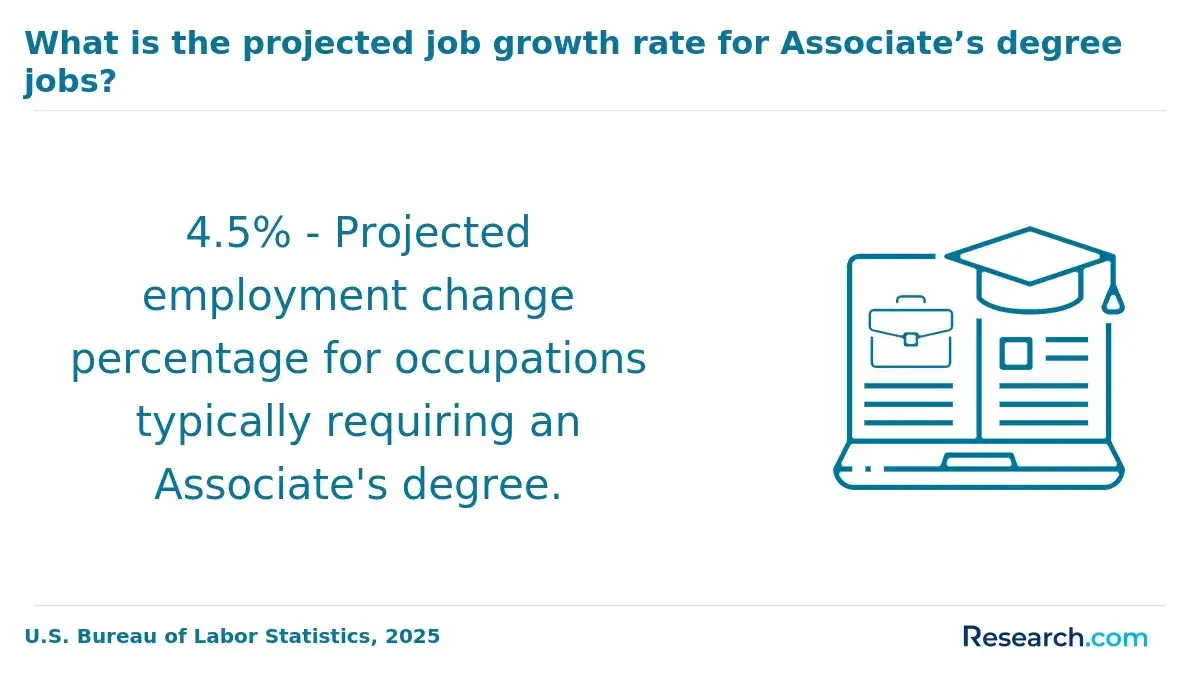
- Placement support should affect program choice because the BLS projects 4% employment growth for architectural and engineering managers from 2024 to 2034, making applied leadership, systems, and operations experience valuable but not automatically guaranteed by the degree.
- What Clinical Placement Requirements Do Engineering Management Degree Programs Have?
- How Are Clinical Placement Sites Assigned in Engineering Management Degree Programs?
What Clinical Placement Requirements Do Engineering Management Degree Programs Have?
In engineering management education, "clinical placement" is not usually a healthcare-style clinical rotation. It typically means a supervised, real-world learning experience in an engineering, operations, manufacturing, technology, healthcare delivery, construction, energy, logistics, or quality-management setting. The important distinction is whether the program requires a site-based experience for graduation or simply offers one as an elective.
Students comparing engineering management degrees should ask schools to define the requirement in writing. A standard Master of Engineering Management, engineering management bachelor's degree, or online engineering management program may rely on a capstone project instead of a placement.
A healthcare systems engineering or clinical engineering management track may require students to work with hospitals, medical device teams, facilities departments, patient-safety units, or health technology management teams.
The table below summarizes how placement expectations usually differ by program type. Use it to identify whether a program is likely to require site access, supervisor approval, or a formal hour log before graduation.
| Program type | Typical placement requirement | How hours are usually documented | Best fit |
| General engineering management bachelor's degree | Often no required clinical placement; may require senior design, internship, or industry capstone | Course deliverables, project reports, internship verification, or faculty evaluation | Students seeking entry-level technical leadership, project coordination, or operations roles |
| Master of Engineering Management | Often capstone-based; some programs offer optional internship or practicum credits | Capstone milestones, employer project approval, or practicum supervisor feedback | Engineers moving toward project, product, operations, or team management |
| Healthcare systems or clinical engineering management concentration | More likely to include supervised fieldwork in a hospital, health system, device company, or clinical operations setting | Site agreement, onboarding completion, hour logs, supervisor evaluation, and final project | Students targeting healthcare technology, patient-safety, biomedical operations, or hospital engineering leadership |
| Online engineering management degree | May be fully online except for optional or required local practicum, internship, or employer-based project | Remote faculty check-ins plus local site verification if fieldwork is required | Working adults who can use their employer or local industry network for applied projects |
| Engineering management doctorate or professional doctorate | Usually research, dissertation, or applied consulting project rather than clinical placement | Research milestones, applied project documentation, committee review, and defense | Senior professionals pursuing executive, consulting, research, or academic leadership |
Applicants sometimes compare engineering management with business programs because both can lead to leadership roles. If you are weighing management depth against technical specialization, an online MBA AACSB accredited program may be a better fit when your goal is finance, strategy, or general management rather than engineering operations.
How Are Clinical Placement Sites Assigned in Engineering Management Degree Programs?
Engineering management placement assignment depends heavily on the school's model. Some programs have formal industry partnerships and assign students to available projects, while others expect students to secure an internship, practicum, or employer-based project independently. The difference can determine whether a student finishes on time.
The table below compares the three most common placement assignment models. It helps you evaluate how much control and risk you will have as a student.
| Placement model | How it works | Advantages | Risks to ask about |
| School-arranged placement | The program identifies approved sites, matches students, and coordinates agreements | Lower student burden, clearer quality control, easier tracking of supervision standards | Limited site inventory, commuting distance, competition for preferred sites |
| Student-arranged placement | The student finds a site and submits it for program approval | More geographic flexibility, useful for working professionals, easier to align with career goals | Approval delays, site refusal, incomplete affiliation agreements, weak supervision |
| Employer-based project | The student completes a placement or capstone through their current employer | Convenient for part-time and online students, often directly relevant to promotion goals | Confidentiality limits, conflict with job duties, lack of qualified evaluator, project scope problems |
A school-arranged model usually makes sense if you are relocating for a campus program, entering a healthcare-focused track, or do not already work in an engineering environment. A student-arranged model can work well if you are employed, have a strong local network, or need a placement near home. However, it is risky if the school does not clearly define site approval criteria, supervisor qualifications, and backup options.
Before enrolling, ask the placement office or academic department for direct answers to these questions. The goal is to identify whether the program has a process or simply expects students to solve placement access on their own. Ask these questions:
- Does the program guarantee a placement, assist with placement, or only approve placements that students find?
- How many approved sites are available within commuting distance of where students actually live?
- Are online students allowed to use their current employer for practicum or capstone work?
- What happens if a site cancels, delays onboarding, or cannot provide a qualified supervisor?
- Who signs affiliation agreements, and how long does that process usually take?
- Are evening, weekend, hybrid, or compressed schedules available at any approved sites?
Placement bottlenecks happen when academic timelines move faster than employer, site, or compliance processes. In engineering management, the problem is often less about finding a "clinical" site and more about finding a site that can provide meaningful management-level work, a qualified supervisor, and access to operational data without violating confidentiality rules.
The table below identifies common bottlenecks and how they can affect completion. It is especially useful for online, working, and healthcare-focused students because those groups often face additional location and onboarding constraints.
| Bottleneck | Why it happens | Possible effect on completion | Red flag before enrollment |
| Limited approved sites | The program has few employer partners or sites restrict student access | Delayed practicum start or assignment to a less relevant site | The school cannot name typical placement settings |
| Slow affiliation agreements | Legal, insurance, and risk-management reviews take time | Student may miss the semester's placement deadline | The program expects new site agreements after admission without a clear timeline |
| Background checks and health clearances | Healthcare and regulated sites may require screenings before access | Start dates can shift if documents are incomplete | The school does not provide an onboarding checklist early |
| Supervisor availability | Qualified managers may be too busy to mentor or evaluate students | Project scope may be reduced or evaluation may be delayed | No written supervisor qualifications are provided |
| Data-access restrictions | Employers may limit access to financial, safety, quality, or patient-related data | Capstone or practicum deliverables may need redesign | The program has no process for de-identified or simulated data |
| Work-schedule conflict | Students may need site hours during business operations | Part-time students may need an extra term | The school cannot explain typical weekly time expectations |
Common mistakes are avoidable if students treat placement preparation as part of admissions research, not as a task to handle later. The most frequent mistake is assuming that "online" means "no in-person requirement." Another is assuming that a current employer will automatically qualify as a placement site.
To reduce bottleneck risk, complete these steps before the first term if the program includes a practicum, internship, or supervised field project:
- Request the placement handbook, not just the marketing page, and confirm whether the experience is required or optional.
- Ask for the earliest date when students may begin site approval, background checks, and onboarding.
- Confirm whether your preferred site has previously hosted students from the program.
- Identify a backup site or backup project topic in case your first option falls through.
- Clarify how many hours per week are realistic if you plan to keep working full time.
Supervision standards are what turn a placement from ordinary work experience into degree-level learning.
In engineering management, a strong site supervisor should be able to observe leadership, process improvement, project planning, risk analysis, quality management, technical communication, budgeting, or cross-functional coordination. The supervisor does not always need a specific license, but the program should define acceptable qualifications.
Evaluation usually combines faculty oversight with site feedback. Students should expect more than a simple attendance sign-off if the placement is required for graduation. A credible evaluation process connects the student's work to program outcomes such as engineering decision-making, ethical practice, systems thinking, and management communication.
The following elements are commonly used to evaluate engineering management placements. They matter because weak evaluation can leave students with hours completed but little evidence of career-ready skill development.
- Learning agreement: A document that defines the project scope, site responsibilities, deliverables, confidentiality limits, and evaluation criteria.
- Qualified site supervisor: A manager, engineer, operations leader, clinical engineering professional, or technical leader who can evaluate the student's applied work.
- Faculty check-ins: Scheduled reviews that keep the placement aligned with academic outcomes and help resolve site problems early.
- Hour or activity log: A record of work performed, meetings attended, project milestones, and reflection on management competencies.
- Final deliverable: A report, presentation, process-improvement plan, dashboard, design review, risk analysis, or implementation proposal.
- Site evaluation: Supervisor feedback on professionalism, communication, problem solving, leadership readiness, and technical judgment.
Red flags include vague grading rubrics, no faculty contact during the placement, supervisors who cannot describe student responsibilities, or projects that are mostly administrative rather than management-focused.
If the site cannot offer exposure to decisions, trade-offs, systems, teams, or measurable operational problems, it may not provide enough value for an engineering management degree.
Many engineering management students are working adults, so flexibility matters. Part-time, online, and near-home placements can work, but only when the program's policies and the site's schedule align. A fully online course sequence does not automatically make a required practicum remote.
Scheduling flexibility varies by site type. Manufacturing, construction, utilities, logistics, and healthcare facilities may need students during normal operations because that is when supervisors, data systems, meetings, and safety briefings are available.
Technology companies and remote project teams may offer more hybrid options, but they still need structured supervision and defined deliverables.
The table below compares common scheduling formats. Use it to assess whether a program fits your work, caregiving, transportation, and location constraints.
| Format | When it works best | Potential limitation | Student profile |
| Full-time weekday placement | Site has structured projects, regular meetings, and on-site supervision | Difficult for students with full-time jobs | Traditional students or career changers with schedule flexibility |
| Part-time placement | Project can be completed over a longer period with consistent weekly hours | May extend graduation if hours accumulate slowly | Working adults balancing employment and coursework |
| Employer-based placement | Current job duties can support a new management or improvement project | Program may reject routine job tasks that do not meet learning outcomes | Engineers already employed in relevant technical environments |
| Hybrid placement | Meetings, analysis, documentation, and reporting can be done remotely | Some site visits may still be required for observation or stakeholder engagement | Online students with access to a local or remote-approved organization |
| Near-home placement | Program allows student-identified sites outside the campus region | New site approval can take longer than using an established partner | Students outside the school's main service area |
Older adults, second-career students, and professionals returning to school should pay close attention to time-to-completion and local site access. If a shorter credential is a better starting point, a one year degree for seniors may offer a more manageable path before committing to a placement-heavy graduate program.
Placement costs are often underestimated because they may not appear as tuition. Students can pay for credit hours while also covering transportation, background checks, health documentation, safety equipment, professional attire, parking, technology, and lost work time. Healthcare-focused placements may add more onboarding requirements than general engineering sites.
Tuition remains the largest cost category. College Board's 2024 pricing data reported average published tuition and fees of $11,610 for in-state public four-year institutions and $43,350 for private nonprofit four-year institutions for the 2024-25 academic year.
For readers, the practical takeaway is that a lower-tuition program is not always cheaper if it requires unpaid travel, relocation, or a self-arranged site that delays graduation.
The table below summarizes cost categories to ask about before enrolling. It separates direct billed costs from placement-related expenses that may come later.
| Cost category | What it may include | Why it matters |
| Tuition for practicum or internship credits | Credit-bearing placement course, supervision seminar, or capstone course | Some students pay tuition even when the placement itself is unpaid |
| Background check and screenings | Criminal background check, drug screen, immunization records, TB testing, or health forms when required by a site | Incomplete clearances can delay site start dates |
| Transportation and parking | Fuel, transit, parking permits, tolls, or rideshare costs | Near-home placement can reduce total cost even if tuition is similar |
| Relocation or temporary housing | Short-term housing near a required site or campus region | May make an otherwise affordable program less practical |
| Equipment and attire | Safety shoes, PPE, laptop requirements, software access, or professional clothing | Industrial and healthcare sites may have specific access requirements |
| Lost wages or reduced hours | Time away from paid work to complete weekday placement hours | Can be the largest hidden cost for working adults |
Students should also ask whether placements are paid, unpaid, stipend-supported, or completed through a current employer. Do not assume an internship will offset tuition; compensation depends on employer policy, academic credit rules, and labor classification.
Clinical placements, practicums, internships, and employer-based capstones can improve career readiness when they expose students to real management trade-offs. The best experiences require students to balance cost, quality, safety, schedule, risk, staffing, customer needs, technical constraints, and stakeholder communication. That is different from simply observing engineers at work.
The BLS projects 4% employment growth for architectural and engineering managers from 2024 to 2034, which is about as fast as the average for all occupations. This does not mean every graduate will become a manager immediately, but it does show a stable market for professionals who can combine technical judgment with leadership and operational accountability.
Strong placements can help students build evidence for roles such as project engineer, engineering project manager, operations manager, process improvement analyst, quality manager, systems engineering lead, product operations manager, construction project manager, manufacturing supervisor, facilities manager, or clinical engineering manager. The most valuable sites are those that let students produce a measurable deliverable rather than only shadow meetings.
Look for placements that build the following competencies. These are the skills employers are likely to notice in interviews, portfolios, and promotion discussions:
- Project execution: Defining scope, timelines, milestones, risks, and stakeholder responsibilities.
- Data-informed decision-making: Using operational, quality, cost, reliability, or safety data to support recommendations.
- Cross-functional communication: Translating technical issues for finance, operations, customers, clinicians, executives, or vendors.
- Process improvement: Identifying bottlenecks, waste, rework, compliance gaps, or reliability problems.
- Leadership judgment: Navigating ambiguity, competing priorities, ethical concerns, and resource constraints.
- Change management: Building stakeholder buy-in for new systems, workflows, tools, or procedures.
Placement experience is useful, but it is not a substitute for degree quality, accreditation where relevant, faculty expertise, career services, or employer reputation. Students should judge the entire program, not just whether it advertises "hands-on learning."
Engineering management placements are changing because employers are changing how technical teams work. AI-assisted analysis, digital twins, automation, remote monitoring, cybersecurity concerns, and data-governed operations are reshaping what students can do during applied learning. A placement that once focused on manual reporting may now involve dashboards, predictive maintenance, workflow automation, or risk modeling.
AI is also changing site access. Some employers may welcome students who can help evaluate automation opportunities, while others may restrict access to proprietary tools, sensitive data, or regulated systems. This makes data governance and confidentiality agreements more important than before.
Current placement opportunities are moving in several directions. Students should use these trends to ask sharper questions about whether a program's partner network reflects the modern engineering workplace.
- More employer-based projects for working adults: Online and hybrid programs increasingly accommodate students who can complete applied work through their current employer, provided the project is new, supervised, and academically approved.
- More analytics-driven deliverables: Sites often value dashboards, process metrics, risk registers, cost models, and quality-improvement recommendations over purely descriptive reports.
- Greater privacy and cybersecurity scrutiny: Healthcare, defense, manufacturing, and technology employers may limit student access to sensitive systems unless agreements are in place early.
- Growth in healthcare technology management: Hospitals and health systems need leaders who understand equipment lifecycle management, safety, interoperability, compliance, and operational reliability.
- More competition for high-quality placements: Students from business, data analytics, public health, systems engineering, and industrial engineering programs may compete for similar applied projects.
For mid-career professionals, executive-format programs can sometimes provide leadership exposure without a traditional placement. An EMBA online may fit students who want senior management development and already have substantial technical experience, while engineering management remains stronger for those who want to lead technical systems and engineering operations.
Placement quality should be a major comparison point when a program requires fieldwork, but it should not be the only factor. A program with excellent site support but weak curriculum alignment may not serve your goals. A program with no placement requirement may still be strong if it offers rigorous capstones, employer-sponsored projects, technical electives, and active career support.
The most practical way to compare programs is to score the placement system before enrolling. Focus on what the school can document, not only what admissions staff say informally.
Use this checklist when comparing engineering management degree options. It is designed to reveal whether a school has a reliable placement infrastructure or only a general expectation that students will find experience somehow.
- Confirm whether placement, internship, practicum, co-op, or capstone work is required for graduation.
- Ask who is responsible for finding the site and whether the school has enough approved partners for current enrollment levels.
- Request examples of recent placement settings, project types, and final deliverables, with confidential details removed.
- Check whether online students receive the same placement support as campus students.
- Ask how far students typically travel and whether near-home or employer-based placements are allowed.
- Review onboarding requirements, including background checks, health screenings, safety training, insurance, and site-specific deadlines.
- Clarify what happens if a site cancels or a supervisor becomes unavailable.
- Compare tuition plus hidden placement costs, not tuition alone.
- Ask how placements are evaluated and whether students leave with portfolio-ready evidence of skills.
- Verify accreditation, faculty experience, career services, alumni outcomes, and employer relationships before making a final decision.
Choose a school-arranged placement model if you need structure, have limited local contacts, or are pursuing a healthcare-focused track. Choose a student-arranged or employer-based model if you need location flexibility and already have access to a relevant workplace.
Paying more can be worth it when a program has documented placement partnerships, responsive coordinators, and backup procedures, but it is harder to justify if the school cannot explain how students actually secure sites.
Clinical or practicum hour requirements affect completion because they add a second calendar to the academic calendar. A course can begin on a fixed date, but site access may depend on employer onboarding, supervisor availability, safety training, data permissions, and operational schedules. Even a short delay can push a placement into the next term if the program has strict start windows.
Unlike nursing, counseling, or allied health programs, engineering management programs do not follow one national clinical-hour standard. Hours are set by the institution, course credit, program outcomes, employer agreement, and the type of experience.
For that reason, the most useful number is not a national average; it is the exact number of required site hours in your degree audit or practicum syllabus.
The table below shows how hour expectations can affect graduation planning without implying that every school uses the same requirement. Use it to match program format with your available time.
| Experience type | Typical role in the curriculum | Completion impact | Planning question |
| No required placement | Coursework and capstone satisfy applied-learning requirements | Lowest site-access risk, but less direct employer exposure | Will the capstone produce a portfolio-worthy result? |
| Optional internship or co-op | Career-building elective or summer experience | May extend time if taken for credit during a regular term | Can the internship count toward degree requirements? |
| Required practicum or field project | Graduation requirement tied to a supervised site or employer project | Higher risk of delay if site access is late | What is the latest placement start date for on-time graduation? |
| Healthcare-focused field placement | Applied work in hospital operations, clinical engineering, health technology, or patient-safety systems | Greater onboarding complexity because regulated environments may require additional clearances | Are health screenings, training modules, or background checks required before access? |
| Doctoral applied project | Research or organizational intervention rather than clinical hours | Timeline depends on approvals, data access, and committee review | Does the project require employer permission or human-subjects review? |
Students considering advanced credentials should also distinguish field hours from research requirements. Many PhD programs online emphasize dissertation progress, applied research, or professional practice projects rather than clinical-site hour logs, so completion bottlenecks may shift from placement access to data access and faculty review.
Other Things You Should Know About Engineering Management Clinical Placement
Most do not require healthcare-style clinical hours. They usually use capstones, internships, co-ops, practicums, or employer-based projects. Healthcare systems, biomedical, or clinical engineering management tracks are more likely to require supervised site-based experience.
Often, yes, but only if the program approves the site, supervisor, project scope, and evaluation plan. Routine job duties may not count unless they are expanded into a defined learning project.
They can be more flexible, especially for working adults, but online delivery does not always remove in-person or site-based requirements. Ask whether the program supports near-home placements and who handles site approval.
The most common risks are late site approval, incomplete onboarding documents, limited supervisor availability, and schedule conflicts. Students can reduce risk by asking placement questions before enrolling and starting required clearances early.
- The Most Effective Ways to Identify Bottlenecks in Engineering Teams and Fix Them Fast https://www.faros.ai/blog/most-effective-ways-to-identify-engineering-bottlenecks
- Placement Management System and Experiential Learning Software for Education https://www.skiltrak.com.au/blogs/placement-management-system-and-experiential-learning-software-for-edu
- Global Clinical Engineering Alliance | Home https://www.globalcea.org/accreditation
- Managing clinical placements for online programs https://corehighered.com/en/blog/managing-clinical-rotations-for-online-programs
- Clinical Placements for Graduate Students: Challenges and Best Practices https://eimpartnerships.com/articles/clinical-placements-for-graduate-students-challenges-and-best-practices
- Effective Clinical Placement Management Solutions https://cliniciannexus.com/student-management/clinical-placement-management
- The Challenges of Student Placements in Higher Education https://inplacesoftware.com/blogs/the-challenges-of-student-placements-in-higher-education/