2027 Most Affordable Online Bachelor's in Computer Science Degree Programs Ranking in Virginia

Co-Founder and Chief Data Scientist
Choosing the right computer science degree can feel overwhelming, especially when balancing budget and quality. This article presents the 2027 Most Affordable Online Bachelor's in Computer Science Degree Programs Ranking in Virginia, developed by the Research.com team of data scientists to guide you through top choices.
By exploring this ranking, you'll discover affordable programs that align with your goals and lifestyle. Earning a computer science degree opens doors to exciting career opportunities and personal growth.
Let this resource help you make a confident, informed decision about your education journey.
Key benefits of getting online computer science degree in Virginia
- Graduates with a computer science degree in Virginia can expect strong earnings, with software engineers and developers earning a mean annual wage of $138,110 and web developers earning around $95,570, offering excellent financial rewards for their skills.
- Career paths are diverse, including roles like software engineer, data analyst, and IT support specialist, allowing graduates from Virginia universities to find opportunities that match their interests and strengths.
- Online computer science degrees provide flexibility for busy learners, letting students balance education with work or family, while gaining the same valuable skills as traditional programs from respected Virginia institutions.
- 2027 Most Affordable Online Bachelor's in Computer Science Degree Programs Ranking in Virginia
- What can I expect from online computer science degree in Virginia?
- Where can I work with online computer science degree in Virginia?
What can I expect from online computer science degree in Virginia?
Students pursuing an online computer science degree in Virginia can typically expect total tuition costs ranging from approximately $30,000 to $60,000 for the entire program, depending on the institution and residency status. Graduates from schools like Virginia Tech and George Mason University often share how they balanced quality education with reasonable expenses, feeling confident the investment aligned with their future career growth.
The cost usually reflects around 120 credit hours required for graduation, with Virginia's public universities offering competitive in-state rates and financial aid options that can ease the burden. Many students appreciate how flexible pacing lets them manage payments over time while working or gaining practical experience remotely.
Imagining the near future, learners anticipate even more affordable and tech-enhanced offerings, such as AI-driven personalized lessons or virtual internships directly connected to Virginia's booming tech hubs, making the financial commitment a worthwhile pathway to a rewarding career.
Where can I work with online computer science degree in Virginia?
Graduates with an online computer science degree in Virginia often find themselves stepping into dynamic roles within thriving tech hubs like Northern Virginia. Many report excitement working for cybersecurity firms protecting critical data, or joining software companies innovating new apps and cloud systems. For instance, graduates from schools such as George Mason University and Virginia Tech frequently land positions with government contractors or startups, valuing the blend of stability and cutting-edge projects.
Opportunities also abound in agencies like the Department of Defense or NASA's Langley Research Center, where cleared professionals contribute to national security technologies. Alumni describe the pride in applying their skills to real-world challenges that impact both local and global communities.
Healthcare and finance sectors in Virginia are increasingly seeking tech-savvy talent to build smarter data platforms and AI-driven solutions. Graduates often share enthusiasm about developing software that makes a tangible difference in patient care or secure transactions, highlighting the rewarding possibilities their degree unlocks across diverse industries in the region.
Graduates from online computer science programs in Virginia often experience promising salary outcomes, reflecting the region's robust tech ecosystem. For example, a software engineer or developer typically earns a mean annual wage of around $138,110, aligning with the competitive market found near universities such as Virginia Tech and George Mason University.
Entry-level roles like IT support specialists usually start lower, with mean wages near $63,640, but graduates quickly move into higher-paying positions by gaining experience or specializing. Web developers report average salaries of about $95,570, blending creativity and technical skill-ideal for graduates balancing a flexible online education with career growth.
Data analysts earn roughly $119,040 annually on average, reflecting the rising demand for data-driven decision-making, particularly in Northern Virginia's government and private sectors. Graduates often share excitement about landing roles with salaries that match or exceed these figures, driven by expanding opportunities in cybersecurity, software architecture, and cloud computing.
Studying online provides graduates the freedom to tap into regional and national markets, boosting earning potential beyond traditional local constraints. These salary prospects inspire confidence in those pursuing Virginia's dynamic computer science programs.
- Online computer science degrees in Virginia cover essential topics like programming, data structures, algorithms, and cybersecurity.
- In-state tuition for online programs at public universities ranges from around $8,000 to $15,000 per year, with higher rates for out-of-state students.
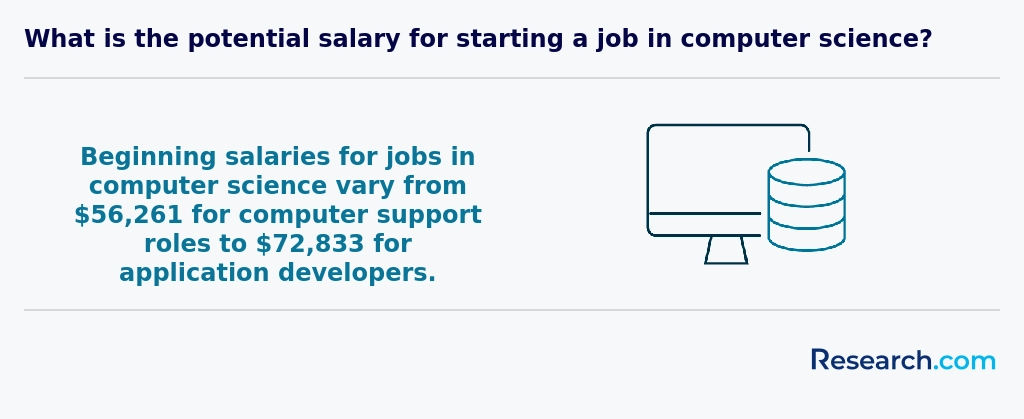
- Early-career salaries for graduates start between $65,000 and $75,000 annually, rising above $120,000 for experienced professionals.
- Virginia's job market features strong demand for roles such as software developers, network administrators, and cybersecurity experts.
- Most online programs allow full remote completion but may require some campus visits or have residency rules.
Completing an online computer science degree in Virginia typically takes around four years for full-time students, aligning with the 120-credit-hour standard. However, many graduates from universities like George Mason and Old Dominion share that flexible pacing options make this timeline feel personalized and manageable, especially for those balancing work and family commitments.
Some students find that transferring prior credits or leveraging accelerated programs can shrink this timeline to as little as three years. Imagine a working professional at Old Dominion who combines year-round courses with previous college credits, finishing faster while maintaining a healthy life balance. This adaptability often brings a sense of accomplishment and motivation.
Others choose part-time enrollment to keep stress low, extending their studies to five or six years but gaining valuable experiences through internships or capstone projects offered by Virginia's top schools. These hands-on opportunities not only enrich learning but also boost confidence in job readiness, making the time invested feel truly worthwhile.
Graduates from institutions like Virginia Tech and George Mason University often describe on-campus computer science programs as immersive, with hands-on access to cutting-edge labs and lively study groups that spark spontaneous collaborations. The buzz of in-person lectures and campus events creates a strong sense of community, making networking feel natural and energizing.
Conversely, online students say their experience unlocks unparalleled flexibility, allowing them to balance demanding jobs or family life while progressing through the same accredited curriculum recognized across Virginia. They emphasize the ease of revisiting recorded lectures and participating in virtual forums that connect peers statewide, fostering a uniquely diverse learning atmosphere not confined by geography.
Looking ahead, Virginia's expanding tech hubs suggest hybrid models may rise, blending physical labs with virtual interaction to harness the best of both worlds. This could mean online learners enjoying occasional on-campus residencies or augmented reality labs to gain practical skills, all while maintaining the convenience they value. Such innovation promises to redefine how Virginians engage with computer science education.
The average total cost of an online computer science degree in Virginia currently centers around $47,100, reflecting a balance between in-state public universities and more costly private options. Graduates from well-known Virginia institutions frequently share that despite tuition variances, the value of an online degree holds up well when considering the flexibility and reduced commuting costs it offers. Many students find that paying around this median cost feels justified, especially when they factor in the potential for scholarships and financial aid tailored for STEM fields like computer science.
Students attending popular colleges for affordable online computer science programs Virginia often mention how their educational investment is softened by technology fees and the availability of grants. One common experience includes managing course materials digitally, which keeps additional expenses moderate, making the overall cost more transparent and manageable. This aspect resonates with online learners who appreciate the ability to balance coursework and part-time jobs, helping control budgets without sacrificing education quality.
Looking ahead, evolving institutional policies may further refine pricing strategies for online education in Virginia, potentially reducing costs for residents and non-residents alike. For those exploring career paths, insights into these costs can be crucial when assessing future plans. Many prospective students also explore computer science career opportunities as an incentive to invest wisely in their education.
Accreditation is the hallmark of an online Computer Science program’s credibility, ensuring that your degree meets rigorous academic standards and is recognized by employers and other institutions. In Virginia, accredited programs typically hold both regional accreditation-most commonly from the Southern Association of Colleges and Schools Commission on Colleges (SACSCOC)-and programmatic accreditation from ABET (Accreditation Board for Engineering and Technology). These credentials guarantee that curricula are regularly reviewed, faculty qualifications are verified, and resources such as labs and student support services are maintained at high levels. Key accreditation considerations:
- Regional vs. Programmatic: Regional accreditation confirms overall institutional quality, while ABET accreditation focuses specifically on the Computer Science curriculum, faculty expertise, and learning outcomes.
- Transferability: Credits earned in a regionally and programmatically accredited program are far more likely to transfer seamlessly to other universities or graduate programs.
- Employer Recognition: Many leading tech companies require or prefer graduates from ABET-accredited programs, as it signals that coursework has met industry-aligned competencies. Before enrolling, verify accreditation status by visiting each institution’s accreditation page or consulting the Department of Education’s Database of Accredited Postsecondary Institutions and Programs. For students researching affordability alongside accreditation, our Low Cost Computer Science Degree Programs Ranking in San Diego, CA offers insight into accredited, budget-friendly options on the West Coast.
Financial aid for online computer science degrees in Virginia often begins with federal programs like Pell Grants and Direct Loans, which many graduates remember as crucial stepping stones during their studies. Imagine a George Mason University student reduced tuition stress through a Pell Grant, feeling encouraged to focus more on coding than on costs. State programs such as the Virginia Tuition Assistance Grant and Virginia Guaranteed Assistance Program are emerging as powerful supports, especially for those attending public universities or private colleges within Virginia's education network.
Merit- and need-based scholarships at institutions like Virginia Tech frequently spark excitement among recipients, offering both validation and financial relief. Employer tuition assistance programs also play a growing role for working professionals in Virginia's tech hubs, with some graduates sharing stories of how company reimbursements turned their ambitions into realities.
Looking forward, innovations in AI-driven scholarship matching and expanding partnerships between tech companies and universities may transform access further, making it easier for every aspiring computer scientist in Virginia to pursue their degree with confidence.
As the tech industry evolves, many Bachelor’s in Computer Science graduates seek to deepen their expertise by focusing on artificial intelligence (AI). Pursuing a specialization not only enhances your skill set but also positions you for high-demand roles in machine learning, data science and robotics. For those balancing cost and quality, exploring a cheap online artificial intelligence degree can be an ideal next step. Key advantages of an AI specialization:
- Targeted curriculum covering neural networks, natural language processing and computer vision
- Hands-on projects using popular frameworks such as TensorFlow and PyTorch
- Access to virtual labs and cloud-based GPU environments for real-world model training
- Industry-aligned capstone experiences in areas like autonomous systems and AI ethics What to look for in an AI certificate or master’s program: 1. Accreditation and faculty expertise in AI research 2. Flexible delivery through asynchronous lectures and live coder sessions 3. Career support including AI-focused mentorship and recruiter showcases 4. Affordable tuition models, scholarships or pay-as-you-learn options Career outcomes with an AI specialization:
- Machine Learning Engineer: average salary $125,000–$145,000
- Data Scientist: average salary $110,000–$130,000
- AI Product Manager: average salary $120,000–$140,000 By layering an AI credential onto your online Computer Science degree, you demonstrate adaptability to emerging technologies and gain a competitive edge in Virginia’s robust tech ecosystem.
Enrolling in an online computer science degree in Virginia often starts with having a high school diploma or GED, alongside a solid foundation in math and basic programming skills. Graduates from well-known Virginia universities share how their success was built on mastering algebra and geometry before diving into coding courses, making these subjects essential prerequisites that future students should embrace.
Many schools, including popular institutions like Virginia Tech and George Mason University, may still request SAT or ACT scores, though test-optional policies are trending. Students report feeling encouraged when test submissions strengthened their applications, reflecting a proactive approach to standing out.
Transfer students recall how well-prepared transcripts highlighting computer science or math courses made their credit transfers seamless. Maintaining a GPA around 2.5 to 3.0 is often emphasized, reflecting a clear standard that assures satisfactory academic readiness.
On the tech side, reliable internet and compatible computers are non-negotiable-graduates frequently stress how updating their hardware accelerated their learning and kept pace with evolving software demands, a practical preparation all Virginia candidates should prioritize.

Succeeding in an online Computer Science program requires a blend of effective time management, active engagement with digital resources, and a commitment to continuous learning. One of the most effective strategies is to establish a dedicated study schedule that helps balance coursework with personal and professional responsibilities. Additionally, leveraging virtual tutoring, online forums, and academic advising can provide extra support when tackling challenging subjects. Staying connected with peers through online study groups and networking events not only enhances your learning experience but also builds a robust professional network for future opportunities. For students seeking affordable options, exploring the cheapest computer science programs in virginia can be a smart way to combine financial prudence with quality education. By setting clear goals, maintaining consistent communication with instructors, and utilizing available online resources, you can maximize the benefits of an online degree and position yourself for long-term career success.
Online computer science degrees in Virginia often include core courses designed to build a strong foundation while preparing students for the evolving tech landscape. Graduates from popular schools like Virginia Tech and George Mason University recall how classes in programming-using languages such as Python or Java-felt immediately applicable when they developed their first apps or scripts to automate everyday tasks.
Courses in data structures and algorithms deepen problem-solving skills, enabling learners to optimize performance in real-world projects, such as creating efficient search engines or handling large datasets. Exploring computer systems and architecture unveils how hardware interacts with software, a crucial insight for those fascinated by both coding and device performance.
Many students find software engineering classes especially rewarding, as working on team projects mirrors professional environments where collaboration and agile development are key. Electives in emerging fields like artificial intelligence and cybersecurity add a future-ready edge, reflecting Virginia's growing tech sectors.
Hands-on experiences like capstone projects or internships offered through institutions such as James Madison University help learners translate theory into practice, fueling excitement and confidence for their tech careers.

Online computer science specializations Virginia programs typically include cutting-edge fields such as cybersecurity, data science, software engineering, artificial intelligence, and cloud computing. Graduates from well-known Virginia colleges often share how focusing on cybersecurity helped them confidently navigate real-world challenges protecting sensitive information for government contractors. Others highlight their enthusiasm for data science and analytics, inspired by hands-on projects analyzing complex datasets that mirror state tech industry demands.
Students pursuing a Virginia computer science degree focus areas like AI and machine learning report excitement about developing solutions using natural language processing and neural networks, anticipating future roles in emerging tech sectors. Network administration and cloud computing specializations prepare learners to support remote infrastructures, a trend growing rapidly across businesses statewide.
Many find the flexibility of online study appealing, often balancing education while engaging with innovations in fields beyond computer science, such as an online BFA in graphic design, fueling interdisciplinary creativity and problem-solving skills.
Choosing the best online computer science degree in Virginia means looking beyond just the curriculum to what aligns with your lifestyle and future goals. Graduates from popular Virginia colleges often share how programs that balance solid theory with hands-on projects in cybersecurity or artificial intelligence sparked their passion and prepared them for evolving tech roles. These students appreciate programs with recognized accreditation, ensuring their hard work translates into respected credentials in the job market.
Affordability is also crucial. Many find affordable computer science programs Virginia-based institutions offer make it easier to stay dedicated without financial stress. Coupled with flexible, asynchronous courses, learners can juggle work and family while advancing their education. Support services like career counseling, common at Virginia universities, help graduates confidently enter a booming regional tech market.
Emerging trends suggest programs that embrace interdisciplinary skills or offer quick bachelor's degrees online might provide an edge, allowing students to keep pace with rapid industry changes.

Graduates pursuing online computer science careers in Virginia frequently find themselves at the forefront of emerging technological fields. Positions like software engineers, cybersecurity analysts, and data scientists dominate, especially in innovation centers near Northern Virginia's tech corridors. Many graduates from prominent universities in the region describe the thrill of tackling real-world problems, such as designing secure applications to defend against evolving cyber threats or utilizing big data to drive strategic business insights. These Virginia computer science degree job opportunities grow as digital transformation invests heavily in cloud computing, AI, and cybersecurity.
Others evolve into roles like systems analysts or IT project managers, navigating complex infrastructures for government agencies or private firms. The dynamic tech ecosystem in Virginia often encourages graduates to explore hybrid career routes, combining traditional computer science knowledge with skills learned at top coding bootcamps for developers. This approach frequently results in increased employability and excitement about future opportunities.

The job market for graduates holding an online computer science degree in Virginia remains vibrant, fueled by the state's unique ecosystem of government agencies, military bases, and tech companies. Graduates from popular Virginia institutions often share how their practical skills in software development or cybersecurity helped them quickly land roles with competitive salaries, especially in metro areas like Richmond and Arlington. The demand for online computer science jobs Virginia is reinforced by employers seeking candidates with certifications such as AWS and CompTIA Security+, combined with hands-on project experience.
As technology continues evolving, these graduates anticipate expanding opportunities in cloud computing and data analysis sectors. Online programs from well-known colleges in Virginia also provide flexibility, enabling working professionals to upskill without disrupting their careers. Many find value in internships that connect them directly with regional tech firms and federal contractors. For those curious about advancing even further, exploring options on how to earn a doctorate degree can open doors to leadership roles and research positions.
With median wages near $110,000 for developers in the Washington-Arlington metro area, the Virginia computer science career outlook encourages online students to pursue these degrees confidently, knowing the state's tech sector is primed for growth.
2027 Most Affordable Online Bachelor's in Computer Science Degree Programs Ranking in Virginia
Investing in your education is a significant decision that can shape your future, and the Research.com team understands the importance of making informed choices. To assist prospective students in Virginia, we have meticulously created the "2027 Most Affordable Online Bachelor's in Computer Science Degree Programs Ranking in Virginia." Our commitment to quality, credibility, and accuracy is reflected in the thorough research and analysis conducted to compile this ranking.
We utilized the following reputable data sources to ensure a comprehensive evaluation of computer science programs:
By exploring this ranking, readers will gain valuable insights into the most affordable and credible online computer science degree options in Virginia, helping them make well-informed decisions about their educational investment. For more details on our methodology, please visit our Research.com methodology page.
# 1 position
University of Management and Technology
Bachelor of Computer Science


Frequently Asked Questions About computer science
Online computer science degree students in Virginia can maximize their learning by actively engaging with course materials and participating in virtual discussions. Utilizing university-provided resources like tutoring centers and technical support enhances understanding. Connecting with professors during office hours ensures clarity on complex topics.
Joining online study groups or local tech meetups can boost collaboration and networking. According to the Virginia Department of Education, students who regularly interact with peers tend to perform 15% better academically.
Finally, staying updated on Virginia's tech industry trends, through sites like the Virginia Economic Development Partnership, helps students align their skills with job market demands.
The field of computer science is rapidly evolving, and several emerging niches are gaining attention among students pursuing online degrees in Virginia. One key area is artificial intelligence (AI) and machine learning, where demand for skilled professionals continues to grow, reflecting national trends reported by the U.S. Bureau of Labor Statistics.
Cybersecurity is another critical niche, especially given Virginia's status as a technology hub near government agencies. The Virginia Economic Development Partnership highlights numerous cybersecurity firms expanding locally, creating job opportunities.
Data science and cloud computing also represent growing fields. According to the Computing Research Association, these specialties are shaping the future of technology careers nationwide, including in Virginia's expanding tech sector.
Preparing for the job market after completing an online computer science degree in Virginia requires strategic planning. Graduates should focus on gaining practical experience through internships or cooperative education programs. According to the Virginia Economic Development Partnership, the state's technology sector employs over 100,000 workers, highlighting strong local demand.
Building a professional network is crucial; students can join Virginia-based tech groups or online communities, including the Northern Virginia Technology Council. Additionally, obtaining relevant certifications, such as AWS or Cisco, can enhance employability.
Targeting local employers known to hire remotely, like companies in Arlington and Richmond, can increase job prospects. Utilizing university career services for resume reviews and interview preparation also helps graduates succeed.
Employers in Virginia highly value computer science graduates who demonstrate strong programming skills, particularly in languages like Python, Java, and C++. According to the Virginia Economic Development Partnership, proficiency in software development frameworks and cloud computing platforms is also crucial due to the region's growing tech industry.
Problem-solving and analytical thinking are essential, as companies seek graduates who can design efficient algorithms and debug complex issues. Communication skills matter too, enabling graduates to work effectively in teams and explain technical concepts clearly.
Familiarity with cybersecurity principles is increasingly important given Virginia's concentration of defense and intelligence agencies. Additionally, knowledge of data structures, databases, and machine learning improves job prospects in this competitive market.
Finding internships in Virginia that align with a computer science degree involves leveraging both university resources and local industry connections. Many Virginia universities offer career services with dedicated internship coordinators who maintain relationships with tech companies across the state. For example, Northern Virginia, a growing tech hub, hosts numerous firms looking for interns skilled in programming, cybersecurity, and software development.
Online students should explore virtual career fairs and platforms like Handshake, popular among Virginia colleges, to discover remote and onsite internships. According to the Virginia Economic Development Partnership, tech employment in Northern Virginia grew over 5% annually, indicating strong internship opportunities.
Networking through local tech groups or events like those hosted by the Virginia Chapter of the ACM can also enhance prospects.
Obtaining an online computer science degree in Virginia significantly enhances career mobility and advancement opportunities. The Commonwealth's tech sector is expanding rapidly, with computing jobs projected to grow 15% by 2030 according to the Virginia Employment Commission. An online degree from an accredited Virginia institution equips students with relevant skills while offering flexibility to work or intern concurrently.
The degree also improves access to higher-paying roles; the U.S. Bureau of Labor Statistics reports that computer and information technology occupations in Virginia average $100,000 annually, considerably above the state's median wage. Furthermore, many Virginia employers recognize online credentials from reputable schools as equal to on-campus degrees, supporting promotion prospects.
Students can leverage networking through virtual career fairs and local tech hubs in cities like Richmond and Arlington, fostering stronger employment connections. Thus, such degrees provide a strategic advantage for professionals aiming to advance within Virginia's dynamic technology workforce.
Studying for a computer science degree in Virginia offers strong preparation for interdisciplinary roles by combining core technical skills with exposure to diverse fields. Many Virginia universities emphasize collaboration with departments such as business, healthcare, and engineering, reflecting workforce demands. According to the Virginia Economic Development Partnership, sectors like cybersecurity, biotechnology, and data analytics are rapidly growing here, increasing the need for professionals who navigate multiple disciplines.
Online programs often include courses in project management, communication, and applied ethics, which build essential soft skills. This broad approach helps graduates adapt to roles requiring both computing expertise and understanding of other industries.
Virginia's emphasis on research and innovation, supported by institutions like Virginia Tech, further enhances interdisciplinary learning, preparing students for complex real-world challenges.
Choosing between a thesis and a non-thesis online computer science degree in Virginia depends on your career goals and learning preferences. A thesis program involves conducting original research and writing a detailed paper, which is ideal if you plan to pursue graduate studies or research-oriented roles.
Non-thesis programs focus more on coursework and practical skills, appealing to students aiming for direct employment in industry. According to the Virginia Employment Commission, computer science jobs in Virginia are expected to grow by 15% from 2022 to 2032, favoring hands-on skills.
Consider also the time commitment: thesis options usually require more time for research, while non-thesis tracks may be completed faster. Review specific program details and faculty expertise before deciding.
Students in Virginia interested in studying computer science abroad through online programs have several options primarily via U.S.-based universities with global partnerships. While Virginia institutions like George Mason University offer competitive online degrees, students can also access programs from universities accredited in other countries that align with U.S. education standards.
Many U.S. universities participate in exchange or dual-degree programs allowing students to complete coursework overseas virtually or onsite. The U.S. Department of Education recognizes certain foreign colleges, ensuring transferability of credits for computer science degrees. This benefits Virginia students who seek international experience without full relocation.
According to NAFSA: Association of International Educators, around 10% of U.S. computer science undergraduates engage in study abroad, a number rising with online options expanding. Virginia's policies on credit recognition are generally supportive, simplifying study abroad integration.
Virginia offers several part-time job opportunities that can enhance computer science degree education, especially for students studying online. Positions such as IT support specialist, web developer, and junior software tester are common and provide practical experience. According to the Virginia Employment Commission, jobs in computer and mathematical occupations are expected to grow 15% between 2022 and 2032, reflecting a healthy demand for tech talent.
Many Virginia-based tech firms, including those in Northern Virginia's tech corridor, offer internships and part-time roles suitable for students. Working in roles like database assistant or network technician can build critical skills alongside academic learning.
Online computer science students in Virginia benefit from diverse networking opportunities despite studying remotely. Many Virginia universities offering online programs provide virtual career fairs, allowing students to connect with local and national tech employers. According to the Virginia Tech Career Services, over 70% of students engage in these events, which are tailored to technology fields.
Additionally, students can join professional organizations like the Virginia Tech ACM student chapter or the Northern Virginia Tech Council. These groups host webinars, workshops, and local tech meetups that foster professional connections and skill development.
Virginia's proximity to the Washington, D.C. tech corridor also offers remote students access to a robust technology ecosystem with over 250,000 IT jobs statewide, as reported by the Virginia Chamber of Commerce, enhancing networking possibilities.
Alumni networks play a crucial role in supporting online computer science degree students in Virginia. These networks connect current students with graduates working in the tech industry, facilitating mentorship and career advice. According to the National Association of Colleges and Employers, 70% of jobs are found through networking, highlighting alumni groups' importance.
In Virginia, a state with a strong tech presence-including companies like Capital One and Amazon-these connections can lead to significant internship and job opportunities in prominent local companies. Alumni events, online forums, and networking meetups create platforms for sharing industry insights and job leads.
Additionally, alumni can offer guidance on navigating the evolving field of computer science, helping students stay informed about certifications and emerging technologies relevant to Virginia's tech market.
In Virginia, customizing an online computer science degree to align with your career goals often involves selecting specific elective courses and concentrations. Many programs offer options such as cybersecurity, data science, software engineering, or artificial intelligence, allowing students to build expertise in high-demand areas. Virginia's strong technology sector benefits graduates who tailor their studies to meet local industry needs, particularly in Northern Virginia's growing tech hubs (Virginia Economic Development Partnership, 2023).
Additionally, some schools provide opportunities for internships or capstone projects remotely, enabling practical experience in your chosen field. Consulting academic advisors can help you choose courses that support your targeted career path effectively.
Online computer science students in Virginia often face challenges related to balancing rigorous coursework with personal and professional commitments. Many learners juggle full-time jobs while managing demanding programming assignments and projects, which require significant time and focus.
Technical difficulties also arise, including the need for reliable internet access and up-to-date hardware capable of running specialized software. According to the Virginia Community College System, around 15% of students reported technology access issues in 2022, impacting their ability to complete courses smoothly.
Additionally, students may encounter limited opportunities for hands-on experiences and networking, both critical in a field like computer science. This can affect their preparedness for Virginia's competitive tech job market, where in-person internships and collaboration often play vital roles.
With an online computer science degree from Virginia, you can pursue several respected professional certifications that enhance your career opportunities. Popular options include the Certified Information Systems Security Professional (CISSP), which is valuable for cybersecurity roles. The Certified Software Development Professional (CSDP) offered by IEEE targets experienced software engineers, while the CompTIA certifications such as Security+ and Network+ are well-regarded for entry-level IT and networking jobs.
Virginia's growing technology sector, supported by the state's 15% projected IT job growth through 2030 (Bureau of Labor Statistics), encourages professionals to gain certifications that boost employability. Many online programs prepare students for these exams.
Also, the Amazon Web Services (AWS) Certified Solutions Architect credential is increasingly relevant as cloud computing expands locally. These certifications help graduates demonstrate specialized skills beyond their degree.
To write a winning application for an online computer science program in Virginia, start by clearly demonstrating your passion for technology and problem-solving. Highlight any relevant experience, such as internships, projects, or prior coursework in programming or math. Admissions committees appreciate applicants who show both technical skills and motivation.
Include a well-crafted personal statement explaining why you chose computer science and why an online program fits your goals. Virginia Tech and Old Dominion University both emphasize the importance of clear communication and career objectives in applications.
Strong letters of recommendation from educators or employers can boost your chances. Also, maintain a competitive GPA; many Virginia programs look for at least a 3.0 in related subjects.
Finally, meet all application deadlines and submit transcripts and test scores if required. Checking individual university requirements carefully ensures no detail is overlooked.
Computer science careers are increasingly recognized worldwide for their critical role in driving innovation across industries. In the United States, including Virginia, the demand for skilled computer science professionals continues to grow rapidly. According to the U.S. Bureau of Labor Statistics, employment in computer and information technology occupations is projected to grow 15% from 2021 to 2031, much faster than the average for all occupations.
Virginia stands out as a key technology hub with companies like Amazon and Microsoft expanding their presence. This creates opportunities for graduates of online computer science programs to engage in global tech markets while based locally.
Globally, computer science skills are valued for their versatility, from software development to cybersecurity. Students in Virginia's online programs gain knowledge aligned with global standards, preparing them for international collaboration and innovation.
Students pursuing an online computer science degree in Virginia can gain practical experience through internships with local technology firms and government agencies. The Virginia Employment Commission reports strong demand for IT internships, which often convert into full-time roles. Many Virginia universities offering online programs provide virtual labs and project-based courses to simulate real-world problems and coding environments.
Additionally, participating in Virginia-based coding competitions and open-source projects helps build technical skills. Organizations such as the Northern Virginia Technology Council frequently host events that foster collaboration. Networking through these channels provides valuable exposure to industry trends and employers.
Choosing the right concentration within an online computer science degree in Virginia requires careful consideration of your career goals and interests. Concentrations often include areas like cybersecurity, software engineering, data science, and artificial intelligence. Virginia's strong tech industry, especially in Northern Virginia, offers growing opportunities in cybersecurity and software development, according to the Virginia Economic Development Partnership.
Evaluate program offerings carefully since not all schools provide the same specializations online. Research reported outcomes such as alumni employment rates and partnership with local companies. Additionally, consider future job market trends in Virginia, where computer science roles are projected to grow by 15% through 2030, as reported by the U.S. Bureau of Labor Statistics.
See What Experts Have To Say About Studying Computer Science
Read our interview with Computer Science experts

Elan Barenholtz
Computer Science Expert
Associate Professor
Florida Atlantic University

Kathleen M. Carley
Computer Science Expert
Professor of Computer Science
Carnegie Mellon University

Imed Bouchrika, Phd
Computer Science Expert
Professor of Computer Science
National Higher School of Artificial Intelligence

Martin Kang
Computer Science Expert
Assistant Professor
Loyola Marymount University

- Computer Science Alumni Council https://www.myniu.com/article.html
- New and Future Computer Science and Technology Trends https://www.computerscience.org/resources/computer-science-trends/
- How to Gain Real-World Experience While Studying Online | American National University https://an.edu/how-to-gain-real-world-experience-while-studying-online/
- What certifications should I get for computer science? | edX https://www.edx.org/resources/certifications-computer-science
- The Crucial Role of Networking for Computer Science Students https://dev.to/thisisaayush/the-crucial-role-of-networking-for-computer-science-students-4k2i
- 8 Reasons to study computer science at university https://students.studygroup.com/blog/why-study-computer-science-in-the-usa
- Getting the Most Out of a Computer Science Degree https://robkokochak.com/blog/getting-the-most-out-of-a-cs-degree/
- Essential Skills Every Computer Science Graduate Needs | LSBF https://lsbf.edu.my/blog/11-essential-skills-every-computer-science-graduate-needs/
- Beyond the Degree: Unveiling the Potential of a Computer Science Degree in Today's Job Market https://www.belmont.edu/stories/articles/2024/computer-science-degree-potential.html
- Study Computer Science Abroad | Go Overseas https://www.gooverseas.com/study-abroad/computer-science