2027 Communication Degree Specialization Pay Report: Which Academic Tracks Lead to the Highest Earnings

Co-Founder and Chief Data Scientist
Choosing a communication specialization can shape your first job, promotion path, and return on tuition. The Bureau of Labor Statistics reported a May 2024 median pay of $91,670 for technical writers and $69,780 for public relations specialists, showing how much role choice can affect earnings even within communication-related careers.
This guide is for students comparing concentrations such as strategic communication, technical communication, journalism, media, organizational communication, and digital communication. You will learn which tracks tend to connect with stronger pay, where the limits of salary data are, and how to choose a specialization that fits your goals.
Key Things You Should Know
- Technical communication, strategic communication, digital analytics, and organizational communication often show the strongest pay signals because they connect communication skills to technology, revenue, risk, operations, or management roles.
- Degree level matters: a bachelor's degree can qualify students for many entry-level communication roles, while graduate study is most useful when it supports management, research, health, policy, UX, or executive communication goals.
- Use salary data carefully: BLS May 2024 occupational medians such as $91,670 for technical writers and $159,660 for advertising, promotions, and marketing managers describe roles, not guaranteed outcomes for a major or concentration.
- Key Things You Should Know
- Which Communication Degree Specializations Lead to the Highest Earnings?
- How Does Communication Specialization Pay Vary by Degree Level?
- Which Industries Pay the Most for Different Communication Academic Tracks?
- Which Communication Degree Tracks Have the Strongest Long-Term Advancement Potential?
- How Do Location and Remote Work Affect Communication Specialization Pay?
- What Skills and Courses Make a Communication Specialization More Marketable?
- How Should Students Compare Communication Specialization Pay Against Program Cost?
- Do Certifications, Licensure, or Graduate Study Change Communication Specialization Earnings?
- How Should Students Choose the Best Communication Degree Specialization for Their Career Goals?
- Top Trending Communication Rankings
Which Communication Degree Specializations Lead to the Highest Earnings?
The communication specializations with the strongest earning potential are usually the ones that connect messaging to measurable business, technical, regulatory, or user outcomes. A general communication degree can be valuable, but concentrations tied to technical writing, strategic communication, digital marketing analytics, organizational communication, and public affairs often create clearer routes into higher-paying job families.
Salary data is most useful when treated as an occupational signal rather than a promise. A concentration does not automatically produce a specific salary; pay changes with employer size, industry, location, portfolio quality, internships, degree level, and whether the role is individual-contributor, specialist, or management-focused.
The table below compares common communication academic tracks with related U.S. occupations and May 2024 BLS median pay where a clear occupational match exists. Use it to identify which specializations tend to map to stronger-paying job markets, not to assume every graduate will enter the highest-paying role immediately:
| Communication specialization | Common role direction | 2024 U.S. salary signal | Best fit for students who want |
| Technical communication | Technical writer, documentation specialist, content strategist, UX writer | Technical writers: $91,670 median pay | A writing career tied to software, engineering, health tech, cybersecurity, or regulated products |
| Strategic communication, advertising, or public relations | PR specialist, brand strategist, campaign manager, communications manager | PR specialists: $69,780 median pay; advertising, promotions, and marketing managers: $159,660 median pay | Campaign planning, brand reputation, media relations, and eventual management responsibility |
| Digital communication and analytics | Marketing analyst, social media strategist, audience insights analyst, growth content specialist | Market research analysts: $76,950 median pay | Data-informed messaging, audience behavior, platform strategy, and performance reporting |
| Organizational or corporate communication | Internal communication specialist, change communication associate, training communication specialist | Pay varies widely because roles often sit inside HR, operations, or executive communication teams | Workplace communication, employee engagement, leadership messaging, and change management |
| Journalism, media writing, or editorial communication | Reporter, editor, content producer, writer | Editors: $75,260 median pay; writers and authors: salary varies by employer and project type | News, storytelling, publishing, multimedia reporting, or long-form content |
| Health communication | Patient education specialist, public health communication associate, health content strategist | Pay depends heavily on whether the employer is a hospital, government agency, nonprofit, insurer, or health technology company | Communication work connected to public health, patient behavior, risk, and medical information |
For many students, the highest-paying communication specialization is not simply the one with the biggest salary number. Technical communication may offer strong specialist earnings earlier, while strategic communication may offer higher upside after a move into management. Digital analytics can be a strong middle path because it combines communication judgment with data skills that many employers now expect.
The main trade-off is focus versus flexibility. A technical communication track can make you more marketable for documentation and product-content roles, but it may feel narrow if you want media, public relations, or entertainment work. A strategic communication track is broader, but students often need internships, campaign samples, analytics experience, and industry knowledge to compete for better-paying roles.
How Does Communication Specialization Pay Vary by Degree Level?
Degree level affects communication pay because it influences the roles a student can credibly pursue. Associate and bachelor's programs usually prepare students for entry-level production, writing, media, public relations, marketing, or internal communication roles. Master's programs are more useful when they build advanced specialization, leadership ability, research capability, or sector-specific expertise.
The table below summarizes how communication-related degree levels usually compare in career purpose and earning leverage. It is especially useful if you are deciding whether a higher degree is worth the additional cost and time:
| Degree level | Typical timeline | Communication career use | Pay impact to evaluate |
| Certificate or minor | Several months to one academic year | Adds a skill such as digital marketing, public relations, technical writing, visual media, or analytics | Can improve employability when paired with a stronger portfolio, but usually does not replace a degree for professional roles |
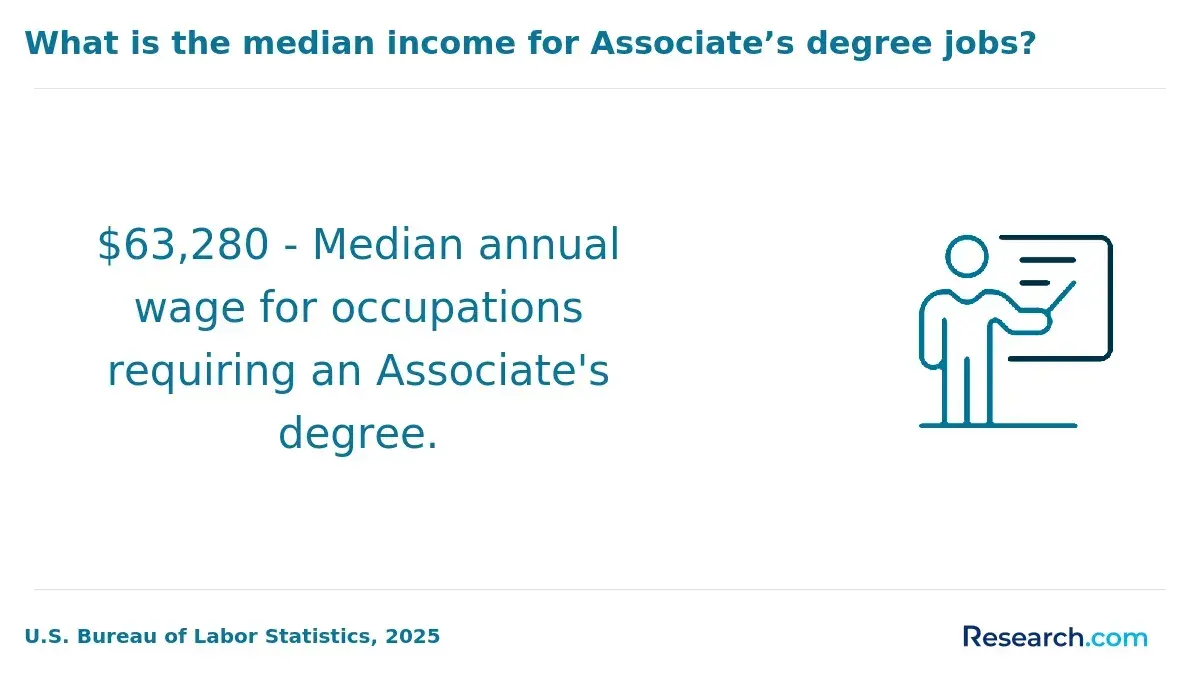
| Associate degree | About two years full time | Supports transfer, media support roles, administrative communication, or production assistant pathways | Best ROI when credits transfer cleanly into a bachelor's program |
| Bachelor's degree | About four years full time | Common baseline for PR, media, marketing communication, corporate communication, and technical writing jobs | Often the most important credential for entry into professional communication roles |
| Master's degree | Usually one to two years | Supports advancement in strategic communication, health communication, public affairs, UX content, organizational communication, or research | Most valuable when it unlocks management, specialized industry, or higher-responsibility roles |
| Doctorate | Varies by program and format | Primarily supports research, university teaching, senior consulting, or specialized leadership | Usually not necessary for standard communication roles unless the career goal requires advanced research or academic credentials |
A bachelor's degree remains the most common decision point because it lets students choose a concentration while building internships and portfolio evidence. Students who already know they want corporate learning, employee communication, or talent-related communication may also compare adjacent graduate paths such as masters in human resources online, especially when their target roles sit closer to workforce strategy than media or public relations.
Graduate study can improve earning potential, but only when the program aligns with a clear role. A master's in strategic communication may help someone move toward communications management, but it may not pay off if the student already lacks practical campaign experience, analytics skills, or industry contacts.
The better question is not "Will a graduate degree increase pay?" but "Which roles will this degree make me competitive for that I could not realistically reach otherwise?"
Which Industries Pay the Most for Different Communication Academic Tracks?
Industry can matter as much as specialization. Communication roles in technology, finance, pharmaceuticals, consulting, government contracting, and large corporate environments often pay more than similar-titled roles in small nonprofits, local media, or early-stage organizations with limited budgets.
The table below shows how different academic tracks commonly connect to industries with stronger compensation potential. It helps students think beyond the major name and toward the employer markets that actually buy those skills:
| Academic track | Industries where pay signals are often stronger | Why employers pay for the skill | Important limitation |
| Technical communication | Software, cloud services, cybersecurity, engineering, medical devices, manufacturing | Clear documentation reduces user confusion, support costs, compliance risk, and implementation errors | Students may need comfort with technical tools, product workflows, and subject-matter interviews |
| Strategic communication and PR | Technology, finance, healthcare, entertainment, professional services, government affairs | Reputation, media visibility, crisis response, and stakeholder trust can affect revenue and public perception | Higher pay often comes after measurable campaign results and management experience |
| Digital communication and analytics | E-commerce, software, agencies, consumer brands, media platforms, market research firms | Employers need communicators who can connect message performance to audience behavior and business goals | Students need data literacy, not just social media familiarity |
| Organizational communication | Large corporations, healthcare systems, universities, consulting, government agencies | Internal messaging supports employee engagement, change adoption, safety, and leadership alignment | Role titles vary, so job searches may require terms such as internal communications, change management, or employee experience |
| Health communication | Hospitals, insurers, public health agencies, pharmaceutical firms, health technology companies | Accurate communication can influence patient understanding, risk behavior, and program participation | Some roles prefer public health, healthcare administration, or clinical knowledge |
One reason technical and strategic tracks can pay well is that their work is close to risk, revenue, or product adoption. A technical writer who helps customers implement complex software is doing more than writing; they are reducing friction in the customer experience. A communication manager who handles crisis messaging is protecting reputation and stakeholder confidence.
Students should also separate "glamour industries" from "high-paying industries." Entertainment, sports, fashion, and local media can be attractive, but competition may be intense and early salaries may be modest. Less visible industries such as B2B software, logistics, healthcare systems, insurance, and manufacturing may provide stronger stability for communication graduates who can translate complex information clearly.
Which Communication Specializations Offer the Best Entry-Level Earnings?
Entry-level earnings are often strongest when the specialization teaches a concrete, employer-ready skill. Students who can show writing samples, campaign dashboards, UX content examples, documentation projects, or media analytics reports usually have a stronger early-career case than students who can only list courses.
For entry-level pay, students should focus on tracks that create visible proof of ability. The following options tend to be practical for first jobs because they map to roles employers regularly hire at the assistant, coordinator, associate, or junior level:
- Technical communication: Strong for students who can build documentation samples, API or software help content, process guides, and user instructions.
- Digital communication and analytics: Strong for students who can interpret campaign metrics, audience data, search behavior, email performance, and social content results.
- Public relations or strategic communication: Strong for students with press materials, campaign plans, media lists, crisis simulations, and internship experience.
- Content strategy and professional writing: Strong for students who can write for websites, brands, newsletters, product education, and thought leadership.
- Organizational communication: Strong for students who can create employee communication plans, change messaging, onboarding materials, and internal campaign samples.
Technical communication often has one of the clearest entry-level salary advantages because employers can evaluate work samples directly and because the writing supports technical products or regulated processes. However, students should not choose it only for pay if they dislike learning technical concepts, interviewing subject-matter experts, or revising precise documentation.
Strategic communication can also lead to good early opportunities, but entry-level roles may start with coordinator duties such as media monitoring, social scheduling, drafting releases, building reports, and supporting events. The upside is stronger when students use those first roles to develop client communication, campaign measurement, and stakeholder management skills.
Which Communication Degree Tracks Have the Strongest Long-Term Advancement Potential?
Long-term earning potential usually depends on whether a specialization can lead to management, consulting, product strategy, analytics leadership, or executive-facing work. The highest salaries in communication-related fields are often not entry-level writing roles; they are roles where communication expertise influences business decisions, stakeholder trust, user adoption, or organizational change.
The strongest advancement tracks tend to share three features: they solve expensive problems, require cross-functional collaboration, and produce outcomes employers can measure. Students comparing long-term potential should look for tracks that build both communication craft and business fluency:
- Strategic communication and public relations: Advancement can lead to communications manager, director of communications, public affairs lead, or crisis communication advisor roles.
- Technical communication and content design: Advancement can lead to senior technical writer, documentation manager, content operations lead, UX content strategist, or product content leader roles.
- Digital communication analytics: Advancement can lead to marketing analytics, audience insights, growth strategy, or performance communication leadership roles.
- Organizational communication: Advancement can lead to internal communications manager, change communication lead, employee experience communication strategist, or executive communication partner roles.
- Health or risk communication: Advancement can lead to public health campaign leadership, patient education strategy, crisis messaging, or communication roles in healthcare systems and agencies.
BLS May 2024 data shows advertising, promotions, and marketing managers at a median pay of $159,660, which helps explain why communication students often pursue management-oriented tracks. The catch is that management pay usually reflects years of experience, budget responsibility, team leadership, and measurable outcomes rather than the concentration alone.
AI is also changing advancement paths. Routine drafting, transcription, social captions, and basic summaries are easier to automate, while higher-value communication work increasingly involves judgment: message strategy, audience research, ethics, brand risk, stakeholder negotiation, and quality control of AI-assisted content. Students who learn to use AI tools responsibly while building analytical and editorial judgment may be better positioned for future roles.
How Do Location and Remote Work Affect Communication Specialization Pay?
Location affects communication pay through employer concentration, cost of living, industry mix, and competition. A technical communication graduate in a software-heavy market may see different opportunities than a journalism graduate in a smaller local media market. Remote work can widen access, but it also increases competition because applicants may be compared nationally.
The most important location question is not just "Which city pays more?" It is "Which region has employers that hire for my specialization?" Strategic communication students may look for agencies, corporate headquarters, healthcare systems, government affairs firms, or universities. Technical communication students may look for software, engineering, medical device, aerospace, cybersecurity, and manufacturing employers.
Remote communication jobs are common in digital content, technical writing, marketing operations, PR support, internal communication, and UX content, but remote pay policies vary. Some employers pay by employee location, some use national bands, and others use headquarters-based compensation. That means a remote job may improve access without necessarily matching the pay of a high-cost metro area.
Students comparing location and remote options should use a simple evaluation sequence before choosing a specialization or school. This process helps avoid overvaluing a national salary number that may not match local opportunities:
- Search job postings in your target region using both specialization terms and role titles, such as "technical writer," "internal communications associate," "PR coordinator," and "content strategist."
- Identify which industries appear most often, then compare whether your program offers courses or projects tied to those industries.
- Check whether postings ask for tools such as Google Analytics, Adobe Creative Cloud, Figma, CMS platforms, media databases, SEO tools, or documentation systems.
- Compare remote postings separately from local postings because pay bands, applicant volume, and experience requirements may differ.
- Ask the school's career office where recent communication students interned or found jobs, not only what roles the degree theoretically supports.
A student who wants remote work should be especially careful about portfolio quality. Remote employers may rely more heavily on writing samples, campaign results, documentation samples, and interview exercises because they have less local context for judging applicants.
What Skills and Courses Make a Communication Specialization More Marketable?
The most marketable communication specializations combine clear writing with evidence that the student can solve practical employer problems. A transcript matters, but employers usually want proof: samples, projects, internships, campaign results, research reports, presentations, or documentation work.
The table below connects communication tracks to the courses and skills that most often strengthen employability. Use it when comparing curricula across schools that use similar concentration names but teach very different content:
| Specialization | High-value courses | Marketable skills to build | Portfolio evidence |
| Technical communication | Technical writing, editing, information architecture, UX writing, usability testing | Documentation, structured writing, user research, content management, interviewing subject-matter experts | User guides, release notes, help articles, process documentation, content audits |
| Strategic communication and PR | Campaign planning, media relations, crisis communication, persuasion, communication law and ethics | Press writing, stakeholder analysis, messaging strategy, media pitching, reputation management | Press kits, campaign plans, crisis response memos, media monitoring reports |
| Digital communication | Analytics, SEO writing, social media strategy, audience research, digital storytelling | Performance reporting, content testing, platform strategy, search intent analysis, dashboard interpretation | Campaign dashboards, content calendars, web copy, audience reports |
| Organizational communication | Leadership communication, conflict, intercultural communication, change communication, training design | Employee messaging, facilitation, executive writing, change planning, internal campaign design | Internal newsletters, change plans, onboarding materials, leadership talking points |
| Visual and media communication | Media production, visual storytelling, photography, design, video editing, multimedia journalism | Visual composition, editing, platform-native storytelling, production planning, brand consistency | Photo essays, short videos, multimedia packages, brand visuals |
Students interested in visual storytelling can compare a communication program's media production courses with more specialized creative pathways such as an online photography degree. The better choice depends on whether the student wants a broad communication career with visual skills or a more focused creative production pathway.
Across nearly every track, data literacy is becoming more important. Communication graduates do not need to become data scientists, but they should be able to read a dashboard, explain what changed, connect results to audience behavior, and recommend a next message. This is especially valuable in digital communication, PR, content strategy, and internal communication roles where leaders expect evidence of impact.
How Should Students Compare Communication Specialization Pay Against Program Cost?
Communication specialization pay only matters if it is evaluated against cost. A higher-earning track can still be a poor financial choice if the program is expensive, weak on career support, or disconnected from employer needs. A lower-cost program with strong internships, transfer pathways, and portfolio development may offer better value than a prestigious program with limited practical support.
College Board's 2024 pricing data reported average published tuition and fees of $11,610 for in-state students at public four-year institutions and $43,350 at private nonprofit four-year institutions. These sticker prices do not represent every student's net cost, but they show why communication students should compare tuition, aid, debt, and likely career path before choosing a concentration.
Use the following steps to compare pay potential against program cost. This process helps you avoid choosing a specialization based only on headline salary figures:
- Estimate your net price after grants, scholarships, employer aid, and transfer credits rather than relying only on published tuition.
- Compare the curriculum with job postings for your target roles to see whether the program teaches required tools, writing formats, and industry knowledge.
- Ask for internship placement examples by concentration, because work experience can matter as much as the specialization name.
- Review portfolio requirements and capstone projects to confirm you will graduate with samples employers can evaluate.
- Compare loan payments with realistic early-career roles, not only with senior management salaries that may take years to reach.
- Consider whether a lower-cost school plus strong internships would beat a higher-cost program with a weaker employment network.
One common mistake is assuming the highest-paying specialization automatically has the best ROI. Technical communication may have strong salary signals, but it is a poor fit if the student avoids technical material.
Journalism may have more modest early pay in some markets, but it can be the right choice for a student building a focused reporting, editorial, or documentary career. ROI should include earnings, cost, fit, persistence, and the probability that the student will actually pursue the related roles.
Students should also ask whether a communication program is housed in a liberal arts college, business school, media school, or professional studies division. That academic home can influence required courses, internship networks, faculty expertise, and the types of employers that recruit students.
Do Certifications, Licensure, or Graduate Study Change Communication Specialization Earnings?
Most communication careers do not require state licensure, but certifications and graduate study can affect earnings when they strengthen a student's credibility for a specific role. The value depends on the track. A technical communicator may benefit from documentation tools and UX training, while a PR professional may benefit from campaign analytics, crisis communication, or professional accreditation after gaining experience.
Certifications are most useful when they fill a clear skill gap rather than simply adding letters to a resume. Students should look for credentials that match job postings in their target industry:
- Technical communication: Tool training in documentation platforms, content management systems, UX writing, accessibility, or structured authoring can improve competitiveness.
- Digital communication: Certifications in analytics, search, paid media, email marketing, social platforms, or marketing automation can support entry-level and mid-career mobility.
- Public relations: Professional development in media relations, crisis communication, ethics, and measurement can support advancement, especially after hands-on experience.
- Organizational communication: Training in change management, facilitation, project management, or employee experience can help students move toward internal communication leadership.
- Health communication: Public health, plain language, accessibility, risk communication, or health literacy training can strengthen fit for healthcare and public-sector roles.
Graduate study is a bigger investment and should be tied to a specific career goal. A master's degree may make sense for students targeting strategic communication leadership, health communication, public affairs, research, organizational consulting, or university-level teaching support.
Doctoral study is usually most relevant for research, academia, or senior expert consulting; students exploring accelerated formats should compare structure, rigor, and career fit carefully when reviewing options such as one year doctoral programs.
The red flag is stacking credentials without a career strategy. A certificate may help if it produces an employer-valued skill, but it will not compensate for weak writing, no portfolio, or no relevant experience. Before paying for a credential, students should compare the cost with the roles it may realistically help them pursue.
How Should Students Choose the Best Communication Degree Specialization for Their Career Goals?
The best communication specialization is the one that balances earning potential, personal fit, employer demand, and program quality. A high-paying track can still be the wrong choice if the daily work does not match your strengths. Likewise, a broader or lower-paying track can be worthwhile if it leads to work you are likely to sustain and improve in over time.
Students should choose by matching the specialization to the type of problem they want to solve. Technical communication solves clarity problems around complex products. Strategic communication solves reputation and persuasion problems.
Organizational communication solves workplace alignment problems. Journalism solves public information and storytelling problems. Health communication solves understanding, behavior, and trust problems in health contexts.
Use this decision process before declaring or changing a concentration. It is designed to keep salary data in the conversation without letting it overpower fit and evidence:
- Choose three target roles, not just a concentration name, and read current job postings for each one.
- Identify the repeated skills, tools, industries, and writing samples those roles require.
- Compare the program curriculum with those requirements, paying close attention to internships, capstones, labs, and portfolio assignments.
- Ask faculty or career services which employers have recently hired students from that track.
- Estimate total program cost and likely debt, then compare that with realistic entry-level roles and advancement timelines.
- Test fit through a project, student organization, internship, freelance assignment, or informational interview before committing fully.
- Keep a backup path by choosing electives that broaden your options, such as analytics for PR students or editing for technical communication students.
Students interested in interpersonal, family, or helping-profession communication should be especially careful not to confuse communication studies with counseling licensure pathways. If the goal is therapy or clinical family services, compare communication programs with professional counseling routes such as online MFT programs, because licensure requirements and career outcomes are very different.
Common mistakes include choosing a specialization only because it sounds creative, assuming a salary table applies directly to graduates, ignoring regional job markets, overlooking internships, and failing to build a portfolio. Better choices come from comparing real roles, real costs, real work samples, and real employer demand. The smartest track is not always the one with the highest headline pay; it is the one that gives you a credible path to work you can perform well and grow in.
Other Things You Should Know About Communication
Technical communication, strategic communication, digital analytics, and management-oriented communication tracks often show the strongest pay potential. The highest salaries usually appear after graduates move into specialized technical roles, analytics roles, or management positions.
Not always. A general communication degree can be valuable if it includes internships, strong writing samples, research experience, and digital skills. A specialization helps most when it clearly matches a target career path.
Many communication roles are accessible with a bachelor's degree, especially when students have a strong portfolio and internship experience. A master's degree is most useful for leadership, research, public affairs, health communication, organizational consulting, or specialized strategy roles.
The biggest mistake is treating salary data as a guaranteed outcome. Students should compare role requirements, location, industry, experience level, program cost, and portfolio quality before choosing a track.
Top Trending Communication Rankings
References
- Communication Skills that will advance your career https://dcmlearning.ie/blog/communication-skills-that-will-advance-your-career.html
- Where Communications Majors Earn the Most (and Least) https://www.mastersincommunications.org/where-communications-majors-earn-most-least/
- Graduate degrees pay-but it’s complicated | Brookings https://www.brookings.edu/articles/graduate-degrees-pay-but-its-complicated/
- Top 10 Highest Paying Jobs with a Communications Degree 2026 | Nexford University https://www.nexford.edu/insights/highest-paying-jobs-with-communications-degree
- Jobs for Communications Graduates: Top 12 Best Across Industries https://www.betterup.com/blog/jobs-for-communications-graduates
- Median Starting Salaries (by Institution): Communication and Media Studies https://www.collegetransitions.com/dataverse/median-starting-salaries-communication-media/
- Top 6 Communication Skills for Career Growth and Organizational Impact https://www.callutheran.edu/programs/articles/top-communication-skills-career-growth-organizational-impact/
- Communications Specialist Certifications: Best Credentials to Advance Your Career | Teal https://www.tealhq.com/career-paths/communications-specialist-certifications
- Master's in Communication Salaries by Career and Position (2025 Update) https://www.mastersincommunications.com/faqs/masters-in-communication-salary
- Median lifetime earnings rise with each additional level of education, report finds https://www.highereddive.com/news/median-lifetime-earnings-rise-with-each-additional-level-of-education-repo/607808/