2027 Communication Degree Job Posting Analysis: Skills, Credentials, and Experience Employers Request Most Often

Co-Founder and Chief Data Scientist
Communication students face a practical question: which skills and credentials actually show up in employer job postings? The answer matters because communication roles now blend writing, strategy, analytics, digital tools, and audience insight. The U. S. Bureau of Labor Statistics projects public relations specialist employment to grow 6% from 2024 to 2034, signaling steady demand but also rising competition. This guide helps students, recent graduates, and career changers interpret job ads, prioritize training, and choose internships, electives, certifications, and career paths more strategically.
Key Things You Should Know
- Most communication degree job postings prioritize writing, audience-focused messaging, content strategy, social media, collaboration, and project coordination; technical tools matter most when tied to measurable communication outcomes.
- A bachelor's degree is the most common baseline credential, while internships, portfolios, campaigns, writing samples, and analytics experience often separate stronger candidates from minimally qualified applicants.
- Salary and ROI vary by path: BLS data places the median annual wage for public relations specialists at $69,780 in May 2024, while College Board data shows 2024-25 published tuition and fees can range from $11,610 for in-state public four-year students to $43,350 at private nonprofit four-year colleges.
- Key Things You Should Know
- Which Industries Have the Highest Demand for Communication Graduates?
- Which Job Titles Appear Most Frequently in Communication Degree Job Postings?
- What Skills Do Employers Request Most Often in Communication Degree Job Postings?
- How Much Experience Do Employers Expect From Communication Degree Candidates?
- Which Certifications Increase Competitiveness in Communication Job Postings?
- How Do Employer Expectations Differ Across Communication Degree Job Postings?
- What Emerging Skills Are Becoming More Common in Communication Degree Job Postings?
- How Can Communication Students Match Their Qualifications to Employer Expectations?
- How Should Students Use Communication Job Posting Trends to Choose a Career Path?
- Top Trending Communication Rankings
Which Industries Have the Highest Demand for Communication Graduates?
Communication graduates are hired across industries because employers need people who can explain ideas clearly, manage relationships, support brand reputation, and adapt messages for different audiences. Demand is strongest where communication directly affects revenue, public trust, customer behavior, or stakeholder coordination.
The table below summarizes where communication degree job postings most often appear and what employers usually expect in each setting. Use it to compare industries before choosing internships, electives, or portfolio projects.
| Industry | Common communication roles | What employers tend to emphasize | Best fit for students who want to build |
| Marketing, advertising, and public relations agencies | Account coordinator, social media specialist, PR assistant, content coordinator | Campaign execution, client communication, writing speed, social platforms, reporting | Agency portfolios, client-facing experience, multi-channel content samples |
| Corporate and business services | Communications specialist, internal communications coordinator, brand communications associate | Business writing, cross-functional teamwork, executive messaging, project management | Professional writing samples, presentations, stakeholder communication experience |
| Healthcare and nonprofit organizations | Community relations coordinator, development communications assistant, patient communications specialist | Clear public messaging, empathy, compliance awareness, donor or community engagement | Mission-driven storytelling, audience education, event communication |
| Government and education | Public information assistant, communications coordinator, outreach specialist | Public-facing writing, accessibility, crisis communication, media coordination | Public service communication, policy translation, community outreach |
| Technology and digital products | Content specialist, product communications associate, customer education writer | Technical clarity, product knowledge, analytics, user-focused messaging | Explainer content, knowledge-base writing, UX-aware communication |
BLS May 2024 wage data shows public relations specialists had a median annual wage of $69,780, but industry and role type strongly influence pay. Students interested in higher-paying paths should compare whether a role is mainly execution-focused, strategy-focused, analytics-heavy, or management-track.
A common mistake is assuming the "communication field" is one job market. A hospital, a software company, a government office, and a PR agency may all hire communication graduates, but they will look for different evidence of readiness.
Which Job Titles Appear Most Frequently in Communication Degree Job Postings?
Communication degree job postings commonly use broad titles, so students should search beyond "communication major jobs." Many relevant postings fall under public relations, marketing, content, media, events, internal communication, outreach, and customer education.
The table below groups frequent job titles by career direction. This helps you avoid missing roles that match a communication degree even when the posting does not use the word "communication" in the title.
| Career direction | Frequent job titles in postings | Typical focus | Common entry evidence |
| Public relations and media relations | Public relations assistant, PR coordinator, communications associate, media relations assistant | Press materials, reputation support, media lists, public messaging | Press releases, media pitches, AP style familiarity, campaign samples |
| Digital marketing and social media | Social media coordinator, digital content specialist, marketing communications assistant | Platform content, engagement, campaign scheduling, analytics reports | Social content portfolio, analytics screenshots, campaign calendars |
| Content and editorial communication | Content writer, copywriter, editorial assistant, communications writer | Articles, web copy, newsletters, brand voice, editing | Writing samples, editing projects, CMS experience |
| Corporate and internal communication | Internal communications coordinator, employee communications associate, corporate communications specialist | Employee messaging, leadership communication, change communication | Business writing samples, presentations, project coordination examples |
| Events and outreach | Events coordinator, community outreach specialist, engagement coordinator | Audience engagement, logistics, stakeholder communication | Event planning experience, volunteer coordination, public-facing communication |
Job title seniority can be misleading. An "associate" role at one employer may require only internship experience, while a "specialist" role at another may expect two or more years of professional work, a portfolio, and tool proficiency.
What Skills Do Employers Request Most Often in Communication Degree Job Postings?
Employers usually evaluate communication candidates through a mix of core communication skills, digital execution skills, and evidence that the candidate can work with teams under deadlines. The strongest applicants show both message quality and measurable results.
The table below separates frequently requested skills into categories so you can decide what to strengthen first. Skills near the top of each category are often more important for entry-level readiness than niche tools.
| Skill category | Frequently requested skills | Why employers request them | How to demonstrate them |
| Writing and editing | Business writing, copywriting, proofreading, storytelling, AP style | Most communication roles require clear messages for customers, employees, media, or the public | Portfolio with press releases, newsletters, web copy, email campaigns, edited samples |
| Digital communication | Social media management, content calendars, email marketing, web content, basic SEO | Employers need candidates who can publish and adapt content across channels | Campaign calendar, platform-specific posts, content briefs, engagement summaries |
| Analytics and measurement | Google Analytics, social media metrics, campaign reporting, audience insights | Communication teams increasingly need to connect messages to performance | Report showing goals, metrics, interpretation, and recommended next steps |
| Interpersonal and organizational skills | Teamwork, stakeholder communication, project coordination, attention to detail | Communication work often depends on approvals, deadlines, and collaboration across departments | Internship examples, event coordination, team projects, supervisor references |
| Creative and visual support | Canva, Adobe Creative Cloud basics, presentation design, video editing basics | Many entry-level roles require light design or content packaging even when the job is not a design role | Social graphics, slide decks, short videos, branded one-page materials |
Technical skills improve employability when they support communication goals. For example, knowing a social media tool matters less than being able to explain why a post worked, which audience it reached, and what should change in the next campaign. For those interested, check out the best colleges for social media marketing.
Students should avoid building a résumé that lists every platform they have ever opened. Employers respond better to concise evidence: a campaign objective, the content created, the audience reached, and the lesson learned.
What Educational Credentials Do Employers Expect From Communication Graduates?
Most communication degree job postings use education as a screening requirement rather than the only hiring factor. A bachelor's degree in communication, public relations, journalism, marketing, English, media studies, or a related field is the most common baseline for professional entry-level roles.
The table below compares credentials employers may require or prefer. It can help you decide whether to pursue a degree, add coursework, or focus on experience first.
| Credential | How it appears in postings | When it matters most | Decision guidance |
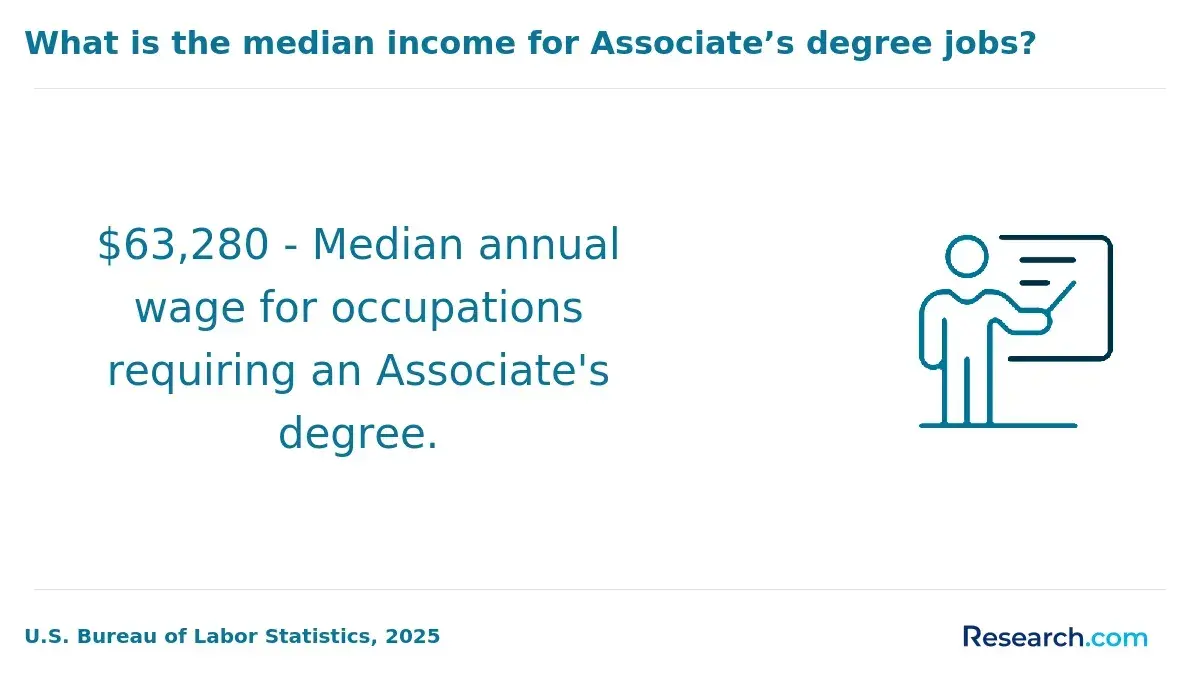
| Associate degree | Less common for professional communication roles, but may appear for assistant or administrative communication jobs | Entry support roles, local organizations, event support, office-based communication tasks | Useful as a starting point, especially if transferable credits can reduce bachelor's degree cost |
| Bachelor's degree | Commonly required or strongly preferred | PR, corporate communication, marketing communication, media, content, and outreach roles | Usually the safest academic foundation for broad communication career options |
| Master's degree | Usually preferred rather than required for early-career roles | Leadership, strategic communication, research-heavy, higher education, or specialized organizational roles | Consider after gaining experience unless the target role clearly favors graduate training |
| Related major or minor | Often accepted when paired with relevant skills | Digital marketing, journalism, English, business, political communication, media production | Can be competitive if supported by internships, writing samples, and tool experience |
| Portfolio or writing samples | Often requested even when not framed as a formal credential | Content, PR, social media, copywriting, internal communication | Essential for proving ability; build it throughout the degree rather than after graduation |
Cost should shape credential decisions. College Board's 2024-25 data lists average published tuition and fees at $11,610 for in-state students at public four-year institutions, $30,780 for out-of-state public four-year students, and $43,350 at private nonprofit four-year institutions. Because communication roles vary widely in pay, students should compare program cost against internships, alumni networks, portfolio opportunities, and local employer connections rather than judging value by institution type alone.
Accreditation also matters. Students should verify that the college is institutionally accredited, especially if they plan to transfer credits, qualify for federal financial aid, or pursue graduate study later such as a masters in communications.
How Much Experience Do Employers Expect From Communication Degree Candidates?
Experience requirements in communication postings often reflect risk tolerance. Employers hiring entry-level candidates may accept internships and student media work, while employers hiring for specialist or manager roles usually expect candidates who can handle projects with limited supervision.
The table below shows how experience expectations typically change by level. Use it to decide whether you should apply now, seek an internship, or build a stronger portfolio first.
| Career level | Typical experience language in postings | What employers want to see | Best preparation strategy |
| Internship or student role | Coursework, campus involvement, basic writing ability, interest in communication | Reliability, curiosity, writing potential, willingness to learn tools | Join student media, volunteer for campus communications, create sample campaigns |
| Entry-level role | Internship, portfolio, class projects, 0-2 years of related experience | Ready-to-use writing ability, deadline management, basic platform familiarity | Complete at least one internship and assemble a targeted portfolio before graduation |
| Early-career specialist | 2-4 years of experience, campaign support, reporting, stakeholder coordination | Independent execution, stronger judgment, ability to measure results | Document outcomes from each role and learn analytics, project management, and presentation skills |
| Manager or strategist | Several years of progressive experience, leadership, strategy, budget or vendor coordination | Planning, supervision, executive communication, cross-functional influence | Seek leadership projects, mentoring responsibilities, strategy exposure, and measurable campaign results |
For many communication graduates, experience can be as important as the degree after the first job. BLS data shows the median annual wage for public relations and fundraising managers was substantially higher than entry-level communication support roles in May 2024, but those roles typically require years of experience and demonstrated leadership rather than a degree alone.
The biggest red flag is waiting until senior year to gain experience. A student with average grades, two internships, strong writing samples, and campaign evidence may be more competitive than a student with only coursework and no applied work.
Which Certifications Increase Competitiveness in Communication Job Postings?
Certifications can help communication candidates when they verify a tool or skill that appears in job postings. They are less useful when they are unrelated to the candidate's target role or when they replace, rather than support, portfolio evidence.
The table below compares certifications and training areas that can strengthen communication applications. Focus on certificate programs that match the roles you are actually applying for.
| Certification or training area | Best matched roles | Why it can help | When it may not be worth prioritizing |
| Google Analytics or GA4 training | Digital communications, content marketing, social media, web content | Shows ability to interpret audience and campaign performance | Less useful for roles with little digital measurement responsibility |
| HubSpot content, email, or inbound marketing certifications | Marketing communications, content, email marketing, demand generation support | Connects communication work to customer journeys and campaign workflows | Not necessary for jobs focused mainly on media relations or internal communication |
| Hootsuite or social media platform certifications | Social media coordinator, digital content specialist, community manager | Signals platform management and scheduling familiarity | Weak if not paired with actual content samples and reporting examples |
| Google Ads or Meta advertising training | Paid social, digital marketing, campaign assistant roles | Useful when postings mention paid campaigns or performance marketing | May be excessive for public relations or editorial roles |
| Adobe Certified Professional or design software training | Content creation, brand communication, social media, multimedia support | Helps candidates who need light design, video, or visual content skills | Not a substitute for professional design training when the role is primarily graphic design |
| Accreditation in Public Relations | Experienced public relations professionals | Can support advancement in PR after professional experience | Usually not an entry-level priority |
A practical rule is to choose one certification that closes a visible gap in your target postings. If five social media coordinator postings mention analytics but none mention a specific paid certification, a free or low-cost analytics credential plus a strong reporting sample may be the better investment.
How Do Employer Expectations Differ Across Communication Degree Job Postings?
Employer expectations differ because communication work changes by audience, risk, channel, and business model. A public-facing government office may emphasize accuracy and accessibility, while a startup may prioritize speed, experimentation, and digital performance.
The table below shows how hiring expectations can shift across common employer types. This comparison helps you tailor your résumé instead of sending the same version to every role.
| Employer type | Skills emphasized | Credentials emphasized | Experience emphasized |
| Agency | Client communication, campaign execution, writing speed, social content | Bachelor's degree usually preferred or required; portfolio is critical | Internships, student agency work, multiple campaign examples |
| Corporate employer | Business writing, stakeholder coordination, brand consistency, internal communication | Bachelor's degree commonly expected; business or marketing coursework helps | Project coordination, presentation work, cross-functional team examples |
| Nonprofit | Storytelling, donor communication, community engagement, events | Bachelor's degree often preferred; mission familiarity can matter | Volunteer communication, event support, grant or fundraising communication exposure |
| Government | Public information, accessibility, accuracy, crisis awareness, formal writing | Bachelor's degree often required; public administration or policy coursework may help | Public-facing writing, outreach, compliance-aware communication |
| Technology company | Product explanation, analytics, customer education, UX-aware writing | Bachelor's degree commonly expected; technical writing or digital coursework helps | Explainer content, knowledge-base samples, product or software familiarity |
Geography can also affect expectations. Large metro areas may have more specialized communication teams and higher competition, while smaller markets may expect one person to handle writing, social media, events, media contact, and basic design.
Candidates should read job postings for patterns rather than isolated requirements. If a skill appears repeatedly in your target city and industry, treat it as a priority; if it appears once in a long wish list, it may be optional.
What Emerging Skills Are Becoming More Common in Communication Degree Job Postings?
Communication hiring is being reshaped by AI-assisted content creation, more sophisticated analytics, short-form video, accessibility expectations, and pressure to prove business value. These trends do not eliminate the need for communication judgment; they raise the bar for editing, verification, audience understanding, and ethical message design.
The table below highlights emerging skills that are becoming more visible in communication job postings and adjacent marketing roles. Use it to future-proof your coursework and portfolio without chasing every new tool.
| Emerging skill | Where it appears | Why it matters | Portfolio evidence to build |
| AI-assisted drafting and editing | Content, marketing communication, internal communication, social media | Employers want faster production without sacrificing accuracy, voice, or ethics | Before-and-after editing samples, AI use disclosure process, fact-checking workflow |
| Data-informed communication | Digital marketing, PR reporting, content strategy, social media | Teams need to explain what worked and why, not just publish content | Campaign report with goals, metrics, insights, and recommendations |
| Short-form video communication | Social media, employer branding, public outreach, product education | Audiences increasingly expect concise visual explanation | Script, storyboard, captioned short video, performance reflection |
| Accessibility and inclusive messaging | Government, education, healthcare, corporate communication, web content | Clear, accessible communication improves reach and reduces reputational risk | Plain-language rewrite, accessible social captions, alt text examples |
| Crisis and reputation monitoring | PR, corporate communication, public affairs, nonprofit communication | Organizations need faster response planning across platforms | Mock crisis statement, monitoring plan, stakeholder message map |
AI is a useful assistant but a risky substitute for judgment. Employers are likely to value candidates who can use AI to draft, summarize, and brainstorm while still checking facts, preserving brand voice, protecting confidential information, and recognizing bias. For more information on responsible AI use, check out applied artificial intelligence degree programs.
How Can Communication Students Match Their Qualifications to Employer Expectations?
The best way to match employer expectations is to reverse-engineer job postings before choosing electives, certifications, or projects. Instead of guessing what matters, compare real postings for your target role, industry, and location.
Use the following process to turn job postings into a personal development plan. It works especially well for students preparing for internships, senior-year job searches, or a career change into communication.
- Collect 10-15 current postings for one target role, such as social media coordinator, communications associate, or PR assistant.
- Highlight repeated requirements in three colors: must-have skills, preferred skills, and tools or certifications.
- Separate baseline qualifications from differentiators; a bachelor's degree may get you screened, but analytics, writing samples, and internship evidence may help you stand out.
- Compare your résumé against the repeated requirements and identify the top three gaps that appear most often.
- Choose one experience-building action for each gap, such as a campus communications project, nonprofit volunteer campaign, internship, certification, or portfolio piece.
- Rewrite your résumé bullets to show outcomes, audiences, tools, and deliverables instead of generic responsibilities.
Students should also avoid common application mistakes that weaken otherwise qualified candidates. These mistakes are fixable if you review postings carefully and document your work throughout the degree.
- Do not assume the degree alone proves job readiness; attach writing samples, campaign work, presentations, or analytics examples.
- Do not list tools without context; show how you used them to plan, publish, measure, or improve communication.
- Do not apply with one generic résumé; tailor keywords and examples to the role's audience, industry, and channels.
- Do not overinvest in certifications before gaining experience; employers usually want proof that you can apply the skill.
- Do not ignore soft skills; teamwork, attention to detail, responsiveness, and judgment are visible in references and interviews.
A strong communication résumé uses evidence-based bullets. For example, "Created weekly Instagram posts for a student organization" is weaker than "Planned and wrote a four-week Instagram content calendar for a student organization, aligning posts with event promotion goals and tracking engagement trends."
How Should Students Use Communication Job Posting Trends to Choose a Career Path?
Job posting trends should guide career planning, but they should not be the only factor. Students also need to consider interests, writing strengths, tolerance for deadlines, preferred work environment, salary goals, and willingness to learn technical tools.
The table below connects common communication career paths with the qualifications that tend to matter most. Use it to choose electives, projects, and early experience that align with your preferred direction.
| Career path | Prioritize these skills | Prioritize this experience | Good next step |
| Public relations | Media writing, messaging, research, crisis awareness, relationship management | PR internship, student agency, press materials, media pitch samples | Build a PR portfolio with press release, pitch, media list, and campaign brief |
| Social media and digital content | Platform writing, short-form video, analytics, content calendars, community management | Managed accounts, campaign reporting, social content production | Create a campaign case study showing goals, content, metrics, and lessons |
| Corporate communication | Business writing, internal messaging, presentation, project coordination | Office internship, newsletter work, leadership communication support | Build samples for employee announcement, executive memo, and change communication plan |
| Content writing and editing | Copywriting, editing, SEO basics, brand voice, research | Student publication, blog, web content, freelance or nonprofit writing | Create a writing portfolio with multiple formats and concise editorial notes |
| Technical or product communication | Plain-language explanation, user-focused writing, software familiarity, information organization | Help center content, product explainer, documentation project | Write a sample guide that explains a complex process clearly for a beginner audience |
Students comparing paths should look at both entry requirements and long-term advancement. BLS May 2024 data lists technical writers at a median annual wage of $91,670, which shows why communication graduates with strong writing and technical clarity may find this path attractive. However, technical communication usually requires comfort learning complex products, interviewing subject-matter experts, and translating specialized information for users.
A practical decision rule is to build a "T-shaped" profile: develop broad communication fundamentals across writing, presentation, collaboration, and ethics, then add one deeper specialty such as social analytics, PR writing, internal communication, content strategy, or technical writing.
Other Things You Should Know About Communication
A communication degree can qualify you for many entry-level roles, but employers usually want evidence of applied ability. Internships, writing samples, campaign projects, analytics reports, and tool experience often make the degree more competitive.
Strong writing should come first because it supports PR, social media, corporate communication, content, outreach, and marketing roles. After that, students should add digital content skills, analytics, and portfolio evidence based on their target job postings.
They can be worth it when they match the role. Google Analytics, HubSpot, social media, or Adobe training may help for digital and content jobs, but certifications rarely replace internships, writing samples, or relevant work experience.
Many entry-level postings accept internships, student projects, campus media, volunteer communication work, or 0-2 years of related experience. If postings repeatedly ask for experience, build proof through internships, freelance projects, nonprofit work, or campus communication roles.
Top Trending Communication Rankings
References
- 10 Vital Soft Skills for IT Jobs https://www.re-coded.com/open-study-hub/10-vital-soft-skills-for-it-jobs
- Communications Degree Job Outlook 2026: Career Tips & Data https://www.mastersincommunications.org/communications-degree-job-outlook/
- Communications Specialist Certifications: Best Credentials to Advance Your Career | Teal https://www.tealhq.com/career-paths/communications-specialist-certifications
- Critical Career Skills https://certiport.pearsonvue.com/Certifications/CCS/Certification/Certify/Professional-Communication.aspx
- Why Soft Skills Are The Hidden Skills Employers Look For in Tech [2025 Guide] https://ntinow.edu/soft-skills-employers-look-for-in-it-careers/
- 7 in-demand certifications in 2025 | edX https://www.edx.org/resources/in-demand-professional-certifications
- Emerging AI Work Skills of 2030: Preparing for the Future Workforce https://inop.ai/emerging-skills-of-2030-preparing-for-the-future-workforce/
- 3 Skills All Communications Majors Have https://www.princetonreview.com/college-advice/communications-majors-career-skills
- What are the Best Certifications for Communications Professionals? - Best Communications Degrees https://www.bestcommunicationsdegrees.com/faq/what-are-the-best-certifications-for-communications-professionals/