2027 Business Degree Underemployment Report: Which Graduates Are Most Likely to Work Below Their Education Level

Co-Founder and Chief Data Scientist
Many business graduates enter a crowded market where a degree alone may not separate them from applicants for analyst, finance, operations, marketing, or management-track roles. The Federal Reserve Bank of New York's 2024 data shows recent college graduate underemployment remains near 40%, meaning many graduates work in jobs that typically do not require a degree.
This report is for business students, recent graduates, and career changers who want to understand underemployment risk, compare degree-level and fallback roles, and choose skills, internships, certifications, and job-search strategies that reduce the chance of getting stuck below their education level.
Key Things to Know About Underemployment in Business Industry
- Business underemployment risk is highest for broad, generalist business majors; New York Fed 2024 major-level data places recent-graduate underemployment for general business and business management above 50%, while more technical business paths such as accounting and finance tend to show lower mismatch risk.
- The strongest protection against low-credential work is evidence of job-ready specialization: internships, Excel and analytics skills, financial modeling, accounting systems, CRM tools, SQL or BI dashboards, sales operations experience, and measurable project outcomes.
- The wage trade-off can be large: BLS 2024 wage data places the median annual wage for business and financial operations occupations at $80,920, while office and administrative support roles sit far lower, making early underemployment a repayment and career-momentum risk for graduates with student debt.
- How likely is it for Business graduates to become underemployed?
- Is the college curricula for Business keeping up with employer expectations?
How likely is it for Business graduates to become underemployed?
Business graduates are not equally likely to become underemployed. The risk depends less on the word "business" on the diploma and more on how clearly the graduate can connect coursework, internships, software skills, and projects to a specific employer problem.
Underemployment means a graduate is working in a role that usually does not require a bachelor's degree. For business graduates, this often includes retail sales, general customer service, clerical support, basic administrative assistant roles, and non-management front-line jobs that do not use college-level finance, analytics, accounting, marketing, operations, or strategy skills.
The table below summarizes the practical risk pattern for common business pathways. It is designed to help students see which concentrations usually need extra proof of specialization before graduation:
| Business pathway | Typical underemployment risk | Why the risk differs | Degree-level roles to target |
| General business or business administration | Higher | The curriculum is broad, so employers may not see a clear technical fit unless the graduate has internships, analytics projects, or a focused career track. | Operations analyst, business analyst, management trainee, project coordinator |
| Business management | Higher for new graduates | Many true management roles require experience, so graduates may be routed into hourly supervisory or customer-facing jobs first. | Leadership development associate, operations coordinator, account manager trainee |
| Marketing | Moderate to higher | Entry-level hiring often favors candidates with campaign analytics, portfolio work, CRM experience, and paid media exposure. | Marketing analyst, digital marketing coordinator, demand generation associate |
| Finance | Moderate | Finance has clearer occupational targets, but competition is strong and internships often matter heavily. | Financial analyst, credit analyst, treasury analyst, investment operations analyst |
| Accounting | Lower when CPA-aligned | Accounting maps to defined occupational requirements and licensure pathways, especially when the student has audit, tax, or systems experience. | Staff accountant, audit associate, tax associate, accounting analyst |
| Business analytics or information systems | Lower when technical skills are demonstrable | SQL, dashboards, ERP systems, and data storytelling make the degree easier for employers to evaluate. | Business intelligence analyst, data analyst, systems analyst, revenue operations analyst |
Use this as a planning tool, not a prediction. A general business major with two internships and strong Excel, SQL, and operations projects may be better positioned than a more specialized major with no applied evidence.
Is the college curricula for Business keeping up with employer expectations?
Many business programs are improving, but employer expectations are moving faster than traditional curricula. The biggest gap is not usually business theory; it is the lack of applied evidence that a graduate can use tools, analyze messy data, communicate recommendations, and contribute quickly in a real workplace.
BLS projections released in 2024 estimate about 963,500 annual openings in business and financial occupations from growth and replacement needs. That volume creates opportunity, but it also means employers sort large applicant pools quickly, often using internships, software keywords, and measurable achievements as screening signals.
The table below shows common curriculum strengths and the gaps that can push business graduates into roles below their education level:
| Area | What business programs often teach well | What employers increasingly expect | Underemployment risk if missing |
| Finance | Financial statements, valuation concepts, budgeting basics | Excel modeling, forecasting, variance analysis, Power BI, internship-based exposure | Graduates may be considered for clerical banking or sales roles instead of analyst roles. |
| Marketing | Consumer behavior, branding, market research theory | Campaign metrics, Google Analytics familiarity, CRM tools, A/B testing, portfolio samples | Graduates may land in retail sales or basic customer service rather than marketing operations. |
| Management | Leadership theory, organizational behavior, strategy frameworks | Process improvement, project coordination, workforce analytics, measurable team outcomes | Graduates may start in hourly supervisor tracks without a clear path to corporate roles. |
| Analytics | Statistics, spreadsheets, decision-making concepts | SQL, dashboarding, data cleaning, business case interpretation, stakeholder presentations | Graduates may be screened out of analyst jobs even when they understand business concepts. |
| Communication | Presentations, writing, group work | Executive summaries, client-ready slides, persuasive data storytelling, cross-functional collaboration | Graduates may struggle to prove readiness for client-facing or analyst-track roles. |
A practical way to judge a program is to compare its required courses against 20 job postings for the role you want. If the postings repeatedly mention tools or deliverables that never appear in the curriculum, treat that as a signal to add electives, certifications, projects, or internships before graduation.
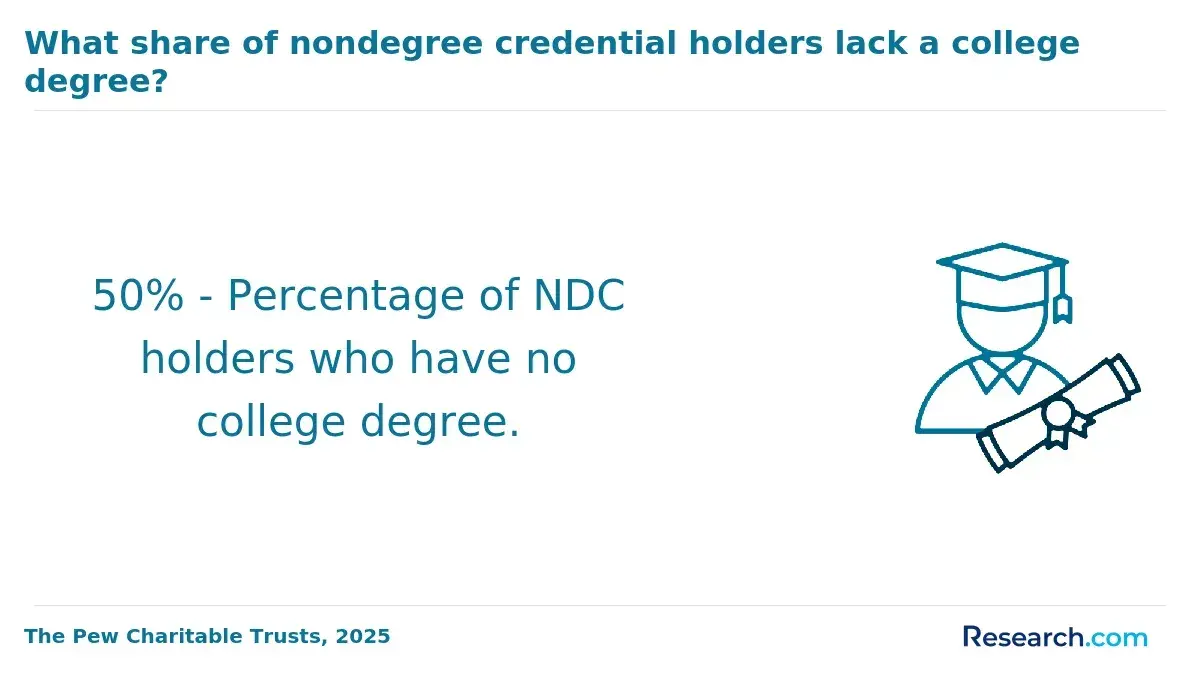
Business sits in the middle of the underemployment spectrum. It is usually less risky than some broad liberal arts pathways when the student develops technical business skills, but it can be riskier than career-aligned majors that lead directly to licensed, regulated, or highly technical occupations.
Recent New York Fed major-level data shows why concentration matters: broad business majors can have underemployment rates above the all-major recent-graduate average, while accounting and finance tend to perform better because employers can connect those degrees to specific roles. This does not mean broad business degrees are poor choices; it means they require earlier career targeting.
The table below compares business with other degree categories using a decision lens rather than a simple ranking. The goal is to show why some graduates face clearer employer demand than others:
| Degree category | Typical underemployment pattern | Reason | What business students can learn from it |
| Accounting, finance, analytics-heavy business | Lower than broad business when skills are proven | Employers hire for defined technical tasks and recognizable job titles. | Choose a target function early and build proof around it. |
| General business and management | Higher for recent graduates | The degree may signal versatility but not a specific job-ready skill set. | Add a concentration, internship, certification, or portfolio before senior year. |
| Engineering, computer science, nursing | Often lower | Occupational pathways and technical requirements are clearer. | Translate business coursework into tools, systems, and measurable outcomes. |
| Humanities and broad social sciences | Varies widely | Graduates often need to define the occupational bridge themselves. | A business degree still needs a bridge from coursework to role-specific value. |
| Licensed or credentialed graduate fields | Often more structured | Career entry may be tied to licensure, supervised practice, or professional standards. | Business students should create their own structure through internships and credentials. |
Some students reduce mismatch risk by choosing fields with tighter credential-to-career alignment. For example, people comparing business with healthcare-related graduate pathways may look at online speech pathology programs masters because those programs are built around a specific professional route rather than a broad corporate job market.
Taking a low-credential role does not automatically damage a business career, but staying in one without a plan can slow wage growth, weaken the resume signal, and reduce access to training pipelines. Early roles matter because many business career ladders are cumulative: analyst becomes senior analyst, coordinator becomes manager, associate becomes account executive, and staff accountant becomes senior accountant.
The main career risk is skill drift. If a graduate spends the first two years doing tasks that do not involve analysis, systems, reporting, client strategy, budget ownership, or cross-functional work, later employers may treat the graduate like an entry-level candidate despite the time since graduation.
Use the following decision rule before accepting a low-credential job:
- Identify the degree-level role you want next, such as financial analyst, marketing coordinator, business analyst, operations analyst, or staff accountant.
- Compare the fallback job description with five postings for that target role.
- Accept the fallback role only if it helps you gain at least two transferable requirements from those postings.
- Set a written exit timeline, usually 6 to 12 months, and define the applications, referrals, certifications, or internal transfers needed before that date.
- Track quantified achievements from day one so the job becomes resume evidence rather than a vague work history entry.
Students who realize they want a more clearly regulated helping-profession path sometimes compare business with options such as a family therapy degree. That kind of pivot is not necessary for most business graduates, but it illustrates an important point: the clearer the occupational pathway, the less room there is for drifting into unrelated work.
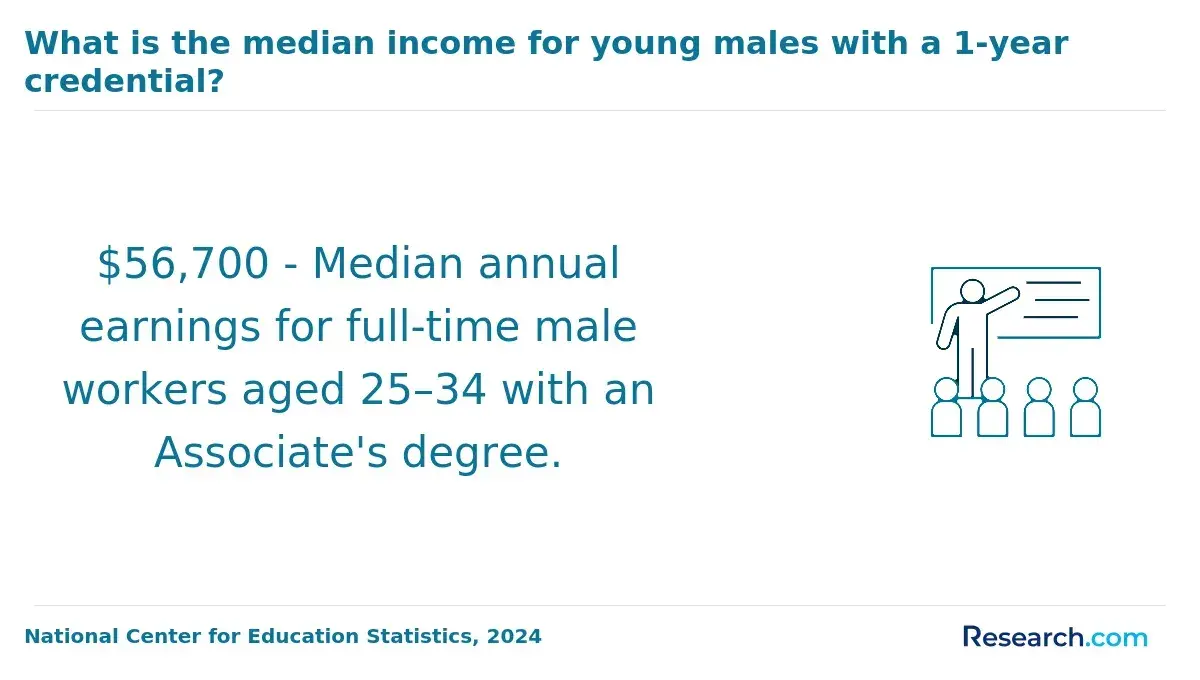
The salary gap between degree-level business work and low-credential fallback jobs is one of the strongest reasons to address underemployment early. BLS May 2024 wage data reports a median annual wage of $80,920 for business and financial operations occupations.
By contrast, office and administrative support occupations have substantially lower median pay, so a graduate who remains in clerical or support work may face a meaningful income gap while student loan payments, rent, and other costs continue.
The table below uses occupation-level wage categories rather than promises about individual outcomes. It helps estimate the economic trade-off between roles that commonly use a business degree and fallback roles that often do not:
| Role category | Typical education match for business graduates | Median wage context from BLS 2024 data | What the gap means |
| Business and financial operations occupations | Usually degree-level | $80,920 median annual wage | These roles are more likely to reward analytical, financial, operational, compliance, or project-based skills. |
| Office and administrative support occupations | Often below bachelor's level | Substantially below business and financial operations | These jobs can provide stability but may not build the same wage trajectory unless they lead to analyst, operations, HR, or finance roles. |
| Retail sales and general customer service roles | Often below bachelor's level | Typically below degree-level business occupations | These jobs may be useful bridges only when they connect to sales operations, account management, banking, or management-track advancement. |
| Accounting, finance, analytics, and operations analyst roles | Usually degree-level | Varies by role, industry, region, and experience | Specialized roles often provide stronger long-term earnings mobility than general office support. |
The student debt impact is also practical. College Board's 2024 student aid reporting places average bachelor's borrower debt around the high-$20,000 range for recent graduates. A lower-paying fallback job may still cover basic expenses, but it can make aggressive repayment, relocation, certification costs, or graduate study harder to manage.
Business graduates usually fall into low-credential roles because of a mismatch between broad academic preparation and specific employer screening criteria. The problem is often preventable, but it requires action before graduation rather than after months of unanswered applications.
The most common barriers are the ones employers can see quickly on a resume or in an interview. These barriers matter because applicant tracking systems and recruiters often make first-round decisions before a candidate can explain their potential:
- No clear target role: A resume that says "business graduate seeking opportunities" is weaker than one built for financial analyst, operations analyst, marketing coordinator, HR analyst, or account management roles.
- Weak technical evidence: Many entry-level business postings ask for Excel, data analysis, CRM systems, ERP exposure, financial modeling, reporting, or dashboard skills.
- No internship or applied project: Employers may assume the candidate needs too much training if the resume contains only coursework and unrelated part-time jobs.
- Overreliance on soft skills: Communication and leadership matter, but they are stronger when tied to measurable outcomes such as revenue supported, costs reduced, reports built, or campaigns analyzed.
- Late job-search timing: Waiting until after graduation can mean missing leadership programs, rotational roles, and internship-to-full-time conversion cycles.
- Ignoring local labor demand: Some regions have stronger hiring in finance, logistics, insurance, healthcare administration, manufacturing, or technology operations than others.
- Accepting fallback work without an exit plan: Income may be necessary, but the graduate should define how the role leads to a degree-level next step.
AI is adding pressure to this transition. Routine entry-level tasks such as basic reporting, scheduling, first-draft marketing copy, and simple spreadsheet cleanup are increasingly assisted by automation, so graduates need to show judgment, tool fluency, and business interpretation rather than only task completion.
A business resume should make the employer's decision easier. Instead of presenting a broad degree and hoping the recruiter sees potential, the resume should show a specific role target, relevant tools, measurable results, and proof that the graduate can work with real business problems.
Use this sequence to reposition a business resume for degree-level roles:
- Choose one target role family for each resume version, such as finance, marketing analytics, operations, HR, accounting, sales operations, or business intelligence.
- Rewrite the summary around that function, not around being a motivated graduate.
- Create a technical skills section that mirrors job postings, including tools such as Excel, Power BI, Tableau, SQL, Salesforce, QuickBooks, SAP, Workday, or Google Analytics only when you can discuss them honestly.
- Convert coursework into project evidence by naming the business problem, data used, analysis performed, recommendation made, and outcome or simulated impact.
- Quantify part-time work where possible, including transaction volume, customer satisfaction, scheduling responsibility, inventory accuracy, revenue supported, or process improvements.
- Move unrelated experience lower and emphasize transferable business tasks rather than generic duties.
- Use job-title keywords from postings naturally so applicant tracking systems can identify the match.
- Ask alumni, internship supervisors, professors, or career center staff to review the resume against a real job posting before submitting applications.
The biggest mistake is using one general resume for every business job. A resume for an accounting associate should not look like a resume for a digital marketing coordinator or operations analyst.
Certifications can help business graduates signal specialization faster than a full graduate degree, especially when the barrier is tool fluency rather than advanced theory. They are most useful when they match a target role and are paired with projects or internships.
The table below summarizes credential options that can improve a graduate's fit for degree-level business roles. Requirements and employer recognition vary, so students should verify which credentials appear repeatedly in postings for their target city, industry, and role:
| Credential area | Best fit | Roles it may support | When it makes sense |
| Excel, Power BI, Tableau, or data visualization | Business, operations, marketing, finance, and analytics graduates | Business analyst, operations analyst, marketing analyst, reporting analyst | When job postings repeatedly ask for dashboarding, reporting, or data presentation. |
| SQL or business analytics certificates | Graduates targeting analytics-heavy roles | BI analyst, data analyst, revenue operations analyst | When the graduate can build a portfolio using real or public datasets. |
| Google Analytics or digital marketing credentials | Marketing graduates | Digital marketing coordinator, SEO analyst, campaign analyst | When paired with campaign samples, content analysis, or paid media projects. |
| Salesforce or CRM certifications | Sales, marketing operations, and customer success candidates | Sales operations associate, CRM analyst, account management associate | When targeting companies with structured revenue operations teams. |
| QuickBooks, bookkeeping, or accounting software credentials | Accounting-adjacent graduates | Staff accountant, accounting assistant, AP or AR analyst | When the graduate needs practical systems exposure before a full accounting role. |
| CAPM or project management training | Operations and management graduates | Project coordinator, operations coordinator, implementation associate | When the target roles involve timelines, stakeholders, documentation, and process tracking. |
A certification is not a substitute for experience, but it can make a resume more searchable and credible. If a graduate is considering graduate school for advancement, an easy online MBA may be worth comparing with shorter certifications only after the person has defined the role, cost, time commitment, and expected career payoff.
The best strategy is to start career positioning before the final year of college. Business students who wait until graduation often discover that employers expected internships, technical tools, and role-specific evidence all along.
Students can reduce underemployment risk by building a job-market plan around the role they want, not just the degree they are earning. The following steps are practical and sequenced for action:
- Pick a business function by sophomore or junior year: Choose finance, accounting, analytics, operations, HR, marketing, supply chain, sales operations, or entrepreneurship support so your electives and projects point in one direction.
- Audit 20 job postings: Record repeated tools, responsibilities, and qualifications, then compare them with your coursework and current resume.
- Complete at least one relevant internship: If a formal internship is not available, pursue a campus business office role, nonprofit consulting project, faculty research assignment, small-business analytics project, or paid co-op.
- Build a portfolio: Include dashboards, market analyses, financial models, process maps, campaign reports, or business cases with short explanations of the problem, method, and recommendation.
- Develop tool fluency: Prioritize Excel first, then add role-specific tools such as SQL, Power BI, Tableau, Salesforce, Google Analytics, QuickBooks, or ERP systems.
- Use alumni networking early: Ask for informational interviews, resume feedback, and referrals before openings are posted.
- Apply before graduation cycles close: Many rotational programs, finance tracks, accounting roles, and corporate internships recruit months in advance.
- Evaluate fallback offers carefully: Accept a lower-credential role only if it provides industry exposure, internal mobility, measurable responsibilities, or a clear timeline to a degree-level role.
- Track outcomes every month: Monitor applications, interviews, referrals, skill gaps, and project additions so the job search improves instead of repeating the same approach.
Students interested in business-adjacent communication, corporate affairs, PR, or internal communications may also compare targeted graduate options such as a one year online master's in communication. That path makes the most sense when the student has a defined communications career goal, not simply as a way to delay the job market.
Some business graduates use low-credential jobs as short-term bridges, but the danger is staying too long without gaining skills that transfer to degree-level work. A customer service job at a bank, for instance, can become a pathway to credit analysis or branch management if the graduate builds product knowledge, internal referrals, and measurable performance. The same job can become a trap if it produces no analytical, operational, or client-management evidence.
A helpful way to evaluate a fallback role is to ask whether it creates a credible next step within 6 to 12 months. The job should offer at least one of the following advantages:
- Direct exposure to a target industry, such as banking, logistics, insurance, healthcare administration, retail operations, SaaS sales, or manufacturing operations.
- Access to internal postings, manager referrals, tuition support, leadership development programs, or analyst-track openings.
- Measurable business responsibilities, such as reporting, scheduling optimization, sales pipeline tracking, budget support, vendor coordination, or process improvement.
- Tools that appear in degree-level job postings, such as Salesforce, Excel, Power BI, Tableau, ERP platforms, QuickBooks, Workday, or SQL-based reporting systems.
If the role lacks these features, treat it as income support rather than a career foundation. In that case, keep applying for degree-level roles while building a project portfolio and networking weekly.
Other Things You Should Know About Business
It can lead to office, sales, bookkeeping, or administrative roles, but many analyst, finance, management-track, and corporate roles prefer or require a bachelor's degree. Associate degree holders can improve mobility through transfer pathways, software credentials, and employer tuition assistance.
Yes. Hiring strength varies by region and industry cluster. Finance roles may be more concentrated in major banking hubs, logistics roles near distribution centers, insurance roles in regional corporate markets, and operations roles near manufacturing or healthcare systems.
It depends on the target role. A double major can help when it adds a clear technical or industry skill, such as accounting, data analytics, economics, information systems, or supply chain. A minor may be enough if paired with internships and strong project evidence.
Yes, but carefully. AI tools can help draft resumes, analyze job descriptions, and practice interviews, but graduates should verify accuracy, personalize every application, and be ready to discuss every listed skill, project, and achievement in detail.
See What Experts Have To Say About Studying Business
Read our interview with Business experts

Ingrid S. Greene
Business Expert
Clinical Assistant Professor of Management
Loyola Marymount University

David W. Stewart
Business Expert
Emeritus President's Professor of Marketing
Loyola Marymount University


- Unemployment rate for college graduates: Key statistics [2025] https://www.wooclap.com/en/blog/unemployment-rate-for-college-graduates/
- The Labor Market for Recent College Graduates https://www.newyorkfed.org/research/college-labor-market
- Working Here or There? Assessing the Impact of Job Location ... https://jurcon.ums.edu.my/ojums/index.php/mjbe/article/download/5100/3482
- Top 10 Emerging Business Niches of 2026 & How to Plan for Them https://prometai.app/blog/emerging-niches-business-planning
- How Long Does It Take to Get a Business Administration Degree? - Team Academy https://teamacademy.nl/how-long-does-it-take-to-get-a-business-administration-degree/
- Networking Tips for Business Students and MBA Candidates - Cyprus West University https://www.cwu.edu.tr/networking-tips-for-business-students-and-mba-candidates/