2027 Business Degree Payback Report: Which Programs Deliver the Best Cost-to-Salary Return

Co-Founder and Chief Data Scientist
Choosing a business degree is a financial decision as much as an academic one. The payoff depends on tuition, debt, work experience, school quality, and the career you target after graduation. According to the BLS, business and financial occupations had a median annual wage of $80,920 in May 2024, well above the $49,500 median for all occupations.
This report helps prospective students, career changers, and working adults compare degree options, estimate payback time, avoid costly mistakes, and choose programs with stronger cost-to-salary potential.
Key Things You Should Know
- The strongest business degree ROI usually comes from low-cost bachelor's programs, transfer-friendly community college pathways, and employer-supported graduate programs, not necessarily the highest-priced schools.
- BLS May 2024 data shows business and financial occupations had a $80,920 median wage, but outcomes vary widely by role, industry, location, experience, and whether the job requires accounting, analytics, finance, or management skills.
- Payback is fastest when students limit borrowing, use internships to enter higher-wage roles, verify accreditation, and compare total cost against realistic first-job salaries instead of relying only on rankings or advertised outcomes.
- What Is the Return on Investment of a Business Degree?
- Which Business Programs Deliver the Best Cost-to-Salary Return?
What Is the Return on Investment of a Business Degree?
The return on investment of a business degree is the financial value you receive compared with what you spend to earn the credential. In practical terms, ROI asks whether the salary increase, career mobility, job security, and promotion potential are worth the tuition, fees, living costs, time away from work, and loan interest.
For most students, business degree payback should be measured with a simple formula: total net cost divided by the annual salary gain linked to the degree. Net cost means tuition and required fees after scholarships, grants, employer tuition assistance, and transfer credits. Salary gain means the realistic difference between what you could earn without the degree and what you can earn after completing it.
Business is a broad field, so ROI differs by specialization. Accounting, finance, business analytics, supply chain, and information systems often produce clearer job-to-degree pathways than general business programs. Management and entrepreneurship can pay off, too, but usually depend more heavily on work experience, industry connections, and performance after graduation.
The most useful way to think about ROI is not "Is a business degree worth it for everyone?" but "Which business credential gets me to my target role at the lowest responsible cost?" A $12,000 transfer pathway into a bachelor's program can outperform a more expensive degree if both lead to similar entry-level opportunities. A higher-cost MBA may still be worthwhile if it unlocks leadership, consulting, product management, or finance roles that the student could not reach otherwise.
Which Business Programs Deliver the Best Cost-to-Salary Return?
Programs with the best cost-to-salary return usually combine modest tuition, strong employer recognition, practical skills, and access to internships or working-adult career networks. The table below compares common business education paths by likely ROI logic rather than by school prestige alone.
| Program type | Typical fit | Cost-to-salary return profile | Best use case |
| Business certificate or undergraduate minor | Students who already have a degree or want targeted skills | Low cost, but limited standalone career impact unless paired with experience | Adding accounting, data analysis, project management, or entrepreneurship skills |
| Associate degree in business | Cost-conscious students, career starters, and future transfer students | Strong value when used to reduce the cost of a bachelor's degree | Completing general education and lower-division business courses before transfer |
| Bachelor's in business administration | Students seeking broad entry into business, operations, sales, HR, or management tracks | Often the best baseline ROI when tuition is controlled and internships are used | Entering the labor market with a widely recognized credential |
| Bachelor's in accounting, finance, analytics, or supply chain | Students who want a more defined career pathway | Often stronger than a general degree because skills map directly to job titles | Pursuing analyst, accounting, logistics, risk, or operations roles |
| MBA or specialized master's | Working adults seeking promotion, career change, or leadership roles | Can be high ROI when employer-funded, low-cost, or tied to a clear advancement plan | Moving into management, consulting, finance, product, or executive-track roles |
For many working adults, the best payback is not the fastest degree but the one that lets them keep earning while studying. An easy online MBA may be worth comparing if flexibility is essential, but students should still check accreditation, curriculum rigor, career services, and whether the program's alumni outcomes match their goals.
As a rule, specialized undergraduate business programs often deliver a clearer early-career payoff than broad management degrees. General business can still be valuable, especially for students who pair it with internships, Excel and analytics skills, sales experience, or industry certifications. The weaker option is a high-cost general program with little employer engagement, no internship pipeline, and unclear graduate outcomes.
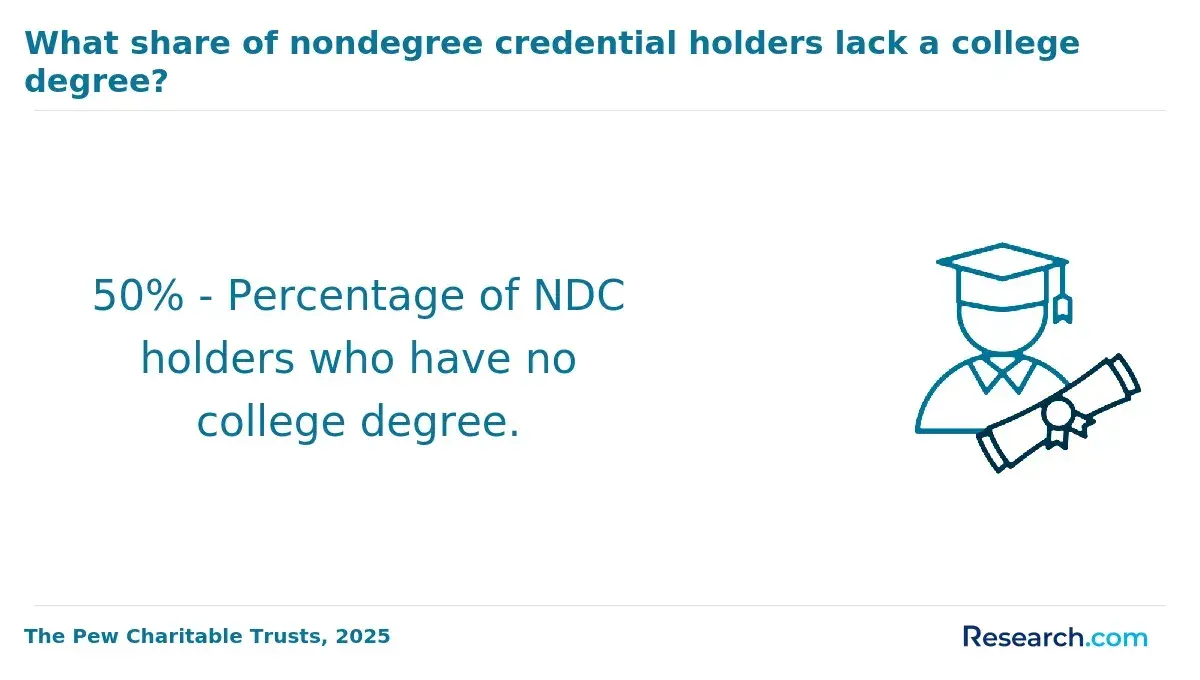
Tuition has a direct effect on payback because every extra borrowed dollar must be recovered through future earnings. The same business salary can produce a strong ROI from a low-cost public or online program and a weak ROI from a high-cost program if debt is excessive.
College Board's 2024 pricing data reported average published tuition and fees of $4,050 for public two-year in-district colleges, $11,610 for public four-year in-state institutions, and $43,350 for private nonprofit four-year institutions. These figures do not include every student's aid package, but they show why school choice can change the payback period dramatically.
The table below shows how tuition level changes the ROI conversation. It is not a ranking of institution types because public, private nonprofit, online, and campus programs can all be strong or weak investments depending on net price and outcomes.
| Cost factor | Why it matters for payback | What to check before enrolling |
| Net price after aid | Sticker price can overstate or understate the real cost | Ask for the estimated cost after grants, scholarships, and required fees |
| Transfer credit policy | Accepted credits can shorten time to degree and reduce tuition | Confirm how many credits transfer before committing |
| Living and commuting costs | Housing, transportation, and lost work hours can exceed tuition savings | Compare total attendance cost, not tuition alone |
| Loan interest | Interest extends payback time, especially for graduate borrowers | Estimate monthly payments under federal loan terms before borrowing |
| Program length | Extra semesters delay earnings and increase cost | Review course availability, prerequisites, and graduation rates |
Students should be cautious about assuming that a higher price automatically means better outcomes. A costly program may be worth it if it has exceptional employer pipelines, licensing preparation, elite alumni access, or strong placement in high-wage fields. But if two accredited programs lead to similar roles, the lower-cost option usually produces the faster payback.
Break-even time is the number of years it takes for the financial benefit of a business degree to repay the net cost of earning it. A simple estimate divides the total net cost by the annual earnings increase reasonably associated with the degree.
For example, if a student's net degree cost is $35,000 and the degree helps create a $15,000 annual earnings lift, the basic payback estimate is a little over two years. This is only a starting point because taxes, loan interest, unpaid internship time, relocation, and salary growth can change the real timeline.
The table below shows how different education paths often compare from a payback perspective. The "payback logic" column is more useful than a universal number because individual costs and earnings vary too much to make one estimate accurate for everyone.
| Path | Typical timeline | Payback logic | Main risk |
| Community college to bachelor's completion | About four years total if full time | Often faster payback because lower-division credits cost less | Lost credits if transfer agreements are not confirmed early |
| Direct public in-state bachelor's | About four years full time | Strong baseline ROI when internships and career services are used | Taking extra semesters or graduating without marketable experience |
| Private or out-of-state bachelor's | About four years full time | Can pay off when aid is strong or employer outcomes are exceptional | High debt for a role that does not require a premium-priced degree |
| Part-time online bachelor's | Often longer than full time | Can pay off well if the student keeps working and avoids lost income | Slow progress if courses are not scheduled consistently |
| MBA or graduate business degree | Often one to three years | Best payback when linked to promotion, career change, or employer funding | Borrowing heavily without a clear post-degree advancement plan |
Online and part-time self-paced degrees can improve payback for working adults because they reduce opportunity cost. The trade-off is that students must be disciplined about pacing, networking, and career development. A low-cost online degree with weak engagement can underperform if the student does not actively build experience and employer connections.
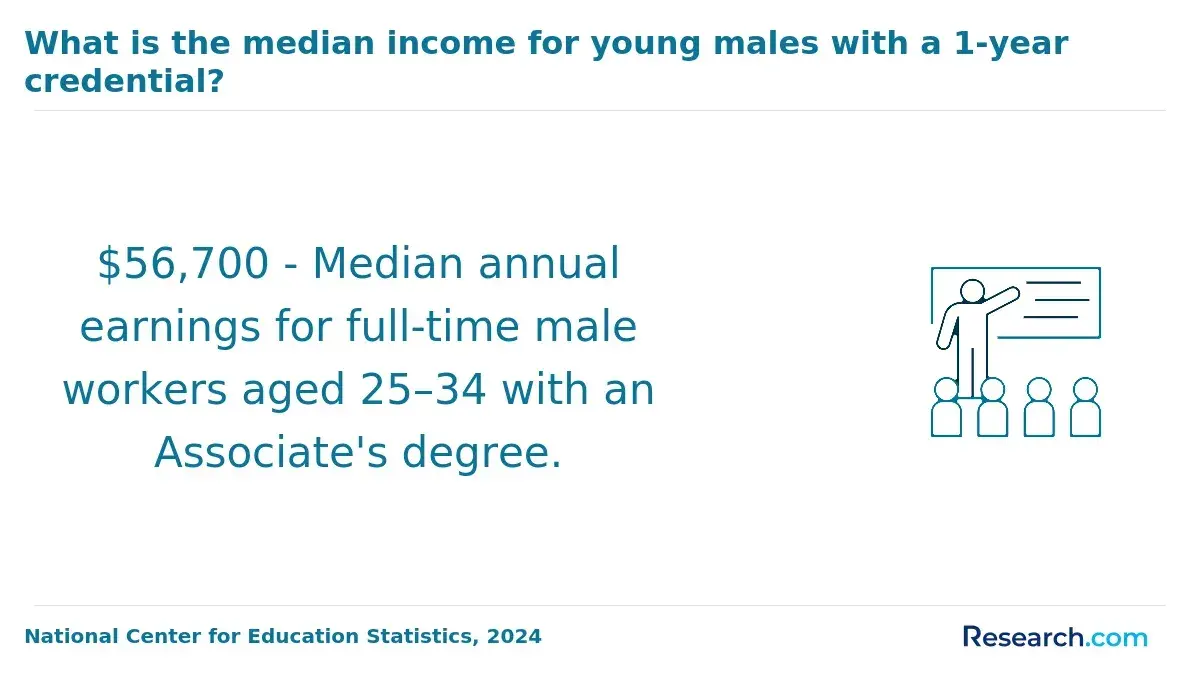
The biggest ROI drivers are not limited to tuition and salary. Business degree value is shaped by the connection between the program, the labor market, and the student's ability to turn coursework into employable skills.
Students should evaluate these factors together because a weakness in one area can erase the advantage of another. A cheap program with poor transfer policies may not be cheap in the end, while a more expensive program with strong employer access may produce better outcomes for a specific career path.
- Accreditation: Choose an institutionally accredited school, and consider programmatic business accreditation when it matters to employers or graduate schools.
- Career alignment: Match the major or concentration to the job target, such as accounting for CPA-track roles, finance for analyst roles, or analytics for data-heavy business roles.
- Internship access: Internships, co-ops, and project-based courses can shorten the gap between graduation and a full-time role.
- Location and employer network: A program near strong finance, logistics, tech, healthcare, or corporate employers may offer better recruiting access.
- Student work history: Working adults often get more value from business degrees because they can apply new skills directly to promotions or role changes.
- Debt level: Borrowing heavily for a low-wage target role can create a long payback period even if the degree is academically strong.
Common mistakes include choosing a school based only on brand recognition, ignoring total cost, assuming online programs are automatically cheaper, and enrolling in a broad business program without a career target. A better approach is to identify three target job titles, check their requirements, and choose the lowest-cost accredited program that credibly prepares students for those roles.
Employer demand affects degree value because ROI improves when graduates enter fields with steady hiring and clear advancement paths. BLS projections for business and financial occupations indicate faster-than-average growth for the 2024 to 2034 period, with about 911,400 openings projected each year on average. For students, that means business remains a broad labor market, but competition will still be strongest for higher-paying analyst, finance, consulting, and management roles.
Technology is changing what employers expect from business graduates. AI tools can automate routine reporting, scheduling, bookkeeping support, and basic market research, so students should focus on skills that are harder to replace: judgment, communication, data interpretation, client management, ethics, and cross-functional problem solving.
Employer demand is especially strong when business training is combined with industry knowledge. A graduate who understands healthcare operations, financial compliance, software sales, supply chain analytics, or human capital systems may be more valuable than a generalist who can describe management theory but lacks applied skills.
Students should read job postings before choosing a concentration. If target roles repeatedly ask for Excel, SQL, Tableau, Power BI, QuickBooks, Salesforce, ERP systems, financial modeling, or project management exposure, those skills should influence course selection, electives, internships, and certifications.
Students can improve the financial value of a business degree by treating enrollment as a career strategy, not just an academic milestone. The best ROI plans start before the first semester and continue through internships, networking, and skill-building.
Use the following steps to compare programs and reduce payback risk before committing to a school.
- Set a target role first, such as financial analyst, staff accountant, operations analyst, HR specialist, sales manager, or marketing analyst.
- Check whether the role usually requires a bachelor's degree, graduate degree, certification, portfolio, internship, or specific software skills.
- Compare total net cost across at least three accredited programs, including fees, transfer credits, books, commuting, housing, and lost work time.
- Ask each school for outcome information by major, not just institution-wide employment claims.
- Prioritize programs with internships, employer projects, career coaching, alumni networks, and flexible scheduling if you plan to work while studying.
- Use electives to build measurable skills in analytics, accounting, finance, communication, negotiation, or project management.
- Limit borrowing to a level that fits realistic entry-level pay, not the highest salary shown in promotional materials.
Communication skills can also raise business degree value because managers, analysts, consultants, and sales leaders must explain decisions clearly. If your career goal is corporate communication, public relations, or executive messaging rather than finance or operations, a one-year online master's in communication may be a useful comparison point against a graduate business degree.
Red flags include programs that cannot explain transfer policies, publish vague employment claims, pressure students to enroll quickly, lack career support, or offer concentrations without relevant courses. Students should also be careful with "fast" graduate programs if the schedule leaves no time for networking, internships, or job searching.
A business degree often compares well with similar fields because it is flexible, employer-recognized, and applicable across industries. Its weakness is that flexibility can become vagueness if the student does not develop a specialized skill set or choose a clear career lane.
The table below compares business with adjacent degree fields from an ROI perspective. This comparison is most useful for students who are deciding between a broad business path and a more specialized professional route.
| Field | ROI strength | Best fit | When business may be better |
| Business administration | Flexible, broad career access, strong for advancement | Students who want options across industries | When the student is unsure of industry but wants management, operations, sales, or analyst roles |
| Accounting | Clearer pathway to defined roles | Detail-oriented students interested in compliance, auditing, tax, or financial reporting | When the student wants broader management or strategy roles instead of accounting-specific work |
| Finance | High upside in competitive roles | Students comfortable with quantitative analysis, markets, and risk | When the student wants broader operations, HR, entrepreneurship, or general management options |
| Economics | Strong analytical foundation | Students interested in policy, research, data, or graduate study | When the student wants applied business coursework and employer-facing skills |
| Information systems or business analytics | Often strong due to technical skill demand | Students who want data, systems, or tech-enabled business roles | When the student prefers people management, sales, entrepreneurship, or general leadership |
| Human services or therapy-related fields | Can be meaningful but may require licensure and supervised experience | Students focused on counseling, family systems, or direct client support | When the student wants organizational leadership rather than clinical or licensure-based practice |
Business may be the better ROI choice for students who want versatility, promotion potential, and access to multiple industries. A specialized field may be better when the student is committed to a licensed profession, technical occupation, or role where employers expect a specific degree rather than a general business credential.
A business degree is most likely to be worth it if you have a clear career target, choose an affordable accredited program, build experience while enrolled, and graduate with skills employers can immediately use. It is less likely to pay off if you borrow heavily, choose a vague concentration, skip internships, or assume the degree alone will produce a high salary.
The decision should start with your goal. A bachelor's degree is usually the better fit for entry into corporate roles, analyst tracks, sales leadership, HR, operations, and management pipelines. An MBA or specialized master's is usually better for working professionals who need a promotion credential, leadership training, or a pivot into a new function. An associate degree is often best as a lower-cost stepping stone, especially when credits transfer smoothly into a bachelor's program.
Some students should consider alternatives. If your goal is clinical healthcare, counseling, education, speech-language services, engineering, or software development, a business degree may not meet the required credential standard. Students considering clinical communication careers, for instance, should compare business against online speech pathology programs master's because those programs are designed for a different professional pathway with different requirements.
Before enrolling, ask admissions and career staff direct questions: What is the total net price? How many credits will transfer? Which employers recruit from this program? What internships are available? What are common first jobs by major? What software or technical skills are taught? How many students finish on time? The answers will reveal more about ROI than a ranking alone.
The best business degree payback comes from alignment: affordable cost, credible school, marketable specialization, real work experience, and a career path that values business training. If those pieces fit, a business degree can be a practical investment. If they do not, the smarter financial move may be a lower-cost program, a more specialized credential, or gaining work experience before graduate study.
Business graduate earnings depend heavily on role selection. A degree in business can lead to accounting, finance, HR, analytics, sales, logistics, management, marketing, and consulting roles, but these career paths do not pay the same or grow at the same pace.
BLS May 2024 wage data provides a useful baseline for comparing common business-related roles. These medians are not promises for new graduates; they reflect workers across experience levels, industries, and locations.
| Business-related role | Median annual wage, May 2024 | What the role typically involves |
| Accountants and auditors | $81,680 | Preparing financial records, reviewing compliance, analyzing taxes, and supporting audits |
| Financial and investment analysts | $101,910 | Evaluating investments, financial performance, risk, and market conditions |
| Management analysts | $101,190 | Improving organizational efficiency, processes, costs, and strategy |
| Market research analysts | $76,950 | Studying consumers, competitors, pricing, and campaign performance |
| Human resources specialists | $72,910 | Recruiting, benefits, employee relations, compliance, and workforce support |
| Sales managers | $138,060 | Leading sales teams, setting targets, analyzing revenue, and managing client strategy |
The strongest early-career salary outcomes usually come from pairing the degree with technical or quantitative skills. Accounting software, financial modeling, SQL, data visualization, CRM systems, supply chain tools, and AI-assisted analysis can make a business graduate more competitive than a generalist with only classroom knowledge.
Students should also compare salary potential by industry. Finance, technology, consulting, healthcare administration, logistics, and enterprise sales may offer higher compensation than some nonprofit, retail, or small-business roles. However, higher pay often comes with greater performance pressure, longer hours, relocation expectations, or more competitive hiring.
Other Things You Should Know About Business
Low-cost bachelor's degrees in accounting, finance, business analytics, supply chain, or information systems often have strong ROI because they connect directly to specific job titles. A general business degree can also pay off when paired with internships and technical skills.
An online business degree can be worth it if the school is accredited, the tuition is reasonable, credits transfer properly, and the program offers career support. It may be especially valuable for working adults who can keep earning while studying.
Payback depends on net cost and salary gain. A low-cost program with strong job outcomes may pay back within a few years, while a high-debt program tied to a modest-paying role can take much longer.
Many students get better MBA value after gaining work experience because they can use the degree for promotion or career change. Going immediately into an MBA may make sense only when the cost is low and the career goal clearly requires graduate business training.
See What Experts Have To Say About Studying Business
Read our interview with Business experts

Ingrid S. Greene
Business Expert
Clinical Assistant Professor of Management
Loyola Marymount University


David W. Stewart
Business Expert
Emeritus President's Professor of Marketing
Loyola Marymount University

- Does College Pay Off? A Comprehensive Return On Investment Analysis - FREOPP https://freopp.org/whitepapers/does-college-pay-off-a-comprehensive-return-on-investment-analysis/
- Careers and Outcomes – School of Business https://business.tcnj.edu/academics/careers-and-outcomes/
- How does a college degree improve graduates’ employment and earnings potential? - APLU https://www.aplu.org/our-work/4-policy-and-advocacy/publicuvalues/employment-earnings/
- MBA in USA - Best business schools ranking, costs, salaries - MBA Crystal Ball https://www.mbacrystalball.com/business-schools/usa/
- The priciest US colleges now cost over $100,000 a year. These are the 30 most expensive schools in 2026, ranked. https://www.businessinsider.com/most-expensive-colleges-tuition-in-us
- The Highest-Paying Business Majors https://poetsandquantsforundergrads.com/news/the-highest-paying-business-majors/
- Is College Worth It? - Public Policy Institute of California https://www.ppic.org/publication/is-college-worth-it/
- Career Outcomes by Major: What the Data Really Says https://myls.ai/blog/career-outcomes-by-major-what-the-data-really-says/
- How to Calculate the ROI of Your College Degree - The College Funding Coach https://www.thecollegefundingcoach.org/how-to-calculate-the-roi-of-your-college-degree/
- Is College Worth it? | Return on Investment Analysis of College Degree https://educationdata.org/college-degree-roi