
2027 Most Affordable Accounting Degree Programs Ranking in Columbia

Co-Founder and Chief Data Scientist
Choosing the right accounting degree program can feel overwhelming, especially with so many options available in Columbia. Our 2027 Most Affordable Accounting Degree Programs Ranking in Columbia, created by the Research.com team of data scientists, is here to simplify that decision.
This ranking highlights quality programs that won't break the bank, helping you find value and excellence in one place. Earning an accounting degree opens doors to stable careers and personal growth. Reading this article will empower you to make a smart, confident choice for your future.
Key benefits of getting accounting degree in Columbia
- Salary for accounting degree graduates: Graduates can expect strong earning potential, with roles like Staff Accountant averaging $90,780 annually and Tax Preparer earning around $49,580. These figures reflect solid financial stability and rewarding career prospects.
- Career paths: Accounting degree holders from universities in Columbia often pursue careers as auditors, bookkeepers, or accounts payable clerks, opening doors to diverse industries and steady job growth. This flexibility allows graduates to find roles that best suit their strengths and interests.
- Benefits of online degrees: Earning an accounting degree online from local Columbia institutions offers convenience and flexibility, enabling students to balance work and study effectively. This approach provides the same quality education while fitting perfectly with busy lifestyles.
- 2027 Most Affordable Accounting Degree Programs Ranking in Columbia
- What can I expect from accounting degree in Columbia?
- Where can I work with accounting degree in Columbia?
What can I expect from accounting degree in Columbia?
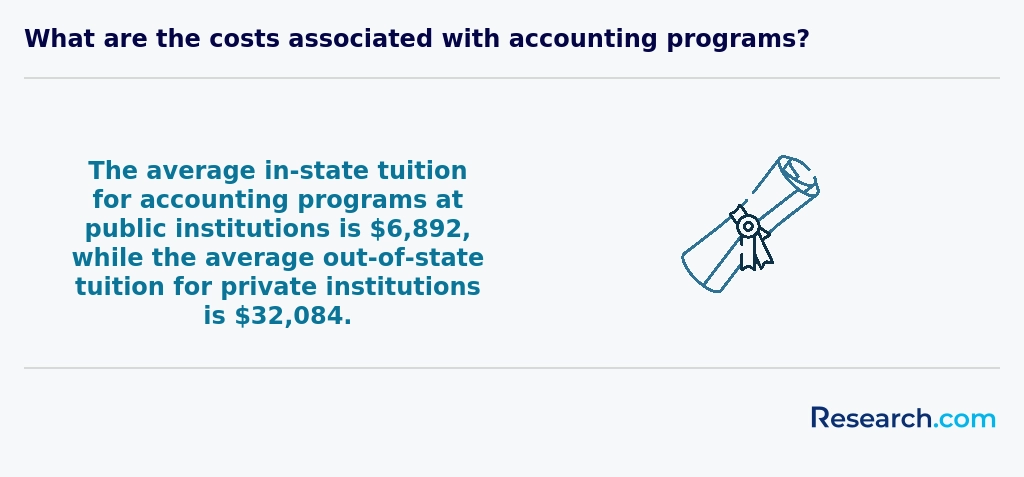
The average cost of an accounting degree in Columbia typically ranges between $15,000 and $40,000 for a bachelor's degree, depending on the institution and whether you attend a public university or a community college. Graduates from institutions like the University of South Carolina or Clemson University often mention balancing tuition fees with available scholarships and part-time work, making their financial journey manageable. Community colleges offer a more budget-friendly route, usually costing around $15,000 to complete the required 120 credit hours.
Many students find value in investing in accredited programs, especially those recognized by AACSB, as these programs often enhance job prospects. In practical terms, this means you'll spend money on not only tuition but also on materials and software essential for mastering accounting technologies. Graduates reflect positively on internship opportunities provided by local colleges, which help offset costs by providing relevant work experience and networking in Columbia's financial markets.
Planning your finances carefully, including applying for internships and scholarships, can ease the burden and make earning an accounting degree in Columbia a compelling and achievable goal.
Where can I work with accounting degree in Columbia?
Graduates with an accounting degree from well-known Columbia institutions often find rewarding careers in public accounting firms like Deloitte or PwC, where they start as entry-level auditors or tax consultants. These roles provide valuable hands-on experience and set a clear path toward CPA licensure, which employers in Columbia highly value.
Many alumni also secure positions in Columbia's manufacturing sector, focusing on cost accounting and budgeting to optimize business operations. Imagine yourself analyzing production costs for an automotive company, a common role for degree holders in this region, which offers steady growth prospects.
Government jobs in local finance departments are another practical option. Graduates report satisfaction managing budgets and audits with a clear impact on community services, using knowledge of standards like GASB, which they mastered during their studies in Columbia colleges.
Others leverage their skills in the fast-growing service sector, working in healthcare or retail companies where expertise in software like QuickBooks or SAP ensures smooth financial operations, offering both stability and room for growth.
Specialized fields such as forensic accounting also attract Columbia graduates excited by fraud detection and financial consulting, often requiring additional certifications but leading to stimulating and well-paid careers.
Graduates from Columbia's well-regarded universities often start their accounting careers in roles such as bookkeepers, tax preparers, or accounts payable clerks, earning around $49,580 annually as per the latest data. This entry paycheck provides a solid base while gaining experience in local companies or government offices.
Progressing to positions like staff accountant, which many Columbia graduates achieve after a couple of years, the mean annual wage rises to approximately $90,780. This jump reflects both increased responsibilities and the value of locally recognized certifications. For example, a mid-career graduate working in a corporate office downtown can expect salaries closer to this figure, especially if they have passed the CPA exam.
Many Columbia alumni highlight that securing internships during college creates valuable connections with employers who offer competitive wages, often above the state average. It's practical to focus on gaining experience in sectors prevalent in Columbia such as government agencies or regional firms, which pay steadily and offer upward mobility.
By targeting these realistic career steps, prospective accounting students in Columbia can visualize a rewarding path starting with nearly $50,000 and growing to a six-figure salary as expertise and certifications accumulate.
- Tuition for public universities in Columbia ranges from $8,000 to $10,000 per year for in-state students and around $20,000 for out-of-state students.
- Private institutions in Columbia usually charge over $30,000 annually for accounting programs, plus additional costs for fees, books, and supplies.
- Entry-level accountants in Columbia earn between $50,000 and $60,000 per year, with salaries increasing to $70,000-$90,000 or more with experience.
- The job market for accountants in Columbia is growing by about 7% over the next decade, driven by demand in public firms, corporations, government, and nonprofits.
- Getting certifications like the CPA and specializing in areas such as forensic or tax accounting can improve job prospects and earnings.
In Columbia, South Carolina, most accounting students at the University of South Carolina-Columbia find that completing their bachelor's degree takes about four years when attending full time. This timeframe allows them to build a strong foundation in subjects like math and economics before moving to key accounting courses such as auditing and taxation. Graduates often share how balancing a steady course load and summer classes helped them stay on track and graduate without feeling overwhelmed.
Some students accelerate their studies by enrolling in extra courses or summer sessions, wrapping up in as little as three years. Part-time learners balancing jobs or family responsibilities might take five or more years to finish, but local universities offer flexible options to support these paths. For those aiming for CPA licensure, graduates emphasize the importance of planning for additional credits or a master's degree, since South Carolina requires 150 credit hours. This extended timeline, which can reach six years, feels manageable with clear goals and steady progress at schools around Columbia.
Navigating the admissions process for accounting degree programs in Columbia, MO, requires careful planning and attention to key dates. Most institutions open applications for the fall semester as early as September, with priority deadlines typically falling between November and January. To ensure your application stands out, gather all required materials-including transcripts, letters of recommendation, and a personal statement-well before deadlines. Many programs also recommend submitting standardized test scores (SAT/ACT), although some schools have adopted test-optional policies. Early Action vs. Regular Decision • Early Action: Submit by November 1 for notifications by mid-December. Ideal for students who have finalized their application materials and seek an early admissions decision. • Regular Decision: Deadlines range from January 15 to February 1, with decisions released between March and April. Regular Decision allows more time to improve your application profile, such as retaking standardized tests or updating your résumé. Application Tips and Institutional Requirements • Transcripts: Request official high school or college transcripts at least two weeks before the deadline to avoid processing delays. • Personal Statement: Tailor your essay to highlight your passion for accounting, referencing specific Columbia, MO program strengths such as internship partnerships or faculty expertise. • Letters of Recommendation: Secure recommendations from teachers or professionals who can vouch for your analytical skills and work ethic. Aim for at least two academic references and one professional reference if available. • Interviews and Campus Visits: Some programs offer optional interviews or open houses-use these opportunities to demonstrate your commitment and learn about campus resources like tutoring centers and career services. Financial Planning and Scholarship Deadlines To maximize aid eligibility, complete the FAFSA by the priority deadline (usually March 1). Additionally, keep track of institutional scholarship deadlines, which often fall between February and April. Remember, meeting early scholarship application dates can unlock merit-based awards that reduce tuition costs significantly. For students considering comparative affordability, be sure to explore our Inexpensive Accounting Degree Programs Ranking in Cincinnati, OH to inform your financial planning across regions.
The key difference between online and on-campus accounting degrees in Columbia lies in how you access your education. Graduates from the University of South Carolina often highlight the value of face-to-face learning, where immediate professor feedback and campus resources like libraries and career services enriched their experience. In contrast, alumni from Columbia College praise online programs for their flexibility, making it possible to balance studies with full-time work or family life.
Cost is another practical consideration. For instance, students attending in-person at popular state universities may pay in-state tuition around $10,500 yearly, while many online programs through community colleges offer lower rates, sometimes as low as $7,000. Regardless of format, programs in Columbia typically adhere to accreditation standards like AACSB, ensuring consistent quality.
Ultimately, choosing between formats means weighing your learning style, schedule demands, and budget. Online studies offer convenience without sacrificing curriculum rigor; on-campus study provides immersive, structured engagement that many find motivating and rewarding.
To maximize the potential of your accounting degree, it's essential to explore various opportunities available in the region. By considering factors such as affordability, program quality, and career prospects, students can make informed decisions about their educational path. For those looking for affordable options, checking out affordable accounting schools in Missouri can provide valuable insights into cost-effective programs that still offer a high-quality education. This can help students balance their financial constraints with their desire for a reputable degree, ultimately leading to a successful career in accounting.
The average cost of an accounting degree in Columbia varies, but median total expenses typically reach around $43,282. For in-state students at public universities, the median total cost is considerably lower, about $20,331, making these options a practical choice for many. Graduates from popular colleges in Columbia often share how budgeting carefully for tuition and living costs helped them manage expenses without overwhelming debt, underscoring the value of affordable accounting degree programs Columbia 2027.
Out-of-state students should anticipate higher costs, sometimes double or more than in-state rates, which aligns with the median out-of-state total cost of about $43,282. Private colleges usually charge more, but they can offer strong financial aid packages and scholarships, particularly for business and STEM fields, which can ease the financial burden significantly. Some graduates recall applying early for these awards, emphasizing that exploring scholarships early on is a smart strategy.
Beyond tuition, students must consider books, supplies, and living expenses, which add roughly $13,000 annually. A common scenario from alumni includes sharing tips on affordable housing near university campuses to reduce room and board expenses, keeping the overall cost manageable. Understanding these factors will help students from Columbia plan realistically for an accounting degree.
Students aiming to leverage their degree can also explore MBA graduate career paths that build on their accounting foundation, often boosting earning potential after graduation.

Investing in an accounting degree involves weighing tuition costs against long-term earnings. In Columbia, MO, the average total cost of attendance for a four-year public institution is approximately $26,030, while fully online programs average around $10,000 per year. When graduates enter the workforce as Staff Accountants with a mean annual wage of $86,740 or as Bookkeepers at $47,440, the payback period can range from just under one year (for online program graduates who secure Staff Accountant roles) to around two years for those starting in lower-paid entry positions. Beyond raw numbers, consider debt-to-earnings ratios: a student borrowing $20,000 to complete a bachelor’s degree can expect a debt-service ratio below 10% if they land a Staff Accountant role immediately, well under the recommended 15% threshold. Additionally, pursuing specialized certificates like the CPA or CMA can boost starting salaries by 10–20%, further shortening the ROI timeline. For students seeking the most cost-effective options nationwide, don’t miss our Inexpensive Accounting Degree Programs Ranking in Cincinnati, OH, which highlights programs with exceptional affordability and strong post-graduation outcomes. By comparing program costs, average graduate salaries, and certification success rates, you’ll gain a clear picture of which institutions deliver the best financial return for your investment.
If you're studying accounting in Columbia, start by completing the FAFSA to access federal financial aid like Pell Grants and Direct Subsidized Loans. Many graduates from the University of South Carolina's Darla Moore School of Business recall how Pell Grants, which can award up to $7,395 yearly, helped cover their tuition without adding debt. Direct Subsidized Loans provide low-interest support, easing upfront costs while focusing on studies.
State-funded options are also vital. For instance, students attending public colleges in Columbia have benefited from the South Carolina Lottery Tuition Assistance program, which can reduce tuition by up to $3,000 annually. Those starting at technical colleges and planning to transfer find this especially helpful in managing expenses over time.
Do not overlook institutional scholarships. Accounting majors at top Columbia schools often earn merit-based aid ranging from $1,000 to full tuition remission by maintaining strong GPAs and engaging in campus activities.
- Working students frequently find employer tuition reimbursement programs invaluable, as some local businesses cover partial or full tuition costs.
- Professional organizations like the AICPA offer private scholarships targeting accounting students aiming for public accounting careers, providing essential financial backing beyond traditional aid.
After earning your accounting degree in Columbia, MO, pursuing professional certifications can markedly boost your marketability and salary potential. The most sought-after credential is the Certified Public Accountant (CPA) license, which in Missouri requires 150 semester hours of education, passing the Uniform CPA Exam’s four sections, and one year of relevant work experience under a licensed CPA. Candidates typically spend six to twelve months preparing, utilizing resources like Becker or Roger CPA Review and joining local study groups through the Missouri Society of CPAs. Another valuable designation is the Certified Management Accountant (CMA), awarded by the Institute of Management Accountants. Requirements include a bachelor’s degree, two years of professional experience in management accounting or financial management, and passing the two-part CMA Exam. Many graduates find that specializing in management accounting during their bachelor’s curriculum smooths the transition to CMA preparation. For those interested in niche fields, the Certified Internal Auditor (CIA) and Certified Fraud Examiner (CFE) offer targeted expertise. The CIA, administered by the Institute of Internal Auditors, demands a bachelor’s degree, a minimum of 24 months of internal auditing experience, and a three-part exam. The CFE, from the Association of Certified Fraud Examiners, requires relevant work experience and passing a four-section exam covering financial transactions, fraud prevention, investigation, and legal elements. Continuing education is essential to maintain these certifications, with Missouri CPAs required to complete 30 hours of continuing professional education (CPE) annually. Many professionals bolster their qualifications by enrolling in a flexible graduate program-consider a low cost accounting masters degree online to deepen your expertise, meet credit hour requirements, and accelerate your path to senior roles like CFO or controller.
To enroll in an accounting degree program in Columbia, you need a high school diploma or GED equivalent as the baseline. Graduates from popular institutions like the University of South Carolina often mention how solid math skills, especially in algebra and statistics, helped them handle coursework confidently from day one. Focusing on relevant high school classes, such as geometry and economics, makes the transition smoother and boosts your chances of acceptance.
Most schools expect you to demonstrate proficiency in math, either through coursework or standardized tests like the SAT or ACT. While test-optional policies have relaxed this requirement, a strong math score can still make your application stand out. Some colleges in Columbia might ask for letters of recommendation or personal statements to better understand your dedication and fit for the program.
Community college transfer credits are often welcomed, giving you flexibility if you started your education elsewhere. This pathway is a common strategy graduates recommend for managing tuition costs and easing into a four-year program in Columbia.
Prospective students can fortify their academic journey by adopting strategic practices tailored to the demands of the accounting field. Begin by setting clear career goals and consistently monitoring progress through both academic and extracurricular activities. Developing strong networking skills is essential-attend local workshops, engage with professional bodies, and make time for informational interviews to learn from established professionals in Columbia, MO. Practical experience is another cornerstone of success. Seek out internships, part-time roles, or volunteer opportunities that not only reinforce classroom learning but also expose you to real-world financial scenarios. These experiences often provide the competitive edge needed during job placements and future career advancements. It’s also beneficial to continually update your technical skills. Embrace emerging accounting software and data analytics tools which are increasingly valued by employers. Additionally, consider exploring supplemental resources that might complement your degree-such as the ranking of the best online certificate programs for accounting-to diversify your expertise and improve job market readiness. Finally, maintain an active dialogue with academic advisors and career services. Their guidance can be fundamental in navigating course selections, understanding industry certifications like the CPA, and aligning your educational path with industry demands, ultimately ensuring a well-rounded and competitive profile upon graduation.
Students enrolled in accounting programs at popular Columbia institutions like the University of Missouri or Columbia College typically find a curriculum designed to build practical skills alongside theory. Core courses often start with Financial Accounting, where graduates recall preparing real company financial statements, helping them grasp industry standards clearly.
Next, Managerial Accounting teaches budgeting and cost analysis, which graduates say proved crucial during internships when making internal business decisions. Taxation courses cover federal laws and tax planning strategies, preparing students to handle real-world tax forms and client queries confidently.
Auditing classes emphasize ethical guidelines and compliance, experiences graduates found helpful when working with government agencies or firms conducting financial reviews. Technology is not overlooked, with Accounting Information Systems showing students how to manage financial data using up-to-date software-a skill praised by many hiring managers.
Other key subjects include Business Law and Finance, which together equip students to navigate corporate regulations and investment principles, essential for roles beyond entry-level accounting. Lastly, courses on ethics prepare students to uphold professional standards, which many graduates highlight as directly relevant to their everyday responsibilities.

In Columbia, accounting degree specializations reflect practical needs in today's job market. Most students choose financial accounting to master preparing financial statements and managing compliance in corporate settings. Graduates from universities here often share how this focus directly prepared them for roles in public companies, making it easier to enter the workforce confidently.
Tax accounting is another popular path, especially for those interested in navigating complex tax laws and maximizing tax efficiency, skills highly valued by public accounting firms and tax departments. Many Columbia students pursuing tax accounting appreciate the real-world application of tax preparation, which can lead to higher earning potential and job stability.
Those drawn to detailed financial scrutiny often specialize in auditing, learning to verify accuracy of records and reduce risks for businesses. This skillset aligns with the steady demand in accounting careers throughout Columbia's job market. For students exploring advanced options, forensic accounting offers a niche in fraud detection, combining legal and investigative expertise.
Columbia's colleges also feature management accounting, where budgeting and internal analysis help students develop strategic financial decision-making skills. For those evaluating Columbia affordable accounting degree options, community colleges and four-year institutions both provide these practical specializations. Students interested in expanding their options can also explore the best business colleges in Georgia for additional pathways and insights.
Start by confirming the accounting degree programs in Columbia hold reputable accreditation, ideally from bodies recognized nationally, which assures quality education and valuable credentials. Graduates from well-known colleges often praise how faculty expertise made complex topics accessible and relevant, boosting their confidence entering the workforce.
Compare tuition carefully since costs can vary widely here, affecting your long-term financial planning. Public universities generally offer best affordable accounting degrees Columbia at around $7,000 to $12,000 per year for in-state students, while private schools may exceed $25,000 annually. Graduates highlight how leveraging scholarships and financial aid made their education manageable without excessive debt.
Choose programs matching your career goals by focusing on curriculum that emphasizes areas like forensic accounting or taxation, which give you a competitive advantage. Many Columbia-area colleges include internships that help you build local connections and practical experience, making the job search after graduation smoother.
Also, consider the program's flexibility-whether part-time, evening, or online options are available-to fit your schedule. For working professionals, exploring a flexible online executive MBA can offer the balance needed to advance your skills without pausing your career.
Finally, research graduation and job placement rates. Schools in Columbia often boast placement figures above 85% within six months, a critical indicator for your future prospects and peace of mind.
Graduates holding an accounting degree in Columbia find several clear career paths that align well with both local and national job markets. Many pursue certification as a CPA, a credential highly respected by public accounting firms and corporate finance teams across the region. Those who graduated from well-known Columbia colleges often report rewarding roles in firms where their analytical skills directly contribute to company profitability.
Others explore corporate accounting careers such as financial analysis, budgeting, or internal auditing. These positions offer daily challenges like managing complex budgets and ensuring compliance, which many graduates describe as both engaging and motivating. Due to Columbia's proximity to key business hubs, job prospects for accounting degree career opportunities in Columbia are notably robust.
Government positions also attract graduates, providing stable and meaningful work in tax agencies or auditing departments. For students weighing institutions, considering accredited business schools in Florida helps widen options while preparing effectively for these roles. For those seeking hands-on experiences, specialized fields like forensic or management accounting present dynamic alternatives with potential for strong salaries.

The accounting job opportunities in Columbia benefit from a balanced market shaped by local institutions and growing businesses. Graduates from well-known accounting programs at the University of Missouri and local community colleges often find positions in government agencies, healthcare providers, and various small to medium-sized enterprises. These roles include bookkeeping, auditing, and tax preparation, providing practical entry points immediately after graduation.
Many graduates have shared how earning professional certifications, especially the CPA, has been key to advancing beyond entry-level roles at public accounting firms in Columbia. Employers appreciate candidates familiar with regional financial regulations and tax codes, which emphasizes the value of studying locally. The Columbia accounting degree employment outlook remains stable, supported by steady demand tied to local economic diversity and government needs.
For those weighing education costs, tuition at Columbia institutions is usually more affordable than the national average, making the return on investment promising. Students interested in advancing further can explore best online PhD programs in accounting to boost their credentials and career options.
2027 Most Affordable Accounting Degree Programs Ranking in Columbia
Investing in your education is a significant decision that can shape your future, and the Research.com team understands the importance of making well-informed choices. To support prospective students in Columbia, we have carefully compiled the "2027 Most Affordable Accounting Degree Programs Ranking in Columbia." Our dedication to quality, credibility, and accuracy is demonstrated through rigorous research and thorough analysis behind this ranking.
We utilized the following reputable data sources to ensure a comprehensive evaluation of accounting programs:
By consulting this ranking, readers will gain valuable insights into the most affordable accounting degree programs in Columbia, empowering them to make well-informed decisions about their education. For more information on how this ranking was created, please visit our Research.com methodology page.

Frequently Asked Questions About accounting
Accounting degree students in Columbia can maximize their learning experience by actively engaging with both coursework and practical opportunities. Enrolling in accredited programs recognized by organizations such as the Association to Advance Collegiate Schools of Business (AACSB) ensures rigorous academic standards. Students should seek internships with local accounting firms or businesses, as hands-on experience enhances understanding of real-world applications.
Utilizing campus resources, including tutoring centers and accounting clubs, supports skill development and networking. Additionally, preparing for the Certified Public Accountant (CPA) exam early in their studies can align coursework with professional certification requirements. According to the National Association of State Boards of Accountancy, over 70% of accounting students in the US pursue CPA licensure, which boosts career prospects.
The accounting field in Columbia is evolving with several emerging niches that reflect broader trends in finance and technology. One prominent area is forensic accounting, addressing fraud detection and legal disputes, a field growing at about 11% annually according to the U.S. Bureau of Labor Statistics. Another rapidly expanding niche is environmental accounting, which focuses on the financial impact of sustainability and regulatory compliance, important as companies adapt to stricter environmental laws.
Technology-driven specialties also stand out. For instance, data analytics and blockchain accounting offer exciting opportunities as firms demand professionals skilled in handling complex data and secure transactions. According to the American Institute of CPAs (AICPA), demand for accountants with IT expertise is rising steadily. These niches require specialized knowledge beyond traditional accounting skills, representing promising paths for students pursuing degrees in Columbia.
After completing an accounting degree in Columbia, preparing for the job market involves several strategic steps. First, gaining relevant experience through internships or part-time roles is crucial. Internships give practical skills and improve employability. According to the U.S. Bureau of Labor Statistics, accounting jobs in Columbia grew by about 5% between 2020 and 2030, signaling steady demand.
Next, pursue certifications such as the CPA (Certified Public Accountant), which is highly valued by employers in the state. Networking is also essential-attending local accounting association meetings or job fairs can open doors.
Finally, focus on developing strong software skills, especially in programs like QuickBooks and Excel, which are commonly required in Columbia-based accounting positions.
Employers in Columbia highly value accounting graduates who demonstrate strong analytical skills and attention to detail. According to the Bureau of Labor Statistics, precision in financial reporting and compliance is crucial for accountants to avoid costly errors. Communication skills are also essential, as accountants must explain complex financial information clearly to clients and colleagues.
Technical proficiency in software like QuickBooks, Excel, and other accounting platforms is frequently requested. Additionally, familiarity with U.S. Generally Accepted Accounting Principles (GAAP) remains a foundational requirement. Problem-solving abilities and ethical judgment are increasingly emphasized, reflecting evolving regulatory demands in the industry.
Finding internships in Columbia related to an accounting degree involves several practical steps. First, students should explore career services at local colleges, such as the University of Missouri-Columbia, which frequently lists accounting internships and partners with regional firms. Networking is also essential; joining professional organizations like the Missouri Society of CPAs can provide access to internship opportunities and mentoring.
The Missouri Department of Higher Education reports that internships increase job placement rates by 20-30% among accounting graduates. Additionally, online platforms such as Handshake and LinkedIn list internships specifically for Columbia students. Early application and tailoring resumes to accounting roles significantly improve chances of securing a position.
In Columbia, an accounting degree significantly enhances career mobility and advancement opportunities. According to the Bureau of Labor Statistics, accountants and auditors in the United States, including residents of Columbia, enjoy a projected job growth rate of 6% from 2021 to 2031. This reflects steady demand across industries such as finance, government, and healthcare. Completing an accredited accounting program equips graduates with essential skills like financial reporting, tax preparation, and auditing, which are highly valued by employers.
Moreover, many firms in Columbia prefer candidates who hold at least a bachelor's degree in accounting, often requiring it for promotion to senior roles. Professional certifications such as CPA further leverage degree credentials, allowing for higher salaries and leadership positions. Educational institutions in Columbia offer pathways aligned with these career goals, fostering graduates' upward mobility.
Studying for an accounting degree in Columbia equips students with skills beyond traditional number-crunching, preparing them for interdisciplinary roles in finance, management, and technology. Programs often include coursework in economics, business law, and information systems, fostering a broader understanding of how accounting intersects with other fields. According to the National Center for Education Statistics, over 60% of accounting students also take classes related to analytics and communication to enhance their versatility.
Employers in Columbia value graduates who can navigate complex business environments, requiring knowledge in ethics, data analytics, and strategic planning. This multidisciplinary training increases employability in diverse roles such as financial consulting, corporate strategy, and compliance.
When choosing between a thesis and a non-thesis accounting degree program in Columbia, students should consider their career goals and learning preferences. A thesis program typically involves conducting original research and writing a detailed paper, which can be beneficial for those planning to pursue doctoral studies or research-focused roles. Non-thesis programs generally emphasize coursework and practical experience, preparing students for immediate entry into the accounting profession.
The Council for Higher Education Accreditation reports that approximately 60% of accounting graduates in Columbia choose non-thesis tracks, reflecting strong demand for practical skills in local industries. According to the National Association of State Boards of Accountancy (NASBA), those aiming for CPA licensure often find non-thesis programs aligned with exam requirements.
Cost and duration differences also matter. Thesis programs may require more time and resources due to research commitments. Prospective students should evaluate program structure, faculty expertise, and how each option supports their future plans.
Students based in Columbia seeking to study accounting abroad often consider options within the United States due to its diverse and reputable higher education system. The U.S. offers various pathways, including community colleges, four-year universities, and specialized accounting programs, many of which are accredited by the Association to Advance Collegiate Schools of Business (AACSB).
Popular destinations include states with strong accounting industries like New York, California, and Texas, which host nationally ranked universities. According to the National Association of State Boards of Accountancy (NASBA), over 70% of accounting graduates find opportunities in these states, making them attractive for international students.
Many institutions also offer online and hybrid accounting degrees, providing flexibility for Columbia-based students. Financial aid and scholarships specific to international students may be available to reduce costs, helping broaden access to quality U.S. accounting education.
Students pursuing accounting degrees in Columbia often seek part-time jobs that complement their studies and build relevant skills. Common opportunities include internships with local accounting firms, where students can gain hands-on experience in bookkeeping, tax preparation, and auditing. According to the Bureau of Labor Statistics, accounting clerks and bookkeepers positions in the US are projected to grow 7% from 2022 to 2032, reflecting steady demand.
Additionally, many students work as accounting assistants or payroll clerks in small- and medium-sized businesses. These roles help develop proficiency in accounting software and financial reporting. Universities in Columbia also offer on-campus positions related to financial services, such as assistant cashier or budget clerk roles.
Such jobs not only provide income but strengthen résumés, making graduates more competitive in the job market after degree completion.
Accounting students in Columbia have access to a variety of networking opportunities crucial for career development. Many universities in Columbia partner with local CPA societies and business organizations to host events and seminars, providing students with direct contact to industry professionals. For instance, the Illinois CPA Society often collaborates with regional schools for workshops and networking mixers.
Additionally, accounting programs typically encourage participation in student chapters of national organizations like Beta Alpha Psi, which connects students to internships and job opportunities through networking events.
Career fairs at schools in Columbia also attract numerous accounting firms from the Midwest, offering valuable face-to-face networking moments for students.
Alumni networks play a crucial role in supporting accounting degree students in Columbia. These networks provide access to experienced professionals who offer mentorship, career advice, and job leads. According to the National Association of Colleges and Employers (NACE), students engaged with alumni have a 20% higher chance of securing internships and full-time positions.
In Columbia, where the accounting industry is growing steadily, strong alumni connections help students navigate the local job market. Networking events and alumni panels offer insights into accounting certifications such as CPA licensure requirements specific to South Carolina.
Furthermore, alumni often share valuable resources like study groups and industry trends. This community support enhances students' academic success and professional development throughout their degree journey.
In Columbia, tailoring your accounting degree to match your career objectives begins with selecting electives aligned with your interests. Many universities offer courses in auditing, taxation, or financial analysis, enabling focused skill development. Additionally, pursuing certifications like the CPA (Certified Public Accountant) alongside your degree can boost job prospects, as CPA licensure is highly respected in the accounting field.
Internships and cooperative education programs available through Columbia institutions provide valuable hands-on experience, enhancing practical understanding and professional networks. Consulting academic advisors about study plans also ensures your coursework meets both state licensure requirements and personal career goals.
According to the South Carolina Board of Accountancy, CPA candidates must complete 150 credit hours; many local programs structure degrees to accommodate this. Customizing your program this way fosters a competitive edge in Columbia's growing accounting job market.
Accounting students in Columbia face several common challenges when pursuing their degrees. One major difficulty is managing the rigorous coursework, which often requires strong analytical skills and attention to detail. According to the National Association of State Boards of Accountancy, many students struggle with understanding complex topics like taxation and auditing.
Financial concerns also impact students significantly. The average tuition for accounting programs in Columbia can exceed $12,000 per year, which may lead to increased student debt. Balancing part-time work and study time becomes a frequent necessity.
Additionally, preparing for the CPA exam is a considerable hurdle. The pass rate nationally hovers around 55%, reflecting the exam's demanding nature. Students must often dedicate extra time outside of class to succeed in this certification process.
With an accounting degree in Columbia, you can pursue several professional certifications that enhance your career opportunities. The most recognized is the Certified Public Accountant (CPA) license, essential for many accounting roles. To become a CPA, candidates must meet education and experience requirements and pass the Uniform CPA Exam administered by the American Institute of CPAs (AICPA).
Other valuable certifications include the Certified Management Accountant (CMA) and the Certified Internal Auditor (CIA). Both focus on specialized skills important in corporate finance and auditing.
These certifications can significantly increase earning potential and job prospects in Columbia and the broader US market.
To write a winning application for an accounting program in Columbia, focus on clearly demonstrating your academic strengths and genuine interest in accounting. Most programs require a strong high school GPA, especially in math courses, as well as competitive SAT or ACT scores. According to the National Center for Education Statistics, competitive accounting programs often look for GPAs above 3.0.
Include a well-crafted personal statement that highlights your career goals and passion for accounting. Emphasize any relevant experience, such as internships or volunteer work, to showcase practical skills.
Letters of recommendation from teachers or employers who know your abilities are essential. Finally, ensure your application is complete and submitted before deadlines to maximize your chances of acceptance.
Accounting careers are highly valued worldwide due to their essential role in business and finance. In the United States, including Columbia, accountants are in strong demand, with the Bureau of Labor Statistics projecting a 7% growth in employment from 2022 to 2032. Globally, accounting professionals are expected to understand international financial reporting standards (IFRS), especially as companies operate across borders.
Knowledge of U.S. Generally Accepted Accounting Principles (GAAP) remains critical for careers focused on American markets. However, exposure to global accounting practices enhances job prospects and salary potentials.
Professional certifications like CPA or CMA, recognized internationally, open doors for cross-border work.
Students in Columbia pursuing accounting degrees benefit from curricula integrating these global perspectives, aligning with evolving employer expectations.
Gaining practical experience while studying for an accounting degree in Columbia is essential for enhancing job prospects after graduation. Many colleges offer internship programs that connect students with local businesses, nonprofits, and government agencies. According to the National Association of Colleges and Employers, over 60% of accounting students secure internships before graduating.
Students can also participate in cooperative education (co-op) programs, allowing them to alternate between classroom study and paid work experience. Additionally, joining on-campus accounting clubs or competing in case competitions helps develop real-world skills.
Volunteering for tax assistance programs, like the IRS Volunteer Income Tax Assistance (VITA), is another practical way to apply accounting concepts.
Choosing the right concentration within an accounting degree program in Columbia requires understanding your career goals and local job market demands. Common concentrations include auditing, taxation, managerial accounting, and forensic accounting. Each offers unique skills applicable to different roles in Columbia's accounting sector, where tax preparation and auditing services are particularly in demand, according to the Bureau of Labor Statistics.
Research program curricula at Columbia colleges to see which concentrations align with your interests. For example, taxation focuses on tax law and regulations, essential for roles in tax firms or corporate tax departments. Managerial accounting suits those aiming for internal business advisory positions.
Consider internship opportunities and local CPA exam pass rates as indicators of program quality. The National Association of State Boards of Accountancy reports that programs emphasizing CPA exam preparation tend to enhance graduate employability in Columbia.
- 2027 Most Affordable Accounting Degree Programs Ranking in Saint Louis
- 2027 Most Affordable Accounting Degree Programs Ranking in Conway
- 2027 Most Affordable Accounting Degree Programs Ranking in Memphis
- 2027 Most Affordable Accounting Degree Programs Ranking in Chicago
- 2027 Most Affordable Accounting Degree Programs Ranking in Madison
- 2027 Most Affordable Accounting Degree Programs Ranking in Indianapolis
- 2027 Most Affordable Accounting Degree Programs Ranking in Louisville
- 2027 Most Affordable Accounting Degree Programs Ranking in Nashville
- 2027 Most Affordable Accounting Degree Programs Ranking in Saint Paul
- 2027 Most Affordable Accounting Degree Programs Ranking in Minneapolis
See What Experts Have To Say About Studying Accounting
Read our interview with Accounting experts

John Wermert, Ph.D., CPA
Accounting Expert
Associate Professor of Accounting
Middle Tennessee State University

Yaw M. Mensah
Accounting Expert
Professor and Interim Vice Dean for Strategic Partnerships
Rutgers Business School

- Accounting | Columbia College https://www.columbiasc.edu/academics/undergraduate/accounting
- Columbia College: Top Accounting Programs 2026 https://afbf.in/best-colleges-for/accounting-columbia-college/
- Accounting Degree Program Guide | Accounting.com https://www.accounting.com/degrees/overview/
- How to Meet Accounting Degree Requirements for Career Success - ICMS https://www.icms.edu.au/degree-discovery/how-to-meet-accounting-degree-requirements/
- Tips for University Graduates Looking to Land Their First Accounting Job https://www.elby.ca/blog/2022/04/27/tips-for-university-graduates-looking-to-land-their-first-accounting-job/
- Accounting | Columbia-Greene Community College https://www.columbiagreene.edu/academics/programs/accounting/
- Business, Management and Accounting at Columbia University https://www.vaia.com/en-us/degrees/universities/columbia-university/business-management-and-accounting-at-columbia-university/
- Everything About Bachelor’s in Accounting https://www.allbusinessschools.com/accounting/bachelor-degree-in-accounting/
- 5 accounting certifications without a degree | Becker https://www.becker.com/blog/career/5-accounting-certifications-you-can-earn-without-a-degree
- How do they influence the accounting students' career choice? https://edulearn.intelektual.org/index.php/EduLearn/article/download/19870/10113


