2027 Online Supply Chain Management Degrees With Strong Global Trade Knowledge

Co-Founder and Chief Data Scientist
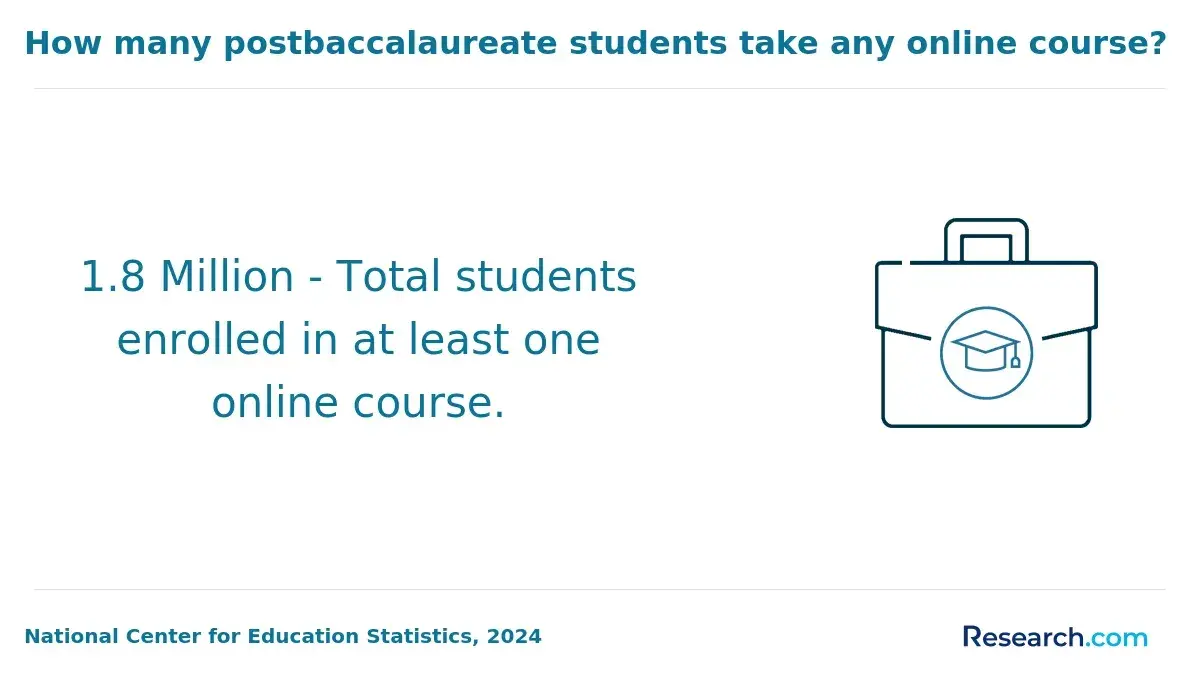
Facing volatile global markets and shifting trade policies, mid-career professionals in supply chain management frequently confront the challenge of acquiring up-to-date expertise without interrupting employment. The U.S. Department of Education reports a 24% rise in enrollment for fully online degrees in business-related fields from 2022 to 2024, a response to growing demand for flexible, accessible education paths.
This trend reflects both workforce urgency and constraints on time or location, which professionals must weigh carefully when choosing programs. This article examines online supply chain management degrees focused on global trade, evaluating how they align with industry needs and learner accessibility to guide strategic educational investments. Prospective students with a penchant for global trade policies will gain insights and degree options.
Key Things You Should Know
- Global trade specialization in supply chain management degrees drives a 15% higher average starting salary, according to the U.S. Bureau of Labor Statistics, but narrows skill flexibility, limiting pivot options within broader logistics roles.
- Employers prioritize graduates with practical exposure to international compliance and trade regulations, elevating job placement rates by 18%, per the Council of Supply Chain Management Professionals, signaling sharper hiring filters.
- Programs with integrated global trade modules cost 20-35% more and average 24 months to complete, per National Center for Education Statistics, creating timing and financial constraints that weigh heavily on midcareer professionals seeking advancement.
What is an online supply chain management degree with a focus on global trade?
Online supply chain management degrees with global trade expertise demand more than foundational logistics knowledge; graduates must navigate intricate compliance requirements tied to international regulations and shifting trade policies. For instance, managing multi-country sourcing in the automotive sector requires anticipating tariff fluctuations while ensuring customs adherence, balancing cost efficiency against regulatory complexity.
Employers increasingly seek professionals fluent in tariff classification, trade documentation, and risk assessment to mitigate disruptions such as port congestions and trade-war fallout. Graduates from distance learning supply chain management programs focused on international trade are expected to apply data-driven analytics to maintain continuity despite currency shifts or evolving geopolitical tensions.
Program rigor varies notably in coverage of trade law depth and sector-specific case studies—pharmaceuticals, electronics, and agriculture each impose distinct trade compliance challenges. Students must weigh curriculum focus carefully to align with real-world sector demands rather than general supply chain topics alone.
The rise in degrees—from 9,336 in 2017 to 10,822 in 2024—reflects market pull for specialists fluent in global commerce dynamics. Professionals aiming to pivot swiftly may consider a fast track MBA 6 months online as an alternative pathway.
How do online supply chain management programs compare to campus programs for global trade careers?
Workforce realities dictate that online supply chain management programs cannot fully replicate the experiential learning vital for global trade careers that campus programs provide. In-person exposure to networking, internships, and on-site simulations builds practical skills in customs compliance, international tariffs, and vendor coordination—experience employers prioritize.
Campus students gain real-time feedback and professional relationships that virtual environments struggle to match, affecting preparedness for managing supply chain disruptions overseas.
Conversely, online programs offer essential flexibility, particularly for those balancing current supply chain roles. This is significant considering the U.S. Bureau of Labor Statistics projects 19% growth for logisticians from 2022 to 2032, with roughly 26,000 openings annually.
Students enrolled online can integrate emerging global trade regulations and supply chain technologies directly into their work, enhancing applied knowledge. However, to mitigate limited hands-on opportunities, online learners should actively pursue virtual internships or employer collaborations.
Choosing between online supply chain management programs vs campus programs for global trade careers hinges on career stage, access to immersive experiences, and learning style. Industries like manufacturing and retail often require negotiation and disruption management skills sharpened through interactive, face-to-face training.
Online students need to leverage digital collaboration and case studies to approximate this rigor. Understanding these tradeoffs is critical for working professionals navigating this evolving field and evaluating pathways such as the easiest online MBA programs that integrate supply chain management.
Which accreditations and quality signals matter most for online supply chain degrees?
Regional institutional accreditation combined with program-specific accreditation from APICS, now part of the Association for Supply Chain Management (ASCM), forms the baseline for credible online supply chain management program regional accreditations.
Regional accreditation ensures degrees meet consistent academic standards valued by employers and facilitate credit transfer, while ASCM-aligned certifications verify curriculum relevance to operational competencies such as global trade logistics and procurement.
Employers often prioritize candidates from programs carrying these credentials because they reliably indicate mastery of practical skills tied to profitability and risk mitigation in supply chain roles. For example, professionals transitioning from manufacturing to logistics analytics gain more from courses aligned with APICS standards emphasizing demand forecasting and tariff regulation impacts than from generic business qualifications.
Students should also assess whether programs embed up-to-date global trade supply chain regulations and vendor-neutral digital toolkits like AI or blockchain, as many degrees lack practical software training or case studies on trade compliance. Other critical factors include strong career services for remote learners and partnerships with employers in sectors sensitive to demand shocks, such as automotive and consumer electronics.
The Association for Supply Chain Management's 2024 salary survey highlights a median total compensation of $103,750 for supply chain professionals, increasing to $118,500 with a master's degree, reflecting the tangible salary premium for advanced, accredited knowledge.
Prospective students weighing a supply chain career pivot or advancement can also explore online MBA programs no GMAT to compare cross-functional credentials.
Careful selection of a program prioritizing applied skill sets aligned with quality certifications for global trade supply chain degrees influences employer recognition, salary potential, and long-term mobility within the profession.
What global trade and logistics courses are typically included in these online programs?
Online supply chain management programs with global trade curricula emphasize navigating regulatory complexity and practical operational tradeoffs. Core global logistics and international trade courses in supply chain management cover customs brokerage, trade compliance, and global sourcing, which are essential for managing documentation and avoiding delays in scenarios such as handling perishable goods or just-in-time manufacturing.
Graduates must weigh transportation mode decisions—maritime, air, or intermodal freight—by balancing cost efficiency against delivery speed depending on product type and market urgency.
Risk management modules prepare students for geopolitical disruptions and currency volatility, teaching contingency planning in volatile international markets. Understanding trade finance, including letters of credit and currency hedging, equips professionals to mitigate financial exposure when entering emerging markets.
Applied analytics instruction helps learners interpret global trade data to enhance supplier negotiations and inventory management, providing a foundation for more strategic decision-making.
Real-world compliance challenges feature prominently, with case studies on World Trade Organization policies and free trade agreements demonstrating consequences of enforcement penalties.
Practical wage outcomes can be measured: Western Governors University reports an average tuition of $3,830 per six-month term for its online supply chain and operations management bachelor's, with graduates seeing an average salary increase of $12,214 post-degree. Those considering an educational pivot might also explore the easiest MBA specialization as an alternative path in management studies.
What admission requirements and prerequisites do online supply chain programs usually have?
Admission criteria for online supply chain management programs often reflect the tension between technical rigor and accessibility. While a high school diploma is the minimum threshold, programs typically favor candidates holding associate or bachelor's degrees, particularly for advanced tracks.
Prerequisites commonly include quantitative coursework or demonstrated proficiency in disciplines like statistics or economics, ensuring readiness for analytic challenges inherent in global logistics.
Applicants with professional experience—especially those with 2-5 years in roles such as procurement or trade compliance—may bypass standardized test requirements, as hiring managers value demonstrated operational competence over academic credentials alone.
This aligns with industry trends, where workforce demands adapt to shifting global trade volumes projected by the World Trade Organization's forecasted 3.3% growth in 2025. However, conditional acceptance and bridge courses remain standard when foundational knowledge gaps exist.
Applicants holding international degrees must navigate transcript verification and federal accreditation rules, adding complexity to the enrollment process. The inclusion of letters of recommendation and personal statements allows programs to assess strategic thinking and advanced readiness—qualities indispensable for managing complex, cross-border supply chains where minor miscalculations can disrupt multimodal transport networks.
Reliable technology and steady internet access are prerequisites for asynchronous learning structures, supporting collaboration across time zones to mirror real-world trade operations. Preliminary interviews often evaluate communication skills and problem-solving aptitude, traits employers demand for roles requiring agile adaptation to volatile market conditions.
How long do online supply chain degrees take and what do they typically cost?
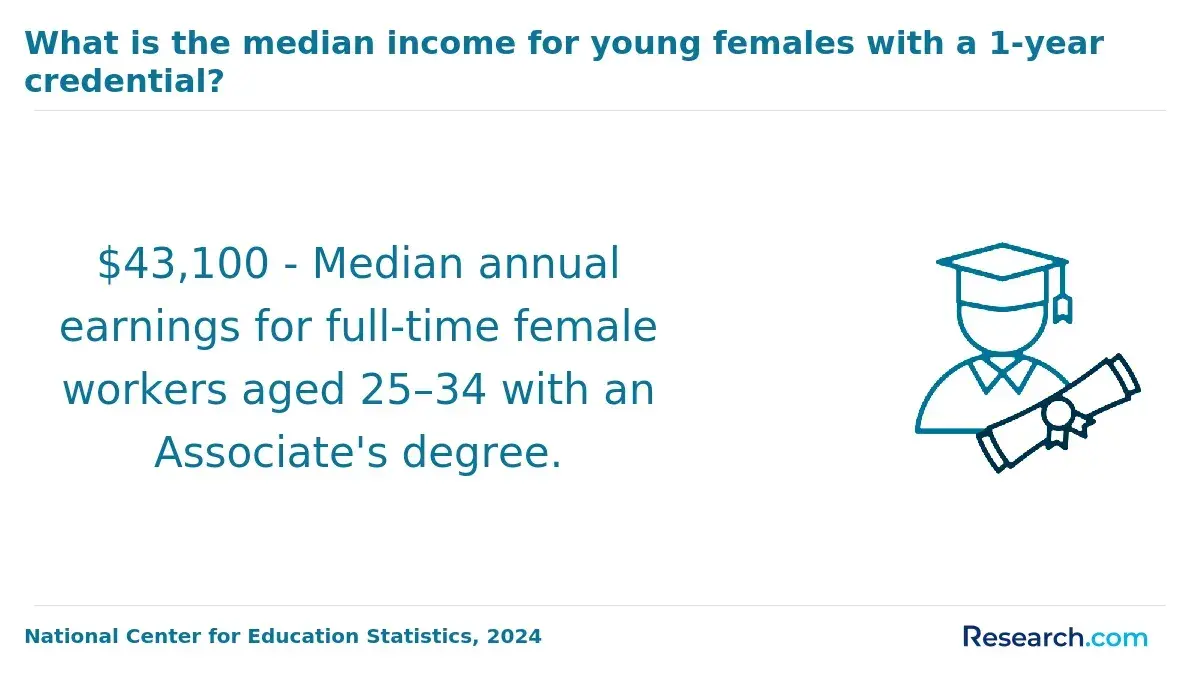
Choosing an online supply chain degree requires balancing time investment against tangible career benefits. Certificate and associate programs offer quicker returns, typically completed within 1 to 2 years, making them practical for professionals needing immediate skill upgrades without lengthy disruption. Bachelor's degrees demand a longer commitment—3 to 4 years full-time—with many students extending beyond 4 years part-time, often complicating income continuity. Master's programs, spanning 1 to 2 years, concentrate on specialized topics like global trade compliance and analytics, justifying higher tuition with potential salary premiums in complex regulatory environments.
Costs correlate with credential levels and institutional types. Certificates can cost $2,000 to $8,000, attractive for swift workforce entry. Bachelor's degrees at public universities average $15,000 to $40,000, while private institutions command notably more. Master's tuition ranges from $20,000 to $50,000, occasionally offset by employer sponsorship, but should factor in extra fees up to $2,000 annually for technology and exams.
Practical outcomes depend on integrating applied experience within programs. Employers prioritize candidates who combine degrees with project work or certifications, not just academic credentials.
In manufacturing hubs with international supply chains, mastering global trade nuances equips graduates for higher wages and leadership roles. The projected growth in global logistics, estimated to approach $13 trillion by 2027, reinforces the strategic advantage of selecting programs emphasizing digital transformation and applied analytics.
What careers in global trade and supply chain can graduates pursue with this degree?
A career leveraging an online supply chain management degree intertwined with global trade expertise demands navigating complex regulatory and operational tradeoffs. For instance, a global supply chain analyst focused on technology manufacturing integrates geopolitical risk with supplier resilience strategies, responding to a post-2020 landscape where 57% of organizations increased investment in risk management, according to ASCM's 2024 survey.
Specialists in trade documentation and customs brokerage must master trade agreements and compliance frameworks, particularly in sensitive sectors like pharmaceuticals and food distribution, where errors cause costly delays. Meanwhile, international procurement managers balance vendor negotiations, currency fluctuations, and trade finance to reduce costs without compromising supply continuity.
Supply chain network design requires advanced modeling skills in retail and automotive industries to optimize inventory distribution while factoring in tariffs and shifting trade policies. Decision-making often involves prioritizing faster shipping over cost savings—all while ensuring regulatory compliance.
Mid-career professionals pursuing roles in global trade risk management should seek curricula incorporating disruption-ready tactics to manage supply shocks and evolving sanctions. Continuous learning about trade sanctions and sustainability mandates is critical to meeting employer expectations and sustaining vendor reliability.
What are the salary expectations and job outlook in supply chain and global trade fields?
Salary prospects for supply chain and global trade roles reveal a practical disparity: those with cross-border compliance and trade regulation expertise earn notably more than peers focused exclusively on domestic operations. This reflects the premium businesses place on navigating international tariffs, customs, and export-import rules, which directly reduce costly delays and compliance risks.
Projected job growth for logisticians is robust at 22%, signaling sustained demand, but candidates must recognize that core quantitative skills alone no longer suffice. Employers increasingly seek fluency with tools like SAP or Oracle alongside nuanced global trade knowledge, which influences hiring decisions and advancement pace.
Regional labor markets with concentrated supply chain activity, such as Charles Town, WV; Knoxville, TN; and Houston, TX, often offer higher wages fueled by competitive local industry presence. For students evaluating educational options, programs blending supply chain fundamentals with international trade law and technology are most aligned with employer expectations.
Tradeoffs include balancing specialized compliance training against broader managerial coursework, understanding that graduates with this hybrid skill set experience shorter job searches and more resilient career trajectories.
Which professional certifications align with online supply chain degrees emphasizing global trade?
Employers increasingly demand certifications like the Certified Supply Chain Professional (CSCP), Certified in Logistics, Transportation and Distribution (CLTD), and Certified Professional in Supply Management (CPSM) alongside online supply chain degrees focused on global trade. These credentials provide practical expertise in international regulations, logistics, and procurement that degrees alone often lack.
For instance, a supply chain analyst at a multinational manufacturing firm relies on CSCP knowledge to optimize cross-border inventory flows and manage tariff compliance-capabilities that candidates without certification frequently miss. The CLTD credential targets transportation and distribution challenges across borders, equipping professionals to address customs clearance issues and mitigate logistical delays as companies expand internationally.
Employers weigh certifications heavily because they demonstrate functional, applied knowledge beyond academic theory. However, pursuing certifications requires balancing time and financial costs with degree programs. A strategic approach-completing a foundational degree before certification-tends to improve hiring outcomes and salary gains compared to simultaneous enrollment without prior field experience.
ASCM data shows 76% of supply chain professionals engaged in continuing education or certification recently, many through online platforms. This highlights ongoing employer preference for validated skills in navigating complex global trade dynamics embedded within supply chain education.
How can students evaluate and choose the best online supply chain program for global trade?
Choosing an online supply chain program for global trade requires careful evaluation of curriculum specificity and its alignment with employer needs. Programs that integrate specialized courses in international logistics, customs, and compliance tend to directly influence employability in cross-border roles. For instance, manufacturing export managers must access content on export documentation and trade finance, while retail distribution professionals need strong inventory management training.
Student outcomes hinge on measurable factors like graduate placement rates and employer engagement, especially opportunities to work with practical case studies or software platforms such as ERP or trade compliance tools. Data from ASCM's career survey shows a 95% employment retention rate among supply chain professionals, signaling sustained demand for these competencies.
Prospective learners should weigh program delivery against their job schedules, ensuring flexible formats without sacrificing accreditation or faculty expertise in global trade regulations, which have rapidly evolved post-pandemic. Networking access is another critical factor when targeting multinational firms or consulting roles in international commerce.
Additionally, tuition costs must be assessed against tangible returns like salary improvements or accelerated promotion timelines. Overpriced programs with limited practical benefit risk diluting the investment. Thoughtful comparison based on these criteria supports a strategic pivot or advancement rather than a generic credential boost.
Other Things You Should Know About Supply Chain Management
Online supply chain management degrees often require significant self-discipline because courses combine theory, case studies, and project work that simulate real-world scenarios. Working professionals must expect intensive periods, especially during group projects or global trade simulation exercises. Programs with flexible pacing or modular course structures are preferable, as they reduce drop-out risk and allow balancing work and study commitments without sacrificing learning outcomes.
Employers actively seek candidates from programs offering international partnerships, internships, or simulated trade environments, as these experiences reflect real-world readiness. Programs lacking such opportunities may be perceived as more theoretical and less practical. If your goal is to work in global trade, prioritize degrees with structured global exposure, since these facilitate networking, understanding foreign market dynamics, and demonstrate practical adaptability to employers.
An online degree alone provides foundational knowledge but rarely suffices for senior or specialized roles. Employers in global trade sectors often expect industry-recognized certifications like Certified Supply Chain Professional (CSCP) or Customs qualifications alongside academic credentials. Recent graduates should plan to obtain relevant certifications to enhance employability and advancement prospects, particularly because certifications validate practical skills beyond theoretical knowledge gained from degree programs.
References
- 19 supply chain certifications for you and your company https://fsc.org/en/blog/supply-chain-certification
- Global Supply Chain Management Course | MSU Online https://www.michiganstateuniversityonline.com/programs/course/global-supply-chain-management-2/
- Choose the Right Supply Chain Management Degree for Global Careers | BSBI https://www.berlinsbi.com/blog/how-to-choose-the-right-supply-chain-management-degree-for-global-careers
- CourseCareers https://coursecareers.com/blog-posts/supply-chain-degree-vs-apics-certification-vs-online-training
- Have you considered a career in Logistics & Supply Chains? - MANCOSA https://www.mancosa.co.za/blog/have-you-considered-a-career-in-logistics-supply-chains/
- FULL-TIME | WINNIPEG LOCATIONS LOGSF-DP Logistics and Supply Chain Mgmt - Business Administration https://catalogue.rrc.ca/Programs/WPG/Fulltime/LOGSF-DP/PrinterFriendly
- Top Supply Chain Management Certifications to Boost Your Career - HUBBIG https://hubbig.com/en/top-supply-chain-management-certifications-to-boost-your-career/
- Supply Chain Management Salary and Career Outlook https://teach.com/online-ed/business-degrees/online-masters-supply-chain-management/salary-and-career-outlook/
- Continuing Education in Global Logistics: A Powerful Catalyst for Career Growth https://gofreightpath.com/continuing-education-in-global-logistics-a-powerful-catalyst-for-career-growth/