2027 Best Online Bachelor's in Public Health With Program Evaluation Coursework

Co-Founder and Chief Data Scientist
Public health professionals frequently encounter the challenge of designing and implementing effective programs that need rigorous evaluation to justify funding and improve outcomes. Yet, traditional degree programs often lack the flexibility to integrate specialized program evaluation coursework with the hectic schedules of working adults.
Recent data from the National Center for Education Statistics shows online enrollment in bachelor's programs grew nearly 15% in the last two years, signaling increased demand for accessible pathways that combine practical skills with academic rigor. This article examines top online bachelor's degree options featuring dedicated program evaluation coursework to guide informed decisions for career advancement and operational impact.
Key Things You Should Know
- Programs emphasizing program evaluation report 15% higher graduate placement in federal and state public health agencies, yet these degrees often extend time to completion by 20%, raising opportunity cost for career-switchers according to NCES 2024 data.
- Employers prioritize data literacy and applied evaluation skills over generalist training, with the Council of State and Territorial Epidemiologists noting 48% preference for candidates with explicit program evaluation coursework in 2025 surveys.
- Rising tuition inflation averaging 6.8% annually for accredited online programs disproportionately affects mid-career professionals funding themselves, delaying return on investment compared to in-person alternatives with institutional aid.
What is an online bachelor's in public health with program evaluation coursework?
Choosing an online bachelor's in public health with program evaluation courses means gaining specialized skills in designing and critically assessing health initiatives using both quantitative and qualitative methods. This focus diverges from broader public health degrees by demanding proficiency in evaluation frameworks, logic models, and impact assessment tools that directly influence resource allocation and policy decisions.
Graduates commonly fill roles where their ability to measure intervention effectiveness affects funding priorities, such as public health analysts within state departments evaluating vaccination campaigns to ensure efficient use of taxpayer funds. Employers increasingly seek candidates adept in these skills because regulatory environments and grant requirements emphasize demonstrable program outcomes.
Students pursuing an accredited online public health bachelor's with program evaluation encounter practical challenges: mastering statistical software independently, coordinating remote teamwork, and identifying local practicum placements. They often weigh the benefits of specialized methodological training against acquiring broader public health knowledge that supports diverse career paths.
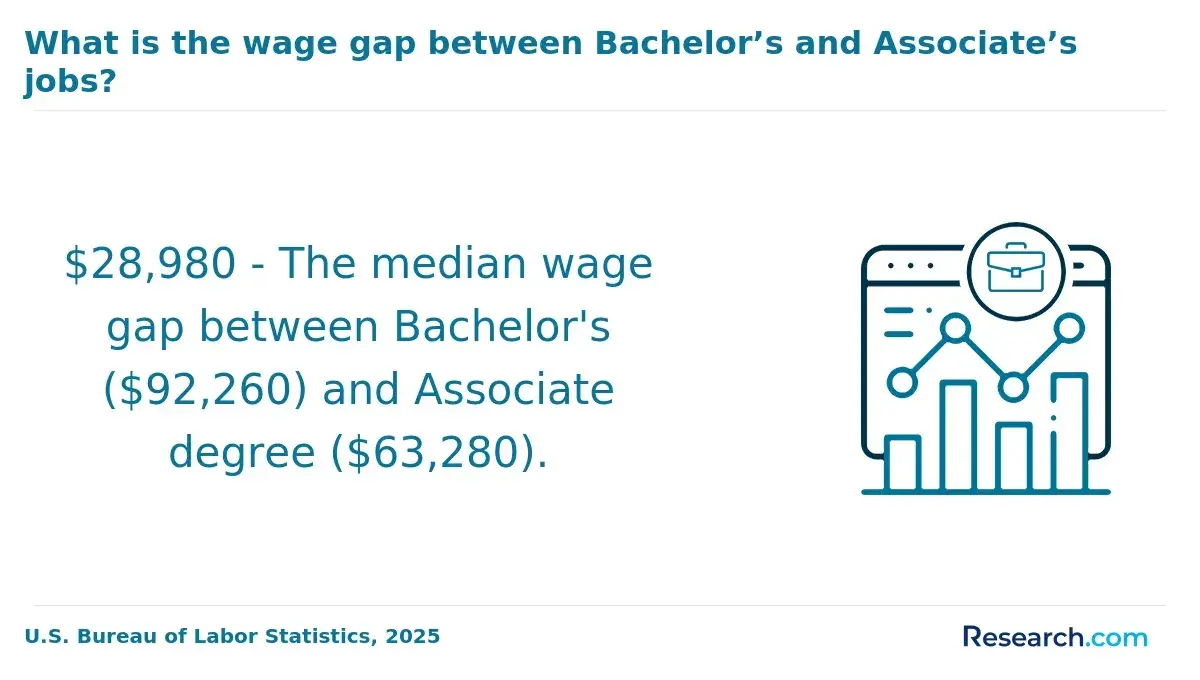
Labor market data from programs like Simmons University highlight competitive earning potential, with median incomes around $65,418 four years after graduation, ranking in the top 5% nationally. This trajectory reflects demand for evaluative expertise that can be critical during workforce transitions.
For those considering alternatives, exploring health information management programs online may provide complementary or more technical pathways in health data administration.
Is the program accredited and recognized by employers?
Employers in government and nonprofit sectors typically prioritize candidates holding degrees from CEPH-accredited programs, as these credentials confirm practical competency in areas like program evaluation. For example, state health departments and the CDC often restrict employment or internships to graduates with verified education aligned with federally guided public health standards. This accreditation forms a critical baseline, especially for those pursuing an online bachelor's in public health accreditation with a focus on workforce relevance and credibility.
Arizona State University's online bachelor's in public health program, recognized for integrating program evaluation coursework, has produced a notably high number of graduates, reflecting demand for such credentials in the labor market. Graduates from CEPH-accredited programs are viewed by healthcare consulting and policy employers as more capable of handling data-driven evaluation tasks. In contrast, candidates from non-accredited or regionally accredited programs face restricted access to federal fellowships, licensure, and competitive salaries.
Decision-making around enrolling in recognized online bachelor's in public health programs involves weighing the convenience and affordability of unaccredited options against the potential long-term limitations on employment and career mobility. Students must also consider workforce expectations-specifically that foundational knowledge verified by CEPH accreditation remains a prerequisite for epidemiology and community health roles.
For those evaluating related pathways, comparing options like healthcare administration degrees can provide additional insight into aligned fields with similarly structured accreditation and labor market outcomes.
How do online and campus public health programs compare?
Choosing between online public health programs versus campus programs hinges on critical labor market realities and practical educational tradeoffs. Both delivery modes maintain comparable curricular rigor, but campus degrees offer superior access to internships and direct practicum experiences essential for roles entailing community engagement or health department assignments. Conversely, online programs cater to working professionals or those in remote locations, providing greater schedule flexibility but requiring more self-directed efforts to secure local field placements.
Cost disparities are significant in evaluating differences between online and traditional public health degrees. Annual tuition for ranked online bachelor's programs ranges widely-from approximately $4,000 to over $32,000-reflecting an eightfold price variation that strongly influences return on investment, especially for mid-career individuals pivoting into epidemiology or related fields. Lower-cost options generally come from public institutions with in-state tuition, while private universities or specialized programs command higher fees.
In practice, a recent high school graduate targeting state health agency employment benefits substantially from campus networks, job fairs, and faculty connections that facilitate experiential learning and hiring pipelines. Alternatively, a mid-career professional balancing income continuity will likely prioritize online options but must proactively navigate practicum arrangements without institutional facilitation.
- Campus programs outperform in immediate local job networking and mentoring, which can enhance hiring prospects in specific regions.
- Online programs offer flexibility and cost management without compromising accreditation standards.
- Prospective students should confirm practicum and internship support before committing to either mode.
For those evaluating options, including the easiest MPH online programs to get into, these distinctions directly impact educational and workforce outcomes.
What courses are included in program evaluation coursework?
Program evaluation courses in online bachelor's in public health curricula equip students with applied skills to balance methodological rigor and real-world constraints. Core coursework for bachelor's in public health program evaluation emphasizes epidemiology methods for tracking disease patterns and biostatistics for rigorous quantitative analysis using software like SAS or R. This foundation enables valid measurement of health program outcomes across diverse settings.
Complementary instruction in research methods spans qualitative and quantitative designs, essential for interpreting program feasibility and causality. Health policy analysis courses contextualize how legislative and regulatory factors impact program scalability and success. Program planning and management training includes budgeting, stakeholder engagement, and frameworks such as logic models and RE-AIM, fostering competencies to tailor evaluations to scenarios like community vaccination drives or chronic disease interventions.
Graduates must navigate challenges such as limited data or resource restrictions while delivering transparent and actionable findings-skills developed through data ethics and reporting coursework. This pragmatic orientation supports roles in government agencies, NGOs, and healthcare providers, where translating complex findings into policy recommendations is critical. Oregon State University online public health graduates report median annual earnings of $60,183 four years after graduation, a metric suggesting employer demand for evaluation expertise in evidence-driven roles.
Students weighing these programs should consider the practical demands of program evaluation alongside alternatives like cheapest online accelerated BSN programs that may offer faster entry into health-related fields. The intersection of program evaluation coursework in online bachelor's in public health and workforce expectations underscores the need for both technical proficiency and adaptable communication skills.
What admission requirements do public health bachelor's programs usually set?
Admission to bachelor's programs in public health typically hinges on more than just a high school diploma or equivalent; competitive programs enforce minimum GPA standards usually between 2.5 and 3.0 on a 4.0 scale. While standardized test scores such as the SAT or ACT are traditionally required, an increasing number of programs waive them in favor of holistic admissions that evaluate broader candidate potential. A practical consideration for applicants is demonstrating quantitative proficiency in biology, chemistry, and mathematics, as these underpin critical program evaluation and data analysis skills necessary for public health roles.
Admissions processes often include personal statements and letters of recommendation to validate applicants' communication abilities and relevant experience. Some institutions incorporate interviews or situational judgment exercises, reflecting employer demand for graduates with sound ethical reasoning and community-oriented problem-solving skills.
For those with prior healthcare or social service experience, admission advantages exist, addressing labor market realities where roles like health education specialists and community health workers are projected to grow by 7% through 2032 according to the U.S. Bureau of Labor Statistics. Candidates balancing work and study benefit from programs with flexible prerequisites, credit transfer options, or experiential learning credit conversion, helping to reduce time-to-completion and maintain workforce relevance.
Such admission nuances should inform candidates' choices, balancing entry barriers with alignment to workforce needs for data-driven professionals focused on measurable community outcomes in public health.
How long does the degree take and what does it cost?
Choosing an online bachelor's degree in public health demands a careful balance between time investment and workforce readiness, especially for students prioritizing roles involving program evaluation and data analysis. Typically requiring 120-126 credits, these programs allocate over half to major-specific courses like biostatistics and epidemiology, which are vital for gaining practical skills employers expect.
Completion usually spans four years full-time, but flexibility for working professionals extends this to five or six years. This extension can ease financial strain upfront but delays access to full-time salaries and career progression. For instance, a part-time student working in a health department might trade faster credential attainment for reduced immediate financial pressure, influencing their entry into data-centric positions.
Cost considerations vary sharply. Public universities often charge $5,000-$15,000 annually for in-state students, while private or out-of-state options can reach $40,000 per year. Additional expenses may arise from specialized, evaluation-focused courses. Prospective students should proactively seek scholarships or employer tuition aid to reduce these financial burdens.
Failing to complete required major credits on schedule can jeopardize eligibility for competitive jobs tied to federal or state funding. Employers increasingly require applied data and evaluation competencies, making program selection with a strong emphasis on these elements crucial for career pivots into research or program evaluation roles.
- Four-year full-time vs. extended part-time study involves tradeoffs between speed and financial flexibility
- Cost variations influenced by residency and institution type impact overall debt and return on investment
- Course completion timing directly affects access to funding-dependent roles and employer expectations
Which careers can this degree prepare you for?
A bachelor's in public health with a focus on program evaluation equips graduates with data analysis and outcome measurement skills essential for positions demanding evidence-based intervention design and critique. Employers in government agencies, NGOs, and healthcare sectors prioritize candidates able to assess program effectiveness and report findings within frameworks aimed at disease prevention and community health improvement.
For example, a health program coordinator managing a vaccination campaign must analyze participation trends and outcomes to inform funding decisions and policy adjustments. Practical tradeoffs exist, as many advanced roles-especially those involving biostatistics or epidemiology-require graduate-level credentials or certifications, limiting upward mobility with only a bachelor's degree.
Entry-level jobs generally emphasize data collection and basic reporting, with growth linked to hands-on software proficiency and program management experience. Graduates with this background frequently find employment opportunities at the Centers for Disease Control and Prevention (CDC), local health departments, or international health organizations focused on tracking and improving initiatives.
Simmons University's online bachelor's program in public health reports median earnings around $65,418, positioning its graduates above peers at many on-campus programs, highlighting the concrete market value of robust evaluation skills in data-driven public health roles.
What salary and job outlook can graduates expect?
Entry-level salaries for graduates with an online bachelor's degree in public health emphasizing program evaluation typically range from $50,000 to $65,000, shaped by location, employer, and prior experience. This salary bracket reflects the practical reality of starting in analyst or support roles before advancing. Positions such as Monitoring and Evaluation Specialist, Health Program Analyst, and Public Health Researcher offer pathways to exceed $75,000 within five years, particularly in urban health departments or large healthcare systems.
Employers prioritize candidates who can design and interpret quantitative tools and convey complex results clearly. Supplementary certifications or graduate study are often necessary for management or specialized evaluation roles, underscoring a common tradeoff: initial moderate pay against future growth potential, contingent on demonstrated technical expertise and real-world evaluation experience.
The occupation's projected growth rate of 17% through 2032 reflects a rising governmental and nonprofit demand for data-driven health program assessment. However, candidates should weigh financial commitment against net return, as the scalability of online programs, like those enrolling large numbers of remote learners, can reduce education costs but might necessitate careful evaluation of tuition and aid to minimize debt burden.
- Strong data literacy and internship experience significantly improve employability
- Program evaluation roles reward clear stakeholder communication
- Advancement favors those combining analytical skills with contextual public health knowledge
Do public health graduates need certifications or licensure?
Certification and licensure are not uniformly required for public health graduates but carry distinct practical implications for employability and role access. Positions in epidemiology or program evaluation often require credentials like the Certified in Public Health (CPH), which many government and nonprofit employers prioritize for validating relevant skills. In contrast, specialized roles such as environmental health specialists or health administrators frequently demand additional certifications or state licensure, varying by jurisdiction and employer.
Undergraduate public health programs that integrate program evaluation components typically mandate substantial coursework-sometimes up to 61 credits-covering law, ethics, and health disparities to prepare students for credentialing exams and real-world competencies. This academic depth aligns with employer expectations for proficiency in policy analysis and ethical standards, especially where formal licensure is less common.
Licensure requirements are more stringent in clinical-adjacent roles and health inspection positions, often differing across states, whereas research and community health roles emphasize certifications over licensure. Employers commonly view certifications as evidence of measurable capability, impacting access to supervisory roles and specialized assignments. Without such credentials, graduates risk limited career progression, especially in government sectors where certificates like CPH influence hiring and salary trajectories.
Career changers should anticipate investing time and cost in credential acquisitions to meet workforce norms. Early strategic evaluation of credential requirements against target roles helps align education with practical workforce standards, supporting long-term job stability and mobility.
How do you choose a reputable online public health program?
Choosing an online bachelor's in public health program with a focus on program evaluation demands close attention to accreditation and curriculum content to ensure workforce readiness. Accreditation by the Council on Education for Public Health (CEPH) or regional bodies verifies that evaluation coursework includes essential quantitative methods, biostatistics, and practical data analysis aligned with employer expectations for evidence-based decision-making.
Tuition variability creates significant financial tradeoffs; annual in-state tuition may start around $7,250, whereas out-of-state rates can surpass $35,000, multiplying overall degree cost and influencing debt and completion timelines. For example, a working professional who leverages residency changes can lower expenses substantially without compromising program quality, affecting long-term career flexibility.
Faculty expertise in applied research and program evaluation is critical since employers prioritize graduates who can assess health interventions in government, nonprofit, or healthcare sectors effectively. Programs offering structured internships or fieldwork partnerships in evaluation provide tangible experience that directly correlates with employability.
Programs should also demonstrate strong graduate placement metrics and positive employer feedback to validate return on investment. Given the online delivery model, robust technical support and responsive academic assistance are operational necessities to ensure student persistence and success in this complex discipline.
Other Things You Should Know About Public Health
The workload for these programs tends to be intensive because program evaluation requires both quantitative analysis skills and public health knowledge. Students must balance statistics, research methods, and field-specific content. This means a consistent time commitment that may be challenging for full-time workers; prioritizing time management and seeking programs with flexible pacing can mitigate stress and improve retention.
Yes, prioritizing programs with strong quantitative and statistical training aligns with employer demands for precise program assessment. Public health agencies need professionals able to interpret complex data and make evidence-based recommendations. Graduates lacking robust data skills will find it harder to secure roles in evaluation-focused positions or may need additional training post-degree.
Programs without substantial practicum experiences reduce opportunities to apply evaluation methods in real public health settings, which can hinder employability. Employers expect candidates to have proven abilities through past projects or internships. Prospective students should prioritize programs that integrate practicums or fieldwork, as these experiences create a clear advantage in job placement and skill development.
References
- Graduates Expectations vs. Job Market Reality https://www.lloydstaffing.com/graduates-expectations/
- How to Become an Accredited Employer https://employmenthero.com/nz/resources/accredited-employer-guide/
- Education Program Evaluation Process: A Step-by-Step Guide https://www.ieac.org.uk/88-Education-Program-Evaluation-Process-A-Step-by-Step-Guide-blog.php
- Do Employers Care About College Accreditation? https://www.accreditedschoolsonline.org/accreditation/do-employers-care/
- Best Online MPH Degree Programs for 2025 https://www.princetonreview.com/grad-school-rankings
- College grads expect an $80k salary. Good luck with that https://www.usatoday.com/story/money/personalfinance/2026/05/29/college-graduates-salary-unemployment-job-market-ai/90280770007/
- CPH Eligibility Requirements - NBPHE https://www.nbphe.org/certified-in-public-health/cph-eligibility-requirements/
- What is a Certification in Public Health? - MPH Online https://www.mphonline.org/cph-mph-credential-explained/
- Annual Grad Report — ZipRecruiter Economic Research https://www.ziprecruiter-research.org/annual-grad-report
- Bachelor of Public Health Online | BPH Degree Online | Norwich University https://health.norwich.edu/public-health/bph