2027 How to Choose an Online Physics Degree as a Career Changer

Co-Founder and Chief Data Scientist
Changing into physics is a high-stakes decision because the degree is demanding, lab-based, and strongly tied to your target career. The payoff can be meaningful: BLS May 2024 wage data placed physicists' median annual pay at about $161,000, though many related roles require different credentials or experience.
This guide is for adults moving from non-STEM or adjacent fields who need a practical way to compare online physics programs, costs, timelines, accreditation, and job outcomes before enrolling.
Key Things You Should Know
- An online physics degree can work for career changers, but you should verify regional or institutional accreditation, lab delivery, transfer-credit policy, and whether the program supports your target path before applying.
- Cost varies widely: College Board's 2024-25 data listed average published tuition and fees at $11,610 for in-state public four-year colleges and $43,350 for private nonprofit four-year colleges, before aid and living costs.
- Physics can lead to research, engineering-adjacent, teaching, data, energy, aerospace, and technology roles, but many physicist jobs require graduate study; BLS May 2024 data placed physicists' median pay at about $161,000.
What is an online physics degree and how does it work for career changers?
An online physics degree is a college program that teaches the mathematical and experimental foundations of matter, motion, energy, waves, electricity, magnetism, quantum behavior, and computational modeling through remote coursework. For career changers, the main question is not simply whether the lectures are online; it is whether the program provides enough math depth, lab experience, faculty access, and career alignment to support the next professional step.
Most online physics programs use asynchronous lectures, live problem-solving sessions, remote discussion boards, simulation software, take-home experiment kits, virtual labs, proctored exams, and sometimes short campus residencies. Because physics is both theoretical and experimental, the strongest programs explain exactly how students complete lab requirements and how those labs appear on the transcript.
Career changers usually enter with one of three goals: moving into a technical role, preparing for graduate study, or qualifying for teaching or science-adjacent work. The right program depends heavily on which of those goals applies. A learner aiming for graduate physics or engineering research needs a more math-intensive curriculum than someone using physics as a quantitative foundation for data analytics, technical sales, energy consulting, or science education.
A useful way to think about the degree is as a structured bridge into quantitative work. It can be a strong choice if you enjoy mathematics, can tolerate abstract problem-solving, and want a credential that signals rigorous analytical training. It may be a poor fit if your main goal is the fastest route to a specific licensed occupation, a software-only role, or a career that requires hands-on clinical or engineering licensure that a physics degree alone does not provide.
Is an online physics degree respected and properly accredited in the United States?
An online physics degree can be respected in the United States when it comes from a properly accredited institution and includes credible coursework, labs, assessments, and faculty support. Employers and graduate schools usually care less about whether a course was online and more about whether the school is accredited, the curriculum is rigorous, and the applicant can demonstrate strong quantitative and technical skills.
The first accreditation checkpoint is institutional accreditation from an agency recognized by the U.S. Department of Education or the Council for Higher Education Accreditation. This matters because it affects federal financial aid eligibility, credit transfer, graduate school recognition, and employer trust.
Programmatic accreditation is less common in physics than in fields such as nursing, education, engineering, or business, so do not assume a physics program is weak just because it lacks a physics-specific accreditor.
However, accreditation does not answer every career question. If you want to become a public school teacher, you must check state educator licensure requirements.
If you want engineering licensure, a physics degree usually is not the same as an ABET-accredited engineering degree. If you want a research physicist role, you should verify that the program prepares students for graduate-level coursework in classical mechanics, electromagnetism, quantum mechanics, thermodynamics, and advanced mathematics.
Use this accreditation checklist before you request information or submit an application:
- Confirm the institution's accreditation status through a recognized U.S. accreditation database, not only the school's marketing page.
- Ask whether the transcript or diploma labels the program as online, and whether that has affected alumni applying to graduate programs or technical jobs.
- Request details on lab delivery, including whether labs use kits, simulations, local partners, or required campus sessions.
- Ask whether physics majors receive access to faculty advising, research opportunities, tutoring, and career services comparable to campus students.
- Check whether credits transfer into graduate programs, teacher-preparation programs, or related STEM degrees if your career goal changes.
Be cautious with schools that emphasize speed over rigor, avoid clear answers about labs, or promise specific salaries. Physics is a respected field, but the value of an online degree depends on academic quality and how well the program matches your target outcome.
How do online physics degrees compare to campus programs for flexibility and learning quality?
Online physics programs can be more flexible than campus programs, especially for adults balancing work and family responsibilities. The trade-off is that physics is lab- and math-heavy, so online learners must be comfortable studying independently, using software tools, and seeking help before small misunderstandings become major gaps.
The table below compares the practical differences that matter most for career changers. It is not meant to say one format is always better; it shows which format fits different constraints and goals.
| Comparison point | Online physics degree | Campus physics degree | Best fit |
| Schedule flexibility | Often asynchronous or evening-friendly, with deadlines and proctored exams | Fixed class and lab times | Online fits working adults; campus fits students who can attend full time |
| Lab access | May use kits, simulations, remote instrumentation, local arrangements, or short residencies | Direct access to teaching labs, equipment, and lab partners | Campus is often stronger for research-heavy goals; online can work if lab design is transparent |
| Faculty interaction | Depends on office hours, discussion tools, response time, and class size | More spontaneous interaction before and after class | Either can work if advising is strong |
| Peer network | Built through group projects, forums, and virtual study groups | Built through labs, clubs, seminars, and departmental events | Campus has a natural advantage; online students must be intentional |
| Graduate school preparation | Strong if curriculum includes upper-division theory, labs, and faculty recommendations | Often easier to access research and advanced electives | Campus may be better for PhD-bound students unless the online program has research pathways |
Online learning quality has improved because more programs now use simulation platforms, remote data collection, recorded problem walkthroughs, and digital collaboration tools. Still, physics is not a passive subject. A strong online learner should expect to solve many problems, attend office hours, use computational tools, and form study groups.
If you are comparing online science degrees more broadly, remember that physics is usually more math-intensive than many life-science and health-science options. For example, someone drawn to applied health, food systems, or wellness science may find a nutrition school online more aligned with their goals than a physics program.
What admission requirements do online physics programs have for students without a STEM background?
Admission requirements vary by school and degree level, but career changers without a STEM background should expect the program to evaluate both general college readiness and math preparation. Physics builds quickly from algebra and trigonometry into calculus-based mechanics, electromagnetism, differential equations, and computational methods, so math placement matters more than prior job title.
Many bachelor's programs admit students through standard undergraduate admissions, then place them into the appropriate math sequence. Master's programs are more selective because they often expect prior coursework equivalent to a physics major or a closely related STEM degree. If you lack that background, the school may require bridge courses, conditional admission, or a second bachelor's pathway.
These are the requirements and preparation steps career changers should look for before applying:
- College transcripts showing completed general education courses and any transferable math, science, or programming credits.
- Math placement into precalculus, calculus I, or higher, depending on the starting point of the physics curriculum.
- Prerequisites such as calculus-based introductory physics, chemistry, linear algebra, differential equations, or computer programming for advanced standing.
- A personal statement that explains why you are changing careers and how the degree supports a realistic target role.
- Letters of recommendation for graduate programs, ideally from instructors or supervisors who can comment on analytical ability and persistence.
If you do not yet have calculus, do not treat that as a disqualifier. It simply changes your timeline. A practical route is to complete precalculus and calculus I through an accredited community college or the same university before entering upper-division physics. College Board's 2024-25 data listed average published tuition and fees at $4,050 for public two-year colleges, which can make prerequisite completion less expensive than starting every course at a four-year institution.
The biggest mistake is applying to a program without asking where you will start in the math sequence. A program advertised as a four-year degree may take longer if you need developmental math, repeated calculus, or prerequisite physics before upper-division coursework.
What physics and math courses will I take in an online degree program?
An online physics degree usually combines mathematics, core physics, laboratory methods, computing, and electives. For career changers, the course list is important because it shows whether the program is designed for broad science literacy, technical employment, graduate preparation, or teacher preparation.
The table below summarizes common courses and why they matter. Course titles vary, but reputable programs should show a clear progression from foundational math to advanced physics and applied problem-solving.
| Course area | Common courses | Why it matters for career changers |
| Mathematics foundation | Calculus I-III, linear algebra, differential equations, probability or statistics | These courses support nearly every advanced physics topic and many analytics careers |
| Introductory physics | Mechanics, electricity and magnetism, waves, optics, thermodynamics | These courses establish the conceptual and problem-solving base for upper-division study |
| Advanced theory | Classical mechanics, electromagnetism, quantum mechanics, statistical mechanics | These are especially important for graduate school and research-oriented roles |
| Laboratory work | Modern physics lab, electronics lab, experimental methods, data analysis | Labs show that you can collect, analyze, and interpret physical measurements |
| Computing and modeling | Python, MATLAB, numerical methods, computational physics, simulation | These courses help translate physics training into technology, data, and engineering-adjacent work |
| Applied electives | Astronomy, materials, optics, energy systems, semiconductor physics, biophysics | Electives help align the degree with industries such as aerospace, energy, healthcare technology, or manufacturing |
The most valuable programs do not isolate theory from application. They ask students to model systems, analyze uncertainty, write technical reports, and use code to solve problems. Those skills are especially useful for career changers because they can connect prior professional experience with new technical training.
Current trends make computing more important than ever. AI tools can assist with coding, literature review, and simulation workflows, but they do not replace mathematical understanding. Employers still need people who can define a physical problem correctly, recognize bad assumptions, interpret noisy data, and explain results to non-specialists.
How long does it take to finish an online physics degree and what does it cost?
The time required to finish an online physics degree depends on your starting credits, math placement, enrollment intensity, and whether the program requires in-person labs or residencies. A first bachelor's degree often takes about four years of full-time study, while degree-completion students with transfer credits may finish faster. Part-time career changers commonly need more time because physics courses are sequential and cannot always be stacked freely.
Cost should be evaluated as total cost, not just tuition per credit. College Board's 2024-25 figures show why: average published tuition and fees were $11,610 for in-state public four-year institutions and $43,350 for private nonprofit four-year institutions. Online programs may reduce commuting and relocation costs, but they can still include technology fees, lab kits, proctoring fees, books, software, and travel for required residencies.
When comparing programs, look for these cost categories rather than relying on a single tuition number:
- Tuition per credit and the total number of credits required for the degree.
- Mandatory online learning, technology, lab, proctoring, graduation, and transcript fees.
- Costs for lab kits, scientific calculators, software licenses, textbooks, and computer upgrades.
- Travel, lodging, or time off work for any required campus labs, exams, or orientations.
- Transfer-credit limits that may require you to retake courses even if you studied similar material elsewhere.
- Federal, state, employer, military, scholarship, and institutional aid that may reduce the net price.
Federal loan costs are also part of the decision. For the 2024-25 academic year, Direct Loans carried fixed rates of 6.53% for undergraduate borrowers and 8.08% for graduate unsubsidized borrowers. That means borrowing for a second bachelor's, graduate certificate, or master's degree should be weighed against realistic career outcomes, not optimistic salary assumptions.
A smart affordability strategy is to complete lower-division math and general education credits at an accredited community college, then transfer into the physics major after confirming equivalency in writing. The risk is that some upper-division physics sequences are tightly structured, so late transfer can still extend your timeline if courses are offered only once per year.
Which physics degree level should I choose to support a mid-career transition?
The right degree level depends on what you want physics to do for your career. A bachelor's degree can open doors to technical, analytical, education, and engineering-adjacent roles, but many physicist and research scientist positions expect a master's or PhD. A certificate can be useful for targeted upskilling, but it rarely substitutes for the depth of a full physics degree.
The table below compares common degree levels from a career-changer perspective. Use it to match the credential to your goal before you spend time and money on applications.
| Credential | Typical fit | Strengths | Limitations |
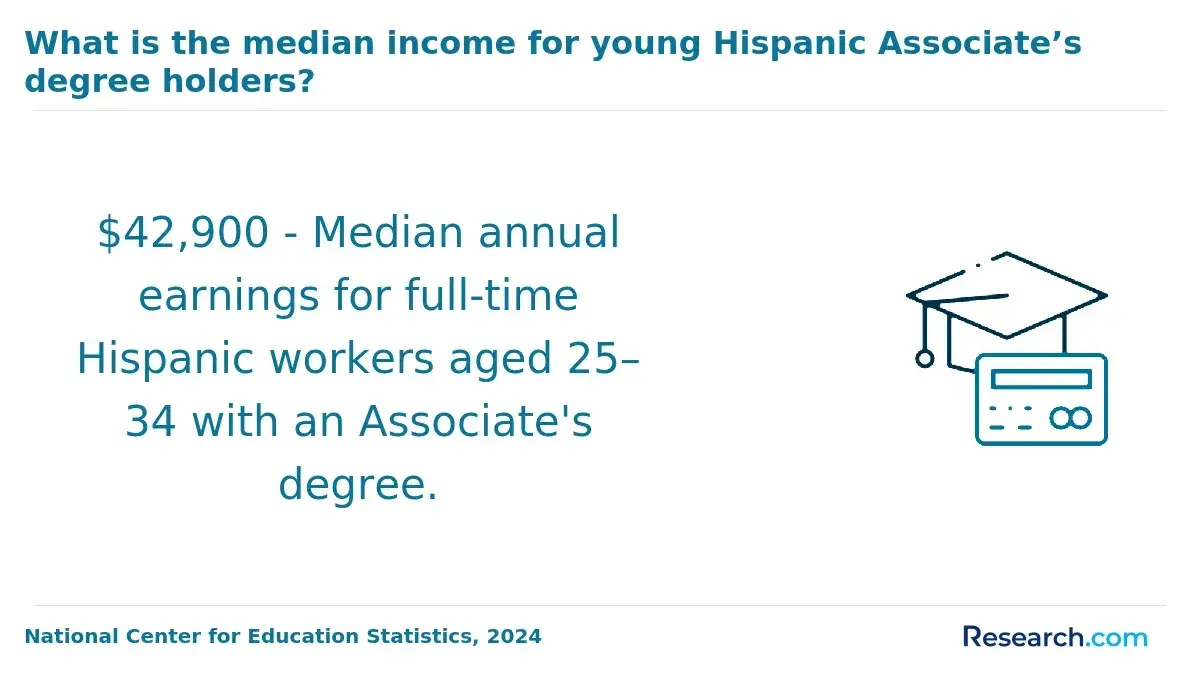
| Associate degree or prerequisite pathway | Students who need math, general education, or introductory science before a bachelor's | Lower-cost way to test interest and build readiness | Usually not enough for advanced technical physics roles |
| Bachelor's in physics | Career changers seeking broad quantitative training, technical roles, teaching pathways, or graduate preparation | Strong foundation across math, labs, and theory | May not qualify for research physicist roles without graduate study |
| Post-baccalaureate certificate | Adults with a prior degree who need selected physics or math courses | Targeted, shorter, and useful for prerequisites | Less comprehensive and may carry limited labor-market signal |
| Master's in physics or applied physics | Students with substantial STEM preparation aiming for advanced technical roles | More specialized and often closer to industry applications | Admissions may be difficult without prior upper-division physics |
| PhD in physics | Students aiming for research, academia, national labs, or advanced R and D | Deep research training and strongest path to physicist roles | Long timeline and highly specialized career path |
If your goal is a mid-career transition into technical analysis, product work, energy, instrumentation, or applied computing, a bachelor's plus internships, projects, and programming may be enough to start repositioning. If your goal is to become a physicist in the strict occupational sense, plan for graduate education and research experience.
It is also reasonable to compare physics with non-physics graduate pathways. For example, a career changer interested in information access, archives, academic libraries, or research support may find a master's in library science online program more directly aligned than a physics degree.
What jobs can a physics degree lead to for someone changing careers?
A physics degree can lead to several career directions, but the job title "physicist" is only one option. Career changers often use physics as proof of quantitative reasoning, modeling ability, technical writing, and comfort with complex systems. Your prior career experience can also shape the transition; for instance, a former project manager may move toward technical program management, while a former teacher may pursue science education or curriculum design.
The table below outlines common career paths and how physics training connects to them. It is a decision tool, not a guarantee of eligibility, because requirements vary by employer, state, and industry.
| Career path | Typical responsibilities | Additional preparation that may help |
| Research assistant or laboratory technician | Run experiments, maintain equipment, collect data, document procedures | Lab experience, instrumentation, safety training, data analysis |
| Physicist or research scientist | Develop models, design experiments, publish findings, solve advanced technical problems | Usually graduate study, research experience, strong faculty recommendations |
| Data analyst or data scientist | Analyze data, build models, communicate findings, automate workflows | Python, statistics, machine learning, portfolio projects |
| Engineering-adjacent technical role | Support testing, modeling, quality, systems analysis, or product development | CAD, electronics, materials, industry experience, sometimes engineering coursework |
| High school physics teacher | Teach physics, design labs, assess students, meet state curriculum standards | State teacher licensure, supervised teaching, education coursework |
| Technical writer or science communicator | Translate complex technical material for customers, students, or decision-makers | Writing samples, subject-matter specialization, communication portfolio |
| Energy, climate, or environmental analyst | Model systems, evaluate data, support sustainability or energy projects | Environmental science, GIS, statistics, policy knowledge |
Physics is especially useful in fields where employers need people who can reduce messy problems to measurable variables. That includes aerospace, defense, semiconductors, optics, renewable energy, medical devices, finance, software, and research organizations. If your interests lean toward climate, conservation, or sustainability rather than core physical modeling, compare physics with what jobs can you get with an environmental science degree before choosing a major.
For many career changers, the strongest strategy is to pair physics with a marketable applied skill. Examples include Python, SQL, statistical modeling, electronics, CAD, technical writing, project management, or teaching licensure. A degree tells employers you can handle difficult material; projects and experience show how you apply it.
What salary ranges and job outlook can physics graduates expect in key industries?
Physics-related salary and job outlook vary widely because graduates work across research, education, technology, defense, data, engineering support, and energy. The highest-paying physicist roles often require graduate training, while bachelor's-level graduates may start in technician, analyst, teaching, or technical support roles before advancing.
The table below uses recent U.S. labor-market data to give a realistic salary and outlook context for common physics-adjacent paths. Treat these figures as occupational benchmarks, not as outcomes promised by any degree program.
| Occupation | Recent U.S. salary benchmark | Outlook context | How a physics degree may fit |
| Physicist | BLS May 2024 median annual pay was about $161,000 | Research roles are specialized and often graduate-level | Best fit with strong upper-division physics, labs, research, and often graduate study |
| Data scientist | BLS May 2024 median annual pay was about $112,000 | Demand is supported by AI, analytics, and automation adoption | Physics helps with modeling, but programming and statistics are essential |
| Operations research analyst | BLS May 2024 median annual pay was about $91,000 | Employers value optimization, forecasting, and decision modeling | Physics math training can transfer well with business or systems knowledge |
| High school teacher | BLS May 2024 median annual pay was about $64,000 | Openings depend heavily on state, district, and subject shortages | Physics content knowledge must be paired with state licensure |
| Engineering technician | BLS May 2024 wages varied by specialty, with many technical fields below physicist-level pay | Hiring depends on manufacturing, aerospace, electronics, and energy activity | Physics can help, but hands-on tools and industry-specific skills matter |
The AI trend is changing how physics graduates compete. Employers increasingly expect technical workers to use computational tools, automate data workflows, validate model outputs, and communicate uncertainty. Physics graduates who combine theory with Python, statistics, simulation, and domain knowledge may be better positioned than those who rely on coursework alone.
Do not evaluate salary using only the physicist occupation title unless you are prepared for graduate study. A more realistic ROI analysis compares the specific roles you can enter after your chosen degree level, the cost of the program, the time you will spend out of the workforce, and the experience you already bring from your previous career.
If you are mainly attracted to the analytics side of physics, compare the curriculum with a data science degree online. Data science may be more direct for analytics roles, while physics may be better if you want deeper preparation in physical systems, experimentation, or research.
How can I evaluate and choose a reputable online physics program as a career changer?
Choosing an online physics program as a career changer requires more than comparing tuition and rankings. You need to know whether the program can support your starting point, your schedule, your lab needs, and your career target. A reputable program should be transparent about accreditation, curriculum, faculty, labs, transfer credit, costs, and outcomes.
Use the following sequence to evaluate programs before enrolling:
- Define your target outcome first, such as graduate physics study, teaching, data analytics, energy work, aerospace support, or technical communication.
- Confirm institutional accreditation and financial aid eligibility through recognized accreditation and federal aid sources.
- Map your current transcripts against the degree plan and ask for a written transfer-credit evaluation.
- Ask where you will start in math and how many prerequisite courses you need before upper-division physics.
- Review lab requirements carefully, including equipment, simulations, residencies, local proctoring, and transcript notation.
- Compare total cost, not just tuition, including fees, lab kits, books, software, travel, and loan interest.
- Ask how online students access tutoring, faculty office hours, research opportunities, internships, career advising, and recommendation letters.
- Request examples of recent graduate pathways, while remembering that schools should not promise employment or salary outcomes.
- Check whether the program supports your next credential, such as a master's, PhD, teacher licensure, or industry certification.
The table below highlights common red flags and better alternatives. These are especially important for career changers because a poorly matched program can cost both money and time.
| Red flag | Why it matters | Better alternative |
| The school will not clearly explain lab delivery | Physics requires experimental training, not only lectures | Choose a program with documented lab methods and faculty oversight |
| The program promises fast completion without reviewing prerequisites | Physics sequences depend on math readiness and course order | Get a personalized degree plan before enrolling |
| Accreditation language is vague or difficult to verify | Accreditation affects aid, transfer, and recognition | Verify institutional accreditation independently |
| Admissions focuses only on enrollment, not career goals | The wrong physics track may not support your intended job | Ask for faculty advising before committing |
| Total cost is unclear | Fees, labs, software, and residencies can change affordability | Request a full cost estimate for your expected completion timeline |
| No support for internships, projects, or recommendations | Career changers need evidence of applied ability | Prioritize programs with project-based work and accessible faculty |
A strong final test is to ask, "If I graduate from this exact program, what evidence will I have that I can do the work my target employers or graduate schools value?" Good answers include advanced coursework, lab reports, coding projects, research participation, technical writing samples, internships, teaching credentials, or a portfolio. If the program cannot help you produce that evidence, it may not be the right investment.
Other Things You Should Know About Physics
Not necessarily, but you may need extra time for precalculus, calculus, and introductory science. The key is starting at the right math level rather than rushing into upper-division physics unprepared.
Many research physicist roles require graduate study, especially a PhD. A bachelor's in physics can still support roles in data, education, technical support, engineering-adjacent work, laboratories, and science communication.
Yes, you can earn a physics degree fully online in 2027. Various accredited universities offer comprehensive online physics programs that include virtual labs and interactive resources. Ensure the program is accredited and aligns with your career goals before enrolling.
References
- As a Physicist You're Always a Career Changer https://martin-ueding.de/posts/as-a-physicist-you-re-always-a-career-changer/
- Physics Degree Online - Edubrain https://edubrain.ai/blog/physics-degree-online/
- Online Physics Degrees: Are They Useful in Today’s Scenario? https://www.allassignmenthelp.com/blog/online-physics-degrees-in-todays-scenario/
- What Can You Do with a Physics Degree? https://willamette.edu/academics/college/physics/career-options
- Not sure what to do with your physics degree? Our expert panel give their careers advice – Physics World https://physicsworld.com/a/not-sure-what-to-do-with-your-physics-degree-our-expert-panel-give-their-careers-advice/
- Do I need a physics degree to get into a physics graduate program? https://www.physicsforums.com/threads/do-i-need-a-physics-degree-to-get-into-a-physics-graduate-program.1048807/
- 2025 Best Online Degrees in Physics https://www.onlineu.com/degrees/physics