2027 Online Human Services Degrees With Youth Services Career Alignment

Co-Founder and Chief Data Scientist
Social workers and youth outreach coordinators often confront a critical bottleneck: advancing their careers without sacrificing full-time employment or personal obligations. Nearly 60% of online students balance family responsibilities or jobs, according to the National Center for Education Statistics, reflecting a growing demand for flexible education models. This shift requires programs that not only accommodate adult learners' schedules but also align clearly with youth services competencies to avoid credential inflation or irrelevant coursework. Selecting an online human services degree with precise youth services career alignment can streamline credential acquisition and enhance employability in competitive local labor markets. This article evaluates relevant online degrees, helping prospective students navigate program rigor, specialization depth, and practical career integration to make informed educational investments.
Key Things You Should Know
- Graduates with online human services degrees focusing on youth services face a 12% wage penalty on average versus in-person programs, according to 2024 National Center for Education Statistics data, complicating ROI estimations.
- Employers in youth-focused agencies prioritize internships and supervised field experience over degree modality, elevating the importance of integrated practicum opportunities that most online programs lack.
- Online degree completion typically extends by 18 months due to asynchronous pacing and limited cohort engagement, delaying workforce entry and affecting long-term earnings as reported by the Bureau of Labor Statistics.
What is an online human services degree for youth services careers?
Choosing an online human services degree program for youth service careers requires careful evaluation of practical training and employer expectations. Many agencies prioritize candidates with direct experience in trauma-informed care, crisis intervention, and multicultural competence-skills often developed through supervised internships. However, students pursuing flexible, accredited online human services studies focusing on youth support may face logistical hurdles securing local practicum placements, particularly if they lack prior relevant experience.
Programs vary significantly in how they integrate fieldwork remotely, affecting readiness for roles demanding youth interaction. For example, a youth counselor working within juvenile justice systems typically needs both degree completion and state licensure, which some online degrees may not fully support without in-person requirements. Prospective students should critically assess the balance between theoretical coursework and hands-on practice.
The labor market outlook remains strong, with community and social service roles expecting approximately 313,700 job openings per year from 2024 to 2034. Still, candidates must confirm their program's alignment with credentialing pathways and employer standards to ensure efficient progression.
For those prioritizing practical application within flexible delivery, reviewing how the program supports external practicum supervision is essential. Additional insights can be found by exploring human services degree online options that might best fit unique candidate circumstances and workforce demands.
Which accreditation should online human services programs have?
Accreditation is a decisive factor for online human services program accreditation standards, directly impacting employability and credential legitimacy. Regional accreditation confirms institutional credibility and credit transferability, prerequisites in California's competitive labor markets. More importantly, program-specific accreditation from the Council for Standards in Human Service Education (CSHSE) attests to specialized training in youth services, case management, and regulatory compliance crucial for roles such as social and human service assistants.
California employers often mandate degrees from accredited programs given labor projections: social and human service assistant positions are expected to grow 13.7% with nearly 6,500 openings annually. Graduates from non-accredited or nationally-only accredited programs typically face stiffer hiring competition due to perceived deficits in practical skills or outdated curricula.
Prospective students should evaluate how well program content aligns with youth-focused service requirements. CSHSE accreditation ensures ongoing curriculum relevance to evolving industry standards and compliance demands in sectors including child welfare and juvenile justice.
Before committing financially or time-wise, verifying both institutional and program accreditation is essential to avoid costly re-education or limited eligibility for state licensure exams. For those weighing different educational pathways, exploring the type of counselors programs can also clarify distinctions in career trajectories connected to human services training.
Can online human services degrees qualify for youth services jobs?
Online human services degrees for youth services careers often face scrutiny from employers who require more than just academic credentials. A common challenge is that fully online programs might not satisfy state licensure or agency requirements for supervised fieldwork or specific youth-focused certifications. For instance, a candidate aiming to work as a child welfare caseworker must navigate varied state mandates-some insist on in-person training or additional clinical hours that many online degrees lack. Without these prerequisites, job placement can be delayed or denied.
Practical experience remains a decisive factor in hiring youth services workers, frequently outweighing the degree itself. Employers favor applicants who combine their human services education with internships or demonstrated work involving youth populations. Graduates seeking these roles should critically evaluate whether their educational pathway accommodates such hands-on opportunities and aligns with state certification standards.
Median wages for youth-focused human services positions hover around $57,530 annually, while leadership roles in social and community service management can command median salaries near $78,240. These discrepancies highlight the value of advanced credentials and managerial experience. Additionally, employers often assess the content of programs, particularly the inclusion of trauma-informed care and developmental psychology.
Students planning their trajectory should weigh these realities carefully, ensuring their credentials are recognized locally and that practicum placements meet agency standards. For professionals considering accelerated options, exploring the fastest online MSW programs can offer alternative routes that often blend online coursework with essential field experience.
What courses are in a youth services human services degree?
Programs with a youth services degree curriculum deliberately equip students to navigate the complexities of working with children, adolescents, and families in settings ranging from schools to juvenile detention centers. This specialized focus means mastering counseling, crisis intervention, and case management strategies calibrated to youth-specific developmental and socialization challenges. The practical demands of human services courses focused on youth development also extend to interdisciplinary collaboration with educators and social workers, a necessity for crafting effective intervention plans in real-world environments.
The curriculum balances theory with required supervised fieldwork, which, while essential, can present logistical challenges, especially for online students who must secure local placements aligned with state licensure requirements. Tuition disparities-online in-state averages at about $10,990 versus out-of-state rates near $33,273-further complicate decision-making for cost-conscious candidates. Graduates emerge prepared to assess intricate family dynamics, advocate for marginalized youth, and manage high caseloads under resource constraints, aligning with employer demand for practitioners adept at combining interpersonal skill with systemic insight.
For those considering accelerated paths, the analysis from BestColleges profiles an accelerated bachelor's degree psychology that may offer complementary perspectives and efficiencies worth evaluating.
How do online and campus human services programs compare?
Choosing between online and campus human services programs has immediate consequences for skill development and employability, particularly in youth services. Campus programs inherently provide structured, face-to-face internships, labs, and mentorship that are critical for mastering applied skills in youth behavioral and mental health contexts. For example, an aspiring youth counselor within a school district may find it difficult to demonstrate essential hands-on competencies relying solely on remote coursework without substantial, supervised practicum hours.
Conversely, online programs offer flexibility but place the onus on students to independently secure quality field placements, which can be a significant barrier. The absence of spontaneous peer and faculty interaction often limits the growth of soft skills vital to youth engagement and crisis management. Employers tend to prioritize candidates with documented in-person practicum experiences, especially given the robust California job outlook projecting 18.5% growth for mental health and substance abuse social workers and 17.9% for healthcare social workers through 2032, per the California Employment Development Department.
When weighing program format, students must consider:
- Access to local agencies willing to supervise online interns versus coordinated campus placements
- The administrative demands of documenting practicum hours independently
- Employer preferences for experiential learning over theoretical coursework alone
Your choice should align with your current capacity for field experience and local workforce needs rather than convenience alone.
What admission requirements do human services programs usually require?
Admission to online human services programs targeting youth services careers hinges on demonstrating basic academic preparation, typically a high school diploma or equivalent. Beyond this baseline, reliable transcripts and a minimum GPA around 2.5 are increasingly standard to indicate a candidate's ability to handle program rigor. Applicants often face varied expectations around standardized tests; while SAT or ACT scores may still be requested, many schools waive these for adult learners or those with college credit, reflecting a response to mature student demographics and workforce timelines.
Strong applications usually include a personal essay revealing motivation and relevant experience essential for youth-focused service roles. Letters of recommendation, though not universally required, can strengthen applications by affirming interpersonal skills valued by employers. Applicants should also expect background checks due to sensitive client interactions, a common filter linked directly to employability in settings serving vulnerable populations.
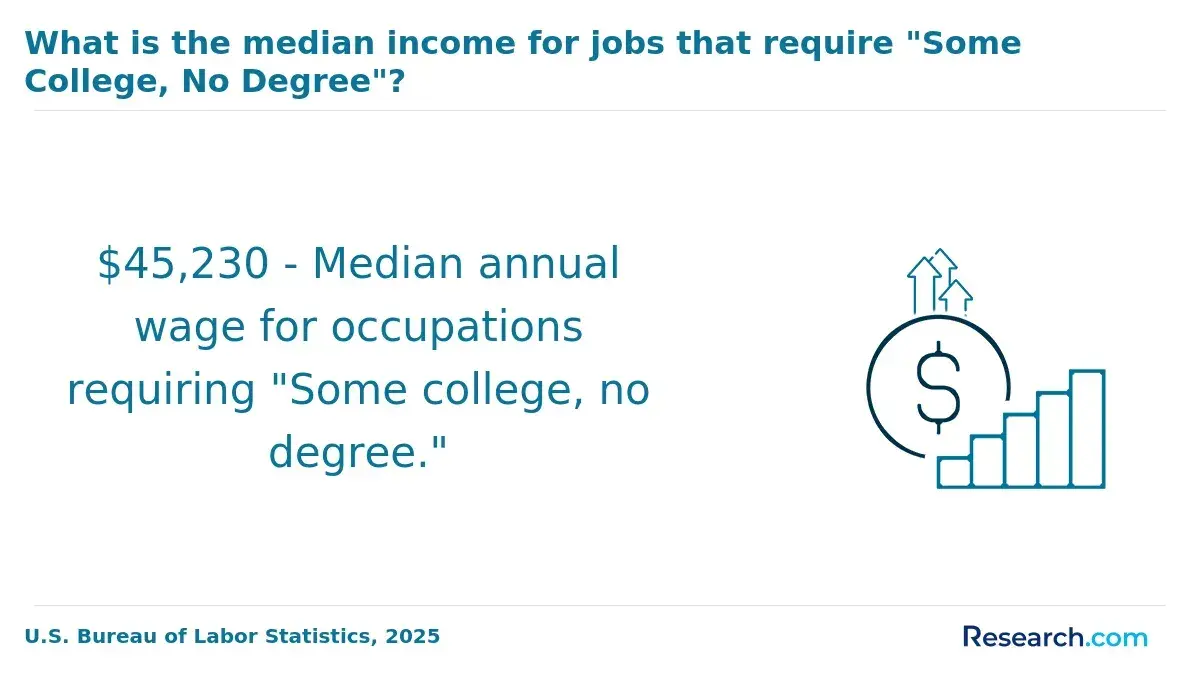
Practical experience documented through certifications-such as CPR or mandated reporter training-or professional work history often substitutes for academic prerequisites or complements admissions. This approach aligns program entry hurdles with real-world readiness, addressing workforce needs where social and human service assistants earn a median of $45,120 annually with expected 8% growth through 2033. International candidates face added demands like English proficiency and placement tests that affect course progression and completion timing.
Early strategic planning around these requirements can prevent enrollment delays or rejection and help candidates align academic effort with employer expectations and career trajectory.
How long does an online human services degree take to complete?
Completing an online human services degree involves balancing duration with career objectives, especially for those targeting supervisory roles in youth services. Traditional associate degrees typically take two years, while bachelor's span four; accelerated formats and prior experience credits can reduce this to as little as 18 months or around three years, respectively. However, accelerating programs may limit exposure to in-depth leadership and policy content essential for managerial responsibilities in youth and family services.
Part-time students often stretch completion beyond four years due to work obligations, yet competency-based assessments can offer faster progression for experienced professionals. This flexibility, while practical, demands careful consideration of how education depth correlates with job requirements and income potential.
According to Bureau of Labor Statistics data cited by edX, social and community service managers in youth programs earn a median annual wage of $78,240, with job growth projected at 8% through 2033. For those pursuing elevated roles, the additional time invested in higher-level degrees frequently unlocks advancement opportunities. Prospective students should weigh program pacing, content complexity, and workforce expectations before committing, acknowledging that the fastest path may not always align with long-term employability in specialized human services positions.
What can you do with a human services degree in youth services?
A human services degree with youth services alignment positions graduates for roles that require not only direct client interaction but also navigating complex systemic challenges such as trauma and at-risk behavior. Employers seek candidates with hands-on experience, typically through internships, who demonstrate proficiency in crisis intervention, counseling, and resource coordination. For example, a graduate entering juvenile justice may need additional state certifications beyond the degree to qualify for specialized case management roles.
Tuition for online human services bachelor's degrees often ranges between $9,000 and $15,000 annually, offering a practical route for working professionals aiming to transition into supervisory or specialized youth services without excessive financial burden. This cost efficiency, noted in OnlineU's 2026 review, contrasts with traditional on-campus programs that may demand more time and money, especially considering the need for flexible scheduling and field placement logistics.
Licensing variability across states adds a layer of complexity; some positions mandate certifications incompatible with program timelines, creating potential delays in employment readiness. Candidates must proactively secure practicum sites, sometimes requiring employer or agency collaboration, adding an operational challenge to degree completion.
Graduates face a competitive market prioritizing trauma-informed care expertise and digital skills for remote service delivery. Given this, strategic selection of coursework aligned with targeted healthcare, nonprofit, or educational roles-and investment in experiential learning-directly impacts career trajectory and employability.
How much do youth services jobs pay with a human services degree?
Region and credentialing exert decisive influence over salaries for youth services jobs with a human services degree. For instance, in California, child, family, and school social workers report a median salary near $73,150 as of May 2024, substantially outpacing the national community and social service median of roughly $45,000 to $55,000. This gap stems from varied local demand, state funding priorities, and licensure requirements that constrain entry-level offerings in some roles.
The ability to secure higher wages hinges on obtaining specialized certifications and licenses often mandated by public schools, nonprofits, and child welfare agencies. These credentials not only permit access to better pay but also require time and financial investment to earn, which can delay salary gains for new graduates.
Geographic mobility reduces earnings variability within California and beyond, as less populous regions offer lower base wages but often have offsetting cost-of-living advantages. Without credentials, new professionals in youth services should realistically expect starting salaries between $50,000 and $60,000 depending on employer sector.
- Licensing correlates strongly with the potential to double median income through clinical social work pathways involving state examinations and supervised hours.
- Entry-level offers vary considerably by organizational focus, from school systems to state-run welfare programs.
- Prospective employees should weigh certification costs and ongoing education demands against incremental pay and advancement prospects.
What certifications help with youth services careers in human services?
Certifications like the Certified Youth Practitioner (CYP), Certified Substance Abuse Counselor (CSAC), and Mental Health First Aid shape employability by directly aligning with employer expectations in community and school-based youth services. For instance, CYP certification equips professionals in juvenile justice or after-school programs with practical techniques to reduce risks and engage adolescents, which can be a decisive factor for roles focused on preventive intervention.
The CSAC certification carries weight in light of the $53,710 median annual wage for substance abuse and behavioral disorder counselors, which signals sustained demand for substance use expertise among youth populations. However, meeting certification requirements involves supervised clinical hours and passing comprehensive exams-challenges that can impact candidates juggling employment and study obligations.
Mental Health First Aid certification strengthens frontline staff's capacity to identify and defuse crises early, which reduces reliance on emergency resources. While training scheduling can conflict with work, this credential elevates job market competitiveness, particularly in environments prioritizing crisis intervention.
Ongoing education and recertification requirements for these credentials demand significant time and financial investment. Candidates must consider these obligations against the tangible enhancement of field-specific competencies and improved long-term labor market positioning.
- Certifications enhance skills in trauma-informed care and adolescent behavioral health
- CSAC addresses critical workforce needs but requires rigorous clinical experience
- Mental Health First Aid supports early crisis response, impacting preventative service roles
- Time and cost commitments for certification maintenance affect career planning
Other Things You Should Know About Human Services
Employers prioritize accreditation and relevant field experience over program delivery mode, but online degrees without practical internships or applied components may face skepticism. Programs that integrate practicum placements with community organizations significantly improve employability. Candidates should confirm that their online degree includes or facilitates these real-world experiences to meet employer expectations in youth services roles.
Focused youth services tracks provide targeted skills but may narrow job opportunities outside that niche, limiting flexibility if career goals shift. Broader human services degrees offer versatility across populations and roles but might lack depth in youth-specific practices valued by some employers. Students should prioritize specialization if committed to youth services careers, but a generalist degree suits those wanting adaptable credentials for diverse human services positions.
Lower tuition online programs may reduce upfront expenses but sometimes offer fewer career support services or limited internship networks, which can delay job placement or salary growth. Higher-cost programs with established employer connections and robust career advising provide stronger paths to steady youth services roles. Prospective students should weigh direct educational costs against proven job outcomes and advancement opportunities when selecting a program.
References
- Youth Services Jobs (with Salaries) - SEEK https://au.seek.com/youth-services-jobs
- Associate Degree - Human Services - Online | Monroe University https://www.monroeu.edu/academics/undergraduate-programs/school-criminal-justice/online-associate-degree-human-services
- What Are My Career Options After a Course in Human Services? https://columbia.ca/career-options-after-a-course-in-human-services/
- Human Services Associate Degree | Academics | Monroe Community College https://www.monroecc.edu/academics/majors-programs/community-engagement/human-services-associate-degree/
- Online Associate in Human Services | AcademicEarth.org https://academicearth.org/associate-in-human-services/
- Online Health And Human Services Associate Degree Program | Ultimate Medical Academy https://www.ultimatemedical.edu/program/health-and-human-services/
- Human Services vs. Social Work: A Brief Comparison | Rasmussen University https://www.rasmussen.edu/degrees/human-services/blog/human-services-vs-social-work/
- Guide to bachelor's in human services | edX https://www.edx.org/bachelors/human-services
- Health and Human Services: Campus & Online Degrees and Careers https://www.publichealthonline.org/human-services/online-degree-programs/
- Is a Human Services Degree Right for You? https://www.ucumberlands.edu/blog/is-a-human-services-degree-right-for-you