2027 Online Environmental Science Degrees With Promotion-Ready Environmental Leadership Alignment

Co-Founder and Chief Data Scientist
Mid-career professionals in environmental science face an urgent challenge: advancing into leadership roles without sacrificing current employment or relocating for on-campus programs. The Bureau of Labor Statistics projects a 5% growth in environmental scientist roles over the next decade, yet access to flexible education remains uneven.
Recent data from the National Center for Education Statistics shows online degree enrollment surged by 14% in 2023 among adults aged 25-44, revealing a clear demand for adaptable learning models. This shift indicates a strategic imperative for programs that accommodate working students seeking promotion-ready competencies.
This article evaluates online environmental science degrees aligned with leadership pathways to help professionals make informed choices that balance career growth with educational accessibility.
Key Things You Should Know
- In 2024, median starting salaries for graduates with promotion-ready environmental leadership skills exceed $65,000, yet programs integrating leadership add 20-30% more tuition and 6-12 additional months, influencing return-on-investment timelines.
- Employers prioritize interdisciplinary leadership aptitudes, with 72% of environmental sector hiring managers citing management credentials as decisive for advancing technical specialists, intensifying pressure on degree specialization choices.
- Federal labor projections show environmental science jobs growing 12% through 2032, but leadership-infused candidates face higher competition due to rising degree completions, requiring early credential completion to secure middle-management roles.
What is an online environmental science degree and how does it prepare future environmental leaders?
Choosing online environmental science degree programs requires acknowledging real-world challenges and workforce expectations rather than relying solely on academic appeal. Employers anticipate graduates to demonstrate proficiency in geospatial technologies, environmental impact assessments, and complex interdisciplinary problem solving.
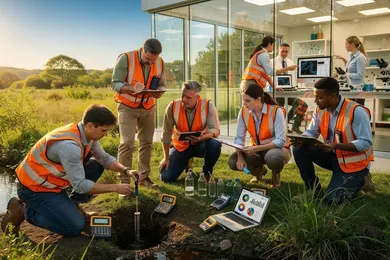
For instance, leading a community water quality improvement initiative demands blending data analysis, stakeholder communication, and compliance with evolving regulatory frameworks-skills that these degrees must address effectively for remote learners.
Beyond technical expertise, the ability to manage projects across diverse settings, from corporate sustainability to government regulation enforcement, is critical. Candidates must also navigate coordination hurdles, such as remotely managing fieldwork or securing internships without local industry presence, which calls for leveraging digital networks and proactive engagement.
This practical context influences the value of an online environmental science degree in shaping future leaders who can balance ecological priorities within economic and social constraints.
Graduates equipped through tailored programs focused on environmental policy, resource management, and ethical decision-making are positioned to influence sustainability strategies in sectors like renewable energy and urban development. However, the variability in program accreditation and faculty experience significantly impacts employability and advancement potential.
The U.S. Bureau of Labor Statistics reports an average salary of $76,480 for environmental scientists with an 8% job growth forecast through 2032, reflecting growing demand for professionals adept at integrating new technologies with environmental law.
Prospective students should carefully evaluate available options, including affordability and institutional quality metrics. Resources like the environmental engineering degree listings provide comparative clarity on costs and program features.
How do online environmental science programs compare to campus-based options for environmental leadership training?
Online environmental science degree programs compared to campus options demand a nuanced evaluation of delivery, flexibility, and applicability to professional trajectories. Online environmental leadership training in online versus traditional environmental science degrees delivers comparable promotion-ready skills but favors those who require adaptable schedules and workplace integration.
For mid-career professionals, this flexibility allows immediate application of data-driven leadership skills on current projects, such as environmental consultants leveraging quantitative analytics to enhance client outcomes and expand project responsibilities.
The labor market's 33.5% growth in data scientist roles related to environmental analytics, with median salaries around $120,230, reflects a shift in employer demand for technical proficiency embedded within environmental leadership. Campus programs, while offering richer access to immersive fieldwork and direct collaboration, often require relocation and fixed scheduling that can delay practical application and advancement.
Key tradeoffs include limited social networking and physical lab experiences online, requiring supplementary local engagements to bridge practical skill gaps. Employers value applied skills alongside accredited credentials, making proactive experiential learning essential. Cost and time efficiencies further differentiate online pathways by lowering barriers for strategic pivots in environmental science leadership fields shaped by evolving labor demands.
These dynamics highlight the importance of matching program format to professional goals and lifestyle constraints. For salary benchmarks and financial considerations relevant to this field, consider the online animal science degree salary.
Which types of accreditation should online environmental science degrees have in the United States?
Institutional regional accreditation remains the most critical factor shaping the functional value of an online environmental science degree accreditation in the United States. Without it, graduates face barriers such as ineligibility for federal financial aid, difficulty transferring credits, and diminished recognition by employers and certification bodies.
For example, an environmental scientist moving from a regulatory agency to a private-sector environmental consulting firm will likely encounter restrictions or delayed advancement without a degree from a regionally accredited program.
Regional and national accreditation for US environmental science programs also influence program credibility and long-term career trajectories. Specialized programmatic accreditations, such as from ABET, can benefit students targeting technical or leadership roles, but these rarely substitute for institutional accreditation in workforce assessments.
Cost considerations are far from trivial. Total tuition for accredited environmental science degrees can span from approximately $5,400 for a 12-credit undergraduate certificate to beyond $70,000 for doctoral studies, representing a more than 13-fold cost spread. Prospective students must weigh this range against potential return on investment and occupational expectations, particularly when choosing between certificates and advanced degrees.
Verifying both institutional and programmatic accreditation through the U.S. Department of Education's database is essential before enrollment to avoid investing in credentials that restrict career mobility. Those seeking a practical guide for degree selection may also explore a nutrition degree online as a comparison point for navigating complex accreditation pathways in related fields.
What admission requirements and prior experience are needed for online environmental science programs?
Admission standards for online environmental science programs frequently weigh academic background against relevant professional experience, a balance that shapes realistic entry routes especially for mid-career professionals. While a bachelor's degree in environmental science, biology, chemistry, or related STEM fields with roughly a 3.0 GPA remains standard, many programs recognize the value of prior experience requirements for environmental science degrees to offset gaps in formal education.
Applicants without direct academic credentials typically must complete prerequisite coursework in core sciences and mathematics, or they must show concrete professional involvement such as environmental consulting, regulatory compliance, or sustainability management. Programs targeting working professionals often require 2-5 years of occupational experience demonstrating applied leadership or project oversight in environmental contexts.
This practical experience must be explicitly documented, including detailed resumes and references that emphasize impact on environmental initiatives. Such evidence aligns with employer expectations where leadership and compliance acumen frequently weigh as heavily as theoretical knowledge.
Regional hubs like South Hooksett, NH; Charles Town, WV; and Tampa, FL offer intensified alumni networks that can considerably enhance internships and career outcomes, a factor prospective students should weigh carefully given how geographic proximity often influences employer engagement.
Digital admission logistics also demand readiness for secure document submission, background checks, and sometimes vaccination or safety certifications related to fieldwork, all of which can introduce enrollment delays if underestimated.
Prospective students selecting programs should consider financial implications as well; for a detailed benchmark, consult the average cost of MLIS degree US as a comparative point within related STEM fields.
What core courses and specializations support promotion-ready environmental leadership in these degrees?
Leadership readiness in online environmental science degrees hinges on mastering interdisciplinary skills essential for managing complex projects within evolving regulatory and sustainability frameworks.
Core coursework typically covers advanced policy analysis, geographic information systems (GIS), environmental risk assessment, and sustainability management, providing students practical expertise to navigate compliance and data-driven decision-making necessary for mid- to senior-level roles.
For example, an environmental consultant aiming to become a corporate sustainability director must develop competence in interpreting complex legislation and leading diverse teams, capabilities cultivated through courses in governance and organizational behavior. Programs that integrate leadership modules in strategic communication, stakeholder engagement, and project management better align with employer expectations for supervisory positions.
Graduates from these tracks report an average salary near $76,480, with an 8% job growth forecast through 2032 according to EnvironmentalScience.org based on BLS data. However, promotion prospects depend heavily on whether programs include applied capstones or practicum experiences; theoretical knowledge alone often falls short of preparing candidates for real-world project management challenges.
Employers seek candidates who can rigorously analyze environmental data, navigate regulatory impacts across functions, and drive compliance initiatives efficiently. Specializations in environmental law or corporate sustainability tend to yield immediate workforce advantages in industries like manufacturing, urban planning, and energy, where leadership requires both technical depth and managerial agility simultaneously.
How long do online environmental science degrees take and what do they typically cost?
Choosing an online environmental science degree involves weighing program length, cost, and career impact with a practical focus on workforce demands. Associate degrees offer quicker, lower-cost entry points, typically around two years and under $10,000, but often lack the depth required for leadership roles.
Bachelor's degrees usually take 3 to 4 years, with tuition ranging from $15,000 to $40,000 depending on institution type and residency. Public universities commonly charge $300 to $600 per credit, while private institutions often exceed $800 per credit hour.
Graduates aiming for mid-to-senior-level environmental management positions should recognize that employers increasingly prioritize bachelor's degrees paired with applied competencies. This investment aligns with a median annual salary near $82,220 and steady growth of 3.4-4.4%, reflecting labor market data from ASU Online.
Part-time learners must be aware that balancing work with study may extend completion beyond the typical timeframe, demanding upfront planning around credit transfer policies and ancillary costs like software or lab kits.
Decision-making in this space entails a tangible tradeoff:
- Longer programs offer comprehensive skills essential for navigating complex environmental policy and management challenges.
- Shorter, less expensive options expedite entry but may limit advancement opportunities in competitive fields requiring demonstrated leadership potential.
For professionals pursuing strategic career pivots or advancement, prioritizing direct alignment with real-world roles optimizes return on investment as the environmental sector steadily expands.
What environmental science careers and leadership roles can graduates pursue with these degrees?
Environmental science degrees combined with promotion-ready leadership skills open pathways into roles that demand navigating complex regulatory environments and stakeholder interests. Career progression hinges on practical experience managing multidisciplinary teams or projects under shifting policy frameworks, not just technical expertise.
For example, an environmental scientist working within a federal agency like the EPA may advance by leading cross-departmental initiatives addressing compliance and impact assessment challenges.
Key positions for graduates often require balancing technical rigor with strategic negotiation and resource management across public, private, and nonprofit sectors:
- Environmental Scientist or Specialist coordinating regulatory compliance and data-driven environmental analysis within government entities.
- Environmental Consultant directing corporate sustainability efforts, handling risk management amid evolving environmental laws.
- Nonprofit Environmental Program Manager integrating community priorities and funding realities to meet measurable impact targets.
- Regulatory Affairs Specialist bridging communication between industry and government to uphold legal standards.
Meeting these roles' demands requires continuous adaptation to legal changes and climate policy updates, paired with leadership agility. Limited budgets and multi-stakeholder collaboration present ongoing operational challenges that influence career outcomes more than academic credentials alone.
Targeted experiential learning and certifications in environmental leadership methods can enhance readiness for strategic positions where sustainable solutions align with regulatory compliance.
What salary ranges and earning potential exist for environmental science and sustainability leaders?
The financial return on an environmental science degree in the U.S. is closely tied to geography, sector focus, and educational investment. Median salaries around $76,480 enable most graduates to recoup tuition costs within 1 to 2 years of full-time work, assuming undergraduate expenses range from $50,000 to $150,000. However, entry-level roles like environmental technicians often start near $50,000, making the initial wage gap and location critical factors in early career sustainability.
Advancement often requires specialized knowledge or certifications, particularly for leadership roles in sustainability management or government policy, which can push salaries beyond $120,000. For example, an environmental project manager in California's renewable energy sector may earn considerably more than counterparts in rural conservation areas, illustrating how industry and region shape compensation.
Students face a strategic choice: enter the workforce immediately with a bachelor's degree or invest additional time and money in graduate education to access higher-level positions. This tradeoff affects not only immediate income but also long-term career trajectories.
Employers prioritize candidates who combine technical expertise with leadership aptitude proven through internships, regulatory experience, or project coordination. Aligning education with these expectations directly influences employability and salary progression.
What certifications, licenses, or professional credentials align with environmental science leadership careers?
Leadership positions in environmental science typically demand certifications that validate both technical expertise and management capabilities. Credentials like Certified Environmental Professional (CEP), Leadership in Energy and Environmental Design (LEED) Accredited Professional, and Registered Environmental Manager (REM) serve distinct functions: CEP supports multidisciplinary project leadership. LEED targets sustainable design regulation; and REM emphasizes compliance management and environmental strategy execution.
State licenses such as Professional Engineer (PE) with an environmental focus or Certified Hazardous Materials Manager (CHMM) highlight specialization in enforcement-heavy areas like remediation and water resource oversight.
For instance, a project manager leading wastewater treatment upgrades often must hold PE licensure to meet strict federal and state regulatory requirements, ensuring accountability in technical and legal domains.
Employers increasingly value credentials that prove leadership impact alongside scientific knowledge, particularly as environmental challenges become more complex. This demand parallels broader access to cost-effective online environmental science degrees.
Graduates with targeted certifications face fewer promotion barriers, especially in government agencies, consulting firms, and private industry, but must carefully consider the time and financial investments relative to their sector's credential preferences and long-term career strategy.
How can students evaluate and choose a reputable online environmental science program for advancement?
Selecting an environmental science program requires weighing accreditation, curriculum focus, and practical alignment with labor market demand. Accreditation by credible agencies ensures credentials accepted by employers, but beyond that, the program's emphasis on climate-action leadership, policy, and applied conservation science distinctly influences employability.
For example, forest ranger positions, integral to climate resilience and land stewardship, are growing at 14.6% with a median salary near $56,870, according to ASU Online labor market data. This underscores the advantage of coursework grounded in ecosystem management and leadership skills tailored to sector needs.
Program structure significantly affects working professionals; options such as asynchronous classes or accelerated tracks can mitigate barriers to completion and support sustained career momentum.
Faculty expertise, especially when relevant to current environmental challenges and accessible for mentorship, enhances skill transferability. Hands-on learning, through virtual labs, fieldwork partnerships, or capstone projects, also improves readiness for complex job environments.
Career services oriented to internships, job placement, and employer networking are critical to converting education into opportunity. For example, a mid-career professional transitioning from compliance to climate policy leadership must prioritize programs offering policy analysis, leadership modules, and direct advocacy group connections, even if it means extended study duration or higher costs.
Transparency in outcomes, graduation rates, employment data, and alumni success, provides a necessary gauge of a program's return on investment and alignment with career objectives.
Other Things You Should Know About Environmental Science Degrees
Employers increasingly accept online environmental science degrees when the program holds regional accreditation and includes substantive fieldwork or lab components. However, some employers in technical or government roles may still prefer traditional degrees due to perceived rigor and networking advantages. Candidates should verify that the online program integrates practical assignments and offers opportunities for internships to enhance real-world readiness and employer confidence.
Core coursework usually includes ecology, environmental chemistry, statistics, GIS, policy, and sustainability management. A promotion-ready leadership track also adds project management, environmental law, strategic planning, and a capstone of 3 to 6 credits that applies environmental decision-making to a workplace problem.
Specialized degrees (e.g., environmental toxicology or sustainability) provide deep expertise valued in niche sectors but may limit flexibility across industries. Generalist environmental science degrees allow broader career adaptability and leadership opportunities in diverse contexts, especially where cross-disciplinary coordination is essential. Professionals targeting senior management roles should weigh immediate specialization benefits against long-term versatility and leadership demands.
References
- Environment Leaders Programme | Our Programmes | Leadership Skills Foundation https://leadershipskillsfoundation.org/programmes/environment-leadership/
- Top Certifications for Remote Environmental Jobs 2025 https://redrockconsultinggroup.com/top-certifications-that-help-you/
- Environmental Education Programs in Higher Education | eePRO https://eepro.naaee.org/learning/higher-education-database
- 10 careers you can have with an environmental science degree - SMWC https://www.smwc.edu/10-careers-you-can-have-with-an-environmental-science-degree-blog-july-20/
- 2025 Most Affordable Online Environmental Science Degrees https://www.onlineu.com/most-affordable-colleges/environmental-science-degrees
- Certification Guide for Young Professionals - Board for Global EHS Credentialing https://gobgc.org/professional-environmental-certifications-professionals/
- Introduction to Environmental Science https://www.straighterline.com/online-college-courses/introduction-to-environmental-science/
- What Certifications are most Valuable for Environmental Science Graduates? https://www.nrep.org/blog/certifications-environmental-science-graduate
- Environmental Certifications for entry-level and career changers https://www.theenvironmentalcareercoach.com/certification-links