2027 Online Environmental Science Degrees With Field-and-Analysis Career Alignment

Co-Founder and Chief Data Scientist
Professionals seeking to pivot into environmental science careers frequently confront a fundamental conundrum: how to acquire hands-on field skills and advanced analytical expertise without disrupting ongoing employment or geographic constraints. The National Center for Education Statistics reports that over 40% of adult learners enroll in online degree programs to balance career demands, a figure reflective of a broader shift toward flexible learning that nonetheless must grapple with the practical challenge of integrating experiential components crucial for environmental science credibility. Meeting employer expectations requires programs that align academic rigor with real-world application, not simply theoretical coursework.
This article evaluates the landscape of online environmental science degrees optimized for career paths combining fieldwork and data analysis, offering critical guidance on selecting programs that reconcile flexibility with essential skill acquisition.
Key Things You Should Know
- National Center for Education Statistics data shows accelerated online environmental science degrees often lack integral fieldwork, causing a critical tradeoff between expedited credentialing and the on-site analysis skills employers increasingly demand.
- Labor market analytics from the U.S. Bureau of Labor Statistics reveal 42% of environmental science employers prioritize candidate experience with geospatial and environmental data tools, suggesting purely theoretical online curricula may limit job placement prospects.
- According to a 2024 survey by the Environmental Careers Organization, total online program costs averaged 25% less than traditional routes but imposed delayed earnings growth due to fewer immediate employer connections and internship opportunities.
What is an online environmental science degree and how does it compare to campus programs?
Choosing an online environmental science degree program involves weighing the tradeoff between theoretical learning and practical field experience. Online formats prioritize virtual labs and simulations, which may not suffice for career paths requiring hands-on data collection or lab work. For example, regulatory compliance roles often demand campus-based lab access or hybrid programs with local partnerships to fulfill credentialing criteria. When assessing online environmental science degree programs with field experience, verify if the curriculum integrates applied components to stay competitive.
Compared to campus environmental science degrees, online programs significantly reduce costs related to housing and commuting but increase the need for strong self-motivation and time management. Employers in government, consultancy, and conservation sectors generally accept accredited online degrees, especially when complemented by internships or certifications that showcase technical skills such as GIS mapping or environmental sampling.
The U.S. Bureau of Labor Statistics reports a median annual wage of $80,060 for environmental scientists, with top earners surpassing $134,000, reflecting the premium on applied skills and fieldwork. A practical scenario involves a professional in urban sustainability using an online degree to advance while arranging local fieldwork via employer collaboration. In contrast, individuals seeking roles with extensive lab analysis may benefit from campus programs.
Prospective students can explore the best online environmental health and safety degree programs to identify options aligned with their career goals.
Are online environmental science degrees accredited and widely recognized by employers?
Employers in the U.S. prioritize online environmental science degrees accredited by employers in the US because accreditation directly impacts a graduate's job eligibility and market credibility. For analytical and field-oriented positions, hiring managers require degrees from institutions with recognized regional or national accreditation, ensuring curriculum rigor and validated skill sets. Without such credentials, candidates face barriers like exclusion from licensure or certifications essential to environmental science roles.
For example, environmental consulting firms demand accredited online environmental science programs for compliance with contractual and regulatory project standards. Federal and state agencies restrict hiring to graduates from recognized environmental science online programs for career advancement, narrowing applicant pools especially as the sector anticipates roughly 8,500 job openings annually with a 4% growth rate. Practitioners switching careers must verify that programs offer actual lab or fieldwork components-virtual or through local partnerships-to meet employer expectations. Fully online degrees lacking hands-on experience often reduce employability due to insufficient practical validation.
In fields such as remediation or natural resource management, employers look for demonstrated competencies in fieldwork and data analysis consistent with job realities. Candidates should weigh accreditation and experiential offerings carefully rather than assuming parity across programs. Those considering a broader academic shift can explore relevant advanced degrees such as the PhD in data science online to complement environmental data analytics skills.
What career paths in fieldwork and environmental analysis can this degree support?
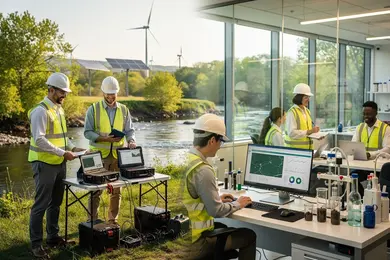
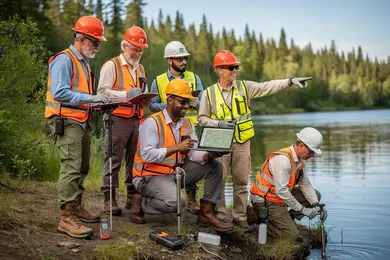
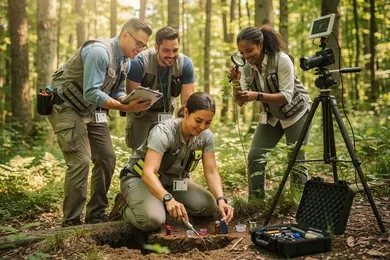
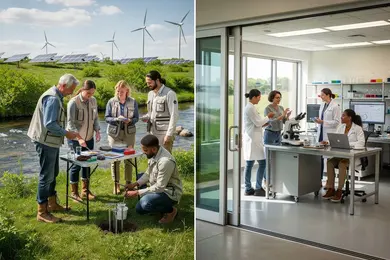
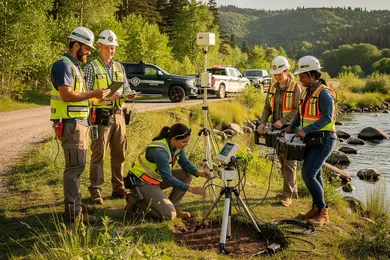
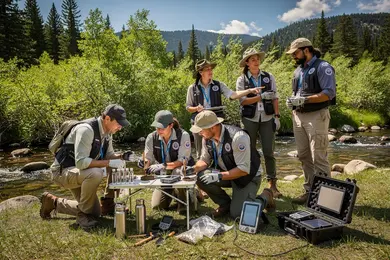
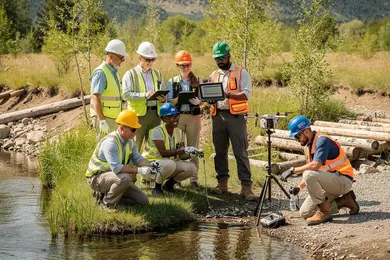
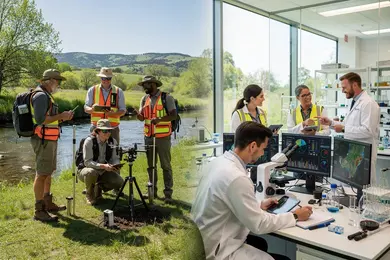
Environmental science degrees geared toward fieldwork careers in environmental science and analysis require candidates to balance technical skillsets with physical adaptability. For instance, environmental science and protection technicians conducting field sampling and site assessments must navigate rugged outdoor environments while collecting legally compliant, quality-assured data. A state agency technician monitoring wetland restoration sites exemplifies how specialized field and laboratory career opportunities demand both precision and real-time problem-solving under variable conditions.
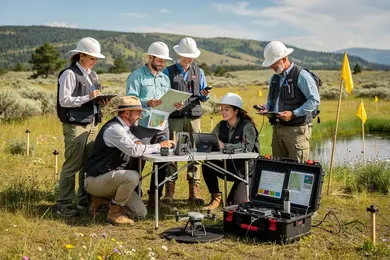
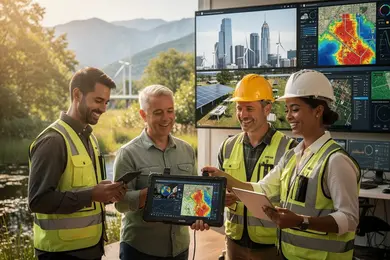
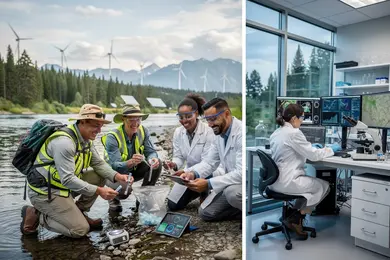
Analytical sections of the field focus heavily on interpreting complex datasets using statistical methods and geospatial software such as GIS. Employers-ranging from regulatory bodies to private consultants-expect graduates who not only understand field data collection but also excel in synthesizing results into actionable environmental impact or climate risk reports. This dual competency is increasingly critical in roles that enforce environmental regulations and advise public or private stakeholders.
Employment for environmental science and protection technicians is projected to grow by 7% over the next decade, outpacing average occupational growth, with median wages about $49,490 as of May 2024. However, pursuing certifications in data analysis or sampling protocols enhances marketability beyond the degree alone. Selecting programs that integrate practicum or internships aids the transition from education to workforce by combining theory with applied experience.
Those evaluating their next step should carefully weigh the physical demands of fieldwork against the intense concentration required for data analysis. For insight into suitable educational options, consider resources like the best exercise science degree online listings that highlight program characteristics useful in similar scientific disciplines.
What core courses and specialized tracks are offered in online environmental science programs?
Choosing specialized tracks in environmental science programs influences both immediate employability and long-term career trajectories. Core courses typically cover ecology, environmental chemistry, statistics, GIS, and environmental policy to build essential quantitative and interdisciplinary skills. For example, students focusing on environmental toxicology gain expertise in pollutant fate modeling and risk assessment, which prepares them for regulatory roles in government agencies. Meanwhile, those pursuing sustainability science or natural resource management emphasize ecosystem services valuation and land-use planning, aligning with consulting careers advising public and private sector clients.
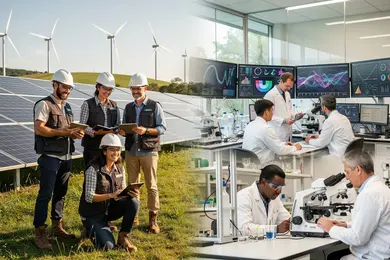
Employment sectors prioritize distinct skill sets: government and research roles demand proficiency in field data collection, lab techniques, and statistical inference, while consulting positions often require knowledge of environmental impact assessments and regulatory frameworks. Data shows 68% of graduates secure roles directly related to environmental science within three years, largely in government, research, consulting, and academia, confirming the value of targeted coursework according to an EnvironmentalScience.org alumni survey. However, program flexibility matters for those pursuing online environmental science core courses and electives, especially regarding lab components and internships. Remote students without hands-on experience frequently encounter delayed job placement or need supplementary certification.
Programs incorporating virtual labs, local field placements, or partnerships with environmental firms improve workforce readiness. Prospective students should also consider comparable graduate pathways, such as a masters in library science online program, when evaluating flexible STEM-related offerings for career pivots.
How do online environmental science programs provide labs, field experiences, and research opportunities?
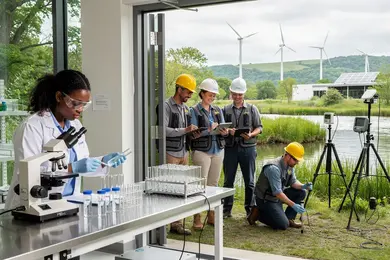
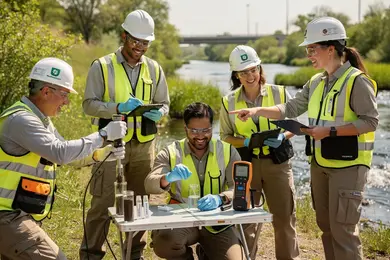
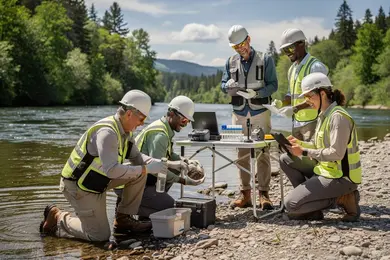
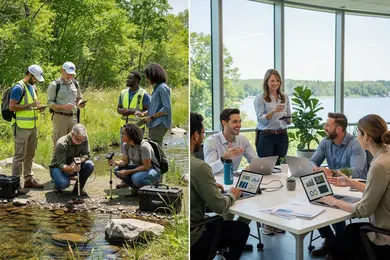
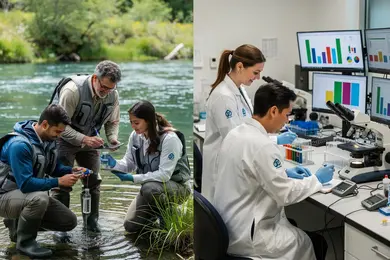
Online environmental science programs attempt to replicate essential field experiences through hybrid and simulated methods, but candidates must recognize the tradeoffs inherent in remote delivery. While local fieldwork or internships arranged with regional agencies provide necessary practical exposure, the variability of these placements can impact skill consistency. For example, a student analyzing watershed health might gather water samples near home and upload data remotely, mirroring consulting workflows that combine field rigor with digital proficiency.
Virtual labs employing interactive software cover areas like soil chemistry and atmospheric monitoring, offering controlled, repeatable scenarios ideal for students balancing work and study. However, these simulations fall short of developing tactile field skills that remain highly valued by employers in environmental roles requiring hands-on interventions.
Research components often center on GIS and geospatial analytics, areas forecasted to triple in market demand by 2030-2035 with AI integration driving growth, according to Project Geospatial. Engagement in such data-driven projects sharpens applied modeling capabilities critical for environmental data-intensive roles.
Prospective students should rigorously assess online programs on:
- The robustness and oversight of field placement structures
- Access to up-to-date simulation and GIS software
- Availability of faculty-led research collaborations supporting current environmental data demands
This scrutiny ensures alignment with employer expectations and mitigates risks associated with uneven hands-on experience, ultimately influencing employability and career progression.
What admission requirements and prior education are needed for online environmental science degrees?
Admission to online environmental science degree programs demands more than nominal credentials; candidates must demonstrate solid quantitative and scientific foundations. Bachelor's programs typically require a high school diploma, but success hinges on prior coursework in calculus, statistics, biology, chemistry, and earth sciences, areas critical for the analytical tasks central to environmental problem-solving. Graduate admission presumes a relevant undergraduate degree and often enforces GPA minimums around 2.5 to 3.0, reflecting the field's competitive and technical nature.
Applicants lacking essential STEM prerequisites risk conditional admission, which entails bridge courses that extend time to degree completion and can disrupt professional momentum. For working professionals pivoting careers, aligning coursework with employer needs-such as data analytics, GIS, or systems modeling-is vital since these skills remain in short supply despite rapid expansion of clean energy jobs, which grew approximately 11-12% between 2023 and 2024 according to U.S. Department of Energy statistics.
Standardized testing like GRE scores rarely dictate admissions but may influence placement in research-intensive master's or doctoral pathways. Programs also expect a statement of purpose to evaluate applicants' readiness for virtual fieldwork and research components, emphasizing applied analytical competence over mere credentialing. Technological and remote sensing software proficiency now form a baseline requirement, making skills demonstration as important as academic history.
How long do online environmental science degrees take and what do they cost to complete?
Choosing between accelerated and traditional online environmental science degrees requires weighing time savings against depth of expertise and networking opportunities. Accelerated bachelor's programs may complete in about two years, but this compressed timeline can amplify workload and reduce chances to engage in field-intensive learning or build professional connections essential to roles like conservation scientist or wildlife biologist. By contrast, standard four-year programs more closely mirror on-campus curricula, enabling gradual skill development and credential stacking.
Cost considerations extend beyond tuition, which ranges widely-from roughly $15,000 to over $50,000 depending on institution type and residency status. Additional expenses for specialized labs and field equipment can increase total costs by 10-15%, impacting budget planning. Financial aid and employer tuition reimbursement often help, but their availability varies and requires careful verification.
Practical field experience remains a pivotal factor for employability in this sector. Median salaries around $68,000 to $73,000 for forestry and wildlife biology jobs correlate strongly with demonstrable field skills and relevant internships. Omitting or minimizing these components risks limiting access to job opportunities and long-term career viability, despite potential upfront savings in time or cost.
Ultimately, prospective students must assess the time-value tradeoff: shorter programs curtail tuition and living expenses but may constrain specialization and network building critical for upward mobility. Longer pathways support deeper expertise that often translates into better positioning for advancement in land and wildlife management careers.
What environmental science jobs, industries, and employers commonly hire online program graduates?
Graduates of online environmental science programs often confront a practical tradeoff: the theoretical knowledge gained remotely must be matched by real-world, supervised internships to meet employer expectations in fields like pollution control and resource management. This requirement can complicate job placement, especially for students without local access to environmental agencies or consulting firms.
Employment typically spans government bodies-such as the EPA and state natural resource departments-private environmental consulting firms, and NGOs focused on impact analysis and renewable energy. Entry roles often include environmental technician, field analyst, or compliance specialist, emphasizing both field data collection skills and proficiency in analytical software.
Pay scales reflect this skill fusion. Graduates with combined practical experience and certifications in GIS or environmental sampling tend to earn above $64,000 annually, a significant premium compared to the median technician salary of $49,000 reported by U.S. News & World Report synthesis from 2024 data. This underscores the advantage of integrating hands-on training with online coursework.
Professionals transitioning from related disciplines such as biology or geology benefit most when supplementing their degrees with environmental law certifications and software competencies widely used in environmental data analyses. Energy development and environmental policy employers give priority to candidates possessing this dual expertise.
- Key industries hiring online environmental science graduates include water quality assessment, waste management, and site remediation.
- Supervised internships remain a non-negotiable credential for most consulting and regulatory roles.
- Careful coordination of local work experience amplifies employability beyond online academic credentials alone.
What salaries and job outlook can environmental science graduates expect in field-and-analysis roles?
The starting salaries for environmental science graduates in field and analysis roles generally range from $60,000 to $85,000, reflecting a national average for positions such as environmental policy coordinator or sustainability planner. Candidates who lack the combined expertise in both environmental data analysis and policy frameworks often struggle to surpass the lower salary threshold or advance efficiently.
For instance, a sustainability coordinator working within a mid-sized city government might start around $60,000 but can exceed $80,000 within five years by honing skills in GIS mapping and ESG reporting tools that directly influence decision-making processes. This progression illustrates how technical proficiency coupled with applied policy knowledge directly affects compensation potential and career mobility.
Employment conditions vary significantly by sector and geography: urban and government roles typically offer higher pay but involve longer hiring processes, while consulting jobs may provide immediate financial benefits at the expense of demanding travel schedules and ongoing certification upkeep.
Prospective students should critically evaluate programs emphasizing integrated data analysis and environmental policy. Building a portfolio showcasing applied fieldwork and quantitative interpretation is essential to align with employer expectations amid steady market growth projected at about 4% annually through the mid-2020s.
- Median starting salary range: $60,000-$85,000
- 5-year growth potential exceeding $80,000 with relevant skills
- Urban/government roles favor policy integration and stability
- Consulting roles require travel and continual certification
- Steady job growth tied to ESG metrics and climate analytics
How can students evaluate and choose a reputable online environmental science program?
Online environmental science programs differ widely in how effectively they prepare students for evolving labor market demands, which requires scrutinizing accreditation and tangible graduate outcomes. Programs lacking regional or program-specific accreditation risk delivering credentials that employers may not recognize, undermining career mobility. Curriculum focus varies: a student aiming for environmental consulting needs strong analytical and field methodology training, whereas one targeting clean energy sectors benefits from courses in renewable technologies and climate resilience. Programs offering customizable tracks better accommodate such distinctions.
Employment transparency is critical. With the U.S. Bureau of Labor Statistics projecting 4% growth and roughly 90,000 relevant jobs, selecting programs that document graduate employment timelines and sector alignment reduces the risk of misinvesting time and money. Strong quantitative skills combined with practical experience increasingly define employability in this space.
Logistical challenges shape learning quality-virtual fieldwork must meaningfully substitute for physical site access, and lab resources or paid internships often differentiate practical readiness. Faculty expertise in both foundational science and applied skills impacts instructional relevance. Programs linked closely with industry partners tend to better equip graduates for roles across government, corporate sustainability, and nonprofit sectors.
Prospective students should leverage alumni insights-contacting graduates directly about how well their training matched workforce realities can reveal program strengths or blind spots irrelevant to promotional materials.
Other Things You Should Know About Environmental Science
Online environmental science degrees often rely on virtual labs and simulations for fieldwork preparation, which can limit hands-on experience compared to in-person programs. Students should prioritize programs with mandatory local field components or partnerships offering real-world placements. Without this, graduates may face gaps in practical skills valued by employers, especially for jobs involving physical data collection or environmental site assessments.
Online environmental science programs are designed for flexibility, but the analytical and lab-intensive nature of the discipline demands consistent, focused study time. Students working full-time must realistically assess their availability for complex assignments and asynchronous participation in virtual labs. Prioritizing time management and choosing programs with clear pacing and support resources is crucial to avoid diminished comprehension and weaker performance in critical skill areas.
A strong program should require ArcGIS or QGIS, basic statistics, Excel, and environmental data interpretation. Many employers also expect remote sensing, GPS field-data collection, and report writing. Programs commonly build these skills through 120 credit hours and a capstone using real-world datasets.
References
- Is a degree in environmental science worth it? | edX https://www.edx.org/resources/is-a-degree-in-environmental-science-worth-it
- Environmental Job Market Trends | ECO Canada https://eco.ca/research-and-resources/environmental-job-market-trends/
- Online Environmental Science Degrees: Compare Schools https://www.degreesforgood.org/online-degrees/environmental-science/
- Introduction to Environmental Science https://www.straighterline.com/online-college-courses/introduction-to-environmental-science/
- Environment Career Profiles Case studies https://environmentaljobs.com.au/environmental-career-paths
- Online Environmental Science Degree | BS Environmental Science | University of Phoenix https://www.phoenix.edu/online-liberal-arts-degrees/environmental-science-bachelors-degree.html
- Certification Guide for Young Professionals - Board for Global EHS Credentialing https://gobgc.org/professional-environmental-certifications-professionals/
- Fieldwork or Lab Work? Exploring Environmental Career Paths https://unity.edu/distance-education-blogs/fieldwork-vs-lab-work/