2027 Online Entrepreneurship Degrees With Franchise Management Concentrations

Co-Founder and Chief Data Scientist
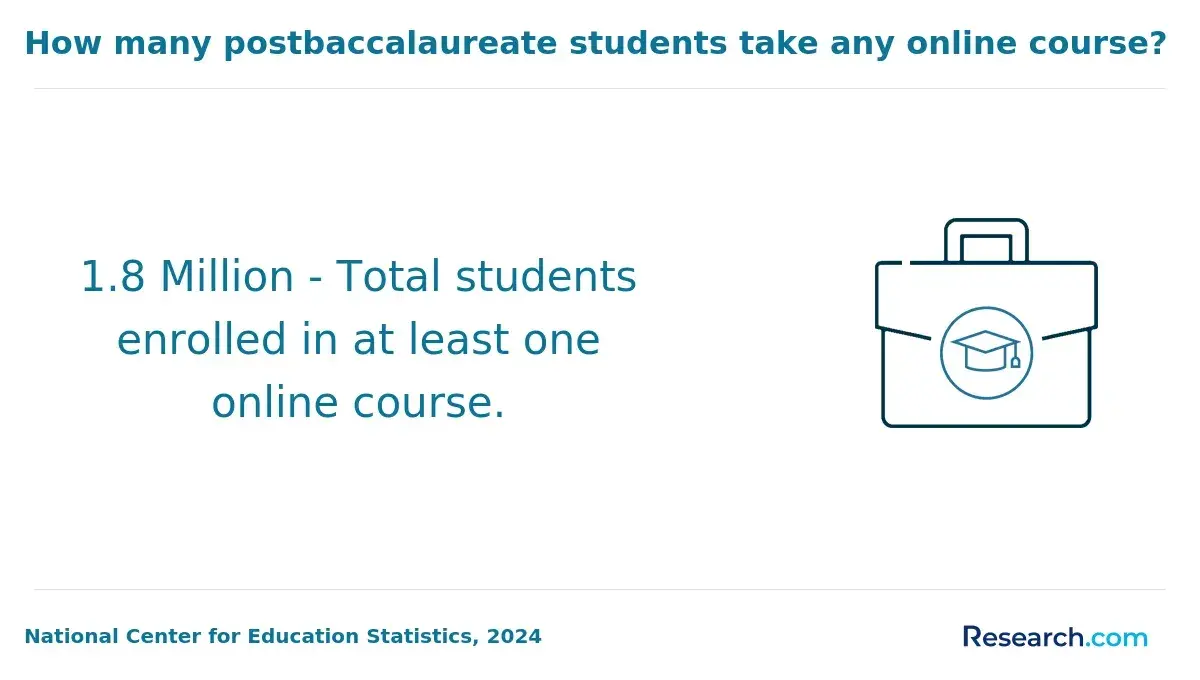
Balancing a full-time job while pursuing advanced education in entrepreneurship with a franchise management focus poses a distinct challenge: finding a flexible program that accommodates irregular schedules without sacrificing depth or accreditation. The National Center for Education Statistics reports over 30% growth in online enrollment among adult learners since 2024, underscoring a clear shift toward remote, adaptable learning models that better serve working professionals.
This surge reflects increased demand not only for convenience but for programs aligned with evolving labor market needs and timing constraints. This article evaluates current online entrepreneurship degrees featuring franchise management tracks, guiding candidates through options that optimize practical career outcomes and real-world applicability.
Key Things You Should Know
- Data from the U.S. Bureau of Labor Statistics shows franchising roles grow 5% annually, yet online entrepreneurship degrees with franchise concentrations often lack a deep operational practicum, limiting immediate employer readiness.
- A 2024 National Federation of Independent Business report notes 62% of franchisors prioritize candidates with multi-domain managerial experience, making degree holders without diverse internships less competitive.
- Tuition, averaging $18,000 for accredited online programs per year per NCES, forces a 2-3 year commitment that risks opportunity costs amid rapid franchising market shifts, pressing a balance between cost, timing, and content depth.
What is an online entrepreneurship degree with a franchise management concentration, and who is it best for?
An online entrepreneurship degree with franchise management focus specifically prepares individuals for leadership roles within franchising systems rather than general business ownership. Candidates best suited for online entrepreneurship franchise management programs are those aiming to navigate the operational complexities of franchise networks, such as existing franchise owners or managers transitioning into multi-unit oversight.
For example, a restaurant manager advancing to regional franchise supervision gains critical skills in site selection, brand adherence, and royalty negotiations not covered by generic entrepreneurship curricula. This specialization also reveals employer preferences: 93% of franchising credentials awarded in 2024 were postbaccalaureate certificates, reflecting an industry inclination toward concise, franchise-specific training over lengthier degrees.
Such programs align better with professional schedules and immediate workforce demands, though full degrees remain options for those prioritizing comprehensive knowledge. Tradeoffs include longer time-to-completion and higher costs traditionally associated with degrees, which may delay entry or progression within franchise careers.
Students should recognize challenges in accessing current franchise law content and hands-on experiential learning in an online format. Effective programs often incorporate virtual simulations or collaborate with franchise brands to bridge this gap. For working professionals, online delivery offers flexible pathways to balance study with existing operational responsibilities.
Those evaluating this pathway against broader business alternatives might also consider degrees like an MBA in operations management online for complementary skills in systems optimization beyond franchising. Ultimately, this concentration suits those committed to a strategic career pivot focused on integrated entrepreneurship and franchise management rather than generic entrepreneurship ambitions.
How do online franchise-focused entrepreneurship degrees compare with traditional on-campus programs?
Choosing between online franchise management degrees vs traditional programs involves weighing accessibility against critical experiential components. Online franchise-focused entrepreneurship degrees offer flexibility essential for working professionals or those with family commitments, enabling them to maintain franchising roles without interrupting their careers.
However, this convenience often comes at the expense of in-person networking, direct mentorship, and hands-on exposure to franchise operations-elements many employers in franchise-heavy industries still prioritize. Traditional on-campus franchise-focused entrepreneurship degrees tend to embed practical knowledge such as legal compliance, multi-site management, and scalable operations through live case studies, site visits, and internships.
This can be pivotal given the projected expansion to 821,000 U.S. franchise establishments employing 8.9 million workers by 2025. Yet, well-structured online programs are evolving, incorporating virtual simulations and remote projects to bridge this gap. Prospective students should critically evaluate franchise-specific rigor since many online entrepreneurship degrees remain broad, lacking depth crucial for leadership roles.
Deciding between formats entails pragmatic tradeoffs:
- On-campus programs excel for those needing robust industry ties and direct franchisor engagement.
- Online degrees serve best when geographic or time constraints dominate.
- Verification of job placement and alignment with evolving franchise markets is essential regardless of delivery mode.
For those considering broader entrepreneurial flexibility, reviewing the easiest MBA online offerings can clarify alternative pathways aligned with professional goals.
Are online entrepreneurship degrees with franchise management concentrations respected and properly accredited?
Employers in franchise operations value degrees that combine accredited curricula with deep operational expertise in franchise management, a balance often missing in unaccredited or less rigorous programs. Online entrepreneurship degrees with franchise management accreditation from regionally recognized institutions or those accredited by bodies like AACSB, ACBSP, or IACBE significantly enhance a graduate's credibility and market value.
Without this foundational quality, candidates risk limited recognition by franchise systems that emphasize scalability, legal understanding, and negotiation skills. Graduates of accredited online entrepreneurship programs in franchise management typically start with average salaries around $53,123, according to the U.S. Bureau of Labor Statistics and National Center for Education Statistics.
Those progressing into executive leadership or operations management roles see salaries climb well above six figures, reflecting the ROI potential of programs focused on practical business frameworks. Yet, variations in course rigor and practical exposure remain critical considerations for prospective students, particularly those aiming to pivot into franchising roles.
Choosing a program that embeds experiential learning and robust career support is crucial, as many employers question graduates from theoretically oriented or unaccredited offerings. Evaluating these factors alongside accreditation status aligns with workforce expectations and long-term employability.
For students weighing options, it is also useful to compare the time-to-completion and career impact of degrees relative to alternatives such as the fastest online MBA programs, which may provide accelerated pathways with broader business scope.
What courses and skills are typically included in a franchise management concentration curriculum?
Effective franchise management education centers on operational strategies, legal compliance, and financial planning tailored to franchise business models. Mastery in franchise law and franchisee-franchisor relationships equips professionals to navigate contractual obligations and resolve conflicts while maintaining brand uniformity. These concentrations prioritize practical insights over theory, reflecting employer expectations for candidates who can handle the nuances of franchise operations and small business management courses from day one.
Financial coursework targets budgeting, royalty frameworks, and profitability metrics within franchising, providing graduates with a nuanced understanding of cash flow challenges unique to multi-unit systems. Marketing instruction emphasizes localized adaptations within prescribed franchise standards, combining brand management with consumer behavior analysis relevant across sectors like retail and food service.
Operations modules address supply chain logistics and quality controls necessary to preserve system-wide consistency, supported by workforce-focused leadership and human resources training designed for decentralized franchise networks. Data analytics and technological tools gain importance for refining territory management and customer engagement strategies.
Real-world scenarios often simulate franchise expansion choices or economic downturn crisis management. Given that business education online enrollment has surged by over 350%, many franchise management curriculums now accommodate remote learning, mirroring workforce demand for flexible, practically oriented programs. For practical comparison, students might also consider an online construction management degree to explore different operational frameworks within complex industries.
What are the admission requirements and prior experience needed for these online programs?
Admission to online entrepreneurship degrees with franchise management concentrations balances academic credentials with practical experience, reflecting workforce needs for operational competence. Candidates often require a high school diploma or equivalent, supplemented by transcripts prioritizing business-related coursework when available. Several programs waive standardized exams for applicants demonstrating relevant professional experience.
For instance, a retail manager shifting toward franchise ownership gains advantage from prior operational exposure, as franchising studies encompass supply chain logistics and compliance issues uncommon in non-business backgrounds. Conversely, those without industry experience may face prerequisite business classes, extending time to degree completion.
Key admission considerations include:
- Proof of 1-3 years in business or customer-facing roles to ensure real-world context.
- Demonstrated proficiency with online learning platforms and time management, critical for asynchronous course formats.
- Alternative pathways such as portfolio assessments for candidates lacking formal academic records, though options vary by institution.
Financially, these programs can be costly; for example, the Bachelor of Business Administration in Entrepreneurship at Strayer University charges $1,555 per course, totaling roughly $62,200 for the full 40-course curriculum before fees. This investment should be weighed against anticipated franchise-related career returns and personal readiness to manage both academic demands and operational realities.
How long do online entrepreneurship and franchise management degrees take, and what do they cost?
Choosing between associate, certificate, or bachelor's pathways in online entrepreneurship and franchise management demands weighing time, cost, and employer expectations. Associate degrees and certificates typically complete within 18 to 24 months and cost between $10,000 and $20,000, favoring faster workforce entry but offering narrower franchise-specific skills. Bachelor's degrees stretch to about four years and often exceed $40,000.
Employers increasingly value practical knowledge in legal frameworks, multi-unit oversight, and supply chain management beyond basic entrepreneurship. For example, a professional targeting franchise development in the food service sector may prioritize shorter, cost-effective certifications to accelerate employment. Conversely, those aiming for senior leadership in franchising must accept longer study commitments and higher costs for broader competencies.
The growing number of U.S. institutions granting franchise credentials-from 16 providers with 118 completions-illustrates rising demand but also a still-limited formal education ecosystem. Prospective students should critically assess how program length and tuition impact salary potential and job readiness.
- Associate/certificate programs: 18-24 months, $10,000-$20,000
- Bachelor's programs: ~4 years, often $40,000+
- Employer preference: practical franchise skills alongside entrepreneurship foundations
What careers can graduates pursue with an entrepreneurship degree focused on franchise management?
Graduates with an entrepreneurship degree focused on franchise management must navigate a shift from independent business ownership to operational leadership within structured brand systems. Positions such as franchise development manager or regional operations director demand not only strategic oversight but also strong skills in financial modeling, regulatory compliance, and franchise law.
The projected 9.1% growth in general and operations manager roles, equaling 2.47 million jobs by 2026, underscores continued demand in this niche, particularly in sectors scaling rapidly through franchising. Practical application varies across industries: in foodservice, managers coordinate location rollouts while ensuring compliance with health and supply chain standards.
In retail, consultants prioritize site analytics and franchisee training to sustain network cohesion. Graduates must adapt to fragmented franchise agreements and fluctuating market conditions, balancing brand consistency with localized operational discretion. Workforce readiness hinges on candidates' ability to engage cross-functional teams and leverage data-driven metrics to optimize profitability.
Without specialized experience, graduates risk blending into broader management pools, where competition favors those with proven operational discipline and industry-specific knowledge. Targeting organizations with robust franchise growth plans can enhance early career traction but demands readiness to align innovation efforts with strict brand protocols.
What salary ranges and earning potential can franchise management graduates reasonably expect?
Franchise management credentials position graduates for roles with stable, moderately constrained earning potential compared to broader entrepreneurship bachelor's pathways. For instance, operational roles in franchise systems often start near $50,000-$70,000 annually, advancing mid-career to $75,000-$110,000, a range shaped by industry sector and location.
This contrasts with entrepreneurship graduates whose salary trajectories tend to be more variable but with higher upside potential linked to startup leadership or business development. The specialization inherent in franchise management focuses on franchise operations, compliance, and brand consistency rather than innovation or venture creation. Employers emphasize practical franchise system knowledge and operational efficiency.
Consequently, career progression beyond mid-level management typically demands additional certifications or extensive hands-on experience within franchising networks. Consider a graduate working for a national quick-service restaurant franchise: initial roles like store manager pay around $55,000, with advancement possible to regional franchise consultant roles at about $100,000.
However, this path trades off flexibility and entrepreneurial scope for a quicker route into targeted franchise support functions. Key practical considerations for prospective students include:
- Choosing a certificate-focused franchise management pathway yields early employability in defined operational roles.
- Limited salary growth without additional credentials or deep franchise experience.
- Less career scope flexibility compared to entrepreneurship bachelor's degree holders pursuing broader business leadership.
How is the job outlook for franchise managers, owners, and related entrepreneurship roles?
Franchise management roles require a blend of operational expertise and strategic agility, reflecting a labor market growth rate near 7% through 2030, closely matching broad management occupations. This moderate growth masks important complexities: aspiring franchise managers face high entry costs and the need to navigate corporate mandates alongside local market variations.
Candidates without direct experience must prioritize credentials that deliver focused, applied skills rather than broad theoretical knowledge to remain competitive. Relevant credentialing programs typically emphasize financial controls, marketing oversight, and compliance management-areas where employers seek demonstrable proficiency to reduce franchising risks.
For example, a professional transitioning from a general management background into franchise ownership will likely encounter barriers unless they acquire specialized training, such as short-cycle graduate certificates designed for accelerated learning and immediate workplace application.
Working professionals benefit most from agile educational models that balance operational realities with employer demand, targeting practical skills like multi-unit oversight and supply chain coordination. These programs facilitate career pivots by embedding real-time market needs and tend to be more impactful than generic business degrees. Ultimately, successful franchise managers integrate hands-on experience with concentrated learning to handle the scale and complexity inherent in franchising.
How can students choose a reputable online program in entrepreneurship and franchise management?
Choosing an online program in entrepreneurship and franchise management requires prioritizing accreditation, curriculum relevance, and verifiable outcomes to avoid costly missteps. Accreditation from regional or national agencies not only ensures academic rigor but also mitigates risks associated with diploma mills and non-transferable credits, safeguarding your investment.
Programs that integrate financial analysis, legal frameworks, and operational management alongside foundational entrepreneurship better prepare students for franchise-specific challenges. For instance, a program that demonstrates a 70% placement rate within a year of graduation into franchise roles or successful franchise launches indicates tangible industry alignment-not just theory.
Students should seek detailed employment statistics and internship partnerships to validate such claims rather than rely solely on promotional materials. Independent rankings and employer feedback further clarify a program's practical value. Tradeoffs emerge when programs focus on emerging niches like digital franchising or multi-unit ownership, often adding complexity and cost.
These specializations align with tech-driven sectors but may require heavier course loads or higher tuition, making ROI evaluation essential. Given the 30% year-over-year growth in online franchise education searches noted by Online Franchise Education & Digital Franchising Educations, the market is intensifying, and discerning students must weigh curriculum scope against workforce demands in relevant geographic and industry contexts.
Other Things You Should Know About Entrepreneurship
The workload in these programs typically requires significant self-discipline due to the dual focus on entrepreneurship fundamentals and franchise-specific management. Students must balance case studies, strategic planning, and franchise legal and operational modules, which often adds complexity beyond standard business programs. Time management is critical, especially for working professionals, since condensed course schedules and project-based evaluations can amplify the challenge.
Completion does not guarantee a position but does improve candidacy by combining general entrepreneurship skills with franchise-specific knowledge. Employers in franchising value practical experience alongside formal education, so recent graduates should prioritize internships or industry networking to maximize outcomes. Selecting programs that emphasize applied learning and partnerships with franchise organizations improves transition into relevant roles.
Many programs require a 3- to 6-credit capstone, consulting project, or practicum in the final semester. Students usually analyze a franchise expansion plan, unit economics, or operations model, and some schools require approval from both an academic advisor and a field supervisor.
Employers often value candidates who combine theoretical insights from online entrepreneurship degrees with practical, hands-on experience in franchise management. This blend equips graduates with critical thinking skills and real-world understanding, enhancing their capability to handle franchise-specific challenges effectively.
References
- What Does a Franchise Owner Do Day to Day? | Zoom Room Franchise https://franchise.zoomroom.com/articles/what-does-a-franchise-owner-do/
- What Does a Franchise Owner Do? 8 Responsibilities & Roles - AtWork https://www.atwork.com/blog/what-does-a-franchise-owner-do-8-responsibilities-roles/
- The Value of Franchising: Local Ownership, Stronger Jobs, and Community Impact - International Franchise Association https://www.franchise.org/2026/01/the-value-of-franchising-local-ownership-stronger-jobs-and-community-impact/
- How to choose a bachelor's in entrepreneurship | edX https://www.edx.org/resources/how-to-choose-a-bachelors-in-entrepreneurship
- Entrepreneurship and Management https://www.onlinebusinessschool.com/entrepreneurship-and-management/
- Degrees for Entrepreneurs | University of Phoenix https://www.phoenix.edu/articles/entrepreneurship/degrees-for-entrepreneurs.html
- BSBA in Entrepreneurship | Online Business degree | Touro University https://www.tuw.edu/academics/business/online-bsba-entrepreneurship/
- Free Online Education to Start Your Own Business https://www.scu.edu/mobi/
- How Online Degrees Are Reshaping Competition in Higher Education - ProMarket https://www.promarket.org/2026/02/09/how-online-degrees-are-reshaping-competition-in-higher-education/
- Online Degree vs. Traditional: Choosing the Right Path https://beal.edu/online-degree-vs-traditional/