2027 Best Online Bachelor's in Entrepreneurship for Business Development Roles

Co-Founder and Chief Data Scientist
Professional or aspiring entrepreneurs seeking business development roles face an acute challenge: balancing the need for rigorous, experience-based education with the demands of unpredictable schedules and financial constraints. The National Center for Education Statistics reports that adult learners now account for more than 40% of undergraduate enrollments, signaling a shift toward flexible, online education. This trend reflects broader workforce demands for adaptable learning pathways that align with real-time career pivots rather than traditional on-campus progression.
Selecting an online bachelor's in entrepreneurship program requires scrutinizing curriculum relevance, access to mentorship, and employer recognition amid a crowded market. This article evaluates top online bachelor's programs designed to equip students for practical success in business development careers, helping readers identify options that align with their specific career objectives and lifestyle requirements.
Key Things You Should Know
- Data from the U.S. Bureau of Labor Statistics shows startups employ 3 million fewer workers than in 2019, pressuring online bachelor's entrepreneurship programs to emphasize scalable business models over traditional small business management, influencing career returns.
- Employer surveys by the National Federation of Independent Business reveal 65% of hiring managers prefer candidates demonstrating digital marketing and financial analytics skills, forcing curriculum choices that may limit focus on core venture creation.
- Tuition for accredited online bachelor's entrepreneurship degrees averages $28,000 with completion rates near 48% per NCES data, requiring applicants to weigh cost against delayed workforce entry and uncertain access to experiential learning.
What is an online bachelor's in entrepreneurship?
Online bachelor's in entrepreneurship programs for business development demand balancing foundational business knowledge with navigating practical constraints such as remote collaboration and virtual networking. These degrees combine core subjects like marketing and finance with applied training in innovation and strategic planning, designed to build the autonomy required for opportunity-driven roles. For instance, a graduate may leverage lean startup methodologies to identify market gaps and scale a retail franchise, reflecting a common real-world scenario in entrepreneurship careers.
Employers in fast-evolving sectors expect graduates to excel in independent problem-solving and digital fundraising strategies, skills emphasized in many bachelor's degree in entrepreneurship for business growth careers. However, the remote format often limits hands-on exposure, which programs mitigate through internships or mentorship pairings crucial for gaining operational insights.
Key workforce implications include:
- Developing agility to adjust business models as markets shift
- Mastering revenue design and organizational leadership in tech, retail, and service industries
- Harnessing digital tools for virtual team coordination
Among U.S. small-business owners, 26% report starting their ventures to pursue new business opportunities, highlighting the tangible impact of targeted entrepreneurial education on business creation. Those evaluating whether to pursue this pathway should also consider complementary options such as online MBA programs comparison for broader strategic management skills beyond entrepreneurship alone.
Is an online entrepreneurship degree accredited?
Accreditation is often the deciding factor for whether an online entrepreneurship degree holds practical value in business development careers. Employers typically prioritize candidates whose degrees come from regionally or nationally recognized accrediting bodies approved by either the U.S. Department of Education or the Council for Higher Education Accreditation. This scrutiny ensures the curriculum's rigor and confirms credits will transfer or contribute to professional credentials. The practical consequence is clear: candidates with unaccredited degrees risk limited job prospects in competitive markets where a bachelor's in business development can command a median annual wage of $78,480, with top performers exceeding $138,000.
For prospective students weighing accredited online bachelor's in entrepreneurship programs, it is essential to consider that industries such as finance and technology may outright reject unaccredited credentials for specialist roles. Meanwhile, startup environments may be more flexible but still regard accredited degrees as evidence of foundational knowledge. This creates a tradeoff between practical experience and formal validation of skills.
Graduates transitioning from non-degree backgrounds must verify accreditation status on institutional and federal databases to avoid challenges like ineffective federal aid or disqualification from tuition reimbursement plans. Accreditation frequently influences CPA or MBA progression pathways, adding tangible value beyond the degree itself.
Those exploring alternative pathways might also consider related offerings, including affordable online MBA programs, for expanded business credentials and marketability through cheap online MBA routes.
How do online and campus entrepreneurship programs compare?
The distinction between online entrepreneurship degree programs vs campus programs often hinges on the tradeoff between flexibility and experiential depth. Campus-based programs provide vital face-to-face networking, live case competitions, and integrated internships that directly connect students to industry hubs in sales, consulting, and management. These immersive experiences cultivate practical skills in teamwork, negotiation, and real-time collaboration, attributes highly prized by employers seeking candidates with robust project portfolios and client-facing competencies.
In contrast, online and traditional entrepreneurship education suits working professionals requiring schedule adaptability, yet it relies heavily on virtual simulations and asynchronous interactions. This modality may limit spontaneous problem-solving opportunities critical for leadership roles in business development. As the workforce anticipates a 10% rise in management analyst positions from 2022 to 2032, having applied projects and client engagement through campus routes often translates into a competitive edge.
Decision-makers must assess personal contexts: a mid-career professional might prefer an online degree for continuity of income paired with expanded theoretical knowledge, while a recent graduate aiming for a startup career should weigh the tangible industry immersion on campus. To bridge gaps, online learners should proactively seek supplemental internships or local networking.
For those considering accelerated tracks, exploring options like a 1 year executive MBA online can provide intensive study without geographic constraints, but may still lack embedded experiential components found in traditional formats.
What courses are in an entrepreneurship bachelor's degree?
Entrepreneurship bachelor's degree curricula directly respond to market demands for professionals capable of translating innovative ideas into viable businesses. The focus is not only on theory but operational realities such as venture finance and risk assessment, teaching students to differentiate funding strategies appropriate for a tech startup versus a retail brand expansion.
Core competencies include financial accounting, management strategies, and marketing principles, which equip graduates to analyze market trends and optimize operational efficiencies. Courses in legal frameworks-such as intellectual property and contracts-address regulatory complexities critical in sectors like manufacturing, where patent protections affect product development timelines and costs.
Data analytics instruction sharpens the ability to interpret customer behavior and performance metrics, skills increasingly prioritized by employers in competitive, numbers-driven industries like e-commerce and software services. This practical dimension is reinforced by exposure to strategic leadership and negotiation, essential for navigating partnerships and team management.
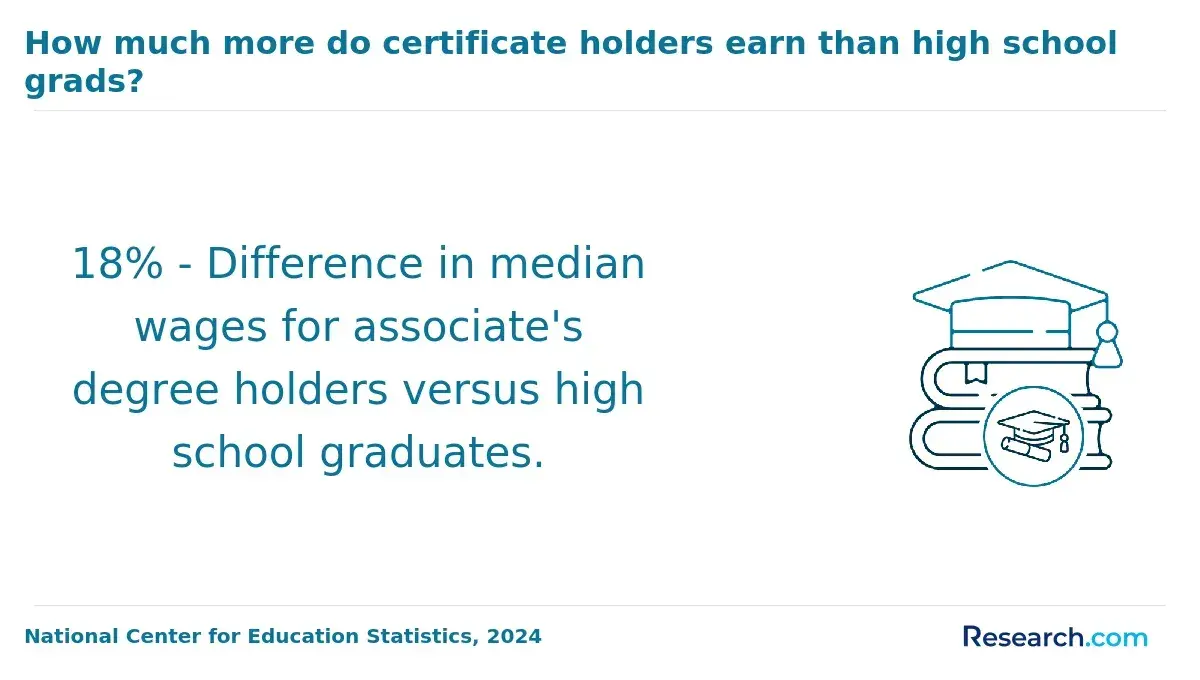
The integration of digital marketing and e-commerce content ensures alignment with the fragmented realities of online marketplaces. Programs often emphasize experiential learning, involving startup simulations or real venture projects that heighten employability. Bachelor's degree holders in entrepreneurship can expect an average annual earnings increase of about $24,000 compared with high school graduates, based on UniversityHQ's analysis of the 2024 BLS and NCES data.
Those evaluating online bachelor's degree courses in entrepreneurship should weigh curricular rigor against employability outcomes and the value of applied projects. For candidates aiming to pivot into business leadership without GMAT burdens, exploring affordable online MBA programs can complement long-term strategic growth preparation.
What admissions requirements do online entrepreneurship programs have?
Entry protocols for online entrepreneurship programs often function as a filter aligning candidates with realistic academic and workforce demands rather than mere formalities. Most require a high school diploma or equivalent, with many setting GPA minimums around 2.5 to 3.0 to ensure foundational readiness. Applicants lacking recent education face additional checks such as placement tests or prerequisite coursework covering math, writing, or business basics. This upfront skill verification can significantly affect time-to-completion and long-term success, particularly for those balancing work and study.
Many institutions have de-emphasized standardized tests like the SAT and ACT, yet some programs-especially hybrids tied to traditional campuses-still request scores or substitute professional experience, valuing demonstrable entrepreneurial or managerial background. This substitution often applies to career changers aiming for leadership in startups or SMBs, where relevant practical skills can outweigh academic credentials.
Financial barriers remain a decisive factor. Tuition widely varies-from just over $13,000 to beyond $138,000 for bachelor's online entrepreneurship degrees per GetEducated 2024 data-requiring candidates to weigh affordability against program credibility and outcomes. Certain programs also mandate proof of funding before enrollment, directly linking financial capacity to progression.
International applicants encounter added layers: English proficiency testing and credential evaluations lengthen admission timelines and complicate planning.
- Academic readiness is confirmed through GPA thresholds or prerequisite courses, influencing student persistence.
- Professional experience may substitute for test scores, especially for adult learners targeting pragmatic leadership roles.
- Tuition disparities necessitate critical evaluation of cost versus return, with some programs imposing upfront financial proof.
Aligning admission demands with career timelines, budget constraints, and real-world skills profoundly shapes the feasibility and value of pursuing an online entrepreneurship degree.
How long does an online entrepreneurship bachelor's take?
Choosing an online bachelor's degree in entrepreneurship requires balancing program length with career timing and financial investment. The standard full-time path spans four years with 120 to 130 credit hours covering core business, specialized entrepreneurship, and general education courses. Accelerated tracks can shorten this to two or three years but typically demand heavy course loads unsuitable for many working professionals.
Real-world impact varies substantially by completion time. For instance, a professional aiming to lead startup projects or launch new products cannot delay skill acquisition without risking lost market momentum or stagnant income. Conversely, part-time study often extends to five or more years, which may allow simultaneous work experience but risks delayed credential recognition from employers prioritizing timely graduation.
Cost is closely tied to duration. An online entrepreneurship bachelor's usually costs around $42,000 total, significantly less than the $68,000 average for in-person degrees, but longer programs drive up expenses and reduce return on investment-especially for those self-funding without employer tuition support.
Employers increasingly seek candidates who combine practical skills with completed degrees within reasonable timeframes. The decision between full-time, accelerated, or part-time study should weigh immediate professional goals, financial realities, and how quickly a degree must translate into opportunities.
What does an online entrepreneurship degree cost?
Tuition for online entrepreneurship degrees varies significantly, reflecting complex tradeoffs between cost, program design, and labor market outcomes. Public institutions may offer rates as low as $300 to $500 per credit for in-state students, while private colleges often exceed $600 to $1,000 per credit. This means a full 120-credit bachelor's degree could cost anywhere from $36,000 to above $100,000, though the highest fees are less typical for predominantly online delivery. Additional expenses such as technology fees and course materials can add 10-20% to total costs, a factor often underestimated.
Students prioritizing rapid program completion and minimizing expenses-common in tech startup ventures-might lean toward more affordable, flexible options. Conversely, those targeting roles within established business development teams could justify spending more upfront to gain access to stronger mentorship, industry connections, and experiential learning opportunities that facilitate portfolio building and employer evaluation.
Ignoring program quality for lower cost risks missing crucial elements like real-world project experience, incubator access, and networking, which directly impact job placement and career growth in entrepreneurship. Financial aid and employer tuition assistance help but rarely offset all expenses. The growing demand for online business education, with a 29% enrollment increase from 2019 to 2022 per NCES, has intensified competition for programs that balance affordability with practical outcomes.
What jobs can you get with an entrepreneurship degree?
Graduates with an entrepreneurship degree frequently move into roles that demand both strategic innovation and operational agility, such as small-business ownership, startup founding, and business consulting. Market data from the Guidant Financial 2024 Small Business Trends Survey shows that 34% of small-business owners with at least a bachelor's degree have relevant credentials, tying the degree directly to founding and managing new ventures.
The degree's real-world utility depends heavily on sector-specific skills. For instance, tech startup roles require deep product development and agile project leadership, while retail entrepreneurs focus on supply chain logistics and customer engagement strategies. Within established companies, entrepreneurship graduates often fill positions like product managers or business development directors, where entrepreneurial thinking is critical to launching new initiatives or scaling services.
Despite foundational financial literacy and business planning taught during studies, graduates face persistent challenges in cash flow management, regulatory compliance, and executing risk assessments under live conditions. Employers prioritize demonstrable leadership experience and practical results over theoretical knowledge alone, making hands-on learning and mentorship indispensable for career traction.
Prospective students should weigh programs emphasizing applied learning, incubator access, and industry networks, as these greatly enhance the transition from degree to effective business development. The competitive landscape means that a degree must be complemented by tactical business outcomes to differentiate candidates effectively.
What salary can business development roles offer?
Business development roles tied to entrepreneurship education generally start near $65,000, with mid-career salaries approaching $113,000, though outcomes depend heavily on industry context and skill application. Candidates with a management or entrepreneurship background who emphasize measurable impacts-such as lead conversion metrics or partnership growth-tend to command stronger offers, especially in rapid-growth sectors like technology startups.
The compensation landscape varies: tech startups often offer premiums reflecting urgent client acquisition goals, whereas manufacturing or nonprofit positions trade some earning potential for stability or mission alignment. This means that choosing the right industry track can significantly affect long-term salary trajectories and work environment tradeoffs.
Delivering salary growth beyond the mid-career range typically requires supplementing entrepreneurship knowledge with technical capabilities like data analysis or strategic marketing. Competition from MBA holders and credentialed professionals further pressures candidates to demonstrate distinct value-adds rather than relying solely on an entrepreneurship credential.
Practical challenges include balancing geographic cost-of-living differences and the upfront investment in skill development against median entry salaries. Those who target industries with scalable revenue models and integrate additional analytical skills are best positioned to surpass the $113,000 benchmark.
- Early career median salary near $65,000
- Mid-career median salary about $113,000
- Higher pay in technology startups versus nonprofit sectors
- Need for data and marketing skills to exceed $100,000
- Importance of quantifiable results for salary progression
How do you choose a reputable online entrepreneurship program?
Choosing an online entrepreneurship program demands focus on accreditation, curriculum relevance, and measurable graduate success, rather than promotional claims. Regional accreditation recognized by the U.S. Department of Education is a non-negotiable baseline, ensuring credit transferability and employer recognition. Programs must go beyond generic business topics and cover practical skills such as opportunity recognition, financial management tailored to startups, marketing strategies for emerging ventures, and innovation execution within entrepreneurial contexts.
Real-world application through startup frameworks or case studies in technology or service industries is critical for bridging theory and immediate work relevance. For instance, an aspiring healthcare tech entrepreneur needs coursework addressing regulatory hurdles alongside business development, not only foundational business management. Mentorship opportunities and direct connections to active entrepreneurs provide networking channels vital to navigating early-stage venture challenges.
Labor market realities underscore the relevance: business and financial roles linked to entrepreneurship are projected to grow 7% from 2022 to 2032, adding roughly 911,400 jobs, according to the U.S. Bureau of Labor Statistics. This growth confirms the importance of selecting programs with strong placement records in roles focused on venture creation and strategic execution. Asynchronous formats and part-time schedules offer flexibility for working professionals balancing education and employment, but vetting career support and interview preparation specifically aligned with entrepreneurial skill sets remains essential.
Prospective students should avoid programs emphasizing only theoretical knowledge without hands-on elements, as employers increasingly prioritize demonstrated problem-solving and leadership under uncertainty. Choosing wisely can influence not only immediate employability but also long-term adaptability in evolving markets.
Other Things You Should Know About Entrepreneurship
Yes. Many accredited online bachelor’s programs allow prior learning assessment or portfolio credit for documented business ownership, usually capped at 25% to 50% of total degree credits. Schools may require tax records, business plans, or supervisor verification before awarding credit.
Many online entrepreneurship degrees include optional or required internships, but availability and quality vary widely. Candidates should prioritize programs that embed structured experiential learning or partnerships with startups, as these components significantly improve readiness for business development roles. Without internships or practical projects, graduates may lack the hands-on experience that employers prioritize for entrepreneurship-focused careers.
Working professionals benefit most from part-time online entrepreneurship programs that allow paced progress without sacrificing job performance. While full-time can accelerate completion, it increases risk of burnout and may impair job focus, especially in demanding business development roles. Selecting part-time options with flexible deadlines supports simultaneous career advancement and academic success, providing a balanced approach to career pivoting.
References
- What to Look for in a Top Entrepreneurship Program https://www.princetonreview.com/business-school-advice/top-entrepreneurship-program
- Bachelor's degrees in entrepreneurship | edX https://www.edx.org/bachelors/entrepreneurship
- business development manager https://www.randstad.ca/job-seeker/job-profiles/business-development-manager/
- Global Salary Report: What International Business Development Managers Earn Worldwide - EMLV Business School Paris https://www.emlv.fr/en/global-salary-report-international-business-development-managers/
- What does a Business Development Manager do? Role, Skills and Salary (2025) https://hyperisland.com/en/blog/hyper-insights/what-does-a-business-development-manager-do-role-skills-salary
- Online Bachelor of Business Administration and Digital Innovation with Digital Entrepreneurship https://www.global-business-school.org/programs/bachelor-europe-bachelor-of-business-administration-online/online-bachelor-of-business-administration-and-digital-innovation-with-digital-entrepreneurship/
- Salary Business Development Manager - Poland https://www.pensjometr.pl/en/salaryinfo/management/business-development-manager
- Entrepreneurship Degree and Certificate Programs | DeVry https://www.devry.edu/online-programs/area-of-study/entrepreneurship.html
- Entrepreneurship Jobs - What are the career opportunities? | CBS https://www.cbs.de/en/blog/entrepreneurship-jobs
- Main navigation https://ouk.ac.ke/bachelor-business-and-entrepreneurship