2027 Best Online Master's in Behavioral Health Management With Low-Residency Formats

Co-Founder and Chief Data Scientist
Choosing an online master's in behavioral health management is really a career-fit and format decision: you need leadership training without losing the clinical, operational, or community-service context that makes behavioral health work different. The need is timely: the U.S. Bureau of Labor Statistics projects 23% growth for medical and health services managers from 2024 to 2034, far faster than average.
This guide is for working clinicians, case managers, nonprofit professionals, and healthcare administrators who want to compare low-residency formats, costs, accreditation, curriculum, and career outcomes before enrolling.
Key Things You Should Know
- Low-residency behavioral health management programs are best for working professionals who want online coursework plus limited campus intensives for leadership labs, networking, simulations, or capstone work.
- The strongest programs usually combine healthcare administration, behavioral health systems, ethics, finance, quality improvement, data-informed decision-making, and practicum or capstone experiences.
- Career outcomes vary by role, but BLS data show strong demand in related U.S. management and behavioral health fields, including 23% projected growth for medical and health services managers from 2024 to 2034.
What is an online master's in behavioral health management, and who is it best suited for?
An online master's in behavioral health management is a graduate program focused on leading organizations that provide mental health, substance use, integrated care, community health, crisis services, residential treatment, or prevention programs. Unlike a counseling master's that primarily prepares students for clinical licensure, this degree emphasizes systems, staffing, budgets, compliance, quality improvement, program evaluation, and service delivery.
The degree is often a good fit for professionals who already understand human services or healthcare but need management credentials to move into supervisory or director-level roles. It may also fit people moving from clinical practice into operations, policy, workforce development, care coordination, or population health.
The table below summarizes who usually benefits most from this degree and who may be better served by another path. Use it to test whether the program's leadership focus matches your actual goal.
| Student profile | Why the degree may fit | When another option may be better |
| Licensed or license-seeking behavioral health clinician | Builds supervision, budgeting, program leadership, compliance, and quality skills for clinic or agency management | A counseling, social work, psychology, or marriage and family therapy degree may be better if the main goal is independent clinical practice |
| Case manager, peer support specialist, care coordinator, or community health worker | Can support movement into program coordination, team leadership, grant-funded program management, or service-line administration | A certificate may be enough if the goal is a narrow skill upgrade rather than a graduate-level leadership role |
| Healthcare administrator entering behavioral health | Adds context in mental health systems, substance use services, crisis care, integrated care, and behavioral health policy | A general MHA, MBA, or MPH may be broader if the student wants to work across all healthcare sectors |
| Nonprofit or public-sector professional | Connects management training with community needs, funding models, outcomes reporting, and human services operations | A public administration or social work management program may fit better for broader government or nonprofit leadership |
A behavioral health management master's is not automatically the fastest path to clinical licensure. Before enrolling, decide whether your target job requires a license, a management credential, field experience, or a combination of all three.
How do low-residency online behavioral health management programs work compared with fully online options?
Low-residency programs deliver most coursework online but require short in-person sessions, often called residencies, intensives, institutes, or immersion weekends. These visits may occur once per term, once per year, or at the beginning and end of the program. Fully online programs, by contrast, usually do not require campus travel, though they may still require local fieldwork or live virtual meetings.
The best format depends on how much structure, networking, and applied practice you want. Low-residency study can be valuable in behavioral health management because leadership, conflict resolution, crisis planning, and interprofessional collaboration are easier to practice in real-time settings.
This comparison shows how the two online formats usually differ. It can help you decide whether the added travel is worth the extra contact with faculty and peers.
| Feature | Low-residency online format | Fully online format |
| Campus visits | Limited required visits for intensives, leadership labs, presentations, or cohort-building | No required campus visits in most cases |
| Best for | Students who want online flexibility but value face-to-face networking and applied practice | Students who need maximum flexibility because of work, caregiving, military service, or distance |
| Scheduling | Online coursework plus fixed residency dates that must be planned around | Often asynchronous or hybrid-synchronous with fewer travel constraints |
| Cost considerations | Tuition plus travel, lodging, meals, parking, and missed work time | Tuition and fees, usually with fewer travel-related costs |
| Learning experience | Stronger in-person relationship-building and live practice opportunities | More dependent on virtual advising, discussion boards, video meetings, and local networking |
Before choosing a low-residency program, ask admissions staff exactly how many visits are required, how long each visit lasts, whether attendance is mandatory, and whether students can complete field experiences near home. A common mistake is focusing only on online convenience and discovering later that required residencies conflict with work schedules or family responsibilities.
Which types of institutions and accreditors should you look for in behavioral health management programs?
Accreditation matters because it affects financial aid eligibility, credit transfer, employer trust, and sometimes licensure or certification pathways. At minimum, choose a school that holds recognized institutional accreditation. For a behavioral health management degree, also look for program-level signals that match your goal, such as public health, healthcare management, counseling, social work, psychology, or business accreditation where relevant.
There is no single universal accreditor for every behavioral health management master's because programs may sit in schools of public health, health administration, social work, psychology, business, or public affairs. That makes program alignment more important than the title alone.
The table below shows common institutional and program-quality markers. These do not all need to appear in one program, but the right ones should match your intended career path.
| Quality marker | Why it matters | What to verify |
| Institutional accreditation | Supports federal financial aid access, transferability, and basic institutional quality review | Confirm the institution is listed by a recognized U.S. accreditor |
| Healthcare management accreditation or alignment | Useful for students targeting healthcare administration, operations, compliance, or service-line leadership | Review whether the curriculum covers finance, policy, quality, informatics, and leadership in healthcare settings |
| Public health accreditation or alignment | Helpful for population behavioral health, prevention, community programs, and policy roles | Look for coursework in epidemiology, program evaluation, health equity, and community assessment |
| Clinical-field accreditation or licensure alignment | Important only if the degree is also intended to support clinical practice preparation | Ask whether the program meets state-specific educational requirements for the license you want |
| Business or management accreditation | Relevant for students interested in organizational strategy, human resources, finance, or executive administration | Compare management depth, analytics courses, and leadership-development opportunities |
If you are considering long-term academic, executive, or research leadership, compare master's options with future doctoral routes, including healthcare PhD programs online. The best master's program for that path should offer research literacy, data analysis, and a capstone or thesis option that can demonstrate graduate-level inquiry.
Red flags include vague accreditation language, pressure to enroll quickly, no clear faculty credentials, no published curriculum, unclear residency requirements, or a program that claims to prepare students for licensure without naming the states or boards involved. If a school cannot explain how its degree connects to your target role, keep looking.
What admission requirements and prerequisites do online behavioral health management master's programs typically have?
Admission requirements vary, but most online behavioral health management master's programs expect applicants to have a bachelor's degree from an accredited institution. Some programs welcome applicants from any major, while others prefer backgrounds in psychology, social work, public health, nursing, human services, healthcare administration, criminal justice, or business.
Because this is a management-focused graduate degree, professional experience can matter as much as undergraduate major. Programs may look for evidence that you understand service delivery, workplace ethics, client populations, or healthcare organizations.
Most applicants should prepare the following materials before applying. These items help schools judge academic readiness, professional maturity, and fit with the program's leadership focus.
- Official transcripts showing a completed bachelor's degree and any relevant prerequisite coursework.
- A statement of purpose explaining why behavioral health management fits your career goals.
- A current resume showing healthcare, behavioral health, nonprofit, public-sector, or management experience when available.
- Letters of recommendation from supervisors, faculty, or licensed professionals who can speak to your readiness for graduate study.
- Possible interview, writing sample, or short essay on leadership, ethics, equity, or behavioral health systems.
GRE requirements are less common than they once were for many professional master's programs, but policies differ by institution. If your GPA is below the preferred threshold, strengthen your application with relevant work experience, a focused statement, recent graduate-level coursework, or strong recommendations.
The biggest admissions mistake is applying to programs based only on title. A program called behavioral health management may be operational, clinical-adjacent, public-health-oriented, or business-focused. Read the course list and outcomes carefully before deciding it matches your background.
How long do online behavioral health management master's programs take, and what do they cost?
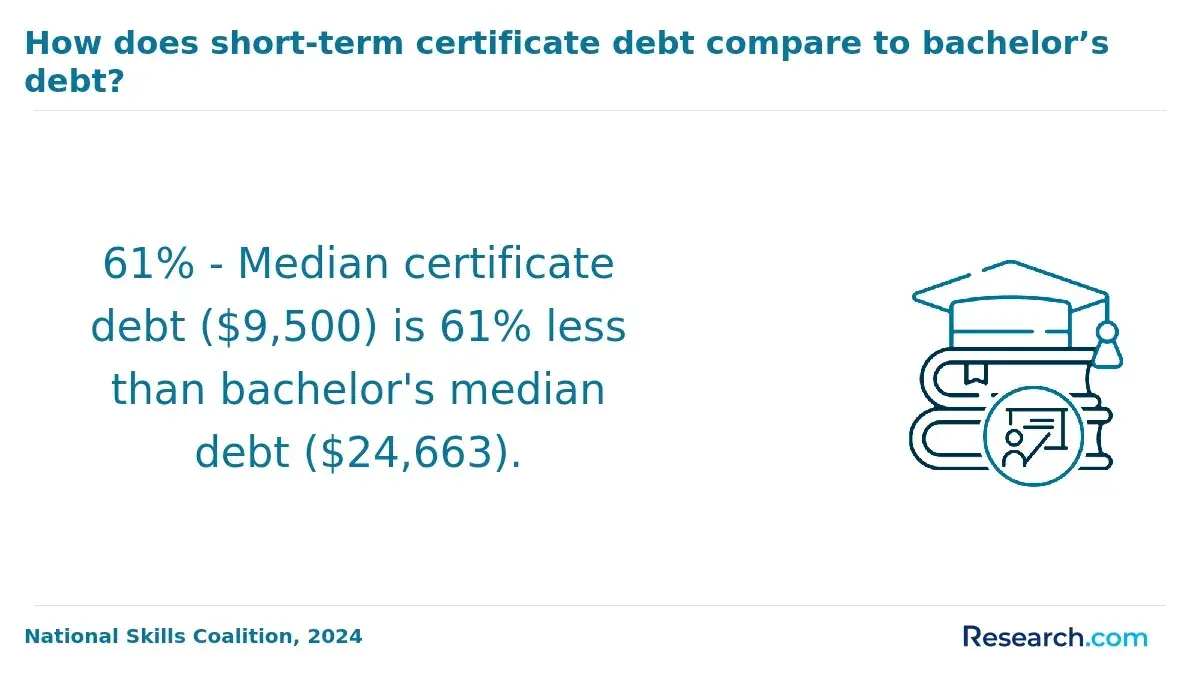
Most online master's programs in behavioral health management take about one to three years, depending on credit load, transfer policies, field requirements, and whether the student attends full time or part time. Accelerated tracks can be attractive, but they are not always best for working professionals in emotionally demanding behavioral health roles.
Cost should be evaluated as total cost of attendance, not tuition alone. Low-residency students should pay special attention to travel expenses because even a few required visits can add meaningful out-of-pocket costs.
When comparing programs, organize the cost into direct charges and indirect expenses. These are the main items to request from each school before committing.
- Per-credit tuition or flat-rate program tuition.
- University fees, technology fees, distance-learning fees, and graduation fees.
- Residency travel, lodging, meals, local transportation, parking, and unpaid time away from work.
- Books, software, background checks, immunization records, or field-placement onboarding costs.
- Potential employer tuition assistance, military education benefits, scholarships, graduate assistantships, or payment plans.
A simple way to estimate tuition is to multiply required credits by the per-credit rate, then add fees and residency costs. For example, a 36-credit program priced at $700 per credit would carry $25,200 in tuition before fees, books, travel, and living expenses. This kind of calculation helps you compare programs with different pricing structures on equal terms.
The table below outlines common timeline trade-offs. Use it to decide whether speed, affordability, workload balance, or relationship-building should matter most in your search.
| Study pace | Typical fit | Main advantage | Main trade-off |
| Accelerated | Students with strong time availability, employer support, or prior graduate coursework | Finishes faster and may reduce time away from advancement opportunities | Heavy workload can be difficult with full-time behavioral health employment |
| Full-time | Students who can manage multiple courses per term | Balanced path for students who want momentum without the fastest possible schedule | May still require reduced work hours during practicum or capstone periods |
| Part-time | Working professionals, caregivers, and students paying as they go | More manageable workload and better fit for full-time employment | Longer time to completion and possible exposure to tuition increases |
| Low-residency cohort | Students who value peer networking and structured in-person milestones | Stronger cohort identity and applied leadership practice | Requires travel planning and less scheduling freedom on residency dates |
If you are still finishing an undergraduate pathway and want to reduce the time before graduate study, an accelerated healthcare administration degree online may be worth comparing with a traditional bachelor's-to-master's route. Just make sure the faster option does not leave gaps in experience, prerequisites, or employer-recognized credentials.
What core courses, practicum, and capstone experiences are included in behavioral health management curricula?
Behavioral health management curricula usually combine healthcare leadership with behavioral health systems knowledge. The strongest programs do not treat management as generic; they show how staffing, reimbursement, compliance, trauma-informed care, crisis response, and community partnerships affect real behavioral health organizations.
Core courses vary by school, but most programs include several recurring content areas. These subjects are important because they map directly to the decisions managers make in clinics, agencies, hospitals, and community programs.
- Behavioral health systems, including mental health services, substance use treatment, crisis care, prevention, and integrated care models.
- Healthcare finance, budgeting, reimbursement, grant management, and resource allocation.
- Organizational leadership, supervision, conflict resolution, workforce development, and staff retention.
- Law, ethics, privacy, compliance, risk management, and documentation standards.
- Quality improvement, program evaluation, outcomes measurement, data analytics, and performance reporting.
- Health equity, cultural responsiveness, social determinants of health, and community partnership development.
Many programs include a practicum, internship, applied project, or capstone. In a management-focused degree, this experience may not involve providing therapy; it may involve analyzing workflows, improving access, designing a program, evaluating outcomes, building a staffing plan, or developing a compliance process.
Students who want to lead projects across technology, operations, grants, or service expansion should pay close attention to project-based coursework. If your main goal is broader operations leadership outside behavioral health, a project management degree online may be a useful alternative or complementary credential.
Ask each program for examples of recent capstones. Strong examples include measurable quality-improvement plans, implementation projects, workforce-retention strategies, crisis-service coordination plans, data dashboards, or grant-funded program evaluations. Weak capstone descriptions that sound purely theoretical may signal limited applied value.
How do online and campus-based behavioral health management programs differ in flexibility, support, and outcomes?
Online and campus-based behavioral health management programs can lead to similar academic credentials, but the student experience can be very different. The right choice depends on your schedule, location, learning style, need for local networking, and tolerance for self-directed work.
Online learning is now mainstream in graduate professional education, but quality still varies. A strong online program should offer responsive advising, accessible faculty, career services, library access, technical support, and clear expectations for synchronous sessions or residencies.
The table below compares the practical differences that matter most to working adults. Use it to identify which format removes barriers and which one may create new ones.
| Decision factor | Online or low-residency program | Campus-based program |
| Flexibility | Best for students balancing work, caregiving, or distance from campus | Best for students who can attend scheduled classes and benefit from routine in-person structure |
| Networking | Can be strong if the program uses cohorts, live sessions, residencies, and active alumni networks | Often easier through campus events, local placements, and informal faculty contact |
| Support | Depends heavily on online advising quality, faculty responsiveness, and technology design | May provide easier access to campus offices, faculty, and peer study groups |
| Fieldwork | Often completed near the student's location, but placement support varies | May have established local partnerships with agencies and healthcare systems |
| Best outcome fit | Strong for experienced professionals who can connect coursework to current work | Strong for students who need local immersion, campus identity, and in-person mentorship |
Do not assume online means easier. Online graduate courses often require more self-management because assignments, discussions, group projects, and live sessions compete with work responsibilities. Before enrolling, ask how faculty handle group work across time zones, whether sessions are recorded, and how quickly advisors respond when students struggle.
A practical selection rule is this: choose fully online if travel is a major barrier, low-residency if you want structured in-person leadership practice, and campus-based study if local networking and face-to-face support are central to your success.
What careers can you pursue with a master's in behavioral health management, and in which settings?
A master's in behavioral health management can support roles that combine people leadership, operations, compliance, and service improvement. It is most useful when paired with relevant experience in healthcare, counseling, social work, case management, nonprofit administration, public health, or human services.
Common employment settings include community mental health centers, substance use treatment programs, hospitals, integrated primary care clinics, residential facilities, crisis response programs, health plans, county agencies, correctional health programs, veterans services, schools, nonprofit organizations, and telebehavioral health companies.
The table below connects possible roles with typical responsibilities. Actual job titles vary widely by employer, state, funding source, and whether the position requires clinical licensure.
| Career path | Typical responsibilities | Credential considerations |
| Behavioral health program manager | Oversees program operations, staffing, schedules, service quality, reporting, and stakeholder coordination | Management experience is often important; clinical licensure may be preferred for treatment programs |
| Clinical operations manager | Improves workflows, access, documentation processes, productivity, and patient or client experience | Healthcare operations experience and knowledge of privacy and compliance standards can be valuable |
| Substance use services administrator | Coordinates treatment programs, compliance, grants, workforce needs, and community partnerships | State rules and employer policies may require specialized substance use credentials or licensed supervision |
| Quality improvement or outcomes manager | Tracks performance indicators, analyzes outcomes, supports audits, and leads process-improvement projects | Data analysis, program evaluation, and quality-improvement training are important |
| Community behavioral health director | Leads teams, budgets, partnerships, reporting, and strategic planning for community-based services | Senior roles often require significant experience in addition to graduate education |
| Workforce development or training manager | Designs staff training, onboarding, supervision systems, retention initiatives, and compliance education | Human resources, adult learning, and behavioral health experience can strengthen candidacy |
Behavioral health organizations increasingly need leaders who can manage workforce shortages, burnout, telehealth workflows, documentation burden, value-based care expectations, and data reporting. If your interests lean more toward hiring, retention, employee relations, and organizational culture across industries, the best online master degree in human resource management may be a better match than a behavioral health-specific program.
This degree is usually not ideal for someone who wants to provide therapy as the primary career goal unless the program is explicitly designed to meet clinical licensure requirements. For management roles, however, it can help translate frontline experience into strategic leadership language employers understand.
What salary ranges and job outlook can graduates in behavioral health management expect?
Salary potential depends on job title, licensure, employer type, region, years of experience, and whether the role is clinical, administrative, or executive. A behavioral health management degree does not guarantee a particular salary, but it can support eligibility for roles where graduate education and leadership experience are valued.
Recent U.S. labor data show why the field attracts working professionals seeking advancement. The U.S. Bureau of Labor Statistics reported a May 2024 median annual wage of $117,960 for medical and health services managers, with 23% projected employment growth from 2024 to 2034. This category is broader than behavioral health, but it is relevant because many behavioral health leadership roles sit inside healthcare management structures.
The table below provides salary context for related occupations. Use it as a benchmark, not a promise, because individual offers vary by location, employer, credentials, and scope of responsibility.
| Related U.S. occupation | May 2024 median annual wage | 2024 to 2034 projected growth | How it relates to behavioral health management |
| Medical and health services managers | $117,960 | 23% | Closest broad benchmark for healthcare operations, clinic management, and service-line leadership |
| Social and community service managers | $78,240 | 8% | Relevant for nonprofit, community behavioral health, public programs, and grant-funded services |
| Substance abuse, behavioral disorder, and mental health counselors | $59,190 | 17% | Useful comparison for clinicians considering a move from direct service into leadership |
The salary question should be framed as return on role fit, not return on degree title alone. A student already working in behavioral health may see stronger practical value if the degree helps them qualify for supervisor, program manager, director, compliance, or quality roles. A student without field experience may need entry-level or coordinator experience before the master's degree translates into management opportunities.
Technology is also changing employer expectations. Behavioral health managers are increasingly expected to understand telehealth operations, electronic health records, privacy workflows, analytics dashboards, AI-assisted documentation risks, and data-informed staffing decisions. Programs that include informatics, quality metrics, and ethical technology use may offer a stronger long-term fit than programs focused only on general leadership theory.
How does a behavioral health management master's align with licensure, certification, and continuing education options?
Licensure is one of the most important points to clarify before enrolling. A behavioral health management master's is usually designed for leadership, administration, or systems roles, not independent counseling licensure. Some programs may include clinical components, but you should never assume a management degree meets state requirements for counseling, social work, marriage and family therapy, psychology, or substance use licensure.
Use the following steps before you apply. They can prevent the costly mistake of completing a degree that does not match your intended credential.
- Identify the exact job title or license you want, including the state where you plan to work.
- Review the state licensing board's education, supervised experience, exam, and coursework requirements.
- Ask the program for a written explanation of whether its curriculum meets those requirements.
- Confirm whether fieldwork hours count toward licensure, management experience, certification, or only degree completion.
- Check whether the degree supports continuing education, specialty certification, or employer advancement even if it does not lead to licensure.
Certification may still be useful for behavioral health managers. Depending on your role, you might consider credentials in healthcare quality, project management, health information privacy, addiction services, nonprofit management, public health, or human resources. Requirements vary, so compare eligibility rules before paying for exam preparation.
Continuing education is also common in behavioral health because laws, payer rules, privacy standards, crisis-care models, and evidence-based practices change over time. A strong master's program should help you build a habit of ethical, evidence-informed decision-making rather than treating graduation as the end of professional learning.
The safest approach is to treat licensure, certification, and graduate education as related but separate decisions. Choose the master's for management preparation, choose licensure pathways for clinical authority, and choose certifications for targeted professional credibility.
Other Things You Should Know About Behavioral Health Management
Yes, many students do, especially in part-time programs. The key is to check residency dates, synchronous class times, group project expectations, and capstone workload before enrolling.
Not always. Some programs admit students from healthcare administration, public health, nonprofit work, criminal justice, or business. However, clinical or human services experience can make coursework more relevant and may help with management hiring.
To minimize travel costs in a low-residency program, consider schools with flexible residency options and choose those that offer financial aid for travel expenses. Look into accommodation discounts for students and plan trips around academic events to maximize the experience with minimal visits.
Ask about accreditation, total cost, residency requirements, fieldwork placement support, licensure alignment, faculty experience, capstone examples, graduate outcomes, and whether online students receive the same advising and career support as campus students.
References
- Online Degrees https://onlinecounselingprograms.com/online-counseling-degrees/
- Best Online Master's In Mental Health Counseling 2025 https://www.psychology.org/rankings/best-mental-health-counseling-programs/
- Campus Mental Health Programs That Build Student Resilience - Campus Mind https://www.campusmind.org/campus-mental-health-programs-resilience/
- 9 Mental Health Careers You Can Pursue with a BA https://www.nec.edu/news/9-mental-health-careers-you-can-pursue-with-a-ba
- A Complete Guide to Careers in Behavioral Health Fields https://behavioralhealth.careers/blog/careers-in-behavioral-health-guide/
- 10 Fulfilling Mental Health Careers You Can Train for Now | Palo Alto University https://paloaltou.edu/resources/blog/mental-health-careers-you-can-start-now
- Behavioral Health - NCQA https://www.ncqa.org/behavioral-health/
- Achieving Excellence: Behavioral Health Accreditation - Haven Health Management https://havenhealthmgmt.org/achieving-excellence-behavioral-health-accreditation/
- Behavioral Health Career Descriptions | SAMHSA https://www.samhsa.gov/about/careers/behavioral-health-workforce/careers-by-state/descriptions
- Joint Commission Accreditation: Behavioral Health Guide | Behave Health https://behavehealth.com/compliance/joint-commission