2027 Best Generative AI Courses for General Managers

Co-Founder and Chief Data Scientist
General managers face increasing pressure to integrate emerging technologies yet often lack foundational knowledge of generative AI to make informed decisions. This gap hinders strategic leadership in tech-driven markets and limits competitive advantage. Many seek education paths that fit busy schedules without requiring prior computer science expertise.
The challenge lies in finding accredited, flexible courses that balance theory and practical application tailored to managerial roles. This article reviews top generative AI programs designed for general managers, highlighting curricula, accessibility, and outcomes to guide professionals in selecting the best educational route for leadership in an evolving technological landscape.
Key Things You Should Know
- The best generative AI courses for general managers in 2026 prioritize practical applications in business strategy, with 72% of programs including real-world case studies.
- Latest courses emphasize ethical AI use and compliance, reflecting a 40% rise in corporate demand for AI governance knowledge since 2024.
- Flexible online and hybrid learning formats dominate offerings, improving accessibility for working professionals balancing education with management roles.
Advance Your Career with AI Online Courses
Artificial Intelligence: Implications for Business Strategy
This program provides an introduction to Artificial Intelligence and their implications for business strategy. Earn an official digital certificate.

Oxford Artificial Intelligence Programme
Explore this Oxford Artificial Intelligence programme offered in a flexible learning environment and explore topics like machine learning, automation, and robotics.

Implementing Agentic AI: Building Your Organizational Playbook
This online MIT Agentic AI course offers a practical approach to deploying AI agents in your organization, including a custom playbook. 3 weeks, exclusive launch price.

AI Adoption: Driving Business Value and Impact
This online MIT AI Adoption: Driving Business Value and Impact offers practical frameworks to close the gap between AI potential and business reality.

Artificial Intelligence in Pharma and Biotech
Discover the applications and limitations of artificial intelligence in pharma and biotech with this MIT online short course.

What makes a generative AI course valuable specifically for general managers?
Generative AI course benefits for general managers lie in equipping leaders with the skills to strategically integrate AI into their organizations. IBM's 2025 Global AI Adoption Index reveals that 61% of CEOs see generative AI as critical to their company's strategy, highlighting the urgent demand for AI-literate general managers who can turn AI capabilities into competitive business advantages.
Key skills from generative AI training for leadership include practical knowledge to improve decision-making, innovation, and operational efficiency.
General managers learn how AI can optimize workflows, enhance product development, and boost customer engagement without needing deep technical expertise. For instance, evaluating AI-generated insights or automating routine tasks can significantly increase productivity.
Courses also cover AI governance, ethical frameworks, and risk management, enabling managers to oversee AI deployment responsibly while ensuring compliance with data privacy standards. This training minimizes risks related to AI misuse and reputational damage.
Data-driven leadership is another critical component, teaching managers to interpret AI outcomes for informed strategic decisions. Understanding how AI impacts workforce dynamics and change management helps leaders guide teams smoothly through AI adoption.
For professionals interested in advancing their expertise, pursuing an accelerated computer science degree online can further enhance understanding of these transformative technologies.
Advance Your Career with AI Online Courses
Artificial Intelligence: Implications for Business Strategy
This program provides an introduction to Artificial Intelligence and their implications for business strategy. Earn an official digital certificate.
Oxford Artificial Intelligence Programme
Explore this Oxford Artificial Intelligence programme offered in a flexible learning environment and explore topics like machine learning, automation, and robotics.
Implementing Agentic AI: Building Your Organizational Playbook
This online MIT Agentic AI course offers a practical approach to deploying AI agents in your organization, including a custom playbook. 3 weeks, exclusive launch price.
Which are the best generative AI courses for general managers in the U.S. today?
Top generative artificial intelligence courses for general managers in the U.S. emphasize practical leadership and strategic integration. The MIT Sloan Artificial Intelligence: Implications for Business Strategy offers executives a rigorous curriculum focused on AI-driven decision-making and competitive advantage.
Stanford's AI for Business Innovation similarly trains managers to leverage generative AI models to optimize operations and product development while balancing technical skills with business insight.
General managers looking for comprehensive training often choose programs like the University of California, Berkeley's AI Strategy and Leadership Program, which guides participants on deploying AI responsibly and managing ethical and compliance risks in organizational settings. These courses cater to leaders aiming to accelerate AI adoption effectively.
Online options such as Wharton's AI for Business Specialization provide flexibility, covering essential managerial skills including AI adoption, change management, and innovation leadership. This format offers access to case studies across industries, supporting real-world application.
As roles requiring AI skills are projected to grow 27% by 2030 and managers fluent in AI earn 21% higher salaries on average, these top generative artificial intelligence training programs for U.S. general managers fill a critical skills gap identified by the World Economic Forum's Future of Jobs 2025 report.
For those considering advanced credentials, exploring the cheapest online masters in artificial intelligence can provide additional pathways to expertise and career growth.
How do online generative AI programs for managers compare with on-campus options?
Online generative AI courses versus on-campus programs for managers present distinct advantages, especially regarding flexibility, accessibility, and relevance to today's industry demands.
Many online programs offer modular structures, enabling professionals to learn at their own pace without interrupting their careers. This approach allows for immediate application of skills, often speeding up the return on time invested.
On-campus programs, by comparison, require fixed schedules and larger time commitments, which may delay practical use of knowledge. Nevertheless, these settings frequently provide richer networking opportunities and direct faculty engagement, benefiting those who prioritize collaboration and mentorship.
A 2024 GMAC survey found that 74% of executives who completed a non-degree AI/analytics program reported measurable performance improvement in their business unit within 12 months, compared to 51% of recent MBA graduates without specialized AI training. This underscores the value of focused, skill-specific training for managers.
- If rapid business impact and immediate skill acquisition are critical, online generative AI programs with project-based learning and real-time case studies excel.
- For broader leadership skills incorporating business strategy, traditional MBAs with AI electives may complement these needs but often lack deep AI specialization.
- Cost effectiveness also favors online training by lowering tuition and eliminating relocation or commuting expenses.
Those exploring AI education for managers should consider a range of options, including specialized degrees like the online PhD AI. Aligning choices with timeframe, learning style, and specific AI competence needs is essential in selecting the best educational path.
What should general managers look for in accreditation and institutional quality for AI courses?
General managers selecting generative AI courses should prioritize accredited programs that meet established standards. Accreditation from reputable regional U.S. bodies or recognized industry organizations in technology and management ensures that the curriculum delivers reliable and current knowledge essential for practical AI implementation.
Institutional quality criteria for AI training programs for executives include faculty expertise, alumni success, and partnerships with leading AI companies, which highlight a program's relevance and industry alignment.
Managers need to consider course depth and delivery methods to suit their schedules and goals. Executive-focused AI programs often emphasize leadership applications, case studies, and AI ethics over technical coding skills, which aligns with strategic organizational roles. Cost-effectiveness is crucial; top generative AI courses for managers typically range from USD 500 to USD 2,500, much less than a full MBA's tuition and earnings loss.
Transparency in program outcomes-such as recognized certification, career support, and ongoing access to materials-is important. Programs offering experiential learning through projects or simulations demonstrate a strong commitment to applied knowledge, enhancing value for managers aiming to integrate AI strategically.
For those exploring AI careers, understanding what does an AI trainer do can provide further insight into practical industry roles from quality education pathways.
What core topics and skills are covered in generative AI courses for general managers?
Generative AI courses designed for general managers equip leaders with essential skills to oversee AI-driven projects and teams. These programs cover foundational topics such as machine learning models, natural language processing, and image generation techniques, focusing on how AI can drive innovation and sustain competitive advantage.
Key skill areas include ethical AI use, data governance, and risk management, enabling managers to evaluate AI applications while addressing bias and legal issues.
Practical elements often involve interpreting AI outputs, collaborating with technical staff, and making strategic investment decisions. Project management in AI contexts is also emphasized, with training on realistic timelines, budgeting, and integrating AI into existing business workflows.
Effective communication skills tailored to AI environments help managers articulate AI capabilities and limitations clearly to stakeholders. Courses may also introduce the AI data lifecycle and basic programming or tool literacy to encourage better alignment with developers and data scientists. Change management strategies prepare leaders to facilitate organizational adoption and overcome resistance.
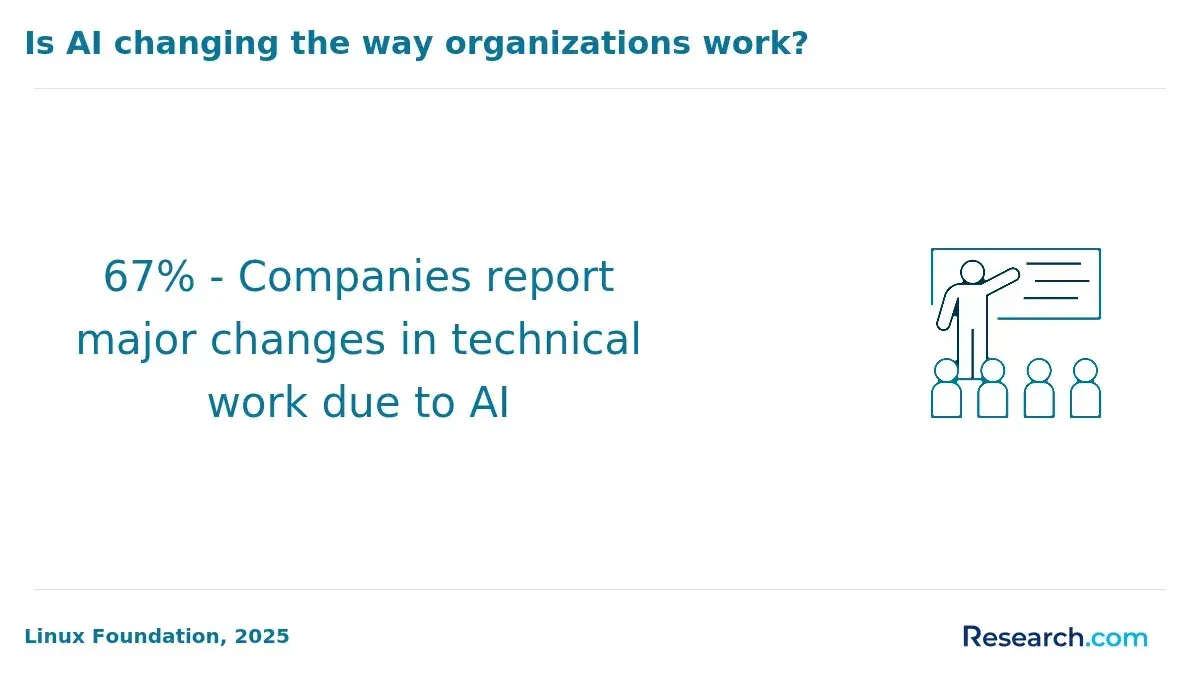
Lattice's 2024 State of AI at Work report highlights that 57% of companies with 1,000+ employees initiated formal AI training programs for managers, and 39% mandated at least one AI course for people leaders. This trend underscores the critical role of robust AI education in leadership and management.
What are the typical admission requirements for generative AI programs aimed at managers?
Admission to generative AI programs geared toward general managers typically requires a bachelor's degree, often in business, technology, or related fields. Many programs also emphasize managerial experience, usually asking for three to five years in leadership or decision-making roles to ensure candidates can effectively apply AI concepts within organizations.
Applicants may need foundational skills like data analysis proficiency or familiarity with tech-driven environments. Some institutions require completion of introductory AI or machine learning courses before enrollment.
Where formal prerequisites are not listed, admissions committees often evaluate candidates through interviews or written statements to assess their motivation and understanding of AI's strategic business roles.
- Nearly 79% of leaders agree AI adoption is critical, but 60% report lacking managers with adequate skills, creating a significant talent gap (Microsoft Work Trend Index, 2024).
- To address this, many programs offer flexible, modular formats tailored to working professionals, sometimes prioritizing demonstrated experience over academic credentials.
- Managers with advanced degrees but limited AI knowledge may need to complete bridging modules covering technical topics like neural networks or natural language processing.
Highlighting AI-related projects during application can strengthen admission prospects by demonstrating practical expertise. These evolving admission criteria reflect the growing demand for leaders capable of integrating AI responsibly and strategically in business settings.
How long do generative AI courses for general managers take and what do they cost?
Generative AI courses for general managers vary in length from one week to six weeks, depending on the program's intensity and format. Many executive education offerings, including the renowned "AI for Business Leaders" course, are structured as 2-4 day workshops with approximately 15 to 25 hours of instruction.
Extended courses of six weeks often include deeper AI strategy integration and hands-on projects or case studies, balancing rigorous content with demanding executive schedules.
Course fees range broadly based on provider reputation, curriculum depth, and delivery format. Shorter programs under a week usually cost between $3,000 and $5,000, while comprehensive six-week courses or top-tier business school options can exceed $10,000. Some providers offer tiered pricing that includes added coaching or materials.
Companies that invest in training their senior leaders report tangible benefits. For instance, data from McCombs School of Business executive education indicates that managers completing the "AI for Business Leaders" course achieved a 12-15% reduction in decision cycle time within six months on strategic initiatives. This underscores the value of targeted programs that combine AI strategy with practical tools.
Consider these points when selecting a program:
- Match course length to your available time and learning goals.
- Evaluate costs in relation to proven business outcomes.
- Seek courses offering both strategic insight and immediate AI application in management.
What management and leadership roles can generative AI training prepare you for?
Generative AI training prepares professionals for various leadership roles that require strategic application and understanding of AI technologies. These include HR managers using AI-driven analytics for talent acquisition, finance managers optimizing forecasting and risk management, and operations managers enhancing supply chain efficiency and automation.
Product managers also benefit by leading AI-enabled innovation and digital transformation, while marketing managers improve customer segmentation and campaign personalization with generative AI. IT managers focus on AI integration and governance within their teams.
Effective leaders in AI must interpret AI outputs accurately, align AI initiatives with business goals, and manage cross-functional projects while ensuring ethical deployment. Training often emphasizes data literacy, responsible AI use, and change management-skills critical for leadership success.
Research from Lattice shows organizations offering targeted AI training for specific functions like HR, finance, and operations saw a 23% increase in AI tool adoption compared to those providing generic training. This underscores the value of role-specific AI education. Prospective learners should seek courses with tailored case studies and hands-on sessions suited to their leadership needs.
Managers in industries such as manufacturing, healthcare, and retail gain particular advantage from AI leadership skills that address challenges like resource allocation, accurate forecasting, and responsible AI scaling within complex organizations.
What salary ranges and earning potential are associated with AI-savvy general managers?
General managers skilled in artificial intelligence within the U.S. command significant salary advantages due to the technology's strategic importance in leadership. Entry-level professionals fluent in AI earn between $90,000 and $120,000 annually.
With advanced AI education and experience, salaries rise to $130,000-$180,000, and in large corporations or tech-driven industries, compensation can exceed $200,000, often enhanced by bonuses tied to AI project outcomes and digital transformation success.
Today's companies value AI expertise that extends beyond traditional management, focusing on AI risk assessment, ethics, and governance. Research from Harvard and MIT shows over 70% of executives prioritize these areas, reflecting a sharp increase from 42% two years prior.
General managers proficient in AI governance are highly sought after for guiding organizations through complex regulatory and ethical landscapes, often securing premium wages.
Additional earning opportunities for AI-savvy general managers include:
- Driving AI-powered innovation to increase revenues and operational efficiency.
- Reducing costs and reputational risks by ensuring AI compliance.
- Leading teams that integrate AI insights into strategic planning.
Focusing on AI ethics, regulatory frameworks, and risk management in education aligns with market demands and can deliver measurable financial returns. These skills position graduates competitively in business environments increasingly shaped by artificial intelligence.
How strong is the job outlook and industry demand for managers with generative AI skills?
A LinkedIn Learning analysis reveals that professionals with generative AI skills receive 46% more recruiter contacts for leadership roles than those without. This rise highlights how organizations value generative AI expertise in executive and general management recruitment.
Managers with these skills gain access to higher-demand roles across sectors such as technology, finance, healthcare, and manufacturing. For instance, tech general managers leading AI transformations benefit from knowledge of both strategic uses and ethical issues.
In healthcare, managers who apply generative AI to improve operations can enhance patient outcomes, making their experience highly desirable.
Key industry needs include leaders who can:
- Guide teams through AI-driven change.
- Align AI projects with business objectives.
- Oversee AI deployment while managing risks around data security and compliance.
To boost marketability, prospective general managers should prioritize courses that blend foundational artificial intelligence knowledge with leadership skills focused on AI adoption and change management.
Practical experience in managing generative AI projects also enhances career prospects in strategy, digital transformation, and innovation leadership.
Investing in generative AI education strengthens long-term career resilience and creates pathways to executive opportunities.
Other Things You Should Know About Artificial Intelligence
Ethical concerns in artificial intelligence include bias in algorithms, privacy issues, and the potential for job displacement. AI systems can unintentionally perpetuate existing social inequalities if training data is not carefully managed. Transparency and accountability are also critical to ensure AI decisions are fair and explainable.
AI is enabling general managers to make data-driven decisions faster by automating routine tasks and providing predictive insights. It improves operational efficiency through advanced analytics and helps in customer segmentation, risk assessment, and supply chain optimization. Managers with AI skills can lead digital transformation initiatives more effectively.
Future AI education for general managers will focus more on interdisciplinary learning combining business strategy with technical skills. Expect increased emphasis on ethical AI use, human-AI collaboration, and real-world applications across industries. Customizable, modular courses and micro-credentials will become more common to accommodate busy professionals.
References
- AI Governance Salaries 2026: $65K to $400K+ (20 Roles) https://techjacksolutions.com/ai-governance-salary-data/
- Generative AI (GenAI) Certification for Managers https://meritglobaltraining.com/course/generative-ai-certification-managers-microsoft
- Managing Generative AI Projects - Data Science PM https://www.datascience-pm.com/managing-generative-ai-projects/
- Best Online AI MBA Courses https://www.upskillist.com/blog/best-online-ai-mba-courses/
- The AI Boom In Executive Education: What You Can Study Right Now At The World's Top B-Schools https://poetsandquantsforexecs.com/exec-ed/the-ai-boom-in-executive-education-what-you-can-study-right-now-at-the-worlds-top-b-schools/
- AI governance salaries 2026: what does the market pay? https://verifywise.ai/blog/ai-governance-salary-report-2026
- AI Governance in Higher Education: A Practical Framework for Institutions in 2026 | Guides | LearnWise https://www.learnwise.ai/guides/ai-governance-in-higher-education
- Strategic Quality Assurance in Higher Education - OAED Website https://oxfordacademy.org.uk/strategic-quality-assurance-in-higher-education/
- Future-Proof Your Career: 5 Gen AI Skills for Managers| MIT-WPU Blog https://mitwpu.edu.in/blog/future-proof-gen-ai-skills
- Top 7 artificial intelligence courses 2025: Comparison of the best online programs https://xd-i.com/en/data-en/ai-courses/