2027 Best Columbia Online AI Courses Online

Co-Founder and Chief Data Scientist
Many professionals with undergraduate degrees in unrelated fields face challenges transitioning into the fast-evolving AI industry. Limited time, lack of flexible learning options, and uncertainty about credible programs make pursuing Artificial Intelligence education daunting. Access to trusted, accredited courses that balance rigorous content with adaptable schedules becomes essential for career pivots. This article outlines the best Columbia online AI courses designed to meet these needs. It evaluates program flexibility, curriculum quality, and accreditation to guide readers toward informed decisions for entering the Artificial Intelligence sector efficiently and confidently.
Key Things You Should Know
- Columbia's online AI courses in 2026 integrate cutting-edge research from Columbia's Data Science Institute, featuring curriculum updates reflecting 2025 breakthroughs in machine learning and natural language processing.
- These programs offer flexible schedules and industry collaboration, with over 65% of graduates reporting career advancements within six months of completion, highlighting their practical value.
- Financial aid and scholarships are increasingly available, making Columbia's AI education accessible while maintaining rigorous academic standards aligned with evolving AI workforce demands.
Advance Your Career with AI Online Courses
Artificial Intelligence: Implications for Business Strategy
This program provides an introduction to Artificial Intelligence and their implications for business strategy. Earn an official digital certificate.

Oxford Artificial Intelligence Programme
Explore this Oxford Artificial Intelligence programme offered in a flexible learning environment and explore topics like machine learning, automation, and robotics.

Implementing Agentic AI: Building Your Organizational Playbook
This online MIT Agentic AI course offers a practical approach to deploying AI agents in your organization, including a custom playbook. 3 weeks, exclusive launch price.

AI Adoption: Driving Business Value and Impact
This online MIT AI Adoption: Driving Business Value and Impact offers practical frameworks to close the gap between AI potential and business reality.

Artificial Intelligence in Pharma and Biotech
Discover the applications and limitations of artificial intelligence in pharma and biotech with this MIT online short course.

What types of Columbia online AI courses are available and who are they best for?
Columbia online artificial intelligence courses for professionals cover a broad spectrum of topics and formats to suit learners at various levels. Beginners can enroll in foundational programs emphasizing programming, core concepts, and practical application, ideal for those new to the field or without technical backgrounds. For those seeking advanced knowledge, intermediate courses focus on specialized skills like neural networks and reinforcement learning, catering to software engineers, data scientists, and analysts aiming to tackle complex challenges across industries such as healthcare and finance.
Executive education options are designed for practicing professionals, highlighting strategic deployment and ethical considerations of ai in business. These often involve case studies and project work, enabling managers and executives to integrate ai technologies effectively. Columbia also offers certificate programs and micro-credentials that validate expertise and support career advancement or transitions to ai-related roles.
Enrollment in online professional education for ai and data science at Columbia's Fu Foundation School of Engineering has seen a 37% annual increase, underscoring the rapid growth and demand for such training.
For those exploring career possibilities, understanding artificial intelligence career paths helps guide educational choices. The best Columbia online ai programs for beginners provide a solid start, while courses for professionals help deepen expertise and strategic awareness.
Advance Your Career with AI Online Courses
Artificial Intelligence: Implications for Business Strategy
This program provides an introduction to Artificial Intelligence and their implications for business strategy. Earn an official digital certificate.
Oxford Artificial Intelligence Programme
Explore this Oxford Artificial Intelligence programme offered in a flexible learning environment and explore topics like machine learning, automation, and robotics.
Implementing Agentic AI: Building Your Organizational Playbook
This online MIT Agentic AI course offers a practical approach to deploying AI agents in your organization, including a custom playbook. 3 weeks, exclusive launch price.
How do Columbia's online AI programs work compared with on-campus options?
Columbia's online AI course delivery compared to campus programs offers rigorous academic quality and faculty expertise equivalent to on-campus learning. Students receive a consistent core curriculum supported by research-led instruction, ensuring the same level of advanced content. Unlike traditional on-campus degrees demanding physical presence and fixed schedules, online options provide asynchronous lectures, interactive assignments, and virtual collaboration tools, letting learners access the education globally without relocating.
Regarding differences between Columbia's online and on-campus AI learning experiences, online students engage through forums and real-world projects, closely mirroring the in-person environment. Online programs also offer modular courses, micro-credentials, certificates, or pathways to full degrees, catering to different professional needs. Financially, avoiding relocation and commuting can make online study more economical.
Reported career outcomes by ColumbiaX's AI course on edX highlight strong parity, with 27% of verified-track learners achieving promotions or new roles within 12 months. This reflects tangible career impact comparable to campus graduates. Columbia's flexible online structure suits working professionals or those balancing commitments.
Students interested in affordable opportunities may explore options like the cheapest online electrical engineering degree, which complement AI education pathways.
Are Columbia's online AI courses accredited and recognized by employers?
Columbia's online AI courses are fully accredited and hold strong industry recognition, especially those offered through Columbia Business School Executive Education. These programs feature rigorous curriculums aligned with current business practices, helping graduates earn certificates that many employers explicitly seek as proof of applicable AI skills. This accreditation supports career advancement by confirming proficiency in real-world artificial intelligence applications.
Evidence of employer recognition is clear in outcomes from Columbia's AI Certificates for Business & Finance. For example, 81% of participants in the AI in Business & Finance Certificate Program applied at least one AI use case within three months after completion. Additionally, 42% reported measurable revenue growth or cost savings within six months, demonstrating the tangible impact these skills have in business contexts.
Employers value Columbia's online AI courses not only for theoretical knowledge but also for practical competencies including automation, predictive analytics, and risk modeling. These programs give professionals in finance, operations, and strategy a distinct edge. Prospective students should confirm whether their target employer values certificate programs versus degree credentials. Columbia's strong industry partnerships and proven participant success underscore the recognition of its accredited online AI programs in Columbia.
For those considering further education, the growing relevance of artificial intelligence makes programs like Columbia's attractive options. Additionally, exploring affordable graduate pathways such as data science masters online can complement AI expertise and career prospects.
What are the admission requirements and application steps for Columbia online AI programs?
Columbia University online AI program admission criteria typically require a bachelor's degree from an accredited institution, preferably in computer science, engineering, mathematics, or a related field. Applicants must submit official transcripts and demonstrate strong quantitative skills and relevant technical knowledge. GRE scores may be requested depending on the program or certificate track.
The step-by-step application process for Columbia AI courses involves completing an online form through Columbia Engineering Professional Education. Candidates provide academic history, work experience, and a statement of purpose expressing their interest in AI studies. Letters of recommendation are usually not required, but highlighting professional experience can improve admission chances. Some programs may also request a detailed resume focusing on technical projects or relevant roles.
Applicants educated outside English-speaking institutions should verify English proficiency through standardized tests. Since application deadlines vary by term and class sizes are limited, early submission is advised. Financial aid options exist but are competitive, emphasizing timely application. While prior programming experience isn't strictly mandatory, familiarity with Python or similar languages greatly supports success.
Graduates from Columbia's online AI and data-focused programs report a median salary increase of 19% within a year, with 64% moving into more AI-centric roles, reflecting strong career impact. For those weighing options, exploring the cheapest online computer science degree programs can provide additional pathways into the field.
What AI topics and core courses can you expect in Columbia's online curriculum?
Columbia's online artificial intelligence curriculum offers an in-depth study of essential topics, balancing theory and hands-on skills. Students engage with machine learning algorithms, deep learning, natural language processing, computer vision, and reinforcement learning. These courses prepare learners to design, implement, and evaluate AI models effectively.
Core subjects cover supervised and unsupervised learning, neural network optimization, probabilistic graphical models, and statistical machine learning. Ethical issues like bias, fairness, and accountability in AI systems play a significant role, reflecting the challenges faced in real-world applications. For instance, natural language processing lessons focus on text analysis techniques and transformer models widely used in sentiment analysis and conversational AI. Computer vision modules include image recognition and object detection, preparing students for roles in robotics and autonomous technology.
Advanced topics such as explainable AI and AI for healthcare incorporate interdisciplinary approaches with rigorous technical content. Students benefit from project-based learning and access to research-grade datasets, enabling practical experience with AI system development and deployment.
Columbia's online AI courses rank among the global top 10 for enrollment volume, with ColumbiaX accounting for about 6% of all AI learners on edX. This highlights Columbia's strong position in AI education, making its offerings a solid choice for those pursuing expert knowledge in this dynamic field.
How long do Columbia online AI certificates and degrees take to complete?
Columbia's online AI certificates typically require three to six months to complete, depending on the program and learner pace. For instance, the Machine Learning Certificate can be finished in about four months with an 8-10 hour weekly commitment. More comprehensive certificates covering AI fundamentals, algorithms, and applications might extend closer to six months. Part-time learners balancing work may take up to a year, which remains efficient given the depth of the curriculum.
Online degrees, such as Columbia's Master of Science in Computer Science with an AI focus, generally demand two to three years of part-time study. These programs offer a broader curriculum, combining core computer science courses with advanced AI topics. Flexibility in online delivery allows students to adjust timelines, but a consistent pace can accelerate career progress in AI-related fields.
When choosing a program, students should consider their available study time, prior experience, and career goals. Shorter certificates quickly build foundational AI skills, while longer programs provide deeper expertise and stronger credentials for career advancement.
Career outcomes affirm the value of Columbia's AI education: a survey by the Columbia University Center for Teaching and Learning Online Alumni Outcomes found that 34% of AI certificate and MOOC learners reported salary increases averaging $18,000 annually, demonstrating that even short certificates can offer significant economic benefits.
What do Columbia online AI programs cost, and what financial aid is available?
Columbia's online ai programs have certificate costs ranging from $2,000 to $6,000, varying by course length and intensity. Professional certificates in ai and data science typically cost between $3,500 and $5,500, while shorter skill-focused courses lean toward the lower end of this spectrum. Tuition depends on credit hours and program type, so reviewing each course's specifics is essential before enrolling.
Financial aid availability has improved notably. The Columbia University Office of the Provost - Online Programs Financial Aid Report indicates that, on average, 46% of tuition for ai and data-related certificates is covered by need-based or employer-sponsored aid, up from 29% just a few years ago. This expansion reflects growing support for students pursuing advanced ai education.
Applicants can explore multiple aid options:
- Need-based aid requires proof of income and serves students with demonstrated financial need.
- Employer sponsorships reimburse partial or full tuition, commonly benefiting working professionals.
- Payment plans allow spreading tuition costs over months, easing upfront expenses.
- Occasional scholarships or grants may be available but tend to be limited and competitive.
Combining employer sponsorship with payment plans often helps students managing work alongside studies. Those without employer support should apply early for need-based aid due to limited funding availability. This approach makes pursuing a Columbia ai certificate more accessible while maintaining quality education standards.
What AI careers can Columbia online graduates pursue, and in which industries?
Graduates of Columbia's online Artificial Intelligence programs find opportunities across industries such as technology, finance, healthcare, automotive, and telecommunications. Popular roles include AI engineer, data scientist, machine learning engineer, AI product manager, and research scientist. In technology, AI professionals improve algorithms and user experiences, while finance roles focus on risk assessment, fraud detection, and automated trading systems.
Healthcare employers rely on AI for medical image analysis, predictive diagnostics, and drug discovery models. The automotive sector increasingly demands expertise for autonomous vehicle technology and advanced driver-assistance systems.
Mid-career professionals frequently pivot through Columbia's programs into strategic roles like AI project managers or consultants, especially within business and social sciences. These positions act as crucial links between technical teams and business stakeholders, ensuring AI tools align with organizational goals.
The Columbia University Online Learning Analytics Report 2024 highlights that 58% of online AI learners come from non-technical undergraduate backgrounds, and 49% have over seven years of work experience. This diversity reflects the program's accessibility to individuals transitioning into leadership or specialized technical roles.
Columbia's curriculum includes multidisciplinary case studies and real-world projects designed to help graduates apply AI skills beyond traditional technology sectors, extending into education, government, retail, and manufacturing.
What salaries and job outlook can Columbia-trained AI professionals expect in the U.S.?
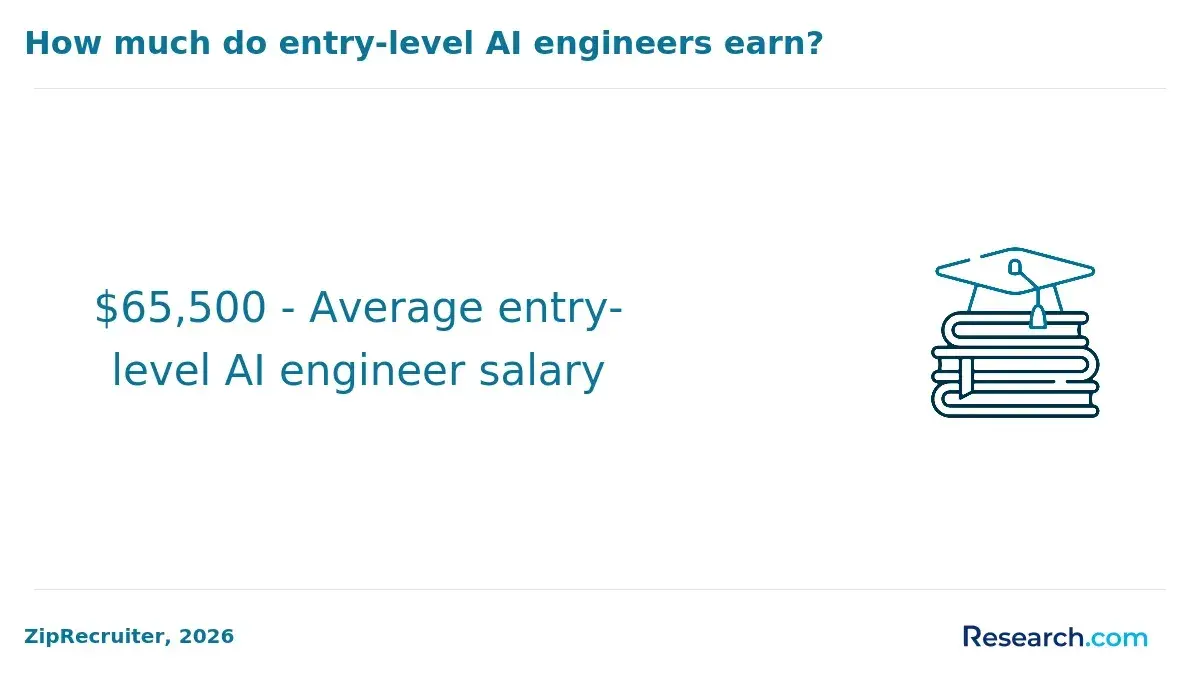
Columbia-trained AI professionals in the U.S. benefit from competitive salaries and robust career growth, thanks to the school's integration of cutting-edge research into its online curriculum. Entry-level AI engineers with Columbia credentials often earn between $95,000 and $120,000 annually. Mid-level positions, including machine learning engineers and data scientists, typically have salaries ranging from $130,000 to $170,000. Senior roles can surpass $200,000 depending on the sector and location.
The U.S. Bureau of Labor Statistics forecasts a 36% growth rate from 2024 to 2034 for computer and information research scientists, encompassing AI specialists. This surge is driven by widespread AI adoption in industries like healthcare, finance, and autonomous systems.
Columbia's curriculum reflects a strong research-to-practice pipeline, with over 70% of new AI courses introduced online in 2024 authored or co-authored by faculty active in premier conferences such as NeurIPS, ICML, and CVPR. This ensures students stay current with breakthroughs and are well-prepared for advanced technical roles.
Specialized roles like AI ethics officers and research scientists offer premium salaries and are growing as ethical concerns in AI become more prominent. Leveraging Columbia's networks can provide invaluable access to leading tech firms and research institutions, accelerating career progression.
How should you choose among Columbia's online AI options and competing programs?
Choosing among Columbia's online ai programs and competing offerings requires a clear focus on your professional goals, background, and available time. Columbia's portfolio is projected to expand by 55% in distinct online ai and machine learning courses between 2024 and 2027, with micro-credentials and short-form certificates expected to make up nearly two-thirds of these new offerings (Source: Columbia University Online Education Strategic Plan 2024-2027).
Consider what credential fits your needs: shorter certificates are ideal for professionals seeking targeted skills quickly, while longer degree or certificate programs serve those aiming for deep expertise or career shifts.
Look at curriculum content and instructor expertise. Columbia's programs typically cover foundational ai concepts, applied machine learning, and ethical issues, providing access to leading faculty and research. Make sure courses reflect current industry tools and trends tailored to your career aims.
Evaluate the flexibility and format that best suits your situation. Asynchronous online courses enable learning alongside a full-time job, while live sessions or cohort formats offer networking and structured progress.
Compare costs in relation to program length and credential value. While Columbia's reputation is strong, some alternatives may provide specialized tracks or lower tuition rates.
Seek programs offering hands-on projects or capstones, essential for demonstrating skills to employers. Also, investigate support services like career advising and alumni networks available through Columbia and its alternatives.
By aligning your goals with program features and delivery modes, you can select an online ai course that maximizes both learning and career impact.
Other Things You Should Know About Artificial Intelligence
Artificial intelligence is widely used in industries such as healthcare, finance, automotive, and retail. Common applications include natural language processing for chatbots, image recognition in medical diagnostics, recommendation systems in e-commerce, and autonomous vehicle technologies.
Artificial intelligence systems often require large datasets to train models, which raises concerns about data privacy and security. Ensuring compliance with regulations like GDPR and using techniques such as data anonymization are critical to protecting personal information when deploying AI solutions.
Key skills for AI professionals include proficiency in programming languages like Python, knowledge of machine learning algorithms, experience with data analysis, and understanding of neural networks. Strong mathematical foundations in linear algebra, calculus, and statistics are also essential.
In 2027, Columbia University offers top-rated online AI courses like "Machine Learning for Data Science and Analytics" on edX, covering supervised and unsupervised machine learning techniques. Another is "Artificial Intelligence (AI) MicroMasters Program," which provides in-depth AI theory and applications, widely regarded for its comprehensive curriculum.
References
- Top 10 Career Opportunities in Artificial Intelligence | Student Guide https://www.manipaldubai.com/blogs/top-10-ai-career-opportunities
- 16 Artificial Intelligence Career Paths https://www.calmu.edu/news/artificial-intelligence-career-paths
- How to Get into Columbia University: All You Need to Know https://www.ivywise.com/blog/how-to-get-into-columbia-university-all-you-need-to-know/
- Making sure you're not a bot! https://www.econstor.eu/bitstream/10419/315657/1/GLO-DP-1604.pdf
- Best AI Courses Online: Free and Paid Options Compared https://hakia.com/news/best-ai-courses-online/
- Free Course: Artificial Intelligence (AI) from Columbia University | Class Central https://www.classcentral.com/course/artificial-intelligence-columbia-university-artif-7230
- Columbia University’s New Free AI Course | by Frederik Bussler | Towards AI https://pub.towardsai.net/columbia-universitys-new-free-ai-course-da6ee95c5cea
- Columbia University Artificial Intelligence Course https://apresgroup.com/columbia-university-artificial-intelligence-course/
- Columbia University AI Policy for Admissions https://gradpilot.com/ai-policies/columbia-university
- 2U AI Boot Camps - Columbia Step 1 — Guild Education: School Resource Center https://schools.guildeducation.com/2u-ai-boot-camps-columbia-1