2027 Best AI Governance Courses for Merchandising Teams

Co-Founder and Chief Data Scientist
Merchandising teams often struggle with ethically implementing artificial intelligence tools that optimize sales without compromising consumer trust or privacy. Missteps can lead to biased recommendations, regulatory issues, and damaged brand reputation. Navigating AI governance frameworks is essential for responsible innovation and compliance in retail environments. This article explores the best courses designed to equip merchandising professionals with the knowledge to govern AI systems effectively. It highlights flexible, accredited programs suitable for individuals from unrelated fields aiming to pivot into AI governance, helping readers identify the education paths that align with their career goals and industry demands.
Key Things You Should Know
- AI governance courses for merchandising teams focus on ethical AI use, risk management, and regulatory compliance specific to retail and e-commerce sectors in 2026.
- Enrollment in these specialized courses increased by 35% from 2024 to 2025, reflecting growing demand for AI-literate merchandising professionals.
- Curricula emphasize practical skills in AI fairness, transparency, and data privacy, crucial for maintaining consumer trust and meeting evolving U.S. legal standards.
Advance Your Career with AI Online Courses
Artificial Intelligence: Implications for Business Strategy
This program provides an introduction to Artificial Intelligence and their implications for business strategy. Earn an official digital certificate.

Oxford Artificial Intelligence Programme
Explore this Oxford Artificial Intelligence programme offered in a flexible learning environment and explore topics like machine learning, automation, and robotics.

Implementing Agentic AI: Building Your Organizational Playbook
This online MIT Agentic AI course offers a practical approach to deploying AI agents in your organization, including a custom playbook. 3 weeks, exclusive launch price.

AI Adoption: Driving Business Value and Impact
This online MIT AI Adoption: Driving Business Value and Impact offers practical frameworks to close the gap between AI potential and business reality.

Artificial Intelligence in Pharma and Biotech
Discover the applications and limitations of artificial intelligence in pharma and biotech with this MIT online short course.

What is AI governance and why does it matter for retail and merchandising teams?
AI governance frameworks for retail teams play a critical role in ensuring the ethical, transparent, and responsible use of AI technologies. For merchandising professionals, strong governance helps prevent biased algorithms, protects customer data privacy, and ensures regulatory compliance. This is vital for AI applications including demand forecasting, personalized marketing, and inventory management to function fairly and effectively, avoiding risks that could harm brand reputation or alienate customers.
Merchandising teams must carefully balance AI-driven automation with human oversight to ensure decisions like pricing and product recommendations remain explainable and compliant with consumer protection laws. Addressing the importance of artificial intelligence governance in merchandising includes managing data quality and ownership, which is crucial since customer information fuels AI insights. Neglecting governance can result in inaccurate forecasts, lost customer trust, and expensive regulatory penalties.
Given that 44% of workers' core skills will be disrupted by AI by 2030, yet only 28% of companies have comprehensive AI upskilling programs, close attention to AI governance training is needed. Merchandisers equipped with governance skills can better collaborate with data scientists and manage ethical concerns in AI models.
Key governance competencies for merchandising teams include:
- Detecting biases in merchandising algorithms
- Understanding privacy laws such as CCPA and GDPR
- Auditing AI systems for fairness in pricing and promotions
- Implementing transparent reporting mechanisms for AI decisions
For those seeking the fastest way to get a computer science degree, gaining expertise in AI governance can open valuable career pathways in retail and beyond.
Advance Your Career with AI Online Courses
Artificial Intelligence: Implications for Business Strategy
This program provides an introduction to Artificial Intelligence and their implications for business strategy. Earn an official digital certificate.
Oxford Artificial Intelligence Programme
Explore this Oxford Artificial Intelligence programme offered in a flexible learning environment and explore topics like machine learning, automation, and robotics.
Implementing Agentic AI: Building Your Organizational Playbook
This online MIT Agentic AI course offers a practical approach to deploying AI agents in your organization, including a custom playbook. 3 weeks, exclusive launch price.
What types of AI governance courses are best for merchandising and retail professionals?
Courses designed for merchandising teams emphasize AI governance training programs for merchandising teams that focus on risk management of AI applications impacting customer data and pricing. McKinsey & Company reports that about 70% of generative-AI use cases in retail involve these sensitive areas, yet fewer than 20% of retailers maintain mature AI risk controls. Therefore, retail-focused AI governance and ethical compliance courses cover data privacy compliance with regulations like GDPR and CCPA, ethical AI deployment, and bias mitigation.
These programs include training on algorithmic transparency to help merchandising professionals audit pricing AI models and detect bias, preventing unfair product recommendations or pricing disparities. Risk assessment frameworks tailored to retail empower teams to identify vulnerabilities prior to AI deployment. Some courses offer practical case studies simulating real merchandising scenarios, enhancing governance skills.
Cross-functional collaboration between data scientists, legal departments, and merchandising managers is often emphasized to ensure AI outcomes align with company policies. Because AI technology evolves rapidly, curricula typically include ongoing updates to keep practitioners current. Balancing technical AI knowledge with compliance and ethics allows retail teams to innovate responsibly while mitigating operational risks.
Those interested in advancing their expertise may explore the best online masters in artificial intelligence programs, which often incorporate relevant governance training, offering a comprehensive pathway to integrating AI responsibly in retail business environments.
How do AI governance programs prepare merchandising teams to use customer and sales data responsibly?
AI governance programs enhance merchandising data ethics by training merchandising teams in responsible customer and sales data use, focusing on regulations like the EU AI Act. With 68% of consumer-products and retail organizations expecting AI regulations to impact them by 2026 yet only 27% feeling prepared, these programs fill a vital preparedness gap. Teams learn to identify risks such as data bias, privacy breaches, and lack of algorithmic transparency.
Training often includes frameworks for ethical decision-making in discount targeting and product recommendations, helping to prevent discrimination against specific demographics. Merchandising professionals also develop skills in documenting AI workflows and maintaining audit trails, which supports compliance and verification efforts.
Practical lessons cover data minimization and anonymization techniques, ensuring teams use only necessary customer data while protecting identities. They also establish clear protocols for responding to data misuse or errors, fostering collaboration between merchandising, legal, and IT departments to meet both technical and legal standards.
By integrating such governance into merchandising, teams can build customer trust and uphold brand integrity through responsible AI utilization. For individuals interested in advancing their knowledge in related technology fields, pursuing a video game design degree can provide foundational skills that complement AI governance expertise.
What should merchandising leaders look for when choosing an AI governance course or certificate?
Merchandising leaders focused on AI governance best practices for merchandising leaders should seek courses combining practical frameworks with industry-specific applications. Essential topics include data ethics, compliance standards, risk mitigation, and transparency in AI decision-making. Such programs help leaders responsibly oversee AI tools while maintaining brand integrity and customer trust. Additionally, strong courses incorporate regulatory requirements like data privacy laws and algorithmic accountability.
Look for training that emphasizes hands-on case studies relevant to retail or product management. This approach aids understanding of governance in AI-driven pricing, inventory forecasting, and personalized marketing. Programs that foster cross-functional collaboration between IT, legal, and marketing teams further prepare organizations to govern AI effectively.
When selecting courses, consider instructor expertise and institution reputation. Those led by experts with proven experience in AI governance or retail technology provide deeper insights and networking advantages. Programs offering recognized certificates meet a key criteria for selecting AI governance certification, signaling validated skills to employers and stakeholders.
Investing in AI literacy paired with structured governance training delivers measurable business impact. A Deloitte survey shows organizations combining AI investment with governance training are 1.7× more likely to report revenue growth of 10% or more from AI initiatives. For professionals exploring career paths, resources about AI training jobs offer valuable guidance.
How do online AI governance courses compare with campus-based options for merchandising teams?
Online ai governance courses provide merchandising teams with greater flexibility than traditional campus programs. These digital options accommodate diverse schedules and locations, allowing working professionals to learn at their own pace without the constraints of fixed class times or commuting. This flexibility supports busy merchandising roles that require practical and timely training.
Such courses focus on real-world applications relevant to merchandising, including ethical AI deployment in areas like customer targeting and inventory management. On the other hand, campus programs often emphasize theoretical frameworks, which may be less directly applicable to daily merchandising challenges.
A recent Boston Consulting Group study reports that 89% of companies see the need for non-technical employees to work effectively with AI, yet only 35% have formal training programs for sales, marketing, and merchandising roles. This gap underscores the value of accessible online education for broad workforce readiness.
- Cost efficiency: Online courses reduce expenses by eliminating relocation and commuting.
- Scalability: Entire merchandising teams, including remote workers, can be trained simultaneously.
- Up-to-date content: Online curricula can quickly adapt to evolving ai governance standards.
While campus programs offer valuable face-to-face mentorship and networking, online courses typically deliver the practical, scalable training merchandising teams need. For detailed insights, see the research.com resources on AI governance education.
What core topics and skills are covered in AI governance courses tailored to merchandising?
AI governance courses designed for merchandising equip teams with essential skills to manage AI ethically and effectively in retail settings. These courses cover risk identification and mitigation for AI-driven merchandising decisions, transparency in recommendation algorithms, and compliance with data privacy regulations. Students also learn to evaluate AI models for bias, assess their effects on customer experience, and implement frameworks to monitor AI behavior in real time.
Key practical skills taught include designing AI risk assessments tailored to merchandising applications like dynamic pricing and inventory management, interpreting AI audit reports, and integrating governance protocols into workflows to prevent reputational harm and revenue loss. Emphasis is placed on the ethical use of customer data in personalization and promotional targeting, which is critical for legal compliance and maintaining consumer trust.
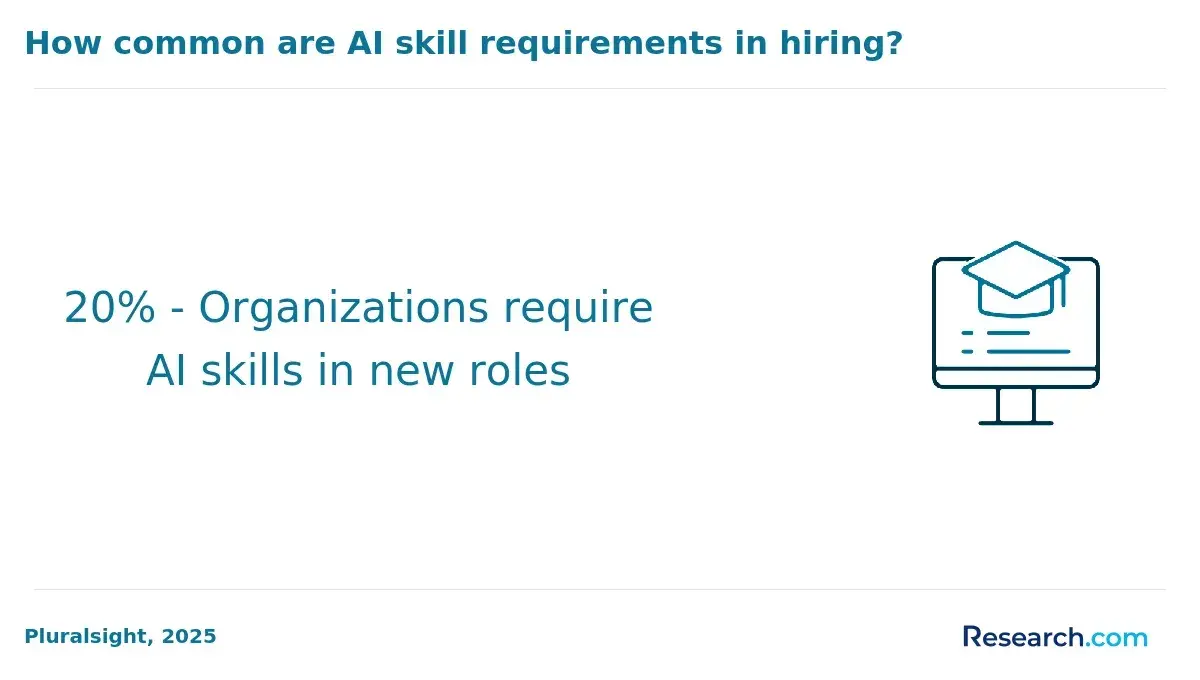
According to a 2024 IBM Institute for Business Value survey, 74% of retail and consumer-products executives ranked "practical AI risk and governance skills for business teams" as a top-three capability gap blocking wider AI deployment. As a result, these programs focus on applied governance over theory.
They also teach collaboration with legal, IT, and data science teams, along with scenario-based learning for AI failure prevention and incident response. This prepares merchandising professionals to address real-world challenges such as algorithmic errors in product recommendations or supply chain disruptions due to AI misconfigurations.
Overall, these courses help merchandising teams embed accountable AI practices and drive responsible, data-driven growth.
Are there accredited universities or business schools offering AI governance programs relevant to retail?
Several accredited universities and business schools offer AI governance programs that are highly relevant for retail and merchandising professionals. These programs emphasize ethical data use, regulatory compliance, and risk management-critical skills for handling customer data and AI-driven decisions in retail. For example, the University of Pennsylvania's Wharton School includes AI ethics and governance within its MBA curriculum, tailoring the content to business applications. The Stanford Graduate School of Business provides executive education focused on AI accountability, transparency, and consumer protection aligned with retail needs.
These programs combine theory with practical case studies, helping merchandising teams grasp AI's role in inventory management, personalized marketing, and consumer privacy. The MIT Sloan School also integrates AI governance and data analytics, highlighting compliance with regulations such as the California Consumer Privacy Act (CCPA) and the European GDPR, which impact retail firms directly.
LinkedIn Learning's 2024 Workplace Learning Report found employees completing AI and data-ethics courses were 2.2× more likely to change how they use customer data than those with general AI overview training, underscoring the value of specialized learning for retail professionals. Prospective students should consider certificates or MBA concentrations in AI ethics or governance. Short-term executive programs also offer practical training for professionals aiming to implement responsible AI in merchandising operations.
How much do AI governance courses for merchandising teams cost, and how long do they take?
AI governance courses tailored for merchandising teams vary in cost, usually between $300 and $2,500, depending on the provider and course depth. Many short professional certificate programs focus specifically on AI governance in practical settings and last from 4 to 12 weeks. These offer essential training in compliance, ethical AI use, and decision-making frameworks critical for merchandising roles managing AI-powered tools.
A 2024 analysis from Coursera shows these short certificates cost under 5% of what a comparable one-year graduate AI program would require. Despite being more affordable and shorter, 77% of learners report career benefits like role expansion or promotion within a year, demonstrating their value in professional growth.
For merchandising professionals, time efficiency matters; completing a focused 1-3 month course enables immediate application of governance principles to projects. This contrasts with traditional degree paths that demand significant time commitment.
Pricing examples include:
- Online certificate courses from $300 to $900, typically 6 to 8 weeks long.
- Extended professional bootcamps priced $1,200 to $2,500 lasting up to 12 weeks.
- Graduate programs costing over $25,000 annually with full-time study requirements.
Merchandising professionals seeking to combine productivity with AI governance expertise benefit greatly from shorter, cost-effective courses balancing practical knowledge and affordability. Employers increasingly recognize these credential options as valid alternatives to traditional graduate degrees for building AI accountability skills.
What career paths, roles, and salary ranges can AI-governance-trained merchandisers expect?
Merchandisers trained in ai governance have access to diverse career paths, including ai compliance officer, risk manager, data ethics analyst, and product manager roles that focus on ai-driven merchandising platforms. Mid-level positions often offer salaries between $70,000 and $120,000 annually, while senior roles at large retail or technology companies can exceed $140,000. Expertise in ai governance is crucial for ensuring merchandising algorithms align with regulatory standards and ethical frameworks, which helps reduce organizational risk and boost consumer trust.
Typical roles involve:
- Ai governance specialists managing vendor compliance and audit controls
- Policy developers overseeing internal ai decision-making guidelines
- Liaisons coordinating between merchandising, legal, and data science teams
According to PwC's 2024 Global AI Survey, companies that depend on external ai training providers spend 30-40% more per employee than those with internal ai-governance academies, with no significant gain in ai maturity. This market insight underscores the value of professionals who blend governance expertise with operational knowledge, enabling merchandisers to lead internal training and governance initiatives.
Advanced certifications in ai governance enhance earning potential and open opportunities in consulting and corporate governance, where salaries often start above $100,000. Practical experience with compliance tools, ethical risk assessments, and data privacy solutions increases employability. Merchandisers targeting executive roles benefit from mastering strategic governance planning alongside ai technology literacy to meet evolving industry demands effectively.
Are there industry certifications or standards in AI governance that benefit merchandising professionals?
Industry certifications and standards in AI governance play a crucial role for merchandising professionals by offering structured approaches to manage risks and promote ethical AI implementation. As AI becomes integral to merchandising tasks such as customer targeting, pricing, and inventory management, possessing governance-focused credentials helps ensure transparency, fairness, and regulatory compliance.
Unlike broader AI or data science certifications, AI governance qualifications emphasize policies, risk assessment, bias reduction, and accountability tailored specifically to merchandising roles. Notable credentials include the Certified AI Ethics Practitioner and courses from organizations like the International Association of Privacy Professionals (IAPP) or the IEEE Standards Association, which concentrate on governance frameworks for customer-facing AI systems.
These programs equip merchandising teams to identify biases in recommendation engines and comply with privacy regulations such as CCPA and GDPR during AI deployment. Gartner forecasts that by 2027, 60% of companies using AI in customer-facing roles will mandate specialized AI governance training before staff can operate AI tools, underscoring the growing industry need.
Merchandising professionals benefit from mastering AI auditing, model interpretability, and cross-department collaboration involving legal and compliance experts. This standardized training supports organizational accountability and ethical design, aligning with evolving regulatory demands and enhancing decision-making quality.
Other Things You Should Know About Artificial Intelligence
In 2027, merchandising teams face obstacles like integrating AI with traditional systems, ensuring data privacy, and navigating regulatory compliance. Overcoming these challenges requires up-to-date courses that address both technical and legal aspects of AI governance.
Effectiveness can be measured through regular audits of AI systems for compliance with established ethical standards and policies. Tracking key performance indicators such as error rates in AI-driven recommendations, customer complaint frequency, and adherence to data privacy can also indicate framework success. Continuous monitoring and updating of governance protocols help maintain their relevance.
Transparency ensures that AI decision-making processes are understandable to all stakeholders, including merchandising staff and customers. It helps build trust and accountability by clearly communicating how AI models influence pricing, inventory management, or personalized promotions. Transparent AI governance supports regulatory compliance and reduces the risk of ethical violations.
Yes, merchandising teams must navigate regulations related to consumer data protection, such as the California Consumer Privacy Act (CCPA) and the General Data Protection Regulation (GDPR). Additionally, there are laws addressing fairness and non-discrimination in automated decision-making. Staying compliant requires that AI governance frameworks incorporate these legal standards to mitigate liability risks.
References
- How Data Governance Impacts Digital Careers https://nowskills.co.uk/data-governance-impact-digital-careers/
- An AI governance certification will boost your career | The Corporate Governance Institute https://www.thecorporategovernanceinstitute.com/insights/guides/an-ai-governance-certification-will-boost-your-career/
- AI governance is the strategy: Why successful AI initiatives begin with control, not code https://www.databricks.com/blog/ai-governance-strategy-why-successful-ai-initiatives-begin-control-not-code
- AI Governance Course For Enterprise Leaders https://cxotransform.com/p/ai-governance-course
- Artificial Intelligence for Corporate Governance https://www.corpoladder.com/courses/artificial-intelligence-for-corporate-governance
- AI Certificate Program & Online AI Courses | Coursiv https://coursiv.io/courses/generative-ai-for-retail
- AI Governance Course: What to Look For - The Case HQ Online https://thecasehq.com/ai-governance-course-what-to-look-for/
- Understanding AI: What Leaders Need to Know | LSBUK https://www.lsbuk.com/executive-education/understanding-ai-what-leaders-need-to-know/
- Frontier AI Governance Course | BlueDot Impact https://bluedot.org/courses/ai-governance
- AI Governance Certifications HUB - AI Governance Library, Articles, Ressources https://aigouvernance.com/certifications/