2027 Best AI Courses for Full-Stack Developers Using Generative AI

Co-Founder and Chief Data Scientist
Full-stack developers face increasing pressure to integrate generative AI into applications, yet many lack formal training in this rapidly evolving field. This gap limits their ability to build efficient, scalable AI-powered systems and hinders career advancement. Traditional courses often focus on theory without practical tools tailored for developers transitioning from unrelated disciplines.
Finding flexible, accredited programs that bridge this knowledge divide is crucial for staying competitive in the tech industry. This article highlights the best AI courses designed specifically for full-stack developers aiming to master generative AI technologies, offering actionable guidance to facilitate a successful career pivot into AI-driven development.
Key Things You Should Know
- Full-stack developers must master generative AI frameworks like GPT-4 and Diffusion Models to build advanced interactive applications by 2026.
- By 2025, 68% of tech employers reported prioritizing candidates with AI integration skills in web and app development roles.
- Leading AI courses now emphasize ethical AI use, prompt engineering, and real-time data synthesis as essential for full-stack professionals.
Advance Your Career with AI Online Courses
Artificial Intelligence: Implications for Business Strategy
This program provides an introduction to Artificial Intelligence and their implications for business strategy. Earn an official digital certificate.

Oxford Artificial Intelligence Programme
Explore this Oxford Artificial Intelligence programme offered in a flexible learning environment and explore topics like machine learning, automation, and robotics.

Implementing Agentic AI: Building Your Organizational Playbook
This online MIT Agentic AI course offers a practical approach to deploying AI agents in your organization, including a custom playbook. 3 weeks, exclusive launch price.

AI Adoption: Driving Business Value and Impact
This online MIT AI Adoption: Driving Business Value and Impact offers practical frameworks to close the gap between AI potential and business reality.

Artificial Intelligence in Pharma and Biotech
Discover the applications and limitations of artificial intelligence in pharma and biotech with this MIT online short course.

What are the best AI courses for full-stack developers?
Top generative AI training for full-stack engineers combines hands-on experience with foundational software engineering skills. The best AI courses for full-stack developers cover both back-end AI model integration and front-end design using frameworks like React and Node.js. These courses often include projects focused on natural language processing, computer vision, and transformer-based architectures to develop practical expertise.
Leading programs emphasize essential topics such as AI model deployment, API integration, and ethical AI practices with interpretability. They also focus on optimizing AI inference performance for client and server environments while updating content to reflect state-of-the-art advances in generative AI. Integrating full-stack tools alongside AI training ensures developers are prepared for real-world scalable applications.
The best AI courses often have these characteristics:
- Comprehensive modules on AI deployment and APIs
- Instruction on ethical AI and model transparency
- Performance optimization for AI inference
- Curriculum updated with generative AI innovations
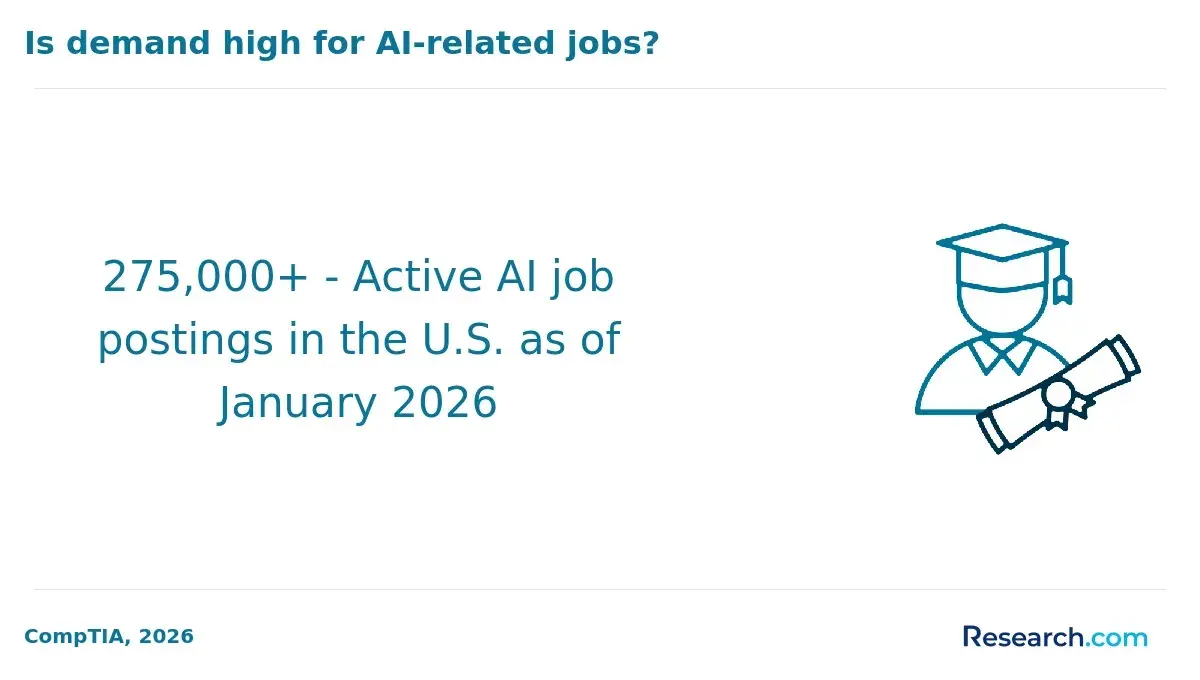
Demand for AI proficiency in full-stack development is rapidly growing. Between 2023 and 2025, federal AI use cases expanded from 700 to over 3,600 across 41 agencies. Certifications supported by tech leaders and research institutions are especially valuable for staying current.
Prospective learners may explore offerings like a 2 year computer science degree online to build relevant AI and development skills with strong industry connections.
Advance Your Career with AI Online Courses
Artificial Intelligence: Implications for Business Strategy
This program provides an introduction to Artificial Intelligence and their implications for business strategy. Earn an official digital certificate.
Oxford Artificial Intelligence Programme
Explore this Oxford Artificial Intelligence programme offered in a flexible learning environment and explore topics like machine learning, automation, and robotics.
Implementing Agentic AI: Building Your Organizational Playbook
This online MIT Agentic AI course offers a practical approach to deploying AI agents in your organization, including a custom playbook. 3 weeks, exclusive launch price.
Which AI course format is best: online, hybrid, or campus?
The best AI course formats for full-stack developers vary based on individual needs, but online courses currently offer significant advantages. These programs provide the flexibility necessary for working professionals and recent graduates balancing jobs or internships while developing new skills. Independent pacing helps learners master complex AI concepts without disrupting their daily routines.
Hybrid models, featuring top hybrid and online AI courses in the US, blend online convenience with periodic campus interaction. They appeal to those seeking structured schedules, networking opportunities, mentorship, and hands-on labs that deepen understanding of AI's practical applications in full-stack development. However, the requirement of campus visits can limit accessibility for remote learners or professionals with strict work commitments.
Campus-based courses focus on immersive, interactive learning with direct faculty access and peer collaboration, ideal for early-career students thriving in concentrated environments. Yet, these formats demand substantial time and geographic commitment, potentially delaying immediate integration of AI skills at work.
Salary trends highlight the value of quality AI education: the average annual salary for full-stack developers with AI expertise in the US is $69,455, underscoring strong industry demand. Choosing an online path allows for rapid skill acquisition and career advancement.
For those interested in exploring affordable options, online engineering programs offer accessible pathways to build expertise.
How do you choose an accredited AI program?
When evaluating the best accredited AI courses for developers in the US, it's important to verify program accreditation from respected agencies such as ABET or regional bodies. This accreditation ensures educational standards that employers value. Look for curricula covering generative AI techniques applicable to full-stack development, including machine learning frameworks, natural language processing, and deployment methods. Hands-on projects using tools like TensorFlow, PyTorch, or OpenAI APIs help build practical skills.
Faculty expertise is another critical factor. Programs with instructors who have proven AI research backgrounds or industry experience can effectively connect theoretical knowledge with real-world applications. Partnerships with tech companies and internship opportunities also enhance career prospects; a HiBob study found that 63% of businesses link AI proficiency to promotions and 61% incorporate AI skills in performance evaluations.
Flexibility matters for working professionals seeking accredited artificial intelligence full-stack development programs. Options like online, part-time, or hybrid formats enable balancing work and study. Post-graduation support such as career services, mentoring, and alumni networks further aid job placement.
For those considering cybersecurity alongside AI expertise, exploring cybersecurity masters online programs can be beneficial.
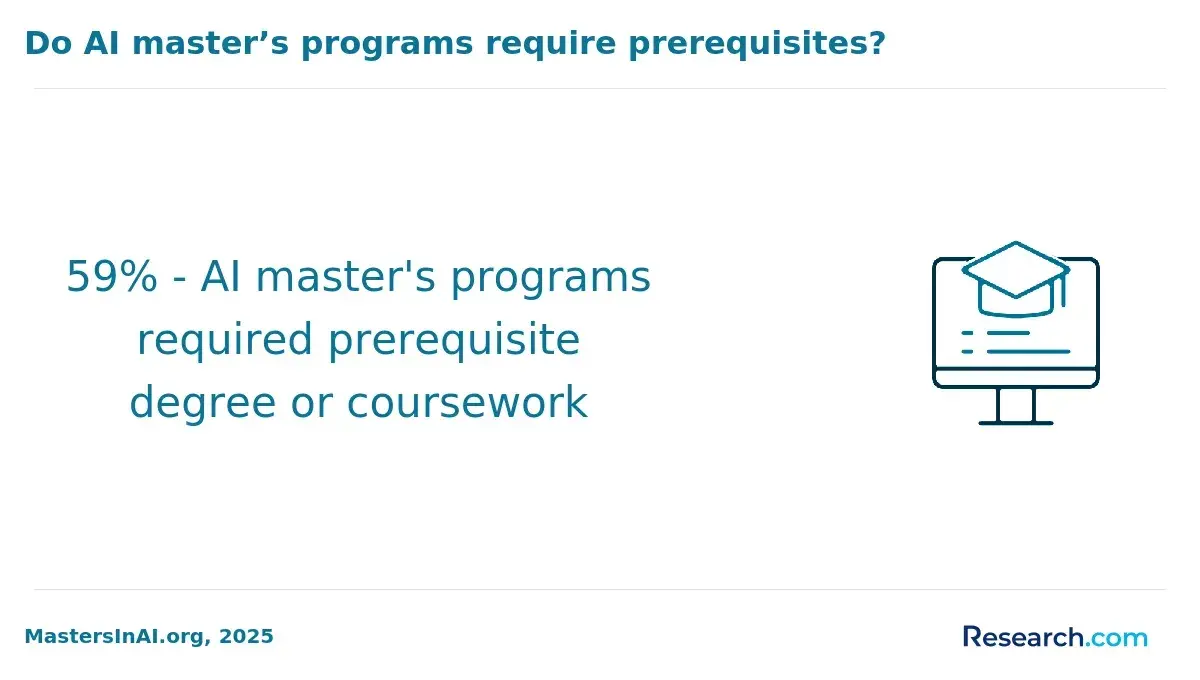
What prerequisites do AI courses for developers require?
AI courses for full-stack developers often demand a solid grounding in programming and mathematics, with proficiency in Python or JavaScript considered essential. These languages support AI model creation and integration within full-stack projects. A firm grasp of data structures, algorithms, linear algebra, probability, and statistics is vital for understanding key AI concepts such as neural networks and generative models.
Essential skills needed for generative AI development also include familiarity with supervised and unsupervised learning techniques and experience using libraries like TensorFlow or PyTorch.
Developers should be comfortable working with web development frameworks and APIs to effectively integrate AI features into applications. Cloud platforms such as AWS, Azure, or Google Cloud are increasingly important for scalable AI deployment. The federal government's AI usage remains limited due to resource disparities, which can affect access to infrastructure for learning and implementing AI technologies.
Prospective students are advised to evaluate their current skills carefully. Beginners may start with foundational courses in Python and machine learning, progressing toward generative AI, while intermediate learners should engage in projects combining front-end/back-end development with AI APIs.
Those interested in related technical fields might explore online cybersecurity degree programs for veterans for complementary education paths.
What topics do full-stack AI courses usually cover?
Full-stack AI courses with a focus on generative AI cover essential topics like machine learning algorithms, neural networks, and deep learning architectures designed for models such as GANs and transformers. Students gain hands-on experience with natural language processing techniques used in chatbots and automated content creation.
These programs combine back-end and front-end development, teaching deployment of AI models in scalable environments using tools like TensorFlow.js, PyTorch, and cloud platforms. Key subjects include API design and managing real-time data to support dynamic user interactions.
Ethical AI is a priority, with courses addressing bias mitigation, transparency, and responsible generative AI use. This reflects industry trends, as nearly 97% of organizations would pay up to 10% more for employees skilled in AI ethics.
Additional modules often cover data engineering tasks such as dataset preparation, augmentation, and version control. Performance optimization and evaluation metrics help students fine-tune models for accuracy and efficiency.
Practical projects emphasize full-stack skills by integrating user interface design, server-side logic, and AI model deployment. This approach equips learners to build production-ready generative AI applications that meet real-world demands.
How long do AI courses for developers usually take?
AI courses for full-stack developers vary widely in length and intensity, usually spanning from a few weeks up to six months, based on course design and objectives. Intensive bootcamps often last 4 to 8 weeks with a strong focus on practical generative AI applications embedded within full-stack development workflows. More comprehensive programs extend to 3 to 6 months, covering foundational machine learning concepts paired with hands-on projects that integrate AI models into full-stack environments.
Learning duration depends heavily on prior experience. Beginners generally need longer courses to build programming, data science, and AI fundamentals, while seasoned developers might opt for shorter, specialized programs of about 6 to 12 weeks targeting generative AI tools and frameworks. Part-time or online options can stretch beyond six months, enabling working professionals to balance study with job responsibilities.
Programs vary in intensity as well: accelerated courses deliver 100-150 hours focused on coding exercises and deploying AI-powered applications. In contrast, advanced certifications might require 200+ hours, combining theory, programming, and system design. Investing time in these courses aligns with career advancement opportunities, considering the median annual salary for full-stack developers is $133,080, with employment growth projected at 15.8% over 2024-2034.
How much do AI developer courses cost?
AI developer courses for full-stack developers vary widely in cost, from free to more than $2,000 for comprehensive, instructor-led programs. Entry-level options on platforms like Coursera and Udacity typically range from $0 to $400, making them accessible for self-paced learners. For instance, a specialization in generative AI fundamentals often costs between $300 and $400 and includes structured lessons plus certification.
More advanced, career-focused courses may cost $800 to $2,500. These typically cover hands-on projects such as prompt engineering, model fine-tuning, and validation processes. Offered by universities or professional bootcamps, these programs frequently provide mentorship, career support, and real-world applications, ideal for full-stack developers branching into AI roles.
Subscription models charging $30 to $100 per month are also available, granting access to multiple courses and resources. Providers like DataCamp and Pluralsight use this approach, which suits learners seeking flexibility and ongoing education on AI and software development topics.
What jobs can you get after an AI course?
Completing an Artificial Intelligence course unlocks a range of career paths beyond traditional full-stack development. Graduates often pursue roles such as AI engineer, machine learning engineer, data scientist, prompt engineer, and AI product manager. These positions involve creating intelligent applications, integrating generative AI models into software, and managing AI projects. For example, a full-stack developer with AI expertise might develop chatbots, recommendation engines, or automated content generators.
Employers increasingly value professionals who combine coding skills with AI knowledge to improve user experience and optimize backend systems. AI software developers focus on embedding AI models within web or mobile apps, while data scientists analyze datasets to train and refine generative AI models using tools like TensorFlow or PyTorch. AI prompt engineers design effective input prompts to boost language model accuracy and usefulness.
A recent study by HiBob revealed that 65% of full-stack developers in the UK who completed AI courses saw significant career growth within a year, underscoring the rising demand for AI skills. Mastery of AI technologies correlates strongly with higher salaries and quicker promotions in tech careers.
Additionally, AI courses prepare candidates for consulting roles advising organizations on AI integration. Freelance opportunities also arise, allowing developers to create custom AI solutions. Practical experience helps learners address challenges such as ethical AI deployment and data privacy compliance.
What salary can full-stack developers expect with AI skills?
Full-stack developers with AI skills can earn between $110,000 and $150,000 annually, influenced by experience, location, and the complexity of AI integration. Entry-level positions involving generative AI start near $110,000, while senior developers with specialized knowledge of AI-driven systems can command salaries closer to $150,000. This growing demand reflects how valuable AI-enhanced full-stack capabilities have become in the tech sector.
Proficiency in AI expands earning potential by enabling developers to automate tasks, optimize data workflows, and integrate machine learning models. Developers skilled in frameworks such as TensorFlow or PyTorch, alongside frontend and backend technologies, often advance quickly into leadership or architect roles with salaries exceeding $160,000, especially in major tech hubs like San Francisco and New York.
Challenges remain, particularly in government sectors, where budget constraints and lengthy approval processes can slow salary growth. However, private industries are rapidly adapting, rewarding AI expertise with competitive compensation aligned with generative AI's strategic importance.
Students and professionals should gain hands-on experience in AI toolchains and cloud deployments while building foundational full-stack skills. Achieving AI certifications alongside web development experience enhances marketability and salary prospects. Reliable data confirms that combining AI competencies with full-stack development creates a highly lucrative career path.
Which AI certifications matter for full-stack developers?
AI certifications carry significant weight for full-stack developers aiming to enhance their careers by demonstrating practical skills in integrating generative AI models with traditional software stacks. Leading certifications like the Microsoft Certified: Azure AI Engineer Associate and the Google Professional Machine Learning Engineer certify expertise in deploying AI services within cloud infrastructures, which is crucial as many full-stack environments increasingly depend on cloud-hosted AI APIs.
Hands-on certifications from OpenAI, focusing on fine-tuning models and API usage, are also gaining momentum due to their emphasis on prompt engineering and customizing generative AI solutions. Complementing these, specialized courses validating proficiency in frameworks such as TensorFlow, PyTorch, and Hugging Face's Transformers are vital for handling AI tasks like natural language processing and image generation.
Data engineering certifications from providers like AWS and Google Cloud strengthen development workflows by ensuring reliable data pipelines for AI training and inference. These varied credentials address common challenges full-stack developers face, such as integrating AI models with front-end frameworks and scaling AI services efficiently.
The demand for hybrid human-AI skills continues to rise, making these certifications an asset in maintaining competitiveness. Priority should be given to programs featuring real-world projects and contemporary tools to ensure relevance and maximize career opportunities.
Other Things You Should Know About Artificial Intelligence
Artificial intelligence is transforming software development by automating routine coding tasks, improving code quality through advanced debugging, and enabling predictive analytics for project management. AI-powered tools can generate code snippets, optimize algorithms, and assist in testing, thus increasing efficiency and reducing development time. This shift allows full-stack developers to focus more on complex problem-solving and innovation.
Full-stack developers must be aware of biases in AI training data, which can lead to unfair or discriminatory outcomes. Ensuring transparency, accountability, and privacy protection are essential ethical responsibilities. Developers should implement rigorous validation processes and prioritize user consent when handling sensitive data in AI applications.
Yes, many generative AI models offer APIs and software development kits that simplify integration into existing applications. However, developers should ensure compatibility with the application architecture and consider computational resource requirements. Proper testing and performance tuning are necessary to maintain application stability and user experience.
In 2027, leading AI courses for full-stack developers include "Generative AI for Full-Stack Development" by Coursera, "Full-Stack AI Integration" on edX, and "Mastering Generative AI Tools," available through Udemy. These courses cover essential AI principles and practical applications to equip developers with skills to utilize generative AI effectively.
References
- 10 best AI engineering courses for developers (I reviewed 50 so you don’t have to) https://dev.to/dev_tips/10-best-ai-engineering-courses-for-developers-i-reviewed-50-so-you-dont-have-to-76n
- Top 10 Careers in Artificial Intelligence and Machine Learning https://apollouniversity.edu.in/blog/building-a-high-flying-career-in-artificial-intelligence-and-machine-learning/
- Best AI Courses in Ireland 2026 — WhichAICourse.com https://whichaicourse.com/
- What To Pay a Full-Stack Developer: Your Guide – TestGorilla https://www.testgorilla.com/blog/full-stack-developer-pay/
- Ultimate Guide: How to Choose the Right AI Training Course to Boost Your Career - ONLC https://www.onlc.com/blog/how-to-choose-ai-training-courses/
- AI Prerequisites: What to Learn Before AI https://blog.nobledesktop.com/learn/ai/ai-prerequisites
- Full Stack Developer Salary: What To Expect https://blog.lewagon.com/career/full-stack-developer-salary/