2027 Best Agentic AI Courses for CRM Automation

Co-Founder and Chief Data Scientist
Many professionals struggle to integrate AI-driven automation into their CRM systems due to the rapid evolution of agentic AI tools and the lack of practical training tailored to non-technical backgrounds. This skill gap limits organizations from maximizing operational efficiency and personalized customer engagement.
Addressing these challenges requires targeted education that balances theory with actionable application in real-world settings. This article explores the best agentic AI courses focused on CRM automation, helping readers identify flexible, accredited programs designed to bridge knowledge gaps and enable effective career pivots into the artificial intelligence industry.
Key Things You Should Know
- Agentic AI courses for CRM automation in 2026 emphasize practical skills in AI-driven customer interaction, boosting efficiency by up to 40% in lead conversion rates, per 2025 industry reports.
- Curricula increasingly cover ethical AI use and data privacy compliance, critical as 68% of companies face challenges integrating autonomous AI tools in CRM systems.
- Top programs include hands-on projects with leading CRM platforms, enabling students to design adaptive AI agents that improve personalized marketing outcomes and customer retention.
Advance Your Career with AI Online Courses
Artificial Intelligence: Implications for Business Strategy
This program provides an introduction to Artificial Intelligence and their implications for business strategy. Earn an official digital certificate.

Oxford Artificial Intelligence Programme
Explore this Oxford Artificial Intelligence programme offered in a flexible learning environment and explore topics like machine learning, automation, and robotics.

Implementing Agentic AI: Building Your Organizational Playbook
This online MIT Agentic AI course offers a practical approach to deploying AI agents in your organization, including a custom playbook. 3 weeks, exclusive launch price.

AI Adoption: Driving Business Value and Impact
This online MIT AI Adoption: Driving Business Value and Impact offers practical frameworks to close the gap between AI potential and business reality.

Artificial Intelligence in Pharma and Biotech
Discover the applications and limitations of artificial intelligence in pharma and biotech with this MIT online short course.

What is agentic AI for CRM automation and why does it matter for business careers?
Agentic AI applications for CRM automation are transforming how businesses handle customer relationship tasks by performing autonomous functions such as lead qualification, workflow optimization, and personalized communication without the need for ongoing human oversight. This automation reduces repetitive work, enhances data accuracy, and delivers timely customer insights, supporting more data-driven business strategies. Organizations adopting these AI agents enable sales teams to concentrate on strategic activities while AI manages customer segmentation and follow-ups.
The impact of agentic AI on business career growth is significant, with knowledge in AI-driven CRM tools becoming increasingly essential. Marketing leaders benefit from predictive analytics powered by agentic AI, which dynamically tailors campaigns to boost customer engagement and return on investment. According to Planetary Labour data, agentic AI courses see over 11,000 monthly Google searches in 2026, highlighting strong interest. Furthermore, Gartner anticipates that 40% of enterprise applications will embed AI agents by 2026, and 62% of companies are actively experimenting with these technologies.
Professionals aiming to leverage agentic AI should develop practical skills in AI process design, system integration, and data analysis. Certifications in platforms like Salesforce Einstein or Microsoft Dynamics 365 AI offer distinct advantages in automation-centered roles. For those exploring education options, consulting data science programs can provide relevant pathways into mastering these advanced AI capabilities.
Advance Your Career with AI Online Courses
Artificial Intelligence: Implications for Business Strategy
This program provides an introduction to Artificial Intelligence and their implications for business strategy. Earn an official digital certificate.
Oxford Artificial Intelligence Programme
Explore this Oxford Artificial Intelligence programme offered in a flexible learning environment and explore topics like machine learning, automation, and robotics.
Implementing Agentic AI: Building Your Organizational Playbook
This online MIT Agentic AI course offers a practical approach to deploying AI agents in your organization, including a custom playbook. 3 weeks, exclusive launch price.
What types of AI and CRM automation courses best prepare you for today's job market?
Top agentic AI and CRM automation training programs combine machine learning fundamentals with CRM platform integration to equip students for enhancing sales workflows and customer engagement. Key topics include predictive analytics, natural language processing, and automated customer segmentation, which are critical for optimizing CRM systems.
Courses often cover popular AI-enhanced CRM platforms such as Salesforce Einstein and Microsoft Dynamics 365 AI. Hands-on experience with Robotic Process Automation (RPA) tools is vital for automating sales tasks and improving operational efficiency. Programs emphasizing AI-driven lead scoring and personalized marketing automation provide advantages in competitive job markets. For those exploring AI courses for CRM automation careers in the US, programs that prioritize practical skills supported by case studies and outcome analysis are essential.
McKinsey data shows companies using AI in sales and CRM achieve a 50% higher lead-to-opportunity conversion rate and 52% higher customer retention, with AI leaders 2.8× more likely to exceed revenue growth expectations. Training addressing data privacy, ethical AI, and cross-team collaboration between sales, marketing, and IT further prepares students for immediate impact in the workplace. Students seeking affordable, quality AI education can explore opportunities through an AI degree that aligns with these industry-driven skills and knowledge.
How do you choose the best agentic AI course for CRM automation for your goals?
Choose the best agentic AI courses for CRM automation in the US by focusing on your career goals, skill level, and the course's alignment with evolving job demands. Prioritize programs offering hands-on experience with automation tools integrated into top CRM platforms like Salesforce, HubSpot, or Microsoft Dynamics. Look for training that covers designing, deploying, and monitoring autonomous AI agents to handle workflows, customer segmentation, and personalized communication.
Top agentic AI training programs for CRM workflow optimization should teach programming relevant to agentic AI, including Python, API integration, and frameworks such as robotic process automation (RPA). The most effective courses combine theory with hands-on projects simulating real-world CRM scenarios and include training in machine learning model development for predictive analytics, a key skill in intelligent CRM automation.
Consider your preferred learning formats-whether online, part-time, or bootcamp-style-while also evaluating mentorship and community support, which can be crucial for mastering complex tools. Certification from recognized institutions or industry partnerships often enhances employability. For those exploring graduate options, a master data science online can complement these skills.
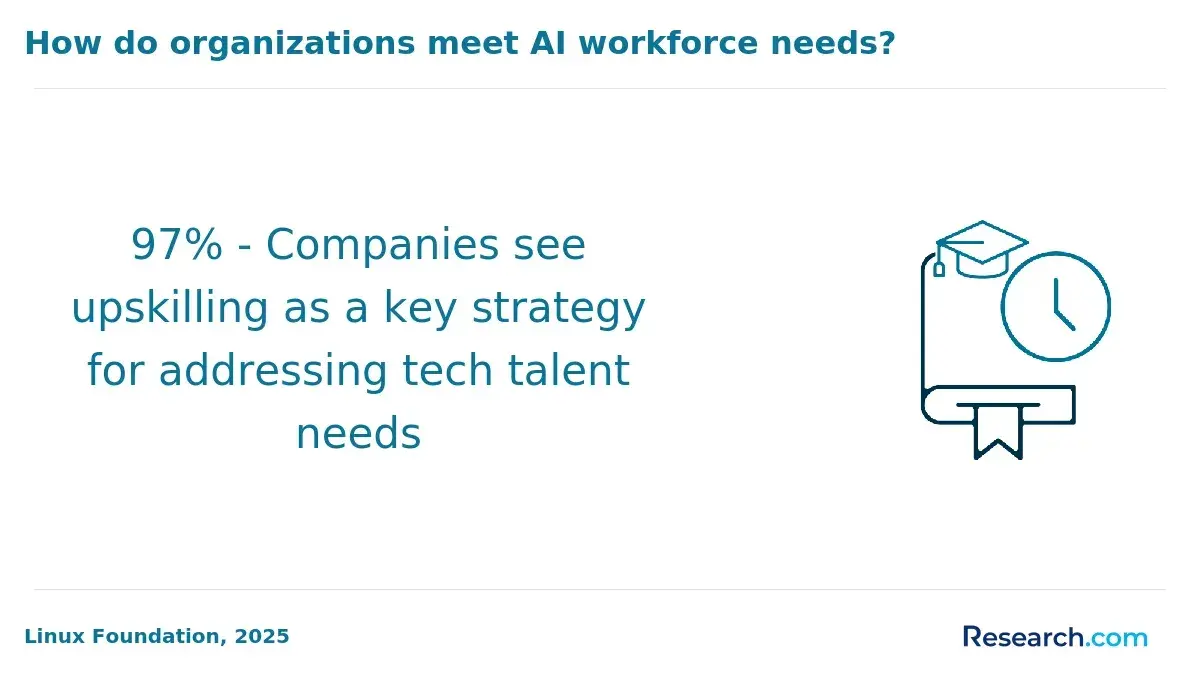
Job postings requiring agentic AI skills have surged over 1,400% between Q1 2024 and Q2 2025, with salaries in the top 20% of AI/ML roles globally, underscoring the value of current, market-aligned education. Also, verify whether courses address ethics, data privacy compliance, and CRM-specific challenges like customer data integration, which are vital for real-world deployment.
Are agentic AI courses for CRM automation accredited, and which credentials actually matter?
Agentic AI courses for CRM automation accreditation are rarely offered by traditional academic institutions due to the rapid evolution of the field. Instead, industry-recognized certifications and specialized credentials hold greater value. Certifications such as Salesforce Certified Platform Developer or MuleSoft Integration Specialist are particularly relevant, as CRM automation involves expertise in API management, data integration, and workflow orchestration.
Research shows that 86% of IT leaders stress the importance of multi-system orchestration skills for deploying generative and agentic AI in CRM, but only 28% of teams currently have these capabilities. This skills gap highlights the need for certified agentic AI training credentials for CRM that demonstrate proficiency across cloud platforms, CRM ecosystems, and automation tools. Practical, vendor-backed certifications from Salesforce, Microsoft, or platforms like UiPath are highly recommended.
Prospective students should focus on courses offering strong technical curricula in API integration, data pipeline creation, and automated workflow design. Project-based learning and developer bootcamps simulating real-world CRM automation scenarios provide functional expertise, which employers often value more than generic academic certificates.
Accreditation from universities is less important than immediate skill applicability and recognized industry standards. Employers seek candidates with hands-on experience integrating AI agent technologies. For those considering cost, reviewing the cost of computer science degree can provide useful perspective when planning education investments.
What curriculum and skills do top agentic AI CRM automation courses typically cover?
Top agentic AI CRM automation courses equip students with essential skills to design, implement, and optimize intelligent customer relationship management systems. Key topics include machine learning algorithms, natural language processing, and data analytics adapted to CRM workflows. Students develop autonomous agents that handle lead generation, customer segmentation, and personalized multi-channel communication.
Programs emphasize hands-on experience with tools such as Python, TensorFlow, and domain-specific AI APIs to create effective CRM automation solutions. Training on cloud platforms like AWS and Azure supports scalable deployment of agentic AI models. A strong focus on security and ethical AI use prepares learners to tackle data privacy and algorithmic bias in practical settings.
Advanced courses incorporate case studies on AI-driven sales forecasting, chatbots, and adaptive customer support systems. Graduates build skills in programming autonomous decision-making agents, integrating AI with CRM databases, and analyzing metrics to enhance automation strategies. Soft skills, including project management and cross-functional communication, are often part of the curriculum, bridging technical and business areas.
Premium certificate programs vary widely in cost, ranging from free to over $2,000. Professional certifications such as NVIDIA's NCP-AAI and IBM's Agentic AI on Coursera have been shown by Planetary Labour to increase median learner salaries by $10,000-$20,000 within a year.
How do online, hybrid, and campus-based AI CRM automation programs compare?
AI CRM automation programs come in several formats, each offering unique benefits for learners seeking to enhance their skills. Online programs allow maximum flexibility, enabling students to progress at their own pace while often reducing costs. These courses frequently update content to keep pace with rapid industry changes, covering skills like AI-driven customer-journey orchestration and next-best-action automation-critical capabilities that deliver measurable business outcomes.
Hybrid programs blend online theory with on-campus sessions, providing hands-on labs and direct instructor interaction. This combination suits those wanting both flexibility and practical experience, often reflecting real-world CRM deployments. Campus-based programs provide immersive learning environments, offering deeper access to university resources, faculty expertise, and networking opportunities. Their structured schedules and group projects foster essential collaboration skills valued in CRM automation careers.
Different formats cater to varied professional needs: online courses fit working professionals seeking quick skill upgrades without career disruption, hybrid models appeal to those wanting mentorship alongside flexible scheduling, and campus programs serve students pursuing in-depth credentialing and research access.
According to McKinsey's sales use-case study, companies mastering AI CRM tools see 10-20% higher customer satisfaction and 10-15% revenue growth, with payback under 12 months. Prospective students should assess programs for practical CRM AI tools, real-world projects, and career support before choosing.
What are the typical admission requirements and prerequisites for AI CRM automation programs?
Admission to AI CRM automation programs usually requires a bachelor's degree in computer science, information technology, business analytics, or related fields. Many programs expect proficiency in programming languages like Python or Java, foundational database knowledge, and experience with CRM platforms such as Salesforce or HubSpot. Some advanced certificates accept relevant work experience in software development, CRM management, or data analysis as an alternative.
Applicants often need basic understanding of machine learning, data structures, and APIs used in CRM integration. Familiarity with cloud computing and automation tools like Zapier is important. Programs incorporating LangGraph or CrewAI frameworks commonly require practical skills in conversational agents or chatbot development to build efficient automation workflows.
Submission of a portfolio featuring AI or automation projects is sometimes necessary, while standardized tests like the GRE or GMAT remain uncommon in certificate programs. Strong skills in statistics and linear algebra support comprehension of ai algorithms applied in CRM systems.
According to Gartner's forecast, by 2026, 40% of new enterprise applications will embed conversational or AI agents, making knowledge of emerging AI tools and frameworks crucial. Candidates without formal degrees but with certifications in CRM automation software or demonstrable expertise in platforms such as Salesforce Automation have alternative routes to admission.
How long do agentic AI CRM automation programs take, and what do they cost?
Agentic AI CRM automation programs vary in length from about 4 weeks to 12 weeks, depending on the curriculum depth and format. Shorter bootcamp-style courses, usually around one month, focus on foundational skills such as AI model integration, workflow automation, and CRM customization. More extensive programs last up to three months or longer and cover advanced topics like multi-agent systems, real-time data processing, and API development for sales and marketing stacks.
Costs differ widely by provider and program length: intensive bootcamps generally range from $2,000 to $5,000, offering an affordable way for professionals to gain quick skills. Extended certificate programs, often run by universities or specialized training firms, typically cost between $7,000 and $15,000 and may include mentorship or capstone projects.
Self-paced courses can take 3 to 6 months, costing $500 to $2,000, but require strong self-discipline and some technical background. Cohort-based programs provide peer interaction and instructor support, accelerating learning but at higher prices.
According to data from Planetary Labour, professionals in "AI automation" and "AI agent engineer" roles focused on CRM earned median yearly compensation of $150,000-$220,000 in the US, surpassing traditional CRM administrators by 40-70%. This highlights a strong return on investment for those completing agentic AI CRM automation training within these time and cost ranges.
What jobs, roles, and career pathways can agentic AI CRM automation training lead to?
Agentic AI CRM automation training prepares professionals for roles centered on developing, managing, and optimizing AI-driven customer relationship management systems. Graduates often become AI CRM specialists, automation engineers, or business process analysts who design agentic solutions to enhance sales and marketing workflows. More advanced careers include AI governance officers and risk management analysts who focus on compliance and failure modes within enterprise AI systems.
These programs train candidates for technical positions involving CRM platform customization, such as Salesforce and HubSpot automation engineers, and also for cross-functional roles like product managers coordinating AI tool integration across departments. Marketers aiming to refine data-driven campaigns benefit by learning agentic automation techniques that improve targeting and customer nurturing at scale.
However, industry audits reveal that only about one-third of agentic AI courses offer hands-on experience with production-level CRM or marketing automation tools. Fewer than 25% address governance or operational risk, leaving graduates less equipped to handle real-world challenges like unpredictable agent behavior or data privacy compliance.
Enhancing expertise in integration and operational risk assessment boosts employability in AI oversight and ethical compliance roles. Students should seek programs with modules focused on agent observability to gain practical skills. Career paths range from engineering-focused implementation to strategic governance roles for organizations adopting intelligent CRM automation.
What salary ranges and job outlook can AI-powered CRM and marketing automation specialists expect?
AI-powered CRM and marketing automation specialists in the U.S. earn between $75,000 and $130,000 annually, depending on experience and role. Entry-level salaries often start around $65,000, while senior positions or managers skilled in agentic AI workflows and CRM integration can surpass $140,000. High-demand roles include AI integration engineers, marketing automation analysts, and CRM solutions architects, reflecting increased adoption of AI-enabled sales and customer support systems.
The job market is growing rapidly as CRM automation and AI agent deployment expand. The global market for AI agents and agentic workflows is expected to reach $41 billion by 2030, with sectors like CRM, sales, and customer support automation leading this growth. This drives demand for professionals capable of designing and optimizing AI-infused CRM platforms.
Employers seek candidates with machine learning, natural language processing, and data analytics skills combined with CRM software expertise such as Salesforce or HubSpot. Specializing in real-time customer engagement automation or AI-driven sales forecasting enhances both marketability and salary potential. Industries including technology, finance, and retail actively recruit specialists able to automate personalized workflows.
Continuous learning is essential to stay current with evolving AI tools and compliance standards. Obtaining certifications in AI and CRM automation, engaging in hands-on projects, and following agentic AI trends remain critical to career advancement and salary growth in this dynamic field.
Other Things You Should Know About Artificial Intelligence
Yes, artificial intelligence can significantly improve customer relationship management by automating routine tasks, analyzing customer data for insights, and personalizing interactions. AI-powered CRM systems use machine learning to predict customer needs and optimize communication strategies, leading to higher customer satisfaction and retention.
A standout AI course in CRM automation for 2027 combines up-to-date curriculum with practical training. It focuses on the latest AI technologies and their applications in CRM, ensuring students gain hands-on experience. An emphasis on real-world case studies and industry-certified instructors can also set a course apart.
AI integration often enhances CRM usability by providing intuitive dashboards, predictive analytics, and automated workflows that require minimal technical expertise. However, some complex features may still require basic training to maximize effectiveness, but overall, AI tools aim to simplify user experience.
Continuous learning is essential due to the rapid advancement of AI technologies and evolving CRM tools. Professionals need to stay updated on new algorithms, data privacy regulations, and software updates to maintain competitive skills and ensure effective and responsible AI application.
References
- AI Course Creator Tool - Build and Translate eLearning https://www.smartcat.com/ai-agents/training-course/
- Career Path after Agentic AI course https://community.deeplearning.ai/t/career-path-after-agentic-ai-course/888664
- ADaSci - Association of Data Scientists | AI & Data Science Community https://adasci.org/blog/best-agentic-ai-certifications-2026-comparison
- Agentic AI Platforms: 2026 Buyer's Guide & Vendor Comparison | Automation Anywhere https://www.automationanywhere.com/rpa/agentic-ai-platforms
- What Is Agentic AI? A Guide to Autonomous AI Agents https://www.bloomreach.com/en/blog/what-is-agentic-ai
- AI CRM Software: Benefits, Use Cases & Top Platforms in 2026 | Creatio https://www.creatio.com/glossary/ai-crm
- Agentic AI Platform Comparison: Top 5 Enterprise Tools 2026 https://ezintegrations.ai/agentic-ai-platform-comparison/
- Master in Management of AI in E-commerce and Retail Marketing - UBI Business School - QS Top 20 worldwide https://ubi.edu/master-in-management-ai-in-e-commerce-and-retail-marketing/
- 7 best agentic AI platforms in 2026 | Market guide https://www.kore.ai/blog/7-best-agentic-ai-platforms
- Agentic AI Career Path: Skills, Roles & Growth https://www.knowledgehut.com/blog/artificial-intelligence/agentic-ai-career-path