2027 The University of North Carolina at Chapel Hill Online Master of Business Administration - MBA in Marketing: Cost, Admissions, Curriculum, and Career Paths

Co-Founder and Chief Data Scientist
Deciding whether to pursue an online Master of Business Administration - MBA in Marketing at The University of North Carolina at Chapel Hill requires more than a simple review of program features. Increasingly, adult learners balance career demands and personal responsibilities while seeking flexible education options.
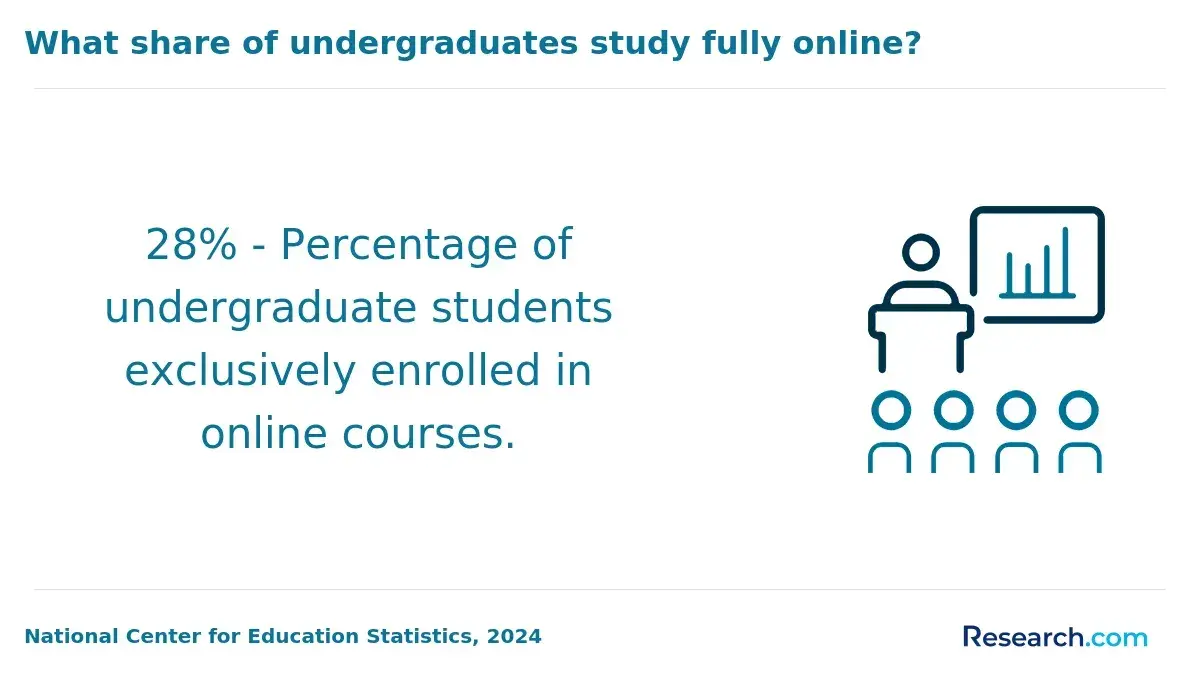
In fact, the National Center for Education Statistics reports a steady rise in online graduate enrollments in 2024, reflecting a shift toward accessibility and adaptability in higher education. This trend highlights the importance of evaluating curriculum rigor, admissions criteria, and career outcomes against individual goals and constraints.
This article examines the cost, curriculum, admissions process, and career prospects to help prospective students determine if this MBA aligns with their ambitions and circumstances.
Key Points About The University of North Carolina at Chapel Hill's Master of Business Administration - MBA in Marketing Program
- The University of North Carolina at Chapel Hill's Online MBA in Marketing has a 19% acceptance rate, indicating a highly selective admission process that demands strong preparation and limits accessibility.
- Graduates typically benefit in the job market because employers recognize UNC's rigorous program, often translating into stronger career advancement opportunities in marketing roles.
- With tuition costing $27,633, prospective students must weigh this investment against potential salary gains and consider their financial readiness for this level of commitment.
What can students expect from The University of North Carolina at Chapel Hill's online Master of Business Administration - MBA in Marketing curriculum?
Students in The University of North Carolina at Chapel Hill's online Master of Business Administration - MBA in Marketing curriculum should anticipate a rigorous blend of foundational and specialized coursework designed to mirror widely accepted U.S. MBA standards while focusing on marketing's evolving demands.
Imagine a mid-career professional transitioning into marketing leadership. The curriculum's balance between core business skills and targeted marketing expertise equips them to navigate complex market dynamics and data-driven decision-making. The online MBA Marketing course structure in North Carolina reflects this dual approach.
Below are key areas that illustrate the program's operational focus:
- Core Business Fundamentals: The curriculum requires mastery of finance, accounting, strategy, and organizational behavior. These are essential for developing a broad managerial perspective, ensuring that graduates can integrate marketing decisions within overarching business goals.
- Marketing Specialization: Students delve into consumer behavior, digital marketing, brand management, marketing analytics, and product development. This specialization trains students to apply quantitative and qualitative insights to influence customer engagement and brand positioning effectively.
- Applied Projects and Collaboration: Case studies and team-based assignments simulate real-world marketing challenges, fostering critical thinking, problem-solving, and strategic leadership in virtual, technology-driven environments.
This curriculum structure aims to produce graduates capable of handling both traditional and emerging marketing roles, aligned with workforce expectations for adaptability and technological fluency. Prospective students assessing options should consider how this curriculum balances theory with applicable skills, helping bridge academic learning and tangible career outcomes.
For those seeking flexible learning options that still demand rigorous engagement, this program fits among offerings identified as the easiest online masters degree to navigate within the competitive landscape of MBA marketing education.
What are The University of North Carolina at Chapel Hill's admission requirements for online Master of Business Administration - MBA in Marketing program?
Admission to The University of North Carolina at Chapel Hill's online Master of Business Administration - MBA in Marketing is selective and requires careful preparation.
For example, an applicant balancing full-time work must anticipate gathering academic transcripts, standardized test data, and letters of recommendation well ahead of application deadlines. This program expects candidates to demonstrate readiness through several key credentials.
Below are the principal admission requirements prospective students must meet to be considered:
- High School Completion: Applicants must have a high school diploma; a GED is not accepted, underscoring the university's emphasis on traditional secondary education records as a foundation for graduate study.
- Academic Records: Submission of secondary school transcripts is mandatory, providing evidence of academic performance and consistency, which helps assess preparedness for graduate-level business coursework.
- English Proficiency: Non-native English speakers are required to submit TOEFL scores to demonstrate adequate language skills necessary for success in this fully online program and professional communication.
- Standardized Tests: While Wonderlic or WISC-III test scores are recommended to complement the application, they are not required. Lack of data on SAT/ACT and GMAT scores means students should be prepared to meet competitive academic standards common to business graduate programs.
- Recommendations: Letters of recommendation from credible sources are necessary to provide external validation of the applicant's qualifications, character, and ability to succeed in a rigorous academic environment.
Additionally, transfer policies for this online MBA in Marketing are not broadly defined, suggesting cautious consideration by transfer applicants. The university prioritizes North Carolina residents in admissions, which can affect out-of-state competition.
Practical readiness also includes reliable computer access, either personal or through university lease options, ensuring students can fully engage with the online curriculum.
Is it difficult to get admitted to The University of North Carolina at Chapel Hill's online Master of Business Administration - MBA in Marketing program?
Admission to an MBA in Marketing program generally requires a blend of academic achievement and relevant experience, but UNC Chapel Hill's online program presents a distinctly high barrier compared to many peers.
While some MBA programs admit a broader swath of candidates, UNC Chapel Hill's acceptance rate of 19% places it firmly in the selective category, reflecting a competitive pool where only a fraction of applicants secure a place.
This competitiveness is underscored by rigorous standardized test score requirements (SAT verbal scores between 680 and 750, math scores from 690 to 780, and ACT scores ranging from 30 to 34) benchmarks that exceed many typical MBA program admissions. The volume of applicants compounds the challenge.
Among nearly 58,000 annual applicants to the university, only about 10,850 are admitted overall. For prospective students, this means that strong academic preparation, leadership experience, and a strategic application are critical to avoiding premature elimination.
The high selectivity also carries workforce implications. Graduates enter job markets with credentials from a widely recognized institution, potentially enhancing employability, but the demanding admissions process means that candidates must weigh their preparedness carefully before investing in an application.
A candidate with a solid academic record but limited leadership or marketing experience might face a difficult decision about whether to apply immediately or strengthen their portfolio first.
A recent graduate shared that the admissions process felt like navigating a narrow funnel. She initially hesitated due to her imperfect test scores but decided to emphasize her professional marketing projects and leadership roles in her application. "It was nerve-racking," she recalled, "because the numbers weren't quite top-tier, but showing clear impact in my career helped me stand out."
The relief she expressed upon acceptance highlighted how multifaceted preparation, beyond scores alone, shapes outcomes in such competitive programs.
The base tuition and fees for the online Master of Business Administration - MBA in Marketing program at The University of North Carolina at Chapel Hill total $8,989 annually. However, the overall cost extends beyond tuition, with books and supplies adding around $622, leading to a total estimated annual cost of $27,633 when including room, board, and other expenses.
This breakdown is important for prospective students who must weigh direct academic costs against ancillary expenses that impact the total financial commitment. Notably, the university does not apply an online-specific technology fee and does not offer a flat-rate in-state tuition, which means pricing structures align closely with standard tuition formats regardless of student residency.
Comparing the online MBA Marketing tuition at the University of North Carolina at Chapel Hill to in-person programs reveals some cost discrepancies shaped largely by housing and living expenses. The Federal Scorecard reports a $25,181 annual cost for in-state students living on campus, which is slightly lower than the online program's total cost, reflecting differences in how indirect costs are accounted for.
This variance underscores a tradeoff students face when choosing remote study. While saving on campus housing may cut some expenses elsewhere, additional costs like technology or home-study setups may offset these savings.
Nationally, total cost for UNC Chapel Hill online MBA in Marketing compares favorably with many programs that often exceed the $8,989 base tuition alone. Many schools charge higher tuition and additional fees, so UNC's pricing places it competitively among reputable business schools, especially for students balancing work obligations or geographic constraints.
However, students should account for these cost factors in the context of expected career outcomes and regional job markets, as the ROI depends on both program quality and post-graduation employability.
For students considering accelerated degree options that prioritize both cost and timeliness, exploring an accelerated associate degree online might present an alternative pathway. This route could allow earlier entry into the workforce or quicker upskilling with lower upfront cost, which must be weighed against the comprehensive scope and prestige the UNC online MBA program offers.
Financial aid for online Master of Business Administration - MBA in Marketing students at the University of North Carolina at Chapel Hill reflects a complex but crucial aspect of managing graduate-level educational expenses.
Navigating aid opportunities carefully can mitigate significant upfront costs, a consideration especially relevant for working professionals balancing tuition with ongoing financial responsibilities. Opting for institutional or employer-supported funding can reduce reliance on loans, which often carry longer-term financial tradeoffs.
Below is a breakdown of key financial aid options accessible to prospective students.
- Merit-Based Scholarships: Targeted at students demonstrating academic excellence or leadership potential, these awards typically require a competitive application or nomination either before or shortly after admission, often covering partial tuition.
- Graduate Fellowships and Grants: These funds are awarded based on academic or research potential and do not require repayment, though eligibility may demand maintaining specific academic standards throughout the program.
- Corporate Tuition Reimbursement: Employees pursuing the MBA while working may have access to employer-sponsored programs that cover part or all of tuition fees, conditional on continued employment and sometimes grade achievement.
- Veteran Benefits: Active military or veteran students can utilize federal GI Bill benefits, facilitated by the school's veteran affairs support, to reduce direct educational expenses substantially.
- Federal Student Loans: After submitting the FAFSA, eligible students may access loans with relatively favorable interest rates and repayment terms compared to private loans, though debt accumulation remains a key consideration.
Access to robust learning resources plays a pivotal role in the success of students pursuing an online Master of Business Administration - MBA in Marketing, particularly in environments where hands-on contact with faculty and peers is limited.
The quality and variety of support influence not only the ability to absorb advanced marketing concepts but also students' capacity to navigate practical challenges, such as applying theory to evolving digital marketplaces. For example, a student balancing a marketing manager role while studying remotely will require timely technical assistance and career services attuned to current hiring practices.
The following resources illustrate how The University of North Carolina at Chapel Hill structures its online MBA program to meet these operational demands and professional expectations.
- Digital Learning Platforms: The university employs advanced, interactive online systems that deliver lectures and facilitate engagement through discussion boards and multimedia content. This ensures content accessibility while promoting collaboration, essential for marketing students adapting to virtual team environments.
- Technical Support Services: Continuous IT assistance is available to prevent disruptions common in remote learning, helping students promptly resolve connectivity or platform issues so they can maintain study momentum without technical setbacks.
- Academic Advising and Tutoring: Personalized advising supports course planning aligned with career goals, while targeted tutoring helps fortify skills in areas like quantitative analysis or communication, both critical for marketing strategy and data-driven decision-making.
- Extensive Digital Library Access: A comprehensive collection of business journals, databases, and publications strengthens students' research capabilities, enabling them to extract insights on market trends and evidence-based marketing tactics relevant to evolving business contexts.
- Career Development Infrastructure: Services include tailored resume workshops, interview coaching, and virtual networking events, connecting students with alumni and industry leaders to bridge academic achievement with actionable professional opportunities.
In marketing-focused MBA programs, the value of in-person practicums or clinicals depends heavily on industry expectations and student circumstances. Many fields like healthcare and education mandate hands-on physical experience, but marketing often relies more on applied projects and simulations.
This distinction affects how programs like the University of North Carolina at Chapel Hill structure practical experience to meet workforce needs without imposing geographic or scheduling barriers commonly associated with traditional clinical requirements.
UNC Chapel Hill's online Master of Business Administration - MBA in Marketing does not require in-person clinicals or practicums. Instead, it emphasizes experiential learning through case studies, group projects, internships, and simulations that are completed remotely. This approach suits working professionals who cannot commit to physical presence yet need practical marketing exposure.
The absence of mandatory on-site components aligns with broader trends in online MBA education, which increasingly incorporate virtual collaboration over traditional fieldwork, making practical marketing experience more accessible and flexible.
The lack of in-person clinical requirements in UNC Chapel Hill's program contrasts with some North Carolina MBA Marketing practicum and internship options that may require on-site engagement.
Students pursuing this online MBA can therefore expect to develop relevant skills through applied coursework and project work without the constraints of physical attendance. This flexibility can be a critical factor for those balancing professional obligations or seeking a more adaptable pathway compared to those programs with stricter experiential mandates.
For related options, consider reviewing accessible associates degree programs that cater to flexible schedules and remote learning.
The practical value of a degree often hinges on the clarity and viability of career outcomes it enables. Graduates of the online Master of Business Administration - MBA in Marketing from The University of North Carolina at Chapel Hill enter a competitive labor market with skills tailored to strategic marketing roles that combine analytical rigor with leadership.
Understanding where these graduates fit in the marketing landscape reveals tradeoffs such as balancing specialization against broader business acumen. Career opportunities for graduates of UNC Chapel Hill MBA in Marketing typically lead to roles where brand positioning, product lifecycle management, and digital engagement strategies are paramount.
Below are representative roles reflecting realistic post-graduation employment options.
- Marketing Manager: Oversees development and execution of marketing campaigns, coordinates market research, and aligns sales strategies to optimize product performance. Salaries vary by industry but remain solid within corporate hierarchies.
- Brand Manager: Maintains and enhances brand value through targeted promotional initiatives and strategic planning, requiring both creative insight and data-driven decision-making.
- Product Manager: Leads the end-to-end management of product development and market introduction, adapting to consumer demand and competitive factors.
- Digital Marketing Strategist: Utilizes digital platforms and analytics tools to refine campaign effectiveness, focusing on customer engagement and conversion metrics.
Graduates with this credential find their marketability enhanced not only by domain-specific knowledge but also by the broader business skills emphasized in the program. This combination positions them well for upward mobility into senior management or consulting roles across varied sectors.
The emphasis on integrated business strategies aligns with industry demand, particularly in fast-evolving fields such as technology and healthcare. Prospective students should consider that attaining this MBA is an investment against a backdrop of increasingly sophisticated marketing expectations and a shifting employer landscape.
For those exploring accredited options, it is useful to review data on recognized educational providers such as research on a not for profit online university to complement decision-making.
The salary outlook for graduates of the University of North Carolina at Chapel Hill's online Master of Business Administration - MBA in Marketing reflects a competitive position within the broader business education landscape.
Given that the median salary for alumni in Business Administration, Management, and Operations is $74,938, MBA in Marketing graduates can reasonably expect earnings near this level. This provides a practical benchmark for prospective students assessing the return on investment given the degree's focus on leadership and strategic marketing roles.
For those weighing career options, the financial advantage of an MBA in Marketing emerges clearly when compared to related fields. Graduates with degrees in Communication and Media Studies, Public Policy Analysis, or Human Resources Management often report median salaries well below the business administration figure, underscoring the advantage of UNC Chapel Hill's business-focused curriculum.
This differential also extends beyond social sciences to some technical and health disciplines, where salaries can range from roughly $56,000 to $60,000, highlighting the practical financial tradeoffs in program selection.
Considering career earnings for UNC Chapel Hill online MBA Marketing graduates within a wider context is essential. The program's salary outcomes are consistent with nationally observed patterns, where business graduates generally command higher starting salaries. Those seeking insight into military-friendly educational options can reference the best online colleges for military spouses for comparative perspective on program accessibility and market value.
Determining whether the University of North Carolina at Chapel Hill's online Master of Business Administration - MBA in Marketing fits your professional path requires an honest assessment of how the program's structure and outcomes intersect with your priorities. The choice influences not only your day-to-day learning experience but also how effectively the credential translates into practical skills and market relevance.
Key factors to assess include:
- Learning Format Suitability: Evaluate if the program's blend of asynchronous coursework and live sessions supports your ability to balance study with work and personal commitments. This hybrid approach demands disciplined time management but can enhance engagement and immediate application.
- Marketing Specialization Depth: Scrutinize the curriculum's coverage of contemporary marketing fields such as digital strategy, consumer analytics, and case-based problem solving. Prioritize programs that emphasize applied learning, as this correlates with employer expectations for real-world readiness.
- Community and Networking Opportunities: Investigate the online student environment's capacity to foster meaningful peer interaction and industry connections, since virtual programs can vary widely in network accessibility and collaborative culture.
- Career Outcome Transparency: Look for data or testimonials that reflect graduates' ability to leverage the degree into leadership or analytical roles within marketing functions, noting how the program supports such transitions.
A recent graduate recalled selecting this program after weighing the importance of live engagement against her irregular work hours as a marketing analyst. She explained, "I was hesitant because I wasn't sure if I could commit to scheduled sessions, but the mix allowed me to focus on complex digital marketing modules at my own pace while still benefiting from real-time discussions that clarified tough concepts. That balance made me confident my time investment would pay off professionally."
Her experience highlights the importance of matching program design with individual circumstances rather than opting based solely on brand or convenience.
What Graduates Say About The University of North Carolina at Chapel Hill's Master of Business Administration - MBA in Marketing Program
- Chloe: "Studying at The University of North Carolina at Chapel Hill gave me a deeper understanding of data-driven marketing strategies, which I quickly realized employers value more than just traditional degrees. The MBA in Marketing program pushed me to build a real-world portfolio through projects and internships that proved crucial during job interviews. While I initially expected the degree alone to open doors, I found that demonstrating practical skills gained at UNC was what really accelerated my career."
- Hope: "The flexibility of The University of North Carolina at Chapel Hill's online MBA in Marketing allowed me to keep working full-time while upgrading my skills, which made all the difference. I appreciated how the curriculum emphasized adapting to digital marketing trends and remote collaboration, skills that were especially relevant as companies shifted to hybrid work. Post-graduation, I noticed that the program expanded my network and provided me with leverage to discuss promotions, even though the salary growth wasn't immediate."
- Eva: "After completing my MBA in Marketing at The University of North Carolina at Chapel Hill, I quickly learned that landing leadership roles often required more than just an advanced degree; experience and certifications heavily influenced hiring decisions. The program's blend of strategic coursework and case studies was invaluable, but I had to be pragmatic in accepting lateral roles first to build that crucial experience. The program helped me pivot from a purely creative marketing role to a more analytical position, which aligned better with my long-term goals."
Other Things You Should Know About Degrees
Students in the 2027 UNC Online MBA in Marketing program may experience challenges such as managing a rigorous academic schedule alongside full-time work, requiring efficient time management and discipline to balance courses, assignments, and professional duties successfully.
The UNC Chapel Hill online MBA in Marketing requires 62 credit hours. Students complete core business courses, marketing electives, and experiential components while studying part time, so most finish in about 24 to 36 months.
The virtual nature of the MBA limits spontaneous, informal interactions that on-campus students experience, which can affect peer networking dynamics. However, The University of North Carolina at Chapel Hill compensates with structured online events, alumni connections, and group projects. For those whose career goals rely heavily on local or in-person networking, pairing this MBA with additional external networking activities is advisable.
Candidates lacking a marketing background can gain foundational knowledge through the program's introductory courses, but they may face a steeper learning curve in advanced modules. For applicants focused on marketing leadership, prior experience can enhance comprehension and application of key concepts. Therefore, those new to marketing should consider supplementing their studies with practical experience to maximize program benefits and future job market competitiveness.
- What Is the MBA in Marketing Salary and Career Outlook? https://online-business.tulane.edu/online-mba/articles/mba-in-marketing-salary-and-career-outlook/
- UNC Kenan-Flagler's MBA online https://www.edx.org/masters/online-mba/unc-master-of-business-administration
- Business Administration https://www.uncp.edu/academics/all-majors-and-minors/business-administration-graduate.html
- The University of North Carolina at Chapel Hill - Kenan-Flagler Business School https://www.princetonreview.com/business/university-north-carolina-at-chapel-hill-kenan-flagler-business-school-1011144
- MBA@UNC Kenan-Flagler Business School Online MBA https://www.bschools.org/profiles/unc-kenan-flagler-business-school-online-mba
- UNC Kenan-Flagler Business School https://www.clearadmit.com/schools/kenan-flagler/