2027 Southern New Hampshire University Transfer Credit Policy: How Many Credits Can You Bring?

Co-Founder and Chief Data Scientist
Students applying to online degree programs at Southern New Hampshire University often face uncertainty when trying to determine how many previously earned credits will transfer. This uncertainty can delay enrollment decisions, as understanding the limits and conditions for credit acceptance is crucial.
Navigating the credit evaluation process requires attention to course equivalencies, accreditation standards, and evidence of learning outcomes, all of which affect how many credits a student can realistically bring forward toward degree completion.
Recent data shows that nearly 40% of U. S. college students transfer credits between institutions, a trend driven by efforts to reduce educational costs and accelerate time-to-degree. For students considering Southern New Hampshire University, this makes grasping transfer policies especially important.
This article examines the university's credit transfer guidelines, maximum credit allowances, and practical strategies to optimize transferable credits, helping students make well-informed choices about their academic pathways.
Key Points About Transferring Credits at Southern New Hampshire University
- Southern New Hampshire University accepts transfer credits based on course alignment with degree requirements and accreditation status, with a typical ceiling that varies by program but reflects moderate overall transferability.
- Students must prepare detailed official transcripts and documentation to facilitate transfer evaluations; practical experiences may count if sufficiently documented and relevant.
- Maximizing accepted credits requires strategic course equivalency alignment and providing comprehensive syllabi or course descriptions during submission to meet Southern New Hampshire University's credit eligibility criteria.
Does Southern New Hampshire University allow students to transfer credits from a different school?
Southern New Hampshire University (SNHU) allows students to transfer credits from different schools with an admission process that is moderately difficult, holding a 96% acceptance rate for transfer applicants. This relative openness facilitates credit transfer, but students must navigate the nuances of how prior coursework fits SNHU's degree requirements and value in career contexts.
For example, a student transferring credits in a healthcare program should confirm equivalencies to avoid delays in graduation and unnecessary course repetition.
Transfer credit acceptance at Southern New Hampshire University depends heavily on the accreditation status of the previous institution. Credits from regionally accredited colleges are preferred and typically accepted.
Conversely, credits earned at nationally accredited schools face higher scrutiny and may not transfer as favorably due to perceived differences in academic rigor and curriculum alignment. This reflects Southern New Hampshire University's policy on transferring credits from different schools prioritizing quality and consistency.
A 2024 study shows nearly 40% of transfer students nationally experience credit loss, a significant barrier that can increase costs and extend time to degree. SNHU's articulation agreements help mitigate these challenges by streamlining evaluations from similarly accredited colleges.
However, students must actively verify course equivalencies to maximize transferable credits. This is especially important for those pursuing specialized or technical fields where course content and skills alignment matter.
Compared to the broader higher education landscape, Southern New Hampshire University maintains a transfer-friendly stance but with pragmatic limits tied to accreditation and course relevance. Students aiming to reduce credit loss should review transfer policies carefully and consider programs like FAFSA-approved online certificate programs as complementary pathways to fill gaps or expedite progression.
What is the maximum number of transfer credits allowed at Southern New Hampshire University?
Southern New Hampshire University allows a maximum transfer of up to 90 credits toward its online bachelor's degree programs. This high ceiling can dramatically shorten the time needed to graduate if students strategically align prior coursework with SNHU's academic requirements. However, practical transfer credit limits depend less on this cap and more on accreditation and course relevance.
Credits from regionally accredited institutions are favored, while those from nationally accredited or non-accredited schools often face rejection or partial acceptance. Additionally, SNHU distinguishes between lower-division (100- and 200-level) and upper-division (300- and 400-level) courses; lower-division credits transfer more smoothly, but upper-division credits undergo stricter evaluation to preserve academic standards and program outcomes.
In practice, students should audit their existing credits against program criteria before expecting full acceptance. A 2024 national study found that nearly 40% of bachelor's degree completers use transfer credits, but credit caps and course misalignment frequently force retaking classes, delaying graduation and raising tuition costs. This is critical for those balancing education with workforce entry, especially when aiming for the most lucrative majors.
Understanding Southern New Hampshire University credit transfer limits enables informed decisions that affect time-to-degree and career trajectories. Optimizing transfer credit acceptance requires prioritizing regionally accredited courses and relevant content to avoid credit loss that extends study time and expenses.
Are there different transfer credit caps for online vs on-campus programs at Southern New Hampshire University?
No, Southern New Hampshire University applies the same transfer credit cap of up to 90 credits for both online and on-campus programs. This approach reflects a consistent standard, avoiding separate limits based on delivery mode. For example, a student transferring with 75 credits can expect equivalent credit acceptance regardless of enrolling online or on campus.
The distinction emerges with credit types rather than caps. Online students often encounter competency-based credits tied to learning outcomes instead of traditional semester hours. While these credits can expedite degree completion, they require rigorous evaluation to establish equivalency to campus-based courses due to different assessment metrics and pacing.
Transfer students should note that digital transfer credit recognition has increased by 12.7%, indicating broader acceptance of non-traditional learning formats nationally. Southern New Hampshire University's policies align with this trend by supporting flexible credit validation methods, though the approval process may demand additional documentation for remote or competency-based credits.
Choosing between modalities involves practical tradeoffs. Traditional campus programs usually follow familiar credit validations, making transfers straightforward. In contrast, online paths offer faster completion through competency credits but need careful planning to ensure maximum credit transferability that meets degree requirements and employer expectations.
How does Southern New Hampshire University evaluate international transcripts and foreign course credits?
International academic credits at Southern New Hampshire University are eligible for transfer only when they meet strict standards that prioritize relevance and quality over quantity. For example, a student transferring from a European university may find that not all credits align with US degree requirements, resulting in a partial transfer. The evaluation focuses on several critical criteria, which include the following:
- Institution Accreditation: Southern New Hampshire University verifies that the foreign institution holds valid accreditation recognized in its country. This confirmation ensures the institution meets baseline academic standards comparable to US counterparts.
- Course Content and Rigor: The university assesses the syllabi and credit hours of completed courses, comparing them to US course expectations. Only courses with closely matching content and sufficient academic rigor are eligible for transfer.
- Grade Equivalency: Foreign grades are converted to the US GPA scale using standardized charts, with a typical minimum requirement of a C grade or its equivalent to accept credits. This standard filters out low-performing coursework.
- Credential Evaluation Services: Many transcripts must be accompanied by evaluations from NACES- or AICE-member agencies, providing independent validation of degree and credit legitimacy which Southern New Hampshire University relies on heavily.
- Language Proficiency Exams: TOEFL or IELTS scores may be required to confirm readiness for academic work in English, indirectly supporting credit acceptance by demonstrating necessary language skills.
A national study showed that only 42% of international credits attempted for transfer are accepted by US online programs on average, underscoring the stringent scrutiny that naturally limits credit transfer and calls for strategic planning before enrollment.
Are there alternative theoretical or practical credentials that Southern New Hampshire University accepts as credit?
Southern New Hampshire University accepts various alternative credentials as credit, recognizing that practical experience often holds academic value. This approach aligns with increasing demand across higher education to validate real-world skills, particularly in online programs.
A typical scenario involves a working professional who leverages military training and prior work projects to reduce degree time through credit transfer. Below are key types of alternative credentials SNHU evaluates for credit transfer.
- Prior Learning Assessment (PLA) Credits: SNHU awards credit for documented professional experience, military service, and non-collegiate learning through a formal PLA process. This includes analysis of military transcripts via the Joint Services Transcript system and credit recommendations guided by the American Council on Education. PLA eligibility often applies across many online degree offerings but depends on course competency alignment.
- Portfolio Review: Students can compile a portfolio showcasing projects and learning achievements outside traditional classes. SNHU faculty assess portfolios to determine if demonstrated knowledge meets course outcomes. This method is more selective and primarily available in specified online programs.
- Challenge Exams: University-administered tests allow students to demonstrate mastery of course material and earn credit without enrollment. These exams help students with prior theoretical or practical knowledge bypass redundant coursework, mainly within core or general education online programs.
- Military and Corporate Training: While military credit transfer is well defined, corporate training and professional licenses must closely match course competencies to qualify. This pathway is more restrictive and evaluated case-by-case, often limited to professional fields reflected in online programs.
Nationally, 55.3% of adult learners using PLA credits complete their degrees versus 29.6% without, highlighting the economic advantage for students who maximize transferable units.
For those assessing whether alternative credentials accepted for transfer credit at Southern New Hampshire University apply, professional experience and certifications should be reviewed critically and discussed with credit evaluators. This strategy can accelerate degree progress, making online programs more accessible and cost-effective for working adults pursuing a cheapest online master's degree.
How do you request an official transfer credit evaluation from Southern New Hampshire University?
Requesting an official transfer credit evaluation from Southern New Hampshire University requires a clear understanding of the procedural phases, which significantly impact degree planning and duration. Online students must submit academic transcripts through SNHU's transfer admissions portal, managed by the Transfer Admissions Department.
The evaluation relies on assessing course equivalencies, accreditation compliance, and degree relevance. With 2024 trends showing a 30% reduction in evaluation times due to electronic transcript exchanges, students benefit from faster decisions that enhance enrollment timing and credit clarity.
Below are the core steps involved in the Southern New Hampshire University online transfer credit submission process.
- Transcript Submission: Students must submit official academic transcripts electronically or by mail. This initiates the credit evaluation process and requires preparation to ensure all prior coursework from accredited institutions is included.
- Course Content Review: SNHU examines submitted courses for content equivalency against its degree requirements, focusing on the relevance and rigor of prior learning. Detailed course descriptions or syllabi improve the accuracy of this review.
- Credit Applicability Assessment: The evaluation differentiates between general education credits, which usually transfer smoothly, and specialized or vocational courses that face more scrutiny to determine transferability based on the desired program.
- Final Credit Determination: After analysis, SNHU provides a credit transfer report indicating which credits apply toward the student's degree. This informs students on cost and time efficiencies for their academic path.
Students evaluating transfer options should note that credit acceptance varies widely depending on their academic background and the receiving program's standards. Being informed about the Southern New Hampshire University online transfer credit submission process is key for efficient degree planning and for making the most of previous academic efforts.
Prospective enrollees interested in exploring opportunities at institutions welcoming diverse academic profiles may find reviewing lists of online graduate schools with low GPA requirements beneficial for comparison purposes.
What are the deadlines for submitting your transfer transcripts to Southern New Hampshire University?
Transfer transcript submission deadlines at Southern New Hampshire University align closely with its accelerated eight-week term schedule. Priority applicants should submit official transcripts at least two weeks before a term begins to allow for thorough credit evaluation. Regular decision students must meet the application deadline, typically one month before classes start, to avoid enrollment delays.
The cutoff dates vary by term and admission type. Fall and spring terms require timely transcript receipt tied to standard deadlines, while rolling admissions offer some flexibility. However, late submissions risk reducing credits accepted and lengthening time-to-degree, impacting students' academic and career timelines.
Compared to other institutions, Southern New Hampshire University's deadlines reflect common administrative processing constraints and the need for prior schools to send official records. A 2024 report found 64% of U.S. colleges now offer flexible transcript deadlines to better accommodate student schedules, especially in online programs, highlighting a trend toward adaptive admissions policies.
Students exploring how to maximize transfer credits should integrate these deadlines within their broader planning. Courses aligned with work-from-home degrees often depend on timely transcript evaluation to secure credit and meet employer expectations in remote-friendly fields.
What is the impact of transferring credits on graduation timelines at Southern New Hampshire University?
Transferring credits to Southern New Hampshire University impacts graduation timelines in complex ways that depend on how those credits align with degree requirements and program structures. For example, a student who transfers mostly elective credits might not significantly shorten their path if core courses still require completion at SNHU.
A recent 2024 study notes transfer students experience an average 15% longer time-to-degree nationally due to credit alignment issues, which magnifies costs and delays workforce entry. Below are key factors shaping how successful credit transfers affect students' progression and time-to-graduation at SNHU.
- Major Requirement Alignment: Credits that fit directly into a student's core major courses allow skipping foundational classes, accelerating degree completion. However, most transfers fulfill general electives, offering limited reduction in time and leaving required SNHU courses intact.
- Hidden Prerequisites and Sequencing: Programs often include sequential courses or prerequisites that cannot be bypassed with transferred credits, forcing students to complete certain classes at SNHU despite prior coursework, potentially extending enrollment.
- Credit Evaluation Variability: Inconsistencies in assessing transfer credits can lead to unexpected credit gaps, requiring additional classes that offset presumed time savings and complicate academic planning.
- Financial and Employment Timing: Extended time-to-degree due to credit misalignment increases tuition costs and delays entry into the job market, which is a critical consideration for many SNHU students balancing work and education.
One graduate recalled, "I transferred about 45 credits from my community college, mostly electives. I hoped this would speed things up, but I still had to take key courses at SNHU because of program rules. It felt frustrating at first, but with advising, I planned out my semesters carefully."
"In the end, my graduation was only delayed by a semester compared to my original goal. The process taught me how crucial it is to understand exactly how credits apply early on, so you don't get caught off guard."
How much tuition can you save by maximizing your transfer credits at Southern New Hampshire University?
Maximizing transfer credits at Southern New Hampshire University directly reduces the total tuition cost, which stands at $51,392. By applying lower-division transfer credits, students can bypass foundational courses charged at per-credit rates, significantly lowering primary tuition fees and cutting semester costs.
These savings depend on the volume of accepted credits. More transferred units mean fewer courses to pay for, less exposure to mandatory fees, and faster degree completion. For example, transferring 30 credits can reduce tuition proportionally, creating tangible semester-to-semester financial relief.
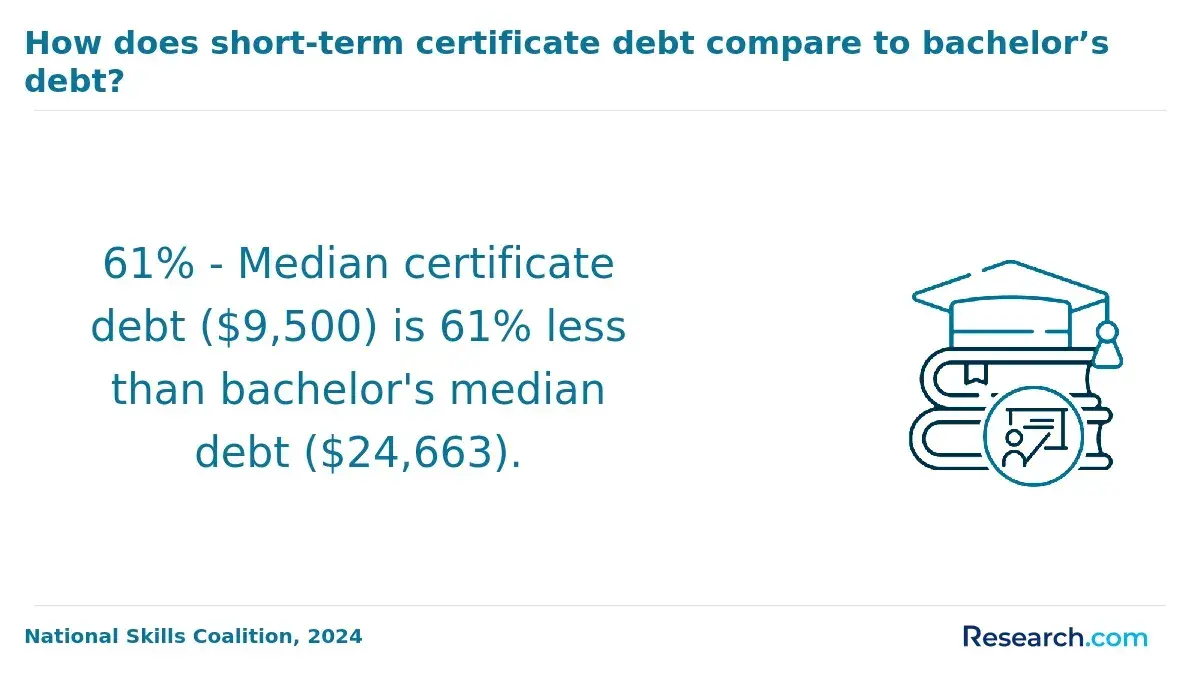
The median graduate debt is $21,082, which frames the transfer credit savings within broader borrowing patterns. Reducing credits owed lowers borrowing needs, easing long-term interest accumulation. A 2024 study shows optimizing transfer credits can cut net education costs by up to 30%, offering a measurable financial advantage over typical debt levels.
Comparing Southern New Hampshire University's total cost of attendance average ($37,524) to credit-optimized student expenses reveals a practical debt-management strategy. This approach balances cost savings with graduate employability and avoids excessive student loan burdens common in alternative institutions.
How can you appeal a denied transfer credit decision at Southern New Hampshire University?
Appealing a denied transfer credit at Southern New Hampshire University requires a strategic approach grounded in detailed evidence and prompt follow-up. Students must recognize that transfer denial often reflects curriculum misalignment rather than institutional quality. For instance, a student who completed a comparable project management course elsewhere may face rejection if their syllabus lacks explicit outcomes matching SNHU's criteria.
Acting quickly, students typically have 30 days to formally challenge such decisions, necessitating a clear, well-documented appeal. Below are common strategies to effectively navigate this process.
- Written Appeal to Academic Dean: This involves submitting a formal letter to the academic leader responsible for the relevant department. The student must detail why their prior coursework meets SNHU's learning outcomes, supported by transcripts, syllabi, and course descriptions. This direct appeal targets decision-makers who assess educational equivalency within the program.
- Provision of Supporting Documentation: Critical materials include official course syllabi with learning objectives, grading rubrics, and examples of completed assignments. These documents substantiate claims that prior courses meet or exceed SNHU standards, addressing the common reason for denial: insufficient evidence of content compatibility.
- Use of Third-Party Evaluations: External accreditation reports or independent course evaluations can serve as objective validators of academic rigor. Presenting such third-party assessments helps overcome subjective bias and aligns the appeal with recognized quality measures.
- Curriculum Alignment Analysis: Mapping previous coursework outcomes explicitly to SNHU's program requirements can clarify overlaps. This strategy demonstrates a granular understanding of SNHU's expectations and directly counters generalized rejections based on mere institutional reputation.
Nationally, 42.7% of transfer credit requests face some level of denial, reflecting a widespread transparency gap in credit evaluation practices. This statistic highlights why carrying out an evidence-based, timely appeal is critical at Southern New Hampshire University to protect earned credits and avoid extended degree timelines.
One Southern New Hampshire University graduate navigated a denied transfer by immediately contacting the department chair with a detailed appeal packet. "I gathered my syllabi and even included assignment samples that mirrored SNHU's projects," she said. "It felt like a race against the clock because the 30-day window was tight, but organizing my documents and showing the alignment of learning outcomes made the difference."
Her experience underscores that success hinges on combining prompt action with precise academic evidence, rather than relying solely on the reputation of past institutions.
What Graduates Say About Their Admissions Experience at Southern New Hampshire University
- Emma: "Enrolling in the online program at Southern New Hampshire University was an intentional choice shaped by my need to balance work and study. The process of transferring my previous college credits involved patiently coordinating transcripts between multiple institutions and regularly checking in with the registrar to verify course equivalencies. Though the generous cap on transfer credits helped reduce some of the administrative burden, I found that maximizing those credits didn't always shorten my path as much as I hoped, especially when adapting to the more specialized courses in my major. Still, having that foundational flexibility eased my financial strain and allowed me to enter the workforce with confidence in both knowledge and credentials."
- DeShawn: "My experience with Southern New Hampshire University's online program was quite pragmatic from the start. The transfer credit evaluation required careful documentation-requesting official transcripts early and anticipating delays was key. I appreciated that SNHU's credit policy allowed for a substantial number of transferred credits, which kept my tuition costs down. However, I noticed that while this accelerated my general education requirements, the transition to advanced major coursework involved a learning curve that extended my overall timeline slightly. Professionally, having the degree has opened doors, but navigating the transfer process taught me the importance of proactive communication with academic advisors to avoid unexpected setbacks."
- Natalie: "Studying online at Southern New Hampshire University offered a reflective opportunity to piece together my previous academic work with my career goals. The transfer credit evaluation was thorough, requiring me to secure transcripts and sometimes clarify course content to ensure equivalency. I valued the relief of generous transfer limits-it felt like recognition of my prior efforts-but in practice, the process was less about speeding through and more about strategically aligning new courses to build expertise. This approach didn't drastically reduce the length of my studies but made for a smoother progression into specialized topics that ultimately enhanced my readiness for the workforce."
Other Things You Should Know About Southern New Hampshire University Degrees
Southern New Hampshire University allows undergraduate students to transfer up to 90 credits toward a bachelor's degree. This policy helps students expedite their educational journey by recognizing prior academic accomplishments.
Given that transfer credit evaluations focus on previously earned college credits, students should not prioritize standardized test submissions for the transfer credit process itself. Instead, prioritizing official transcripts and detailed course descriptions will more effectively support credit acceptance. Only students with minimal prior college coursework or specific program requirements should consider submitting standardized test scores to strengthen their admissions profile.
For online bachelor's programs, standardized test scores are rarely required if students have sufficient college-level credits to transfer. Graduate programs often rely more on prior academic transcripts and professional experience, rather than standardized tests. Prospective students should focus on meeting credit transfer standards rather than test scores unless specifically admitted based on the absence of transferable undergraduate credits.
Standardized test scores usually do not expedite transfer credit evaluations since these rely on transcript review and course equivalencies. However, delayed submission of required test scores can slow admission decisions for students without adequate transfer credits. Students aiming for a quicker enrollment should prioritize prompt submission of official transcripts over standardized tests, which commonly have minimal bearing on transfer credit timelines.
References
- Southern New Hampshire University | Electronic Transcripts https://www.electronictranscripts.com/southern-new-hampshire-university/
- SNHU Transcript Information https://www.teachingchannel.com/snhu-transcripts/
- SNHU Transfer Courses from Sophia | Sophia Learning https://snhu.sophia.org/
- Southern New Hampshire University - SNHU | Bergen Community College https://bergen.edu/center-for-student-success/transfer-and-articulation-services/colleges-with-agreements-transfer-partnerships/southern-new-hampshire-university-snhu/