2027 Accredited Online Fashion Merchandising Degree Programs for Working Adults: Flexible, Part-Time, and Self-Paced Options

Co-Founder and Chief Data Scientist
Choosing an accredited online fashion merchandising degree is really a question of fit: Can the program work around your job, budget, and career plans? NCES distance education data released in 2024 shows that millions of U.S. undergraduates now take at least one online course, making flexible degree formats a mainstream option rather than a backup plan.
This guide is for working adults comparing part-time, asynchronous, and self-paced fashion merchandising programs. You will learn how accreditation, tuition, transfer credits, workload, and career outcomes affect the value of each option.
Key Things You Should Know
- Choose an institution recognized by the U.S. Department of Education or CHEA, then check whether fashion, business, or merchandising coursework aligns with your career goals.
- Full-time students often finish in about 4 years, while part-time working adults commonly plan for 5 to 6 years unless transfer credits shorten the timeline.
- Expect roughly 8 to 12 hours of weekly work per 3-credit online course; College Board's 2024-25 data lists average published public four-year in-state tuition and fees at $11,610, before aid, fees, books, and living costs.
What Is an Accredited Online Fashion Merchandising Degree Program and Why Does Accreditation Matter?
An accredited online fashion merchandising degree is a college program delivered fully or mostly online by an institution that has been reviewed by a recognized accrediting agency. The curriculum usually combines fashion industry knowledge with business courses in retailing, buying, product development, consumer behavior, visual merchandising, supply chain basics, digital commerce, analytics, branding, and marketing.
Accreditation matters because it affects financial aid eligibility, credit transfer, employer recognition, and graduate school options. For working adults, it also reduces the risk of spending time and money on a credential that another school or employer may not respect.
There are two accreditation layers to understand. Institutional accreditation applies to the college or university as a whole. Programmatic accreditation, when available, applies to a specific school, department, or degree area. Fashion merchandising programs may sit inside business, design, retail management, or family and consumer sciences departments, so program-specific accreditation varies by institution.
Use this comparison to understand what each accreditation type does and does not tell you.
| Accreditation type | What it evaluates | Why it matters for working adults | What it does not guarantee |
| Institutional accreditation | The overall college or university | Federal aid eligibility, transferability, employer recognition, and graduate school access | That every major has the same career outcomes or flexibility |
| Programmatic accreditation | A specific program, school, or department | May signal additional review of curriculum, faculty, and professional standards | That the degree is automatically better than a non-programmatically accredited option |
| State authorization | Whether an online school may enroll students in a state | Important if you live outside the school's home state | That credits will transfer or that the program is affordable |
The practical move is to verify institutional accreditation before you compare tuition or scheduling. Then review the fashion merchandising curriculum course by course. A strong program should teach both fashion-market judgment and measurable business skills, because many merchandising roles now rely on e-commerce data, inventory systems, trend forecasting tools, and cross-functional teamwork.
Which Flexible Fashion Merchandising Degree Formats Are Best for Working Adults: Part-Time, Full-Time, or Self-Paced?
The best format depends on your available study hours, deadline tolerance, financial situation, and urgency to finish. "Online" does not always mean "self-paced," and "flexible" does not always mean you can ignore weekly deadlines.
Working adults should compare formats based on how much control they provide over time, pace, and interaction. The table below summarizes the major trade-offs.
| Format | Best fit | Typical workload pattern | Main advantage | Main risk |
| Full-time asynchronous | Adults who can study most evenings and weekends | Several courses at once with weekly deadlines | Faster completion without commuting | Can become overwhelming with full-time work |
| Part-time asynchronous | Adults working 35 or more hours per week | One or two courses per term | More manageable schedule and lower term-by-term cost | Longer time to degree |
| Self-paced or competency-based | Independent learners with prior college or industry knowledge | Progress depends on assessments and school limits | Potential to move faster through familiar material | Requires strong self-management and may have subscription-term pressure |
| Synchronous online | Students who want live discussion and structure | Scheduled virtual classes plus assignments | More direct interaction with faculty and peers | Less convenient for shift workers or caregivers |
| Hybrid | Students near campus or industry hubs | Online coursework plus occasional in-person requirements | Useful for labs, networking, or local internships | Travel requirements can conflict with work |
If you work full time, part-time asynchronous study is often the safest starting point. It lets you learn the platform, test your weekly workload, and avoid overcommitting before you know how demanding fashion buying projects, market research assignments, and group presentations will be.
Self-paced study can be valuable, but only if the school clearly explains assessment rules, course availability, instructor access, subscription periods, and maximum completion windows. It is not ideal for students who need frequent reminders, live discussion, or external structure.
Before choosing a format, ask each school targeted scheduling questions rather than accepting broad claims about flexibility:
- Are classes asynchronous, synchronous, self-paced, or a mix of formats?
- How many assignment deadlines occur each week in a typical 3-credit course?
- Can part-time students enroll continuously, or are some courses offered only once per year?
- Are group projects required, and if so, how are teams scheduled across time zones?
- What happens if work travel, caregiving, or overtime makes you miss a deadline?
What Are the Admission Requirements for Accredited Online Fashion Merchandising Degree Programs?
Admission requirements vary by degree level and school selectivity, but online fashion merchandising programs are often designed to be accessible to adult learners. Bachelor's programs usually require a high school diploma or GED, transcripts, an application, and sometimes a personal statement. Transfer applicants may need college transcripts from every previously attended institution.
Associate and bachelor's programs typically focus on readiness for college-level work, while master's-level retail, fashion business, or merchandising programs may require a bachelor's degree, resume, statement of purpose, and sometimes professional experience. Portfolio requirements are more common in design-heavy programs than in merchandising-focused programs, but some schools may ask for creative or business-related samples.
The table below shows common admission materials and why they matter.
| Requirement | Commonly requested for | What admissions teams are checking | Working-adult tip |
| High school or GED transcript | Associate and bachelor's programs | Basic eligibility and academic history | Request records early if you graduated years ago |
| College transcripts | Transfer and degree-completion applicants | Transferable credits and GPA | Send every transcript, even from unfinished programs |
| Resume | Degree-completion and graduate programs | Retail, sales, management, marketing, or business experience | Highlight measurable results such as sales, inventory, or team leadership |
| Personal statement | Selective undergraduate and graduate programs | Goals, motivation, and program fit | Connect fashion merchandising to a clear career direction |
| Portfolio or work samples | Design-adjacent programs | Creative thinking, visual communication, or project experience | Ask whether retail displays, marketing campaigns, or buying analyses qualify |
Some online programs offer adult-friendly policies such as rolling admissions, multiple start dates, test-optional review, and prior learning assessment. These features can help, but they should not replace a careful review of graduation requirements and course sequencing.
How Much Does an Online Fashion Merchandising Degree Cost, and What Financial Aid Options Are Available?
The cost of an online fashion merchandising degree depends on tuition, fees, transfer credits, enrollment pace, and whether the school charges in-state, out-of-state, private, or flat online rates. College Board's 2024-25 pricing data lists average published tuition and fees at $11,610 for in-state students at public four-year institutions. That figure is useful as a benchmark, but online students still need to check technology fees, course materials, proctoring costs, and any required software.
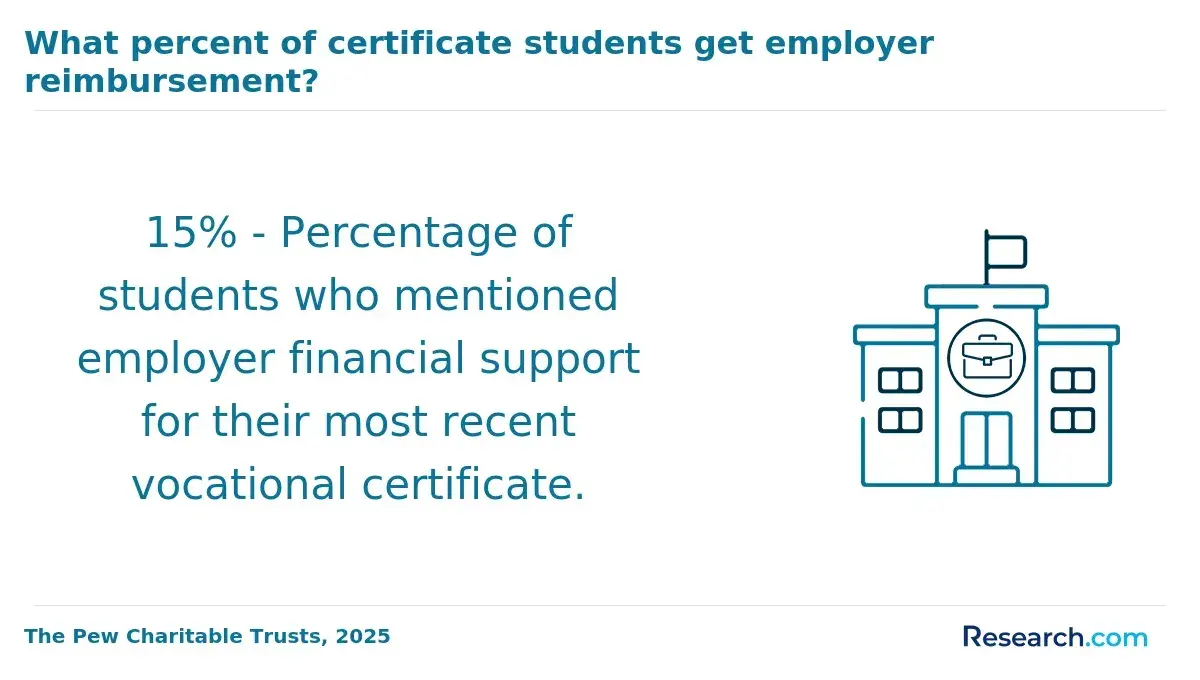
Most accredited online programs that participate in federal aid allow eligible students to use the FAFSA for grants, loans, and work-study. The maximum Federal Pell Grant for the 2024-25 award year is $7,395, which can materially reduce out-of-pocket cost for qualifying undergraduates. Employer tuition assistance may also help, especially for adults already working in retail, e-commerce, logistics, or corporate fashion environments.
When comparing costs, separate the sticker price from the net price. The list below shows the major cost items that working adults often overlook.
- Tuition per credit or per term, including whether online students pay in-state or special distance-learning rates
- Mandatory online learning, technology, graduation, proctoring, or student service fees
- Books, digital access codes, Adobe-style creative software, business analytics tools, or retail simulation platforms
- Lost income if internships, fieldwork, or accelerated course loads reduce your work availability
- Interest cost if you use loans and take longer to complete the degree part time
If affordability is your top constraint, compare accredited public universities, degree-completion programs, transfer-friendly schools, and employer-supported options before considering high-cost private programs. Adults researching future graduate study may also find broader cost-comparison strategies in guides to the most affordable online masters, even though fashion merchandising bachelor's pricing will differ by institution.
A practical ROI calculation should include your current income, expected career path, total debt, time to completion, and whether the program helps you build a portfolio, internship experience, or business analytics skills. Do not choose the cheapest option if it lacks accreditation, career services, or courses connected to the roles you want.
How Long Does It Take to Complete an Online Fashion Merchandising Degree, and Can Transfer Credits Help You Graduate Faster?
A bachelor's degree in fashion merchandising usually requires about 120 credits. Full-time students who take 12 to 15 credits per term may finish in about 4 years, while working adults taking 6 credits per term often need closer to 5 or 6 years. Associate degrees are shorter, and certificate programs may be useful for skill-building, but they do not replace a bachelor's degree for roles that prefer broader business preparation.
Transfer credit can be the biggest timeline advantage for adult learners. If you already completed general education, business, communication, or retail-related courses, a transfer-friendly online program may reduce both your cost and time to graduation.
The table below shows how enrollment pace and transfer credits can affect planning. These are typical planning ranges, not promises, because each school applies its own curriculum and residency rules.
| Student profile | Likely starting point | Common completion planning range | Key question to ask |
| First-time bachelor's student, full time | 0 credits | About 4 years | Can I handle multiple online courses each term? |
| First-time bachelor's student, part time | 0 credits | About 5 to 6 years or longer | Will required courses be offered often enough for part-time progress? |
| Transfer student with associate degree | Roughly half of bachelor's credits may be reviewed | Often about 2 to 3 years, depending on accepted credits | Will my associate degree satisfy general education requirements? |
| Adult learner with mixed prior credits | Varies by transcript evaluation | Depends on major fit and residency requirements | Which credits apply to the major, not just electives? |
| Self-paced student with prior knowledge | Varies by competency model | Potentially faster if assessments are completed quickly | Are there term limits, subscription fees, or assessment retake rules? |
Adults who want the fastest route should request an official or pre-admission transfer evaluation before enrolling. Do not rely on a verbal estimate from admissions if your decision depends on finishing quickly.
Fast completion can be attractive, but quality still matters. If you are comparing unusually accelerated education pathways, resources such as an associate degree in 6 months online free guide can help you understand how accelerated claims are evaluated; for fashion merchandising, however, a reputable bachelor's pathway still depends on accredited credits, major requirements, and realistic workload.
What Should You Look for When Comparing Accredited Online Fashion Merchandising Degree Programs?
The strongest online fashion merchandising program is not always the fastest or cheapest. It is the one that combines recognized accreditation, relevant coursework, realistic flexibility, transparent costs, career support, and proof that adult learners can complete the program without disrupting their lives unnecessarily.
Fashion merchandising is changing as e-commerce, social commerce, data analytics, AI-assisted trend analysis, and inventory automation influence buying and retail decisions. That does not mean you need to become a software engineer, but you should look for programs that teach digital retail tools, merchandising analytics, consumer insights, and ethical sourcing alongside fashion history and visual presentation. If you are curious about how AI is reshaping adjacent education and business fields, comparisons of the best online master's in artificial intelligence show how quickly data-driven skills are becoming part of professional education.
Use the checklist below to compare programs in a way that reflects real adult-learner constraints.
- Verify institutional accreditation through the accreditor, the school, or a recognized federal or CHEA database.
- Review the full curriculum and confirm it includes merchandising, retail math, buying, consumer behavior, branding, digital commerce, analytics, and business communication.
- Ask whether courses are asynchronous, synchronous, self-paced, hybrid, or mixed across the degree.
- Confirm how often required major courses are offered, especially if you plan to study part time.
- Request a written transfer-credit estimate before committing to enrollment.
- Compare net price after grants, scholarships, employer benefits, and transfer credits rather than tuition alone.
- Ask about internship alternatives if your job schedule prevents daytime field placements.
- Review career services, employer connections, portfolio support, and alumni outcomes where available.
Common mistakes can be expensive, especially for students balancing work and family responsibilities. Watch for these red flags before you sign an enrollment agreement.
- Assuming "online" means there are no live classes, group meetings, or weekly deadlines
- Choosing a self-paced program without checking maximum completion windows or instructor response times
- Ignoring whether transfer credits apply to major requirements or only count as electives
- Comparing tuition without adding fees, software, books, and possible internship-related costs
- Prioritizing speed over accreditation, curriculum quality, and career relevance
- Enrolling before confirming whether your state is authorized for the online program
What Career Opportunities and Salary Potential Can You Expect With a Fashion Merchandising Degree?
A fashion merchandising degree can prepare you for roles that connect products, customers, pricing, visual presentation, inventory, marketing, and sales performance. It is most useful for adults who want to move beyond frontline retail into buying, planning, brand coordination, e-commerce merchandising, showroom support, product development, or retail operations.
Salary potential varies widely by role, location, employer, experience, and whether the job sits in store operations, corporate retail, wholesale, luxury, apparel manufacturing, or e-commerce. BLS May 2024 wage data reports a median annual wage of $75,740 for buyers and purchasing agents across industries. That figure is not fashion-specific, but it gives a realistic benchmark for buying-related work that may overlap with merchandising career goals.
The table below connects common career paths to responsibilities and degree relevance.
| Career path | Typical responsibilities | How the degree may help | Important skills |
| Assistant buyer or buyer trainee | Support product selection, vendor communication, pricing, and sales review | Builds knowledge of retail math, trend analysis, and consumer behavior | Excel, negotiation, forecasting, product judgment |
| Merchandise planner | Analyze inventory, sales, margins, and seasonal demand | Connects merchandising decisions to business performance | Analytics, financial planning, allocation systems |
| Visual merchandiser | Create displays, store layouts, and brand presentation strategies | Combines aesthetic judgment with customer experience principles | Visual communication, styling, spatial planning |
| E-commerce merchandising specialist | Manage product pages, categorization, promotions, and online assortment | Supports digital retail and customer journey understanding | SEO basics, analytics, content management, product data |
| Retail store or district manager | Lead teams, sales goals, operations, and customer experience | Adds business and merchandising strategy to retail experience | Leadership, scheduling, loss prevention, sales analysis |
| Brand or product coordinator | Coordinate launches, samples, vendors, timelines, and marketing materials | Develops cross-functional communication and market awareness | Project management, communication, trend research |
This degree is not the best fit for everyone. If you want to design garments professionally, a fashion design program with studio work may be more appropriate. If you are pivoting into counseling, public service, or social support careers, alternatives such as MFT programs may align better with your goals than fashion merchandising.
The degree is most valuable when paired with experience. Adults already working in retail, sales, logistics, marketing, or customer service can often use class projects to demonstrate skills such as assortment planning, competitive analysis, product storytelling, and data-informed decision-making.
How Can Working Adults Balance a Fashion Merchandising Degree With Full-Time Work and Family Responsibilities?
Balancing an online fashion merchandising degree with adult responsibilities requires a realistic schedule, not just motivation. A common planning estimate is 8 to 12 hours per week for each 3-credit course, though project-heavy courses may require more time near deadlines. If you work full time, starting with one course can help you test the workload before adding more credits.
The most successful adult students usually treat coursework as a fixed appointment. Fashion merchandising assignments may include market research, trend boards, retail math exercises, presentations, group projects, and case analyses, so last-minute work can quickly become stressful.
Use the following steps to build a schedule that can survive busy workweeks and family obligations.
- Choose a target course load based on available weekly study hours, not on the fastest advertised timeline.
- Block two or three recurring study sessions each week and protect them like work meetings.
- Review every syllabus during the first week and mark major projects, exams, and group assignments.
- Tell instructors early if your job involves travel, rotating shifts, or unpredictable overtime.
- Use lunch breaks or commute-free mornings for reading, discussion posts, or short videos, but save projects for longer blocks.
- Build a backup week into your personal calendar for illness, childcare disruptions, or peak work seasons.
Part-time enrollment is not a sign of lower ambition. For many adults, it is the format that makes completion possible. The trade-off is a longer timeline, so ask whether the program allows continuous enrollment, summer courses, and temporary stop-outs without losing catalog rights or financial aid eligibility.
What Student Support Services and Online Learning Resources Should You Expect From a Fashion Merchandising Degree Program?
Strong student support can make the difference between enrolling and finishing. This is especially true for adults returning to school after years away from college, students transferring credits from multiple institutions, and learners who need help with online platforms, writing, math, or career planning.
Look for support that is available outside standard business hours, because working adults often study at night or on weekends. A program may be academically strong but still difficult to complete if advising, tutoring, or technical support is hard to reach.
The list below highlights services that are especially useful in an online fashion merchandising program.
- Dedicated academic advising for degree planning, course sequencing, and part-time enrollment decisions
- Transfer-credit counseling before enrollment and after official transcript review
- Online tutoring for writing, business math, retail calculations, spreadsheets, and presentations
- Library access to market research databases, fashion trend resources, business publications, and citation help
- Career services for resumes, interview preparation, internship searches, portfolio development, and employer networking
- Technical support during evenings or weekends, especially for learning platforms, proctoring tools, and software access
- Disability accommodations, military or veteran services, and adult-learner support where applicable
Support services also help you judge whether a school understands adult learners. If admissions responds quickly but academic advising is hard to reach, that may be a warning sign. Adults comparing broader online career-change pathways, including fields outside fashion such as a masters in human services, should apply the same support-services test before enrolling.
Do Online Fashion Merchandising Degree Programs Include Internships, Practicums, or Other Hands-On Learning Requirements?
Many online fashion merchandising programs include hands-on learning, but the format varies. Some require internships, while others use capstone projects, case studies, retail simulations, portfolio assignments, local field experiences, or employer-based projects. For working adults, the key issue is whether hands-on requirements can fit around an existing job.
Internships can be valuable because they help students build contacts and demonstrate experience, but they may be challenging for adults who cannot leave full-time employment. If you already work in retail, merchandising, marketing, logistics, or e-commerce, ask whether your current workplace can support an approved project or internship equivalent.
Before enrolling, clarify these hands-on learning details with the program director or advisor.
- Is an internship required, optional, or replaceable with a capstone or employer-based project?
- Can internships be completed locally, remotely, during evenings, or through a current employer?
- How many hours are required, and over how many weeks must they be completed?
- Does the school help students find placements, or is the student responsible for securing one?
- Are unpaid internships common, and how would that affect your work and income?
- What portfolio artifacts will you graduate with, such as buying plans, visual merchandising boards, market analyses, or e-commerce projects?
A good online program should be transparent about experiential requirements before you enroll. If hands-on learning is mandatory but the school cannot explain how online working adults complete it, keep comparing options.
Other Things You Should Know About Fashion Merchandising
Fashion merchandising is both, but it is usually more business-focused than fashion design. Students study products, customers, pricing, retail strategy, marketing, visual presentation, and inventory decisions rather than spending most of the program on garment construction.
No, but retail, sales, customer service, marketing, or inventory experience can help you understand coursework faster and build stronger career examples. Adults without experience should look for programs with internships, projects, or portfolio-building assignments.
Yes. Major fashion markets can offer more corporate opportunities, but e-commerce, regional retailers, brand offices, distribution centers, boutiques, and remote merchandising roles may exist in many areas. Location still affects salary, networking, and internship access.
Useful starter skills include spreadsheet basics, business writing, trend awareness, visual communication, customer analysis, and comfort with digital retail platforms. If math has been a weakness, review percentages, margins, markups, and basic data interpretation before taking retail buying or planning courses.
References
- Fashion Merchandising and Management Programs https://berkeleycollege.edu/academics/undergraduate-degrees/fashion-merchandising-management/index.html
- Top 5 Fashion Career Opportunities after Graduation https://www.lcca.ac.uk/blog/fashion/top-5-fashion-career-opportunities-after-graduation/
- Online, Hybrid, and More: Flexible Learning Options in College - ReUp Education https://reupeducation.com/blog/online-hybrid-and-more-flexible-learning-options-in-college/
- Study Online - Distance Learning https://www.ifaparis.com/study-online-distance-learning
- Careers in Fashion Merchandising https://www.limcollege.edu/careers-internships/career-pathways/careers-fashion-merchandising
- Vogue Retail Design & Visual Merchandising: Fashion & Luxury | Vogue College of Fashion https://www.voguecollege.com/courses/retail-design-visual-merchandising-fashion-luxury/
- Balancing Work, Family, And Online Study | Catholic International University https://catholiciu.edu/balancing-work-family-and-online-study-time-management-for-adult-learners/
- Meeting the Needs of Adult Students | Insight Into Academia https://insightintoacademia.com/meeting-the-needs-of-adult-students/