2027 Pepperdine University Review for Online Students: Tuition, Programs, and Admissions

Co-Founder and Chief Data Scientist
Choosing an online program involves more than course listings and schedule flexibility. Many prospective students face uncertainty about how programs align with job market demands and whether the credential holds weight among employers. Recent studies show that over 60% of online learners prioritize institutions with clear career support, reflecting increased scrutiny on return on investment in education.
Pepperdine University offers a range of online programs, but questions remain about tuition costs, admissions selectivity, and the real experience of remote students. Analyzing these factors helps determine if Pepperdine meets practical expectations. This article breaks down tuition, program options, admissions criteria, and student culture to help you decide if Pepperdine University suits your long-term academic and professional goals.
Key Points About Pepperdine University Online Programs
- Admission to Pepperdine University's online programs is moderately selective, requiring strong academic preparation; this level balances accessibility with maintaining cohort quality, influencing peer interaction and networking potential.
- The total tuition cost of $95,012 represents a substantial investment, necessitating careful evaluation of long-term return on investment relative to industry recognition and salary trajectories in targeted fields.
- Online student life offers essential academic support but limited campus engagement, demanding self-driven participation and external networking to leverage career advancement opportunities effectively over time.
What is the academic reputation of Pepperdine University?
Pepperdine University is recognized for its values-based education and leadership focus, especially through its Graziadio Business School. The business school emphasizes practical management skills aligned with market demands, which can support employability for online learners. This approach benefits students targeting roles where ethical leadership and communication matter more than pure research pedigree.
Employers generally view Pepperdine degrees favorably, particularly in sectors prioritizing interpersonal skills and applied knowledge. However, the prestige of its online programs may not carry the same weight as traditional on-campus credentials in highly competitive industries.
A 2024 survey by the National Association of Colleges and Employers found that 68.3% of employers consider online degrees from regionally accredited schools credible, yet practical experience remains a stronger hiring factor. Prospective online students should weigh this carefully when evaluating Pepperdine's fit for their career goals.
Students report strong faculty engagement and flexible learning, but some note limited networking compared to in-person cohorts. Pepperdine's reputation lends itself better to careers valuing applied ethics and leadership, making it less suitable for research-intensive or highly specialized fields.
Are online programs at Pepperdine University accredited?
Pepperdine University holds accreditation from the Western Association of Schools and Colleges Senior College and University Commission. This regional accreditation encompasses all academic programs, including online offerings in business, education, and psychology. Such accreditation ensures these programs meet rigorous standards critical for academic credibility and employer recognition.
For an online student pursuing a degree in psychology, this accreditation signals that the program adheres to established professional and academic criteria. Employers often view accredited degrees as reliable indicators of knowledge and skill. A 2024 report from the National Student Clearinghouse found 37% of online students prioritize accreditation when selecting a program, underscoring its growing importance in the hiring process.
However, accreditation alone does not guarantee favorable employment outcomes or seamless transfer to advanced degrees. Prospective students must also assess whether Pepperdine's online programs provide practical experiences and career support aligned with their professional goals. These factors more directly affect job market readiness and long-term success beyond accreditation status.
Students should consult Pepperdine University's official resources for the latest accreditation updates on specific programs. Accreditation agencies periodically review standards, so staying informed helps ensure enrollment in programs that maintain recognized quality essential for both career and academic pathways.
What are the top online programs at Pepperdine University?
The top online undergraduate programs at Pepperdine University prioritize a balance between academic rigor and practical application, designed for adult learners managing work-life commitments. These programs cover core disciplines in business, psychology, communication, human resources, and interdisciplinary studies.
Below are the key offerings with a brief overview of their focus and typical learning format:
- Business Administration: This program emphasizes organizational management and financial analysis, preparing students for roles requiring strategic decision-making. Classes combine synchronous sessions for real-time interaction with asynchronous materials to allow schedule flexibility.
- Psychology: Focused on behavioral science and research methods, this degree develops critical thinking and analytical skills needed in mental health and social services. It uses a mix of live discussions and self-paced coursework to reinforce student engagement.
- Communication: Blending media studies with interpersonal communication, this program suits students targeting careers in public relations, marketing, or corporate communication. The curriculum includes frequent synchronous interaction to foster practical communication skills.
- Human Resources Management: Covering workforce planning and labor relations, this program addresses contemporary HR challenges and compliance issues. The learning modality incorporates live case studies and flexible online materials to fit various schedules.
- Liberal Studies: Designed as a flexible interdisciplinary curriculum, this degree supports students needing a customizable education track. It leverages asynchronous content heavily, with occasional synchronous sessions for collaborative projects.
The delivery of these programs leans toward synchronous classes to encourage engagement and retention. This approach aligns with a 2024 study by the National Center for Education Statistics, which found that 59.3% of online undergraduate students prefer mixed course formats, reporting better motivation and outcomes. Such preferences matter when evaluating Pepperdine's program structures and their fit for diverse learning styles and professional objectives.
While Pepperdine's smaller selection of online undergraduate degrees may limit specialized depth, the programs aim to develop essential skills like communication, critical thinking, and leadership applicable across industries. Prospective students should weigh these offerings against other options, including considering regional availability of affordable options, as noted in resources like cheapest online colleges that accept FAFSA near me.
The choice to enroll in any of Pepperdine University's online programs should take into account not only academic content but also the format's alignment with personal schedules and employer expectations for applied learning and interactive engagement.
Does Pepperdine University offer online graduate degrees and professional certifications?
Pepperdine University provides online graduate degree programs and professional certifications designed for working adults who require flexible scheduling. A typical professional balancing a full-time job and family might appreciate the mix of asynchronous coursework and live seminars that facilitate both independent study and real-time interaction.
Students considering these offerings should evaluate how the program's delivery mode and faculty engagement meet their mentorship and networking needs, as these factors greatly influence long-term career impact.
The following highlights five notable online options available at Pepperdine University:
- Master of Business Administration (MBA): This program emphasizes leadership and strategic decision-making. Its primary asynchronous coursework is supplemented by scheduled live seminars to enhance peer interaction and practical application.
- Master of Public Policy: Focused on data analysis and governance, this degree balances flexible schedules with opportunities for problem-solving in policy contexts.
- Master of Arts in Psychology: Covers counseling techniques and research methods with a curriculum designed to develop applicable skills for mental health professions.
- Doctor of Education (EdD) in Organizational Leadership: Centers on change management with mostly asynchronous instruction, supported by live seminars to discuss leadership challenges and solutions in real time.
- Certificate in Project Management: Designed to build expertise in planning and execution frameworks, this program leans heavily on synchronous sessions, fostering collaboration and immediate feedback.
Online graduate degree programs at Pepperdine University blend synchronous and asynchronous formats to meet adult learners' diverse preferences. According to the National Center for Education Statistics, over 60% of graduate students prefer hybrid or flexible online formats to balance education with other commitments.
This underscores the importance of adaptable program structures that do not sacrifice learning quality while providing accessibility. Prospective students should also consider exploring an accelerated bachelor's degree pathway if seeking a pathway with potentially faster completion times before pursuing graduate credentials.
Ultimately, Pepperdine's professional certifications offered by Pepperdine University online and graduate programs reflect a practical, career-aligned approach. Their designs emphasize applied knowledge over theory, aiming to enhance employability in competitive fields. However, the decision to enroll must weigh the quality of faculty interaction and program specificity against personal career objectives and networking expectations.
What are the admission requirements for online programs at Pepperdine University?
Admission to Pepperdine University's online programs reflects a balanced level of selectivity, with an acceptance rate of about 50%. This indicates that while candidates face competition, the process is not prohibitively exclusive, allowing a diverse range of students with solid academic credentials to apply. The university deliberately avoids an open admission approach, requiring careful documentation to demonstrate academic readiness.
For example, a prospective student transitioning from a community college should prepare to provide detailed academic records and recommendations rather than assume automatic entry based on prior credits alone.
The admissions challenge lies in meeting traditional academic benchmarks rather than non-traditional or experiential criteria. Current employment trends show that employers increasingly value demonstrable academic rigor and related competencies in online credentials.
Research from the National Center for Education Statistics underscores that degrees with clear academic standards remain well-regarded in recruiting pools, which aligns with Pepperdine's insistence on conventional documentation and evaluation.
Below are key admission requirements prospective online students can expect. These elements help maintain academic integrity and prepare candidates for the university's curriculum rigor:
- Secondary School Diploma or GED: Applicants must hold a high school diploma or GED certificate to enter the program. This foundational credential confirms baseline academic skills necessary for college-level work.
- Submission of Transcripts and GPA: Official secondary school transcripts and GPA must be provided. This data helps evaluators assess previous academic performance and readiness for rigorous coursework.
- Recommendations: Letters of recommendation are required to demonstrate personal qualities and academic potential, providing evaluators with insight beyond grades.
- Standardized Test Scores: SAT or ACT scores are part of the review, with SAT verbal typically ranging from 630 to 710 and math from 620 to 740, while ACT scores fall between 26 and 32. These scores serve as a benchmark of academic aptitude but are supplemented by other assessments when necessary.
- English Language Proficiency: International students or applicants whose primary language is not English must submit TOEFL scores. This ensures that language barriers do not hinder academic performance.
- Advanced Placement Credits: AP credits are accepted, allowing some students to demonstrate college-level mastery in specific subjects and potentially reduce their course load.
- Computer Access: Ownership of a computer is not mandatory; however, Pepperdine offers purchase or lease options to support students' hardware needs, acknowledging the digital demands of online learning.
Is it difficult to transfer to an online program at Pepperdine University?
Transferring to an online program at Pepperdine University is moderately competitive but not prohibitive. The university typically accepts transfer credits based on course equivalencies, which reduces friction. However, acceptance involves careful evaluation of academic readiness rather than a simple acceptance rate, so applicants with closely aligned prior coursework have better chances.
Students must prepare detailed transcripts and documentation of prior learning. Pepperdine relies on established evaluations such as ACE recommendations, CLEP, and DSST exams to assess credit transfers. Transfer windows occur during Fall and Spring semesters, which requires timely application submission to avoid delays in enrollment.
To ease the process, prospective students should proactively review their previous courses against Pepperdine's curriculum. Early communication with admissions advisors helps clarify credit applicability and reduce surprises. Leveraging CLEP or DSST exams beforehand can increase accepted credits and shorten time to degree completion.
Nearly 40% of online students identify transfer flexibility as crucial when selecting programs, according to a study by the National Center for Education Statistics. This trend highlights the practical importance of Pepperdine's structured credit acceptance policies for those balancing prior education and new academic goals.
One recent graduate recalled, "I transferred from a state university where my credits weren't all straightforward matches. The evaluation took time, and I hesitated to apply because I wasn't sure how much I'd get accepted. After working closely with an advisor, I used DSST exams to supplement credits. It was challenging balancing the timing, but ultimately the process felt manageable with the right guidance."
How much does it cost to study an online program at Pepperdine University?
The cost to study online at Pepperdine University is aligned closely with its on-campus tuition, with base tuition and fees totaling $66,742 annually. When including books and supplies, the expected additional cost is about $1,000. The full cost of attendance, accounting for room, board, and other expenses, can reach $95,012, though remote students usually avoid housing costs, potentially lowering their actual expenses.
Pepperdine University online tuition and fees breakdown shows there is no specific online tuition discount or flat-rate in-state tuition for remote students. The pricing remains consistent regardless of program-specific requirements since no additional fees for technology or remote studies are publicly disclosed. This fixed tuition approach means that potential students must consider all costs carefully before enrolling.
Financial aid helps offset Pepperdine's premium tuition. With 92% of students receiving awards averaging $35,221, net costs can be substantially reduced for qualifying learners. Rising education costs have shifted enrollment decisions nationwide, making it critical to balance tuition against long-term employability and earnings potential, especially in fields with growing demand.
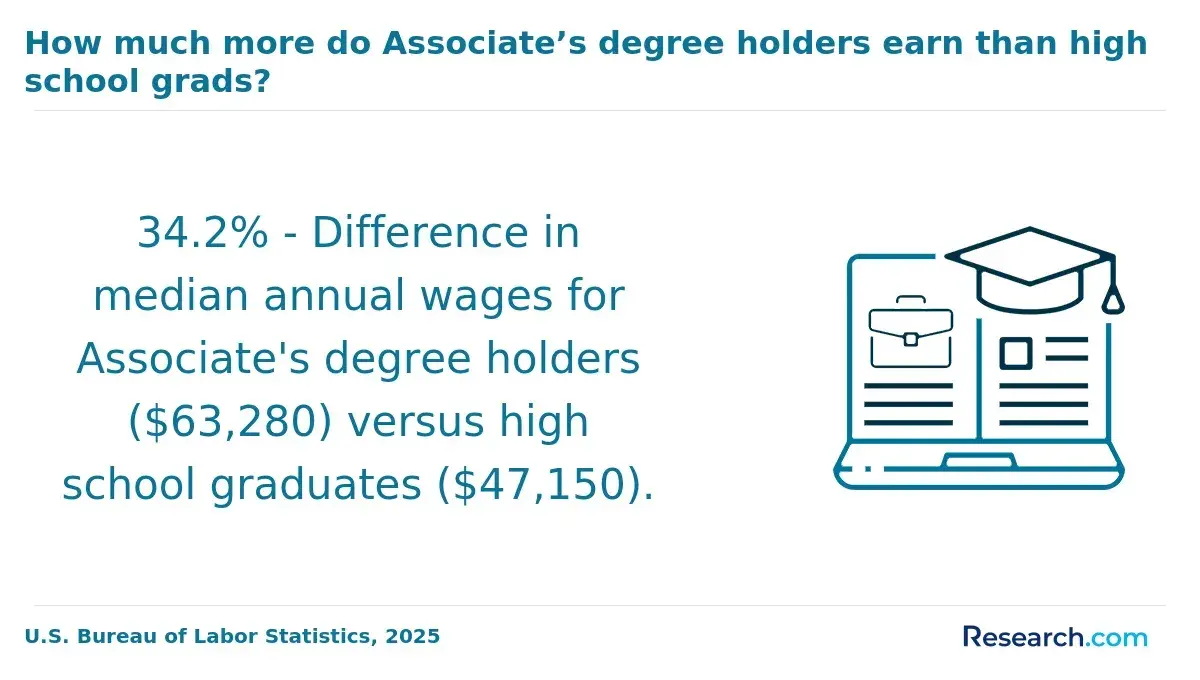
For prospective students weighing Pepperdine's cost against alternatives, exploring options like easy associate degrees that pay well may provide accessible pathways. Evaluating career goals alongside tuition commitment helps determine if Pepperdine's academic resources justify its pricing in the competitive landscape of online education.
What is the online student experience like at Pepperdine University
Studying at Pepperdine University as an online student requires strong self-discipline and the ability to manage motivation without the direct structure of in-person classes. The university offers a suite of digital tools designed to simulate campus engagement and support academic success.
These include interactive forums, live events, and comprehensive digital libraries. Such resources help mitigate the isolation common in remote study but cannot fully replace informal networking or hands-on experiences that occur naturally on campus.
For example, an online business student may find access to faculty webinars valuable for nuanced discussions but miss the spontaneous problem-solving collaborations typical in a physical cohort.
Below are key resources and experiences that shape the online student journey at Pepperdine University:
- Official Student Forums: These platforms foster peer-to-peer interaction and enable students to seek advice, share insights, and form study groups asynchronously. They benefit learners by creating a virtual community that supports academic engagement without geographic constraints.
- Live Online Events: Scheduled webinars and interactive sessions with faculty provide real-time opportunities to clarify complex topics and engage in discussions that mimic classroom dynamics, enhancing comprehension and connection.
- Extensive Digital Libraries: Access to a wealth of scholarly articles, e-books, and research databases equips students with essential academic resources, helping develop critical research skills necessary for advanced study and professional work.
- Flexible Scheduling: The asynchronous nature of most online courses allows students to tailor their study time around work and family obligations, a key advantage for non-traditional learners balancing multiple responsibilities.
- Faculty Accessibility: Although primarily virtual, instructors remain reachable through email and scheduled office hours, providing personalized academic support that encourages persistence and understanding.
- Limited Experiential Learning: While some disciplines require in-person practicums or workshops, the limited availability of these opportunities online can challenge students whose fields depend heavily on hands-on skills and real-world practice.
- Networking Constraints: Without informal campus interactions, building professional contacts can be more challenging, requiring intentional effort through digital platforms and external events to cultivate relationships valuable for career advancement.
National data indicate that 58% of online students struggle to maintain motivation throughout their programs, contributing to higher dropout rates versus traditional formats. This reflects the necessity for prospective Pepperdine online learners to proactively cultivate discipline and engagement strategies to succeed academically and professionally.
One graduate recalled the challenge of managing coursework alongside a full-time job and family: "I often felt the pressure of keeping up without in-person accountability. The student forums were my main outlet to discuss ideas and stay connected. Still, the lack of casual chats and immediate feedback sometimes made me question if I was on the right track. It wasn't until I prioritized weekly live events that I gained more confidence and clarity. Those moments shaped how I approached projects and interviews later on."
This experience underscores the demanding nature of online study at Pepperdine and the importance of using available resources intentionally to replicate the depth of learning found on campus.
What is the employment outlook like for Pepperdine University online degree graduates?
Finding employment after earning a Pepperdine University online degree is generally achievable but varies by sector and role. About 87% of graduates secure jobs within six months, a rate slightly above the national average for online degree holders.
For instance, a graduate completing an online master's in counseling might face tougher licensing requirements but can leverage internship experiences to improve hiring chances. Graduates typically find opportunities across several industries, each with distinct hiring criteria and expectations.
Below are common employment sectors for Pepperdine University online alumni.
- Business Management: Graduates often become project managers, business analysts, or operations coordinators, where emphasis is placed on leadership skills and strategic thinking rather than solely degree format.
- Counseling and Psychology: Roles such as licensed counselors or mental health practitioners require professional certification and supervised experience, making licensure a critical factor in employment.
- Education: Graduates may serve as education coordinators or administrators, though some positions demand state certification and practical classroom involvement.
- Technology: IT specialists and software developers are common roles, where demonstrable technical skills usually outweigh the modality of degree attainment.
- Nonprofit and Community Services: Positions like program managers or outreach coordinators are available and often value relevant experience alongside a degree.
- Health Services Administration: Graduates can enter management roles in healthcare settings, benefiting from knowledge of healthcare regulations and organizational practices.
- Marketing and Communications: Job roles include digital marketing coordinators and communications specialists who show proficiency in current technologies and strategies.
Employer acceptance of online degrees has increased, with 78% of recruiters now viewing these credentials as credible when paired with practical skills and internships per a 2024 survey by the National Association of Colleges and Employers. Such realism about the job market helps clarify how Pepperdine University online degree graduate employment rates fit within broader U.S. employment trends.
Students should remain proactive in building skills and networks to navigate competitive professional environments effectively. For those weighing the value of online education paths, exploring graduate degrees that are worth it offers additional context on where demand is strongest.
Do Pepperdine University online degree graduates have a good salary outlook?
Pepperdine University online degree graduates show varied salary outcomes depending on their field, impacting the practical value of these credentials. The median alumni salary is $82,939, higher than the U.S. median wage of about $58,260, illustrating potential for strong earning power. For example, a graduate with an online degree in Business Administration may enter management roles earning around $53,559 initially.
Salary shifts significantly across departments. Accounting graduates earn approximately $59,350, while Communications fields like Public Relations see $46,780 median salaries. Lower wages in majors such as Biology and Drama, near $22,639 and $23,856 respectively, highlight the financial tradeoffs for students prioritizing arts or science-based online programs.
These differences suggest students weighing Pepperdine University online degree salary statistics should assess alignment with career goals carefully. Industries recruiting alumni from business and media sectors offer lucrative paths, but success depends on factors including experience and networking. This nuanced outlook affects long-term return on investment.
For adult learners balancing career and study, exploring accelerated bachelors degree programs for adults offers additional options to improve earning potential efficiently. Understanding these employment outcomes is key for prospective students considering Pepperdine University's online offerings.
What Graduates Say About Pepperdine University
- Christopher: "Choosing to study online through Pepperdine University was a strategic decision for me to balance full-time work while expanding my qualifications. The program's flexibility allowed me to stay committed without sacrificing my job performance. After graduation, I noticed how employers in my field valued my degree, but equally prioritized the projects and internships I completed alongside the coursework-those hands-on experiences from the program were crucial in differentiating me during hiring."
- Fatima: "My experience with Pepperdine University's online program was defined by practicality. The curriculum was rigorous but designed to fit around my busy schedule as a working professional. Entering the workforce after graduation, I found that although the online degree opened doors, advancement often hinged more on certifications and networking than just the diploma. Ultimately, the degree helped me pivot into management, but I had to proactively build credentials beyond the classroom to move up."
- Patrick: "For me, finishing an online degree at Pepperdine University was about accelerating entry into a new career path without leaving my current responsibilities behind. The program demanded a high level of self-discipline, but it felt relevant and immediately applicable. Employers recognized the reputation of Pepperdine University, which gave me credibility, but I also realized salary progression in my industry can plateau without supplementary experience or additional skills. This pushed me to seek out internships and mentorship post-graduation."
Other Things You Should Know About Pepperdine University Degrees
Pepperdine University online programs primarily use accelerated eight-week terms rather than traditional semester schedules. This setup can offer faster completion but demands consistent weekly time commitments, which may challenge students with unpredictable or very busy work hours. Prospective students who must prioritize flexibility should expect less leeway in pacing compared to self-paced programs and may need to arrange stable blocks of time weekly to keep up with coursework effectively.
The online programs often enroll students in cohorts that progress together, fostering structured peer interaction but limiting the diversity of networking beyond the cohort. While this design supports community building within a smaller group, it also constrains exposure to a broader alumni base. Students aiming to maximize professional networking should weigh the benefits of tight-knit cohorts against the narrower industry and geographic diversity accessible through this format.
Many of Pepperdine's online degrees are concentrated in business, education, and psychology fields, which align better with roles that emphasize leadership, management, or counseling skills. However, the absence of technical or STEM-focused online programs may limit direct entry into highly specialized or technical professions. Candidates with career goals in technology, engineering, or scientific research may need to consider if Pepperdine's offerings match their targeted skills and industry requirements.
For successful participation in Pepperdine University's 2027 online programs, students need reliable internet access, a modern computer, and proficiency in digital tools like video conferencing and learning management systems. Familiarity with these technologies is crucial for effective engagement and academic success.
References
- Pepperdine University https://onlinecounselingprograms.com/school-profiles/pepperdine-university/
- Pepperdine University Tuition and Fees | SoFi https://www.sofi.com/pepperdine-university-tuition-and-fees/
- Buy Master Degree from The Pepperdine University https://www.buydiplomonline.net/shop/united-states-of-america-universities/pepperdine-university/master-degree-pepperdine-university/buy-master-degree-from-the-pepperdine-university/
- It’s Graduation Season. What’s the Job Outlook Like? https://www.herzing.edu/blog/its-graduation-season-whats-job-outlook
- 2U Expands Partnership with Pepperdine University to Launch Six Online Degree Programs • EdTech Chronicle https://edtechchronicle.com/2u-expands-partnership-with-pepperdine-university-to-launch-six-online-degree-programs/
- Transfers face daily struggles unseen - Pepperdine Graphic https://pepperdine-graphic.com/transfers-face-daily-struggles-unseen/
- Pepperdine University https://www.chea.org/pepperdine-university
- 10 Fun Facts about Pepperdine University | AdmitSee https://www.admitsee.com/blog/10-fun-facts-about-pepperdine-university
- Pepperdine Requirements for Admission https://www.prepscholar.com/sat/s/colleges/Pepperdine-admission-requirements
- Pepperdine University Online Master's Degrees in Counseling https://www.counselingschools.com/profiles/pepperdine-university