2027 How Hard Is It to Get Into Florida Institute of Technology Online Programs?

Co-Founder and Chief Data Scientist
Imagine a working professional juggling multiple responsibilities while trying to decide if the Florida Institute of Technology online programs offer a realistic path to career growth. The demand for flexible online degrees has surged, with recent data showing a 15% increase in applications nationwide, pushing many programs to tighten admission standards. This means meeting minimum requirements alone may not guarantee acceptance, as admissions committees weigh academic history, test scores, and relevant experience more closely.
Admission to Florida Institute of Technology online programs is competitive but not prohibitive for well-prepared candidates. Understanding how selection decisions balance applicant qualifications against program capacities reveals practical strategies to strengthen applications. This article analyzes those dynamics and guides prospective students through admission requirements, competitiveness, and effective ways to improve their chances of acceptance.
Key Points About Admission Difficulty at Florida Institute of Technology Online Programs
- The 63% acceptance rate at Florida Institute of Technology online programs reflects moderate competitiveness, requiring applicants to meet defined standards but not facing high rejection risks typical of highly selective universities.
- Out of 15,205 applicants, about 9,579 admissions show the process filters candidates based on criteria beyond minimum qualifications, which suggests a need for applicants to demonstrate relevant credentials and preparedness.
- Admission chances improve with aligned academic background and application completeness, while insufficient qualifications limit entry, making strategic preparation crucial for applicants targeting these online programs.
How competitive is admission to Florida Institute of Technology's online programs?
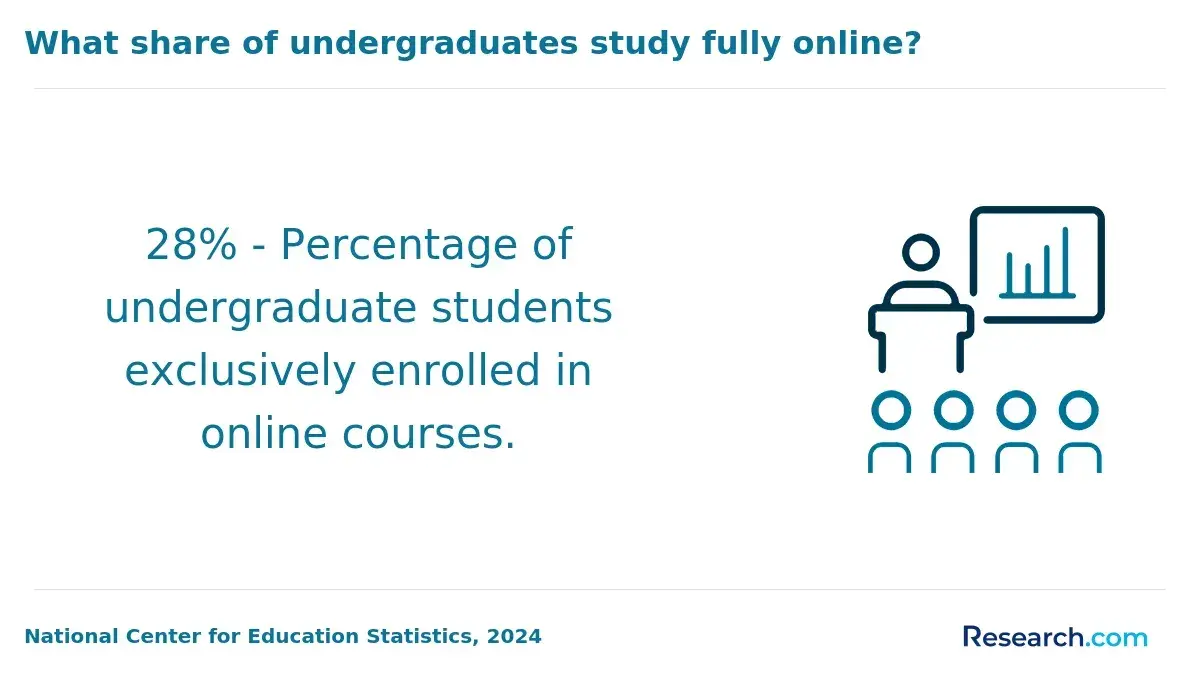
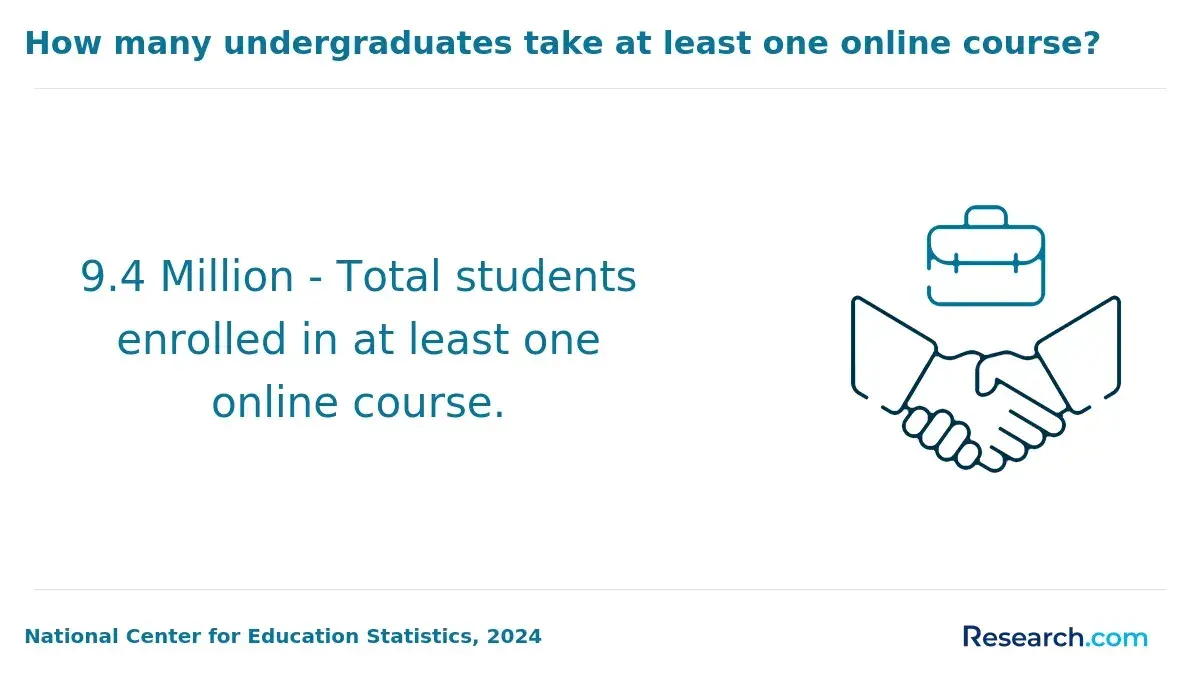
Admission to Florida Institute of Technology online programs reflects moderate competitiveness, with a 63% acceptance rate from 15,205 applicants. This indicates a selective but accessible process where the majority of candidates with consistent academic backgrounds gain admission. Unlike highly restrictive programs, Florida Tech balances quality standards with expanding access, a pattern confirmed by a 2024 National Center for Education Statistics study.
This study links growth in online enrollment to more inclusive admissions strategies designed to serve broader populations, suggesting the school's approach fits current postsecondary trends. Admission selectivity at Florida Institute of Technology also depends on program-specific requirements such as prerequisite coursework, GPA thresholds, and demonstrated professional experience.
For example, technologically intensive programs may expect stronger quantitative skills, while others might emphasize prior industry exposure. Such criteria shape the applicant pool and influence practical admission chances beyond the headline acceptance rate. Prospective students should assess their fit by aligning qualifications with these standards and understanding employer expectations for credentials.
Preparing a carefully tailored application addressing relevant experiences and academic readiness improves outcomes. Candidates often weigh admission feasibility alongside long-term career impact, as employer recognition and skill applicability frequently outweigh simple acceptance metrics in evaluating program value.
What academic credentials do successful applicants typically have?
Admission to Florida Institute of Technology online programs requires a balance of solid academic credentials rather than exceptional test scores. For example, an applicant with consistent GPA performance and prerequisite coursework in math and science stands a stronger chance than one relying solely on standardized scores.
This practical approach suits students prepared for technical fields where foundational knowledge matters most. Academic readiness linked to competitive benchmarks reflects in trends showing admitted candidates usually have GPA upwards of 3.0, aligning with expectations to manage rigorous online content effectively.
The following characteristics illustrate the typical academic profile of successful applicants.
- High School Diploma or GED: Completion of secondary education with documented GPA is mandatory, serving as the basic proof of academic preparation and allowing the institution to assess consistency in academic performance.
- SAT and ACT Scores: Test results within 570-660 (verbal) and 560-660 (math) or ACT scores between 23-28 provide a moderately competitive signal, reflecting a stable academic track record for typical Florida Institute of Technology online applicants.
- TOEFL for Non-Native Speakers: Demonstrating English proficiency ensures students can handle coursework. This requirement directly impacts success in understanding and engaging with complex material.
- Advanced Placement Credits: AP credits are accepted to showcase college-level competency, providing an edge to applicants who have completed rigorous preparatory coursework and reducing future credit load.
- No Open Admission Policy: This selectivity emphasizes the need for academic readiness rather than allowing automatic acceptance, ensuring a baseline quality of admitted students relevant to online program demands.
- Coursework in Math and Science: Foundational classes related to the intended field improve competitive standing, as confirmed by studies showing admitted students typically complete these courses prior to enrollment.
- Standardized Testing is Recommended but Flexible: While tests like Wonderlic or WISC-III may be suggested, they are not required, allowing applicants to focus more on traditional academic credentials that better predict success in this setting.
Despite the need for strong academic preparation, Florida Tech online applicants should consider practical affordability and program selection carefully. For those exploring financially viable options, reviewing lists of affordable online PhD programs can provide strategic insight into balancing cost and quality when planning advanced study.
What admissions requirements matter most beyond GPA?
Admission to Florida Institute of Technology online programs extends beyond mere GPA metrics, combining several factors that assess both academic foundation and cognitive skills. Applicants must demonstrate readiness through standardized tests and language proficiency, reflecting the rigor of these programs and their emphasis on critical thinking. For instance, a prospective STEM student whose GPA is solid but lacks strong SAT or ACT scores may face challenges in admission given the holistic evaluation approach.
The admissions process inherently values measurable academic potential and cognitive ability to predict success in complex technical fields. The following factors shape applicant competitiveness beyond GPA:
- High School Completion or GED: Prospective students must present a high school diploma or GED certificate as a baseline academic qualification. This requirement ensures foundational educational attainment necessary for the curriculum's demands.
- Standardized Test Scores: Submission of SAT or ACT scores is mandatory, providing a standardized benchmark that complements the GPA. Strong scores reflect aptitude in core academic areas and enhance admission chances.
- English Proficiency Tests: Non-native English speakers must submit TOEFL scores, verifying language skills crucial for comprehending course material in an entirely online environment.
- Advanced Placement Credits: Florida Institute of Technology accepts AP credits, allowing applicants to leverage prior academic achievements. This flexibility can strengthen an application by showcasing mastery of college-level content.
- Cognitive Assessments: Although not always required, recommended examinations like Wonderlic or WISC-III help evaluate critical thinking and problem-solving capabilities. These tests add depth to the admissions review, emphasizing qualities beyond GPA.
Recent findings from the National Association for College Admission Counseling support this multifaceted admissions approach. Over 60% of institutions prioritize cognitive test outcomes and competencies when reviewing online STEM program applicants, which parallels Florida Institute of Technology's selective criteria.
Applicants should consider these dimensions carefully when assessing their fit and readiness for admission to Florida Institute of Technology online courses. Applicants researching pathways to advanced degrees should explore options such as an accelerated bachelor's degree online accredited, which can offer streamlined routes while ensuring academic rigor.
Are online Florida Institute of Technology programs easier to get into than campus-based programs?
Acceptance rates for Florida Institute of Technology's online and campus-based programs align closely, both near 68%, reflecting consistent admissions criteria. Applicants face similar requirements, including academic transcripts and standardized test scores when applicable, regardless of program format. These parallels indicate no general ease in entering online courses compared to traditional on-campus ones.
Admissions standards can shift depending on the program's focus and applicant pool. For example, engineering and aerospace degrees maintain rigorous benchmarks across both modes due to industry expectations, while some business programs might show slight variance in selectivity tied to demand and cohort size. Nonetheless, the university does not relax criteria for online applicants simply based on delivery method.
This parity in selectivity ensures degrees retain equivalent credibility for employers, who often scrutinize online credentials with increased rigor. Prospective students should assess their credentials, readiness, and career goals rather than presume online enrollment offers a competitive shortcut. The uniform acceptance rate signals that strong applications remain crucial across all delivery types.
Research from the National Center for Education Statistics shows that identical acceptance rates for online and campus programs are uncommon, highlighting Florida Institute of Technology's unique approach. This consistency matters because it protects degree value and prepares candidates for comparable academic challenge irrespective of format.
How do admissions standards vary across different Florida Institute of Technology online programs?
Admissions standards at Florida Institute of Technology online programs vary because of differences in academic discipline demands, professional licensure prerequisites, and program competitiveness driven by applicant volume. Programs aligned with technical fields or healthcare often require stricter prerequisites due to regulatory or professional standards.
Meanwhile, programs focused on professional development may emphasize relevant work experience more than undergraduate credits. These factors result in a selectivity spectrum that is not uniform but tailored to the skills and backgrounds expected from entering students.
The following points highlight how admissions standards fluctuate across specific online degree programs.
- Undergraduate Degree Completion: Acceptance rates hover around 72%, reflecting more lenient standards that prioritize previous college credit accumulation and a minimum GPA near 2.0 to 2.5. Admission is generally accessible for returning students without recent academic activity, making it the least selective option.
- Master of Science in Engineering Management: Requires a bachelor's degree in engineering or a closely related field with a GPA close to 3.0. This program seeks applicants who demonstrate a practical understanding of engineering principles and management experience, leading to higher standards than undergraduate options.
- Master of Science in Cybersecurity: Often demands prerequisite coursework in IT and a minimum 3.0 GPA. Some level of relevant professional experience is preferred to ensure candidates can handle advanced technical content and real-world security scenarios.
- Doctorate in Systems Engineering: Admission policies demand a master's degree with a 3.25+ GPA, research experience, and a clear plan for contributions to academia or industry innovation. This selectivity stems from the program's focus on producing research leaders and specialists in systems design and integration.
- Doctorate in Clinical Psychology: Candidates must present graduate-level academic excellence, documented practicum or internship experience, and detailed career objectives that meet licensure expectations. The program's stringent requirements reflect regulatory, ethical, and clinical training demands unique to mental health professions.
- Master of Business Administration (MBA): While a bachelor's degree is required, admissions also emphasize managerial experience and leadership potential over high GPA thresholds. This practical orientation suits applicants aiming to leverage the program for career advancement in diverse industries.
- Master of Science in Applied Behavior Analysis: Students must meet specific coursework thresholds and demonstrate familiarity with behavioral intervention methods. The selectivity reflects certification and licensure pathways that govern professional practice post-graduation.
For applicants evaluating online tuition costs at Florida Institute of Technology alongside admissions competitiveness, understanding these distinctions helps allocate effort toward the most realistic program fit. Additionally, Florida Institute of Technology online program affordability compared to campus offerings can influence decisions, especially when professional work experience supplements academic credentials. Prospective students should also consider pathways like quick certifications that pay well to complement or bridge gaps ahead of applying to highly selective online programs.
How do transfer credits and prior experience affect admission chances?
Transfer credits and prior experience can decisively influence admission chances for Florida Institute of Technology's online programs, but their effect depends on careful alignment with program requirements. Admitting transfer students involves evaluating both the volume and relevance of previously earned credits or professional credentials.
While Florida Tech maintains an average transfer difficulty, strategic presentation of prior learning can shorten degree timelines and reduce tuition costs, impacting practical outcomes beyond admission. Notably, a 2024 national study found that institutions recognizing professional and prior learning credits report 18% higher completion rates among nontraditional students, signaling that such recognition provides both access and momentum.
Below are key types of transfer credits and prior learning that often shape admissions decisions at Florida Institute of Technology.
- American Council on Education (ACE) Recommended Credits: These credits come from various military, corporate, or educational training programs endorsed by ACE. Applicants can submit ACE evaluations to validate workforce training, which helps Florida Tech assess equivalency to college courses, enhancing admission prospects especially for adult learners.
- CLEP Subject and General Exams: Exam scores from CLEP tests document knowledge in specific subject areas. Florida Tech accepts these as credit, allowing applicants to demonstrate mastery of foundational subjects and possibly bypass entry-level courses, making acceptance and progression smoother.
- DSST/DANTES Testing: Military-affiliated exams such as DSST or DANTES provide documented proof of college-level learning acquired outside traditional classrooms. These tests are valuable for candidates with military backgrounds, improving their profile during admission review at Florida Tech's online programs.
- Prior Academic Coursework from Regionally Accredited Institutions: Transfer credits from other accredited colleges must closely match course content at Florida Tech. Careful course equivalency review ensures credits reduce redundancy without creating skill gaps employers consider crucial, directly affecting admission and long-term employability.
- Professional Experience and Portfolio Reviews: Florida Tech may consider documented professional or technical experience supported by portfolios or certifications. For nontraditional students, this can validate real-world competencies, but it requires detailed substantiation to influence admission positively.
- Term-based Transfer Timing (Fall, Spring, Summer): Transfer students can apply credits for admissions in any term, but program start dates and credit processing times might affect enrollment timing and financial planning, factors weighed during application evaluation.
- Alignment with Program Workforce Needs: Credits or experience irrelevant to core program objectives may weaken admission chances. Florida Tech emphasizes quality and relevance, underscoring the importance of strategic credit transfer planning tailored to targeted careers.
What common application mistakes lead to rejection?
Admission to Florida Institute of Technology online programs depends heavily on the application's completeness and clarity, not just academic credentials. Many qualified candidates face rejection due to procedural oversights that create doubts about their preparedness. An incomplete application packet, unclear personal statements, or financial documentation issues can overshadow solid qualifications. For example, missing transcripts or unverified test scores often stall the review process, pushing candidates out regardless of prior achievements.
Below are the most common application mistakes causing rejection from Florida Institute of Technology online programs.
- Incomplete Application Packet: Missing essential documents like transcripts or prerequisite proof causes immediate disqualification. Admissions committees need verified records to assess academic readiness. Applicants must carefully cross-check submission requirements and deadlines to avoid this critical error.
- Unclear Personal Statements: Submitting vague or generic personal statements risks signaling lack of genuine interest or misalignment with program goals. Clear articulation of career objectives linked to the program's offerings strengthens candidacy.
- Untimely or Missing Financial Documentation: Failure to provide consistent tuition funding details on time flags enrollment risk. Institutions prioritize financially ready applicants to reduce administrative burdens and attrition risks.
- Poor Communication of Motivation: Applications lacking honest and concrete reasons for program choice weaken competitive positioning. Demonstrating realistic expectations and career relevance matters more than marginal academic differences.
- Misinterpretation of Admission Criteria: Applying without fully understanding prerequisites or program focus leads to mismatched applications. Researching program specifics, such as by exploring an online associate's degree pathway, can prevent futile submissions.
- Neglecting Submission Deadlines: Late applications or document updates result in automatic denials. Time management and early preparation reduce unnecessary rejections.
- Inconsistent Information Across Documents: Contradictory statements or data undermine trust in the application's accuracy. Consistency reassures admission staff of the applicant's reliability.
How can applicants improve their chances of acceptance?
Applicants aiming to improve acceptance chances for Florida Institute of Technology online programs must recognize the growing importance of professional experience alongside academic credentials. A cumulative GPA of 3.0 or higher still offers a clearer path, but the university increasingly values applicants with at least two years of relevant work experience who present detailed resumes and strong letters of recommendation. These documents should emphasize practical skills and demonstrate alignment between past roles and career goals.
Since standardized test scores are becoming optional, a holistic review prioritizes tangible achievements over traditional metrics. For example, an applicant with average academics but a specialized certification and a letter showcasing project leadership in their industry can offset weaker grades. Data from Florida Tech reveals that submissions with thorough resumes and recommendations increase acceptance rates by 27.5%, underscoring the advantage of a strategic, skills-focused application.
This reflects broader trends in online education where applicants tied closely to workforce demands stand out. Prospective students weighing their options among the best online colleges for military spouses may find similar patterns of emphasis on experience and career clarity. Below are practical tips for strengthening Florida Institute of Technology online program applications.
- Highlight Relevant Work Experience: Demonstrate at least two years in roles connecting to your field. Concrete examples of responsibilities and accomplishments help admissions committees assess readiness beyond GPA.
- Craft a Purpose-Driven Statement: Clearly link past experience with future career objectives. This narrative shows evaluators your motivation and realistic alignment with program outcomes, making your application more compelling.
- Include Detailed Resumes and Recommendations: Provide documents that emphasize practical skills and professional growth. Letters from supervisors or clients can validate your expertise and work ethic effectively.
- Showcase Certifications or Achievements: When academic indicators are weaker, certifications relevant to your program demonstrate industry engagement and bolster your application's credibility.
Does admission selectivity affect student success and career outcomes?
Admission selectivity at Florida Institute of Technology's online programs helps identify applicants more likely to persist and graduate, but it is not the sole determinant of success. The 65% average graduation rate indicates that while a majority complete their studies, a significant minority do not, which affects their capacity to leverage the credential for career growth. Strong admissions standards can filter for academic readiness and motivation, creating a cohort with better odds of completing the program.
However, many factors beyond selectivity influence student outcomes. Program quality, faculty engagement, and access to support services often play equal or greater roles in student persistence. Career outcomes also depend on alignment with industry demand, professional networking, and individual effort after enrollment. This complexity means that less selective programs can still produce graduates who succeed if students engage effectively throughout their studies.
A 2024 analysis from the National Education Research Alliance found that applicants admitted to moderately selective online programs showed similar early career earnings to those from highly selective ones when controlling for work experience and major. This suggests that selectivity signals potential but does not guarantee superior economic results. Long-term success relies on navigating the program, gaining relevant skills, and leveraging post-graduation opportunities.
For example, a working professional admitted to Florida Institute of Technology's online programs might face moderate admission hurdles but can still achieve positive career outcomes by combining their degree with ongoing certifications or industry connections. Persistence and skill-building often matter more than prestige when employers prioritize proven abilities, especially in technical or applied fields where experience carries weight alongside academic credentials.
What should students consider before applying to a Florida Institute of Technology online program?
Admissions decisions at Florida Institute of Technology online programs should be weighed alongside deeper considerations that extend beyond acceptance rates or prerequisites. Prospective students must scrutinize financial commitments, academic demands, and alignment with career objectives to avoid misestimating the true cost and value of enrollment.
For instance, understanding that indirect costs such as technology fees and learning materials can substantially increase total expenses helps clarify affordability. Moreover, competency in self-directed learning and time management strongly influences persistence and completion rates. The following factors clarify key assessments students should make before they submit an application.
- Comprehensive Cost Evaluation: Tuition alone does not capture the complete financial obligation. Students need to factor in additional fees, required software, and equipment expenses. Accurately estimating these helps avoid unexpected burdens that can impede progress and satisfaction.
- Self-Motivation and Time Discipline: Online learning demands consistent self-direction. Applicants should realistically consider their ability to manage deadlines and study independently since a lack of structure may undermine success in Florida Institute of Technology's remote programs.
- Career Goal Alignment: Matching the chosen program with specific occupational aspirations is crucial. The 68% rate of career advancement reported by graduates signals positive outcomes, yet benefits vary by discipline and must be weighed against alternative pathways.
- Technology Proficiency and Access: Reliable internet, familiarity with digital platforms, and basic troubleshooting skills are indispensable. Students without these may struggle with course delivery methods and miss critical information or deadlines.
- Program Competitiveness and Selectivity: Admission odds fluctuate by program and cohort size. Understanding competitive thresholds can inform whether additional preparatory qualifications or experience are necessary before applying.
- Realistic Appraisal of Work-Life Balance: Balancing professional, personal, and academic responsibilities often challenges online learners. Prospective students should anticipate and plan for this dynamic to maintain progress and avoid burnout.
- Long-Term Investment Perspective: Evaluation should include expected returns on education, such as credential recognition within target industries. The discernment of whether Florida Institute of Technology's online offerings provide meaningful leverage over other credentials or experience affects the ultimate decision to apply.
What Students Say About Getting Into Florida Institute of Technology Online Programs
- Chloe: "When I first looked into the online programs at Florida Institute of Technology, I was drawn to the balance between accessibility and rigor. The admissions process felt competitive but fair, with a clear emphasis on GPA and relevant work experience, which motivated me to strengthen my application by highlighting my engineering internship. Studying online allowed me to juggle full-time work while gaining a credential that significantly boosted my credibility in aerospace engineering roles after graduation."
- Hope: "I was cautious about applying to Florida Institute of Technology's online degree programs because I wasn't sure if my non-traditional academic background would meet the prerequisites. However, the admissions team's detailed guidance on required materials and their openness to professional experience helped me decide to apply. Completing the program online gave me both flexibility and specialized skills, which eased my transition into project management positions that value practical knowledge and accredited qualifications."
- Eva: "Choosing Florida Institute of Technology's online program was a strategic decision influenced by perceptions of the school's selective admissions and the program's technical depth. Although I was uncertain about my chances due to my average GPA, I leveraged my detailed statements and relevant research projects to strengthen my application. The rigorous curriculum challenged me but ultimately paid off, as my online degree opened doors in data analytics roles that demand advanced analytical skills and accredited education."
Other Things You Should Know About Florida Institute of Technology Degrees
The demanding nature of Florida Institute of Technology's online courses means that admissions committees look for applicants who can manage a significant workload alongside other responsibilities. This practical expectation raises the bar beyond mere academic history, emphasizing time management and persistence. If you anticipate needing a lighter pace or less intense assignments, this program may prove challenging, so consider your readiness for a rigorous online environment before applying.
Programs with numerous strict prerequisites may limit the applicant pool, effectively increasing admission difficulty but also leading to cohorts that are better prepared academically. If you lack some prerequisites, targeting programs with fewer entry barriers can improve your chances, but this might mean facing a curriculum designed for varied academic backgrounds, which can extend your study duration or workload. Prioritize based on your current academic preparation and your willingness to undertake additional foundational coursework.
Some Florida Institute of Technology online programs require standardized tests, which adds an extra hurdle that filters out less-prepared applicants. Successful candidates often invest time and resources preparing for these exams, which can delay application submission and increase overall effort. If you struggle with such tests, it may be strategic to focus on programs or terms where testing is waived or less emphasized to avoid unnecessary barriers to admission.
References
- Florida Institute of Technology (Florida Tech) https://www.princetonreview.com/college/florida-institute-technology-1023516
- Featured College: Florida Tech - Student Research Group https://studentresearchgroup.com/florida-tech/
- 3 College App Mistakes Students Often Make https://www.collegexpress.com/articles-and-advice/admission/blog/3-college-application-mistakes-youre-likely-making/
- Apply to Florida Institute of Technology https://www.commonapp.org/explore/florida-institute-technology/
- Is Florida Institute of Technology Hard to Get Into Admissions Guide https://techtrim.co.uk/is-florida-institute-of-technology-hard-to-get-into-admissions-guide/
- College Application Mistakes That Can Hurt Your Admission Chances and What to Do Instead https://www.scholaro.com/db/News/college-application-mistakes-students-make-291
- International Admission Requirement - FTU https://ftuflorida.com/admissions-aid/international-admission-requirement/
- Florida Institute of Technology - Top Ten Online Colleges https://www.top10onlinecolleges.org/school-profiles/florida-institute-of-technology/
- Florida Institute of Technology Requirements for Admission https://www.prepscholar.com/sat/s/colleges/Florida-Institute-of-Technology-admission-requirements
- Florida Institute of Technology http://collegetransfer.org/FloridaInstituteOfTechnology/TransferProfile/tabid/145/Default.aspx