2027 Can You Earn a Degree Faster at Florida Institute of Technology as an Adult Learner?

Co-Founder and Chief Data Scientist
Adult learners juggling work and previous credits often wonder if Florida Institute of Technology's online programs can truly shorten their time to a degree. The challenge lies in efficiently applying past coursework and professional experience toward graduation requirements. Given that over 40% of U. S. college enrollees are now adults balancing multiple responsibilities, understanding how flexible scheduling and credit transfers impact duration is critical for informed decision-making.
This article examines how Florida Institute of Technology accommodates adult learners seeking accelerated graduation. It offers evidence-based insights and practical strategies to evaluate and optimize your path through their degree programs.
Key Points About Faster Degree Completion at Florida Institute of Technology
- Florida Institute of Technology allows up to 90 transfer credits, which can substantially shorten degree timelines for adult learners with prior college or relevant professional experience, reducing time to credential completion.
- Online program scheduling supports balancing demanding coursework with external obligations, enabling adult learners to maintain steady progress toward graduation despite work or family commitments.
- Graduates report an earnings-to-debt ratio of 1.60x, reflecting moderate financial returns that suggest accelerated degree completion can improve workforce reentry and long-term income prospects.
Can adult learners at Florida Institute of Technology realistically complete their degrees quickly?
Adult learners at Florida Institute of Technology can realistically shorten their degree completion by leveraging accelerated online programs and credit transfers, typically reducing time by 25-30%. For example, a full-time working professional using prior certifications might trim 2 to 3 semesters from a standard 4-year timeline, finishing in about 2 to 3 years.
Students may overload courses each term, though this raises the risk of academic burnout. Transfer credits from professional certifications and extra projects are valuable but limited by institutional policies. National trends emphasize that combining flexible schedules with credit transfers boosts graduation speeds by nearly 20%, underscoring the practical benefits for motivated adult learners balancing work and study.
Florida Institute of Technology online programs provide pathways through course overloading, transfer policies, and prior learning assessments to expedite graduation. However, adult learners must navigate these options thoughtfully, as pushing too hard can impact performance and retention.
Completion timelines vary depending on program requirements and credit transfer caps. Some majors enforce stricter credit rules, leading to longer durations despite accelerated options. Adult learners need to assess program structures carefully to realistically plan faster graduation.
Does Florida Institute of Technology have specific admission requirements for adult learners?
Florida Institute of Technology does not have admission requirements specifically crafted for adult learners, but the school's standards reflect the practical realities that working professionals face. Adult students must meet traditional admission criteria rather than receive special exceptions based on age or experience.
A common scenario involves a working professional with military experience seeking to transfer credits and accelerate degree completion without additional coursework from life experience credit-which Florida Tech does not grant.
Below is a summary of the key admission requirements adult learners must navigate to gain entry and progress efficiently.
- High School Completion Credential: A verified GED or comparable secondary school diploma is mandatory to prove foundational academic readiness. This requirement aligns with regulatory standards for degree programs and ensures adult learners have a verified academic record despite potentially lengthy gaps in formal education.
- Transfer Credits and Credit-by-Exam Options: The institution accepts transfer credits and recognizes CLEP and DSST exams, supporting adult learners with prior college or military coursework to bypass introductory classes. This policy facilitates degree acceleration but excludes credit for professional life experience itself, which limits some adult learners' options.
- Standardized Test Scores and English Proficiency: Submission of standardized test scores and TOEFL results for non-native English speakers remains a staple for assessing academic preparedness and language skills. These tests ensure that adult learners meet baseline competencies necessary for successful program completion.
- Term Flexibility for Enrollment: Admission is offered for Fall, Spring, and Summer terms, providing multiple entry points that accommodate working adults' schedules. This flexible calendar is critical for adults balancing jobs and education pacing.
Florida Institute of Technology's moderate 63% acceptance rate underscores the selective nature of its adult learner admission criteria. This approach aligns with a growing 2024 trend that adult education policies emphasize reliance on credit-by-exam and prior learning assessments, which reduces barriers yet still demands documented academic readiness.
However, practical work experience alone does not substitute academic prerequisites at Florida Tech, affecting the speed at which many adult learners can earn a degree. Adult learners interested in the cheapest doctorate degree options should closely evaluate how these admission policies integrate with their professional background and plan accordingly to maximize transfer credit benefits.
Are there executive programs at Florida Institute of Technology for mid-career professionals?
Florida Institute of Technology offers executive education programs tailored to mid-career professionals seeking to expedite their degrees. These include an Executive MBA and specialized master's degrees in areas such as project management and engineering management, designed with hybrid and weekend-intensive formats. This flexibility suits adults balancing work and study, reducing time away from employment while maintaining academic rigor.
Unlike traditional online tracks, these programs often use cohort models that enhance peer learning and networking, which can accelerate professional growth. Credit for prior professional experience further shortens the path to degree completion. However, prospective students must consider the demanding pace these formats require alongside personal and work commitments.
Employers increasingly value executive programs at Florida Institute of Technology for combining current industry knowledge with practical experience, supporting upward mobility without extended career breaks. Recent data shows a 14% rise in executive-level program enrollment nationwide, indicating a growing preference for such accelerated, tailored learning solutions.
Mid-career professionals exploring degree options at Florida Institute of Technology should also consider how these programs align with their career goals and available time. For those targeting most lucrative college degrees, these executive programs provide a strategic, efficient route.
Credit transfers can shorten the time-to-graduation for adult learners at Florida Institute of Technology by reducing redundant coursework and better aligning prior learning with degree requirements. An adult learner returning to college after years in the workforce might leverage ACE recommendations or CLEP exams to bypass foundational classes, making each term more focused and efficient. However, the actual acceleration depends on how transferred credits match core major courses rather than just electives.
An experienced project manager in an online program could skip introductory business classes but still face prerequisites locked by sequential course rules. A 2024 national study shows institutions with flexible credit transfer policies can cut degree timelines by nearly half a semester, yet hidden prerequisites may limit gains.
Here are specific ways credit transfers accelerate completion at Florida Institute of Technology:
- Prior Learning Conversion: Prior academic work, professional certificates, and standardized exam credits accepted here can reduce total credits needed, freeing adults from retaking familiar content and enabling faster progression through their program.
- Major Requirement Alignment: Credits that fulfill key required courses shorten the critical path to graduation more than electives do. Adult learners benefit most when transferred credits cover sequential major prerequisites.
- Flexible Term Scheduling: Transfer credits open up more balanced course loads across fall, spring, and summer terms, allowing adult students to optimize enrollment without delay due to course availability.
- Work-Life Balance Consideration: By shortening the credit load, transfers reduce semester demands, permitting adult learners to maintain employment or family responsibilities while graduating sooner.
Florida Institute of Technology allows adult learners to convert certain professional certifications and training into academic credits, providing a tangible pathway to accelerate degree completion. This option is not uniformly available across all programs and requires alignment with curriculum requirements and thorough documentation. Real-world learners should assess how credit transfer fits with core courses and electives to avoid unexpected delays.
Conversion eligibility varies widely by program and the quality of supporting evidence. Even when certifications qualify, students must balance credit acceptance with institutional standards and long-term career goals. Academic advising is essential to navigate these nuances and optimize the benefits of PLA within Florida Institute of Technology's flexible scheduling.
Examples of professional certifications accepted for credit include several highly regarded credentials. Below are some common types recognized at Florida Institute of Technology along with why they are considered eligible for credit transfer:
- Project Management Professional (PMP): This certification demonstrates comprehensive knowledge of project management principles and practices aligned with collegiate course objectives, making it suitable for credit consideration.
- Certified Information Systems Security Professional (CISSP): CISSP validates advanced expertise in information security, reflecting skills equivalent to academic coursework in cybersecurity and related disciplines.
- Cisco Certified Network Associate (CCNA): The CCNA program covers essential networking concepts and hands-on skills parallel to technical networking courses offered on campus.
- Certified Public Accountant (CPA) Courses: Relevant CPA study demonstrates mastery of accounting principles, which supports transfer credit toward finance or accounting degrees.
- Military Training Programs: Certain formal military training translates to credit by showcasing applied skills and knowledge consistent with academic learning outcomes in technical fields.
The growing acceptance of professional certification credit transfer at Florida Institute of Technology reflects a broader workforce credential tracking trend. A 2024 study by the Council for Adult and Experiential Learning found 78% of universities with PLA policies report improved retention and completion rates for adult students.
This data indicates that, when effectively implemented alongside core academic requirements, PLA can be a valuable tool for adults aiming to accelerate degree completion.
Adults seeking to convert training into college credits at Florida Institute of Technology should carefully verify eligibility to balance accelerated progress without compromising program integrity. Exploring fast masters degrees is one strategy to further shorten the time to graduation once credit transfer options are maximized.
Florida Institute of Technology does not offer formal competency-based education programs for adult learners, which means students cannot accelerate their degrees purely by demonstrating mastery instead of completing credit hours. Adult learners seeking faster degree completion must rely on flexible online formats and credit transfer policies, particularly in fields like engineering management and information technology.
For instance, a working professional might leverage prior credits and flexible course schedules to expedite graduation, but their progress still depends on set curriculum timelines.
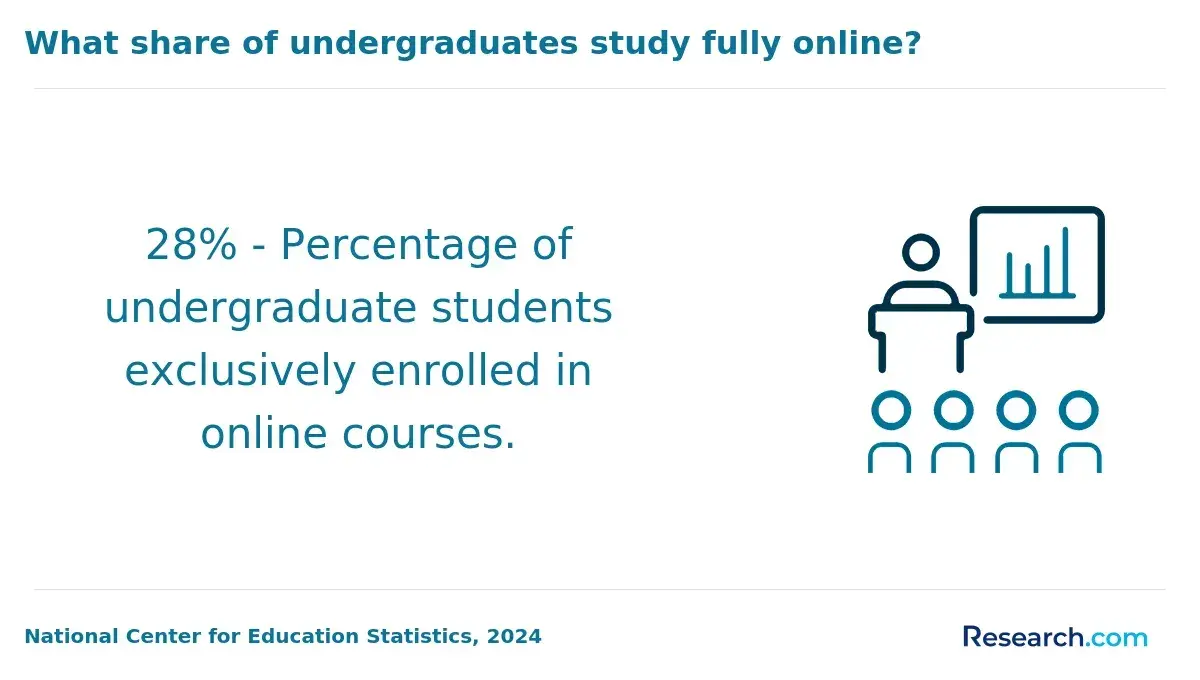
Competency-based education programs typically allow self-paced advancement and can reduce cost and duration by focusing on skill mastery. Nationally, enrollment in such programs has increased by 9.7% according to the National Center for Education Statistics, signaling rising demand for flexible, mastery-based credentials.
This growth highlights a tradeoff for adult learners at Florida Institute of Technology who cannot benefit from direct-assessment models to fully capitalize on their experience.
While Florida Institute of Technology's lack of formal competency based education programs for adult learners may limit expedited completion options, those balancing work and study should explore transfer credits and flexible scheduling. Adult learners considering alternatives might also research low GPA colleges with strong CBE offerings to accelerate degree progress more effectively.
Florida Institute of Technology does not operate on a fully continuous school calendar that eliminates summer breaks. Instead, it follows a semester-based system with defined fall, spring, and optional summer sessions. This structure offers predictability but limits the nonstop enrollment flexibility found at institutions with year-round calendars.
For adult learners balancing work and family, this means planning must align with fixed course start and end dates. For example, a working parent seeking to accelerate degree completion can use consecutive summer sessions offered online to stack credits, but cannot enroll in classes continuously without breaks throughout the year.
A 2024 study on accelerated multi-term academic calendars found that adult learners leveraging such schedules reduce their time-to-degree by 15-25%. This suggests that Florida Institute of Technology's optional summer terms present a valuable opportunity to speed completion when used strategically, despite the lack of continuous enrollment.
Term lengths at Florida Institute of Technology may vary based on program-specific requirements, including practicum or lab components requiring in-person attendance. This variation can further impact pacing options and requires careful consideration when aiming for accelerated progress.
Accelerating degree completion at Florida Institute of Technology presents significant trade-offs that adult learners must carefully evaluate. The pressure to reduce time in the program often clashes with the reality of balancing work, family, and academic demands. For example, an adult learner trying to finish an engineering degree in half the usual time might find that intense course pacing leads to overwhelming stress and conflicts with job schedules.
A recent study found that 38.6% of non-traditional students drop accelerated programs due to burnout and workload, highlighting how these challenges can derail even highly motivated students. Key obstacles involve institutional policies, personal commitments, and the quality of learning.
The following challenges illustrate common barriers and potential strategies to navigate this path.
- Transfer Credit Limitations: Credit acceptance varies by department and course equivalency. Delays in evaluation can extend graduation timelines, forcing students to retake courses. Early, thorough credit audits with academic advisors help reduce these risks.
- Intense Accelerated Scheduling: Courses move at a rapid pace requiring rigorous time management and study discipline. Adult learners often struggle to juggle coursework with professional and family obligations, increasing risk of burnout.
- Restricted Course Availability: Some required classes are only offered in particular semesters or cycles. This inflexibility can interrupt continuous progress and complicate planning for accelerated completion.
- Financial Aid Eligibility Constraints: Accelerated formats may limit access to certain types of aid, forcing students to self-finance or increase work hours, which can impede academic focus and success.
- Trade-offs in Mastery of Content: Speed can compromise deep understanding, which employers often prioritize over rapid credential acquisition. This affects long-term skill development and career readiness.
- Stress-Related Attrition Risk: High pressure environments correlate with increased withdrawal rates, as noted by recent withdrawal statistics among non-traditional accelerated students. Maintaining balance and leveraging support resources are critical.
Florida Institute of Technology students can significantly reduce their time to degree by strategically leveraging targeted institutional resources designed for adult learners. Effective use of these supports balances accelerated progression with the maintenance of essential academic depth, addressing the practical realities employers expect from graduates.
For instance, an adult learner managing full-time work and family might rely heavily on success coaching and credit transfer evaluations to streamline course loads while maintaining steady progress toward graduation.
Below are key resources that facilitate fast-tracking degrees at Florida Institute of Technology:
- Specialized Academic Advising: Advisors with expertise in online and nontraditional student needs help design course plans emphasizing transfer credits and prior experience, maximizing credit applicability and avoiding redundant coursework.
- Success Coaching: Personal success coaches assist with customized strategies that address common adult learner challenges like time management and balancing responsibilities, increasing academic momentum.
- Credit Evaluation Services: Expedited credit reviews recognize relevant professional certifications and past coursework, reducing unnecessary class repetition and shortening degree timelines.
- Tutoring and Writing Support: These academic help programs target specific skill gaps, preventing delays often caused by struggling with coursework after a return to formal education.
- Early Intervention Advising Models: Proactive engagement with advisors supports resource navigation and retention, contributing to a documented 12.5% increase in adult learner persistence in similar online settings nationwide.
- Flexible Course Scheduling: Offering asynchronous and evening classes accommodates work and life demands, helping maintain consistent enrollment and steady credit accumulation.
- Prior Learning Assessment (PLA): Methods that accurately assess experiential learning can convert practical knowledge directly into degree credits, preserving educational depth while accelerating completion pace.
Adult learners assessing Florida Institute of Technology adult learner resources for accelerated degree completion should weigh the benefits of these supports against potential trade-offs in learning depth and employer perceptions. Implementing advising and credit fast-tracking effectively positions students to graduate on time without undercutting critical competencies.
For those seeking a highly accelerated pathway, programs such as the PhD no dissertation can exemplify alternative degree acceleration models worth exploring.
Earning a degree on a shorter timeline at Florida Institute of Technology offers clear professional leverage by enabling adult learners to re-enter or advance in the workforce promptly. For example, a mid-career professional pursuing a management role can transition to higher responsibility faster, reducing the time spent without full-time income and avoiding additional debt accumulation. Employers tend to reward candidates who demonstrate dedication and efficient time management through accelerated degree completion, which can translate into earlier salary increases and broader career opportunities.
Accelerated graduates also benefit from flexible credit transfer policies acknowledging prior experience, reducing redundant coursework without compromising rigor. Research from the National Center for Education Statistics indicates that 68% of graduates from accelerated online programs secure employment related to their field within six months, highlighting employer recognition and return on investment that parallels traditional degrees.
Below are key career advantages adults can expect from faster degree completion at Florida Institute of Technology.
- Reduced Financial Burden: Completing a degree sooner limits the duration of tuition payments and reduces the accumulation of student debt, which averages $27,000 for Florida Institute of Technology graduates. This can lead to improved long-term financial stability and less pressure from ongoing loan repayments.
- Accelerated Career Mobility: Faster entry into advanced roles allows learners to capitalize on promotions or new job opportunities ahead of peers on conventional timelines, maximizing their earning potential earlier in their careers.
- Recognition of Prior Learning: Transfer credits and competency assessments shorten the path to graduation by valuing relevant professional experience. This streamlining avoids unnecessary coursework and maintains academic rigor while respecting adult learners' backgrounds.
- Employer-Preferred Outcomes: Employers increasingly value candidates with demonstrable commitment and efficient time management, qualities evident in accelerated degree completers. This can enhance hiring prospects and lead to faster salary growth.
What Graduates Say About Being an Adult Learner at Florida Institute of Technology
- Chloe: "As an adult learner balancing a part-time job and family commitments, choosing the online program at Florida Institute of Technology was a strategic decision. I appreciated their test-optional admissions and the ability to transfer substantial credits from prior coursework and professional certifications, which significantly reduced my time to degree completion. This acceleration allowed me to enter the workforce sooner, and I found that the combination of hands-on online coursework and flexible pacing helped me immediately apply new skills in my job, making the investment worthwhile."
- Hope: "What stood out to me about Florida Institute of Technology's online degree program was the credit-by-exam option, which recognized my years of professional experience and let me convert it directly into academic credits. This was crucial because I didn't have the time to retake subjects I already mastered, so I streamlined my degree path effectively. While the faster timeline was helpful, I found the real impact was how clearly the program framed my experience academically, helping me negotiate a better salary once I transitioned back into the workforce."
- Eva: "Initially, I was cautious about enrolling online as an adult learner, but Florida Institute of Technology's flexible scheduling and accelerated track changed my perspective. Navigating their admissions process, especially utilizing their test-optional policy, eliminated a lot of administrative stress. The degree completion speed genuinely translated into quicker career advancement for me, although I had to be very intentional about maximizing transfers and choosing the right accelerated courses to keep momentum without sacrificing depth of learning."
Other Things You Should Know About Florida Institute of Technology Degrees
The online courses at Florida Institute of Technology are often offered in accelerated formats, typically lasting 7 to 8 weeks rather than a full semester. This compression means adult learners need to commit to a more intensive study schedule, which can be challenging if balancing work and family. Prioritizing courses that allow higher credit loads per term can reduce time-to-degree, but learners must realistically evaluate their capacity to handle a faster pace without sacrificing mastery or risking burnout.
Yes. Florida Tech may award credit for approved CLEP subject exams, and those credits can reduce the number of courses needed for a degree. Adult learners must meet Florida Tech’s transfer and minimum grade rules, and the final degree plan must still satisfy the university’s residency and major requirements.
Degree programs with well-structured curricula and clearly defined elective options are easier to navigate quickly, as they minimize scheduling conflicts and redundant coursework. Adult learners should prioritize programs that allow stacking courses or permit concurrent enrollment in multiple classes. Evaluating program design from the start can avoid unnecessary delays caused by prerequisite sequencing or limited course offerings each term.
- Benefits of Graduating Early: 7 Reasons to Consider It https://www.xceedprep.org/benefits-of-graduating-early/
- Transfer High School Credits to Florida: What Parents Need to Know https://www.thebarrettschool.org/post/transfer-credits-florida
- Accelerated Degree Completion: The Fastest Way to Your Degree https://abound.college/finishcollege/advice/accelerated-degree-completion/
- Best Online University for Working Adults | Flexible Degrees Florida https://www.floridacoastaluniversity.com/best-online-university-for-working-adults/
- Florida Institute of Technology Graduates Largest Class in School's History https://www.prnewswire.com/news-releases/florida-institute-of-technology-graduates-largest-class-in-schools-history-135915873.html
- Florida Institute of Technology (Florida Tech) https://www.princetonreview.com/college/florida-institute-technology-1023516
- Competency Based Education: Moving Adult Students Towards Credentials and Degrees - The EvoLLLution https://evolllution.com/programming/credentials/competency-based-education-moving-adult-students-towards-credentials-and-degrees
- Florida Tech Acceptance Rate & Average GPA https://www.acceptancerate.com/schools/florida-institute-of-technology
- Top 5 Executive Education Programs for Mid-Career Professionals in 2025 https://welingkarexedp.com/top-5-executive-education-programs-every-mid-career-professional-should-consider-in-2025/
- Top 10 Executive Education Programs https://managementconsulted.com/executive-education-programs/