2027 Accredited Online International Business Degree Programs With No GRE or GMAT Requirements

Co-Founder and Chief Data Scientist
Choosing an online international business degree is often harder than deciding to skip the GRE or GMAT. Many accredited programs now evaluate applicants through GPA, experience, essays, and recommendations instead of test scores. The timing matters: BLS wage data updated in 2024 reports a median salary of $101,190 for management analysts, a role many global business graduates pursue.
This guide is for working adults, transfer students, and career changers comparing flexible programs. You'll learn which no-test options exist, how admissions really work, and how to judge value beyond convenience.
Key Things You Should Know
- Accredited no-GRE and no-GMAT options exist at the bachelor's, MBA, and specialized master's levels, but applicants should confirm whether a school is test-free, test-optional, or waiver-based before applying.
- Skipping the GRE or GMAT can save direct exam fees of about $220 for the GRE General Test or about $275 for the GMAT at a U.S. test center, but tuition, transfer credit, and financial aid usually have a larger effect on total cost.
- Employers generally evaluate the accredited institution, degree level, skills, internships, experience, and career fit rather than whether the applicant submitted a graduate admissions test score.
Which Accredited Online International Business Degree Programs Do Not Require the GRE or GMAT?
Accredited online international business programs without GRE or GMAT requirements are most common in three categories: bachelor's degrees, online MBAs with international business concentrations, and specialized master's programs in global or international business.
Bachelor's programs normally do not require GRE or GMAT scores because those exams are designed for graduate admissions; graduate programs may be test-free, test-optional, or waiver-based.
The table below summarizes examples of accredited online programs that publicly position standardized graduate tests as not required, optional, or commonly waived. Because admissions policies can change by term, use this table as a starting point and verify the current catalog or admissions page before applying.
| School | Online program type | International business focus | Accreditation signals to verify | GRE or GMAT status to confirm | Best fit |
| Florida International University | Master of International Business | Dedicated international business graduate degree | Institutional accreditation; business school accreditation such as AACSB | Typically listed as not requiring GRE or GMAT scores | Students who want a specialized global business credential rather than a general MBA |
| University of Delaware | Online MBA | International business concentration or related electives | Institutional accreditation; business school accreditation such as AACSB | Often promoted as no GMAT or GRE required for online MBA admissions | Working professionals who want a broad MBA with global business coursework |
| University of Scranton | Online MBA | International business specialization | Institutional accreditation; business school accreditation such as AACSB | Commonly listed as not requiring GMAT or GRE scores | Applicants seeking a professionally oriented MBA with a values-based business curriculum |
| Southern New Hampshire University | Online BS in Business Administration | International business concentration | Institutional accreditation; programmatic business accreditation where applicable | GRE and GMAT are not relevant for undergraduate admission | First-time or transfer students seeking an online bachelor's pathway |
| Liberty University | Online BSBA | International business cognate or concentration | Institutional accreditation; programmatic business accreditation where applicable | GRE and GMAT are not relevant for undergraduate admission | Students seeking an undergraduate business degree with global coursework |
| Touro University Worldwide | Online MBA | Global management or international business-related concentration | Institutional accreditation | Typically does not require GMAT or GRE scores | Adult learners who want flexible graduate business study without a test barrier |
A strong shortlist should include more than "no GRE" programs. Compare whether the curriculum includes international finance, global supply chains, cross-cultural management, international marketing, trade regulation, analytics, and experiential projects with multinational or export-oriented organizations.
Why Have Accredited Online International Business Degree Programs Eliminated GRE and GMAT Requirements?
Many business schools have reduced standardized testing because online learners often bring evidence that is more directly tied to success: prior college performance, professional experience, quantitative coursework, leadership history, and written communication. For international business programs, schools also value global exposure, language ability, intercultural experience, military service, logistics work, finance experience, or sales and marketing roles across regions.
Another reason is competition. Online graduate business education now competes with certificates, employer training, stackable credentials, and adjacent fields such as AI degrees online, where schools emphasize skills, projects, and portfolio evidence. Removing a test requirement can widen the applicant pool without necessarily lowering academic expectations.
The admissions label matters because "no GRE" can mean different things. This comparison helps you interpret the language on admissions pages accurately.
| Admissions policy | What it usually means | Should you submit scores? | What to watch for |
| Test-free | The program does not use GRE or GMAT scores in admissions decisions | No, because scores are not considered | Other criteria such as GPA, prerequisites, and experience may carry more weight |
| Test-optional | You may apply with or without scores | Consider scores if they are strong and help offset a weaker GPA | Optional does not always mean irrelevant for scholarships or borderline applications |
| Waiver-based | The test is required unless you qualify for a waiver | Submit only if you do not qualify for the waiver or your score strengthens the file | Waivers may depend on GPA, work history, prior graduate study, or professional credentials |
The practical takeaway is simple: do not assume a no-test policy makes the application informal. It usually shifts the burden of proof from a test score to the rest of the file.
What Admissions Criteria Matter Most Without GRE or GMAT Scores?
When GRE or GMAT scores are absent, admissions committees look for evidence that you can handle graduate-level business analysis, writing, teamwork, and time management. For undergraduate programs, the review usually centers on high school or transfer GPA, previous college credits, and readiness for business coursework.
The table below shows how common application components function when test scores are not required. Use it to identify which parts of your application deserve the most attention.
| Admissions factor | Why it matters | How to strengthen it | Common weakness |
| GPA and transcripts | Shows academic consistency and readiness for quantitative courses | Explain upward trends, retake key prerequisites, or highlight strong grades in business, economics, math, or writing | Ignoring a low GPA instead of giving context |
| Professional experience | Demonstrates maturity, leadership, and exposure to real business problems | Quantify responsibilities, budgets, markets, teams, or process improvements | Submitting a job-description résumé with no measurable accomplishments |
| Statement of purpose | Connects your goals to the program's international business curriculum | Name specific interests such as trade compliance, global marketing, supply chain, or market entry strategy | Writing a generic essay that could apply to any MBA |
| Recommendations | Provides third-party evidence of judgment, discipline, and communication | Choose supervisors or faculty who can discuss specific achievements | Using recommenders with impressive titles but little knowledge of your work |
| Prerequisites | Helps schools assess readiness for accounting, economics, finance, and statistics | Complete missing courses before enrollment if the program allows it | Assuming no GRE also means no quantitative preparation |
Applicants without test scores should build a coherent admissions story. That means your résumé, essay, transcripts, and recommendations should all point to the same message: you are prepared for advanced business study and have a clear reason for choosing international business.
Are No-GRE or No-GMAT Online International Business Degree Programs Easier to Get Into?
No-GRE or no-GMAT programs can be easier to apply to, but they are not automatically easier to enter or complete. The application process may be faster because you do not need months of test preparation, but selective programs may compensate by placing greater emphasis on GPA, work experience, essays, prerequisite grades, interviews, or professional accomplishments.
The real question is whether the admissions model matches your strengths. These scenarios can help you decide whether applying without scores is strategically smart:
- Apply without scores if your GPA, résumé, recommendations, and goals are already strong and the program states that scores are not required or not considered.
- Consider submitting optional scores if your undergraduate GPA is weak, your work experience is limited, and your GRE or GMAT score is meaningfully stronger than the rest of your profile.
- Choose a waiver-based program carefully if you meet the waiver conditions; otherwise, build test preparation time into your admissions calendar.
- Avoid assuming that open or flexible admissions means low academic expectations; online business programs still require writing, data analysis, group projects, and deadline discipline.
For many working adults, the main advantage is not lower selectivity but lower friction. Removing the test can reduce time, cost, and anxiety, allowing applicants to focus on selecting a program that fits their career plan.
Does Skipping the GRE or GMAT Affect Academic Quality or Accreditation?
Skipping the GRE or GMAT does not determine academic quality. Accreditation, faculty qualifications, curriculum design, student support, assessment standards, and employer alignment are more meaningful indicators. A test-free program at an accredited university can be academically stronger than a test-required program with weak support or limited career relevance.
For U.S. students, the first checkpoint is institutional accreditation recognized by the U.S. Department of Education or the Council for Higher Education Accreditation. Business-specific accreditation can add another quality signal, especially for MBA and graduate business programs.
| Quality signal | Why it matters | How to verify it |
| Institutional accreditation | Supports federal financial aid eligibility and credit recognition | Check the school's accreditation page and federal accreditation databases |
| Business accreditation | Indicates external review of business curriculum, faculty, and outcomes | Look for AACSB, ACBSP, or IACBE where relevant |
| Curriculum depth | Shows whether the program goes beyond general business topics | Review courses in global strategy, international finance, trade, supply chain, and cross-cultural management |
| Student support | Online learners need advising, tutoring, library access, and career services | Ask how support is delivered to distance learners across time zones |
| Outcome transparency | Helps estimate value and risk | Request graduation, retention, employment, and alumni outcome information when available |
Employers usually do not know or ask whether a graduate submitted a GRE or GMAT score. They are more likely to evaluate the school's reputation, accreditation, the applicant's experience, and the relevance of the degree to the role.
Which Students Benefit Most From Online International Business Degree Programs Without GRE or GMAT Requirements?
No-GRE and no-GMAT pathways are especially useful for applicants whose strengths are visible in real-world performance rather than standardized testing. They can also help students who need to move quickly because of promotion timelines, relocation, military transition, employer tuition deadlines, or family responsibilities.
The students below often gain the most from a test-free or test-optional international business program because the admissions model lets them emphasize experience, academic history, and career direction.
- Working professionals with several years of business, logistics, finance, sales, marketing, operations, or management experience.
- Transfer students pursuing an online bachelor's degree who want to apply previous credits toward a global business concentration.
- Career changers who can explain how international business connects to a specific target role, such as global account management, trade compliance, procurement, or market research.
- Military-connected students whose leadership, cross-cultural experience, and operational planning may strengthen the application.
- Applicants with strong undergraduate grades or prior graduate coursework who do not need a test score to prove academic readiness.
Students who need rapid prerequisites or schedule flexibility should also compare term lengths carefully. Some schools offer accelerated formats similar to 6 week courses, while others use traditional semesters that may be slower but less compressed.
This pathway may not be ideal for applicants who have little academic evidence, limited work history, and a weak essay. In that case, a strong optional test score, prerequisite coursework, or a certificate may help build a more competitive file.
How Do Tuition and Financial Aid Compare for No-GRE Online International Business Degree Programs?
No-GRE programs are not automatically cheaper. The test waiver may reduce upfront application costs, but total price depends on tuition per credit, required credits, transfer policies, fees, books, residency requirements, employer reimbursement, and time to completion.
For graduate students, Federal Student Aid lists the Direct Unsubsidized Loan annual limit at $20,500 for eligible borrowers, which is useful for planning but should not be treated as a recommendation to borrow the maximum.
Here are common cost items to compare before you treat a no-test admissions policy as a financial advantage:
- GRE General Test registration in the U.S. is about $220 before preparation materials, rescheduling, or extra score reports.
- GMAT exam registration at a U.S. test center is commonly about $275 before preparation materials, rescheduling, or extra score reports.
- Application fees, graduation fees, technology fees, and course materials can change the real cost even when tuition looks affordable.
- Transfer credit, prior learning assessment, employer tuition assistance, and scholarships may reduce net cost more than skipping an exam.
The table below shows the main cost levers that affect online international business programs. It is designed to help you compare net cost rather than advertised tuition alone.
| Cost factor | Why it affects value | Question to ask the school |
| Tuition per credit | Determines the base price of the degree | Is tuition locked once I enroll, or can it increase? |
| Total credits required | A lower per-credit price can still be expensive if the program requires more credits | How many credits will I personally need after transfer or prerequisite review? |
| Transfer and prior graduate credit | Can shorten time to completion and reduce tuition | What is the maximum number of credits I can transfer? |
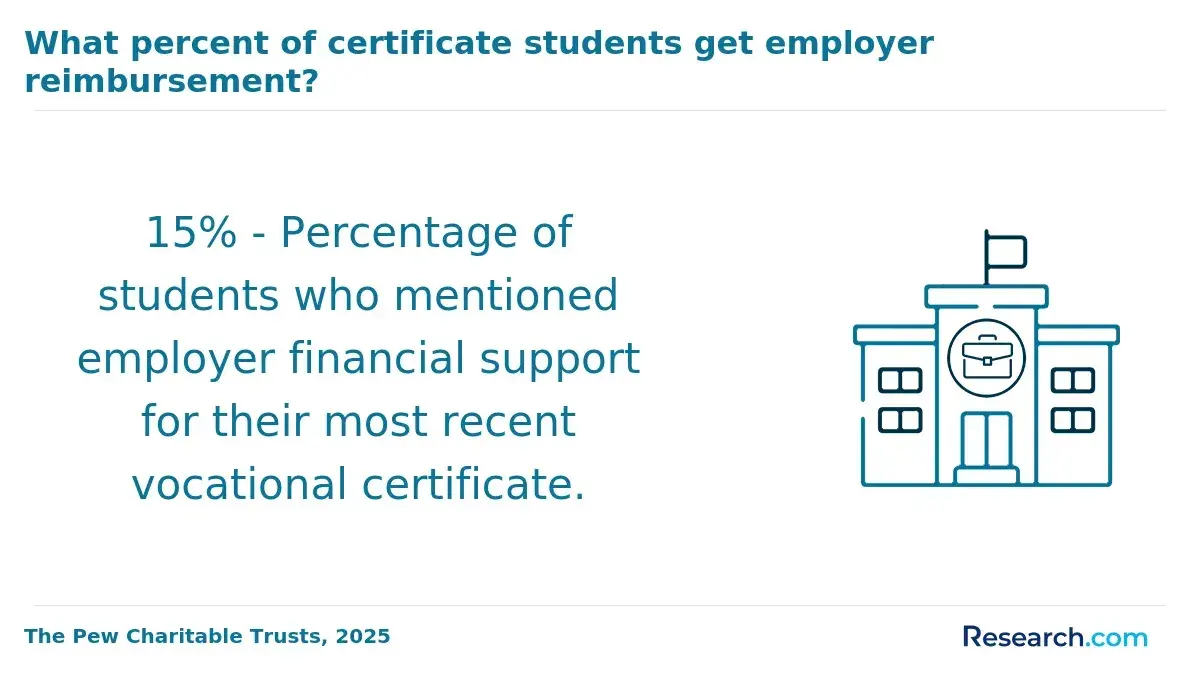
| Employer reimbursement | Can reduce out-of-pocket cost for working adults | Does the billing schedule align with employer reimbursement deadlines? |
| Course load flexibility | Affects whether you can keep working while enrolled | Can I pause, slow down, or accelerate without financial penalties? |
If cost is your main constraint, compare international business programs alongside broader lists of affordable masters degrees. A less expensive general MBA with global electives may be a better fit than a higher-priced specialized degree if your employer values the MBA credential more.
What Career Outcomes Can Graduates Expect From No-GRE Online International Business Degree Programs?
Career outcomes depend on degree level, prior experience, industry, geography, language ability, internships, and technical skills. A no-GRE international business degree does not create a separate labor market; graduates compete for the same roles as students from test-required programs.
The table below summarizes U.S. roles commonly connected to international business preparation. BLS wage data updated in 2024 should be used as a labor-market benchmark, not a promise of individual earnings.
| Career path | Typical responsibilities | Relevant international business preparation | U.S. salary context |
| Management analyst | Analyze operations, recommend efficiency improvements, support market or process strategy | Global strategy, data analysis, consulting projects, operations | BLS reports a median pay of $101,190 for management analysts in May 2024 |
| Market research analyst | Study customers, competitors, pricing, and demand across markets | International marketing, analytics, consumer behavior, research methods | Compensation varies by industry and analytical skill level |
| Logistician or supply chain analyst | Coordinate sourcing, distribution, transportation, and supplier performance | Global supply chain, trade rules, operations, data tools | Roles may favor candidates with analytics platforms and procurement experience |
| International sales or account manager | Manage customer relationships, negotiate contracts, and support revenue growth in global markets | Cross-cultural communication, finance, negotiation, regional market knowledge | Pay may combine salary, commission, bonuses, or territory-based incentives |
| Trade compliance specialist | Support import, export, sanctions, documentation, and regulatory compliance processes | International trade, legal environment of business, risk management | Specialized compliance knowledge can matter as much as degree title |
Students comparing ROI should also look beyond international business alone. Research on degrees that make the most money can help you understand how business, finance, analytics, technology, and quantitative skills interact in the labor market.
To improve outcomes, choose a program that helps you build concrete evidence: projects using real companies or datasets, internship options, a portfolio, certifications, language skills, and faculty or alumni networks connected to your target industry.
What Common Application Mistakes Reduce Admission Chances to No-GRE Online International Business Degree Programs?
The biggest mistake is treating "no GRE" or "no GMAT" as the main selection criterion. Admissions flexibility helps only if the degree is accredited, affordable, academically appropriate, and connected to your career goals.
Applicants can avoid many weak applications by checking for these common errors before submitting materials:
- Choosing a program only because it does not require a test instead of reviewing accreditation, curriculum, faculty, support, and outcomes.
- Submitting a generic statement of purpose that does not explain why international business is the right field for your goals.
- Failing to address a low GPA, missing prerequisites, or gaps in academic history with context and evidence of readiness.
- Using a résumé that lists duties but does not quantify achievements, markets served, budgets managed, teams led, or projects completed.
- Assuming that test waivers are permanent when some policies depend on the term, applicant profile, or program format.
- Ignoring total cost while focusing on the convenience of skipping test preparation.
- Forgetting to ask whether optional test scores affect scholarships, assistantships, or admission to more selective tracks.
A strong application should make the admissions decision easy to understand. It should show what you have done, why you are ready, why this program fits, and how the degree supports a realistic next step.
How Should Students Compare Accredited Online International Business Degree Programs Without GRE or GMAT Requirements?
The best program is not always the fastest, cheapest, most selective, or easiest to enter. It is the one that fits your academic background, work schedule, budget, and target role while meeting recognized accreditation standards.
Use this step-by-step process to compare programs before applying. It turns a long list of online options into a practical shortlist.
- Confirm institutional accreditation first, then check whether the business school or program has AACSB, ACBSP, or IACBE accreditation if that matters in your target market.
- Identify whether the program is a bachelor's degree, MBA concentration, specialized master's, or graduate certificate that can stack into a degree.
- Read the admissions policy carefully and label it as test-free, test-optional, or waiver-based.
- Compare curriculum depth in international finance, global strategy, international marketing, trade compliance, supply chain, analytics, and cross-cultural leadership.
- Calculate total cost using tuition, credits required, fees, transfer credit, financial aid, employer reimbursement, and expected time to completion.
- Ask about online format, including asynchronous coursework, live sessions, group work, proctored exams, residency requirements, and time-zone expectations.
- Request outcome information such as retention, graduation, career services participation, internship access, alumni networks, and employer partnerships.
- Match the program to a specific career path instead of assuming that any international business degree will serve every global role.
If you are deciding between international business and a more quantitative path, compare the curriculum with an online degree in finance. Finance may be the stronger choice for investment, corporate finance, or risk roles, while international business may fit better for global strategy, trade, marketing, or cross-border operations.
Before enrolling, ask admissions counselors direct questions: Will my application be reviewed differently without test scores? How many credits will transfer? Are career services available to online students? What companies recruit graduates? What happens if I need to slow down? The answers will tell you more about fit than the absence of a GRE or GMAT requirement alone.
Other Things You Should Know About International Business
A major or full degree is usually better if you want a broad foundation for global business roles. A concentration works well if you want a general business or MBA credential with international electives. A certificate may be enough if you already have a business degree and need targeted knowledge in trade, global marketing, or supply chain.
Some programs require or recommend foreign language coursework, but many do not. Even when it is not required, language ability can help in roles involving regional markets, client relationships, international sales, or cross-border operations.
Many U.S. online programs accept international students, but requirements vary. Applicants may need transcript evaluations, English proficiency scores, and documentation that differs from domestic admissions. Fully online study also may not provide the same visa options as campus-based study.
Yes. An MBA usually covers broad management topics and adds international business through electives or a concentration. A master's in international business is typically more specialized from the start and may go deeper into global strategy, trade, markets, and cross-cultural management.
References
- GMAT or GRE for MBA Admissions: What You Need to Know https://www.stacyblackman.com/blog/gmat-vs-gre-for-mba/
- Affordable Online MBAs, No GMAT Needed | OnlineMBA.com https://www.onlinemba.com/rankings/affordable-online-mba/no-gmat/
- Online MBA No GMAT or GRE Required https://mycollegeguide.org/online-mba-no-gmat/
- Top Careers for Psychology Master’s Graduates https://www.onlinemastersdegrees.org/best-programs/mba-programs/non-business-majors/
- Online Master’s in Accounting Programs No GRE Required or GMAT Waiver https://www.onlineeducation.com/business/faqs/gmat-requirements-online-masters-in-accounting-programs
- MBA Programs that Don’t Require GMAT, GRE or EA Test Scores https://www.clearadmit.com/mba-programs-that-dont-require-gmat-gre-or-ea-test-scores/
- Best Online MBA Programs https://www.princetonreview.com/business-school-rankings
- MBA Programs Offering GMAT/GRE Test Waivers https://www.mbamission.com/blog/mba-programs-offering-gmat-gre-test-waivers/
- MBA without GMAT requirement in USA, Europe, India - MBA Crystal Ball https://www.mbacrystalball.com/blog/2015/07/27/mba-without-gmat/
- Best Online MBA Programs No GMAT Required (2026) - Edubrain https://edubrain.ai/blog/best-online-mba-programs-no-gmat/