2027 Can You Earn a Degree Faster at University of North Carolina Wilmington as an Adult Learner?

Co-Founder and Chief Data Scientist
Adult learners often face pressure to complete their degrees quickly due to professional and personal commitments. Many arrive with prior college credits or substantial work experience that could reduce required coursework. At University of North Carolina Wilmington, understanding how these factors translate into accelerated degree completion is crucial. National data shows that adult learners now make up nearly 40% of total undergraduate enrollment in U.S. universities, reflecting growing demand for flexible and expedited paths in higher education.
However, not all institutions equally recognize professional experience or offer streamlined credit transfers. This article evaluates how University of North Carolina Wilmington supports adult learners in shortening their time to graduation through transfer policies, online course availability, and flexible scheduling. It provides a concrete analysis to help prospective students make informed decisions about accelerating their degree completion there.
Key Points About Faster Degree Completion at University of North Carolina Wilmington
- UNCW allows transfer credits to shorten program length, enabling adult learners to apply prior coursework toward degree requirements, which can reduce time and cost burdens in fields where professional experience overlaps academic prerequisites.
- The university's online programs provide flexible scheduling that aligns with work commitments, allowing adult learners to balance professional duties while accelerating degree progression without sacrificing course rigor or program integrity.
- Graduates report an earnings to debt ratio of 2.82x, indicating that quicker completion through UNCW's online pathways can enhance financial returns, though outcomes depend on industry recognition and relevance of acquired credentials.
Can adult learners at University of North Carolina Wilmington realistically complete their degrees quickly?
Adult learners at University of North Carolina Wilmington can realistically shorten their time to degree completion by leveraging transfer credits and professional experience. Many students reduce their education span by up to a year, cutting down from the typical 4 to 6 years. This takes advantage of UNCW's policies allowing course overloading and credit evaluations.
An example is a working professional transferring 30 credits from previous college coursework and certifications who then completes remaining requirements in 2.5 years through online accelerated courses. The university's 71% graduation rate reflects a supportive environment but highlights that personal balancing of workload and life commitments is essential for success.
UNCW offers flexible academic pathways such as prior learning assessments and course overloading, helping motivated students accelerate progress. Students can strategically combine transfer credits with continuous, accelerated semesters online, significantly reducing time but requiring disciplined planning and sustained effort.
Completion timelines vary widely by program due to differing credit requirements and course availability. According to national data, adult learners often take around 4.3 years to graduate in online settings, which illustrates the practical limits despite institutional options. Realistic pacing depends on individual circumstances and program structure complexities.
Does University of North Carolina Wilmington have specific admission requirements for adult learners?
University of North Carolina Wilmington does not impose uniquely specific admission requirements exclusively for adult learners, but its policies reflect a moderate level of selectivity that is relevant for this demographic. Adult learners with prior college credits or professional experience must strategically present these credentials under the school's accepted credit types to accelerate their degree completion.
For example, a working professional with CLEP or DSST exam credits can transfer these to reduce time in residency. However, experiential learning without formal credit recommendations is generally not accepted, which limits some adults who wish to leverage life experience for academic acceleration. Trends show that while many institutions increasingly emphasize competency-based admissions, UNCW remains grounded in traditional academic documentation.
This approach aligns with the university's 74% acceptance rate, providing a moderate but not open admission gateway for adults. The following list clarifies key University of North Carolina Wilmington adult learner admission criteria.
- High School Credential Requirement: Adult applicants must submit a completed high school record or GED equivalent, ensuring foundational preparation for college-level work. This is crucial since the university does not support open admission, making standardized credentials mandatory.
- Transfer Credit Acceptance: UNCW accepts varied transfer credits, including CLEP subject and general exams, DSST/Dantes, and ACE-recommended credits, enabling adult learners to capitalize on prior learning. These credits must meet university standards to count toward degree progress.
- English Proficiency Testing: TOEFL is required for nonnative English speakers, reflecting the need for adequate language skills critical to academic success. Adults from international backgrounds must budget time and resources for this step.
- Competency Demonstrations (Recommended): While not mandatory, assessments like Wonderlic or WISC-III tests can strengthen applications, especially for adults whose formal records are limited or dated. These options offer a partial bridge to competency-based admission trends without replacing transcripts.
- Dual Credit and Open Admission Policy: The university does not offer dual credit options or open admission paths, which means adult learners must rely on prior collegiate credits and formal documentation rather than high school dual enrollment or guaranteed entry policies.
Adult learners evaluating University of North Carolina Wilmington should consider how these criteria affect their potential to earn a degree faster. Effective use of transfer credits can shorten time to graduation significantly, but reliance on traditional academic records may require additional steps to document preparedness.
For more information on accessible affordable programs, consider exploring the best online colleges that accept FAFSA which includes other adult-friendly options beyond UNCW.
Are there executive programs at University of North Carolina Wilmington for mid-career professionals?
The University of North Carolina Wilmington offers executive education programs for mid-career professionals, primarily through its Cameron School of Business. These programs benefit adult learners by providing hybrid and cohort-based formats, which allow students to complete degrees faster without pausing their careers. This structure supports balancing work, study, and networking effectively.
Unlike traditional online tracks, these executive programs incorporate weekend intensives and leverage learners' professional experience for practical application. This reduces reliance on constant campus attendance and enhances skill relevance, meeting typical employer expectations for leadership and career progression.
A 12.7% enrollment increase in hybrid executive programs nationally reflects a significant trend favoring flexible, intensive professional training. This growth underlines why accelerated degree options are valuable for those seeking rapid credentialing without sacrificing job responsibilities.
For adult learners considering mid-career accelerated degree options at University of North Carolina Wilmington, flexibility in scheduling and recognition of prior experience are key. Access to an accelerated associate degree pathway can further shorten time to completion in certain contexts.
How can credit transfers affect the time-to-graduation for adult learners at University of North Carolina Wilmington?
Credit transfers at University of North Carolina Wilmington can notably reduce the time adult learners spend earning their degrees, but success hinges on strategic alignment of transferred credits with program requirements. For example, an adult learner working full-time who transfers CLEP exam credits to bypass introductory general education courses can shorten their degree path without compromising program integrity.
This approach is beneficial because a 2024 national study found students using transfer credits typically reduce their time-to-degree by about 0.7 years, a meaningful acceleration in a competitive job market. Below are key ways credit transfers can directly speed program completion at University of North Carolina Wilmington.
- Bypassing introductory courses: Transferring credits recognized by ACE and CLEP exams allows adult learners to skip lower-level general education classes. This prevents repetition and frees up time for advanced coursework aligned with career goals.
- Fulfilling core major requirements: When transfer credits meet specific major prerequisites, students avoid delays caused by curricular sequencing. This alignment helps maintain continuous academic progress without scheduling setbacks.
- Flexible term enrollment: Acceptance of transfer credits in fall and summer terms permits learners to accelerate enrollment cycles. The ability to start or continue studies year-round reduces gaps between terms and expedites graduation.
- Reducing financial strain: Completing the degree faster by applying transfer credits can lower cumulative tuition and fees. This financial relief is critical for adults balancing education with work and family responsibilities.
One University of North Carolina Wilmington online graduate shared that transferring credits from a prior military training program initially caused some uncertainty. "I was worried that my credits wouldn't apply directly to my major, which might delay my progress," they explained.
However, after careful evaluation and working with an advisor, they successfully applied most credits toward core requirements. This credit transfer allowed completion of their degree program in three semesters instead of four, providing relief both financially and in managing work-life balance.
Can professional certifications and training be converted into credits at University of North Carolina Wilmington?
University of North Carolina Wilmington allows adult learners to convert professional certifications and experiential training into academic credits. This option accelerates program completion, especially for those with extensive workplace experience. A realistic scenario involves a working nurse obtaining credit for a Certified Nursing Assistant certification to shorten time in a healthcare degree.
Credit transfer eligibility varies widely depending on the department and specific program requirements. Not all certifications translate into direct course equivalencies; some may only count as elective credit. Careful evaluation of institutional policies alongside personal academic goals is essential. Balancing educational depth with acceleration remains a key decision for candidates evaluating training programs for academic credit at University of North Carolina Wilmington.
Professional certifications commonly accepted for credit reflect rigorous standards aligned with university curricula. Examples of these include credentials from healthcare, IT, project management, and technical trades. Below are some certifications that can typically be converted into credit:
- Certified Nursing Assistant (CNA): This credential demonstrates foundational clinical skills and patient care competency, aligning with healthcare program objectives. It offers a pathway to earn credit in nursing or allied health degrees.
- Project Management Professional (PMP): PMP indicates mastery of project planning and execution, mapping to business and management courses, enabling credit in related programs.
- Certified Information Systems Security Professional (CISSP): A highly regarded IT security certification that covers essential cybersecurity knowledge, often accepted as credit toward computer science or information technology degrees.
- Cisco Certified Network Associate (CCNA): This certification verifies networking skills and protocols, supporting credit in information technology or telecommunications studies.
- American Welding Society Certifications: These validate specialized technical skills in welding, typically qualifying for credit in technical trades or engineering technologies.
A 2024 Lumina Foundation study shows institutions awarding PLA credit achieve a 22% higher four-year graduation rate for adult learners versus those following traditional paths. This data highlights why integrating professional certifications into academic credit can be a strategic approach to degree completion. Adult learners seeking to join accredited online colleges like University of North Carolina Wilmington should prioritize informed selection and evaluation of these opportunities.
Does University of North Carolina Wilmington have competency-based education programs for adult learners?
University of North Carolina Wilmington does not offer formal competency-based education programs designed specifically for adult learners seeking accelerated degree completion. Its degree programs follow traditional credit-hour models, requiring students to adhere to set course schedules instead of progressing through direct-assessment or mastery demonstrations typical of CBE.
Adult learners can benefit from transfer credit evaluations and prior learning assessments to shorten their degree timeline by applying credits from prior experience. While these alternatives cannot substitute the full flexibility of competency-based frameworks, they provide practical methods for accelerated degree paths at University of North Carolina Wilmington.
Nationally, enrollment in direct-assessment higher education grows around 8.7% annually, indicating increasing interest in accelerated, competency-driven programs. For adults considering options, the lack of CBE at University of North Carolina Wilmington means fewer opportunities for self-paced progress compared to institutions with embedded competency-based tracks. Adult learners should assess flexible scheduling and transfer credit options carefully to make informed decisions about faster degree completion.
Those interested in more flexible pacing might explore a list of self-paced online universities that better support competency frameworks outside University of North Carolina Wilmington.
- Competency-based education programs at University of North Carolina Wilmington for adult learners
- Accelerated degree options with competency-based learning at University of North Carolina Wilmington
Does University of North Carolina Wilmington run a continuous school calendar that eliminates summer breaks?
University of North Carolina Wilmington does not offer a fully continuous school calendar that removes summer breaks entirely. Instead, it provides multiple summer sessions, including shorter optional terms to help students accelerate progress if desired. For adult learners, this means the ability to pick up additional credits during summer without mandatory year-round enrollment.
Consider a working adult who wants to finish a degree faster but must balance job and family. The optional summer courses at University of North Carolina Wilmington allow taking select online classes to maintain momentum. However, since summer courses are not guaranteed or fully integrated, this flexibility comes with limited course availability, which can hinder continuous advancement if specific required classes are unavailable.
A significant 2024 study on accelerated academic calendars found that students in programs with multiple compressed terms per year graduated 15% faster, but only when course offerings matched precisely with degree requirements. This highlights that optional summer sessions without assured continuous alignment may still slow pacing for some adult learners.
Term lengths and scheduling demands at University of North Carolina Wilmington often depend on program-specific requirements. Students must actively plan registration and manage course sequencing carefully to leverage available accelerated options without disrupting their graduation timeline or increasing workload imbalances.
What are the challenges of faster degree completion for adult learners at University of North Carolina Wilmington?
Accelerating degree completion at University of North Carolina Wilmington requires confronting structural inflexibility and personal constraints that often limit faster progression. An adult learner juggling a full-time job and family responsibilities may find that prerequisite sequencing forces delayed enrollment in critical courses, extending time-to-graduation despite strong motivation. This mismatch between personal urgency and institutional pacing can generate stress and require strategic planning.
Below are key challenges adult learners face when attempting to shorten their degree timeline at University of North Carolina Wilmington and approaches to address them.
- Limited Course Scheduling Flexibility: Course offerings are often fixed with limited evening or weekend options, which constrains how many classes an adult learner can take at once. Prioritizing required courses during available time slots demands early academic advising to maximize load without overload.
- Prerequisite Chain Delays: Programs require strict sequencing of courses, so failing or postponing one class can cascade into extending the entire pathway. Mapping out prerequisites with advisors helps anticipate bottlenecks and identify opportunities for substitution or credit transfer.
- Academic Burnout Risks: Nearly 38% of non-traditional students nationwide withdraw from accelerated programs due to burnout, highlighting the pressure of compressed timelines combined with external responsibilities. Developing realistic pacing and incorporating breaks reduces attrition risk.
- Financial Aid Compliance Pressure: Maintaining full-time enrollment and satisfactory academic progress is crucial for aid eligibility. Accelerated plans can jeopardize this balance, requiring careful monitoring to avoid unexpected financial shortfalls.
- Transfer Credit Evaluation Uncertainty: Transfer policies can be inconsistent, delaying credit approval or forcing course repetition. Early submission and documentation of prior learning improve chances for credit recognition.
- Intensity of Condensed Courses: Accelerated classes demand rapid adaptation to advanced content and learning formats, which can challenge returning adults. Enhancing time management and leveraging support resources assists in handling course rigor.
One online degree graduate shared that their initial plan to complete the program in two years was disrupted by a prerequisite delay and financial aid constraints. Balancing a second job during evenings left little room for heavier course loads, leading to necessary pacing adjustments.
They described feeling caught between "the urgency to finish and the reality of what my schedule and finances could support," ultimately finding relief by working closely with advisors and accepting a slower but sustainable timeline. This experience illustrates how managing expectations alongside institutional limitations is essential for realistic acceleration at University of North Carolina Wilmington.
How can University of North Carolina Wilmington students leverage school resources to fast-track their degree?
Adult learners at University of North Carolina Wilmington (UNCW) can leverage targeted institutional supports to actively expedite their degree completion. For instance, a working professional balancing family commitments used credit transfer reviews and specialized advising to reduce redundant coursework, cutting months off their timeline.
Key resources available help students strategically combine transfer credits, prior learning assessments, and flexible course scheduling to maintain momentum without sacrificing academic quality. The following list details primary university supports that enable this accelerated progress.
- Academic Advising Specialized for Adults: Advisors focused on online and nontraditional students craft personalized course plans that maximize credit transfers and align with career goals. This reduces unnecessary classes and prevents delay.
- Fast-Track Credit Review: This service evaluates professional certifications and former coursework rapidly, allowing adult learners to apply existing knowledge toward degree requirements efficiently.
- Success Coaches: Dedicated coaches provide consistent guidance, helping students manage competing obligations and maintain steady progress through personalized accountability and resource referrals.
- Tutoring Services and Writing Centers: These supports strengthen academic skills critical for accelerated programs, enabling quicker mastery of challenging material and fostering confidence.
- Technology Assistance: Technical support ensures smooth engagement with online and hybrid courses, minimizing disruptions that can delay completion.
- Flexible Course Scheduling: Offering evening, weekend, and online options accommodates adult learners' varied schedules to sustain academic momentum.
- Prior Learning Assessment Opportunities: Students can translate work experience and prior education into academic credits, reducing course loads and shortening time to degree.
National data from the National Student Clearinghouse reveals proactive academic advising and resource utilization increase adult learner retention by nearly 12%, underlining the tangible impact of these supports on expedited graduation and employability outcomes.
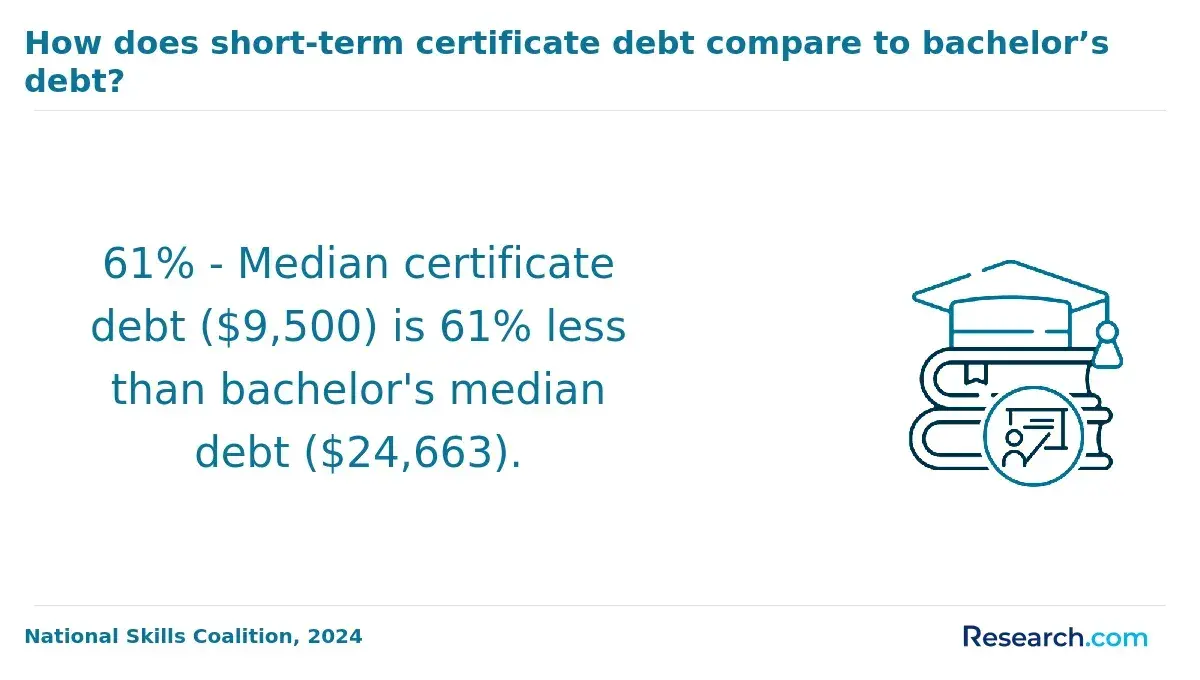
Adult learners considering fast-tracking degrees at University of North Carolina Wilmington will find that engagement with these resources, combined with a realistic assessment of external commitments, is essential to avoid burnout and maintain performance. For many, coupling these supports with short-term certificate programs further streamlines pathways through targeted skill acquisition relevant to workforce needs.
What are the career advantages of earning a degree from University of North Carolina Wilmington on a shorter timeline?
Accelerating degree completion at University of North Carolina Wilmington provides distinct career leverage by enabling adult learners to act on opportunities faster and with stronger positioning. For example, a mid-level project manager might earn an accelerated degree to qualify for a leadership training program months earlier than peers, translating academic progress directly into workplace advancement.
The career advantages also stem from financial efficiency, employer recognition of nontraditional learning paths, and earlier access to developmental resources. Below are key professional benefits that illustrate how a shorter timeline sharpens career outcomes for adult learners at University of North Carolina Wilmington.
- Quicker Workforce Reintegration: Graduating sooner allows adult learners to reenter or advance in the labor market rapidly. This reduces income disruption and supports momentum, which can be crucial in industries where continuous experience accumulation drives salary growth.
- Reduced Educational Debt Burden: By minimizing semesters, students lower total tuition and living costs. Given a median graduate debt of $19,500, this accelerated path improves long-term financial stability and return on investment.
- Enhanced Employer Perception: About 78% of employers now appreciate alternative credentials and accelerated programs that maintain rigor, increasing the value placed on degrees earned quickly but comprehensively from institutions like University of North Carolina Wilmington.
- Earlier Access to Advancement Opportunities: Completing degrees faster unlocks eligibility for certifications and leadership roles sooner, enabling adult learners to leverage these credentials for pay increases and specialized projects without delay.
- Optimized Skill Validation: The ability to combine transfer credits and professional experience reduces redundancy and signals practical readiness. This efficiency aligns with employer demand for demonstrable skills and commitment beyond traditional degree timelines.
What Graduates Say About Being an Adult Learner at University of North Carolina Wilmington
- Hannah: "Choosing to enroll in an online degree program at University of North Carolina Wilmington was a strategic decision for me as an adult learner balancing work and family. I carefully maximized my credit transfers and took full advantage of their credit-by-exam options, which sped up my timeline considerably. The test-optional admissions process was a relief, removing unnecessary barriers, and ultimately my accelerated degree helped me enter the workforce sooner with tangible advancements in salary and responsibilities."
- Molly: "My experience with University of North Carolina Wilmington's online program was largely shaped by the flexibility it offered for adult learners like me. I appreciated navigating the program requirements with a focus on leveraging professional experience to reduce coursework, but I was cautious about rushing-completing faster didn't always equate to immediate promotion. Still, the streamlined testing policies and online format allowed me to maintain steady progress without compromising quality, and I found the degree respected by employers in my field."
- Jade: "As someone who returned to school after years in a different profession, University of North Carolina Wilmington's online degree was a practical fit given my schedule and goals. I strategically used credit transfers and the test-optional admission pathway to fast-track my studies, which relieved administrative burdens. What stood out to me was how the accelerated timeline translated into quicker re-entry into the workforce, though real career growth required ongoing networking and experience beyond the degree itself."
Other Things You Should Know About University of North Carolina Wilmington Degrees
The structure of online courses at University of North Carolina Wilmington typically follows a traditional semester schedule, limiting the ability to accelerate through self-paced models. While asynchronous elements offer flexibility, most courses require consistent weekly engagement, which can slow down faster completion for working adults juggling multiple responsibilities. Prioritizing courses with shorter session lengths or those offered during the summer can slightly reduce time to degree, but the overall format does not fully support rapid acceleration.
Enrolling in more credits per term is a common strategy to graduate faster, but at University of North Carolina Wilmington, this often increases stress and workload, especially for adult learners balancing work and family. Overloading can lead to lower academic performance, which may impact future opportunities and financial aid eligibility. It is advisable to carefully balance course load with personal capacity, focusing on quality over speed to maintain outcomes valued by employers.
Not all degrees offered online at University of North Carolina Wilmington lend themselves to faster completion because some fields require sequential courses, internships, or practicum experiences that cannot be condensed. Programs in nursing or education, for example, often have fixed clinical components, restricting acceleration options. Adult learners should prioritize programs with flexible sequencing and fewer residency requirements if rapid completion is a critical goal.
The University of North Carolina Wilmington offers resources such as academic advising, flexible online courses, and credit for prior learning to help adult learners accelerate their degree completion. These resources are designed to accommodate the unique needs of adult students balancing education with other responsibilities.
References
- Adult learners: who they are and what they want out of college | EAB https://eab.com/resources/blog/adult-education-blog/adult-learners-who-they-are-what-they-want-college/
- Here are the proposals for the UNC System’s new three-year degree option https://www.newsobserver.com/news/local/education/article315656928.html
- Expand competency-based education to support adult learners https://www.highereddive.com/spons/expand-competency-based-education-to-support-adult-learners/642381/
- Plan the Perfect UNC-Wilmington Graduation Weekend https://www.wilmingtonandbeaches.com/blog/post/plan-the-perfect-college-graduation-weekend/
- Keeping track of college transfers | WilmingtonBiz https://www.wilmingtonbiz.com/education/2026/02/11/keeping_track_of_college_transfers/27216
- University of North Carolina Wilmington | CollegiateParent https://collegiateparent.com/school/university-of-north-carolina-wilmington/
- University of North Carolina Wilmington Transfer Program https://www.cccc.edu/programs/university-transfer-programs/transfer-partnerships/university-north-carolina-wilmington
- Adult Degree Programs | North Carolina Wesleyan University https://ncwu.edu/academics/adult-professional-studies/
- Mixed response from NC universities on pitching quicker degree programs https://carolinapublicpress.org/75504/mixed-response-from-nc-universities-on-pitching-quicker-degree-programs/
- These UNC System Schools Want to Create Three-Year Degrees https://www.theassemblync.com/news/education/higher-education/these-unc-system-schools-want-to-create-three-year-degrees/