2027 Is Arizona State University Good for Online Students? Programs, Flexibility, and Value

Co-Founder and Chief Data Scientist
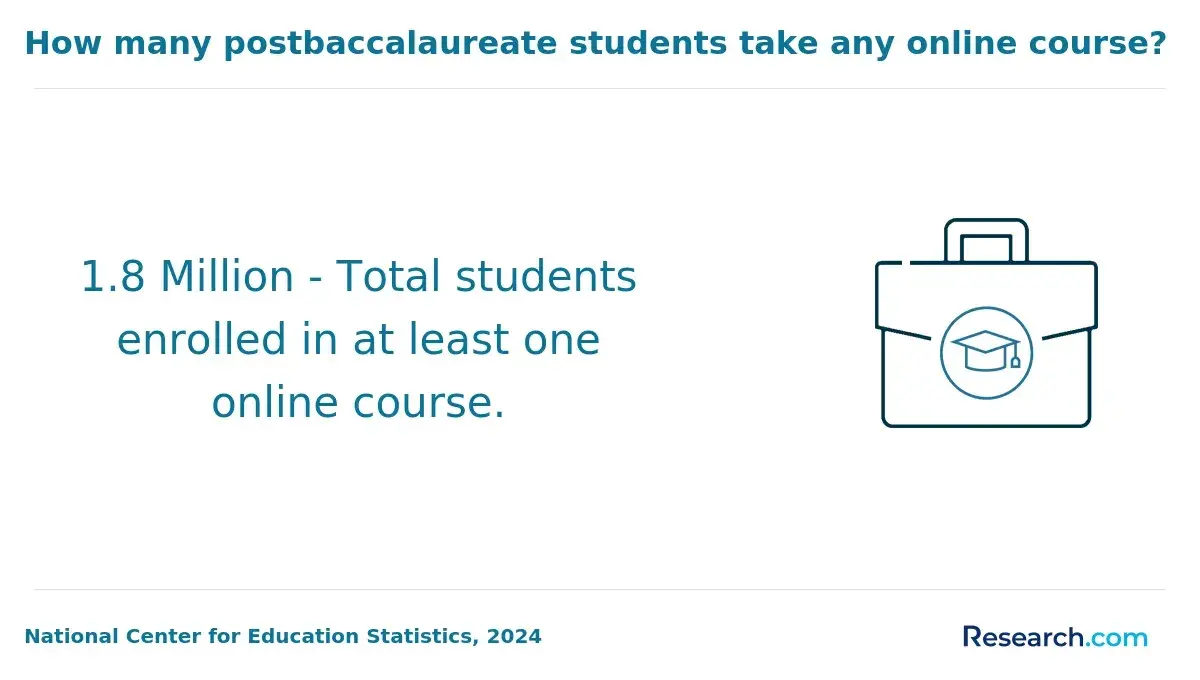
Determining whether Arizona State University provides a supportive environment for online learners requires examining its program offerings, scheduling options, and alignment with employer expectations. With online enrollment growing by over 7% in 2023 according to the National Center for Education Statistics, students increasingly demand education that balances flexibility with recognized quality.
This trend underscores the need to evaluate how Arizona State University's programs accommodate varied schedules and career trajectories, particularly for working professionals seeking upward mobility without risking valuable time and resources. This article will analyze Arizona State University's online degrees in terms of available programs, flexibility, cost, and student support to clarify their practical value for online students.
Key Points About Studying at Arizona State University as an Online Student
- Arizona State University's total tuition of $34,845 reflects the full cost for online programs, requiring students to assess this investment against their financial capacity and expected return in career prospects.
- The tuition encompasses access to extensive learning resources, indicating that cost includes critical academic supports that influence student success beyond course content alone.
- With a 68% graduation rate and high reported satisfaction, online students experience a balance of achievable completion and perceived program value, highlighting practical engagement with coursework and institutional support.
What online degree programs are available at Arizona State University?
The structuring of online degree programs at Arizona State University reveals a deliberate balance between accessibility and program rigor, crucial for students who must juggle competing time demands. For instance, a working nurse seeking advancement may benefit from primarily asynchronous courses that allow study during irregular shifts, while another student in education leadership might engage in synchronous sessions that provide essential real-time collaboration. The practical design of these programs reflects a clear understanding of operational constraints common among remote learners. Below are some representative online degree options to consider within the flexible online degrees at Arizona State University.
- Bachelor's in Business Administration: This program focuses on foundational and strategic business principles, offering primarily asynchronous coursework that permits self-paced study but incorporates scheduled discussions to foster peer networking and application of concepts.
- Bachelor's in Computer Science: Emphasizing programming, algorithm design, and system architecture, this degree blends flexible online lectures with periodic synchronous labs to simulate hands-on coding environments.
- Bachelor's in Nursing: Designed to meet ongoing demand across healthcare systems, this program integrates asynchronous theory with required hybrid clinical practicums, balancing flexibility with essential in-person skills training.
- Master's in Engineering Management: Targeting professionals overseeing technical teams, this graduate degree combines self-directed study with live problem-solving sessions to enhance leadership capabilities in engineering contexts.
- Master's in Criminal Justice: Focusing on policy, law enforcement, and criminology theory, this curriculum uses mostly asynchronous modules supplemented by live case study analyses encouraging interactive participation.
- Professional Certificates: These shorter, career-focused credentials address niche skill sets and emerging fields such as public health, delivered entirely online to facilitate swift upskilling without extended enrollment.
Arizona State University online degree programs extend across undergraduate and graduate levels, accommodating diverse learner profiles aiming to maintain professional roles while studying. This adaptable delivery model supports students in managing personal and work commitments without sacrificing quality or relevance. For prospective enrollees weighing their options, the university's approach provides a useful case study in balancing flexibility with employer-valued credentialing.
Prospective students should also consider financial pathways carefully, as online study affordability varies widely. More information on cost-effective options can be found through online colleges that pay you to attend, which details institutions with cost-conscious models accepting federal aid applicable to online environments.
Are admissions for online degrees at Arizona State University difficult?
Arizona State University's online degree admissions are notably more accessible than traditional competitive universities. With an acceptance rate around 90%, the barrier to entry is comparatively low, favoring applicants who meet basic educational criteria rather than high test scores or extensive extracurricular profiles. This places ASU in a position that balances selectivity with openness, especially as many institutions tighten admissions standards using rigid test score requirements.
The university requires either a GED or a high school diploma and does not mandate SAT or ACT scores for online applicants, which simplifies the process for working adults or international students who must provide TOEFL results instead. Transfer credits from exams like ACE, CLEP, and DSST are widely accepted, reflecting pragmatic flexibility for students with prior coursework or professional training. In this context, ASU's admissions approach aligns with modern demands for inclusive, non-exclusionary access to higher education.
One ASU online graduate shared, "I applied after delaying college for years because standardized testing felt like a roadblock. Knowing I didn't have to submit SAT scores made it possible to start without that added stress. The well-organized transfer credit evaluations also helped me save time, and the application itself was straightforward-no unexpected hoops to jump through. It felt like they valued my past experience and future goals."
How flexible are the online degree programs are at Arizona State University?
Arizona State University online degree flexibility hinges on a hybrid approach combining asynchronous and synchronous learning, allowing students to tailor coursework around professional and personal commitments. For example, a working parent enrolled in a business program can access recorded lectures to study during off-hours, yet participate in scheduled live discussions for critical engagement. This balance supports varied learning styles but requires disciplined time management, especially when synchronous sessions overlap with occupational responsibilities.
While most programs are fully online, health-related degrees incorporate mandatory in-person clinicals or practicums, limiting flexibility but aligning with licensure requirements and employer expectations. The semester-based academic calendar includes multiple annual start dates, benefiting those needing midyear entry or who cannot pause employment. This structure presents scheduling advantages but may complicate cohort cohesion compared to traditional fixed-start programs.
Overall, flexible online programs at Arizona State University offer adaptability for diverse students, though they are not uniformly asynchronous or entirely remote. Prospective enrollees prioritizing convenience should assess program-specific demands closely. Given the demand for accelerated credentials, students might also consider alternatives such as the fastest associates degree online options for quicker workforce entry.
Is it expensive to attend an online program at Arizona State University?
Arizona State University's online tuition averages $12,051 annually, but total costs including books, supplies, room, and board reach about $34,845. For remote learners, this consolidated expense notably excludes additional online-specific technology fees, providing predictability that benefits professionals balancing education with work or family responsibilities. Such fixed in-state tuition regardless of student location simplifies financial planning and avoids unexpected charges often found in online programs.
While some degree programs nationwide vary widely in their additional requirements and fees, Arizona State University maintains stable tuition costs that do not fluctuate based on program specifics or student geography. This approach contrasts with many institutions where online tuition can differ significantly depending on residency or program intensity, making ASU's total expenses easier to assess upfront.
Financial aid is a critical factor in managing annual expenses, with 93% of undergraduates receiving aid averaging $12,396 each, substantially mitigating the nominal cost of attendance. This aid availability is a notable aspect when weighing whether the Arizona State University online tuition cost competitive against other options, especially given that many traditional online programs tend to exceed this tuition benchmark.
For those comparing value within the growing landscape of remote higher education, Arizona State University offers a cost structure that aligns with practical budgeting needs and educational goals. Prospective students seeking inexpensive masters programs may find this balance crucial when prioritizing affordability alongside long-term employability outcomes.
What resources are included in the tuition cost at Arizona State University?
Access to comprehensive digital and academic resources is a critical factor in evaluating the practical value of an online degree. For Arizona State University students, the tuition cost incorporates tools and services that directly address common obstacles faced by remote learners, such as technical challenges, limited access to academic support, and reduced career networking opportunities. For instance, a working professional balancing full-time employment with coursework benefits from reliable 24/7 technical assistance to prevent disruptions, while also leveraging personalized academic coaching to stay on track. Below are key resources included in the tuition that underpin student success and employability:
- Learning Management System: ASU's integrated platform consolidates course materials, assignments, and communication tools, providing students with a centralized interface. This reduces time spent navigating disparate systems and fosters efficient engagement with coursework.
- 24/7 Technical Support: Continuous technical assistance ensures that students encountering software or access issues outside regular hours can maintain steady progress without administrative delays, which is essential for those studying asynchronously.
- Academic Support Services: Dedicated tutoring, writing help, and coaching are offered virtually across disciplines, supplying personalized guidance that many online programs limit or charge extra for. This support enhances retention and academic performance.
- Student Portal and Library Access: The portal offers schedule management, grade tracking, and advisor communication, along with comprehensive digital library resources. It equalizes research capabilities compared to on-campus peers, a vital factor for coursework dependent on current and credible sources.
- Career Development Resources: Included career coaching, resume critiques, and job search assistance via ASU's online career center connect students to employer networks and internships. This service targets real-world employment outcomes beyond degree completion.

Are the online degrees at Arizona State University ideal for working professionals?
Arizona State University's online degree programs address the complex challenges faced by working professionals trying to balance career progression with continuing education. Consider a mid-level manager navigating a demanding schedule who needs coursework that fits around irregular hours without sacrificing academic rigor. The asynchronous format of many programs enables this flexibility, allowing students to engage with materials and complete assignments independently, which supports ongoing employment without disruption. These academic pathways are designed with career applicability in mind, frequently aligned with fields like business analytics and cybersecurity where skill demand is tangible and immediate. Networking resources integrated into the online experience also provide vital professional connections that help translate learning into advancement.
This practical structure is reinforced by features critical for working students, as outlined below:
- Flexible Scheduling: Programs use asynchronous delivery, enabling students to access course content anytime, which is essential for professionals managing varied work shifts and personal obligations.
- Industry-Relevant Curriculum: Degree offerings emphasize current workforce requirements, focusing on disciplines such as business and health care that maintain strong hiring interest.
- Multiple Start Dates: Several enrollment windows per year allow learners to begin studies without long delays, supporting career timing needs.
- Career Support Services: Online students receive tailored resources including virtual networking and career planning aligned with evolving job markets.
- Employer Tuition Partnerships: Collaborations with companies provide tuition assistance options, reducing financial barriers and encouraging continued professional development.
- Diverse Degree Levels: Options range from undergraduate to graduate degrees, accommodating different stages of a professional's career trajectory.
- Recognition Among Non-Profit Institutions: ASU's status as a leader in flexible education is noted within the non profit universities category, reflecting reliability in online academic quality.
How big is the online student community at Arizona State University?
Arizona State University's online student body, numbering 79,593 across all programs, represents one of the largest digital learning populations in the nation. For a student balancing full-time work and family, this scale means access to a diverse peer group for sharing resources and perspectives, which is critical for deeper engagement and motivation in online learning environments.
The university's support framework extends beyond academics through dedicated honor societies like the National Society of Collegiate Scholars and Pi Alpha Alpha, which also welcome online students. These affiliations provide targeted networking and recognition that can enhance resumes and foster connections relevant to public administration and other fields.
Moreover, ASU's official social media groups and student-run forums create virtual spaces resembling campus community life. Platforms on Facebook and LinkedIn enable students to collaborate, exchange advice, and participate in events-features that mitigate isolation and boost academic persistence and practical knowledge sharing.
While the size and digital infrastructure offer substantial benefits, individual experiences depend on proactive engagement efforts. Students who actively use these networks generally report stronger peer support and improved outcomes, but passive enrollment in large communities may offer limited practical advantage without deliberate participation.
Is there high online student satisfaction at Arizona State University?
Online students at Arizona State University generally report favorable experiences, particularly noting the flexibility that accommodates full-time work or family obligations. For example, a working parent managing an irregular schedule often highlights how the platform's structure allows course completion without strict synchronous participation, which is crucial for balancing multiple responsibilities.
Students also commend the university's course design, which promotes clear navigation and accessible learning materials, supporting effective study habits despite physical distance. The relevance of program content to industry demands further reinforces perceived value, helping learners feel their time investment translates to employable skills.
However, some learners encounter challenges such as delayed responses from instructors and limited technical support, which can hinder timely progress and create frustration. These issues, while not widespread, suggest areas where Arizona State University still needs to improve its responsiveness and infrastructure to match growing online enrollment pressures.
Despite these concerns, the overall sentiment among Arizona State University's online student body leans positive. The combination of program flexibility, practical curriculum, and institutional recognition tends to outweigh intermittent service shortcomings, resulting in a generally supportive environment for online degree completion.
What is the average salary for online degree graduates at Arizona State University?
Online degree graduates from Arizona State University typically enter the workforce with salaries that reflect the school's program diversity and sector alignment. Those aiming for mid- to high-tier earning roles should note that median salaries vary significantly by discipline, reflecting labor market realities more than any institutional uniformity. For instance, an online graduate in Construction Engineering might reasonably anticipate earnings around $74,873, exceeding the overall average but tied to the demand in engineering fields. This contrasts with the more modest income range for fields like Public Health, where median pay hovers near $38,462, underscoring the importance of field selection when assessing Arizona State University online graduate salary outcomes.
The average salary for online degree graduates at Arizona State University stands at approximately $62,668, yet this figure conceals broad variances. Graduates with degrees in Computer Science and Registered Nursing report salaries in the $66,000 to $73,000 range, reflecting sustained healthcare and technology sector demand. Conversely, business-related areas such as Finance and Management Sciences fall between $50,000 and $57,000, suggesting moderate but consistent opportunities. These disparities illustrate how workforce placement depends heavily on academic focus and regional industry trends.
Flexibility is a key advantage for working professionals pursuing these degrees, especially through accelerated online degrees. However, potential students must weigh the salary outlook against personal and professional goals. While Arizona State University's online programs open entry to reputable sectors, the value proposition hinges on aligning degree choice with realistic earning possibilities and growth expectations in the relevant labor markets.
Does the ROI of an online degree from Arizona State University justify the cost?
Investing in an online degree can be costly, but the return on this investment hinges on post-graduation earnings and manageable debt levels. At Arizona State University, the total tuition for online programs approaches $35,000, which places a significant financial burden on students who often graduate with a median debt around $19,500. This debt load is offset by an earnings-to-debt ratio exceeding 3, indicating that graduates typically earn more than three times their debt, a critical factor when assessing whether the financial tradeoff favors the student's long-term economic position.
For many working adults balancing job responsibilities and family commitments, the fixed tuition rate guaranteed throughout the program provides crucial financial predictability. This policy shields students from unexpected tuition increases over their enrollment period, allowing better personal financial planning. Coupled with tuition levels that remain in line with broader market rates and relatively low institutional loan default rates, these factors reinforce that the cost structure is reasonable given the debt burden graduates carry.
The time to recoup educational expenses will vary depending on the field and individual circumstances, but the earnings multiplier suggests that most graduates achieve positive cash flow on their investment within a few years after completing their degree. This points toward online degrees from Arizona State University generally offering competitive economic value, particularly for students aiming to enter or progress in sectors with steady or growing employer demand.
Nonetheless, the ROI analysis requires careful personal consideration of career goals, program alignment to market needs, and the ability to sustain payments on debt. While not universally advantageous, the structured support and outcomes data position ASU online degrees as feasible financial investments for many prospective students.
One graduate shared how, after hesitation around incurring debt while working full-time, the tuition guarantee helped ease the decision. "Knowing the cost wouldn't jump midway made it manageable to budget alongside my family expenses," she explained. Although balancing coursework with a job was exhausting, she noted that landing a promotion within two years post-graduation made the financial strain worthwhile. "It wasn't just the degree; it was about the stability it brought to my household finances after paying off the loans," she added, highlighting how ASU's policies directly impacted her ability to justify the initial investment.
What Graduates Say About Arizona State University's Online Degree Programs
- Olivia: "Completing my online degree at Arizona State University really emphasized flexibility, which was essential since I was balancing work and family. The ability to study remotely allowed me to gain the credential faster while staying engaged professionally. When I entered the workforce full-time, I noticed employers valued my practical experience and the structured coursework from ASU, even though I competed in fields where portfolios and internships often held more weight than the degree alone."
- Kevin: "Studying online through Arizona State University gave me the opportunity to pivot careers without pausing my income. While the degree opened doors to remote work options and faster entry into new roles, I quickly realized that advancement in my field still leaned heavily on certifications and on-the-job results rather than the degree itself. That said, ASU's program laid a solid foundation that helped me understand the industry well enough to navigate those realities thoughtfully."
- Kayla: "Arizona State University's online program was challenging but rewarding, and it definitely prepared me to handle real-world pressures when I transitioned to the workforce. I have found that the degree offers credible validation of my skills, but I've had to supplement it with internships and networking to compete for higher-level roles. For me, the key value of the ASU online degree was gaining knowledge while maintaining a career trajectory, even if salary growth has its limits without further licensure."
Other Things You Should Know About Arizona State University Degrees
In 2027, Arizona State University's online programs utilize advanced digital platforms, enabling high levels of interaction through discussion boards, video calls, and group projects. This fosters strong communication with professors and peers, replicating the traditional classroom experience.
Online students at Arizona State University do have access to career resources, but the experience differs from on-campus offerings. While virtual workshops, resume reviews, and employer connections are available, the lack of in-person networking events may limit opportunities for relationship-building with recruiters. Prospective students should weigh the benefit of these digital career services against their personal networking needs, potentially supplementing with external platforms to enhance career prospects.
Arizona State University's online programs often demand a consistent weekly commitment similar to traditional courses, generally requiring focused hours for readings, assignments, and projects. Unlike on-campus schedules, the flexibility can encourage time management but also risk procrastination, leading to intense workload spikes near deadlines. Students working full-time should anticipate strategic planning to avoid burnout, prioritizing programs with clear pacing and structured milestones to better synchronize studies with other responsibilities.
Degrees earned online from Arizona State University hold solid recognition due to the school's established reputation and accreditation, but the perception varies by industry and employer familiarity with online education. In fields emphasizing skill application and portfolios, an online degree's value rises if supplemented by relevant experience. Job seekers should actively communicate their hands-on achievements and verify if their prospective employers acknowledge online credentials equally when evaluating candidates.
References
- ASU, UA rank among top online college programs https://www.azcentral.com/story/news/education/2024/02/08/asu-ua-rank-among-top-online-college-programs/72510378007/
- Is Arizona State University Online Right for You? A Comprehensive Guide - Prince of Streets https://blog.princeofstreets.com.br/is-arizona-state-university-online-right-for-you-a-comprehensive-guide
- Arizona State University, Online Reviews https://www.onlineu.com/online-reviews/arizona-state-university
- 5 Best Colleges with Extensive Online Degree Options for Working Adults - Church Hill Classics Blog https://www.diplomaframe.com/chc-blog/5-best-colleges-with-extensive-online-degree-options-for-working-adults/
- Arizona State University - Wikipedia https://en.wikipedia.org/wiki/Arizona_State_University
- Finding the ROI of Online Programs -- Campus Technology https://campustechnology.com/articles/2017/07/19/finding-the-roi-of-online-programs.aspx
- High School Program https://www.asuprepdigital.org/online-high-school-program/
- Quick Read: ASU Online Degree Cost: Your Complete Guide https://www.centremulti.qc.ca/qc-news/asu-online-degree-cost-your-complete-guide-1767648100
- Arizona State University sets new enrollment records for fall semester https://www.fox10phoenix.com/news/arizona-state-university-sets-new-enrollment-records-fall-semester
- Arizona State University Expands Access to Education with Thirteen New Online Programs https://www.prnewswire.com/news-releases/arizona-state-university-expands-access-to-education-with-thirteen-new-online-programs-300313761.html