Students Tested Their School’s Water Fountains. What They Found Prompted Action

Co-Founder and Chief Data Scientist
Students at The School at Marygrove in Detroit wanted to know whether the water coming from their school’s fountains was safe to drink. Their investigation uncovered traces of lead and raised questions about water quality, prompting school officials to take action.
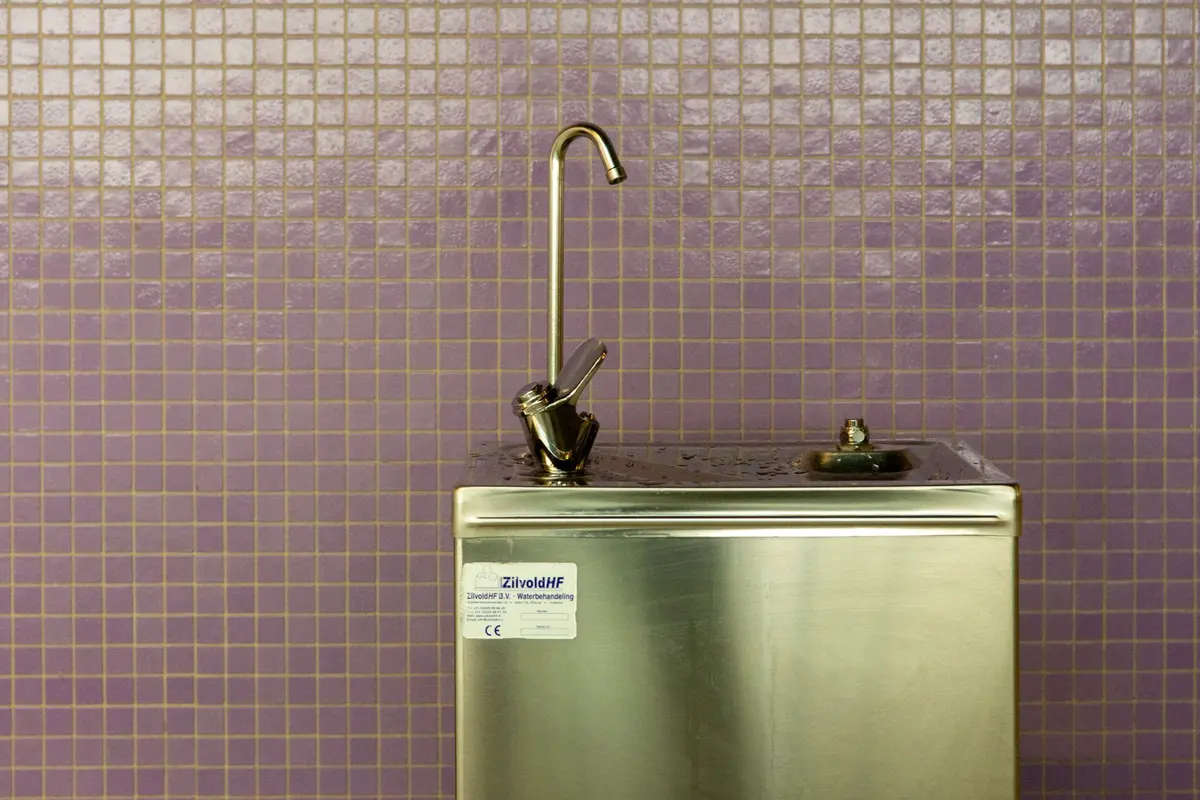
As part of a class project, students tested all eight water fountains on campus for as many as 20 contaminants. Their findings showed an average lead concentration of 1.7 parts per billion (ppb). Although that figure was below the federal Environmental Protection Agency’s (EPA) 15 ppb action level, it exceeded the stricter benchmark recommended by the American Academy of Pediatrics (AAP) for drinking water in schools.
The students did more than document the results. They presented their findings to the superintendent and advocated for improvements. School officials responded by flushing pipes, replacing filters and continuing water testing.
Their project demonstrates how student-led investigations can bring attention to potential environmental health concerns and encourage schools to address them.
How Students Tested Their School’s Drinking Water
The students examined all eight drinking fountains at The School at Marygrove as part of a classroom investigation into drinking water quality. They tested the water for up to 20 contaminants, including lead.
Rather than treating the assignment as a routine science exercise, students used their findings to investigate a concern that directly affected their school community. The testing gave them information they could bring to school leadership and use to support their requests for improvements.
Their results showed that the school's drinking water contained an average lead concentration of 1.7 ppb. While this was considerably lower than the EPA's 15 ppb action level, the finding prompted further discussion about what constitutes an acceptable level of lead in water used by children.
The students presented their findings to the superintendent, turning their classroom research into an opportunity to advocate for safer drinking water. Their work helped bring the issue to the attention of school administrators and encouraged a response.
Why Lead Levels Below the Federal Action Level Still Matter
A lead concentration below the EPA's action level does not automatically mean drinking water is safe for children.
The EPA's 15 ppb action level is a regulatory threshold used to determine when water systems must take corrective action. It should not be interpreted as a health-based safety standard for children's drinking water. Lead exposure can harm children's development, and avoiding exposure is particularly important in schools, where students may drink from the same fountains every day.
The American Academy of Pediatrics recommends that lead concentrations in school drinking water remain below 1 ppb. This recommendation provides a much stricter benchmark than the federal action level.
At an average of 1.7 ppb, the water tested at Marygrove exceeded the AAP's recommended level, even though it remained below the EPA threshold. This distinction highlights why relying exclusively on federal action levels can give families an incomplete picture of potential risks.
Research from Harvard's T.H. Chan School of Public Health also examined lead concentrations in U.S. school drinking water testing programs between 2016 and 2018. The research highlights the importance of school testing programs and opportunities to strengthen policies addressing lead exposure.
Under Michigan’s Filter First law, Detroit schools must install lead-reducing filters on drinking-water fixtures, test filtered water annually, and remove any fixture from service if lead exceeds 5 ppb. Statewide, EGLE announced $50 million in grants for 612 school systems and 122 child-care centers to support compliance.
The Marygrove findings illustrate why schools should take water quality seriously even when test results fall below federal regulatory thresholds.
How School Officials Responded to the Findings
The students' presentation prompted school officials to take steps to address the water quality concerns.
Following the presentation to the superintendent, officials flushed the school's pipes and replaced water filters. They also continued testing to monitor drinking water quality.
These measures demonstrated that student research could lead to practical changes within the school. The response also underscored the importance of follow-up testing rather than treating one round of results as a complete assessment of water safety.
For students and families, the project offered an important lesson: identifying a potential problem is only the first step. Schools must also respond to findings, maintain appropriate filtration and continue monitoring their water systems.
Detroit Water-System Lead Results, 2020-2025
| Year | Detroit 90th-percentile lead result | Michigan action level |
| 2020 | 9 ppb | 12 ppb |
| 2021 | 12 ppb | 12 ppb |
| 2022 | 12 ppb | 12 ppb |
| 2023 | 12 ppb | 12 ppb |
| 2024 | 13 ppb | 12 ppb |
| 2025 | 8 ppb | 12 ppb |
Source: City of Detroit Water and Sewerage Department sampling results.
How Parents Can Check Their School's Drinking Water Results
Parents do not have to wait for a classroom investigation to ask questions about the water their children drink at school.
They can start by contacting their child's school administration or district facilities department and requesting the latest drinking water testing results. Families should ask for the actual laboratory findings, not simply confirmation that the school passed its inspection or met federal requirements.
When reviewing the results, parents can consider several questions:
- When was the water last tested? Recent results can help families understand whether the school regularly monitors its drinking water.
- Were all drinking fountains tested? Results from one location may not represent every fountain or water outlet in a building.
- What lead concentrations did the tests find? Parents should look beyond whether results fall below the EPA's 15 ppb action level and consider the AAP's recommendation of less than 1 ppb.
- What happened after elevated levels were identified? Families can ask whether the school flushed pipes, replaced filters or took other corrective measures.
- Has follow-up testing been completed? Additional testing can help determine whether corrective actions addressed the problem.
If school officials cannot provide the results, parents can ask the district where its drinking water testing records are maintained and how families can access them.
The Marygrove students' experience shows why transparency matters. Families need access to meaningful testing information to understand potential risks and hold schools accountable for addressing concerns.
Ultimately, the students' project was about more than measuring contaminants. It showed how young people can use research, communicate their findings and encourage decision-makers to act. Their investigation also delivered a message that applies to schools everywhere: water quality deserves attention even when test results fall below federal action levels.
References:
Bakuli, E. (2023, April 3). Student-led water testing spurs action at Detroit’s School at Marygrove. Chalkbeat Detroit. https://www.chalkbeat.org/detroit/2023/4/3/23665464/detroit-public-schools-marygrove-conservancy-lead-water-drinking/
Cradock, A. L., Barrett, J. L., Poole, M. K., Flax, C. N., Vollmer, L., & Hecht, C. A. (2022, September 30). Lead concentrations in U.S. school drinking water: Testing programs, prevalence, and policy opportunities, 2016–2018. American Journal of Public Health, 112(S7), S679–S689. https://doi.org/10.2105/AJPH.2022.306961
Michigan Department of Environment, Great Lakes, and Energy. (n.d.). Filter First sampling guidance. https://www.michigan.gov/egle/-/media/Project/Websites/egle/Documents/Programs/DWEHD/Community-Water-Supply/Schools/Filter-First/Sampling-Guidance.pdf