Rock Climbers Found An 80-Million-Year-Old Trackway By Accident. Amateurs Keep Doing This.

Co-Founder and Chief Data Scientist
Rock climbers scaling Monte Cònero, a limestone cliff overlooking Italy's Adriatic coast, noticed grooves in the rock face that reminded them of another discovery that had made headlines earlier the same year, in a different part of the same regional park. They weren't paleontologists. But one of the climbers happened to also be a geologist, and he recognized the find was worth a second look, leading to a study published November 19, 2025, in the journal Cretaceous Research, identifying the grooves as evidence of sea turtles fleeing an earthquake-triggered underwater avalanche roughly 79 million years ago.
It's a pattern that shows up again and again in paleontology and archaeology: some of the field's most significant finds come from people with no formal training who happened to be in the right place, looking closely at something specialists weren't yet looking for.
Rock Climbers Recognized What They'd Seen Before
The climbers on Monte Cònero consulted fellow climber and geologist Paolo Sandroni, who contacted Alessandro Montanari, director of the Coldigioco Geological Observatory, according to Live Science's reporting on the discovery. Sandroni and a colleague returned to the cliff face to collect rock samples and document the site with a drone. Hundreds of tracks turned out to sit on a layer of Scaglia Rossa limestone that geologists have studied for decades; researchers determined an earthquake-triggered underwater avalanche buried the tracks within minutes of their being made, which is the only reason they survived at all, since seafloor organisms normally erase such traces within days. What got the discovery noticed wasn't specialized paleontological training. It was climbers spending enough time on that particular rock face, and enough familiarity with an earlier find nearby, to recognize a pattern.
A Quarry Worker Felt "Unusual Bumps"
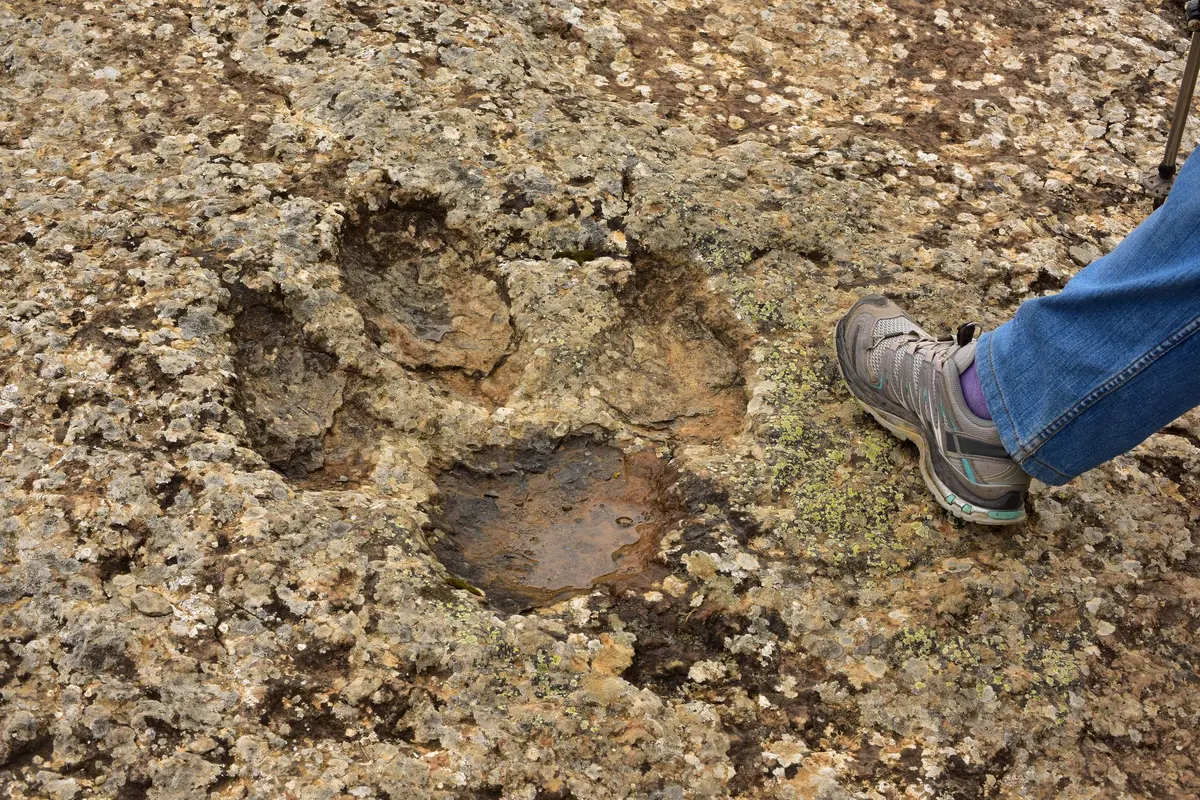
A similar story played out in Oxfordshire, England, in June 2024. A worker at Dewars Farm Quarry, digging up clay, felt irregular bumps underfoot and flagged them. The find led to a week-long excavation by more than 100 researchers from the Universities of Birmingham and Oxford, who documented roughly 200 footprints across five trackways, one nearly 500 feet long, dating to the Middle Jurassic period around 166 million years ago, according to NPR's coverage of the dig. Four of the trackways belonged to long-necked sauropods, likely the 60-foot Cetiosaurus; a fifth belonged to the carnivorous Megalosaurus, the first dinosaur ever scientifically named, in 1824. The same quarry had already produced a major dinosaur track discovery once before, in 1997, when limestone workers, not scientists, first stumbled onto more than 40 sets of footprints there.
The Pattern Goes Back Decades
Neither of these is a new phenomenon. On September 12, 1940, four teenagers, Marcel Ravidat, Jacques Marsal, Georges Agnel and Simon Coencas, entered a hole in a hillside near Montignac, France, that Ravidat's dog had investigated days earlier, according to the French Ministry of Culture's own archaeological record of the discovery. They found the Lascaux cave, whose walls hold some of the most significant Paleolithic paintings ever documented. None of the four had any archaeological training. They were curious teenagers exploring a hole in the ground.
Why Amateurs Find What Specialists Miss
The mechanism behind this pattern isn't mysterious. Professional paleontologists and archaeologists typically survey known or likely sites, guided by prior research, funding priorities and existing site records. Climbers, quarry workers, farmers and teenagers cover terrain nobody has flagged as promising, simply because their work or curiosity takes them there anyway, at a scale and frequency that formal survey teams, working with limited budgets and time, can't match. Recognition still requires some frame of reference, which is why the Cònero climbers only understood what they'd found because a similar discovery had made local news months earlier, and why a specific dinosaur track site is now on its second major find by successive generations of quarry workers rather than paleontologists actively searching for one.
How An Accidental Find Enters The Scientific Record
In both recent cases, the transition from accidental sighting to documented science followed the same basic path: someone with informal knowledge, a climbing geologist, a curious worker, recognized that what they'd found looked unusual, and brought it to someone with formal training who could investigate further. From there, the process looks like any other scientific discovery: sample collection, documentation, peer review, and eventual publication in a journal other researchers can build on. The accident is in the finding. Everything that happens afterward runs through the same institutions, and the same scrutiny, as work that started with a research grant instead of a dog, a shovel, or a rope.