2027 Most Recession-Resistant Careers You Can Pursue With an Educational Policy Degree
Audited and Verified:
Our Editorial and Data Verification Process
Research.com uses government datasets, official education statistics and primary institutional information to support its career and degree guides. Our review process checks factual accuracy, occupational definitions, source dates and the requirements associated with the credentials discussed.
How This Article Was Fact-Checked
Our editorial team verifies salary estimates, employment projections, education requirements and program information against original data providers and official organizations. Salary figures are checked against the relevant occupational definitions and reporting periods. Information about licensure, accreditation and required in-person training is reviewed separately.
Fact-checked and verified on:

Co-Founder and Chief Data Scientist
Graduates who hold an educational policy degree frequently encounter uncertainty in a changing job market, where budget cuts and shifting priorities can threaten stability. Since 30% of education-related roles are projected to grow even amid economic downturns, aiming for recession-resistant careers is essential.
Positions in policy analysis, program evaluation, and compliance monitoring usually sustain demand as institutions keep adapting to federal and state mandates. Remaining competitive calls for a solid understanding of data analytics and regulatory frameworks. This article examines the most recession-proof career paths open to educational policy graduates and provides strategies for strengthening marketability in these resilient fields.
Key Points About Recession-Resistant Educational Policy Careers
- Educational policy graduates often secure roles in government agencies where demand remains stable despite economic downturns, ensuring consistent employment through policymaking and program evaluation.
- Expertise in educational data analysis is crucial-47% of policymakers prefer candidates who can leverage data to improve school systems, a skill that protects jobs during budget cuts.
- Careers in nonprofit education advocacy grow as social equity efforts expand, offering recession-resistant positions focused on policy reform and community engagement within the educational sector.
What is the employment outlook for graduates of Educational Policy?
Job growth for people with an educational policy degree is projected to rise by roughly 8% over the coming decade, exceeding the national average for all occupations. Roles including education administrators, policy analysts, and curriculum coordinators continue to see steady demand.
Below are main reasons that support the strong employment outlook for educational policy graduates:
- Ongoing reforms: Sustained efforts to enhance public education fuel demand for specialists who can design and carry out effective policies.
- Focus on accountability: A growing emphasis on equity and accountability requires skilled professionals to make sure educational institutions satisfy evolving standards.
- Technological adaptation: Schools need leaders who can handle changes brought by technological advances and societal shifts, which makes this expertise essential.
- Job security: Unemployment among educational policy professionals stays below the national average, even in economic downturns, because their skills are specialized.
People reviewing job market trends for educational policy degree holders will see that ongoing investment in education and government mandates create stable, long-term opportunities. In addition, prospective students can examine reputable options through online master's programs to advance their qualifications in this resilient career path.
What are the most recession-resistant careers for Educational Policy degree graduates?
Some roles in educational policy and nearby industries are often naturally protected from economic swings because they are essential or regulatory in nature. Labor reports show that employment for policy-related education positions is expected to grow by approximately 7%, outpacing the national average.
Below are several of the best recession-proof jobs for educational policy graduates that provide stability and steady demand.
- Education Administrator: These professionals oversee schools or educational programs and ensure compliance with state and federal regulations. Their leadership is crucial for keeping schools running, so their roles remain essential even during budget cuts and economic downturns.
- Education Policy Analyst: Analysts study and assess educational policies and programs at district, state, or federal levels. Governments rely on accurate data and well-informed policy adjustments during recessions, which protects the position's resilience.
- Compliance Officer: These officers make sure schools satisfy legislative and accreditation requirements. Because noncompliance risks lost funding or legal problems, their work is given high priority to avoid costly penalties in uncertain financial times.
- Grant Coordinator and Manager: Responsible for securing alternative funding, these professionals keep educational programs going when public budgets shrink. Their ability to reach external funding sources makes them indispensable for maintaining revenue channels.
- Curriculum Developer: Curriculum professionals revise and align educational content with mandated standards. Because maintaining compliance and quality education is non-negotiable, even in tight financial conditions, demand for these experts stays steady.
Those who want to enhance their expertise may also consider related programs such as an MLIS degree online, which can expand career options within educational administration and policy settings. For individuals pursuing stable career paths with an educational policy degree, these roles are among the top options that combine meaningful impact with economic stability.
In which industries can Educational Policy degree holders find work?
Graduates with an educational policy degree have opportunities beyond traditional education roles; they can apply their expertise across various sectors that remain stable despite economic fluctuations. Nearly 40% of policy graduates who enter tech-related fields report steady or growing job demand.
The industries below commonly hire educational policy professionals and value their skills:
- Government and public administration: Professionals in this sector create and enforce education-related policies at different government levels to improve outcomes and funding distribution. Roles such as policy analyst and program coordinator stress long-term stability tied to public education's essential services.
- Nonprofit and advocacy organizations: These groups focus on equity, access, and reform and hire specialists for research, grant writing, and community engagement. The steady philanthropic support that many nonprofits receive helps shield them from economic downturns.
- Higher education: Colleges and universities hire policy graduates as research analysts, accreditation specialists, and program evaluators to handle funding and compliance demands, providing reliable career paths that recessions affect less.
- Educational technology: Growing quickly, this sector needs policy professionals to guide product standards, ensure regulatory compliance, and promote digital inclusion. Steady demand here reflects the growing integration of technology in learning environments.
A conversation with a professional who earned an educational policy degree online showed the real-world application of such skills. He described uncertain moments when moving between sectors but stressed that the analytical and communication abilities he gained enabled smooth adaptation.
"At first, navigating organizational cultures in government versus nonprofits was difficult," he shared, "but understanding policy frameworks helped me match projects to each employer's goals." His experience demonstrates that flexibility combined with deep policy insight can create opportunities across diverse, stable industries.
For educational policy graduates, public sector roles usually provide more job stability than private sector positions. Public positions in government agencies, academic institutions, and non-profit organizations gain from steady funding and protections that help preserve employment during economic downturns.
For instance, many government education departments set aside consistent budgets to support policy development over time, with about 78% of professionals keeping their roles even amid major recessions.
By contrast, private sector opportunities, such as those in educational technology startups or consulting firms, often involve more frequent workforce adjustments because of market changes or venture capital availability. However, these environments tend to encourage faster career advancement driven by innovation and dynamic projects, often with higher salaries but fewer job protections and a greater risk of layoffs.
The choice between sectors depends on what graduates prioritize: public sector roles offer stability, benefits such as pensions, and job security, but slower professional growth and lower salary ceilings; private sector careers provide rapid professional development and potentially greater earnings but with increased job insecurity.
Ultimately, a graduate's tolerance for risk and desire for either security or accelerated advancement should guide the decision when choosing between public and private paths within educational policy.
The place where Educational Policy graduates choose to work greatly influences their job stability, and certain states serve as key centers with more lasting opportunities. Below are three key states with strong, recession-resistant demand for these professionals.
- California: With a location quotient above 1.3, California has a higher concentration of educational policy roles than most states. Its large public school network and continued commitment to equity and technology integration create steady demand for experts in educational reform.
- New York: The state's large urban education workforce and prominent research institutions drive steady growth in educational policy jobs. Focused efforts on bilingual education, equity, and urban school improvement contribute to its approximately 7% projected employment increase, outpacing the national average.
- Texas: Rapid population growth and expanding school districts fuel demand for people skilled in educational policy, especially around STEM initiatives and charter school systems. Its diverse economy supports innovation funding, which strengthens the state's resilience to economic downturns.
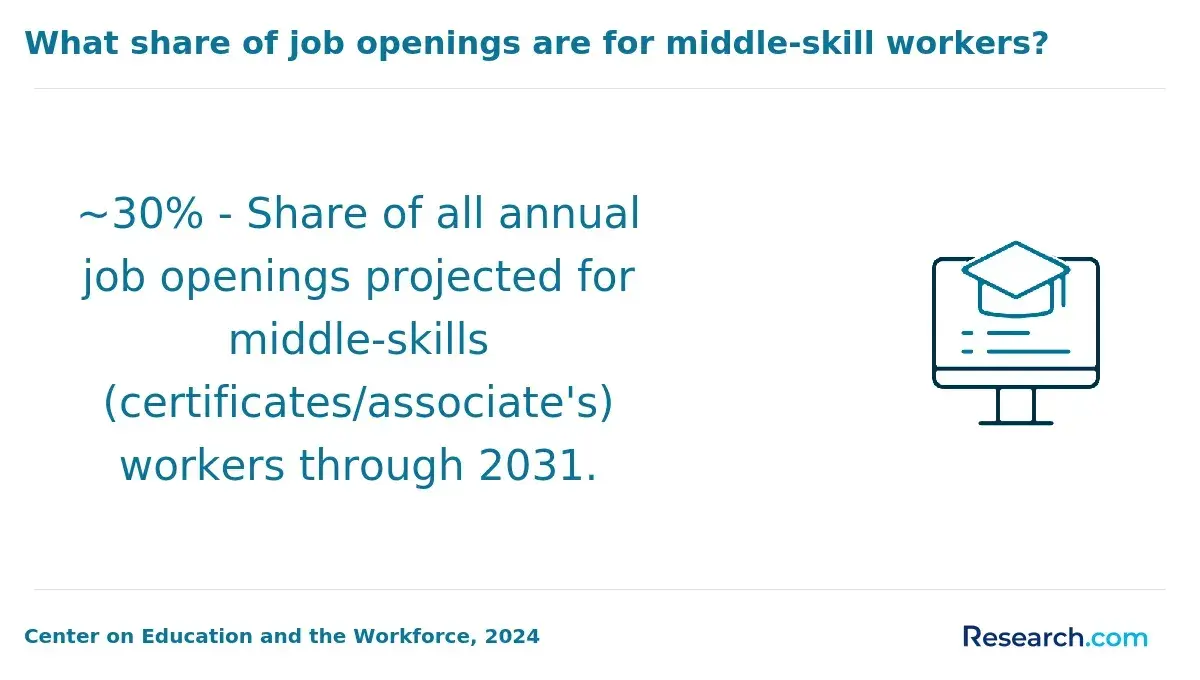
Post-graduate credentials and continuing education act as a protective layer during layoffs by demonstrating specialized expertise that stays in demand. Labor market studies show that professionals with targeted certifications experience 15% less employment disruption during economic downturns.
Below are several certifications that can make educational policy careers more recession-proof.
- Certified Educational Planner (CEP): This credential focuses on policy implementation and on advising students and institutions about educational pathways. CEP holders often secure stable roles in school districts and policy think tanks despite economic challenges.
- Project Management Professional (PMP): Because educational policy increasingly involves managing complex programs, PMP certification highlights leadership abilities in government agencies or nonprofits focused on education reform, skills that are crucial when budgets tighten.
- Data Analysis Certifications: Credentials such as the Google Data Analytics Certificate or the Certified Data Analyst teach skills for interpreting large datasets that are critical to data-driven decision-making in education. Demand for data-savvy professionals in school systems and government departments is projected to grow by over 8% during recessions.
- Certified Public Manager (CPM): This certification boosts credibility for those seeking public sector leadership roles, demonstrating expertise in efficient management of public resources that is valued amid recession-driven scrutiny.
- Grant Writing and Fundraising Certifications: Training from the Grant Professionals Association prepares professionals for stable roles in educational nonprofits or district initiatives that depend on securing external funding, which often becomes more important during recessions.
Earning these top educational policy certifications to improve job security can be a key part of career planning. For individuals considering further education to complement such certifications, exploring options such as the cheapest online MBA no GMAT programs may provide valuable flexibility and a competitive edge.
Keeping skills up to date makes professionals more indispensable during economic reorganizations, a key factor for career longevity in educational policy. Below are core competencies that help educational policy graduates strengthen job security and adapt to changing roles.
- Data Analysis: Mastering the interpretation of educational data lets graduates assess program impacts and guide decision-making. This skill is vital for analysts and policy advisors who seek to influence effective resource distribution.
- Program Evaluation: Expertise in designing and reviewing educational initiatives ensures programs meet goals and funding requirements. This ability supports roles centered on improving learning outcomes and securing stakeholder confidence.
- Grant Writing: The ability to write compelling funding proposals is valuable for sustaining educational projects that rely on external support. Policy professionals with this skill improve their prospects in nonprofit and governmental sectors.
- Stakeholder Communication: Clear, persuasive engagement with teachers, administrators, and legislators increases policy impact. Strong communicators excel in roles that demand collaboration and advocacy.
- Technology Integration: Familiarity with digital education tools prepares graduates for emerging responsibilities in remote and tech-enhanced learning environments. This proficiency aligns with roles that adapt to ongoing technological transformations in education.
Gaining these skills strengthens career resilience by aligning with employer demands for versatile educational policy professionals. Those who want to expand their expertise might also examine essential certifications for educational policy careers to complement their practical abilities.
In addition, exploring options such as online construction management courses can diversify a graduate's qualifications and open opportunities in related fields.
Institutional reputation often plays a major role in securing stable jobs for educational policy graduates. Employers may prefer candidates from prestigious programs, linking their degrees with rigorous training and higher-quality education.
This perception can give graduates an early advantage when they enter a competitive job market that values institutional pedigree.
Graduating from a well-regarded school also opens doors to strong professional networks. Alumni connections and access to exclusive job fairs or internships can lead to better opportunities and mentorship, improving career prospects in educational policy fields.
This networking advantage often gives graduates an edge in securing positions that offer greater job security and growth potential.
However, graduates from any accredited program can stay competitive by showing proven performance and relevant experience. Success in educational policy depends heavily on skills and accomplishments; strong portfolios and effective outcomes can outweigh the prestige of one's alma mater, ensuring resilience in recession-resistant careers.
Proactive career preparation is essential for connecting academic learning with the changing demands of the educational policy field. This approach not only improves employability but also strengthens job stability in competitive and uncertain economic conditions.
Below are key strategies students can use to strengthen their readiness:
- Practical Internships: Seek internships or fellowship opportunities in governmental education departments or policy-focused organizations to gain hands-on experience in developing and assessing educational programs.
- Research Participation: Join projects that examine issues such as educational equity, funding allocation, or reform efforts to sharpen analytical skills and produce data-informed insights.
- Technical Competence: Build proficiency with policy assessment tools and software for qualitative and quantitative data analysis, since these skills set candidates apart in job markets.
- Communication Skills: Develop the ability to present policy recommendations clearly and persuasively through written briefs and oral advocacy, which allows effective engagement with diverse stakeholders.
- Professional Networking: Engage actively in conferences, workshops, and associations related to educational policy to connect with experts, stay current on trends, and find employment opportunities.
When asked how educational policy students can meet today's job market expectations, a professional who completed an online bachelor's degree shared insights about his journey. He noted the overwhelming challenge of balancing studies with family and work commitments, but stressed that adopting a disciplined schedule helped him stay on track.
He recalled, "It was not only about coursework but also about finding ways to apply what I learned through volunteering and small contract projects, which made me more confident during interviews." He also mentioned the mental strain of entering a competitive field, but reinforced that constant learning and networking were the keys to opening doors.
"At first, I underestimated the value of professional associations. After I got involved, opportunities began to appear." His experience highlights that, beyond academic achievement, adaptability and persistence are vital for securing stable roles in educational policy.
Recession-resistant careers in educational policy usually offer competitive salaries, with professionals earning between $65,000 and $85,000 annually on average. Positions such as policy analysts and education program managers, often found in government agencies, policy think tanks, or higher education administration, tend to provide lucrative income, especially when supplemented by specialized certifications that can raise pay by 5% to 10%.
This range reflects the average income for recession-proof educational policy jobs, balancing earning potential and job security.
Although some recession-resistant educational policy careers offer higher pay, others prioritize stable employment without top-tier salaries. Roles in non-profits or smaller government units may provide lower upfront compensation but maintain steady demand with an annual growth rate of about 3.5%, surpassing the national average for all occupations.
Additional financial incentives, such as performance-based bonuses tied to policy outcomes, also add to total earnings in this sector.
Income for educational policy professionals can vary greatly depending on factors such as industry, company size, and geographic location. Advanced academic credentials and continuous learning, particularly in data analysis, can increase earnings potential by up to 15%.
For those interested in accelerating their educational policy career, pursuing the fastest online masters can be a strategic option that improves both expertise and marketability.
What Graduates Say About Their Career After Getting a Degree in Educational Policy
- Grant: "Earning a degree in educational policy was a deliberate decision for me so I could understand the systemic challenges in our school systems. The program taught me how to analyze data and design reforms that truly affect student outcomes. This foundation has been crucial for landing a stable role in government education services, which stays in demand regardless of economic shifts."
- Harlan: "In hindsight, choosing educational policy felt like the best investment for a career with longevity and purpose. The curriculum's mix of theory and practical application helped me navigate complex regulatory environments. Because of this degree, I now hold a leadership position in a nonprofit that continues to thrive even during recessions."
- Archer: "My passion for equity in education led me to complete a degree in educational policy, which gave me skills in strategic planning and advocacy. These have been invaluable for securing a stable job as a policy analyst, where I influence funding decisions that affect schools nationwide. The degree's reputation and my hands-on experience made all the difference when I entered this recession-resistant field."
Other Things You Should Know About Educational Policy Degrees
The U.S. Department of Education, the Congressional Research Service, the Government Accountability Office, and state education agencies hire educational policy graduates for work in budget, accountability, and program analysis. Jobs usually require a bachelor's or master's degree, and federal analyst roles often follow USAJOBS hiring rules.
Educational policy experts play a central role in shaping workforce development initiatives and retraining programs during recoveries. By aligning educational systems with labor market needs, they help prepare people for emerging job opportunities. Their input is essential for crafting policies that promote equitable access to education and skill-building.
In 2027, educational policy careers that adjust to changing demographic trends are more likely to endure economic downturns. As diverse student populations grow, professionals who address equity, inclusion, and resource allocation within educational systems will be vital, which helps ensure stable roles despite recessions.
Yes, interdisciplinary skills such as data analysis, economics, and public administration improve career sustainability. Educational policy professionals who can interpret data, evaluate program effectiveness, and communicate across sectors become more valuable. These skills allow them to contribute broadly to policy discussions and stay competitive in tight job markets.
- 5 Best Industries for College Graduates https://bhsg.com/resources/5-best-industries-for-college-graduates
- Top 5 Recession-Proof Jobs That Don’t Require a Degree https://sundancecollege.com/blog/recession-proof-jobs/
- Jobs in Education Policy: Career and Salary Information | Resilient Educator https://resilienteducator.com/teaching-careers/education-policy-analyst/
- 4 Career Planning Steps to Recession-Proof Your Career https://sopa.tulane.edu/blog/4-career-planning-steps-recession-proof-your-career
- Recession-Proof Plans Study: Professionals Consider Grad School https://online.aurora.edu/recession-proof-with-graduate-school-study/
- How To Recession-Proof Your Career https://junocollege.com/blog/how-to-recession-proof-your-career/
- Which States Help Their College Grads Land Good Jobs? | Washington Monthly https://washingtonmonthly.com/2024/04/04/which-states-help-their-college-grads-land-good-jobs/
- The Education Sector: A Recession-Resistant Enterprise for You - UCMAS Canada https://ucmas.ca/education-sector-a-recession-resistant-enterprise/
- 4 Recession-Proof, Essential Job Skills to Learn https://straighterline.com/blog/essential-job-skills-during-recession
- Recession-Proof Skills: What to Learn When Job Markets Become Uncertain https://ciiskills.in/blog/recession-proof-skills-for-uncertain-job-markets