2027 Technology Management Degree Growth by State: Where Interest Is Rising the Fastest

Co-Founder and Chief Data Scientist
States with rapidly expanding technology management degree enrollments often reflect unique economic and regulatory climates that shape workforce development. For instance, regions experiencing accelerated growth frequently align with state investments in innovation sectors or evolving licensure frameworks that influence adult learner participation. According to recent National Center for Education Statistics data, flexible online options have increased graduate enrollment by over 12% nationally in 2024, a trend that underscores how accessibility and scheduling adaptability affect candidate choices.
Understanding these localized trends helps prospective students assess not only where programs are growing but also the practical implications for career mobility and employer expectations in varied state markets.
Key Things to Know About the State Where Technology Management Degree Interest Is Rising the Fastest
- States like Texas show rapid technology management enrollment growth driven by expanding tech hubs, yet regulatory licensing variability imposes tradeoffs in credential transferability affecting career mobility.
- Florida's aging workforce correlates with increased adult learner enrollment in technology management, reflecting employer demand for mid-career upskilling to address skill gaps in technology leadership roles.
- California's strong online education infrastructure lowers entry barriers, accelerating enrollment but raising timing and cost challenges due to intense competition among digital program providers.
- Which States Are Seeing the Fastest Growth in Technology Management Degree Enrollment? States with Fastest Growth
- What Does Enrollment Growth in Technology Management Programs Actually Tell Prospective Students? Interpreting Enrollment Growth
- How Do Regional Job Market Conditions Drive Technology Management Degree Demand by State? Regional Job Market Conditions
- Which States Have Added the Most New Technology Management Degree Programs in the Last Five Years? States with New Programs
- How Has the Rise of Online Education Changed Which States Lead in Technology Management Program Interest? Role of Online Education
- What Demographic Trends Are Fueling Technology Management Degree Growth in Specific States? Demographic Trends Fueling Growth
- How Do State Funding Levels for Technology Management Services Influence Degree Program Growth? Role of State Funding
- Which States Are Emerging as Unexpected Leaders in Technology Management Degree Interest? Leaders in Growth
- How Does State Population Size Affect the Interpretation of Technology Management Degree Growth Data? Role of State Population
- What Role Do State Licensing Requirements Play in Driving or Suppressing Technology Management Enrollment? Role of State Licensing
Which States Are Seeing the Fastest Growth in Technology Management Degree Enrollment?
The national expansion of technology management degree enrollment reflects a deeper recalibration within the workforce where multidisciplinary skills bridging technical acumen with strategic business insight are increasingly essential. Yet, this growth is not uniform; critical pockets across the country reveal a sharper climb in specific states, influenced heavily by local economic ecosystems, industry presence, and educational infrastructure. For a student or working professional choosing a graduate program, recognizing these geographic accelerators of talent development can signal where future industry hubs are coalescing and where hiring demand is more likely to intensify.
- Texas: The state's enrollment surge is fueled by its complex economy and vibrant tech sectors concentrated in urban and increasingly suburban areas. Graduates often benefit from direct employer-university collaborations, which can ease transitions into roles requiring immediate operational impact rather than theoretical knowledge alone.
- Florida: Florida's rapid growth ties to its emerging tech hubs and migration patterns bringing skilled workers and demand for education. Students here face a tradeoff between leveraging state incentives for STEM growth and contending with a comparatively dispersed market that can challenge networking opportunities.
- Washington: Home to global tech leaders, Washington's growth is strategically aligned with apprenticeship and internship availability, favoring students who prioritize early workforce integration and practical credentials over purely academic pathways.
- North Carolina: With its research-driven universities and growing tech corridor, this state offers enrollment growth rooted in targeted policy aimed at workforce upskilling. This creates scenarios favoring candidates focused on connecting academic credentials to tangible regional economic development.
- Arizona: Arizona's rise reflects efforts to diversify its economy via educational partnerships spanning community colleges and universities, producing more flexible learning options but also requiring students to navigate varied program quality and transferability implications.
This clustering mainly in southern states and the Pacific Northwest illustrates how technology management degree enrollment growth intertwines with state policy environments, population trends, and localized labor market demands. Subsequent sections will unpack the dynamics behind employer expectations, program innovations, and regulatory influences shaping these enrollment patterns. Understanding the momentum behind these hotspots is crucial for prospective students weighing program attributes against real-world career outcomes and geographical flexibility.
For those balancing practical education pathways with long-term employability, recognizing where enrollment is surging is not just about popularity-it signals evolving opportunities within the national technology management field. For insights on related fields with accelerated credentialing options, consider examining the accelerated social work degree landscape, which likewise navigates workforce responsiveness through program design.
What Does Enrollment Growth in Technology Management Programs Actually Tell Prospective Students?
Rising enrollment in technology management programs often reflects interest but not necessarily program quality or graduate success. For example, a program growing rapidly due to lowered admission standards may not prepare students as effectively as one with steady growth driven by strong employer demand and rigorous academics.
Raw enrollment figures provide a useful initial gauge of demand but omit critical context. Without considering retention rates, graduation rates, licensure pass rates, and job placement outcomes, prospective students can misinterpret growth as a sign of program strength rather than just popularity. These additional metrics more accurately indicate whether students succeed academically and professionally once admitted.
- Context: Enrollment alone does not reveal how many students complete the program or secure relevant employment, crucial for assessing return on investment.
- Quality Versus Quantity: Growth fueled by meaningful curricula and labor market alignment tends to produce better career outcomes than expansion driven by aggressive recruitment or reduced standards.
- Outcomes: Metrics such as licensure pass rates and employer satisfaction better reflect a program's ability to meet workforce needs than enrollment figures by themselves.
- Critical Perspective: Enrollment growth should be one data point among many- including program reputation, faculty expertise, and experiential learning offerings-when evaluating programs.
- Direct Insight: Conversations with current students and alumni provide valuable qualitative perspectives on curriculum relevance, real-world preparation, and career trajectories, complementing quantitative data.
How Do Regional Job Market Conditions Drive Technology Management Degree Demand by State?
Regional workforce demand for technology management graduates is closely tied to localized economic dynamics, with state-specific labor markets shaping both the availability of positions and graduate program interest. For example, states investing heavily in healthcare infrastructure inevitably generate a need for specialized technology oversight, which in turn draws more students to technology management degree programs that align with those workforce openings. However, candidates must weigh the tradeoffs of enrolling in programs tied to less dynamic markets, where stagnant hiring reduces practicum opportunities and limits starting salary leverage after graduation.
- California: Benefiting from expansive health IT investments and smart city projects, California leads demand for technology management professionals, reflecting robust job growth and growing enrollments tied to its complex public and private sector ecosystems.
- Texas: A surge in digital infrastructure upgrades across school districts and government agencies combines with employer incentive programs to create a fertile environment for technology management credential holders.
- Florida: Expanding healthcare services alongside an increasing public-sector IT workforce modernizing efforts drive rising technology management job openings that attract prospective students.
- Washington: With its thriving technology sector enhanced by state government digital initiatives, Washington shows high projected job growth particularly in healthcare technology management roles.
- North Carolina: Workforce development grants supporting healthcare and education technology growth position the state as an emerging market for technology management credentials.
Deciding where to pursue technology management education warrants careful assessment of state-level workforce projections and employer hiring trends, as they determine practical outcomes like practicum placement availability and employer negotiations on compensation. For those balancing program options, researching these regional job market conditions can clarify long-term opportunities and inform strategic choices. This grounded approach is especially relevant for those exploring a doctorate in leadership, where understanding economic context is critical for aligning educational investments with career pathways.
Which States Have Added the Most New Technology Management Degree Programs in the Last Five Years?
The fastest expansion of technology management degree programs across the U.S. reflects distinct regional dynamics shaped by economic focus, institutional priorities, and workforce needs. Growth is not merely about adding seats but signals where states expect technology leadership roles to strengthen in the coming decade. Institutions respond to accreditation opportunities, state funding, and intense inter-university competition by tailoring program offerings, often balancing online access with in-person specialization to attract diverse student profiles.
- Texas: The state stands out for launching numerous new programs and introducing online tracks within existing degrees. This expansion is closely tied to state grants supporting STEM workforce development and a tech sector concentrated in urban hotspots, forcing colleges to rapidly scale to meet employer demands.
- Florida: Growth here comes from ramped-up enrollments in established programs plus new niche focuses such as cybersecurity and digital supply chain management. Public universities' competition and state-identified workforce shortages sustain investments, while private institutions add options for flexible learning pathways.
- Ohio: Ohio's strategy centers on converting standard programs to hybrid or fully online formats aimed at professionals balancing work with study. State efforts to integrate manufacturing with advanced technology encourage curricula adjustments that bridge skill gaps aligned with local employer requirements.
- California: Program growth is geographically uneven, concentrated in Silicon Valley and Los Angeles. The crowded higher-ed marketplace compels schools to offer specialized tracks and scholarship funding, but high costs of living and tuition limit some enrollment gains, emphasizing students' need to weigh financial aid against program features.
- Virginia: While growth is more measured, targeted federal and state incentives create an environment where public institutions expand cohort sizes and private colleges prioritize online delivery to reach rural or remote learners.
- Accreditation Incentives: Many states see institutions pursuing accreditation not only for quality assurance but also to unlock funding streams that enable program innovation and expansion.
- Workforce Shortage Designations: State labor departments identifying tech skill deficits drive universities to establish or expand offerings precisely to fill these targeted gaps, shaping program focus and enrollment priorities.
- Student Impact: More programs translate into greater variety and competition for scholarships. This can lower tuition costs but requires prospective students to diligently compare curricular content, format flexibility, and specialization options before committing.
- Decision-Making Advice: Choosing from a crowded field within a state demands careful analysis of program delivery modes, faculty expertise, and alignment with career objectives rather than defaulting to name recognition or proximity alone.
One recent graduate recalled a stressful admissions cycle shaped by rolling deadlines and shifting program availability. Applying first to a Texas school that had just enhanced its online technology management track, the applicant hesitated amid waiting for financial aid details before submitting. Meanwhile, programs in Florida and Ohio with slightly later deadlines offered solid alternatives but with distinct curricular emphases. This delay meant juggling acceptance offers close to the start of the term, highlighting how rapid expansion in multiple states complicates timely decision-making and underscores the value of early, informed preparation to secure a spot in the preferred program format and specialization.
How Has the Rise of Online Education Changed Which States Lead in Technology Management Program Interest?
The expansion of fully online technology management programs has fundamentally altered the geography of graduate enrollment, disrupting the longstanding norm that students must choose schools within commuting distance or relocate. States with well-established online programs are now drawing students nationally, leveraging factors such as program quality, accreditation credibility, and competitive tuition. This shift allows students greater flexibility to prioritize program outcomes and costs over location, but it also introduces complexities tied to state-specific licensure and employer expectations.
- Geographic Decoupling: Online offerings have untethered program choice from physical proximity, enabling states with strong digital infrastructure and respected programs to become nationwide educational hubs.
- Program Reputation: Institutions in select states attract larger nonresident cohorts largely due to their curricula's alignment with employer demands and recognized graduate success.
- Cost Incentives: States with lower tuition for online learners gain an enrollment edge, especially among cost-conscious professionals balancing work and study.
- Licensure and Regulation: Students must assess varying state licensure laws for technology management roles to ensure their education translates into local professional eligibility.
- Implications for Students: While access has broadened, navigating jurisdictional regulations and labor market nuances remains essential for informed program selection.
- Institutional Influence: States hosting prominent online programs now contribute markedly to talent pipelines nationwide, reshaping workforce distribution beyond traditional regional confines.
What Demographic Trends Are Fueling Technology Management Degree Growth in Specific States?
Regional demographic shifts have a direct, nuanced impact on the demand for technology management degree enrollment, influencing not only where programs expand but also the practical career outcomes for graduates in those states. For example, states confronting rapid population aging, such as Florida and Arizona, drive sustained need for tech-savvy healthcare management professionals who can leverage smart technology to support elder care infrastructure-an area firms invest in steadily due to predictable demographic aging curves.
Conversely, states with significant immigration influxes like California and Texas see a dual demand for technological expertise and inclusive organizational leadership, reflecting cultural workplace diversity and expanding tech industry participation from immigrant communities. Graduates in these regions must navigate complex social and technical skill requirements to stay competitive.
The uneven distribution of these trends creates distinct hotspots, making localized labor market analysis essential for prospective students. Considering the demographic trajectory of the target state reveals long-term labor demand stability, guiding students toward regions where technology management roles correspond with deeper economic and social transformations rather than volatile sector swings.
- Population Aging: States with rapidly aging populations see increased demand for technology-driven healthcare management and infrastructure upgrades, aligning enrollment growth with health services innovation and elder care tech integration.
- Immigration Patterns: States with significant immigrant inflows foster rising interest in technology management degrees, propelled by the need for leadership in culturally diverse tech sectors.
- Urbanization: Rapid growth in urban centers such as those in Colorado and Georgia boosts demand for professionals managing smart city tech projects and complex infrastructure systems.
- K-12 Enrollment Growth: Regions with rising K-12 enrollments, particularly in Southern and Midwestern states, indicate younger populations sustaining future demand for educational technology management roles.
- Mental Health Diagnoses: Increasing mental health diagnoses among younger demographics in states like Oregon and Massachusetts increase the need for improved health information systems, prompting demand for technology management graduates who can align clinical compliance with tech solutions.
Prospective students weighing these dynamics may also want to consider flexible, accelerated options such as a 6 month MBA that blends technology management with leadership development, allowing quicker entry into evolving job markets. Overall, aligning enrollment choices with demographic-fueled workforce demand helps optimize long-term career prospects in an increasingly complex employment landscape.
Technology management degree enrollment growth by state reinforces the critical value of regional economic and demographic analysis in shaping graduate education decisions.
How Do State Funding Levels for Technology Management Services Influence Degree Program Growth?
State investment in technology management services directly shapes how degree programs expand and sustain themselves. Where funding is strong, especially through mechanisms like Medicaid reimbursements, block grants, and support for school-based mental health and community clinics, there emerges a reliable demand for skilled professionals. This steady demand encourages institutions to develop or grow technology management programs and attracts students seeking viable local employment.
In contrast, states lacking consistent funding face diminished job markets, prompting graduates to relocate to better-supported regions and discouraging local program development. Evaluating a state's recent legislative funding trends offers prospective students critical foresight into the stability of their intended career market. Additionally, examining in-state graduate retention rates after several years can reveal the tangible career longevity tied to local funding.
- Funding Stability: Reliable state funding creates predictable conditions for employers, which underpins sustainable program enrollment and institutional commitment.
- Employment Pipeline: Investment in public technology management services fosters direct pathways from education to employment, bolstering connection between degree completion and job placement.
- Graduate Retention: Well-funded states typically see a higher percentage of graduates maintaining in-state employment, strengthening regional economic and educational ecosystems.
- Program Development: States prioritizing consistent support attract qualified faculty and continuously update curricula to align with workforce changes.
- Opportunity Costs: Limited funding often forces students to choose between local programs with uncertain outcomes or moving to better-resourced states.
- Legislative Insight: Monitoring recent state legislative actions reveals how future career environments may evolve for technology management professionals.
- Employment Metrics: Asking programs what share of graduates remain employed locally five years post-graduation provides practical insight into program effectiveness and market health.
One technology management graduate recalled navigating a rolling admissions cycle marked by delayed application decisions amid shifting state budget approvals. Uncertain whether funding cuts would impact program availability or financial aid, the graduate hesitated before committing but ultimately accepted an offer after confirmation of stable state support. This real-time financial backdrop shaped not only the admissions timeline but also the graduate's confidence in the local job market upon completion, exemplifying how funding dynamics can influence educational and career trajectories on a highly practical level.
Which States Are Emerging as Unexpected Leaders in Technology Management Degree Interest?
States with modest historical footprints in technology management graduate education are now gaining unexpected traction, reshaping regional landscapes for emerging professionals. This growth often relates to strategic investments in academic programs aligned with evolving employer expectations, yet offers a nuanced tradeoff between opportunity and sustainability in workforce pipelines. For students and career changers, these emerging hubs present alternatives to conventional tech centers with distinct cost, competitiveness, and labor market profiles.
- Arkansas: Accelerated enrollment growth stems from targeted state funding for STEM programs and new accredited technology management degrees. As a member of regional education compacts, Arkansas eases credit transfers and attracts nonresident students. Though pandemic-related stimulus supported initial expansion, ongoing industry partnerships and workforce incentives suggest a durable market. Graduates here may find less saturated hiring environments but should scrutinize employer network depth compared to larger hubs.
- Alabama: Expansion corresponds with aerospace and automotive sectors digitizing their operations, prompting universities to revise curricula. Legislative backing expands scholarships and lowers STEM tuition, reducing admissions competition relative to larger tech markets. However, Alabama's trajectory depends heavily on sustained funding and employer engagement once temporary pandemic stimulus fades, a critical factor for long-term career prospects.
- Nebraska: Growth aligns with rural and mid-size urban initiatives to retain talent and upskill workers, supported by interstate graduate education pipelines. Constraints include slower statewide population growth and economic reliance on cyclical industries, which may limit hiring volatility. Students should weigh these demographic and economic factors when considering their educational investments in Nebraska's technology management market.
- South Dakota: Workforce development targeting emerging fields like data analytics and cybersecurity drives interest despite low population density. State incentives and new program accreditations elevate appeal but caution is warranted regarding the scale of local employer networks and job market stability. Graduates may face denser competition for limited positions, making practical job market analysis crucial.
These regional trends reflect rapid growth in technology management degree enrollment by state, underscoring that emerging regional hubs for technology management education expansion are not confined to traditional tech centers. Prospective students with geographic flexibility should deliberately assess whether lower tuition and less competitive admissions balance the risks tied to each state's market durability. Those pursuing less conventional locations might also explore specialized credentials or connections through partnerships to strengthen employability. Moreover, an informed approach can help navigate tradeoffs between immediate accessibility and long-range career mobility.
For military-affiliated students exploring flexible learning options aligned with workforce demands, online colleges for military remain a valuable consideration within this evolving landscape.
How Does State Population Size Affect the Interpretation of Technology Management Degree Growth Data?
Interpreting technology management degree growth purely through raw enrollment numbers can mislead potential students and workforce analysts, particularly when ignoring state population impact on technology management degree growth. A large state adding 2,000 new graduates annually might dominate headline figures, yet a smaller state producing 300 graduates may exhibit a much higher per-capita increase. This per-capita growth better signals genuine market demand and indicates lower saturation in that state's workforce. Absolute growth reflects only volume, often favoring populous states where supply may already exceed demand, leaving new graduates facing stiff competition.
When evaluating regional enrollment trends in technology management programs, it's essential to consider the existing baseline of licensed professionals per capita. States with fewer credentialed technology management specialists relative to their population size typically offer stronger early-career hiring prospects. Conversely, states with saturated markets may offer fewer opportunities despite high enrollment growth. This population-adjusted perspective helps avoid overestimating hiring openness in large markets.
Prospective students and career changers should also account for licensure complexity, as some states impose more restrictive acceptance criteria, limiting professional influx and influencing both enrollment trends and workforce supply. Realistically, identifying regions with a balanced supply-demand ratio is critical for career planning.
- Population Context: Adjusting growth data by state population exposes true market demand beyond absolute numbers.
- Per-Capita Metrics: Graduates per 100,000 residents reveal emerging, underserved markets potentially obscured by raw data.
- Workforce Saturation: Licensed professional ratios indicate where supply still lags demand.
- Licensure Complexity: Restrictive acceptance criteria in certain states can slow professional growth and affect enrollment.
Additionally, those considering flexible program pacing should examine the architect course duration as a comparative model for accelerated credentialing pathways that may soon inform technology management academic structures.
What Role Do State Licensing Requirements Play in Driving or Suppressing Technology Management Enrollment?
Enrollment in technology management degree programs is strongly influenced by the regulatory landscape governing professional licensure within each state. States that implement clear, consistent, and accessible licensing requirements foster an environment where prospective students can confidently plan their educational and career paths. For example, a graduate choosing between a program in State A with a transparent licensing timeline and standardized examinations versus State B, where licensure criteria shift frequently without clear guidance, is more likely to commit to State A. This preference affects regional program growth and ultimately workforce distribution, as licenses often dictate eligibility for leadership roles in sectors like healthcare IT and manufacturing oversight.
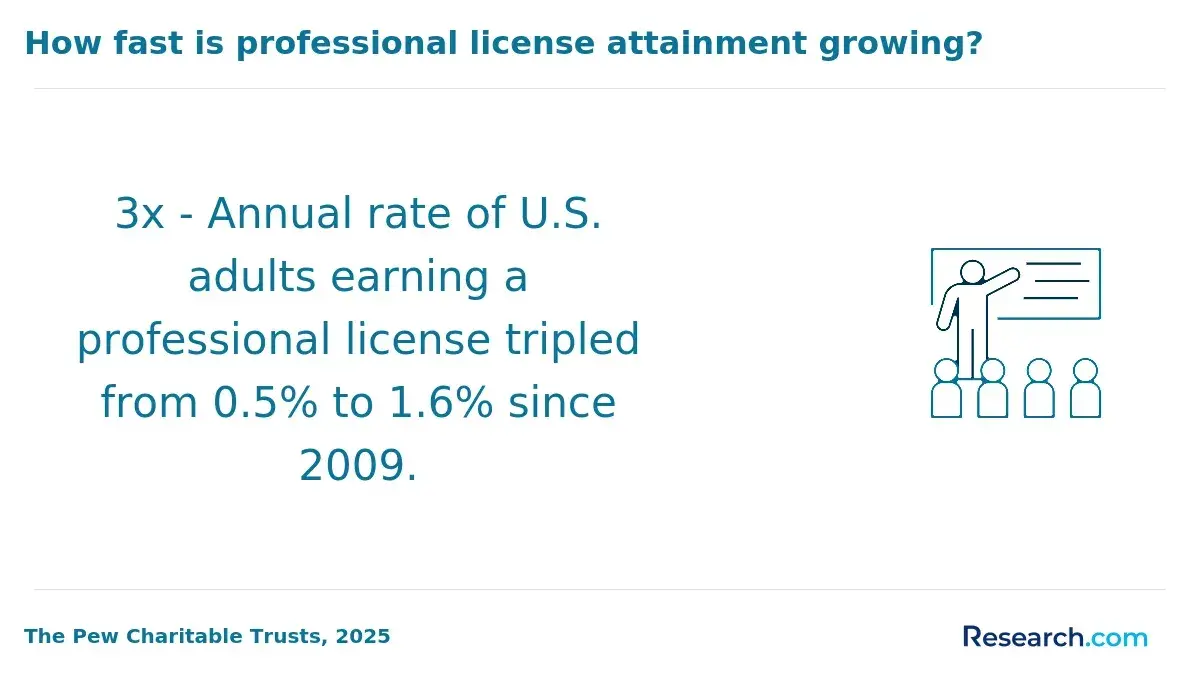
Licensing boards shape market expectations by signaling to employers the professional standards needed for specific roles. In states where licensure is well-established and valued, employers typically require or highly prefer candidates who have secured the relevant credentials, which in turn motivates higher enrollment in aligned graduate programs. This dynamic can be seen in regions where average salaries for licensed technology management professionals exceed those of their non-licensed peers by 15-25%, reinforcing the practical utility of licensure.
Moreover, a positive feedback loop emerges: greater enrollment gives academic programs influence with regulators, enabling advocacy for streamlined pathways and updated requirements that reflect evolving industry needs. However, this cycle is disrupted when licensing demands are overly stringent or opaque, creating barriers that suppress demand and reduce workforce agility.
Prospective students must evaluate not only degree prerequisites but the entire licensure journey-including examinations, supervised experience, and renewal-recognizing that post-graduate licensing obligations significantly affect career flexibility and geographic mobility.
- Clarity: Transparent licensing processes reduce uncertainty and build confidence among prospective students, increasing enrollment in local technology management programs.
- Stringency: Excessively rigorous or complex licensure requirements can suppress enrollment by raising barriers to entry and prolonging time to professional practice.
- Employer Influence: Clear licensure standards shape employer hiring criteria, reinforcing demand for licensed graduates and contributing to program growth.
- Feedback Loop: Enrollment increases empower institutions and stakeholders to advocate for better regulatory frameworks, which in turn attract more students.
- Strategic Decision-Making: Review licensure pathways comprehensively, including post-degree obligations, before selecting a program or state, to ensure alignment with career goals and geographic mobility.
References
- Research That Shows How Career Education Programs Align With Regional Job Markets https://economic-mobility.wested.org/project/research-that-shows-how-career-education-programs-align-with-regional-job-markets/
- How Technology Can Support Your Enrollment Management Strategy - Hartman Executive Advisors https://hartmanadvisors.com/how-technology-can-support-your-enrollment-management-strategy/
- Technology management developing and implementing effective licensing programs https://tind.wipo.int/record/12814
- Is Online Learning Here to Stay? Trends & Insights for 2026 https://www.calmu.edu/is-online-learning-here-to-stay-trends-insights-for-2026
- The Work Ahead | Findings https://www.cfr.org/task-force-reports/work-ahead/findings
- 2026 Higher Education Trends https://www.deloitte.com/us/en/insights/industry/articles-on-higher-education/2026-higher-education-trends.html
- How Online Learning Has Changed Education | ACE Blog https://ace.edu/blog/how-online-learning-has-changed-education/
- How graduate enrollment leaders—and prospective students—are using AI | EAB https://eab.com/resources/blog/adult-education-blog/graduate-enrollment-leaders-prospective-students-using-ai/
- Panicked colleges are adding many new majors and certificate programs http://hechingerreport.org/panicked-universities-in-search-of-students-are-adding-thousands-of-new-majors/
- Trends in Enrollment Management in Higher Education https://moderncampus.com/blog/trends-in-enrollment-management.html
Other Things You Should Know About Technology Management
Employers in states where technology management degree interest is rising the fastest tend to value candidates who combine technical expertise with strategic business skills. These states often have expanding tech sectors or significant investment in digital transformation initiatives, pushing demand for graduates who can manage complex projects and integrate technology solutions efficiently. However, employers may prioritize candidates with practical experience and industry certifications alongside their degrees, making internships and applied learning within programs crucial for job placement success.
Higher tuition and living costs can dampen enrollment growth even in states with strong job markets, while more affordable states attract a broader range of candidates due to lower financial barriers. Prospective students should weigh the total cost of education, including living expenses, against the likelihood of higher starting salaries in more expensive states. For many, choosing a state with moderate costs and solid employment opportunities strikes a better balance between investment and return on their technology management degree.
By 2026, states like Texas, California, and Florida are expected to lead in the growth of Technology Management degree programs, driven by increasing demand for tech professionals and substantial investments in educational infrastructure.
Rural and underserved states are increasingly launching or expanding technology management programs to fill local skill gaps and retain talent. These states often focus on flexible and online learning formats that accommodate working adults and geographically dispersed students. However, graduates face tradeoffs, such as fewer local internship or job opportunities, which makes it essential to consider how programs facilitate placement, possibly leveraging partnerships with regional employers or remote work prospects to mitigate these limitations.