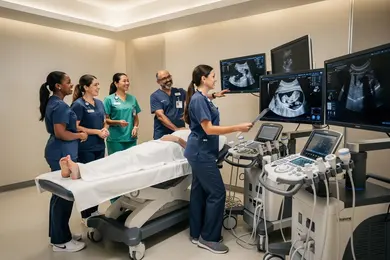
2027 Online vs Campus Ultrasound Technology Outcomes Report: Graduation Rates, Cost, and Career Trade-Offs

Co-Founder and Chief Data Scientist
Adult learners weighing online versus campus ultrasound technology programs often confront a hidden dilemma: how to translate previously earned credits into real progress without extending time-to-graduation or inflating costs. In 2024, only 42% of transfer credits are fully accepted by many degree programs, a decline signaling tighter institutional controls that complicate credit portability. This reflects a broader shift toward prioritizing program alignment over course quantity, pressuring students to retake classes or extend enrollment periods.
As time and tuition costs escalate, these factors directly impact career timelines and return on investment. This article dissects graduation rates, total costs, and career trade-offs between delivery formats to guide informed decisions around ultrasound technology education pathways.
Key Things to Know About Online vs Campus Ultrasound Technology Outcomes
- Campus-based ultrasound technology programs show a 12% higher graduation rate, reflecting structured clinical access but demand greater time commitment, which may delay workforce entry for some students.
- Online formats reduce direct expenses by approximately 20%, yet often shift costs to proctored clinical placements, complicating budgeting and potentially extending total program duration.
- Employers value hands-on experience from campus programs more, with 63% prioritizing clinical hours over online training, signaling a trade-off in perceived readiness that affects early career opportunities.
- Key Things to Know About Online vs Campus Ultrasound Technology Outcomes Key Things to Know About Online vs Campus Ultrasound Technology Outcomes
- What Are the Biggest Differences Between Online and Campus Ultrasound Technology Program Outcomes? Online vs Campus Outcomes
- How Do Graduation Rates Compare Between Online and Campus Ultrasound Technology Programs? Comparing Graduation Rates
- Why Do Online and Campus Ultrasound Technology Students Have Different Completion Rates? Why Completion Rates Differ
- How Do Online and Campus Ultrasound Technology Programs Compare on Total Cost? Total Cost Comparison
- What Hidden Costs Should Students Expect in Online vs Campus Ultrasound Technology Programs? Hidden Program Costs
- How Does Financial Aid Affect the Cost of Online and Campus Ultrasound Technology Programs? Financial Aid Impact
- Do Online and Campus Ultrasound Technology Graduates Have Different Career Outcomes? Comparing Career Outcomes
- How Do Employers View Online vs Campus Ultrasound Technology Degrees? How Do Employers View Online vs Campus Ultrasound Technology Degrees?
- Which Ultrasound Technology Degree Format Offers Better Flexibility for Working Adults? Which Ultrasound Technology Degree Format Offers Better Flexibility for Working Adults?
- How Should Students Choose Between an Online and Campus Ultrasound Technology Program? Choosing Your Program Format
What Are the Biggest Differences Between Online and Campus Ultrasound Technology Program Outcomes?
Graduation rates reveal a significant divergence between online and campus ultrasound technology programs, with campus programs typically achieving a 65-75% completion rate within six years, while many online programs lag behind at around 45-55%, according to 2024 NCES data. This gap reflects how structured environments and direct access to clinical training on campus promote timely progression, whereas online learners often face challenges balancing flexible schedules with limited hands-on opportunities. For instance, a student juggling part-time work and online study may extend their enrollment period by repeatedly deferring or retaking clinical components, increasing debt and delaying licensure, which can constrain early career mobility in a field where practical expertise is critical.
Cost comparisons between modalities also underscore important career trade-offs, as total expenses extend beyond tuition to include fees, living costs, and potential debt accrued from prolonged enrollment. While lower advertised tuition may draw students to online programs, data suggests that delayed graduation and part-time attendance generate higher cumulative costs and increased debt exposure. Campus programs, though sometimes more costly upfront due to facility and housing fees, often provide clearer pathways to clinical placements and employer networking, which many hiring managers value. Students seeking flexibility but wary of these factors might investigate accelerated options such as fast medical assistant programs to better balance affordability, practical training, and timely entry into the healthcare workforce.
How Do Graduation Rates Compare Between Online and Campus Ultrasound Technology Programs?
Graduation rates for ultrasound technology programs reflect more than just instructional format; they hinge heavily on the interplay of student demographics, program structure, and support systems. Campus-based programs generally report completion rates between 70% and 85% within two to three years, benefiting from tightly scheduled cohorts, direct clinical access, and robust on-site advising. Online programs, which often serve a diverse population of working adults juggling family and employment, show more variability with rates typically ranging from 55% to 75%, influenced by part-time enrollment and less immediate academic support. Comparisons can be skewed by differences in reporting standards and the flexibility of online curricula, which sometimes allow extended timelines that traditional metrics fail to capture adequately.
Programs blending online instruction with in-person clinical components tend to narrow the graduation-rate gap, accommodating adult learners' needs while preserving essential hands-on training. However, these hybrid formats still face challenges in replicating the immersive, cohort-driven environments that help maintain student engagement and momentum on campus. Prospective students must consider how the mixture of transfer credits, advising access, and pacing flexibility fits their lifestyle, as these factors critically affect persistence and timely completion. Without accounting for these variables, raw graduation data risks misleading career decisions, especially when balancing workforce demands and educational investment in a field where clinical aptitude is key.
One recent graduate, weighing options amid a full-time job and family care responsibilities, hesitated about enrolling in an online ultrasound technology program despite its schedule flexibility. She worried whether virtual advising and self-paced courses would provide the structure needed to stay on track compared to a campus cohort's peer motivation and immediate access to clinical settings. After contacting alumni, she learned hybrid programs offered a practical compromise but still demanded disciplined time management. This blend of firsthand research and nuanced insight helped her choose a path aligning realistically with her capacity for balancing education and life commitments.

Why Do Online and Campus Ultrasound Technology Students Have Different Completion Rates?
The observed gap in completion rates between online and campus ultrasound technology students stems largely from differences in enrollment patterns and institutional support rather than program quality. Campus learners commonly engage full-time within cohort-based structures that integrate hands-on clinical training on-site, fostering steady progress and reducing stop-outs. In contrast, many online students balance part-time enrollment alongside complex work and family obligations, which often delays completion as they independently coordinate clinical placements and manage asynchronous coursework. A recent 2024 study highlights that nearly 60% of online ultrasound technology students identify competing responsibilities and time management challenges as central barriers to timely graduation.
Access to advising and peer networks further distinguishes campus experiences, with on-site resources that bolster retention and encourage consistent academic momentum. Online students frequently report greater feelings of isolation and less immediate support, which can compound attrition risks unless programs implement robust engagement strategies like synchronous sessions, mentorship, and flexible clinical scheduling. These institutional design choices, together with demographic factors such as age and employment status, heavily influence persistence metrics and should frame how prospective students interpret completion rates relative to their own circumstances.
Ultimately, the difference in graduation outcomes reflects a confluence of student life realities and program logistics rather than inherent differences in education quality. Prospective ultrasound technology students must weigh their ability to maintain steady enrollments, leverage available advising, and navigate clinical requirements when choosing between formats. Those with more unpredictable schedules or needing stronger direct support systems might experience slower or less certain progress in online pathways, whereas campus programs tend to better facilitate continuous advancement through integrated cohort and clinical experiences.
How Do Online and Campus Ultrasound Technology Programs Compare on Total Cost?
Evaluating total costs between online and campus ultrasound technology programs requires looking beyond tuition alone to include fees, living expenses, and travel. While NCES data from 2024 shows average published tuition for public campus-based programs ranges between $8,000 and $15,000 annually, mandatory campus fees and housing costs can add $10,000 or more, significantly raising overall expenses. Conversely, online students avoid housing and many campus fees but may pay technology or proctoring charges and often face greater travel costs for clinical placements, narrowing expected savings. For example, a student attending a campus program near local hospitals might have minimal clinical travel, whereas an online learner can incur steep lodging and transportation costs for distant clinical sites, impacting debt and timeline planning.
Cost differences also influence work continuity and financial aid eligibility, with campus students typically accessing broader state grants and institutional scholarships tied to residency. Online learners may find fewer aid options but can leverage employer tuition assistance, especially when balancing jobs. Considering these trade-offs is crucial since some private and for-profit online programs surpass campus tuition prices, increasing financial burden despite flexible scheduling. Prospective students weighing online vs campus ultrasound technology total cost comparison should also explore accelerated program models like accelerated LPN programs that might affect program length and expenses, aligning choices with personal and career circumstances.
What Hidden Costs Should Students Expect in Online vs Campus Ultrasound Technology Programs?
Hidden expenses complicate budgeting for Ultrasound Technology students, often outweighing advertised tuition differences between online and campus formats. Online programs may seem attractive due to the absence of daily commuting and campus fees, but mandatory technology charges, exam proctoring, and specialized software costs-ranging from $200 to $600 per semester according to 2024 National Center for Education Statistics data-incrementally raise overall costs. Meanwhile, campus-based students face significant housing and transportation expenses, with monthly off-campus rents averaging $1,100 in some college towns, alongside parking permits and travel to often distant clinical sites. These indirect costs impact not only total program affordability but also completion timelines, as expenses like childcare and lost wages from reduced work hours can pressure working adult learners to alter their enrollment pace or format choice.
The divergence in financial aid coverage further complicates decision-making, as online learners tend to receive fewer grants and rely more on loans, increasing long-term debt burdens. Many programs also require brief residencies or on-site assessments that blunt the presumed convenience of fully remote study, necessitating travel and accommodation spending not initially budgeted. Prospective students must weigh these multifaceted costs against local labor market demands and employer expectations for hands-on experience, carefully assessing how format-related expenses and scheduling constraints influence post-graduation employability and financial stability.
One graduate recounted initially discounting an online program's higher fees for software and proctoring, assuming savings from lack of campus commuting would compensate. Yet after factoring in mandatory weekend residencies and purchasing a simulator device for coursework, the financial gap narrowed substantially. Coupled with uncertainty about childcare during irregular clinical hours and extra travel costs for on-site training, the graduate hesitated, finally opting for a nearby campus program that, despite upfront housing costs, provided clearer scheduling and fewer unforeseen expenses. This experience highlighted how hidden costs and logistical realities can shift the value proposition in ways not apparent from tuition figures alone.

How Does Financial Aid Affect the Cost of Online and Campus Ultrasound Technology Programs?
Financial aid plays a pivotal role in differentiating the net cost of online versus campus ultrasound technology programs, often reshaping affordability in ways that are not immediately obvious from sticker prices. Campus ultrasound technology scholarships and financial assistance typically offer broader access to merit- and need-based awards, which tend to require full-time enrollment and on-campus participation, reducing net costs by up to 30% for some students. Online learners, however, face more limited scholarship options and higher per-credit or technology fees, meaning they must carefully evaluate how differential aid packaging, residency-based tuition discounts, and added fees impact their total expense.
For students weighing the financial impact on program pacing and borrowing decisions, employer tuition assistance emerges as a significant factor-particularly for working adults enrolled online who may leverage reimbursement programs to offset out-of-pocket costs. Meanwhile, federal aid through FAFSA remains equally accessible to both modalities, but online students often rely more heavily on unsubsidized loans that accrue interest during study, increasing long-term debt exposure. Combining these considerations with the potential use of military or veterans' benefits-which benefit a substantial share of online enrollees-highlights the complex interplay of aid eligibility criteria, loan types, and institutional policies shaping cost outcomes.
Prospective ultrasound technology students should approach financial aid impact on online ultrasound technology program costs by not only comparing published tuition but also incorporating scholarship availability, assistantship opportunities, residency rules, and employer benefits into their net cost analysis. For those exploring a health career pathway with flexible delivery, this nuanced assessment can influence not only affordability but also timely graduation and debt levels. Those considering alternatives might also benefit from insights into complementary pathways such as medical assistant to LPN programs, which can offer different entry points with varied financial structures.
Do Online and Campus Ultrasound Technology Graduates Have Different Career Outcomes?
Employment outcomes for ultrasound technology graduates from online and campus programs are generally comparable within six months after graduation, with rates often between 85% and 90%, according to recent data from the National Center for Education Statistics and the College Scorecard. However, employer preferences can differ notably depending on local market conditions. Larger urban hospitals sometimes favor campus graduates due to their direct access to hands-on clinical experience and in-person networking opportunities, which can be critical for securing competitive positions in specialized diagnostic roles.
Both online and campus pathways require accreditation and completion of clinical internships to qualify for certification exams like the ARDMS, yet online students frequently face greater challenges in arranging local clinical placements. This logistical hurdle, while manageable, highlights an important tradeoff: online formats offer flexibility suited to working adults and those outside dense urban centers but may necessitate more initiative to build professional relationships and secure quality internships. Campus programs often provide more immediate career services and alumni connections, which can ease early-job placement, whereas online students benefit from geographic reach and often lower program costs that influence long-term financial mobility.
Ultimately, the decision between online and campus ultrasound technology programs hinges on how well a student can leverage institutional reputation, clinical placement networks, and professional development resources within their chosen format. The diploma rarely differentiates delivery mode, but the depth of experiential learning and immediate employer access tends to vary. Prospective students should weigh how these factors align with their personal schedules, regional job markets, and capacity for proactive networking to navigate the nuanced realities shaping post-graduation career trajectories in this field.
How Do Employers View Online vs Campus Ultrasound Technology Degrees?
Employer evaluations of online versus campus ultrasound technology degrees hinge less on the mode of delivery and more on factors such as accreditation, institutional reputation, and the presence of comprehensive clinical training. A 2024 survey by the National Association of Colleges and Employers (NACE) found that approximately 68% of employers prioritize program quality indicators like accreditation from bodies such as the Commission on Accreditation of Allied Health Education Programs (CAAHEP), signaling rigorous industry alignment. In practical hiring scenarios, especially in healthcare settings where hands-on proficiency is critical, employers scrutinize the structure and visibility of clinical internships and applied clinical experience, which historically favored campus programs but increasingly feature in accredited online pathways through local placements.
The choice between online and campus ultrasound technology programs can affect networking opportunities and local market perceptions, with some smaller or rural employers still placing greater trust in in-person credentials due to established relationships and face-to-face vetting. However, hiring managers familiar with online education report growing confidence in these credentials when matched with clear curriculum alignment and demonstrated licensure readiness, such as success on ARDMS exams. Ultimately, students must weigh trade-offs between scheduling flexibility, total program cost, and access to meaningful clinical experiences against the potential advantages campus programs offer in face-to-face networking and perceived institutional rigor within competitive regional job markets.
Which Ultrasound Technology Degree Format Offers Better Flexibility for Working Adults?
Working adults pursuing ultrasound technology degrees face critical trade-offs in program format flexibility that directly impact persistence and career continuity. While online programs provide asynchronous coursework to accommodate shift-based employment and caregiving demands, mandatory in-person clinical practicums restrict the full flexibility often presumed. For example, a nurse balancing overnight shifts may find online lectures accessible on their schedule but still needs to arrange daytime clinical sessions, which can create scheduling conflicts and potential delays in graduation.
Campus-based ultrasound technology programs offer structured schedules and easier access to faculty and peers, which can foster cohort cohesion but require regular commuting and adherence to fixed class times. These demands often pose burdens for working adults who cannot adjust their work hours easily, slowing degree progress or forcing part-time enrollment. The balancing work and ultrasound technology degree online scenario frequently leads students to extend study periods, influencing total cost exposure and timing of workforce re-entry at higher credentials.
These flexible ultrasound technology programs for working adults reflect a compromise: online formats facilitate pacing over time and reduce workplace absence, appealing to employer-supported education plans, yet may lack immediate feedback and community engagement found on campus. Prospective students should weigh these operational differences alongside clinical hour requirements and personal work-life dynamics to select the structure that aligns best with their professional and familial responsibilities. For comparative insights in related allied health fields, including RN to BSN programs, learners can explore RN to BSN programs which also highlight similar flexibility considerations and trade-offs in educational delivery.
How Should Students Choose Between an Online and Campus Ultrasound Technology Program?
Graduation rates for campus ultrasound technology programs typically range between 60-70%, while online program completion rates vary more widely, often between 40-65%, reflecting differences in student persistence and course sequencing. Choosing between online and campus ultrasound technology program outcomes requires weighing how these rates might impact career mobility and opportunity costs. For example, students with rigid work schedules or caregiving responsibilities may find the flexibility of online courses valuable, despite a potentially longer time to completion or reduced immediate access to clinical labs and peer networks that employers frequently prioritize.
Cost comparisons should factor in not only tuition but also additional expenses such as commuting, housing, and campus fees, which can increase campus program costs by 20-30%. While online programs may appear more affordable, investment in reliable technology and proctored exam fees add to overall expenses. Importantly, accredited programs meeting licensure requirements remain essential regardless of format, but campus students often benefit from direct clinical experience, aligning better with employer expectations in many healthcare settings. Those choosing between online and campus ultrasound technology courses must balance affordability, scheduling flexibility, and hands-on exposure to meet both professional standards and personal circumstances effectively.
This decision's practical impact extends beyond tuition to include career readiness and employer preferences. Ultrasound technology students prioritizing immersive clinical training and consistent faculty interaction might lean toward campus options, while those valuing adaptable pacing for work-life balance may prefer online paths, accepting associated trade-offs. For related considerations in healthcare and social sciences, exploring pathways such as the best online bachelor degree in sociology can illuminate how modality choices affect outcomes across disciplines.
References
- Funding Opportunities for Sonography Students https://www.downstate.edu/education-training/school-of-health-professions/programs/diagnostic-medical-imaging/funding_opportunities.html
- How employers see your online degree https://www.calcoast.edu/news/truth-about-how-employers-view-your-online-degree
- Sonography School | How Long Is Sonography School and Is It Hard? https://www.cambridgehealth.edu/dms-diagnostic-medical-sonography/sonography-school/
- Choosing an Ultrasound School – What You Need to Know https://www.ultrasoundschoolsinfo.com/choosing-an-ultrasound-school-what-you-need-to-know/
- Top Online Ultrasound Technician Schools https://www.affordablecollegesonline.org/degrees/vocational/ultrasound-tech/
- Ultrasound Technician Associate of Applied Science - High Desert Medical College https://hdmc.edu/programs/ultrasound-technician-associate-of-applied-science/
- Guide to Sonography: Types and Careers | MTMI https://www.mtmi.net/blog/guide-sonography-types-and-careers
- Diagnostic Ultrasound and Vascular Technology Certificate Program https://www.kumc.edu/school-of-health-professions/academics/departments/respiratory-care-and-diagnostic-science/academics/diagnostic-ultrasound-and-vascular-technology-certificate-program.html
- Sonography (Ultrasound) Program Cost - Kettering College https://kc.edu/academics/sonography-ultrasound/sonography-ultrasound-program-cost/
- Sonography https://www.hcw.ac.at/en/studies/study-courses/sonography
Other Things You Should Know About Ultrasound Technology
Campus programs generally offer more direct access to in-person clinical rotations and lab practice, which are essential for developing hands-on ultrasound skills under supervision. Online students often rely on arranged clinical sites locally, which can vary widely in quality and availability. This variability can lead to gaps in practical experience, affecting readiness for real-world diagnostics and potentially requiring additional on-the-job training after graduation.
Online programs usually provide more flexible scheduling, allowing students to study asynchronously around work commitments, which can reduce immediate time pressure. However, balancing online coursework with irregular clinical hours may still present challenges. Campus formats demand fixed class and lab times, which may be harder for working adults to accommodate but create a structured environment that often helps maintain steady progress, reducing the risk of falling behind.
While many employers accept online degrees, campus programs often facilitate stronger professional networking through direct faculty relationships, on-site job fairs, and peer connections. These networks can be critical in a field like ultrasound technology where clinical reputation and referrals matter. Graduates of campus programs may have an edge in highly competitive markets, whereas online program graduates might need to invest more effort in building professional contacts independently after graduation.
Campus programs typically provide exposure to a broader range of ultrasound equipment and newer technologies during training, meeting employer expectations more fully. Online programs might limit equipment variety due to remote learning constraints, resulting in narrower technical proficiency. For students targeting specialized ultrasound roles or cutting-edge workplaces, campus programs may better prepare them to meet demanding technical standards from day one.