2027 How Employers Are Changing Hiring Criteria for Media Communication Graduates in the AI Era

Co-Founder and Chief Data Scientist
A prospective media communication student or recent graduate quickly learns that holding a degree alone no longer guarantees a competitive edge. In today's AI-driven job market, employers seek candidates with a blend of technical savvy, adaptability, and strategic thinking. According to the World Economic Forum's 2024 Future of Jobs Report, over 50% of companies have accelerated AI adoption in their workflows, reshaping the demand for workforce skills globally.
This shift means media communication graduates must go beyond traditional knowledge to meet evolving employer expectations. Increasingly, AI literacy and transferable skills like critical analysis and digital collaboration are vital. This article examines how hiring criteria for media communication graduates are changing, highlighting the rising importance of AI proficiency and outlining strategies students can adopt to stay competitive in the AI era.
Key Things to Know About the Changing Hiring Criteria for Media Communication Graduates in the AI Era
- Employers now prioritize candidates who integrate AI-driven content analysis tools effectively, reflecting a 42% increase in job postings requiring AI tool proficiency since 2023, indicating real-world demand for technical fluency beyond traditional skills.
- AI literacy intersects with transferable communication and data interpretation skills, compelling graduates to navigate both creative and algorithmic workflows; this dual competency enhances adaptability in evolving editorial and strategic roles.
- Competitive candidates demonstrate proficiency in AI-augmented storytelling and ethical data use, signaling an industry shift where nuanced understanding of AI's impact on content authenticity increasingly determines hiring decisions.
- Key Things to Know About the Changing Hiring Criteria for Media Communication Graduates in the AI Era Key Things to Know About the Changing Hiring Criteria for Media Communication Graduates in the AI Era
- How Is AI Changing What Employers Look for in Media Communication Graduates? How Is AI Changing What Employers Look for in Media Communication Graduates?
- Which AI Skills Are Employers Expecting Media Communication Graduates to Have? AI Skills
- Which Human Skills Are Employers Looking for in Media Communication Graduates? Human Skills
- How Are AI Tools Changing Daily Work in Media Communication Careers? AI Workplace Tools
- How Are Employers Evaluating Media Communication Candidates Beyond Academic Credentials? Hiring Criteria
- How Are Media Communication Degree Programs Adapting to AI? AI Curriculum
- Which Industries Are Changing Hiring Expectations Most for Media Communication Graduates? AI and Industry Expectations
- How Is AI Changing Career Growth for Media Communication Professionals? AI and Career Growth
- How Should Media Communication Students Prepare for AI-Driven Hiring? Career Preparation
- How Should Students Choose a Media Communication Program for the AI Era? How Should Students Choose a Media Communication Program for the AI Era?
How Is AI Changing What Employers Look for in Media Communication Graduates?
Employers increasingly favor media communication graduates who do more than manage routine technical tasks-they want professionals who can actively collaborate with AI systems to enhance content delivery and strategic decisions. According to a 2024 report from the World Economic Forum, over 60% of media-related roles today require proficiency in AI tools or the ability to interpret AI-driven analytics. This shift means graduates must combine creative storytelling with the aptitude to leverage AI for audience targeting, content optimization, and data analysis. Such integration demands a mindset that embraces ongoing learning and adaptation as AI technologies evolve rapidly.
As hiring priorities change, technical fluency-such as familiarity with AI-enhanced content management systems and coding languages like Python or R-has become vital alongside traditional communication skills. Employers value graduates who not only understand how to utilize AI but can also navigate the ethical considerations around AI use in journalism and media, reflecting findings from contemporary research on technology and journalism ethics. This hybrid skill set, supported by data from the National Association of Colleges and Employers revealing that 74% of employers expect AI competency, sets candidates apart. Moreover, it highlights that distinctly human qualities-critical thinking, ethical judgment, and clear communication-remain essential even as AI tools become integral to media workflows.
For prospective students seeking to position themselves ahead in the job market, integrating AI skills thoughtfully is key. This approach might mean pursuing rigorous programs or specialized training, such as online doctoral programs focusing on the intersection of technology and communication. Ultimately, understanding how AI reshapes hiring criteria for media graduates in the AI era involves recognizing employers' demand for professionals who balance technical expertise with creativity and a proactive learning mindset to maintain relevance in a dynamic industry.
Which AI Skills Are Employers Expecting Media Communication Graduates to Have?
Employers in the media communication sector are redefining their expectations by integrating AI competencies as core hiring criteria. This shift reflects the broader reality that AI tools are no longer optional but essential in enhancing storytelling, audience engagement, and data-driven decision-making. Graduates who merely possess traditional communication skills are finding their job prospects limited unless they can also demonstrate practical AI skills that boost efficiency and insight. For example, a digital marketing team might rely on a graduate's proficiency with AI-powered analytics to tailor campaigns that outperform competitors. Below are key AI skills that employers increasingly expect media communication graduates to master.
- Natural Language Processing (NLP) Proficiency: Mastery of NLP tools enables graduates to automate transcription, summarize content quickly, and analyze audience sentiment, which are critical for scalable content production. Employers prioritize candidates who can apply NLP to streamline workflows and extract meaningful trends from unstructured text data. Students can build this skill by engaging with common platforms and APIs that provide hands-on exposure to text analytics.
- Machine Learning Literacy: Understanding machine learning concepts helps graduates interpret predictive models that guide strategic communication decisions. Employers seek professionals who can collaborate with data scientists or independently leverage learning platforms to optimize messaging based on audience behavior. Coursework or projects involving basic ML frameworks can enhance a candidate's ability to translate data insights into compelling narratives.
- AI-Powered Analytics and Visualization: The ability to harness AI-driven analytics tools and translate data into clear visual stories is highly valued. Graduates are expected to turn complex datasets into actionable reports that influence content strategies. Practical experience with industry-standard analytics suites, often introduced through internships or specialized certifications, strengthens this competency.
- Adaptability to Emerging AI Technologies: Given the rapid evolution of AI tools, graduates must demonstrate continuous learning aptitude and flexibility in integrating new applications. Employers value candidates who proactively update their skill sets to harness the latest AI-driven innovations within communication workflows. Engagement in ongoing professional development and digital literacy initiatives is essential.
- Ethical Awareness and Critical Thinking: Navigating AI's ethical implications-including misinformation, data privacy, and bias-has become imperative. Employers expect graduates to critically assess how AI tools shape public narratives and maintain transparency and accountability. Developing this skill involves studying AI ethics frameworks and participating in discussions about responsible AI use in media communication contexts.
Prospective students can explore educational pathways aligned with these expectations, including programs highlighted as an easiest associate degree to get that incorporate foundational AI and analytics training for supply chain careers.
Which Human Skills Are Employers Looking for in Media Communication Graduates?
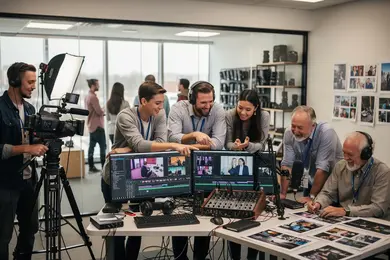
As AI continues to automate routine functions across industries, the demand for uniquely human skills in media communication rises sharply. Technical tools excel at processing data and generating content, yet they fall short in grasping cultural nuance or emotional subtleties essential for authentic messaging. Employers now prioritize graduates who can effectively collaborate with AI while contributing creative judgment and interpersonal insight that machines cannot replicate. This shift means media communication professionals must develop capabilities that enhance-not replace-technological processes. The following five human skills have become increasingly crucial in this evolving landscape.
- Cognitive Flexibility: This skill enables professionals to navigate rapidly changing contexts and diverse audiences, adapting communication strategies on the fly. AI may provide data trends, but media communicators exercise judgment in interpreting effects across social groups and ethical considerations. Students can enhance this skill through varied coursework and real-world projects that challenge fixed perspectives.
- Emotional Intelligence: Understanding and responding to audience emotions remains a core strength for human communicators, especially as AI-generated content floods digital spaces. Graduates skilled in empathy can foster trust and engagement in ways algorithms cannot mimic. Practicing active listening and feedback integration during internships helps build this competency.
- Creative Problem Solving: Innovation involves combining analytical insights with original ideas to craft compelling narratives that resonate emotionally and culturally. While AI suggests options, humans choose and shape stories with intention. Media communication students should pursue interdisciplinary studies that blend technology, humanities, and arts to cultivate creativity under uncertainty.
- Interpersonal Communication: Collaboration-both virtual and in-person-is vital amid complex projects requiring negotiation and shared understanding. AI tools assist coordination but cannot replace nuanced human dialogue that resolves ambiguity and builds consensus. Participating in team assignments and leadership roles sharpens this skill before entering the workforce.
- Adaptability and Lifelong Learning: The media landscape's constant evolution demands professionals update their expertise and integrate new technologies swiftly. This mindset ensures graduates remain relevant as tools and platforms shift. Developing this agility involves seeking continuous education and openness to feedback post-graduation.
A recent graduate recalled a critical moment early in her career when an AI-driven campaign failed to connect with a target community due to overlooked cultural sensitivities. Recognizing this gap, she stepped in to rewrite messaging with input from local voices and deployed a series of live virtual discussions that machine algorithms couldn't replicate in authenticity. Though initially uncertain about challenging the AI's recommendations, she found her empathetic communication and cultural awareness were decisive in rescuing the project's credibility and impact. This experience reinforced for her how essential human skills remain, even as AI tools become standard in media communication.
How Are AI Tools Changing Daily Work in Media Communication Careers?
AI technologies have become integral to the daily operations of media communication professionals, automating routine tasks such as drafting content and processing data, which frees workers to engage in more strategic and creative activities. According to 2024 findings from the U.S. Bureau of Labor Statistics and the Pew Research Center, over 60% of professionals in this field actively use AI tools for content creation, editing, and audience analysis. For example, a social media specialist might rely on generative AI to quickly produce post drafts while dedicating more time to curating messaging that aligns with brand values and audience expectations. This shift not only accelerates content production but also demands that professionals possess a combination of digital literacy and interpretive judgment to effectively manage AI-generated outputs.
The growing incorporation of AI has reshaped job roles in media communication, emphasizing the need for critical thinking, ethical decision-making, and collaborative skills alongside technical proficiency. Hybrid digital environments supported by AI facilitate remote teamwork and real-time audience insights, enabling professionals to refine messages with greater precision. Employers increasingly prioritize candidates who can navigate these ecosystems and continuously update their expertise to keep pace with evolving technologies. Consequently, media communication workers are expected to act as creative strategists and ethical overseers of AI tools, highlighting a transition toward roles that blend creativity with technical oversight rather than simply executing repetitive tasks.
How Are Employers Evaluating Media Communication Candidates Beyond Academic Credentials?
Employers evaluating media communication candidates have shifted focus from traditional academic achievements to practical, demonstrable experience. According to a 2024 Deloitte survey on recruitment trends, more than 70% of hiring managers prioritize candidates who showcase hands-on skills with AI-enhanced tools, even if those skills come from internships or independent projects rather than formal education. This means that portfolios highlighting AI-assisted campaigns or data analytics projects increasingly serve as vital proof of a candidate's ability to contribute effectively. Among these, soft skills like teamwork, problem-solving, and adaptability are inseparable from technical fluency, reflecting employers' demand for versatile professionals capable of navigating fast-changing digital landscapes.
The pivot towards holistic hiring practices reflects the recognition that a media communication degree alone no longer guarantees readiness for real-world challenges shaped by artificial intelligence. Behavioral interviews and scenario-based assessments, now common in about 65% of recruitment processes as reported by McKinsey, help employers gauge emotional intelligence and ethical decision-making alongside technical know-how. For instance, a candidate demonstrating the ability to interpret AI-generated audience data and then craft tailored messaging in diverse contexts stands out more than one with purely academic credentials. Prospective and current students who invest in developing a hybrid skill set that merges technology fluency with strong interpersonal abilities align themselves better with evolving market needs, improving long-term career prospects.
This shift underscores the broader trend wherein employers value versatility and continuous learning. Graduates who actively build portfolios and certifications showcasing AI literacy-and who remain agile in incorporating emerging technologies-can illustrate their real-world capabilities more convincingly. For those interested in aligning educational choices with these evolving demands, considering programs like an operations management degree may offer relevant interdisciplinary exposure. In essence, success in the AI-driven job market increasingly depends on demonstrating both technical proficiency and human-centered skills beyond academic qualifications alone.
How Are Media Communication Degree Programs Adapting to AI?
Media communication degree programs are increasingly integrating AI-related content to keep pace with employer demand for graduates who combine traditional media expertise with technical savvy. According to a 2024 report by the National Center for Education Statistics, about 65% of institutions have incorporated AI-focused coursework, reflecting a shift toward practical skills in machine learning, natural language processing, and data-driven content strategies. This approach equips students for roles where automated audience targeting, content analysis, and multimedia production are routine, blending creative instincts with technological fluency.
These curricular changes also emphasize experiential learning-such as collaborations with industry partners and exposure to AI platforms-helping students navigate evolving software and real-world workflows. However, programs strive to maintain a balance by reinforcing critical thinking and human-centered communication skills, ensuring graduates can address ethical questions and algorithmic biases inherent in AI systems. For example, a student trained in both AI-powered analytics and media ethics might critically assess how an algorithm shapes public opinion while crafting responsible messaging strategies.
Higher education institutions are adapting further by fostering interdisciplinary studies and promoting lifelong learning to prepare graduates for the media landscape's rapid evolution. The curricular expansion toward AI literacy does present challenges, including reduced emphasis on interpersonal communication or foundational ethics, which remain vital for maintaining trust in media. The forward-looking media communication professional emerges as a versatile thinker, equipped to manage the technical demands of AI tools alongside thoughtful stewardship of media's social impact.
Which Industries Are Changing Hiring Expectations Most for Media Communication Graduates?
The speed at which AI technologies are integrated into workplaces varies widely between industries, shaping distinct employer expectations for media communication graduates. Companies in sectors with rapid AI adoption demand professionals who blend traditional communication skills with advanced digital proficiencies. Conversely, fields slower to incorporate AI maintain more conventional criteria but increasingly value adaptability. A recent graduate comparing options might find that while marketing values data and algorithm fluency, journalism emphasizes ethical AI collaboration. Understanding these sector-specific nuances is essential for positioning oneself effectively. Key industries shifting hiring standards include the following.
- Marketing and Advertising: This sector leads in integrating AI for customer segmentation, personalized messaging, and campaign analytics. Graduates must demonstrate not only creativity but also proficiency with AI platforms that automate content and interpret consumer behavior. Recent reports highlight a growing preference for candidates adept in digital marketing tools combined with AI literacy to drive measurable ROI.
- Journalism: News organizations increasingly deploy AI to produce automated reports, conduct fact-checking, and generate multimedia content. Hiring managers look for media communication graduates who can ethically collaborate with AI to improve reporting speed and accuracy. Competence in balancing journalistic integrity with AI-enhanced workflows is becoming a critical differentiator.
- Entertainment: AI supports virtual production, scriptwriting aid, and audience preference analytics in this field. Professionals who grasp both AI's creative potential and the ethical boundaries of AI-generated content attract employer interest. This industry demands a nuanced understanding of how technology shapes storytelling innovation without compromising authenticity.
- Corporate Communications: Sectors like finance, tech, and healthcare prioritize applicants familiar with AI tools for internal messaging optimization, crisis scenario simulations, and real-time feedback processing. According to a 2024 Deloitte survey, over 60% of firms seek candidates who can leverage AI to enhance communication strategies and organizational responsiveness.
- Public Relations: Emerging AI capabilities in sentiment analysis and media monitoring are reshaping PR roles. Graduates who can interpret AI-driven insights and tailor messaging dynamically gain a competitive edge. Employers increasingly value agility in synthesizing automated data with human judgment to maintain brand reputation under changing conditions.
A recent media communication graduate grappled with choosing between job offers in marketing and journalism. During her decision process, she noted that the marketing role demanded advanced skills in AI-powered customer analytics and content automation-areas she had studied less extensively-while the journalism position required proficiency in AI collaboration and ethical reporting, a strength from her coursework. Contemplating her career path, she weighed the urgency of mastering AI competencies against her passion for integrity-driven storytelling. Ultimately, this experience underscored how vital it is for graduates to assess not just the industry but the specific AI-related skills employers prioritize. This awareness informed her targeted skill development, helping her feel more confident about her professional trajectory amid evolving hiring standards.
How Is AI Changing Career Growth for Media Communication Professionals?
The rate at which AI technologies are adopted varies significantly across industries, causing employer expectations for media communication graduates to evolve unevenly. Sectors with rapid digital transformation and data-driven decision-making demand advanced AI fluency, while more traditional industries adjust more slowly. This variation affects the skills new graduates must prioritize, especially as employers increasingly value candidates who integrate AI capabilities with traditional media communication. Analyzing which industries are changing hiring expectations most sharply helps graduates target their skill development effectively.
Below are five key industries where AI is driving notable shifts in hiring criteria for media communication professionals:
- Technology and Software: This sector leads in adopting AI tools for content personalization, user engagement analytics, and automated media campaigns. Employers now expect media communication graduates to have competencies in AI-driven platforms such as natural language processing and sentiment analysis to craft data-informed narratives.
- Advertising and Marketing: The rise of programmatic advertising and AI-powered customer segmentation requires candidates to combine creative storytelling with proficiency in AI-based audience targeting. Graduates who understand both algorithmic insights and brand strategy have a competitive edge.
- Healthcare Communications: With an increasing focus on patient engagement through digital channels, this industry demands ability in interpreting AI-generated health data for clear, empathetic messaging. Media communication roles increasingly blend technical literacy with regulatory knowledge.
- Financial Services: AI-enabled risk analysis and consumer behavior forecasting are reshaping content development here. Media communication professionals are expected to translate complex data into accessible multimedia stories tailored for diverse stakeholders.
- Entertainment and Media: Content optimization via AI-powered analytics and multimedia tools is accelerating. Graduates adept at leveraging AI to enhance audience engagement and personalize media experiences meet a growing employer preference for innovative, tech-savvy talent.
Adapting to these evolving hiring expectations hinges on new graduates embracing continuous learning in AI tools and data interpretation. Prospective students can also explore specialized educational pathways-such as an online mechanical engineering degree-to broaden their technical foundation in a multidisciplinary approach. Understanding AI impact on career growth for media communication professionals is essential for positioning oneself effectively in this disrupted market landscape.
How Should Media Communication Students Prepare for AI-Driven Hiring?
Preparing for AI-driven hiring involves more than completing a media communication degree; it requires cultivating a hybrid skill set that blends technical know-how, AI literacy, and essential human judgment. As AI tools now touch over 40% of communication roles, according to the 2024 U.S. Bureau of Labor Statistics, students must go beyond traditional media skills to stay relevant. In practice, this means mastering AI concepts while preserving critical thinking and ethical interpretation of AI-generated content. The following strategies help students develop practical competencies for this shifting landscape.
- Build AI Literacy: Understanding foundational AI principles like machine learning and natural language processing equips students to engage with AI-powered platforms effectively. This technical knowledge is increasingly demanded by employers who want graduates fluent in AI-driven analytics and content creation.
- Hone Critical Thinking and Ethics: The 2024 Deloitte survey highlights that 72% of hiring managers value candidates able to interpret AI outputs creatively and ethically. Students should practice evaluating AI insights with a human-centered lens to ensure messaging remains authentic and audience-focused.
- Gain Hands-On AI Experience: Internships or projects involving AI-powered content management or social listening tools provide practical exposure. Such experience demonstrates adaptability and readiness to work alongside evolving technologies.
- Develop Cross-Disciplinary Skills: Skills like coding for data visualization and understanding algorithmic biases enable graduates to navigate both the technical and social implications of AI in media communication. These competencies broaden career opportunities in an AI-enhanced job market.
- Commit to Lifelong Learning: AI innovation evolves rapidly, so fostering adaptability and continued education is critical. Exploring certificate programs that pay well can help students quickly upskill and respond to shifting employer expectations.
How Should Students Choose a Media Communication Program for the AI Era?
Choosing a media communication program today demands more than traditional factors like reputation or tuition. With AI reshaping employer expectations, students need programs that integrate artificial intelligence skills deeply into the curriculum. According to the EDUCAUSE Center for Analysis and Research 2024 report, over 60% of higher education institutions have revised courses to include AI literacy and digital ethics. To prepare for the evolving job market, students must assess how programs align with these realities. Here are five key factors to evaluate when selecting a media communication program for the AI era.
- Curriculum Integration: Programs should embed AI tools-such as natural language processing and automated content creation-within core coursework. This hands-on experience is vital, as many graduates will manage AI-enhanced media platforms in the workplace.
- Interdisciplinary Opportunities: Combining media communication with computer science or data science courses develops versatile skills. Graduates with cross-domain expertise are 45% more likely to meet employer demands, per the National Science Foundation 2024 STEM Education Report.
- Ethical and Societal Focus: Understanding AI's societal impacts fosters responsible communication strategies. Employers increasingly value graduates who think critically about AI ethics and its influence on public discourse.
- Faculty and Industry Connections: Access to instructors with AI expertise and partnerships offering internships ensures exposure to real-world AI applications. Such connections bridge theory with practice and enhance employability.
- Curriculum Agility: Given AI's rapid evolution, programs must regularly update content. Students should verify how often courses are revised to stay current with technological advances and industry standards.
References
- The 2025 AI Hiring Playbook https://www.dice.com/hiring/recruitment/ebooks/ai-jobs-hiring-guide
- AI Recruiting in 2026: The Definitive Guide https://www.phenom.com/blog/recruiting-ai-guide
- Media Jobs Rewritten: New Roles Across Publishing & Film ... https://www.mediabistro.com/be-inspired/career-transition/media-industry-jobs-are-being-rewritten-this-is-the-new-list/
- Revolutionizing Hiring: The Role of AI in Candidate Communication https://cvviz.com/blog/enhancing-candidate-experience-through-ai-driven-communication/
- The Impact of AI on Marketing, Communications & Digital Jobs https://www.wowrecruitment.com.au/the-impact-of-ai-on-marketing-communications-digital-jobs
- Top human skills to succeed in the age of AI | edX https://www.edx.org/resources/human-skills-for-ai
- Careers in Communication: What Can You Do With a Degree in Communications? https://www.mastersincommunications.com/features/careers-in-communication
- Careers in digital communication and AI https://www.efap.com/en/careers/digital-communication
- AI Recruiting Guide 2025: Transform Your Hiring Process https://x0pa.com/blog/ai-recruiting-guide/
- Communication Careers: Thriving in the AI Era | Swinburne University, Sarawak, Malaysia https://www.swinburne.edu.my/swinsights/communication-careers-ai/
Other Things You Should Know About Media Communication
Yes, many employers increasingly prioritize hands-on projects that demonstrate a candidate's ability to apply media communication concepts using AI tools rather than purely theoretical understanding. This shift means students should focus on building a portfolio with real-world or simulated assignments that integrate AI-driven content creation, analytics, or user engagement strategies. While foundational theories remain relevant, practical experience signals readiness to contribute immediately, which can be decisive in hiring.
Employers often face a tradeoff between hiring specialists who deeply understand one AI-related niche and generalists who can navigate multiple tools or platforms. In media communication, prioritizing a balanced approach-developing expertise in a critical AI application while maintaining adaptable skills-tends to be more valuable. Graduates who focus narrowly may struggle if their specialty falls out of favor, whereas those with diversified capabilities can better adjust to shifting industry demands.
Formal certifications are generally considered supplementary; employers are more persuaded by tangible examples of AI integration in candidate work, such as campaign results or workflow automation projects. For media communication graduates, emphasizing demonstrable outcomes-like increased engagement or streamlined content production-provides stronger evidence of AI proficiency. Candidates should invest effort in creating measurable, outcome-driven projects alongside pursuing credentials.
Yes, some employers remain cautious about candidates leaning too much on AI capabilities at the expense of fundamental media communication skills such as storytelling, audience analysis, and ethical judgment. The practical implication is that graduates should not sacrifice these core competencies, as AI tools are only effective when paired with sound communication strategies. Balancing AI fluency with a strong grasp of traditional media principles often yields the most sustainable hiring advantage.