2027 Computer Science Career Outcomes by Degree Level Report: Pay, Employment, and Advancement Patterns

Co-Founder and Chief Data Scientist
For many adult learners and working professionals, choosing which computer science degree to pursue poses a strategic dilemma: Will an associate, bachelor's, or graduate degree reliably lead to better employment stability or upward mobility? With 2024 labor data showing bachelor's degree holders in computing fields experience a 15% higher retention rate in tech roles versus those with only an associate degree, this difference highlights critical access and advancement gaps.
Navigating these nuances shapes not only immediate job prospects but also long-term career trajectories. This article analyzes pay, employment, and advancement patterns across computer science degree levels to equip readers with actionable insights for informed planning.
Key Things to Know About Computer Science Career Outcomes by Degree Level
- Data from 2024 shows bachelor's degree holders enter employment faster than master's graduates, reflecting employer preference for timely workforce entry over advanced credentials in many tech roles.
- Employers increasingly prioritize specialized master's degrees for leadership roles, indicating credential-level impacts on advancement opportunities rather than entry-level eligibility.
- Associate degrees offer lower cost and quicker access but correlate with limited advancement, emphasizing a tradeoff between immediate employment and long-term career growth potential.
- Key Things to Know About Computer Science Career Outcomes by Degree Level Key Things to Know About Computer Science Career Outcomes by Degree Level
- What Career Outcomes Can Students Expect From Each Computer Science Degree Level? Career Outcomes by Degree
- How Much Do Computer Science Graduates Earn by Degree Level? Salary by Degree Level
- Which Computer Science Degree Level Offers the Strongest Employment Prospects? Best Degrees for Employment
- What Entry-Level Jobs Can You Get With a Computer Science Degree? Entry-Level Career Opportunities
- How Do Computer Science Degree Levels Affect Career Advancement and Promotion Opportunities? Career Growth by Degree
- Is a Computer Science Degree Worth It Based on Salary, Employment, and ROI? Salary, ROI, and Value
- How Do Associate, Bachelor's, Master's, and Doctoral Computer Science Degrees Compare? Comparing Degree Levels
- Which Industries and Employers Hire Computer Science Graduates by Degree Level? Which Industries and Employers Hire Computer Science Graduates by Degree Level?
- What Skills, Credentials, and Experience Improve Computer Science Career Outcomes? What Skills, Credentials, and Experience Improve Computer Science Career Outcomes?
- Which Computer Science Degree Level Is Best for Your Career Goals? Choosing the Right Degree
What Career Outcomes Can Students Expect From Each Computer Science Degree Level?
Career outcomes in computer science differ markedly by credential level, shaping employment access, role preparation, and advancement trajectories in distinctive ways. Holders of certificates or associate degrees typically find quicker entry into technical support or foundational programming roles but face limitations in accessing specialized or higher-paying positions without further study. This credential tier offers a practical, time- and cost-efficient route for workforce entry and often serves as a bridge for adult learners or military-affiliated students planning to transfer credits toward bachelor's programs. Because many employers prioritize comprehensive credentials, those with associate degrees must often supplement experience with certifications online to remain competitive in evolving job markets.
The bachelor's degree remains the benchmark for most professional roles in computer science, with about 65% of computer and information technology jobs requiring this level, according to the U.S. Bureau of Labor Statistics. Beyond foundational theory, bachelor's programs facilitate internship access and emerging specialization areas such as cybersecurity, which enhance initial employability and align closely with employer expectations. For transfer students and professionals balancing work and study, this path often involves strategic credit transfer and skill layering to reduce time-to-completion while improving career mobility. Employment and advancement patterns for computer science graduates at this level consistently demonstrate stronger starting positions and clearer pathways toward mid-tier roles in software development, systems analysis, and related fields.
Advanced degrees shift emphasis toward leadership readiness, innovation capacity, and research expertise, which influence long-term career ceilings and role specialization. Master's programs typically enhance qualifications for managerial, analytics, or R&D roles, where employers value demonstrated problem-solving and technical prowess amid rapid technology shifts. Doctoral degrees, less common but critical for academic and cutting-edge industry posts, provide extensive research experience necessary for developing novel algorithms or theoretical applications, granting a degree of job stability uncommon at lower levels.
Across these tiers, the interplay of formal credentials with relevant internships, certifications, and regional labor dynamics shapes realistic advancement opportunities. Recognizing these factors can guide working professionals and degree completers in choosing credentials that align with their capacity for investment and their targeted roles within the competitive and varied landscape of computer science careers.
How Much Do Computer Science Graduates Earn by Degree Level?
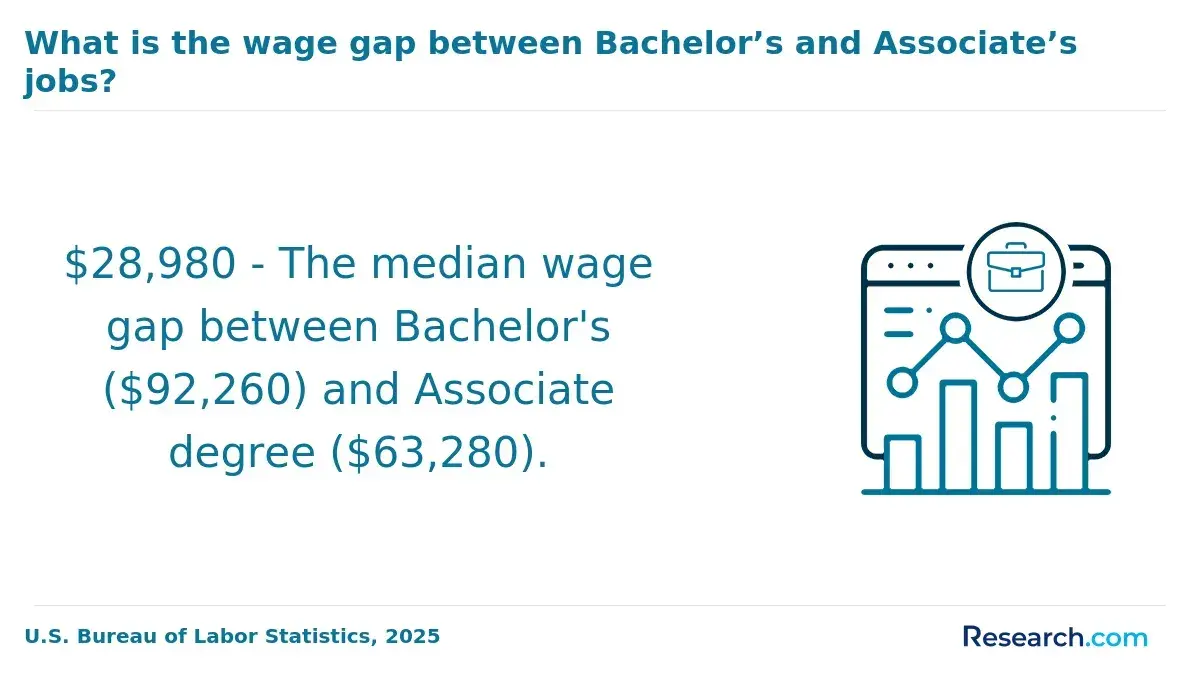
Earnings for computer science graduates vary considerably by credential level, but the value of higher degrees involves more than just salary figures. While entry-level roles accessible to certificate or associate degree holders typically center on support or junior developer positions with median wages near $50,000, these jobs might offer limited long-term advancement and generally require additional experience or education to break into specialized or leadership roles.
Bachelor's degrees open up substantially higher pay brackets, often around $95,000, and qualify candidates for core development or engineering functions, balancing technical rigor with practical skills; however, pursuing this degree entails longer study periods and possibly more debt, factors crucial for working adults and transfer students to weigh. Graduate degrees, especially master's, command median salaries exceeding $125,000 and align with advanced, niche occupations but also demand significant time and financial investment, which may not suit everyone's immediate career goals or geographic labor markets where employer preferences can differ sharply.
Interpreting these earnings in context means considering employment stability and advancement potential alongside median pay, as higher degree holders generally experience lower unemployment and better promotion chances. Real-world factors such as transfer-credit acceptance, program duration, and skill specialization heavily influence whether the incremental salary gains justify extended study-particularly for those balancing work, family, or military commitments.
Moreover, industry sector and local demand shape where degree premiums materialize most strongly, so prospective students need to evaluate how regional and sector-specific employer expectations match their credentials. For many, starting in a certificate or associate track might provide a faster, lower-risk labor market entry, but later investment in bachelor's or advanced degrees could unlock substantially broader pathways if timed and financed strategically.
A recent bachelor's graduate recalls initially considering an associate degree due to its shorter completion timeline and lower cost but decided against it after noticing that local employers were listing requirements favoring bachelor's credentials for their developer roles. Balancing tuition concerns with career ambitions, the graduate carefully compared salary surveys and job postings, recognizing that while an associate might offer a quicker start, it came with capped growth prospects. This pragmatic approach led to completing a bachelor's degree with targeted internships to build relevant experience, underscoring how informed decision-making about education levels involves nuanced tradeoffs between time, cost, and realistic job market positioning rather than just salary comparisons alone.
Which Computer Science Degree Level Offers the Strongest Employment Prospects?
Employment prospects in computer science largely hinge on degree level, but a bachelor's degree often strikes the most effective balance between accessibility and employer expectations. Many technical roles explicitly require a bachelor's due to its broader curriculum, internship opportunities, and stronger alignment with practical job readiness. For instance, employers commonly favor bachelor's degree holders for standard development or IT positions because they typically enter the labor market faster than those pursuing graduate credentials, while also avoiding the narrower job range often linked to associate degrees or certificates. According to the U.S. Bureau of Labor Statistics Occupational Outlook Handbook (2024), computer-related occupations requiring a bachelor's degree are projected to grow by nearly 15% through 2032, underscoring sustained demand for candidates with this qualification level.
While associate degrees or certificates may expedite workforce entry, they often correspond to limited wage growth and more constrained occupational pathways, particularly without further education or work experience. Conversely, master's and doctoral degrees enable advancement into specialized, research-driven, or leadership roles but come with delayed labor market entry and higher upfront costs. A practical decision for many involves starting with a bachelor's degree to maximize initial job market access and then pursuing graduate study part-time or after gaining industry experience. Regional factors such as internship availability and local tech ecosystems also significantly sway employment stability and growth potential, making it crucial to weigh geographic context alongside credential choice when planning a computer science career trajectory.
What Entry-Level Jobs Can You Get With a Computer Science Degree?
Entry-level positions accessible with a computer science degree vary notably based on degree level, prior hands-on experience, and employer expectations. Graduates holding an associate degree often encounter roles focusing on IT support or junior programming, which typically provide foundational skill-building but may offer limited upward mobility without further credentials. In contrast, bachelor's degree holders generally qualify for software development or systems analysis roles that demand deeper technical proficiency and offer clearer advancement pathways. Students should weigh these distinctions carefully, especially considering that many "entry-level" postings require 1-2 years of experience, pushing new graduates toward internships or short-term contracts to attain employability that aligns with employer demands and industry standards.
Practical experience, such as internships or portfolio projects, substantially impacts early employment success, as demonstrated by National Center for Education Statistics data showing a 30% higher employment rate within the first year for graduates with such exposure. Certifications in areas like cloud computing or network administration can also influence job prospects, particularly for specialized roles in those segments. Geographic factors further complicate access; urban technology centers often favor candidates with advanced degrees and extensive skills, while regional employers may prioritize associate-level graduates with practical experience. Those selecting between degree pathways must also consider long-term flexibility, as bachelor's and graduate-level programs generally facilitate more stable access to higher-paying positions and leadership roles, whereas associate degrees might necessitate ongoing education for comparable opportunities.
Analyzing entry-level computer science jobs in the United States requires balancing immediate employment potential with strategic skill accumulation and credentialing. For those exploring alternatives to traditional degree routes, evaluating a range of options including a certified program or an easiest MSW online program may offer insight into balancing educational investment with career goals in related fields. Understanding these operational realities helps students calibrate expectations and develop practical career plans aligned with current workforce trends and their own advancement ambitions.
How Do Computer Science Degree Levels Affect Career Advancement and Promotion Opportunities?
Promotion prospects in computer science are heavily influenced by the degree level, but the relationship is nuanced rather than linear. While a bachelor's degree frequently serves as a baseline for eligibility in supervisory and mid-management roles-reflecting employer screening practices confirmed by 2024 data from the U.S. Department of Education-advanced degrees like master's or doctorates unlock pathways to specialized leadership or research-focused positions that value technical depth and strategic skills.
However, practical experience and relevant certifications often shift the timeline for promotions; for example, a mid-career professional with a certificate and solid portfolio may outpace peers holding higher degrees but lacking applied skills. Transfer-credit programs and continuing education options provide working adults and military-affiliated students with flexible routes to meet rising employer credential expectations without pausing career momentum, balancing time investment against long-term advancement potential.
Degree level also affects career mobility and leadership readiness. Bachelor's grads dominate entry and middle tiers of employment, but master's holders tend to fill roles demanding interdisciplinary problem-solving and project oversight. Many employers mandate a bachelor's degree for promotion to supervisory roles, but they increasingly prioritize candidate credentials that signal leadership capability and specialized knowledge, especially for technical team leads or strategic planners. Adult learners weighing further education must consider the tradeoff between immediate workplace advancement and the delayed benefits of graduate education, which often requires time away from earning and accumulating on-the-job experience.
A computer science professional recalled hesitating to pursue a master's degree after several years in system administration, uncertain if the credential would meaningfully impact promotion eligibility within a company emphasizing certifications and practical results. After conversations with managers, they realized that while a bachelor's degree secured initial promotions, reaching leadership roles demanded both advanced study and demonstrated project leadership. Balancing this with family commitments, they opted to complete a part-time master's while leveraging employer-supported certification training, cautiously optimistic that this dual approach would position them better for senior roles without sacrificing too much professional momentum.
Is a Computer Science Degree Worth It Based on Salary, Employment, and ROI?
Salary expectations and employment stability in computer science vary significantly by degree level and local market conditions, making blanket judgments about a computer science degree's worth misleading. For working adults or transfer students, completing a bachelor's degree often results in substantially higher entry pay and access to more stable positions than associate degrees or coding boot camps, though that comes with longer time-to-completion and potentially heavier debt. Meanwhile, regional demand disparities mean that while tech hubs reward credentials with premium salaries, other areas may offer less financial upside but lower competition, highlighting the importance of situational awareness alongside computer science degree salary and employment outcomes.
Return on investment (ROI) for computer science degrees reflects a tradeoff among upfront costs, opportunity costs from time spent studying, and advancement potential. Graduates with bachelor's or higher credentials typically see better career mobility as they qualify for senior roles requiring advanced skills or certifications, whereas associate degree holders may face pay ceilings without further education. Adult learners and military-affiliated students benefit from options like part-time enrollment or transfer credits, which reduce disruption but must be weighed against extended program duration. Practical decisions about pursuing additional education should also consider alternative pathways, such as shorter, less costly programs or fields related to computer science, like an urban planning degree, where divergent labor market dynamics apply.
Given these complexities, prospective students need to evaluate computer science degree salary and employment outcomes as part of a broader strategy that includes financial realities, career goals, and local demand. Understanding return on investment for computer science degrees by level demands looking beyond headline figures to factors like debt burden, employment stability, and the realistic pace of advancement. Only through this nuanced analysis can individuals align educational choices with their specific circumstances and long-term workforce trajectories.
How Do Associate, Bachelor's, Master's, and Doctoral Computer Science Degrees Compare?
Employment outcomes for computer science graduates shift significantly with degree level, influencing initial job roles, career mobility, and specialization options. Associate degrees typically facilitate quicker, cost-effective entry into technical support or junior development roles, but candidates may face constraints in upward mobility and leadership prospects. Transferability of associate credits toward bachelor's programs can accelerate progress but often depends on institutional policies, which may extend completion times and costs. For many, stopping at an associate degree limits eligibility for positions demanding a deeper technical and theoretical foundation, as most employers prefer bachelor's credentials for core software engineering roles and leadership tracks.
Bachelor's graduates routinely see employment rates exceeding 85% within a year, reflecting the degree's alignment with employer expectations for foundational knowledge and problem-solving skills. This level offers a better balance of practical experience and academic rigor, supporting specialty development and supervisory responsibilities. For professionals eyeing work in data science or systems architecture, a master's degree further enhances prospects by providing advanced expertise and often more stable employment, especially in competitive fields like cybersecurity, where certifications such as CISSP complement academic credentials. Doctoral programs, by contrast, cater primarily to those targeting research-intensive roles, academic positions, or niche innovation careers, where the significant time and financial investment weigh against broader labor market flexibility but yield access to unique specialization and policy influence opportunities.
Choosing the right degree level depends on weighing time, cost, and professional goals against real-world returns. For example, a working adult aiming to pivot into management might pursue a master's rather than investing the years required for a doctorate, which suits fewer career paths despite its prestige. Meanwhile, students focused on swift workforce entry should consider how an associate degree's limitations could necessitate later returns to school for advancement. Data from the U.S. Department of Education and labor agencies underscores that bachelor's degrees remain the pivotal threshold for most technical roles, with advanced degrees providing greater stability and leadership openings but with diminishing returns for those outside specialized or academic tracks.
Which Industries and Employers Hire Computer Science Graduates by Degree Level?
The hiring landscape for computer science graduates distinctly varies by degree, reflecting employer preferences tied to technical depth, managerial potential, and specialization needs. Associate degree holders typically gain entry into operational and support roles within information technology services, telecommunications, and manufacturing sectors, where hands-on skills and vendor certifications often matter more than theoretical knowledge. For example, a graduate aiming to work as a network support specialist will find many small to mid-sized firms prioritizing practical experience and certifications over advanced degrees, but such roles usually offer limited advancement without further education or management training.
Bachelor's degree holders experience the broadest access across diverse industries, including major technology companies, finance, healthcare informatics, government agencies, and e-commerce. A notable 75% of computer science job postings in a 2024 labor market analysis by Burning Glass Technologies specify a bachelor's degree as a minimum, signaling widespread acceptance of this credential for mid-level roles such as software engineering or cybersecurity analysts. In contrast, master's and doctoral graduates are concentrated in research-intensive settings, advanced analytics, and AI development, where they often lead teams or drive innovation in sectors like aerospace and pharmaceuticals. Employers in these fields generally require the advanced specialization and strategic skills that graduate training provides, a requirement made more explicit by workforce data from the National Center for Education Statistics highlighting rising demand for master's-level professionals in AI and data science.
Professional certificates usually supplement degrees by addressing fast-evolving niches such as cloud computing or cybersecurity but rarely replace degree requirements in employer screening, especially for managerial or research-heavy positions. Public sector roles, affected by regulatory and security clearance protocols, more rigidly enforce formal educational qualifications than private employers, who may prioritize credentials differently based on size and technical focus. Consequently, students must weigh whether the pursuit of higher degrees aligns with their targeted employer profiles and long-term role ambitions, recognizing that degree level significantly impacts not just entry but advancement opportunities and specialization trajectory within computer science domains.
What Skills, Credentials, and Experience Improve Computer Science Career Outcomes?
Technical proficiency in programming languages such as Python, Java, and JavaScript remains a decisive factor for employment in computer science, as employers typically view these skills as baseline indicators of entry-level readiness and problem-solving adaptability. While a bachelor's degree often serves as the starting credential, stacking it with targeted certifications like Certified Software Development Professional or AWS Certified Solutions Architect can substantially enhance employment access and signal specialization, which is critical when vying for roles with upward mobility. For adult learners and working professionals, combining prior credits with a online associates degree or similar credentials can offer a practical path to meeting these technical skill demands without redundancy, balancing time investment against tangible job market returns.
Employers increasingly expect demonstrable applied experience, with internships and co-op programs serving as strong predictors of job offers post-completion, often accelerating early career progression. Beyond technical skills, soft skills like communication and leadership become essential for promotion readiness, particularly when transitioning from individual contributor roles to management or specialized technical tracks. Military-affiliated students or those with prior industry exposure benefit from transferable experiences, though licensure remains uncommon in computer science, shifting emphasis toward portfolio evidence such as GitHub projects or open-source contributions, which tangibly showcase capability and differentiate candidates in a competitive hiring environment. These factors collectively shape the practical decisions around credential stacking and experiential learning pathways pivotal to sustainable employment outcomes.
Which Computer Science Degree Level Is Best for Your Career Goals?
Associate degrees in computer science may enable quicker entry into technical roles such as programming or IT support, which can appeal to working adults balancing time and financial constraints. However, many employers now expect at least a bachelor's degree for software development or engineering positions due to the broader, deeper foundational skills such degrees provide. Bachelor's programs are often preferred for their superior employment outcomes, with approximately 87% of graduates employed within six months according to the National Center for Education Statistics (2024). This makes the bachelor's degree the best computer science degree option for employment outcomes, especially as it supports specialization in areas like artificial intelligence or cybersecurity, enhancing long-term mobility and advancement potential.
Graduate degrees-including master's and doctorates-are primarily suited to professionals targeting leadership, research, or highly specialized roles that require advanced credentials or unique expertise. These pathways usually come with higher cost and time investments; student debt for master's degree holders is typically about 60% greater than for bachelor's graduates. Decisions about pursuing graduate education should consider opportunity costs, employer expectations, and whether relevant work experience can substitute for specialized academic credentials. For many working students and transfer learners, evaluating credit transfer and program flexibility is crucial when selecting the appropriate degree level. Those seeking accelerated progress might explore online MBA accepting transfer credits options to balance career and education effectively.
References
- Computer Science Job Growth and Advancement Opportunities https://online.maryville.edu/online-bachelors-degrees/computer-science/careers/computer-science-job-growth/
- 5 Computer Science Careers to Consider | YouScience https://www.youscience.com/resources/blog/5-computer-science-careers/
- Why your computer science degree won't get you an IT job https://targetjobs.co.uk/careers-advice/information-technology/why-your-computer-science-degree-wont-get-you-it-job
- Fields of Work in Computer Science: Top IT Careers | Walbrook https://www.walbrook.ac.uk/subjects/computer-science/computer-science-fields-of-work-career-in-it/
- The Top 10 Entry-Level Computer Science Jobs https://www.synergisticit.com/top-10-entry-level-cs-roles/
- Top Careers in Computer Science | Careers, Salaries, and Resources https://www.computerscience.org/careers/
- The Real Cost of a Computer Science Degree in 2026: ROI Analysis with Actual Numbers https://www.birjob.com/blog/cs-degree-roi-2026
- Computer Science Degree ROI: Is It Worth the Investment? https://hakia.com/degrees/computer-science/salary-roi/
Other Things You Should Know About Computer Science
Advanced degrees such as master's and doctorates often demand considerable time, typically requiring at least one to three years of intensive study. For working adults balancing employment and personal responsibilities, this can mean significant opportunity costs, including lost income or reduced work experience. Prioritizing degree programs with flexible scheduling, part-time options, or employer tuition assistance is crucial to mitigate disruption, especially since incremental career gains from advanced degrees depend heavily on roles that specifically value deep specialization or research skills.
Yes, degrees earned through traditional in-person programs tend to provide more hands-on collaboration, access to faculty mentorship, and networking opportunities, which can translate to smoother transitions into technical roles. Online or accelerated programs, while more accessible, sometimes lack these immersive experiences, potentially affecting graduates' readiness for complex project work and employer preferences. Prospective students should assess program quality and delivery format carefully, as experiential learning remains a significant factor for many hiring managers beyond just the degree title.
Specialized master's programs often focus intensely on niche areas like artificial intelligence or cybersecurity, which can enhance prospects within targeted sectors but limit flexibility for career shifts outside those domains. In contrast, a broad bachelor's provides a wider foundational skillset appealing to diverse employer needs, albeit sometimes at the cost of deep expertise. Students must decide whether depth or breadth aligns better with their long-term plans and industry demand, keeping in mind that specialized roles tend to expect direct, relevant experience alongside credentials.
Many employers in computer science value demonstrable skills, such as coding projects, internships, or contributions to open-source communities, sometimes even more than the degree level itself. This means a bachelor's degree supplemented by robust practical experience can rival or surpass advanced degrees in certain hiring contexts, particularly in startups or technical roles emphasizing agility. Therefore, students should prioritize programs offering integrated experiential learning or co-op opportunities to ensure their education translates into tangible workplace capabilities.