2027 Which Public Policy Degree Careers Offer the Best Return Without Graduate School?

Co-Founder and Chief Data Scientist
Many recent graduates face the challenge of balancing education costs with future earnings. For those holding a bachelor's degree in Public policy, the question arises: is pursuing a graduate degree essential to secure lucrative career opportunities? According to the U. S. Bureau of Labor Statistics, employment in policy analysis roles is projected to grow 6% from 2022 to 2032, reflecting steady demand.
However, several positions within Public policy offer competitive salaries and advancement without additional schooling. This article explores which Public policy degree careers provide the best financial returns without requiring graduate education, guiding readers toward cost-effective career paths.
Key Benefits of Public Policy Degree Careers That Offer the Best Return Without Graduate School
- Strong earning potential with early salary growth boosts long-term return on investment, with median starting salaries around $55,000 typical for public policy bachelor's degree holders.
- Stable job demand and expanding career growth in sectors like government and nonprofits enhance financial security over time.
- Accessible entry requirements without graduate education allow faster workforce entry, reducing education costs and enabling earlier income accumulation.
Which Public Policy Careers Offer the Best Return Without Graduate School?
Evaluating the return on investment in public policy careers is essential, especially when considering paths that do not require graduate school. The U.S. Bureau of Labor Statistics notes that many government and nonprofit roles related to public policy offer competitive median salaries above $60,000 annually for those holding only a bachelor's degree. Below are some notable public policy careers with high salary potential that balance salary, career longevity, and advancement opportunities.
- Legislative Assistant: Legislative assistants provide critical support to elected officials by researching policy issues and drafting legislation. These roles offer stable employment and opportunities for career development within government offices or advocacy groups, making them a strong investment over time.
- Policy Analyst (Entry-Level): Junior policy analysts collect and assess data to evaluate existing policies, often working within nonprofits, government agencies, or think tanks. With experience, they can move into senior analyst positions that offer higher compensation and increased influence.
- Public Affairs Specialist: These professionals manage communication strategies between organizations and the public, often shaping policy narratives. Their roles tend to grow with experience, networking, and demonstrated results, providing solid long-term ROI without a graduate degree.
- Community Development Coordinator: Coordinators typically work for local governments or nonprofit agencies, designing programs to address community needs. The steady demand for these roles and possibilities for leadership positions contribute to their advantageous return on investment.
What Are the Highest-Paying Public Policy Jobs Without a Master's Degree?
Evaluating public policy careers that offer strong salaries without requiring a master's degree can help students enter the workforce faster while maximizing earning potential. According to the U.S. Bureau of Labor Statistics, several policy-related jobs provide median annual wages above $70,000, making them attractive options for bachelor's degree holders. The following roles showcase some of the highest-paying public policy jobs available without graduate education.
- Policy Analyst: Many policy analyst positions accept candidates with a bachelor's degree, especially when focused on data analysis and recommendations. Salaries typically range from $60,000 to $85,000 per year, reflecting the role's influence in shaping decisions in governmental and nonprofit organizations.
- Budget Analyst: Responsible for managing and developing budgets, budget analysts earn between $60,000 and $85,000 annually. Their crucial role in overseeing public funds drives efficient governance, making this a well-compensated position without requiring advanced degrees.
- Governmental Affairs Specialist: These specialists earn from $60,000 to $90,000 per year by managing interactions between organizations and government agencies. Their expertise in regulatory processes supports their high pay and career growth without mandating graduate study.
- Urban Planner: With salaries ranging from $55,000 to $80,000, urban planners focus on community development and strategic planning. Many state and local positions accept bachelor's degrees in public policy or related fields, offering solid earnings in this growing sector.
Which Industries Offer High Salaries Without Graduate School?
Industry selection significantly impacts earnings for public policy bachelor's degree holders, with wage gaps of nearly 40% observed across different sectors. Choosing fields with robust financial rewards can greatly enhance salary outcomes without pursuing graduate education. Below are several industries known for offering strong pay and notable returns for those with a public policy background.
- Financial Services: This sector offers some of the highest salaries, typically ranging from $60,000 to over $100,000 annually. The demand for policy expertise in regulatory compliance and analytical assessment drives compensation, rewarding professionals with solid earnings despite the absence of advanced degrees.
- Government Agencies: Federal and local government positions provide stable and competitive salaries, often between $55,000 and $90,000. The wide application of policy skills in public administration supports reliable income and job security in this sector.
- Healthcare: With ongoing reforms and regulatory demands, healthcare organizations value policy proficiency, offering salaries commonly from $50,000 up to $90,000. Opportunities for advancement in this growing field help enhance compensation over time.
- Consulting Firms: Specializing in policy analysis, consulting firms reward critical thinking and strategic insight, with starting salaries near $65,000 that can increase based on performance. These firms focus on results rather than advanced degrees, making them attractive to public policy graduates.
- Technology: Rapid expansion and regulatory challenges, such as data privacy, have created lucrative opportunities, with salaries generally between $70,000 and $110,000. The industry's growth fuels high demand for professionals knowledgeable in policy matters.
When asked about industry choices, a public policy degree graduate shared firsthand experience navigating this landscape. He recalled the uncertainty of identifying sectors that match his skills and offer good pay without extra schooling. "It wasn't just about the salary but also finding a field where my knowledge made an impact," he explained. He emphasized that persistence and researching employer priorities were key, along with valuing industries open to rewarding policy competence without insisting on graduate credentials. "It felt like piecing together a puzzle to find where I fit best-and knowing those industries exist made that challenge manageable."
Selecting entry-level public policy jobs with clear advancement pathways is essential for long-term career success, especially as social and community service roles are expected to grow 12% from 2022 to 2032. These initial positions help build core skills that support promotion into influential roles. Below are several entry points ideal for fostering upward mobility in this field.
- Policy Analyst Assistant: This role involves supporting research and evaluating policies, providing a solid foundation in data analysis and legislative procedures. It often leads to positions as policy analysts or advisors, where professionals influence decision-making processes.
- Government Affairs Coordinator: Acting as intermediaries between organizations and government agencies, these coordinators gain vital experience in advocacy and compliance. Many progress to managerial or specialist public affairs roles.
- Research Assistant: Working primarily in think tanks or nonprofits, these professionals focus on collecting data and preparing reports. These skills pave the way toward senior research or program director positions.
- Community Outreach Coordinator: By engaging with the public and building partnerships, these coordinators cultivate essential communication and leadership skills, opening doors to program management or strategic planning careers.
Those seeking to combine practical experience with advanced business knowledge may consider executive MBA programs to further enhance their career opportunities in public policy and related sectors.
Developing targeted skills can have a direct impact on salary growth, with recent research showing that employers may offer up to a 20% wage increase for candidates who demonstrate in-demand competencies. Focusing on strategic capabilities enhances both versatility and leadership potential in public policy careers. The following skills particularly boost earning power without the need for additional degrees.
- Data Analysis: Mastering the interpretation and manipulation of data empowers professionals to provide evidence-based insights that improve decision-making. Competence in software like Excel and other analytical tools makes candidates more attractive for roles with higher pay.
- Communication and Negotiation: The ability to articulate ideas clearly and negotiate effectively with diverse stakeholders is crucial. These skills increase influence within organizations and often correlate with salary advancements linked to leadership and advocacy roles.
- Project Management: Organizing tasks, managing deadlines, and coordinating teams ensures policies are implemented efficiently. Proficiency in managing projects reduces costs and risks, signaling value to employers and supporting compensation growth.
- Critical Thinking and Problem-Solving: Evaluating complex challenges and creating innovative solutions enhances organizational effectiveness. This capability often leads to greater responsibilities and improved salary prospects without requiring further academic credentials.
- Technical Literacy: Knowledge of emerging tools like geographic information systems (GIS) or simulation software differentiates candidates. This technical edge facilitates streamlined workflows and can lead to higher remuneration.
When discussing what skills increase salary without a master's degree, a professional with a public policy degree shared her experience of transitioning from entry-level to mid-career roles. She emphasized how building confidence in negotiation and learning to translate technical data into compelling presentations helped her overcome initial hesitation. "It wasn't easy at first," she reflected, "but gaining these abilities made me a trusted voice on complex projects and opened doors to promotions."
She also noted that managing projects with tight deadlines forced her to develop strong organizational habits, which her employers consistently rewarded. Her journey highlights that practical, transferable skills-not just advanced degrees-can drive meaningful salary progress over time.
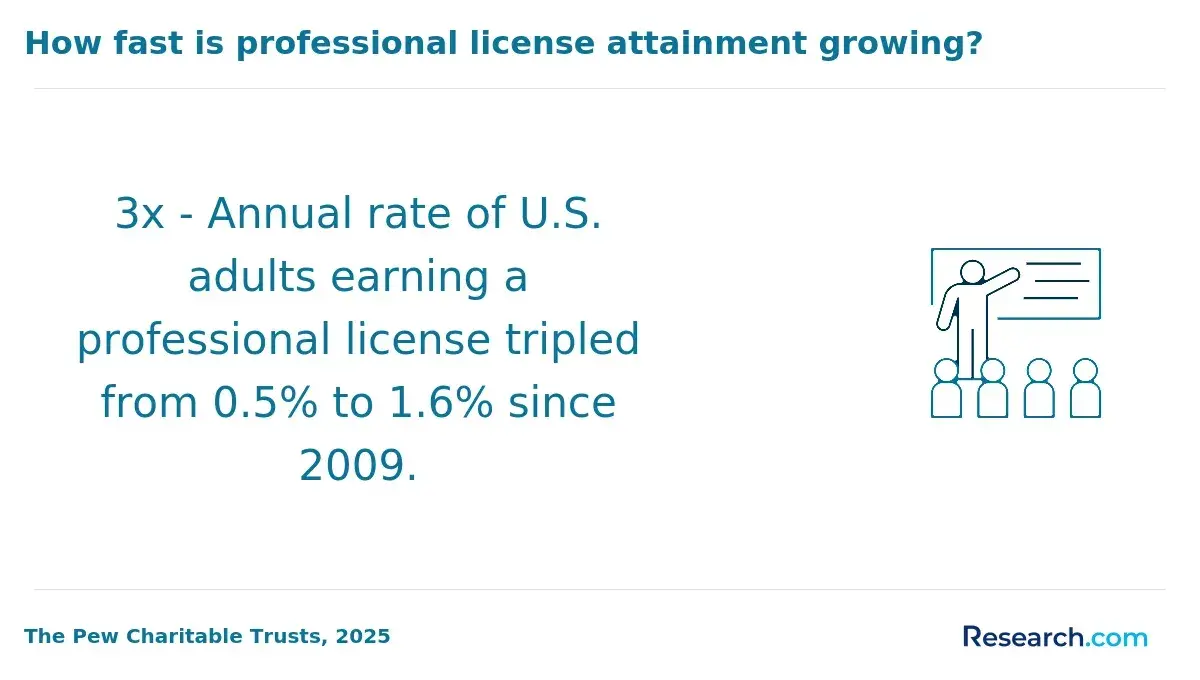
Certifications offer a credible path to boost professional standing and open new career doors as an alternative to graduate education in public policy fields. Studies show that earning such certifications can raise salaries by around 20%, emphasizing their value in career advancement. Below are several prominent certifications known for enhancing the skills and marketability of public policy professionals.
- Certified Public Manager (CPM): Designed to enhance leadership and organizational skills in government agencies, this credential helps professionals demonstrate their capability to improve policy execution and operational efficiency.
- Project Management Professional (PMP): Widely recognized internationally, this certification validates expertise in managing complex projects, a vital ability for implementing successful policy programs and initiatives.
- Data Analytics Certification: Offered by respected bodies, these programs provide critical tools for analyzing and interpreting policy-related data, fostering evidence-based decision-making essential for effective public policy work.
- Certified Economic Developer (CEcD): Focused on economic and community development, this credential signifies proficiency in strategies that encourage sustainable regional growth, aligning with key public policy goals.
- Lean Six Sigma Certification: Concentrating on process improvement, this certification equips professionals to optimize governmental workflows and policy processes, increasing overall efficiency and impact.
Employers in public policy careers often prioritize demonstrated skills, on-the-job learning, and proven performance over formal graduate credentials. Professional experience can effectively showcase problem-solving abilities, leadership, and a practical understanding of policy impacts, which are highly valued in roles focused on tangible outcomes and management. This hands-on experience builds a portfolio of accomplishments that frequently supports career advancement.
For many positions such as policy analysis and program management, a strong record of results and stakeholder engagement can open doors to promotions and salary growth without requiring advanced degrees.
However, relying exclusively on experience has its limits. Certain senior or specialized roles-especially within government agencies, consulting firms, or research-driven organizations-often require a master's degree or higher as a formal entry or advancement criterion. Progression into these positions may be slower or capped without advanced credentials, particularly in sectors with technical or analytic demands.
Experience becomes most valuable when paired with continuous learning, certifications, and professional networking, enabling some individuals to outpace new graduate hires by developing niche expertise or leadership skills in public policy, while others may still pursue a most affordable online MBA to strengthen their formal business and management credentials.
Many public policy professionals weigh the trade-offs of halting their education after a bachelor's degree, especially when considering long-term career advancement. Data from the U.S. Bureau of Labor Statistics shows that individuals with a master's degree typically earn about 20% more annually than those with only a bachelor's degree in similar fields. Below are several key limitations experienced by those who choose not to pursue graduate education in this area.
- Slower Advancement: Career progression in public policy often favors candidates with advanced degrees. Many leadership and strategic roles require or prefer a graduate degree, making promotions less accessible for those holding only undergraduate credentials. This can result in longer timelines to reach senior positions.
- Limited Access to Senior Roles: Numerous government agencies, consulting firms, and research institutions list graduate degrees as minimum qualifications for specialized or senior-level jobs. Bachelor's degree holders commonly face restrictions in competing for these roles, narrowing available career pathways.
- Competitive Disadvantages in Hiring: In a competitive job market, employers often screen candidates based on graduate education, especially for positions demanding strong analytical, policy evaluation, or quantitative skills. Those without graduate degrees may need to compensate with additional certifications or substantial practical experience.
- Salary Growth Constraints: Without a graduate degree, the potential for long-term salary increases may be limited despite initial entry-level offers. Advanced degrees frequently correlate with higher earning potential throughout one's career.
- Networking and Mentorship Access: Graduate programs often provide valuable professional networks, internships, and mentorships that support career development. Forgoing graduate education means these connections might require extra time and effort to establish independently.
For some looking to bridge skill gaps without committing to a traditional graduate degree, exploring data science degrees can present alternative opportunities, especially in analytics-heavy public policy careers.
Return on investment (ROI) in education measures how effectively the time and money spent on a degree translate into increased career earnings and job satisfaction. For public policy bachelor's degree holders, the median mid-career salary is nearly $70,000, demonstrating solid earning potential without the need for graduate education. To maximize ROI, students should focus on strategies that balance initial costs with long-term salary growth and career advancement. Below are key approaches to enhance your return on investment with a public policy degree.
- Strategic Internships: Pursue internships and practicums in government agencies, nonprofits, or private sector firms that focus on high-demand areas such as healthcare, environmental, or economic policy. These experiences build valuable professional networks and often lead to higher-paying job offers, which is crucial for boosting public policy degree career paths without graduate school.
- Develop Analytical Skills: Employers highly value strong quantitative and research abilities in public policy roles. Strengthening your data analysis and research skills through targeted coursework and projects can set you apart and open doors to higher-responsibility positions with better compensation.
- Geographic Flexibility: Target regions with higher salary scales, such as major urban centers or states with large public sector budgets. Being open to relocation can significantly increase long-term earnings prospects, thereby improving ROI.
- Early Leadership: Seek leadership roles in campus groups, community initiatives, or entry-level jobs to build management experience. This early leadership can accelerate promotions and salary growth without additional schooling.
For students comparing degree options to boost their ROI, exploring alternatives like an MFT degree may also provide valuable career insights.
Deciding to attend graduate school for public policy careers depends largely on your professional objectives, industry norms, and the expected return on investment. Data from the U.S. Bureau of Labor Statistics shows that those with a master's degree in this field can earn about 20% more over their lifetime than bachelor's degree holders. However, this advantage is not uniform and varies by job type and sector. We explore when pursuing further education truly offers lasting benefits.
Graduate school benefits for public policy careers become especially clear in specific circumstances, such as gaining entry to specialized policy analyst roles, advancing into leadership positions, or thriving in regulated sectors that demand formal credentials. Research-driven careers that require in-depth methodological skills also often prioritize candidates with advanced degrees.
For those aiming to increase their employability without graduate study, focusing on skill-building or alternative pathways can be essential, illustrating public policy career advancement without graduate degree remains feasible. For more detailed options outside of traditional programs, consider resources on a mechanical engineering online degree, which exemplifies how flexible education pathways can support career growth.
What Graduates Say About Public Policy Degree Careers That Offer the Best Return Without Graduate School
- Romeo: "Choosing not to pursue a graduate degree in public policy was initially scary, but it proved to be the right choice for me. I focused on gaining real-world experience through internships and networking, which opened doors that a master's might not have. The practical knowledge I gained has been invaluable, and my career growth has been steady without the need for further formal education."
- Aidan: "Reflecting on my decision to stop at a bachelor's in public policy, I realized that the best return came from specialization and certifications rather than graduate school. I took extra courses in data analysis and communication that complemented my degree, making me stand out to employers. That hands-on approach helped me secure a role where I'm impacting local government projects daily."
- Luke: "My public policy degree laid a solid foundation for my career, but skipping graduate school meant I had to be more proactive about professional development. I attended workshops, volunteered for policy research, and leveraged mentorship opportunities to build credibility. These steps allowed me to contribute effectively and advance in organizations without the traditional graduate school route."
Other Things You Should Know About Public Policy Degrees
Networking is crucial in 2027 for public policy careers without advanced degrees. It helps professionals connect with potential employers, mentors, and colleagues, often leading to job opportunities, projects, and professional growth that may not be accessible through formal education alone.
Many public policy graduates find employment in local government offices, nonprofit organizations, think tanks, and advocacy groups. Private sector firms offering government relations or regulatory compliance services also hire bachelor's degree holders. These employers often value practical skills and relevant experience over advanced degrees.
Yes, internships provide crucial hands-on experience and help build professional networks. They allow graduates to demonstrate their capabilities, gain familiarity with policy processes, and improve their resumes. Internships in governmental or nonprofit settings often lead to full-time positions.
Project Management Professional (PMP), Certified Government Financial Manager (CGFM), and data-analysis certificates can strengthen public policy applications in 2027. Employers often look for 35 contact hours for PMP eligibility, while CGFM requires three exams and a minimum of two years’ public-sector experience.
- How to advance your career in public policy | Open Access Government https://www.openaccessgovernment.org/advance-career-public-policy/29276/
- 17 Jobs for Political Science Majors (That Don't Require You to Run for Office) https://www.theforage.com/blog/careers/jobs-for-political-science-majors
- Discover Career Paths With Bachelor's Degree In Public Policy https://online.mountsaintvincent.edu/degrees/undergraduate/bachelor-public-policy/rewarding-careers/
- ROI in Higher Education - FREOPP https://freopp.org/roi-in-higher-education/
- Public Policy Careers: 2023 Guide to Career Paths, Options & Salary https://www.beyondberea.org/blog/2023/03/22/public-policy-careers-2023-guide-to-career-paths-options-salary/
- A Graduate Degree in Public Policy Is Not Worth Your Time or Money https://www.mic.com/articles/4870/a-graduate-degree-in-public-policy-is-not-worth-your-time-or-money
- 3 Amazing and Well-Paying Jobs for PhDs and Master's Grads - Roostervane https://roostervane.com/3paths/
- Artwork of a gum leaf symbolising ‘welcome’ and acknowledging diverse countries, environments, communities, cultures, beliefs, and history. https://www.seek.com.au/policy-entry-level-jobs
- Top Public Policy Jobs in International Relations and National Security https://publicpolicy.pepperdine.edu/blog/posts/top-public-policy-jobs-in-international-relations-and-national-security.htm
- Online Public Policy & Governance Certificates & Short Courses https://teach.com/online-ed/short-courses/online-public-policy-courses/