
2027 Which Biomedical Sciences Degree Careers Have the Lowest Unemployment Risk?

Co-Founder and Chief Data Scientist
Choosing a biomedical sciences degree specialization without understanding its employment landscape can lead to prolonged joblessness-especially as automation and shifting healthcare demands reshape the market. For instance, careers in molecular diagnostics and clinical research show unemployment rates below 3% across entry-level to senior roles, outperforming less specialized paths. Geographic factors also play a crucial role-urban centers with life sciences hubs offer stronger job security. Additionally, professional certifications and advanced degrees consistently reduce unemployment risk, emphasizing the need for strategic credentialing. This article examines these critical factors-specializations, industries, locations, and credentials-to guide readers toward biomedical sciences careers with the lowest unemployment risk.
Key Things to Know About the Biomedical Sciences Degree Careers With the Lowest Unemployment Risk
- Historical data show that careers in biomedical sciences with licensure requirements, such as clinical laboratory scientists, experience significantly lower unemployment rates, often below 3%, even during recessions.
- Ten-year demand projections indicate sustained growth exceeding 15% for roles involving advanced certifications and graduate education, mitigating automation risks prevalent in routine laboratory tasks.
- Geographic market selection critically affects employment stability, with metropolitan hubs offering robust opportunities, while rural areas show higher volatility, underscoring the protective value of specialization and credentialing.
What Makes Biomedical Sciences Degree Jobs More or Less Resistant to Unemployment?
Unemployment risk for biomedical sciences degree careers involves multiple dimensions-structural unemployment caused by industry decline or automation, frictional unemployment representing short-term job transitions, and cyclical unemployment linked to broader economic downturns. These types vary in impact, making it essential to analyze the specific drivers behind employment stability within this field.
Authoritative labor market data from the Bureau of Labor Statistics (BLS), O*NET occupational profiles, and Lightcast analytics identify key factors that lower unemployment risk for biomedical sciences graduates. These include:
- Licensing and Certification: Roles requiring professional licensure or specialized credentials-such as clinical laboratory technologists or biomedical equipment technicians-tend to have lower unemployment risk by creating barriers to entry and reducing competition.
- Employer Concentration: Positions distributed across many employers typically offer greater resilience than those dominated by a few organizations, since employer diversity mitigates vulnerability to single-company downsizing.
- Sector Growth Rate: Occupational demand linked to expanding industries like biotechnology, pharmaceuticals, and healthcare services usually lowers structural unemployment risk due to rising need for relevant skills.
- Role Replaceability: Careers involving complex problem-solving, critical thinking, and human interaction demonstrate less susceptibility to automation compared to routine or manual tasks.
Degree level, specialization, and geographic location strongly influence unemployment resistance in biomedical sciences careers across geographic markets. Advanced degrees and expertise in emerging biotech specialties help buffer against cyclical downturns by qualifying professionals for niche roles. Metropolitan areas with dense healthcare and research ecosystems generally offer more stable opportunities than less diversified labor markets.
This article uses a consistent analytical framework covering historical unemployment trends, projected occupational demand, automation vulnerability, recession resilience, licensure value, geographic market strength, and graduate certification impact. Such a comprehensive perspective enables students and professionals to assess career paths by employment stability rather than just salary or interest.
For prospective students evaluating pathways, considering options like a 12 month DNP program online can be a strategic choice to enhance credentials and reduce long-term unemployment exposure.
Which Biomedical Sciences Career Paths Have the Lowest Historical Unemployment Rates?
Several biomedical sciences degree careers with the lowest historical unemployment rates in the United States reflect durable structural factors that shield them from broad economic swings. These career paths demonstrated resilience across recessions-including the 2008-2009 financial crisis, the 2020 COVID-19 disruption, and the 2022-2024 labor market normalization period-offering insights into long-term employment stability.
- Healthcare Practitioners and Technical Roles: Roles like medical laboratory technologists and clinical researchers maintain very low unemployment.
- Structural reasons:
- Demographic trends, such as aging populations, drive ongoing demand for diagnostics and treatment monitoring.
- Regulatory mandates enforce credentialing and quality standards, preventing oversupply.
- Their essential-service status protects employment, as healthcare rarely contracts significantly even in downturns.
- Pharmacologists and Biomedical Scientists: Those working in drug development and biomedical research face consistently low unemployment risk.
- Structural reasons:
- Innovation cycles and regulatory oversight create steady demand for drug testing and breakthroughs.
- Chronic undersupply of specialized researchers limits unemployment despite economic pressures.
- Multi-year research funding cushions against short-term labor market shocks.
- Registered Nurses with Biomedical Specializations: Specialized nursing roles linked to biomedical sciences maintain low unemployment levels.
- Structural reasons:
- Ongoing demand driven by chronic population health challenges and hospital staffing regulations.
- Licensure and continuing education create barriers to unemployment.
- Essential frontline roles sustain employment through pandemics and economic crises.
- Biomedical Equipment Technicians: Professionals who maintain and repair medical devices experience stable employment.
- Structural reasons:
- Regulatory standards require continuous device upkeep and calibration, ensuring steady demand.
- Technical skill shortages create labor market undersupply.
- Equipment maintenance is essential regardless of economic cycles, protecting jobs.
- Public Health Analysts and Epidemiologists: Experts in population health monitoring and disease control show strong employment resilience.
- Structural reasons:
- Government and institutional mandates keep these roles funded and vital.
- New health threats sustain demand during crises like pandemics.
- Data-driven health policies expand employment opportunities.
While historical unemployment rates offer valuable insights into career stability, they do not guarantee future outcomes. Prospective and current biomedical sciences professionals should pair this data with ten-year labor demand forecasts and automation vulnerability assessments to develop a comprehensive career risk profile.
For example, those exploring nursing specializations may consider high-quality FNP online programs to enhance their credentials and further reduce unemployment exposure.
How Does the Biomedical Sciences Job Market Compare to the National Unemployment Average?
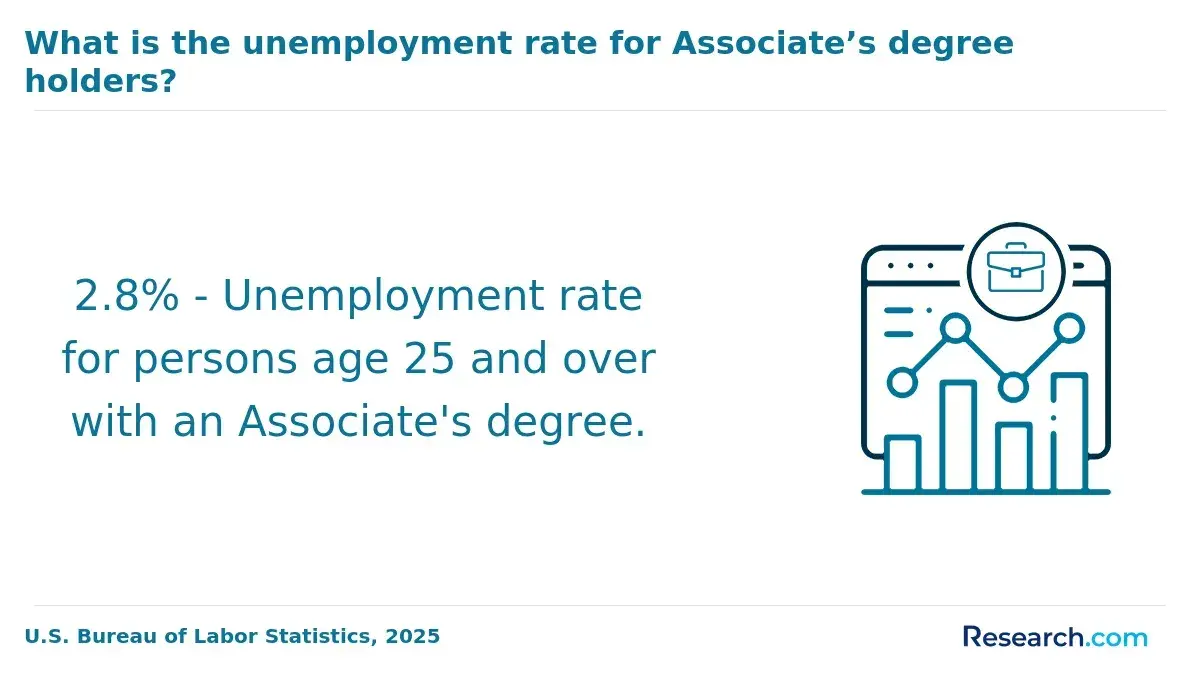
Unemployment among biomedical sciences degree holders is generally lower than the national average for college graduates-which hovers around 2.5%-with many specializing in this field experiencing rates near 1.3%. This gap signifies more than just a number: it translates into shorter job searches, steadier income flow, and a greater likelihood of continuous employment during early career stages. However, focusing solely on unemployment masks a crucial risk-underemployment-where graduates accept roles that fail to utilize their full biomedical training. This hidden challenge affects income potential and career growth despite appearing employed on paper.
- Data Variability: Unemployment statistics in narrow biomedical sciences specialties often fluctuate sharply due to small sample sizes, so reviewing trends over multiple years provides a clearer picture of structural risks than isolated annual data.
- Contextual Meaning: Unemployment in biomedical fields also reflects lost opportunities for career-building skill development early on-a critical factor affecting long-term earnings and advancement.
- Underemployment Risk: Many graduates work in positions unrelated to their specialization or at lower pay grades, exposing them to financial insecurity despite formal employment.
- Strategic Positioning: Selecting biomedical subfields, geographic areas, and certifications that align with market demand and licensure options can greatly reduce unemployment and underemployment risks over time.
Reflecting on his journey, a biomedical sciences professional shared that despite initially facing frustration and uncertainty, persistent networking and targeted internships eventually led to relevant opportunities. He recalls, "It was often tough to see jobs that seemed just out of reach, and the waiting stretched longer than I expected." Still, he emphasizes that understanding the specific labor market dynamics helped him prioritize positions with stronger growth potential, which ultimately shortened his job search and built a more stable career foundation.
Employer demand in biomedical sciences specializations is heavily concentrated in select fields shaped by emerging technologies, evolving regulations, demographic shifts, and ongoing workforce shortages. Real-time analytics from Lightcast, LinkedIn Talent Insights, and SHRM reports highlight five to seven subspecialties showing elevated job postings, faster hiring rates, and competitive salaries-indicating robust career openings rather than transient spikes.
- Genomics and Precision Medicine: Growth stems from advances in gene sequencing and personalized therapies, with employers prioritizing expertise in genetic data analysis to inform treatment pathways.
- Clinical Research Coordination: Persistent clinical trial activity and stricter compliance rules have created sustained demand for coordinators well-versed in regulatory protocols.
- Regulatory Affairs: Increasing complexity in drug and device approvals drives need for professionals capable of navigating evolving legal frameworks.
- Immunology and Infectious Diseases: While recent global crises elevated this field, long-term demand is reinforced by demographic trends and vaccine development priorities.
- Biomedical Data Science: The infusion of AI and big data into biomedical research fosters growth in specialists skilled in managing and interpreting large datasets.
- Medical Laboratory Technology: Chronic shortages of skilled lab technicians coupled with healthcare expansion sustain hiring demand.
- Neurobiology and Neuroscience: Aging populations and rising neurodegenerative disorders underpin durable employer interest.
Prospective students exploring top in-demand biomedical sciences career paths in North America should verify these demand signals through salary benchmarks, professional association data, and direct conversations with hiring managers to ensure alignment with their targeted location and employment sector. Tailoring academic plans to incorporate relevant coursework, specialized internships, and certifications-such as advanced genetics for genomics or biostatistics for data science-can significantly improve job prospects. For those prioritizing application ease, consider enrolling at no application fee colleges that offer these critical program elements to position candidates competitively in sectors demonstrating stable demand rather than temporary vacancies.
Industries employing the largest share of biomedical sciences graduates while maintaining stable and expanding workforces reveal distinct structural advantages that limit job market fluctuations. These sectors typically benefit from essential-service designation, regulatory frameworks, or persistent technical demand, ensuring graduates play integral, non-peripheral roles.
- Healthcare Services: Characterized by continual demographic-driven demand and chronic disease management, this sector offers diverse roles in laboratory analysis, clinical trial coordination, and healthcare informatics. Its essential nature and consistent health needs bolster employment stability.
- Pharmaceutical and Biotechnology: Innovation cycles combined with intense regulatory scrutiny create ongoing requirements for expertise in drug discovery, safety evaluation, and compliance. Graduates with proficiency in molecular biology and clinical trial methodologies find steady opportunities in research, quality assurance, and regulatory affairs.
- Public Health and Government Research: Supported by stable government funding, this arena focuses on population health monitoring, epidemiology, and policy rollout. Biomedical sciences professionals contribute to surveillance, data interpretation, and program effectiveness amid predictable operational continuity.
- Medical Devices and Diagnostics: Driven by innovation but bounded by strict regulatory protocols, this sector demands specialized skillsets in product validation, assay development, and compliance documentation-areas where biomedical sciences graduates are essential for successful market authorization.
- Academic and Clinical Research Institutions: Grant-dependent yet resilient, these institutions rely on biomedical sciences graduates for experimental design, data analytics, and ethical oversight. Funding mechanisms protect roles in research coordination from economic shifts.
Concentration in a single industry presents inherent risks-sector-specific regulatory revisions, technological shifts, or regional market changes can put employment at risk. Developing capabilities across multiple fields-such as data analytics, project leadership, or regulatory expertise-enhances resilience and broadens career prospects. High-stability employers within these industries consistently demonstrate robust hiring trends and minimal layoffs for biomedical sciences graduates, as validated by workforce data and employer reputation metrics.
After discussing these insights with a professional who built her career following a biomedical sciences degree, she reflected on the realities of navigating employment within these sectors. She described the early uncertainty of finding stable positions but emphasized how cultivating versatile skills and embracing cross-sector opportunities helped mitigate risks. "I encountered unexpected delays during clinical trial projects and regulatory reviews that tested my adaptability," she recounted, "but those challenges ultimately deepened my expertise and confidence." Her experience highlights the value of flexibility and strategic skill-building for sustained job security in biomedical sciences fields.
Federal and state government positions tend to provide more stable employment for biomedical sciences degree holders compared to private-sector roles. Data from authoritative sources such as the BLS and OPM show that unemployment rates among public-sector biomedical professionals are lower, largely because public institutions are less exposed to market volatility. Civil service protections reduce the frequency of layoffs-even during economic downturns-offering a buffer less common in private biotech and pharmaceutical companies where workforce cuts happen more readily.
Government biomedical roles experience fewer eliminations due to budget cuts, with tenure policies and job protections limiting sudden job losses. In contrast, private-sector employers adjust their workforce to remain competitive, increasing job insecurity for employees.
Length of employment is typically greater in public-sector positions. Many graduates working in federal health agencies, state public health labs, public universities, or quasi-governmental research organizations benefit from structured advancement systems, retirement plans, and job security that encourage long-term careers.
Common Public-Sector Categories:
- Federal agencies focused on health research and regulation maintain steady funding and robust employment safeguards.
- State and local government biomedical roles, including public health and environmental health departments, uphold stability by being insulated from market forces.
- Public universities and affiliated research bodies provide consistent academic and research opportunities supported by government grants.
- Quasi-governmental organizations combine certain public protections with nonprofit flexibility, offering hybrid employment security.
Civil service rules protect many public-sector biomedical employees from abrupt layoffs caused by political shifts or economic crises, significantly lowering job loss risk and associated stress.
Public-sector biomedical roles usually offer lower initial salaries than the private sector. However, the benefits package, including pensions, generous leave, and eligibility for public service loan forgiveness, can result in better overall financial security over a career, appealing to those prioritizing stability over immediate income.
Graduates must evaluate their tolerance for job market risk against compensation goals. Those seeking predictability and long-term security often find public-sector roles advantageous, while candidates favoring higher starting pay and bonuses might lean toward private-sector careers despite increased unemployment risk.
Licensure and certification are critical gatekeepers for many biomedical sciences careers, serving as legal and professional standards that narrow labor supply to credentialed individuals. Roles such as clinical laboratory scientists, genetic counselors, and medical technologists require state licensure or certification from authoritative bodies, including the American Society for Clinical Pathology (ASCP) and the American Board of Genetic Counseling (ABGC), as mandatory prerequisites for employment. This legal requirement restricts job eligibility to candidates who have met strict educational and examination criteria, thereby reducing competition from unlicensed workers. Such a structural barrier creates a stable demand floor, shielding licensed professionals from unemployment risks even during economic downturns.
In addition to mandatory licensure, several certifications-though not legally required-serve as strong hiring filters in a competitive biomedical sciences job market. Credentials like Certified Biomedical Equipment Technician (CBET) and Professional Science Master's (PSM) demonstrate advanced expertise and dedication, helping applicants stand out. Earning these recognized certifications before entering the workforce lowers unemployment risk by limiting the candidate pool to similarly credentialed peers, making credential acquisition a strategic career investment.
Credential strategies typically fall into three categories:
- Mandatory Licensure: Required for legally regulated positions and essential for entry.
- Valued Certifications: Widely recognized credentials that measurably enhance employability and reduce unemployment risk.
- Low-Value Credentials: Certifications that offer minimal market advantage relative to their cost and time investment.
According to recent U.S. Bureau of Labor Statistics data, biomedical sciences occupations with mandatory licensing show unemployment rates 1.5 to 2 percentage points below the national average, highlighting how licensure limits labor supply and strengthens job security. For more detailed credentialing standards and licensing databases, consulting state licensing boards and professional association websites is recommended.
Geographic impact on unemployment risk for biomedical sciences graduates varies widely across the United States, driven by the concentration of employers and industry clusters. Data from BLS metropolitan area unemployment statistics, ACS geographic employment trends, and Lightcast regional demand analytics show that metropolitan areas like Boston, San Francisco, and Raleigh-Durham consistently offer lower unemployment rates and more stable career opportunities for biomedical sciences degree holders. These areas benefit from dense healthcare corridors, robust pharmaceutical sectors, and thriving biotech startups, creating resilient local economies with sustained demand.
Structural regional factors contribute to this variation. Areas with high employer density-often government employment centers, technology hubs, or financial services clusters integrating biomedical research-provide abundant positions and cushion against economic downturns. Conversely, regions with fewer biomedical sciences employers tend to exhibit longer job searches and heightened exposure to local economic volatility, increasing unemployment risk for graduates. This geographic variation forms a critical component of regional employment trends for biomedical sciences degree holders.
The rise of remote work also reshapes geographic unemployment risk. Roles in data analysis, clinical research coordination, and regulatory affairs often allow for remote or hybrid models, significantly expanding accessible labor markets and mitigating local job market fluctuations. However, careers requiring physical presence-such as laboratory scientists or biomedical technicians-remain tightly linked to regional employment conditions. Graduates should consider whether their specialization supports remote work as part of a broader risk management strategy.
Conducting a geographic labor market analysis is essential for those seeking to optimize their career stability. Making use of BLS area-specific employment data, LinkedIn job location filters, and regional wage benchmarks can inform decisions about remaining local, relocating to strong-demand areas, or pursuing remote-compatible biomedical sciences roles. For individuals interested in advancing their credentials, a master of science in dietetics is an example of a specialization with growing demand and geographic flexibility. Notably, approximately 20% of biomedical sciences-related job listings in metropolitan areas explicitly offered remote or hybrid options, reflecting an expanding geographic labor market for this field.
In assessing which biomedical sciences careers in the United States face the greatest vulnerability to automation and technological disruption, it is essential to distinguish roles where machines supplement human work from those where they potentially replace it. Drawing on analyses from the McKinsey Global Institute, Oxford Martin School, and MIT, careers heavily focused on routine data processing, repetitive document review, standardized decision-making, and pattern matching are the most exposed to near-term automation risk.
- Laboratory Technicians: These roles involve repetitive sample preparation, data entry, and standardized testing protocols-tasks increasingly automated through robotic processing and AI-enhanced data analysis. Their probability of displacement is high, as routine workflows are prime targets for automation to improve accuracy and efficiency.
- Medical Coders and Data Registrars: Responsible for converting clinical, diagnostic, and procedural information into standard codes, these jobs depend on pattern recognition and rule-based decisions. Advances in natural language processing and machine learning are making automated coding systems more common, potentially reducing demand for human coders.
- Clinical Trial Monitors: These professionals monitor patient data collection and compliance using standardized checklists and repetitive documentation review-functions increasingly supported by automated monitoring software and AI-driven data validation, which may reduce staff needs.
- Biomedical Equipment Operators: Operators performing routine calibration, maintenance, and simple troubleshooting are at risk as robotics and smart systems move toward autonomous operation and self-diagnosis capabilities.
Conversely, biomedical sciences careers emphasizing complex problem-solving, ethical judgment, interpersonal interaction, and creative innovation face much lower automation risk. Roles such as biomedical researchers designing novel experiments, clinical specialists engaging in nuanced patient care, and regulatory compliance experts overseeing ethical standards require uniquely human expertise.
Prospective or current biomedical sciences professionals targeting high-automation-risk fields should consider a mid-career transition as automation reshapes job requirements. Developing complementary skills-particularly in managing automated systems and strengthening ethical and interpersonal judgment-is critical. This strategy can reposition practitioners as essential overseers rather than those displaced by technology.
Automation risk scores are probabilistic trends, not certainties. The pace and extent of automation adoption depend on employer investments, regulatory frameworks, technology maturity, and cost factors, varying widely across organizations and geographic markets. Therefore, automation vulnerability should inform, not dictate, career decisions in biomedical sciences. Continuous learning and adaptability serve as crucial buffers against disruption in this evolving labor market shaped by automation, demographic change, and sectoral shifts.
Professionals exploring credentialing might also consider avenues such as kinesiology certification online programs, which can complement existing biomedical sciences qualifications and strengthen employment resilience in related fields impacted by technological disruption.
Graduate degrees substantially lower unemployment risk for biomedical sciences degree holders by qualifying them for positions with higher demand and less competition. Data from Georgetown University and the Bureau of Labor Statistics indicate that advanced degrees-master's and doctorates-can reduce unemployment rates by up to half compared to bachelor's holders. These qualifications also offer a salary premium ranging from 20% to 40%, reflecting enhanced expertise and increased career durability.
Certain graduate programs are particularly effective in boosting employment security:
- Professional Master's Degrees: Programs enabling licensure-such as in clinical practice, legal fields, or biomedical engineering-grant access to regulated professions with steady demand and lower automation risks.
- Research-Focused Graduate Programs: Master's and doctoral studies prepare candidates for advanced practitioner and investigator roles where labor supply is limited, reducing unemployment likelihood.
- MBA Degrees: An MBA opens leadership and management opportunities often inaccessible to bachelor's graduates, expanding career options within biomedical sciences industries.
Investing in graduate education requires careful financial consideration:
- Cost and Time: Programs typically span 1-5 years and may cost $20,000 to over $100,000, excluding living expenses.
- Opportunity Cost: Time in school delays workforce earnings and experience accumulation.
- Return on Investment: Evaluating program-specific outcomes is critical-some degrees reach salary break-even points faster due to both wage gains and reduced joblessness, whereas others might not outperform less costly alternatives.
Alternatives like professional certification, selective employer and geographic choices, or specializing in in-demand subfields can sometimes lower unemployment risk comparably, with less expense and time commitment. For many biomedical sciences professionals, a customized blend of graduate education and these strategies maximizes long-term employment resilience.
Entry-level roles in biomedical sciences that reliably lead to long-term employment stability share characteristics such as clear career advancement paths, strong employer retention practices, credential-building opportunities, and extensive professional networks. Analysis of NACE survey data, LinkedIn career tracking, and BLS occupational mobility trends highlights key positions that function as effective springboards into mid-career stability rather than being isolated job stops.
- Clinical Research Coordinator: Positioned within a structured career lattice, this role offers a pathway toward project management, regulatory affairs, or clinical data analysis. Internal promotion is common, with typical advancement occurring within three to five years as certifications are earned and expertise deepens. Employers, especially in pharmaceutical and research sectors, foster networks that bolster resilience through economic fluctuations.
- Laboratory Technician: Roles in hospitals or biotech companies provide stable entry points with transferable skills applicable across fields. Promotion often comes after roughly four years and can accelerate with accreditations such as CLS or ASCP. Retention programs in these sectors further contribute to career growth and reduce turnover.
- Regulatory Affairs Assistant: This position offers consistent demand due to regulatory complexity in healthcare. Advancement to specialist or associate roles typically happens between two and four years. The role supports credential development valued in pharmaceutical and device companies, while strong professional communities improve retention and stability.
- Biomedical Sales Representative: Combining domain knowledge with network development, sales roles tied to biomedical products enable durable career progress. Top performers frequently move into management within five years. The presence of dense biomedical industry clusters enhances job security through diverse product portfolios and employer incentives to retain talent.
Early-career choices-selecting employers with solid promotion cultures, pursuing relevant certifications quickly, and targeting biomedical hubs geographically-significantly influence long-term employment stability. Viewing entry-level offers through the lens of retention data and career trajectories rather than immediate pay helps graduates build sustained career equity immune to automation and market shifts.
What Graduates Say About the Biomedical Sciences Degree Careers With the Lowest Unemployment Risk
- Esteban: "Choosing a career in clinical research within biomedical sciences has truly shaped my professional journey-especially in the dynamic healthcare industry where demand is consistently high. Earning my Certified Clinical Research Professional credential right out of university opened doors that would have otherwise taken years to access. From entry-level roles conducting trials to senior positions overseeing research compliance, the credential has translated into job security across the board."
- Alexis: "Reflecting on my path through biomedical sciences, I found that specializing in pharmaceutical development created diverse opportunities in both North American and European markets. The mid-career stage required me to pursue advanced certification in regulatory affairs, which significantly lowered unemployment risk and allowed for a smooth transition into leadership roles. Industries focused on drug safety and production are truly where my expertise feels most impactful-especially in regions investing heavily in biotech innovation."
- Eli: "From a professional standpoint, biomedical sciences offers several underappreciated advantages when paired with strategic credentialing-particularly in public health and epidemiology sectors. I started with an entry-level Certificate in Public Health, which helped me gain entry in government agencies, and now, as a senior practitioner, my Certified Health Education Specialist license keeps me competitive. Geographic markets with strong public health infrastructure-especially urban hubs-maintain steady demand for specialists like me."
Other Things You Should Know About Biomedical Sciences Degrees
Mid-career biomedical sciences professionals tend to see the highest demand in specialized research positions, regulatory affairs, and clinical trial management. These tracks require advanced expertise and certifications, which reduce unemployment risk. Employers value experience combined with technical skills, especially in pharmaceutical development and healthcare innovation sectors.
Clinical laboratory scientist, medical technologist, and some genetic counseling roles require state licensure or certification before employment in many U.S. states. Clinical laboratory scientists often need ASCP certification, and genetic counselors typically need board certification from the ABGC.
Economic recessions tend to impact biomedical sciences careers less severely than many other sectors. Healthcare and biotechnology services are considered essential, providing ongoing funding and employment opportunities. However, discretionary research funding may face cuts, potentially slowing job growth in some niches during downturns, though overall unemployment rates remain comparatively low.
- Unveiling Hidden Opportunities: 7 Lesser-known Careers for Biomedical Science Graduates - Beal University https://beal.edu/unveiling-hidden-opportunities-7-lesser-known-careers-for-biomedical-science-graduates/
- College majors with the best and worst job prospects — art history beats finance https://www.cnbc.com/2025/05/16/college-majors-with-the-best-and-worst-employment-prospects.html
- What Can You Do With a Biomedical Sciences Degree? | CourseCompare.ca https://www.coursecompare.ca/what-can-you-do-with-a-biomedical-sciences-degree/
- 5 Emerging Careers in Biomedical Science You Should Know About https://www.nuhs.edu/5-emerging-careers-in-biomedical-science-you-should-know-about/
- which - Ściągi, wypracowania, lektury - Bryk.pl https://www.bryk.pl/slowniki/slownik-angielsko-polski/226609-which
- How the Geography of Jobs Affects Unemployment https://www.richmondfed.org/publications/research/econ_focus/2014/q3/feature2
- The 11 college majors with the lowest unemployment rates https://www.businessinsider.com/college-majors-with-the-lowest-unemployment-rates-2017-11
- These 37 College Majors Reveal Unemployment Rates Higher Than All Other Workers https://www.investopedia.com/these-37-college-majors-reveal-unemployment-rates-higher-than-all-other-workers-11941188
- U.S. Life Sciences Talent Trends 2025 | CBRE https://www.cbre.com/insights/reports/us-life-sciences-talent-trends-2025
- WHICH - Translation in Polish - bab.la https://en.bab.la/dictionary/english-polish/which


