2027 What to Expect in an Online English Language Learning Doctorate Program: Courses, Research, Faculty Support, and Final Projects

Co-Founder and Chief Data Scientist
The biggest question before enrolling in an online English Language Learning doctorate is not whether the format is convenient; it is whether you can sustain the coursework, research, and final project. NCES reported that English learners made up about 10.6% of U. S. public school enrollment, or roughly 5.3 million students, making advanced expertise in language learning highly relevant. This guide is for educators, TESOL leaders, curriculum specialists, and administrators comparing doctoral options. You will learn what courses, research tasks, faculty support, and final projects typically involve so you can judge fit before committing.
Key Things to Know About English Language Learning Doctorate Programs
- Most online English Language Learning doctorates are education doctorates or closely related language, literacy, TESOL, or curriculum programs that commonly require about 54 to 90 post-master's credits, depending on whether the program is an EdD, PhD, or bridge pathway.
- There is no reliable national completion-rate dataset that isolates online English Language Learning doctoral students, so applicants should ask each program for cohort completion, dissertation continuation, and time-to-degree data before enrolling.
- Expect research to begin early: students usually move from literature reviews and methods courses to proposal development, data collection, analysis, and a dissertation or applied project over a commonly advertised 3- to 5-year online EdD timeline, with PhD routes often taking longer.
How is the course load structured in an online English Language Learning doctorate program?
An online English Language Learning doctorate usually combines advanced education coursework, language-learning specialization courses, research methods, seminars, and a final dissertation or applied project sequence. The structure matters because a program that looks flexible on paper may still require weekly live meetings, intensive writing blocks, field-based research, or short residencies.
Many programs are designed for working educators and use part-time pacing, but "online" does not mean light. A typical 3-credit doctoral course can require weekly readings, discussion posts, applied assignments, data analysis tasks, and scholarly writing. Students who are teaching full time often take one or two courses per term; taking more can be difficult unless the program is intentionally accelerated.
The table below summarizes common workload components so you can compare program catalogs more realistically. Exact credit requirements vary by school, prior graduate credits, and whether the doctorate is an EdD, PhD, or specialization inside a broader education doctorate.
| Program component | Typical role in the degree | Common workload pattern | Decision point for students |
| Core doctoral courses | Build foundations in leadership, equity, policy, curriculum, or learning theory | Usually taken in the first half of the program | Look for courses that connect directly to multilingual learners, not only general education leadership |
| English Language Learning specialization | Focuses on language acquisition, assessment, TESOL, bilingual education, and literacy | Often sequenced after or alongside core courses | Check whether the program is designed for K-12, adult education, higher education, or teacher preparation |
| Research methods | Prepares students to design, evaluate, and conduct original or applied research | Usually includes qualitative methods, quantitative methods, and mixed methods | Choose a program with methods training aligned to your likely project, such as classroom inquiry or program evaluation |
| Doctoral seminars | Support literature review development, academic writing, and proposal preparation | Often repeated across multiple terms | Ask whether seminars produce dissertation-ready deliverables or only discussion-based assignments |
| Final project credits | Reserve time for proposal, data collection, analysis, writing, and defense | Usually completed after coursework or near the end of coursework | Confirm whether students pay per credit, per term, or continuation fee during this stage |
Accelerated pathways can be attractive, but they are not right for everyone. If you are comparing 1 year EdD programs online, look carefully at whether the timeline assumes transfer credits, year-round enrollment, a practitioner project instead of a traditional dissertation, or an unusually heavy course load.
A practical way to estimate fit is to map the degree against your calendar before applying. Use the following steps to test whether the structure is manageable:
- Identify how many courses you would take each term and whether terms are 8, 10, or 15 weeks.
- Ask whether courses are asynchronous, synchronous, or hybrid, and note any required evening meetings.
- Block weekly reading and writing time as if it were a fixed work shift, not optional study time.
- Confirm when research work begins, because the final project often overlaps with remaining coursework.
- Ask current students how many hours they spend during peak writing, proposal, and data-analysis periods.
What courses are covered in an online English Language Learning doctorate program?
Coursework usually moves from broad doctoral foundations to specialized study of language learning, multilingual education, assessment, literacy, leadership, and research design. Students new to doctoral education should understand that these courses are less about memorizing content and more about producing publishable, defensible, evidence-based arguments.
The table below shows common course areas and what each one helps you do. Program names vary, so compare the learning outcomes rather than relying only on course titles.
| Course area | What the course usually covers | How it supports doctoral work |
| Second language acquisition | Theories of how children, adolescents, or adults acquire additional languages | Helps students frame research questions about language development and instructional practice |
| TESOL methods and pedagogy | Instructional models, sheltered instruction, language objectives, and classroom strategies | Connects doctoral theory to teaching and program improvement |
| Bilingual and multilingual education | Dual-language models, translanguaging, sociolinguistics, and language policy | Supports research on equity, access, and culturally sustaining education |
| Language assessment | Placement, proficiency measurement, formative assessment, and test interpretation | Prepares students to evaluate outcomes without misusing assessment data |
| Literacy development for multilingual learners | Reading, writing, oral language, disciplinary literacy, and academic vocabulary | Useful for projects focused on curriculum, intervention, or teacher professional development |
| Curriculum and instructional leadership | Program design, teacher coaching, curriculum alignment, and implementation | Fits students aiming for district, institutional, or consulting roles |
| Qualitative research | Interviews, observations, case studies, coding, trustworthiness, and ethics | Often central to classroom-based and practitioner research |
| Quantitative or mixed methods research | Survey design, descriptive statistics, outcome analysis, and mixed-method integration | Supports program evaluation and studies using achievement or assessment data |
One current trend is the increasing use of AI-assisted tools for literature discovery, transcription, coding support, and writing organization. Good programs do not treat AI as a shortcut; they teach students how to use tools ethically, protect participant data, verify citations, and maintain original analysis.
When reviewing a curriculum, look for alignment between courses and your goal. A future university researcher may need stronger theory and methods depth, while a district ELL director may benefit more from program evaluation, assessment, and leadership courses. Red flags include vague specialization labels, no dedicated language-assessment course, or research courses that appear disconnected from multilingual education.
What coursework requirements must English Language Learning doctoral students complete?
Doctoral coursework requirements usually include minimum credits, required core courses, specialization credits, research methods, residency or intensive experiences, comprehensive exams or qualifying papers, and a minimum grade standard. Requirements vary widely, so applicants should read the handbook, not only the admissions page.
In many online education doctorates, students must maintain satisfactory academic progress and may need a B or higher in required courses. Some programs allow limited transfer credits from a master's, EdS, or prior doctoral work, while others require most credits to be completed in residence through the university.
The following list shows requirements that often determine whether the program is manageable and affordable. These are the details to verify before you apply, because they can affect both your timeline and total cost:
- Minimum post-master's credits required for graduation, including whether dissertation or project credits are included in that total.
- Required research sequence, including qualitative, quantitative, mixed methods, statistics, and proposal-development courses.
- Specialization requirements in TESOL, bilingual education, literacy, multilingual learners, or curriculum leadership.
- Comprehensive exam, portfolio, qualifying paper, or benchmark assessment before moving into candidacy.
- Residency, immersion, summer institute, or campus visit requirements, including travel costs and time away from work.
- Grade minimums, repeat-course policies, and time limits for completing the degree.
- Transfer-credit rules for prior graduate coursework, EdS credits, or professional certification coursework.
Cost should be evaluated alongside requirements, not separately. When comparing cheapest online EdD programs, check whether the listed tuition includes doctoral fees, dissertation continuation credits, technology fees, residencies, and extra terms if your final project takes longer than planned.
A common mistake is assuming a shorter credit requirement automatically means a lighter degree. A 54-credit program with year-round 8-week courses and strict milestone deadlines may feel more intense than a 60-credit program with slower pacing and stronger advising. The better question is whether the schedule, support, and research sequence fit your work and family obligations.
Research work in an online English Language Learning doctorate usually focuses on problems of practice, language development, assessment, instructional design, teacher preparation, equity, policy, or program effectiveness. The exact expectation depends on the degree type: PhD programs usually emphasize original scholarly contribution, while EdD programs often emphasize applied research that improves practice in a real educational setting.
National databases do not publish a clean, current statistic for dissertation-versus-applied-project completion rates specifically among online English Language Learning doctoral students. Because of that limitation, the most trustworthy data comes from individual programs: ask for recent cohort completion, median time to candidacy, and the number of students still enrolled in dissertation continuation.
The table below shows common research responsibilities and the skills they require. Use it to judge whether a program's research sequence prepares you for the kind of project you want to complete.
| Research responsibility | What students do | Skill emphasized | Why it matters in English Language Learning |
| Literature review | Analyze prior studies, theories, and policy debates | Synthesis and scholarly argument | Prevents projects from repeating known findings or relying only on personal experience |
| Problem framing | Define a focused, researchable issue | Scope control and theory-to-practice alignment | Helps narrow broad topics such as "ELL achievement" into feasible studies |
| Research design | Select qualitative, quantitative, or mixed methods | Methodological fit | Ensures the method matches the question, participants, and available data |
| Ethics and IRB approval | Protect participants and confidential school data | Research ethics and compliance | Critical when working with minors, immigrant families, or sensitive language-status data |
| Data collection | Conduct interviews, surveys, observations, document analysis, or assessment review | Fieldwork organization | Determines whether the project can be completed on schedule |
| Data analysis | Code qualitative data, analyze survey results, or interpret outcome measures | Evidence-based interpretation | Supports credible conclusions about instruction, programs, or learner outcomes |
| Scholarly writing | Write chapters, reports, or manuscripts | Argumentation and revision | Turns fieldwork into a defensible contribution for educators and researchers |
Research demand is highest when students underestimate access issues. For example, a project requiring multilingual family interviews, district assessment data, or classroom observations may need multiple approvals before data collection can begin. If your workplace will also be your research site, ask early whether your employer allows internal research and what data can be used.
The final project is usually the largest academic requirement in the degree. Depending on the program, it may be a traditional dissertation, applied dissertation, dissertation-in-practice, capstone, improvement project, or portfolio-based doctoral project.
The table below compares the two most common models. The distinction is important because the right choice depends on whether you want to produce scholarly research, solve an institutional problem, or prepare for leadership, faculty, or consulting roles.
| Final project type | Typical purpose | Common evidence base | Best fit | Potential drawback |
| Traditional dissertation | Contribute original research to the field | Primary data, secondary datasets, theory-based analysis, or mixed methods | Students interested in research, higher education, publication, or a PhD-style scholarly path | Can take longer if the topic, methods, or committee feedback become complex |
| Applied dissertation or dissertation-in-practice | Investigate and improve a problem of practice | Program data, interviews, surveys, classroom artifacts, implementation evidence, or evaluation findings | Practitioners aiming for school, district, nonprofit, curriculum, or language-program leadership | Still requires rigorous research design and cannot be treated as a simple workplace report |
| Doctoral capstone or portfolio | Demonstrate advanced competence through an integrated project | Artifacts, applied research, reflection, evaluation, and implementation planning | Students in practice-heavy programs with clear professional deliverables | May be less familiar to employers or academic hiring committees than a dissertation |
Good final projects in English Language Learning are focused and feasible. Examples might include evaluating a newcomer support model, studying teacher implementation of language objectives, analyzing multilingual family engagement practices, or examining how AI-supported writing tools affect academic language instruction.
Choose the final project track by working backward from your goal. If you want a tenure-track or research-intensive position, a traditional dissertation may be more aligned. If you want to lead instructional improvement, evaluate programs, or support multilingual learner outcomes in a district or organization, an applied dissertation may provide more direct professional value.
The final project is demanding because it requires independent work, sustained writing, methodological precision, and repeated revision. It is not just a long paper; it is a formal inquiry that must be approved by a committee and, in most cases, an institutional review board before data collection begins.
Reliable national attrition data specifically for online English Language Learning doctoral students is not publicly available. However, doctoral programs across fields consistently report that students are most vulnerable to delay after coursework, when structure decreases and the dissertation or project depends heavily on self-management, advisor communication, and access to data.
The most common delays are predictable. Students can reduce risk by watching for these problems early:
- Choosing a topic that is too broad, such as "improving outcomes for English learners," instead of a focused question tied to a specific population, setting, and intervention.
- Designing a study that depends on data the student does not control, such as district assessment files that require multiple permissions.
- Waiting until the final year to build a literature base, which makes proposal writing slow and unfocused.
- Assuming an applied project is easier than a dissertation, even though both require evidence, ethics review, analysis, and defensible conclusions.
- Submitting chapters without first clarifying the advisor's expectations for structure, citation style, and revision cycles.
- Underestimating the emotional workload of long-form writing while working full time.
One practical benchmark is whether you can protect regular writing time every week for an extended period. Students who only write during school breaks or after major work deadlines often lose momentum. A more realistic plan is to schedule smaller weekly writing sessions, monthly advisor check-ins, and fixed deadlines for each chapter or project component.
Research progress is usually evaluated through staged milestones rather than one final deadline. These checkpoints help faculty determine whether your topic is feasible, your methods are ethical, your evidence supports your claims, and your writing meets doctoral standards.
The table below summarizes common milestones. Timelines vary, but the sequence helps you understand how an online doctorate is structured from start to finish.
| Milestone | What is evaluated | Typical timing in the program | What can slow progress |
| Research coursework | Understanding of methods, ethics, data, and scholarly writing | Early to middle stage | Weak alignment between assignments and intended dissertation topic |
| Topic approval | Feasibility, relevance, and fit with faculty expertise | Often before formal proposal work | Topic is too broad or lacks access to participants or data |
| Literature review benchmark | Depth, currency, synthesis, and theoretical grounding | Middle stage | Summarizing sources instead of building an argument |
| Proposal defense or review | Research questions, design, methods, ethics, and contribution | After core coursework and before data collection | Committee asks for major design revisions |
| IRB approval | Protection of participants and data confidentiality | Before data collection | Incomplete consent procedures or unclear recruitment plans |
| Data collection and analysis review | Quality of evidence and accuracy of interpretation | Late stage | Low participation, inaccessible records, or inconsistent coding |
| Final defense or presentation | Completed argument, findings, implications, and limitations | Final stage | Insufficient revision time or unresolved committee concerns |
Online programs may use learning management systems, virtual defenses, shared document review, video advising, and research seminars to monitor progress. Ask whether the program has formal milestone deadlines, because clear checkpoints can help prevent the "all but dissertation" stage from stretching longer than expected.
Use milestone evaluation as a support system, not merely a compliance process. Each checkpoint is a chance to narrow your topic, identify weak evidence, and prevent a late-stage redesign that could add terms to your timeline.
Faculty support is one of the strongest predictors of whether a doctoral experience feels manageable. In an online English Language Learning doctorate, support may come from a primary advisor, dissertation chair, committee members, methods instructors, writing coaches, librarians, and sometimes cohort mentors.
No national source publishes a current average faculty-to-student ratio specifically for English Language Learning doctoral programs. For that reason, applicants should ask programs direct questions about advising loads, response-time expectations, committee availability, and how often students meet with chairs during the proposal and final-project stages.
The table below explains who typically supports doctoral research and what each role should cover. This can help you evaluate whether a program has enough support beyond course instructors.
| Support role | What they typically help with | What students should ask before enrolling |
| Faculty advisor | Early topic fit, course planning, and academic direction | How are advisors assigned, and can students request faculty with ELL expertise? |
| Dissertation or project chair | Proposal development, research design, chapter feedback, and defense preparation | How many doctoral students does each chair supervise? |
| Committee member | Content expertise, methodological guidance, or external perspective | Can committee members come from TESOL, bilingual education, literacy, or related fields? |
| Methods instructor or consultant | Qualitative, quantitative, mixed-methods, or evaluation design support | Is methods help available after the research courses end? |
| Research librarian | Database searches, citation management, and systematic literature strategies | Are online doctoral students given synchronous research consultations? |
| Writing center or doctoral writing coach | Organization, clarity, APA style, and revision planning | Is doctoral-level writing support included or fee-based? |
| Cohort or peer group | Accountability, feedback, and shared problem-solving | Does the program intentionally form writing groups or research communities? |
Strong faculty support does not mean faculty do the work for you. It means the program has clear advising processes, faculty whose expertise matches your interests, timely feedback, and escalation pathways if communication breaks down.
A warning sign is a program that promotes flexibility but cannot explain how dissertation chairs are assigned, how many students they supervise, or what happens if an advisor leaves. Before enrolling, request examples of recent dissertation or applied-project titles to see whether faculty are actively supporting research in English Language Learning topics.
Many programs allow students to express advisor preferences, especially after they have clarified a research topic. Others assign an initial advisor at admission and later match students with a dissertation chair based on topic, methodology, and faculty availability.
You may be able to change advisors, but the process is usually governed by doctoral handbook rules. A change can make sense if your topic shifts, your advisor's expertise no longer fits, communication is consistently ineffective, or a faculty member becomes unavailable. It should not be treated casually, because changing advisors late can affect timeline, committee expectations, and project direction.
Before requesting a change, take a structured approach. The following steps can help you protect the professional relationship while solving the problem:
- Review the doctoral handbook for advisor-change policies, forms, and approval requirements.
- Document the issue clearly, such as mismatched expertise, delayed feedback, or a major topic change.
- Request a meeting with your current advisor to discuss expectations and possible solutions.
- Identify faculty whose research aligns with your topic and methods before asking for reassignment.
- Speak with the program director or doctoral coordinator if the problem cannot be resolved directly.
- Clarify whether prior approvals, proposal drafts, or committee decisions will carry over after the change.
Students entering through post-master's or specialist pathways should pay special attention to advising continuity. If you are comparing EDS to EdD programs, ask whether your prior specialization affects advisor placement, transfer credits, and the point at which you begin dissertation planning.
The best advisor match usually combines three things: content knowledge in multilingual education, methodological fit, and reliable communication. A famous faculty member may not be the best choice if they are unavailable or if their expertise does not match your project design.
How can students prepare for the research demands of an online English Language Learning doctorate program?
Preparation should begin before admission. The students who adjust best are often those who enter with a realistic research interest, a protected study schedule, basic comfort with scholarly databases, and an understanding that the final project will evolve through feedback.
Use the following preparation steps to reduce avoidable delays and decide whether the degree is the right investment for your goal:
- Write a one-page problem statement about an English Language Learning issue you have observed, including the setting, population, evidence, and why it matters.
- Read recent peer-reviewed articles on that issue and note which methods researchers use most often.
- Identify whether your likely project would require interviews, classroom observations, assessment data, surveys, or program documents.
- Ask your workplace whether research access, participant recruitment, or de-identified student data would be allowed.
- Practice using citation management software and library databases before your first term.
- Create a weekly doctoral schedule that includes reading, writing, discussion participation, and advisor communication.
- Contact current students or alumni and ask what surprised them most about the research workload.
- Compare programs based on faculty expertise, milestone structure, and completion support, not reputation alone.
Students who are not yet ready for doctoral research may benefit from strengthening skills first. For example, educators interested in digital curriculum, language-learning technology, or online course design might explore the best online instructional design master's programs before deciding whether a doctorate is necessary for their career path.
Ask yourself four decision questions before committing: Do I need a doctorate for the role I want? Am I more interested in research, leadership, teacher preparation, or curriculum design? Can I protect time for multi-year writing and revision? Does the program have faculty who can support my exact research area?
An online English Language Learning doctorate can be a strong fit for educators who want to lead language programs, conduct applied research, teach in higher education, influence curriculum, or evaluate services for multilingual learners. It is a poor fit if you mainly want a quick credential, dislike independent writing, or cannot secure the time and support needed for the final project.
Other Things You Should Know About English Language Learning
Not always. Some programs are designed for licensed K-12 educators, while others admit higher education professionals, adult education instructors, curriculum specialists, or nonprofit leaders. Licensure requirements depend on the school, your state, and your career goal.
Yes. At minimum, choose an institution with recognized institutional accreditation. If you want roles tied to educator preparation, school leadership, or state credentials, also check whether program-level accreditation or state approval is required for your intended role.
Possible paths include TESOL faculty roles, district multilingual learner leadership, curriculum director positions, instructional coaching, language-program evaluation, education consulting, policy work, and teacher preparation. Outcomes depend on experience, location, employer requirements, and the type of doctorate earned.
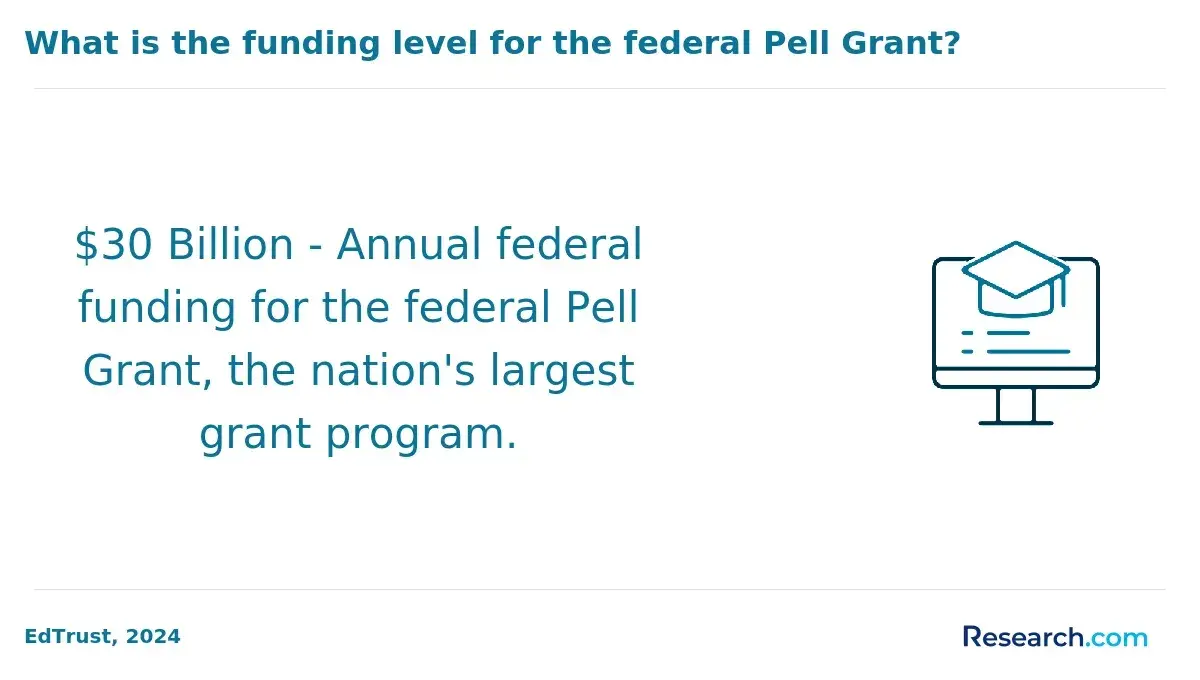
Often, yes, if the program and student meet federal aid eligibility rules. Students may also use employer tuition assistance, scholarships, fellowships, military benefits, or payment plans, but availability varies by institution and individual eligibility.
- Online EdD Programs in TESOL and English Language Learning https://www.onlineeddprograms.com/faqs/edd-programs-tesol
- English as a Medium of Instruction (EMI) - Arqus https://arqus-alliance.eu/our-communities/our-hubs/arqus-plurilingual-and-intercultural-hub/emi-programmes/
- 5 Ways to Assess Student Learning Online https://grade-university.com/blog/assessment-of-student-learning-online
- RESEARCH METHODOLOGY IN LINGUISTICS https://englishmasterinstitute.school.blog/research-methodology-in-linguistics/
- English (PHD) Applied Linguistics Emphasis https://www.etamu.edu/programs/english-phd-applied-linguistics/
- How to Assess Progress in Language Teaching? - Sanako https://sanako.com/how-to-assess-progress-in-language-teaching
- Helping Doctoral Students Build Connections in the Online Environment https://www.facultyfocus.com/articles/online-education/online-student-engagement/one-loneliest-number-helping-doctoral-students-build-connections-online/
- Evolving Research Methodologies in Applied Linguistics https://egarp.lt/index.php/JPURM/article/download/231/228/557
- How to Write a Dissertation https://customuniversitypapers.com/how-to-write-a-dissertation/
- RESEARCH ON ENGLISH LANGUAGE TEACHING https://tahtamedia.co.id/issj/article/download/920/917/3409