
2027 What Can You Do with a Library Science Master's Degree? Careers, Salaries & Growth

Co-Founder and Chief Data Scientist
A master's degree in library science is usually a career decision, not just an academic one: you are weighing tuition, time, accreditation, job requirements, and the shift from traditional library work to digital information management. The degree can prepare graduates for roles in public, academic, school, government, nonprofit, corporate, archival, and digital information settings, but the value depends heavily on program quality, specialization, practical experience, and local hiring conditions. According to the U. S. Bureau of Labor Statistics, employment of librarians is projected to grow 9% from 2022 to 2032, faster than average for all occupations. This guide explains what applicants should know before enrolling, including admission expectations, GPA requirements, cost and financing, program length, career paths, salary ranges, certifications, hiring industries, job outlook, and the skills employers expect.
Key Things to Know About What You Can Do with a Library Science Master's Degree
- Master's programs typically require a bachelor's degree and focus on information management, digital libraries, and research methods, offering flexible online or on-campus formats to accommodate diverse students.
- Graduates enter roles like archivists, librarians, or information specialists, with median salaries around $60,000 and growth aligned with increasing digital information demands.
- Comparing programs on cost, accreditation, and career services is vital; certified professionals often experience accelerated salary growth and broader job opportunities.
What Are the Admission Requirements for a Library Science Master's Program?
Admission to a library science master's program is usually accessible to applicants from many undergraduate backgrounds, but strong programs still look for evidence that you can handle graduate-level research, writing, technology, and public-facing service work. Because employment for librarians and media specialists is projected to grow by 5% from 2021 to 2031, applicants should treat the application as a professional positioning document, not just a checklist.
- Bachelor's degree: Most programs require a bachelor's degree from an accredited institution. The major often does not have to be library science. Applicants commonly come from education, English, history, information technology, communications, social sciences, and other fields, but they should show strong research, writing, organization, and user-service skills.
- Minimum GPA: Many schools look for a minimum undergraduate GPA around 3.0 on a 4.0 scale, though requirements vary. A higher GPA can help at selective institutions, while applicants with weaker grades may need to rely more heavily on work experience, recommendations, or a strong statement of purpose.
- Relevant experience: Library, archive, records management, teaching, research, nonprofit, customer service, or technology experience can strengthen an application. It is not always required, but it helps admissions committees see that you understand the profession and are not applying based on a vague interest in books or research alone.
- Standardized tests: GRE or GMAT scores are optional or no longer required at many schools. However, some universities may still request GRE scores, especially for certain tracks, scholarships, or applicants whose academic record needs additional support.
- Letters of recommendation: Most programs ask for two to three letters. The strongest letters come from professors, supervisors, or professional mentors who can discuss your analytical ability, communication skills, reliability, and readiness for graduate work.
- Statement of purpose: This is often the most important part of the application. Use it to explain your career goals, the type of information environment you want to work in, and why the program's curriculum fits those goals. Avoid generic statements about loving libraries; focus on service, access, digital systems, equity, archives, research support, or information organization.
- Writing sample or resume: Some programs require a writing sample to assess research and communication skills. A resume can also show transferable experience, including project work, database use, teaching, public service, metadata exposure, or technology training.
If speed is a major factor, compare program calendars carefully. Some students also review a one year masters degree option in a related field to understand how accelerated graduate formats handle course load, workload intensity, and career trade-offs.
What Is the Minimum GPA Requirement for a Library Science Master's Program?
The minimum GPA requirement for a library science master's program usually ranges from 2.75 to 3.0 on a 4.0 scale, but the stated minimum is not always the same as a competitive GPA. Programs may admit students below the preferred threshold when the rest of the application shows strong professional fit, academic recovery, or relevant experience. With the library and information science field projected to grow 6% from 2021 to 2031, applicants should focus on presenting a complete case for readiness.
- Typical GPA range: Many programs publish a minimum GPA between 2.75 and 3.0. Always verify the requirement in the current graduate catalog, because department rules may differ from general graduate school rules.
- Institutional differences: Public universities, online programs, and less selective programs may use more flexible thresholds. Highly competitive schools may expect stronger academic records even when the official minimum is lower.
- Holistic review: Admissions committees often consider GPA alongside professional experience, recommendations, writing ability, career goals, and evidence of technical or research skills.
- Applicants below the minimum: If your GPA is below the posted requirement, look for conditional admission policies, probationary admission options, prerequisite coursework, or opportunities to submit an explanatory statement. Use the application to show improvement, not excuses.
- Graduate readiness matters: Library science programs require sustained reading, writing, research, collaboration, and technology use. A strong statement of purpose and credible references can help demonstrate that you are prepared for that workload.
Students comparing people-centered graduate pathways sometimes review fields such as msw programs alongside library science to evaluate differences in admissions expectations, licensure implications, fieldwork, and long-term career fit.
How Much Does a Library Science Master's Degree Cost and How Can You Finance It?
A library science master's degree can cost about $10,000 to $40,000 in tuition and fees, depending on the institution, residency status, delivery format, and program length. The real cost can be higher once you include technology fees, books, commuting, relocation, childcare, unpaid practicum hours, and reduced work hours. Before enrolling, calculate the total cost of attendance and compare it with likely salaries in your target role and region.
- Public versus private tuition: In-state public universities are often the least expensive option. Private universities may cost more but can be worthwhile if they provide strong specialization options, funding, alumni networks, or placement support.
- Online versus campus costs: Online programs can reduce relocation and commuting expenses. However, online students may still pay technology fees and should check whether tuition differs for in-state and out-of-state learners.
- Scholarships and fellowships: Departmental scholarships, professional association awards, diversity fellowships, and university grants can reduce borrowing. Apply early because many awards have deadlines before admission decisions are finalized.
- Graduate assistantships: Assistantships can provide income, tuition support, or both. They are especially valuable because they also create relevant library, archive, research, or instructional experience.
- Employer tuition benefits: Current library, university, government, school, or corporate employees should ask about tuition reimbursement. Confirm whether the benefit requires continued employment after graduation.
- Federal loans: Federal graduate loans can help cover remaining costs, but borrowing should be tied to a realistic repayment plan. Compare monthly payments against expected entry-level earnings, not just mid-career salaries.
- Return on investment: Specializations such as digital librarianship, archival management, records management, data curation, and information governance may influence earning potential. Compare the curriculum with job postings before choosing electives.
- Admissions and access: Many online library science master's programs have acceptance rates exceeding 50%, often weighing professional background and career direction alongside academic records.
One practical approach is to build a funding calendar before applying: list FAFSA dates, scholarship deadlines, assistantship applications, employer benefit windows, and tuition payment deadlines. Students comparing affordable library science degrees should also check accreditation, practicum requirements, and whether the program supports the specialization they plan to pursue.
A graduate of a library science master's program said cost control depended on early planning: applying for assistantships as soon as possible, keeping part-time work manageable, and choosing projects that doubled as career experience. The funded role reduced debt while also making the graduate more competitive for entry-level positions.
How Long Does It Take to Earn a Library Science Master's Degree?
Most full-time students complete a library science master's degree in 1.5 to 2 years. Part-time students often take 3 to 4 years, while accelerated tracks may be completed in about one year. The right timeline depends on your work schedule, finances, family responsibilities, internship requirements, and tolerance for an intensive graduate workload.
- Full-time enrollment: A full-time schedule usually allows completion within 1.5 to 2 years. This option works best for students who can reduce outside commitments or who receive enough funding to limit paid work.
- Part-time enrollment: Part-time study is common among working professionals. It spreads tuition and workload over a longer period, but it can delay graduation and career advancement.
- Online programs: Online formats often provide the most scheduling flexibility. Students should still confirm whether courses are asynchronous, synchronous, or hybrid, because live meeting times can affect work schedules.
- Accelerated programs: Some programs allow completion in about one year. These tracks can reduce time out of the workforce but usually require heavier course loads, shorter breaks, and careful planning around practicums or capstone projects.
- Combined bachelor's/master's programs: Some institutions allow undergraduates to begin graduate coursework early. This can shorten the total time needed to earn both degrees.
- Transfer credits: Prior graduate-level coursework may reduce the number of required credits if the program approves the transfer. Policies vary, so students should ask before enrolling.
- Thesis versus non-thesis tracks: A thesis can be useful for students considering research-heavy or academic roles, but it may extend the timeline. Non-thesis options often emphasize coursework, portfolios, practicums, or capstones.
- Internship or practicum requirements: Field experience can improve employability, but scheduling matters. Students working full time should ask whether placements can be completed evenings, weekends, remotely, or at their current workplace.
When comparing formats, look beyond the advertised completion time. Ask how many courses students typically take each term, how often required courses are offered, and whether delayed course availability can push back graduation. Students researching online graduate formats in other disciplines, such as engineering online programs, can use the same comparison method: flexibility only helps if course sequencing and support services match the student's schedule.
What Career Paths Are Available with a Library Science Master's Degree?
A library science master's degree can lead to traditional librarian roles, but it also supports careers in archives, digital content, records management, research support, data stewardship, information governance, and knowledge management. The best path depends on the setting you want to work in and the technical depth you develop during the program.
- Public librarian: Public librarians support community learning, reader services, digital access, programming, outreach, and information literacy. Strong communication and community engagement skills are essential.
- Academic librarian: Academic librarians support college and university students, faculty, and researchers. Duties may include instruction, research consultations, collection development, scholarly communication, and digital repository work.
- School librarian or media specialist: School-based roles may require state-specific education credentials in addition to the master's degree. Students interested in this path should confirm licensure rules before choosing a program.
- Archivist: Archivists preserve, organize, describe, and provide access to historical records, institutional records, manuscripts, photographs, and digital collections. Coursework in preservation, metadata, and archival standards is useful.
- Records manager: Records managers oversee retention schedules, compliance, document control, and information lifecycle policies. These roles are common in government, legal, healthcare, higher education, and corporate environments.
- Digital asset manager: Digital asset managers organize and maintain digital media, datasets, documents, and metadata for organizations that need reliable access to large information collections.
- Knowledge manager: Knowledge managers help organizations capture, structure, and share internal expertise. This path often values project management, taxonomy design, collaboration tools, and stakeholder communication.
- Information specialist: Information specialists may work in law firms, hospitals, corporations, research centers, nonprofits, and government agencies, helping users locate, evaluate, and apply specialized information.
A graduate described the transition into the workforce as challenging because employers expected both service skills and digital confidence. The degree helped most when coursework included applied projects, metadata practice, research methods, and experience with information systems. In their words, "Having a solid foundation in digital literacy and research methods made it easier to navigate complex information environments and take on projects that others found challenging."
What Is the Average Salary for Library Science Master's Degree Holders?
Salaries for library science master's degree holders vary widely by role, employer, location, specialization, and years of experience. Data from the U.S. Bureau of Labor Statistics and industry surveys show that entry-level salaries typically begin between $45,000 and $55,000 per year. Mid-career professionals can often expect $60,000 to $75,000, while senior professionals in major cities or specialized sectors may earn $85,000 or more annually.
- Entry-level salaries: New graduates often start between $45,000 and $55,000, depending on region, employer type, and whether the role is public-facing, technical, academic, or specialized.
- Mid-career salaries: Professionals with stronger experience, supervisory duties, or technical specialization commonly move into the $60,000 to $75,000 range.
- Senior-level salaries: Library directors, digital services leaders, information governance specialists, and experienced professionals in high-cost urban areas or private organizations may earn $85,000 or more per year.
- Employer differences: Public institutions may offer stronger job stability, retirement benefits, and predictable salary scales. Private employers may offer higher base pay, bonuses, or other compensation depending on the role.
- Location matters: Urban areas and states with higher living costs tend to offer higher salaries, but higher pay does not always mean higher take-home value after housing and commuting costs.
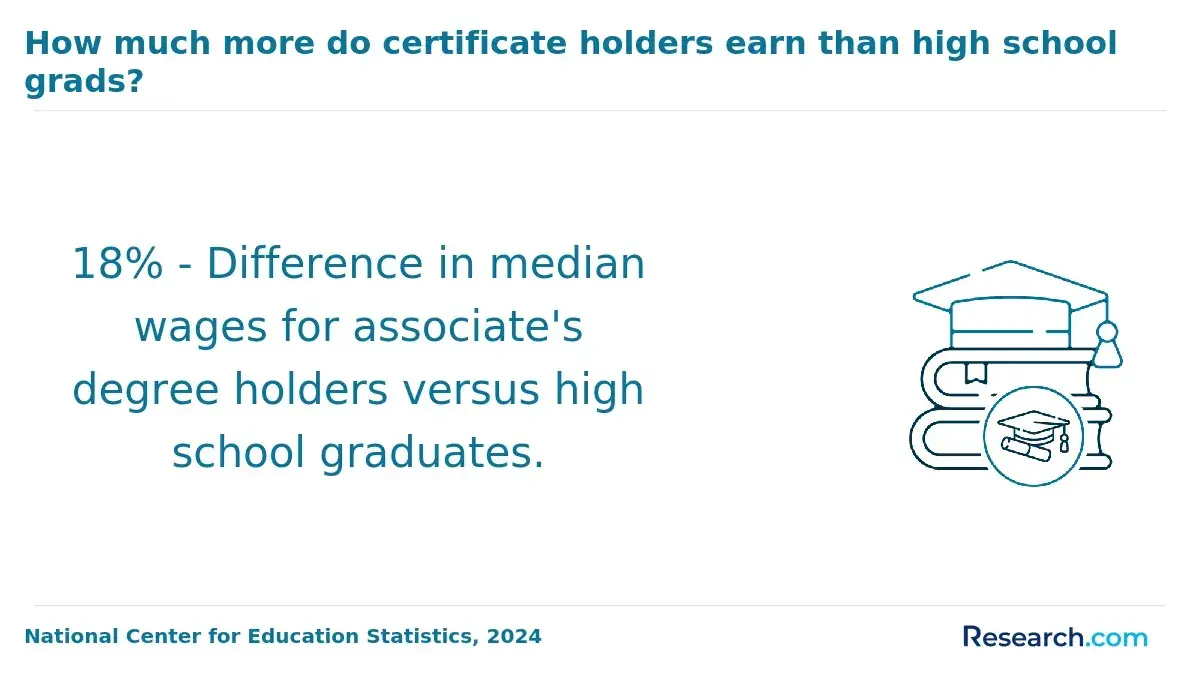
- Degree premium: Master's degree holders usually receive a 10% to 20% salary advantage over comparable bachelor's-level workers, although the actual premium depends on the position and employer requirements.
- Benefits and total compensation: Retirement plans, health insurance, tuition benefits, professional development funds, paid leave, bonuses, and occasionally stock options in private organizations can materially change the value of an offer.
When evaluating salary, compare job postings in your target region before enrolling. A degree that is financially reasonable in one labor market may be harder to justify in another if local openings are limited or salary scales are low.
What Professional Certifications Complement a Library Science Master's Degree?
Professional certifications can help library science graduates qualify for specialized roles, especially in archives, records management, health sciences, and information governance. They are not a substitute for a strong degree program or relevant experience, but they can signal expertise to employers when aligned with a clear career path.
- Certified Archivist: Offered by the Academy of Certified Archivists (ACA), this credential is designed for archivists and requires candidates to hold a master's degree and pass a comprehensive exam on archival principles and practices. Renewal is required every five years through continued professional development. It is especially relevant for roles in museums, universities, government agencies, historical societies, and institutional archives.
- Certified Records Manager (CRM): Awarded by the Institute of Certified Records Managers, the CRM credential focuses on records and information management. Eligibility requires practical records management experience, and candidates complete a rigorous series of six exams. Renewal occurs every five years through continuing education. This credential is useful in corporate, legal, healthcare, government, and compliance-heavy environments.
- Academy of Health Information Professionals (AHIP): Provided by the Medical Library Association (MLA), AHIP supports professionals in health sciences librarianship. It uses a tiered system based on experience and contributions to the field, with annual renewal tied to professional development. It is most useful for those pursuing roles in hospitals, medical schools, universities, and research institutions focused on health information.
The best time to pursue a certification depends on the credential. Some require work experience, so students should first choose coursework, internships, and entry-level roles that build eligibility. Others can be planned during graduate school by joining professional associations, attending workshops, and documenting professional development.
Students concerned about total education cost may compare affordable master's degrees online while also checking whether the program offers courses that support certification goals in archives, records management, health sciences librarianship, or digital information work.
What Are the Top Industries Hiring Library Science Master's Degree Graduates?
Library science graduates are hired wherever organizations need reliable access to information, records, research, collections, digital assets, or knowledge systems. Education and libraries remain central employers, but demand also comes from government, healthcare, corporations, museums, archives, legal organizations, and technology-adjacent information roles.
- Education sector: Colleges, universities, community colleges, and research institutions hire academic librarians, archivists, scholarly communication specialists, digital repository managers, and research support professionals. These employers often value instructional ability, database expertise, metadata skills, and subject knowledge.
- Public libraries: Public libraries employ adult services librarians, youth services librarians, outreach coordinators, digital services managers, branch managers, and community programming specialists. Employers often prioritize public service, technology instruction, community partnerships, and inclusive access.
- Schools: School libraries and media centers hire professionals who support student literacy, research skills, digital citizenship, and curriculum-aligned resources. State credentialing rules may apply, so prospective students should verify requirements before enrolling.
- Government agencies: Federal, state, and local agencies need records managers, archivists, research librarians, information policy specialists, and document control professionals. Compliance, retention schedules, privacy, and public access rules are especially important in this sector.
- Corporate information centers: Corporations hire knowledge managers, taxonomy specialists, competitive intelligence researchers, records managers, and digital asset managers. These roles often reward technical fluency, project management, and the ability to organize information at scale.
- Healthcare and health informatics: Hospitals, medical schools, research centers, and healthcare organizations employ medical librarians and information professionals who support evidence-based practice, literature searches, research compliance, and health information access.
- Museums, archives, and cultural institutions: These employers need professionals trained in preservation, arrangement, description, digitization, access policies, and collection stewardship.
- Emerging digital fields: Digital asset management, data curation, open access publishing, research data services, and information governance continue to expand as organizations produce and manage more digital content.
What Are the Highest-Paying Jobs for Library Science Master's Degree Holders?
The highest-paying jobs for library science master's degree holders are usually leadership, technology, data, or specialized information roles. Students aiming for higher compensation should build skills beyond general librarianship, including budgeting, staff supervision, metadata, user experience, digital systems, records compliance, data management, and project leadership.
- Chief Librarian or Library Director: This executive role oversees operations, budgets, staffing, collections, facilities, community strategy, and institutional planning. Earnings often surpass $80,000 annually and can reach beyond $120,000 in large academic or metropolitan libraries.
- Information Architect: Information architects design digital information structures that improve navigation, search, usability, and content access. They often work with technology teams, product teams, or digital content groups. Median salaries generally exceed $90,000, with higher pay in major technology centers.
- Archivist: Archivists preserve, arrange, describe, and provide access to records and collections. Government and corporate settings may offer salaries from $60,000 up to $90,000. Archival management certifications may significantly improve competitiveness and earning potential.
- Data Curator or Digital Asset Manager: These professionals manage datasets, digital files, metadata, repositories, and access systems. Healthcare and finance employers often offer compensation between $70,000 and $100,000 for these roles.
- Academic Librarian: Academic librarians support teaching, learning, research, collections, scholarly communication, and digital scholarship. Salaries can range from $60,000 to upwards of $95,000 depending on institution prestige, role scope, location, and advanced qualifications, including doctoral degrees.
Supplementary credentials such as Certified Archivist status, Project Management Professional certification, or a PhD credential can strengthen advancement prospects. Geography and employer type also matter: metropolitan areas and private organizations often pay more, while public institutions may provide stronger benefits and stability.
What Is the Job Outlook and Employment Growth for Library Science Professionals?
The job outlook for library science professionals is steady, but it is changing. The U.S. Bureau of Labor Statistics projects about 9% employment growth for librarians from 2022 to 2032, a rate slightly above the national average for all occupations. That growth does not mean every job will look like a traditional librarian role. Many new opportunities are tied to digital access, data, archives, learning support, and information governance.
- Steady employment growth: The 9% projection from 2022 to 2032 suggests continued demand for trained information professionals, especially in settings that need help organizing, preserving, retrieving, and teaching access to information.
- Technology is reshaping the field: Digital archives, electronic resources, discovery systems, data curation, institutional repositories, and information retrieval tools are expanding the role of library professionals. Automation may reduce some routine cataloging work, but it also increases demand for professionals who can manage systems, metadata, users, and policy.
- Community and education needs remain important: Public libraries, schools, universities, and research institutions continue to need professionals who support literacy, digital inclusion, research access, and lifelong learning.
- Funding can affect hiring: Public libraries, schools, and government agencies may be vulnerable to budget cycles. Students should research local hiring conditions and not rely only on national projections.
- Specialization improves resilience: Graduates with skills in digital preservation, records management, data services, health information, instructional design, or information governance may have broader options than graduates with only general coursework.
Students comparing fast or flexible graduate options should remember that speed is only useful if the program leads to the required credential and practical skills. The same caution applies when reviewing unrelated accelerated pathways, such as accelerated mft programs online, where program length, field requirements, and career outcomes must be evaluated together.
What Skills and Competencies Does a Library Science Master's Program Develop?
A strong library science master's program develops a blend of technical, research, service, management, and communication skills. The degree is valuable when students use it to build marketable competencies, not just complete required credits.
- Information organization: Students learn how to classify, describe, arrange, and retrieve information through cataloging systems, taxonomies, metadata frameworks, subject headings, and controlled vocabularies.
- Digital systems and archives: Programs often cover digital repositories, electronic resource management, digital preservation, database tools, and archive management. These skills are increasingly important as collections and records move online.
- Research and reference skills: Graduates learn to conduct advanced searches, evaluate sources, support users, and translate complex information needs into effective research strategies.
- Data and database management: Coursework may build competency in data organization, database searching, data stewardship, and information retrieval, particularly for students pursuing digital librarianship, health information, or data curation.
- Teaching and information literacy: Many roles require librarians to teach users how to find, evaluate, and ethically use information. This is especially important in academic, public, and school settings.
- Leadership and project management: Students may develop budgeting, planning, assessment, supervision, policy writing, and project coordination skills needed for advancement.
- Communication and user service: Library science work is user-centered. Graduates must communicate clearly with patrons, students, faculty, researchers, executives, community members, vendors, and technical teams.
- Ethics, access, and privacy: Programs often emphasize intellectual freedom, privacy, accessibility, copyright, licensing, equity of access, and responsible information stewardship.
- Experiential learning: Internships, practicums, case studies, simulations, and collaborative projects help students turn theory into workplace-ready experience.
- Transferable competencies: Digital literacy, research fluency, service design, metadata, records management, and project coordination can transfer into education, healthcare, government, nonprofit, corporate, and cultural heritage roles.
What Graduates Say About Their Library Science Master's Degree
- : "Applying to a library science master's program felt complicated at first, but researching accredited institutions helped me narrow the options. I used official academic catalogs to compare course structures, graduation requirements, and specialization choices. That preparation made the program easier to manage once I enrolled. — Jason"
- : "I had many programs to choose from, so accreditation became my starting point. I wanted a degree that employers would recognize and that would support long-term mobility. Reviewing library science master's degrees online took patience, but the careful comparison gave me confidence in my final choice. — Camilo"
- : "My goal was to finish efficiently without missing important requirements. Academic catalogs and accrediting agency resources helped me track credit hours, course sequencing, and equivalencies. That attention to detail helped me graduate ahead of schedule and enter the job market with a clearer professional direction. — Dominique"
Other Things You Should Know About Library Science Degrees
In 2027, a Library Science master's degree can lead to diverse career paths with starting salaries ranging from $50,000 to $65,000 annually, depending on the role and location. Strong job opportunities exist in academic libraries, corporate information centers, and digital archiving positions, reflecting the growing importance of information management.
Top-ranked library science master's programs in the United States often include those at the University of Illinois Urbana-Champaign, the University of North Carolina at Chapel Hill, and Syracuse University. These schools offer strong faculty expertise, comprehensive coursework, and connections to diverse library systems. International students may also consider programs recognized by the American Library Association or equivalent bodies in their home countries for better career mobility.
Whether a library science master's degree is worth pursuing depends on your career goals and financial situation. The degree opens doors to a variety of roles in libraries, archives, and information management with generally positive job growth. However, prospective students should weigh program costs against potential salaries and consider if their desired career path specifically requires or favors this advanced qualification.
References
- MLib Salary in India: Career Opportunities and Earnings https://dbuonline.in/blog/mlib-salary/
- Alternative Career Paths Utilizing Library Science Skills https://www.librariancertification.com/alternative-career-paths-utilizing-library-science-skills/
- 4 Highest-Paying Careers As A Librarian https://www.workitdaily.com/highest-paying-careers-librarian
- Best Librarian Careers for Library Science Degree Graduates https://www.librarysciencedegrees.org/librarian-careers
- 2025's Most Affordable Library Science Degrees (MLIS) Online https://librarysciencedegreesonline.org/affordable-library-science-programs/
- Curriculum & Specializations - Master of Library and Information Science (MLIS) - College of Information (INFO) https://ischool.umd.edu/academics/masters-programs/master-of-library-and-information-science/curriculum-specializations/
- Best Online Library Science Master's Degree Programs, Jobs, and Salaries https://careerkarma.com/blog/masters-library-science-online/
- What careers are possible with a degree in Library Science? | UK Online https://online.uky.edu/blog/what-careers-are-possible-degree-library-science
- Explore Librarian Salary, Jobs, and Careers in Library Science https://teach.com/online-ed/education-degrees/online-masters-library-science/librarian-careers/
- Master of Library and Information Science - Wikipedia https://en.wikipedia.org/wiki/Master_of_Library_and_Information_Science


