2027 How Many Credits Can You Transfer into a Library Science Degree Master's Program?

Co-Founder and Chief Data Scientist
If you already have graduate coursework, a library science master's program may not require you to start from zero. The harder question is whether your prior credits will actually count, and if so, how they will affect your timeline, tuition, course plan, and financial aid. A 2023 survey found that nearly 35% of library science master's students transfer some credits, making this a common issue for career changers, returning students, and applicants moving between graduate programs.
Credit transfer decisions are not automatic. Schools review the level, age, accreditation, subject match, grade, and documentation for each course. Some programs accept only a small number of credits, while others allow more flexibility for closely related graduate coursework or certificate credits. This guide explains how transfer credit usually works in a library science master's program, what limits to expect, which courses are most likely to qualify, and how to avoid delays or financial aid surprises.
Key Benefits of Knowing How Many Credits You Can Transfer into a Library Science Degree Master's Program
- Credits must align closely with library science curriculum and demonstrate relevance to core competencies, ensuring transferred work supports advanced study requirements.
- Only graduate-level credits with a minimum grade threshold, often B or higher, are eligible, maintaining academic rigor and program standards.
- Many programs limit credit age, typically within the last 5 to 7 years, reflecting current knowledge and industry practices in library science careers.
What Is Graduate Credit Transfer, and How Does It Apply to a Library Science Master's Program?
Graduate credit transfer is the process of applying previously completed graduate-level coursework toward a new master's degree. In a library science master's program, this usually means a school reviews courses you completed elsewhere and decides whether they are equivalent to required or elective coursework in areas such as information organization, reference services, archives, data management, digital libraries, or research methods.
Graduate transfer is different from undergraduate transfer. At the graduate level, schools are less likely to accept broad general education credits and more likely to require a close match in course outcomes, academic rigor, and professional relevance. Even if a course appears related by title, the receiving program may ask for a syllabus, assignments, reading list, and learning objectives before approving it.
- Transfer applies to completed graduate coursework: Most eligible credits come from graduate courses taken at accredited institutions, prior master's programs, or approved graduate certificates.
- Equivalency matters more than course title: A course called “Information Systems” may or may not satisfy a library science requirement depending on the content, assessments, and learning outcomes.
- Approval is controlled by the receiving school: The new library science program decides whether credits count, how many apply, and whether they satisfy core, elective, or general graduate requirements.
- Policies vary by institution: Many schools set caps, commonly around 6 to 12 credits, to make sure students complete enough of the degree within their own curriculum.
- Demand is increasing: A recent survey by the Council of Graduate Schools found that over 40% of master's programs in information science fields reported increased demand for transfer credit evaluations.
The best time to investigate transfer credit is before enrolling. Ask for the program's written policy, confirm whether credits can be reviewed before admission or only after enrollment, and keep copies of every syllabus. If you are comparing formats, an online library science degree may also have transfer rules worth reviewing alongside tuition, accreditation, and course availability.
Some students also explore adjacent graduate options, including programs such as the best online masters in ai, when they want technical skills that complement information science. If you plan to move credits between fields, confirm transferability in writing because related content does not guarantee approval.
How Many Credits Are Typically Allowed to Transfer into a Library Science Master's Program?
Most library science master's programs allow a limited number of transfer credits rather than accepting a large portion of the degree from another institution. A common range is 6 to 12 semester credit hours, which usually represents about 20-40% of total course requirements. For example, the University of North Texas permits up to 9 semester hours transferred for its iSchool master's degree.
The exact number depends on the school's policy, accreditation expectations, curriculum design, and whether your previous coursework fits required courses or electives. A program may advertise a transfer cap but still approve fewer credits if your courses are outdated, too general, graded below the minimum, or not aligned with degree outcomes.
- Expect a cap: Many programs limit transfer credits to preserve the integrity of the degree and ensure students complete key professional coursework through the awarding institution.
- Check semester and quarter conversions: One semester hour typically equals 1.5 quarter hours. If your previous school used quarter hours, the receiving institution may convert the credit value before applying it to the degree.
- Core courses are harder to replace: Programs are often more cautious about transferring foundational requirements, especially when those courses support accreditation, capstone preparation, or professional competencies.
- Electives may offer more flexibility: Courses in archives, information technology, youth services, digital curation, or academic libraries may be easier to apply as electives if they do not match a required course exactly.
- Online coursework is increasingly considered: With the rise of remote learning, nearly 45% of MLS programs reported adapting transfer policies to include more online and non-traditional credits as of 2023.
Credit transfer can reduce tuition, but it should not be your only cost strategy. A course that transfers as an elective may save money, while a denied course may leave you with the same degree cost plus extra time spent gathering documents. Students who are building targeted skills outside the degree may also compare online certification courses, but certificate work should be treated separately unless the master's program confirms that the credits can apply.
What Types of Courses Are Eligible for Transfer Credit in a Library Science Master's Program?
The courses most likely to transfer into a library science master's program are graduate-level courses from accredited institutions that clearly match the program's curriculum. Schools usually evaluate eligibility by asking three questions: Was the course graduate level? Was it completed at a recognized institution? Does it support the learning outcomes of the library science degree?
- Graduate-level library and information science courses: Courses in cataloging, metadata, reference services, information organization, collection development, archives, digital libraries, information behavior, or research methods are often the strongest candidates.
- Related graduate coursework: Courses from education, instructional technology, data management, public administration, history, or computer science may qualify if they support the student's library science concentration or elective plan.
- Graduate certificate courses: Credits from formal certificates may be accepted when the certificate is graduate level, academically assessed, and aligned with the master's program.
- Advanced undergraduate coursework: Some programs may review advanced undergraduate courses in limited circumstances, especially in combined degree structures, but these credits face stricter scrutiny and are less commonly accepted.
- Core requirements: Required courses usually need a close match in objectives, readings, assignments, and competencies. A partial match may not be enough.
- Elective requirements: Elective credit is often more flexible, especially when the course supports a specialization such as archives, youth services, digital content, academic librarianship, or information technology.
- Non-credit professional training: Workshops, seminars, webinars, and continuing education units usually do not transfer because they lack graduate credit, formal assessment, and transcripted grades.
One career changer who entered an online library science master's program described the process as “a bit overwhelming” because he had to work with advisors to verify course equivalencies. His experience points to a common lesson: the more complete your documentation, the stronger your case. Keep syllabi, assignment descriptions, reading lists, grading criteria, and catalog descriptions from prior courses whenever possible.
What GPA or Grade Requirements Must Transfer Credits Meet for a Library Science Master's Program?
Most library science master's programs require transfer courses to have been completed with a minimum grade of B, or 3.0 on a 4.0 scale. The purpose is to ensure that accepted credits reflect graduate-level mastery, not merely course completion. A course that is relevant but earned with a lower grade may be denied even if it came from an accredited institution.
- Minimum grade standards are strict: A B or better is a common threshold for graduate transfer credit. Some schools may apply higher standards to required courses.
- Overall GPA may also matter: In addition to reviewing individual grades, programs may consider whether the applicant was in good academic standing at the prior institution.
- Core courses may receive closer review: If a transferred course would replace a required foundation course, faculty may examine both the grade and the depth of the coursework.
- Pass/fail grades are often difficult to transfer: Pass/fail or satisfactory/unsatisfactory marks may be denied because they do not show a precise level of graduate performance.
- International transcripts may require evaluation: Applicants educated outside the United States may need a credential evaluation that converts grades to the U.S. 4.0 scale.
Because studies show about 35% of candidates incorporate transfer credits, grade policies are not a minor detail. Before assuming a course will transfer, compare your transcript against the program's minimum grade rule. Students researching graduate transfer policies across fields may also review examples from programs such as masters in counseling, but library science programs will apply their own standards.
How Recent Must Transfer Credits Be to Qualify for a Library Science Master's Program?
Many library science master's programs limit transfer credits by age. A common expectation is that prior coursework must have been completed within the past five to ten years. Some schools apply a stricter rule, and over 60% of accredited library science graduate programs now enforce a strict seven-year limit on transfer credits.
These time limits exist because library and information science changes quickly. Courses in databases, metadata, digital preservation, user experience, information policy, and emerging technologies may become outdated as tools, standards, and professional practices evolve. Older coursework is not automatically worthless, but the receiving program may require proof that your knowledge is still current.
- Five to ten years is a common range: If your credits are older, ask whether the program offers exceptions before you apply.
- Technology-heavy courses may face stricter review: Older courses in digital systems, information architecture, or data tools may be less likely to transfer than courses with more stable theory or research content.
- Waivers may be possible: Some programs allow currency waivers when applicants can show relevant professional experience, recent training, or continued work in the subject area.
- Competency exams may help: A school may allow an exam or portfolio review to prove current knowledge instead of requiring a student to retake an entire course.
- Confirm timing before enrollment: A credit that is acceptable by subject and grade can still be denied if it exceeds the program's age limit.
One student who had coursework from over eight years ago said the timeline rule was one of her biggest concerns. Her program allowed a competency exam, which helped her demonstrate current knowledge without repeating the full course. That kind of flexibility is useful, but it is program-specific and should never be assumed.
Do Accreditation Standards Affect How Many Credits Can Transfer into a Library Science Master's Program?
Yes. Accreditation can strongly affect whether credits transfer into a library science master's program. Schools generally prefer graduate credits from accredited institutions because accreditation signals that the prior coursework met recognized academic standards. Accreditation does not guarantee transfer approval, but lack of recognized accreditation can make approval unlikely.
- Regional accreditation is commonly preferred: Credits from regionally accredited institutions are generally more widely accepted in graduate transfer decisions.
- National accreditation may receive closer scrutiny: Credits from nationally accredited institutions may be reviewed more cautiously if the receiving school determines that the academic structure or curriculum does not align with its graduate standards.
- Professional accreditation can matter: Library science programs may consider expectations associated with the American Library Association when deciding how much coursework must be completed within the program itself.
- Non-accredited coursework is rarely accepted: Courses from non-accredited or unrecognized institutions are usually disqualified because they lack validation through established academic review.
- The receiving institution has final authority: Even when the prior school is accredited, the new program decides whether each course meets its requirements.
Applicants should verify both institutional accreditation and program-level expectations. If your previous coursework came from a school with a different accreditation profile, ask the admissions office or registrar whether those credits are eligible for review before paying application or enrollment deposits.
What Is the Application and Approval Process for Transferring Credits into a Library Science Master's Program?
The transfer approval process usually starts with official transcripts, but transcripts alone are rarely enough. Library science programs often require a formal transfer petition and supporting documents so faculty can compare your prior coursework with the current curriculum.
- Request official transcripts: Send transcripts from every institution where you completed graduate coursework. Unofficial copies may help with early advising, but final approval usually requires official records.
- Review the program's transfer policy: Check the maximum number of transferable credits, minimum grade, age limit, accreditation requirement, and deadline for submitting requests.
- Complete the transfer petition: Many schools require a form listing the course title, institution, term completed, grade, credit hours, and the course you want it to replace.
- Submit detailed documentation: Include syllabi, catalog descriptions, learning outcomes, weekly topics, reading lists, major assignments, and grading methods. If the course is from another country, you may also need a credential evaluation.
- Meet with an advisor: Advising can clarify whether credits are likely to count as core requirements, electives, or general graduate credit.
- Wait for faculty or program review: Decisions may take several weeks to a full semester, depending on the institution's procedures and whether faculty committees must review the request.
- Get the decision in writing: Keep written confirmation showing which credits were accepted and how they apply to your degree plan.
Approval is never guaranteed. A course can be denied because it is too old, not equivalent, below the required grade, outside the transfer cap, or from an institution that does not meet the receiving school's standards. Build a backup plan in case you need to retake a required course or adjust your graduation timeline.
Can Credits from a Previous Master's Program Transfer into a Library Science Master's Program?
Credits from a previous master's program can transfer into a library science master's program, but only when they meet the receiving program's standards. Prior master's coursework is often a strong candidate because it is already graduate level, yet relevance remains the deciding factor. A course in research methods, information systems, archives, education technology, or data management may be easier to justify than a course with no clear connection to library and information science.
- The coursework must be graduate level: The prior courses should appear on a graduate transcript and be part of an officially recognized master's program.
- The subject must support the new degree: Unrelated coursework is unlikely to transfer, even if it was academically rigorous.
- Good academic standing helps: Students who left a previous program in good standing may have fewer obstacles than students who left under academic dismissal.
- Transfer caps still apply: Many library science master's programs allow only 6 to 12 credit hours, even for students who completed more graduate coursework elsewhere.
- Documentation can change the outcome: If a course is initially denied, a detailed syllabus or learning outcomes document may help support an appeal.
Students changing programs should compare the cost of transferring with the cost of starting fresh. In some cases, an accepted transfer course may shorten the degree; in others, a limited transfer award may not change the timeline if required courses are offered only in sequence. Cost-conscious students may also compare broader lists of the cheapest online graduate programs while confirming that any credits they hope to transfer are actually eligible.
Are Online or Hybrid Course Credits Transferable into a Library Science Master's Program?
Online and hybrid graduate credits are often transferable into a library science master's program when they come from an accredited institution and meet the same academic standards as in-person courses. Many universities no longer treat delivery format as the primary issue. Instead, they review accreditation, graduate level, course content, grade, credit value, and alignment with the degree.
- Online credits may be evaluated like campus credits: Most universities now recognize online course credits from regionally accredited institutions as equivalent to in-person credits.
- Transcript wording can matter: If the transcript labels a course as online, that usually does not prevent transfer by itself, but the receiving school may still ask for documentation.
- Hybrid courses are usually judged by content: A course that combines online and in-person instruction is typically reviewed according to its learning outcomes and credit hours.
- Hands-on requirements may receive extra review: Programs with practicum, fieldwork, lab, or licensure-related elements may be less willing to accept online credits for experiential components.
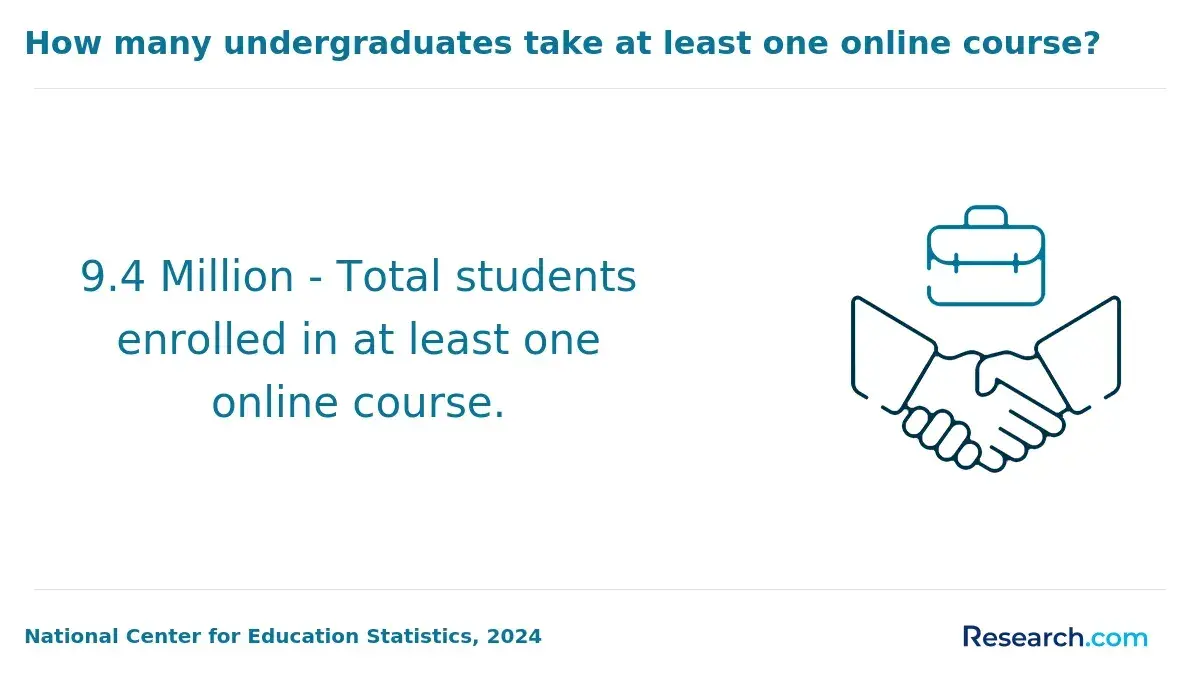
- Policies continue to change: According to a 2023 National Center for Education Statistics report, more than 75% of graduate students have taken at least one online course, reflecting growing acceptance of online learning in graduate education.
The safest approach is to ask the receiving school whether online and campus courses are treated the same in transfer review. Applicants comparing fields such as online psyd programs accredited by apa will see similar issues: accreditation, supervised experience, and transcript clarity often matter more than convenience alone.
How Do Transfer Credits Affect Tuition, Financial Aid, and Scholarships in a Library Science Master's Program?
Transfer credits can reduce the number of courses you need to complete, which may lower tuition and shorten your program. However, the financial impact is not always simple. Accepted credits can also change your enrollment status, aid eligibility, scholarship requirements, and degree plan.
- Tuition may decrease: If the school charges by credit hour and accepts transfer credits toward graduation, you may pay for fewer courses overall.
- Time to completion may improve: Transfer credit can help students graduate sooner, especially when accepted credits replace required courses or reduce elective requirements.
- Financial aid can be affected: Federal loans, grants, and institutional aid often depend on enrollment status. If transfer credits reduce your course load from full-time to part-time, your aid package may change.
- Scholarships may have credit-load rules: Some scholarships, assistantships, or tuition discounts require a minimum number of credits per term. Transferring credits may make scheduling harder if you need to maintain that load.
- Satisfactory academic progress still applies: Transfer credits may count toward attempted or completed credits in ways that affect progress calculations, depending on the institution.
- Billing may not change immediately: If transfer credit is approved after enrollment, your tuition plan may need to be adjusted after the decision is posted.
Before accepting transfer credits, speak with both an academic advisor and the financial aid office. Ask how the credits will apply, whether your enrollment status will change, and whether any scholarship or assistantship requires a minimum course load. A credit transfer that saves tuition should not accidentally reduce aid you were counting on.
Can Graduate Certificate Credits Be Applied Toward a Library Science Master's Program?
Graduate certificate credits can sometimes be applied toward a library science master's program, especially when the certificate is part of a stackable pathway at the same institution. These arrangements are most reliable when the school clearly states that certificate credits may count toward the master's degree.
- Same-university certificates are usually easier: If the certificate and master's program are housed in the same school or department, the curriculum is more likely to align.
- Formal pathways matter: Articulation agreements or stackable credential policies give students clearer expectations than informal case-by-case review.
- Field alignment is essential: Certificates in library science, archives, digital curation, information management, school librarianship, or related areas are more likely to qualify than unrelated certificates.
- Credit caps still apply: Even when certificate credits are accepted, many programs limit the transferable amount, commonly between 6 and 12 credits.
- Grades and timing still matter: Certificate courses generally must meet the same grade, age, accreditation, and documentation standards as other transfer credits.
- Financial aid may differ: Certificate programs and master's programs may have different aid rules, so students should confirm how credits will affect costs before enrolling in the certificate.
If your goal is to move from a certificate into a master's degree, do not assume the credits will automatically stack. Ask for written confirmation that the certificate courses apply to the library science master's program, which requirements they satisfy, and whether admission to the certificate guarantees or does not guarantee later admission to the master's program.
What Graduates Say About Transferring Credits Into Their Library Science Master's Program
- Jason: "Transferring my credits into the library science master's degree program was a surprisingly smooth process, but it required thorough attention to the institution's specific requirements. Understanding which courses qualified beforehand saved me a lot of time and stress. Successfully completing the program with these transferred credits accelerated my career advancement and opened doors to roles I hadn't imagined before."
- Camilo: "Reflecting on my journey, the key was carefully navigating the credit transfer requirements for the library science master's degree. The program's flexibility allowed me to leverage my previous academic work, which made the rigorous curriculum manageable. In the end, having a master's degree with those transferred credits significantly boosted my professional confidence and expanded my network within the field."
- Annette: "From a professional standpoint, knowing the exact criteria for transferring credits into the library science master's degree was essential to planning my studies effectively. I appreciated how the university supported the credit evaluation process, which helped me complete the degree faster without compromising quality. This strategic approach not only enhanced my credentials but also positioned me competitively in the job market."
Other Things You Should Know About Library Science Degrees
In 2027, consider the specific transfer policies of the institution, as they vary widely. Ensure your credits are from accredited programs and consult admissions for assistance. Check if there's a cap on transferable credits and if courses match the curriculum requirements.
Yes, transfer credit policies often vary between public and private institutions. Public programs may have stricter state regulations that influence credit acceptance, while private programs might have more flexible or varied criteria. Prospective students should review each institution's specific policies to understand how many credits can transfer and under what conditions.
If a transfer credit request is denied, the student may need to complete additional coursework to fulfill degree requirements. Some programs allow appeals or provide alternative pathways to earn credit, such as challenge exams or supplementary assignments. Financial aid and graduation timelines may also be affected by denied transfer credits, so students should plan accordingly.
References
- Frequently Asked Questions - College of Information (INFO) https://ischool.umd.edu/academics/masters-programs/master-of-library-and-information-science/frequently-asked-questions/
- Master of Library and Information Studies https://www.ualberta.ca/en/school-of-library-and-information-studies/programs/mlis/index.html
- ALA-Accredited MLS/MLIS (Library Science Masters Programs) https://librarysciencedegreesonline.org/mlis-programs-from-ala-accredited-schools/
- Transfer of Credit and Waiver of Course Requirements https://lis.catholic.edu/admission/transfer-waiver/index.html
- Best Online MLIS Degree Programs, Updated for 2025 https://www.librarysciencedegrees.org/programs/online/masters-mlis
- Financial Aid and Scholarships for Library Science Students - Master's in Library Science MLS & MLIS Programs Online https://www.mastersinlibraryscience.org/financial-aid-scholarships-mls-students/
- Graduate Certificate Policies https://academiccatalog.umd.edu/graduate/policies/certificate-policies/
- Understanding the Master of Library Science (MLS) Degree https://www.librariancertification.com/understanding-the-master-of-library-science-mls-degree/
- Library and Information Science - Master's https://www.usm.edu/graduate-programs/library-information-science.php
- Master of Library and Information Science https://sis.wayne.edu/mlis