
2027 Shortest Online Health Sciences Associate Degree Programs: Fast AS, AA, AAS, and Transfer Degree Options

Co-Founder and Chief Data Scientist
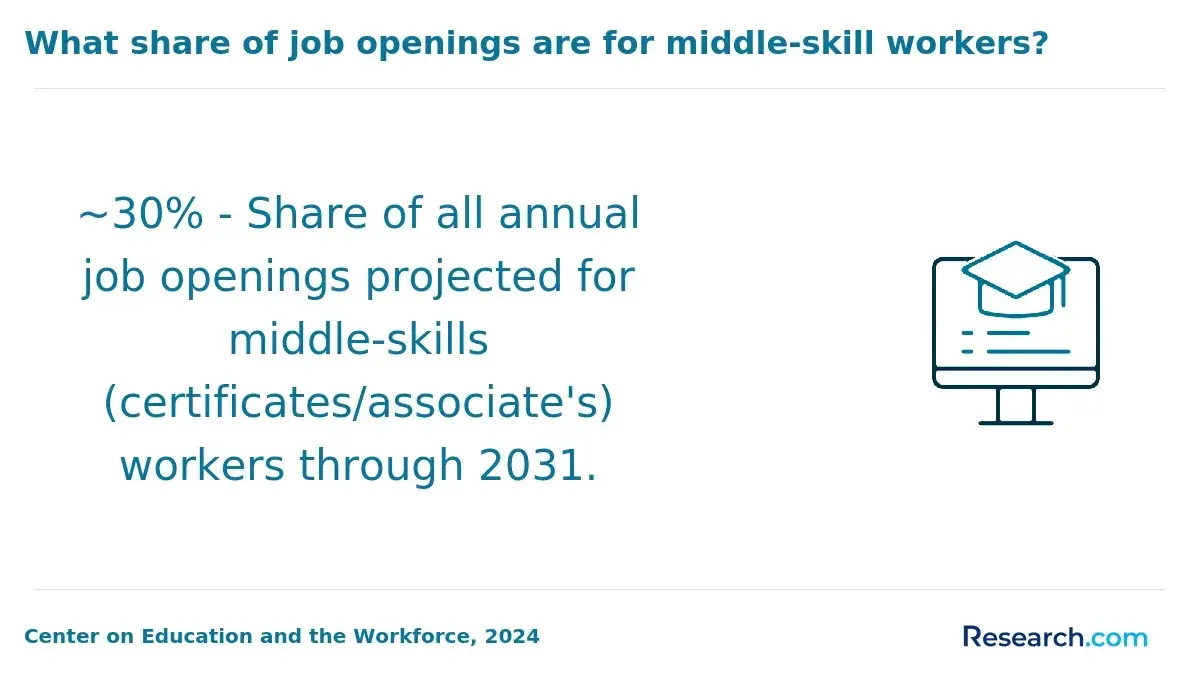
Choosing the shortest online health sciences associate degree is really a decision about speed, cost, transferability, and career fit. The field matters because the U. S. Bureau of Labor Statistics projects healthcare occupations to generate about 1.9 million openings each year from 2023 to 2033, largely from growth and worker replacement needs.
This guide is for students who want an AA, AS, AAS, or transfer-oriented degree without wasting time or credits. You'll learn which formats finish fastest, where acceleration creates trade-offs, and how to compare programs before enrolling.
Key Things You Should Know
- The shortest realistic path is usually not a "faster" 60-credit degree; it is a 60- to 70-credit program combined with accepted transfer, AP, CLEP, military, prior-learning, or allied-health credits.
- First-time students commonly need 15 to 24 months in accelerated or year-round online formats, while students with substantial prior credits may finish in 6 to 12 months if residency and course-sequencing rules allow it.
- Cost savings are not automatic: College Board's 2024 pricing data placed average published in-district tuition and fees at public two-year colleges at $4,050 for 2024-25, but accelerated private or out-of-state online programs may cost more per credit or per term.
Which Online Health Sciences Associate Degree Programs Can Be Completed in the Shortest Time?
The shortest online health sciences associate degree programs are usually broad health sciences, allied health, healthcare studies, health services, or health information-focused degrees that do not require long clinical placements. Programs tied to licensure, direct patient care, or intensive labs can still be valuable, but they are less likely to be the fastest because clinical rotations, practicums, and site approvals may control the pace.
Most legitimate associate degrees require roughly 60 credits, so the biggest time difference comes from transfer credit, term length, course availability, and whether the curriculum has tightly sequenced prerequisites. The table below summarizes the online health sciences associate formats that most often support accelerated completion.
| Program type | Typical credential | Fastest realistic timeline | Best fit | Main speed limitation |
| General health sciences | AA, AS, or AAS | 6 to 12 months with major transfer credit; 15 to 24 months for many first-time students | Students seeking a broad healthcare foundation or bachelor's transfer | General education and science prerequisite sequencing |
| Allied health completion | AS or AAS | 6 to 18 months, depending on accepted professional credits | Certified or licensed healthcare workers who already completed training | Whether prior clinical or technical training applies to degree requirements |
| Health information or medical records pathway | AAS or AS | 12 to 24 months, sometimes faster with transfer credit | Students interested in records, coding, compliance, data, or revenue cycle work | Programmatic accreditation, coding courses, and practicum rules |
| Healthcare administration or health services transfer | AA or AS | 12 to 24 months | Students planning to continue into a bachelor's degree | Transfer-map requirements and business/general education courses |
| Clinical associate degrees with online theory courses | AAS | Usually 18 to 30 months or more | Students pursuing patient-care roles that require supervised practice | In-person labs, clinical sites, state rules, and cohort schedules |
A fast program is most suitable for students who can study year-round, already have transferable credits, and do not need a state-regulated clinical credential immediately. Students should be cautious when a school advertises a very short timeline without explaining required credits, transfer assumptions, residency rules, and whether every course is offered every term.
How Do AA, AS, and AAS Online Health Sciences Associate Degrees Differ in Completion Time?
AA, AS, and AAS degrees can all be completed online in accelerated formats, but they are built for different goals. The fastest option on paper may not be the best option if it sends credits poorly into a bachelor's degree or lacks the technical preparation needed for an entry-level healthcare role.
The comparison below shows how each associate degree type usually affects completion speed and long-term value.
| Degree type | Primary purpose | Typical online completion speed | When it makes sense | When it may be a poor fit |
| AA in Health Sciences or Health Studies | Broad liberal arts and transfer preparation | Often fast if general education credits transfer cleanly | Students aiming for a bachelor's in healthcare administration, public health, health education, or related fields | Students who need technical preparation for immediate healthcare operations or records roles |
| AS in Health Sciences | Science-oriented transfer foundation | Moderate to fast, depending on lab science sequencing | Students preparing for bachelor's programs in health science, nursing prerequisites, public health, or allied health | Students who struggle to complete lab sciences quickly or need a job-focused curriculum right away |
| AAS in Health Sciences or Allied Health | Career-focused technical preparation | Fast for students with prior allied-health credits; slower if technical courses are sequenced | Working healthcare employees, certificate holders, or students seeking applied skills | Students whose main goal is maximum transfer into a bachelor's program |
| Transfer-oriented associate degree | Designed around a university transfer agreement | Fast when the student follows the transfer map exactly | Students who already know the target bachelor's program | Students who are undecided or may switch majors after transfer |
As a rule, an AA is often the most flexible for nonclinical bachelor's transfer, an AS is useful when science prerequisites matter, and an AAS is often strongest for applied career preparation. The common mistake is choosing the shortest advertised curriculum without checking whether the degree matches the next step.
Which Online Health Sciences Associate Degree Programs Accept the Most Transfer Credits?
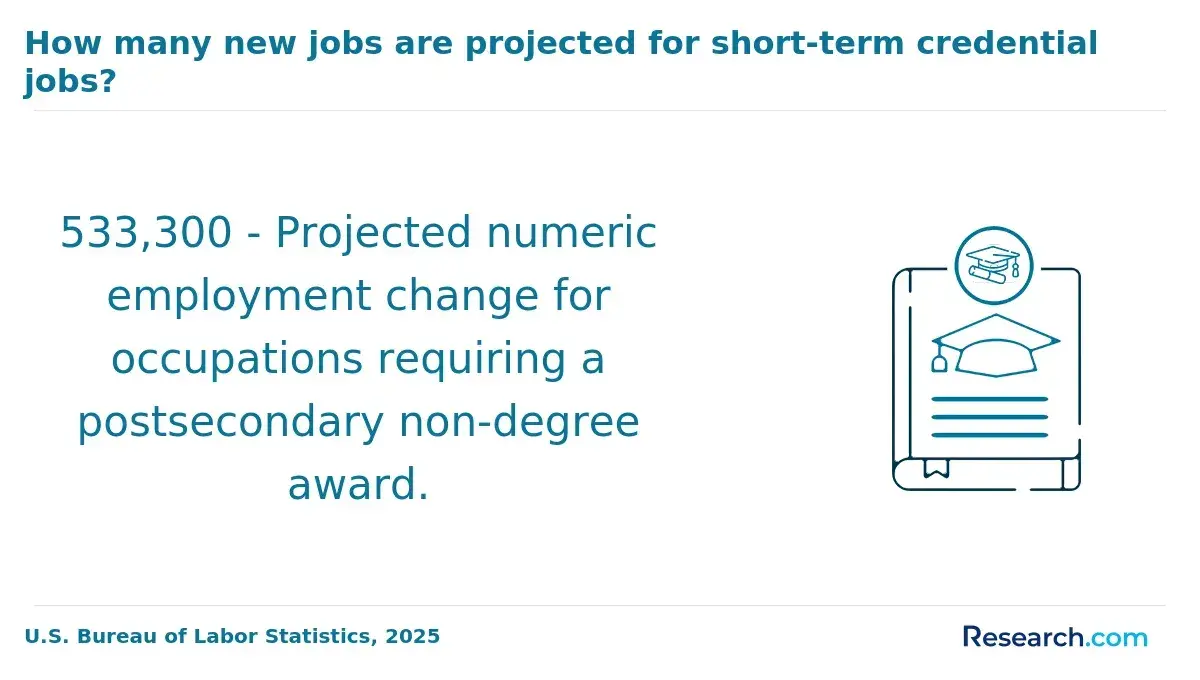
Programs that accept the most transfer credits are usually degree-completion or allied-health completion tracks rather than traditional first-time-student pathways. These programs may accept previous college credits, military training, industry certifications, standardized exam credit, or documented prior learning, but the key question is not how many credits transfer; it is how many apply directly to the associate degree.
Students with prior college, medical assisting, coding, EMT, military medical, pharmacy technician, dental assisting, or other allied-health coursework should ask for a written transfer evaluation before committing. For example, a health information management degree online may be a better match than a general health sciences program if the student wants prior medical records, coding, or healthcare data coursework to count toward a focused pathway.
When comparing transfer-friendly programs, use the following checklist to separate real time savings from broad marketing language.
- Ask for the maximum number of transfer credits allowed toward the associate degree and the minimum number of credits that must be completed at the school.
- Request a degree audit showing exactly which previous credits satisfy general education, science, elective, and major requirements.
- Confirm whether AP, CLEP, DSST, military transcripts, professional certifications, or portfolio-based prior learning are accepted.
- Check whether transferred credits only reduce elective requirements or actually replace required health sciences courses.
- Ask whether older science, anatomy, physiology, statistics, or medical terminology credits expire for the intended pathway.
- Verify whether transfer credits affect financial aid status, satisfactory academic progress, or the number of terms needed to graduate.
The biggest red flag is a school that says many credits "may" transfer but will not provide a program-specific audit before enrollment. A student with 45 prior credits may still need several terms if those credits do not match the required curriculum sequence.
Short course terms can reduce calendar time, but they do not reduce academic requirements. A 3-credit anatomy, medical terminology, statistics, or healthcare ethics course still requires the same learning outcomes whether it is taught over 5, 8, 10, or 15 weeks.
The table below explains how accelerated term lengths affect pacing, workload, and completion strategy.
| Course length | How it can speed completion | Best for | Main risk |
| 5-week courses | Students may complete more start dates per year and stack courses sequentially | Highly organized students taking one intensive course at a time | Little recovery time if a student falls behind |
| 8-week courses | Common accelerated format that allows two sessions in a traditional semester | Students balancing speed with a manageable workload | Two simultaneous science or writing-heavy courses can feel like a full-time job |
| 10-week courses | Faster than a standard term but less compressed than 5- or 8-week formats | Students who need acceleration without maximum intensity | Fewer annual start points may slow course sequencing |
| 15- or 16-week courses | Usually slower in calendar time but easier to combine with work and family responsibilities | Students taking lab sciences, math, or writing-intensive courses | Longer time to degree if courses are only offered once or twice per year |
Accelerated courses work best when the curriculum is flexible and courses are offered in every session. They work poorly when a student must wait for prerequisites, required labs, practicums, or capstone courses that are only available in specific terms.
Finishing faster can reduce living expenses, opportunity costs, and the number of terms in which a student pays fees. It does not always reduce tuition, because many schools charge by credit rather than by time, and accelerated programs sometimes add technology, online, lab, assessment, or portfolio fees.
College Board's 2024 Trends in College Pricing reported average published in-district tuition and fees at public two-year colleges of $4,050 for 2024-25. That figure is useful as a baseline because many online associate degree shoppers compare low-cost community college options with accelerated private, out-of-state, or fully online institutions that may have higher per-credit pricing.
Students should calculate cost-to-completion rather than relying on advertised annual tuition. The following factors can change the total price even when two programs require the same number of credits.
- Per-credit tuition, including whether online students pay in-district, in-state, out-of-state, or separate e-learning rates.
- Mandatory fees for technology, online learning, graduation, transcripts, testing, prior-learning assessment, labs, simulations, or proctoring.
- Books, access codes, software, uniforms, background checks, drug screening, immunizations, or clinical onboarding costs if required.
- Transfer-credit efficiency, because credits that transfer as electives may not reduce the number of credits still needed for graduation.
- Enrollment intensity, since taking more credits per term may speed graduation but can reduce work hours or increase the risk of withdrawing from courses.
- Financial aid timing, especially if year-round enrollment requires careful planning for summer aid or lifetime eligibility limits.
The most affordable fast program is usually the one with the lowest remaining cost for the credits the student actually needs, not the one with the shortest marketing timeline. If a faster program causes repeated withdrawals or nontransferable credits, it can become more expensive than a slightly slower option.
A fast online health sciences associate degree can feel more demanding than a traditional schedule because compressed courses concentrate reading, assignments, exams, projects, and discussion work into fewer weeks. A common planning rule is to budget about two to three hours of study time outside class for each credit hour, with science, statistics, writing, and coding courses often landing on the higher end.
The table below gives a practical workload estimate for students deciding whether an accelerated pace is realistic alongside work or caregiving responsibilities.
| Enrollment pace | Credits at one time | Estimated weekly academic time | Best fit |
| Light part-time | 3 to 6 credits | 9 to 18 hours | Full-time workers, caregivers, or students returning after a long break |
| Moderate part-time | 6 to 9 credits | 18 to 27 hours | Students with steady schedules and some college experience |
| Full-time | 12 credits | 36 hours or more | Students who can treat school like a major weekly commitment |
| Accelerated overload | 15 or more credits | 45 hours or more | Students with strong academic preparation and limited outside obligations |
Students should avoid building a schedule that only works if everything goes perfectly. Healthcare courses often include cumulative exams, terminology-heavy content, group projects, proctored assessments, and prerequisite concepts that must be understood before the next course begins.
Accreditation matters because it affects transfer credit, financial aid eligibility, employer recognition, and whether a program supports later education. For online health sciences associate degrees, students should first verify institutional accreditation, then check whether programmatic accreditation is needed for the specific career path.
Institutional accreditation is the baseline for most degree programs. Programmatic accreditation is not required for every general health sciences associate degree, but it can be important in specialized areas such as health information management, radiologic technology, respiratory care, nursing, or other regulated fields. Students comparing records, coding, or healthcare data pathways can use lists of the best online CAHIIM accredited health information management degree programs as a starting point for understanding why specialized accreditation can matter.
Before enrolling, students should complete these verification steps rather than relying only on a school's homepage.
- Confirm the institution's accreditation status through recognized accreditation directories or the school's official accreditation page.
- Check whether the program itself needs specialized accreditation for the intended occupation, certification exam, transfer pathway, or state requirement.
- Ask the program director whether the online format has the same accreditation status as the campus version.
- Verify whether labs, practicums, clinicals, internships, or field experiences must be completed in person or in the student's state.
- Contact the intended bachelor's program, employer, certification body, or licensing board to confirm the associate degree will be accepted for the student's goal.
A major red flag is a program that emphasizes speed while being vague about accreditation, licensure eligibility, or certification exam preparation. Fast completion has limited value if the credential is not accepted where the student needs to use it.
The fastest employment-oriented online health sciences associate degrees are usually applied AAS programs or health information-related programs that prepare students for administrative, records, coding, revenue cycle, patient access, or healthcare support roles. Fully online general health sciences AA or AS degrees can help with advancement or transfer, but they may not provide enough specialized training for immediate job entry unless paired with experience or certifications.
Students should compare employment speed by role requirements, not just by degree title. The table below shows which associate pathways tend to be more employment-facing and which may require additional credentials.
| Pathway | Possible entry-level direction | Employment speed | Additional requirement to check |
| AAS in Health Information or Medical Records | Medical records, coding support, release of information, revenue cycle, patient data roles | Often strong if the curriculum includes relevant coding, records, compliance, and practicum preparation | Certification preferences, CAHIIM status, employer software expectations |
| AAS in Allied Health | Healthcare support, clinical office, care coordination support, allied-health advancement | Strong for students who already hold a healthcare certificate or license | Whether prior training is recognized and whether the role requires state credentials |
| AS in Health Sciences | Healthcare support, transfer preparation, prerequisites for clinical programs | Moderate unless paired with experience or certifications | Whether employers view the degree as job-specific enough |
| AA in Health Studies | Administrative support, transfer preparation, community health support | Moderate to limited for direct healthcare roles | Whether the student needs a bachelor's degree for advancement |
Health information is one of the more practical online-friendly directions because much of the work centers on records, systems, compliance, reimbursement, and data quality rather than bedside care. Students weighing this route should compare program outcomes with current health information management salary information, keeping in mind that associate-level, entry-level, and management roles can differ significantly.
A certificate may be faster than an associate degree for students who need a very specific skill quickly, such as medical billing, coding fundamentals, or patient access. An associate degree may be the better investment when the student wants transfer credit, broader advancement options, or a stronger academic foundation.
The most efficient transfer degrees are usually AA or AS programs built around statewide transfer agreements, university articulation pathways, or clearly mapped general education requirements. AAS degrees can transfer, but they often contain more technical credits, and some bachelor's programs may apply those credits as electives rather than major requirements.
Students who plan to earn a bachelor's degree should choose the associate degree backward from the intended university program. The table below summarizes which associate pathways usually transfer most smoothly.
| Associate pathway | Best bachelor's transfer target | Transfer efficiency | What to verify before enrolling |
| AA in Health Studies or Health Services | Healthcare administration, public health, health education, interdisciplinary health studies | High when aligned with general education and transfer maps | Whether all general education categories are completed |
| AS in Health Sciences | Health science, allied health leadership, public health, pre-nursing or pre-professional pathways | High when science prerequisites match the bachelor's plan | Whether lab sciences and math courses meet the receiving school's requirements |
| AAS in Allied Health | Applied health science, health services, allied health leadership, technical bachelor's completion | Variable | How technical credits apply and whether a bachelor's-completion option exists |
| AAS in Health Information | Health information management, healthcare data, informatics, compliance, healthcare administration | High in aligned programs; variable in unrelated majors | Programmatic accreditation, coding sequence, and transfer articulation |
Students interested in leadership roles should think beyond the associate degree while still protecting short-term affordability. A student who begins with an associate degree, continues into a bachelor's program, and later considers a masters in healthcare administration will benefit from choosing credits that build cleanly rather than restarting requirements at each level.
The mistake to avoid is assuming that "transferable" means "applies to the major." A course may transfer to a university but still count only as a general elective, which can extend the bachelor's timeline and reduce the value of finishing the associate degree quickly.
How Should Students Compare Completion Time, Cost, Transferability, and Career Outcomes for Online Health Sciences Associate Degrees?
The best fast online health sciences associate degree is the one that meets the student's actual goal with the fewest wasted credits, not simply the one with the shortest calendar estimate. Students should compare programs using the same decision criteria: remaining credits, total cost, accreditation, online requirements, transfer fit, workload, and career alignment.
The following framework helps students make a decision that balances speed with long-term value.
- Define the primary goal: fast employment, bachelor's transfer, career advancement, prerequisite completion, or finishing a previously started degree.
- Choose the degree type that matches the goal: AA for broad transfer, AS for science-oriented transfer, AAS for applied employment, or a transfer-specific associate degree for a known university pathway.
- Request a written transfer evaluation before enrollment and calculate the exact credits still needed for graduation.
- Compare advertised timelines against course availability, prerequisite sequencing, summer options, and whether required courses are offered every accelerated session.
- Calculate total cost-to-completion, including tuition, fees, books, software, proctoring, prior-learning assessment, lab, practicum, and graduation costs.
- Verify institutional accreditation and any programmatic accreditation, certification, licensure, or employer requirements tied to the intended career.
- Ask whether any labs, clinicals, internships, practicums, capstones, or residencies require in-person attendance or site approval.
- Confirm transfer agreements with the receiving bachelor's program before choosing courses, especially for science, statistics, and technical credits.
- Match the weekly workload to real life, including work hours, caregiving responsibilities, commuting, health, and financial pressure.
- Compare outcomes such as graduate transfer rates, job placement support, employer partnerships, certification preparation, and advising quality.
Use the table below as a final comparison tool when narrowing a shortlist of programs.
| Decision factor | What a strong program shows | Red flag |
| Completion time | Clear timeline based on remaining credits and term schedule | Short timeline advertised without credit assumptions |
| Cost | Transparent tuition, fees, and total estimated cost-to-completion | Low tuition promoted while mandatory fees are hard to find |
| Transferability | Written articulation agreements or documented transfer history | Credits are described as transferable without explaining how they apply |
| Accreditation | Institutional accreditation and programmatic accreditation where needed | Vague claims about recognition or approval |
| Online format | Clear disclosure of synchronous sessions, proctoring, labs, and in-person requirements | "100% online" language that excludes clinical or testing details |
| Career alignment | Curriculum connects to real roles, certifications, transfer pathways, or advancement goals | Broad degree title with little explanation of outcomes |
Students should avoid prioritizing speed if they are unsure of their career direction, need strong science preparation for a competitive clinical program, have limited weekly study time, or are comparing programs without a confirmed transfer audit. Acceleration is valuable when it removes wasted time; it becomes risky when it compresses weak planning.
Other Things You Should Know About Health Sciences
Yes, but it depends on the course load and term length. Many full-time workers do better with one accelerated course at a time or a moderate part-time schedule rather than a full-time accelerated load.
Common requirements include a high school diploma or GED, transcripts, placement information, and basic technology access. Some programs may require prerequisites, immunizations, background checks, or proof of current healthcare certification for allied-health completion tracks.
Some are self-paced or competency-based, but many use fixed 5-week, 8-week, 10-week, or semester schedules. Students should confirm deadlines, exam rules, instructor interaction, and whether courses must be taken in sequence.
Usually no. It may help complete prerequisites or support transfer, but nursing, physical therapy, physician assistant, and similar clinical careers have separate admissions, accreditation, clinical, licensure, and degree requirements.
- Pursue Your AS in Allied Health Science Online with South U https://www.southuniversity.edu/online/degrees-programs/healthcare/allied-health-science-as
- Online Health Sciences Degrees https://www.affordablecollegesonline.org/degrees/public-health-programs/health-sciences/
- Health Science: Campus & Online Degrees and Career Paths https://www.publichealthonline.org/health-sciences/online-degree-programs/
- Online Health Science Degrees with Financial Aid https://www.edumed.org/online-schools/health-science-degrees/financial-aid/
- Online Associate Degree in Health Sciences https://www.marian.edu/blog/2026/04/beyond-entry-level-how-an-online-associate-in-health-sciences-builds-career-momentum.php
- Top 30 Most Affordable Online Bachelor’s in Health Sciences Degrees 2018 - Healthcare Administration Degree Programs https://www.healthcare-administration-degree.net/best/affordable-online-bachelors-health-sciences-degrees/
- Best Online Health Sciences Degrees https://www.onlineu.com/degrees/health-sciences


