2027 Sharps Safety and Exposure Reporting: What New Nurses Should Know About Employer Procedures
Audited and Verified:
Our Editorial and Data Verification Process
Research.com uses government datasets, official education statistics and primary institutional information to support its career and degree guides. Our review process checks factual accuracy, occupational definitions, source dates and the requirements associated with the credentials discussed.
How This Article Was Fact-Checked
Our editorial team verifies salary estimates, employment projections, education requirements and program information against original data providers and official organizations. Salary figures are checked against the relevant occupational definitions and reporting periods. Information about licensure, accreditation and required in-person training is reviewed separately.
Fact-checked and verified on:

Co-Founder and Chief Data Scientist
A needlestick can happen during a busy shift, even when a new nurse knows the safety rules. What matters next is acting promptly and knowing the employer's reporting route before an incident occurs. This guide explains which injuries and splashes count as occupational exposures, the immediate steps to take, what to expect from employee health, and how to assess the training offered by a school or new employer. Use it to prepare for clinical practice and to identify procedures you need clarified during orientation.
Key Things You Should Know
- After a needlestick or other potential bloodborne pathogen exposure, give immediate first aid, notify the designated contact, and obtain prompt medical evaluation; do not wait for symptoms or a source patient's test result.
- Under OSHA's bloodborne pathogens standard, covered employers must offer confidential post-exposure evaluation and follow-up at no cost to the employee, with required training at initial assignment and at least annually afterward.
- Before your first clinical shift, locate the after-hours reporting route, employee health contact, approved sharps containers, and your site's procedure for documenting an exposure.
What is sharps safety, and why does it matter for new nurses?
Sharps safety means preventing injuries from needles, lancets, scalpels, and other items capable of puncturing skin, while handling and disposing of them safely. An occupational exposure is a particular incident involving contact with blood or other potentially infectious material through a needlestick or cut, a mucous membrane, or nonintact skin. An intact-skin contact generally does not meet that definition, but the site's reporting procedure may still call for assessment.
For a new nurse—especially those balancing early clinical practice with future education goals outlined in a BSN-to-MSN program affordability guide—the distinction matters because a quick visual judgment cannot reliably determine whether an exposure needs follow-up. The relevant risks depend on the material involved, route of contact, source information, and the nurse's hepatitis B vaccination and documented response, among other factors. Employee health or the designated clinician makes that assessment; a preceptor's reassurance is not a substitute.
The examples below help distinguish incidents that need prompt exposure evaluation from other safety concerns. They are not a substitute for your employer's clinical assessment.
| Incident | Why it matters |
| Used needle punctures a finger | Percutaneous exposure; report promptly, even if the puncture is small. |
| Blood splashes into an eye | Mucous-membrane exposure; prompt irrigation and evaluation are needed. |
| Blood contacts a hand with broken skin | Possible nonintact-skin exposure; the condition of the skin matters. |
| Blood lands on intact skin | Not usually an OSHA-defined exposure incident, but clean the area and follow local reporting guidance. |
What should a nurse do immediately after a needlestick or exposure incident?
Stop the task safely, protect the patient, and seek help with care if needed. Then use the facility's exposure protocol without delaying for a supervisor to investigate. These steps describe general first aid and escalation, not individualized treatment:
- For a puncture or cut, wash the area with soap and water. For an eye splash, irrigate with water or saline; rinse other exposed mucous membranes with water.
- Notify the person specified by the site's procedure - often the charge nurse or supervisor - and contact employee health or the designated after-hours service immediately.
- Obtain prompt medical evaluation. Tell the clinician when and how the exposure occurred, what material was involved, and what is known about the source; do not seek source information outside approved channels.
- Complete the required incident report and follow the clinician's plan for testing, possible prophylaxis, and follow-up.
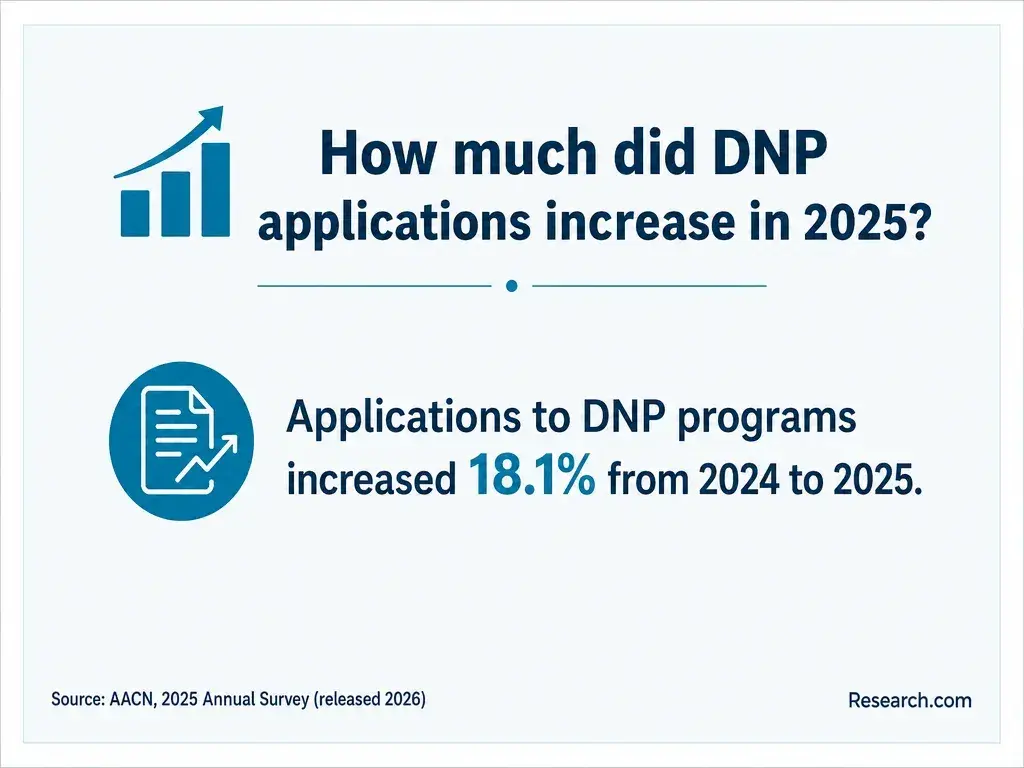
Do not squeeze the wound, apply caustic chemicals, or assume a tiny puncture is harmless. HIV post-exposure prophylaxis, when indicated, is time-sensitive; hepatitis B management depends in part on documented immunity; and routine post-exposure prophylaxis is not recommended for hepatitis C. The evaluating clinician determines which measures apply. For nurses looking to advance from frontline safety protocols into clinical leadership roles, reviewing accelerated DNP admissions and requirements is a practical next step.
How do nurses report needlestick injuries and bloodborne pathogen exposures?
Use both parts of the employer's process: immediate notification to reach medical care and the formal incident documentation used for safety review. A report entered in an electronic system is not a reason to delay calling employee health, especially at night or on a weekend. Conversely, telling a preceptor does not necessarily complete the employer's required report.
Record factual details as soon as practical: the time and location; the device and task; whether a safety feature was activated; the route of exposure; the material involved; first aid; and whom you notified. Describe the event without guessing a patient's infection status or assigning blame. Use approved systems for source-patient information, and do not put identifiable patient details in personal notes or unsecured messages.
Ask which office handles the confidential clinical record and which system receives the workplace incident report. They serve different purposes. For covered establishments that must keep occupational injury and illness records, OSHA also requires a sharps injury log that protects the injured worker's confidentiality and captures information such as the device and where and how the injury happened.
Under OSHA's bloodborne pathogens standard, a covered employer must make a confidential medical evaluation and follow-up immediately available after a reported exposure incident, at no cost to the employee. The employer must document the exposure route and circumstances, identify and document the source individual when feasible, arrange source testing under applicable consent rules, and make relevant results available to the evaluating healthcare professional. Required follow-up includes appropriate testing, counseling, evaluation of reported illness, and post-exposure prophylaxis when medically indicated.
The employer must give the evaluating healthcare professional the information specified by the standard and obtain a written opinion within 15 working days of completing the evaluation. That opinion is limited: it addresses whether hepatitis B vaccination is indicated and whether the worker was informed of evaluation results and any condition requiring further evaluation or treatment. Other medical findings remain confidential.
These are baseline employer duties, not a promise that every exposed nurse will receive the same tests or medication. If you cannot identify the after-hours evaluator, ask your supervisor or employee health before you are assigned exposure-prone tasks. Unpaid students may be covered through different school and clinical-site arrangements rather than as the site's employees; clarify the responsible contact and financial process before placement.
OSHA's Bloodborne Pathogens Standard, 29 CFR 1910.1030, requires covered employers to maintain an exposure control plan and use measures that reduce occupational exposure. These include engineering controls such as safer sharps devices and accessible disposal containers; work-practice controls; appropriate personal protective equipment; hepatitis B vaccination for eligible workers with occupational exposure; training; and post-exposure follow-up.
The plan must be reviewed and updated at least annually, including consideration of commercially available safer devices. Covered employers must solicit input from nonmanagerial employees who directly provide patient care and may be exposed to contaminated sharps when identifying and evaluating effective controls. That gives bedside nurses a defined role in reporting a device that is difficult to activate or a disposal setup that creates avoidable risk—a practical foundation in quality improvement that often inspires clinicians to explore doctoral nursing programs with broader entry pathways.
OSHA training is required at initial assignment to tasks with occupational exposure and at least annually afterward, with additional training when changes affect exposure. The standard sets a workplace minimum; it does not replace unit-specific demonstration, supervised practice, or competency checks. State plans and institutional policies may add requirements, so learn the rules that apply at your site.
Prevention works best when the safer device, the task, and the disposal location fit together. During orientation, practice with the actual devices used on your unit rather than assuming every safety needle activates the same way. Focus on these points before independent assignments:
- Prepare a nearby, approved sharps container before starting; replace it according to its fill line and local policy rather than forcing items into it.
- Activate the device's safety feature as trained, then dispose of the sharp immediately. Do not leave an exposed sharp on a tray or carry it to a distant container.
- Do not bend, break, or routinely recap contaminated needles. OSHA permits recapping only when no alternative is feasible or a specific procedure requires it, using a mechanical device or one-handed technique.
- Pause and get help when patient movement, poor visibility, handoffs, or an unfamiliar device makes the task unsafe.
If a container is missing or overfilled, report the hazard rather than improvising. A near miss is also useful safety information: it can reveal a device or workflow problem before someone is injured—the exact type of root-cause thinking emphasized in post-MSN DNP pathways in systems leadership.
Useful preparation connects classroom infection-prevention concepts to observed performance. Students should learn standard precautions, routes of bloodborne pathogen exposure, device-specific handling, first aid, and the clinical site's notification pathway. In a skills lab or simulation, they can rehearse activating safety features, disposing of sharps, and making a concise exposure report while an instructor observes.
Simulation is a place to make and correct mistakes; it is not proof that a student can manage every device or unexpected event independently. During a supervised rotation, ask the clinical instructor or preceptor to confirm the unit's devices, container locations, and escalation route before performing a new procedure. If an incident occurs, follow the site and school reporting requirements; one report may not automatically notify both organizations. Building these clinical habits early also gives nursing students a strong foundation as they look ahead to licensure and long-term goals like master's nursing study after an ADN.
For sharps safety, look beyond a program's accreditation label to its written clinical policies and how it assesses skills. Institutional accreditation, nursing program accreditation where applicable, and state board approval or recognition serve different purposes. None establishes that a particular clinical site has a clear after-hours exposure process.
Ask a prospective program who supplies bloodborne pathogen training, when students practice safety-engineered devices, how competency is checked before clinical work, and who pays for evaluation after an exposure involving a student. Request the student handbook's incident-reporting instructions and ask how they coordinate with clinical-site procedures. A strong answer names responsible contacts and explains what happens when the instructor or campus office is closed.
If you are already an RN considering degree completion, distinguish academic projects from employer safety training. Some BSN completion programs using workplace-based projects have different learning activities from prelicensure clinical skills education; neither replaces the exposure procedures at your job.
Online instruction can teach exposure definitions, prevention principles, and reporting decisions through modules or case discussions. Hands-on skills still require access to equipment, observation, and feedback through in-person labs, simulation, or approved clinical placements. Campus delivery may make scheduled practice easier to access, but it does not by itself guarantee more device-specific preparation.
Compare programs—whether full degree tracks or short online psychiatric nursing certificates—by asking where and when you will practice sharps handling, who evaluates performance, and which organization's exposure protocol applies at each site. Confirm required travel and attendance rather than assuming an online course means remote-only clinical preparation. For a working student, the most useful schedule is one that leaves enough time for required labs and supervised practice - not merely one with asynchronous lectures.
Which nursing careers require additional infection-control certifications?
Most new staff-nurse roles call for employer infection-prevention training and demonstrated competence, not a separate infection-control certification. Specialized infection preventionist positions may prefer or require certification, such as the Certification in Infection Control (CIC) awarded by the Certification Board of Infection Control and Epidemiology. Eligibility depends on the certifying body's current practice and application requirements; a new graduate should not assume a nursing degree alone qualifies them.
If infection prevention is your career goal, compare job postings for the settings that interest you. Look for duties such as surveillance, outbreak response, staff education, and quality improvement, then identify the experience and credential the employer actually requests. For your first nursing role, prioritize a workplace with clear exposure procedures, accessible employee health services, device training, and supportive orientation. An additional degree or specialty certificate—including short-format family NP degree and certificate routes—is not necessary simply to learn how to report a needlestick, and is best saved for when you are ready to expand your clinical scope.
Other Things You Should Know About Nursing
Report the exposure and obtain evaluation anyway. The evaluating clinician can assess the available information and recommend follow-up without waiting for a source result; testing and disclosure must follow applicable consent and confidentiality rules.
Not necessarily. Bring your vaccination and any documented antibody-response results to the evaluator. The recommended next steps depend on that record, the source information, and clinical guidance.
Follow the employer's records policy. Keep permitted confirmation details, such as a report number and follow-up appointments, but do not store patient identifiers or confidential records on a personal device.
Yes. Tell the designated supervisor or safety contact about a malfunction, near miss, or disposal hazard using the employer's reporting process. Reporting before an injury can help the team evaluate a safer device or workflow.
- Bloodborne Pathogen Exposures Continue in Operating Room Settings | NIOSH Science Bulletin | CDC https://www.cdc.gov/niosh/bulletin/2023/sharps-or.html
- Needlestick - StatPearls - NCBI Bookshelf https://www.ncbi.nlm.nih.gov/books/NBK493147/
- 1910.1020 - Access to employee exposure and medical records. | Occupational Safety and Health Administration https://www.osha.gov/laws-regs/regulations/standardnumber/1910/1910.1020
- Post-Exposure Prophylaxis (PEP) - HIV Prevention https://hivinfo.nih.gov/understanding-hiv/fact-sheets/post-exposure-prophylaxis-pep
- What To Do Following A Sharps Injury | cdc.gov https://archive.cdc.gov/www_cdc_gov/nora/councils/hcsa/stopsticks/whattodo.html
- HIV Post-exposure Prophylaxis (PEP): Information for Health Care Providers | colorado.gov https://cdphe.colorado.gov/sti-hiv-vh/pep-for-hiv/providers
- Guidelines for HIV post-exposure prophylaxis | who.int https://www.who.int/publications/i/item/9789240095137
- Needlestick injury | Better Health Channel https://www.betterhealth.vic.gov.au/health/conditionsandtreatments/needlestick-injury
- Post-Exposure Evaluation | Ohio University https://www.ohio.edu/finance-administration/safety/bio-safety/bloodborne-pathogen-program/post-exposure-evaluation