2027 Returning to Nursing After Caregiving: Skills Review, Licensure, and Job Search Planning
Audited and Verified:
Our Editorial and Data Verification Process
Research.com uses government datasets, official education statistics and primary institutional information to support its career and degree guides. Our review process checks factual accuracy, occupational definitions, source dates and the requirements associated with the credentials discussed.
How This Article Was Fact-Checked
Our editorial team verifies salary estimates, employment projections, education requirements and program information against original data providers and official organizations. Salary figures are checked against the relevant occupational definitions and reporting periods. Information about licensure, accreditation and required in-person training is reviewed separately.
Fact-checked and verified on:

Co-Founder and Chief Data Scientist
A caregiving break can change your schedule, confidence, and clinical readiness without erasing your nursing experience. Before applying for jobs or enrolling in a degree program, determine whether you are authorized to practice, which skills need updating, and what support an employer will provide. This guide is for former RNs and LPNs/LVNs returning to US practice. It will help you choose between targeted training, supervised reentry, and further education - and identify jobs that fit both your qualifications and your caregiving responsibilities.
Key Things You Should Know
- Check your license with the board of nursing for each state where you intend to practice; an expired or inactive license is not authorization to resume clinical work.
- Match your training to the gap: a short absence may call for continuing education and supported orientation, while a longer absence or board requirement may call for a refresher course with supervised practice.
- Evaluate job offers by schedule, orientation, patient acuity, and demonstrated competencies - not salary alone. A new degree is usually unnecessary solely to return to an existing licensed role.
What steps should former nurses take before returning to clinical practice?
Start with the role you previously held and the role you want now. An RN returning to ambulatory care, for example, faces a different skills gap from an LPN/LVN seeking a first hospital position. Caregiving can strengthen communication and care coordination, but family care is not a substitute for documented professional practice.
Use this sequence to separate regulatory requirements from training and job-search preferences:
- Verify your license status, state of intended practice, and any restrictions directly with the relevant board of nursing.
- Gather license records, prior employment dates, continuing education records, certifications, and evidence of previous clinical training.
- Compare the duties of your target jobs with your recent experience; identify unfamiliar equipment, documentation systems, medications, and setting-specific workflows.
- Ask the board whether reactivation requires continuing education, a refresher course, supervised practice, or another step before paying for training.
- Set a workable schedule for study, clinical attendance, interviews, and eventual shifts, including backup care arrangements.
If you completed nursing coursework but never obtained a license, this is an initial licensure decision, not license reactivation. Ask prospective programs how prior courses would apply before comparing nursing school application options by selectivity; admission to a school does not establish eligibility for its nursing major or a license.
How can nurses review clinical skills after time away from practice?
Review should follow the work you intend to do. Begin with clinical judgment and safety: assessment, recognizing deterioration, medication safety, infection prevention, documentation, and when to escalate concerns. Then add the procedures and technology used in your target setting. Reviewing a skill is preparation; independently performing it requires current authorization, applicable policy, and demonstrated competence.
A useful self-assessment distinguishes what you know from what an instructor or employer has observed. For each target duty, note when you last performed it, what has changed, and whether you need reading, simulation, or supervised patient care. Ask employers how they assess competency during orientation rather than assuming a continuing education certificate will satisfy their requirements.
An LPN/LVN seeking RN responsibilities needs an RN-licensure pathway, not simply a skills refresher. Compare fast-track RN education for licensed practical nurses against actual prerequisites, clinical attendance, state approval, and NCLEX-RN eligibility; a short advertised timeline does not make the two licenses interchangeable.
What licensure requirements apply when returning to nursing after caregiving?
Requirements depend on your license type, status, and state. An active, unrestricted RN or LPN/LVN license may permit practice within its scope, subject to employer credentialing and competency checks. An inactive, lapsed, or restricted license requires a board-specific determination before you provide licensed care. Renewal or reactivation may involve an application, fees, continuing education, a background check, or evidence of recent practice; do not assume another state's rules apply.
If you have moved, ask the destination state's board whether you need licensure by endorsement and whether any multistate license privilege applies to your circumstances. A compact privilege is not a universal authorization for every role or work location. Keep copies of board correspondence, and wait for confirmation of your status before accepting clinical assignments.
Someone who has never held an LPN/LVN license cannot use a refresher to obtain one. In that different situation, compare state-approved initial programs - including LPN education options with distance coursework - and verify where labs and supervised clinical experiences take place.
Not automatically. The board may require a specified reentry process for your license status, while an employer may require orientation even when the board does not mandate a course. A refresher is most valuable when it addresses identifiable gaps and provides skills assessment or supervised clinical experience accepted by the authority that requires it.
Before enrolling, ask the board and course provider who approves the course, whether clinical placement is arranged, which hours and competencies are documented, what attendance is required, and whether completion meets your reactivation conditions. An employer residency or orientation may be excellent preparation but may not replace board-required supervised practice; the reverse is also true.
If the barrier is that you never completed initial nursing education, neither a refresher nor an employer orientation creates RN eligibility. Applicants who hold a non-nursing degree should instead investigate an approved initial-licensure route; online graduate-entry MSN pathways are a distinct option, with substantial in-person clinical requirements and program-specific licensure outcomes.
For a previously licensed nurse seeking the same role, check whether license reactivation, focused learning, and supported onboarding suffice before committing to a degree. Formal education becomes more relevant when the target role requires a different license, a degree you do not hold, or graduate preparation.
The distinctions below help prevent paying for a program that does not solve your immediate reentry problem.
| Pathway | Who it generally serves | Reentry relevance |
| Refresher or continuing education | Previously licensed nurses updating practice | May address board or employer requirements; does not award a new degree |
| LPN/LVN-to-RN | Licensed practical/vocational nurses seeking RN licensure | Requires an eligible prelicensure program and subsequent RN licensing steps |
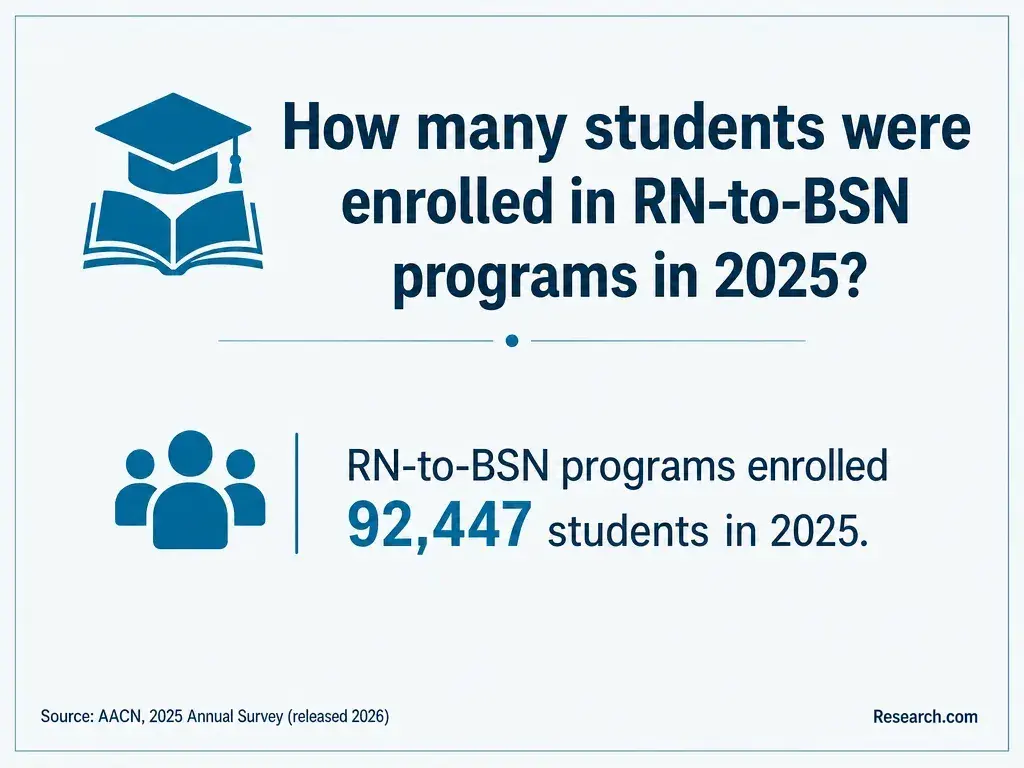
| RN-to-BSN | RNs seeking a bachelor's degree | Can support advancement; normally assumes RN licensure rather than restoring it |
| RN-to-MSN or ADN-to-MSN | Eligible RNs seeking graduate preparation | Track determines whether it prepares for a particular advanced role or a non-APRN function |
If you hold an associate degree and have a defined graduate goal, compare ADN-to-MSN bridge programs with an RN-to-BSN followed by an MSN. Request a written review of prerequisites, awarded credentials, clinical requirements, and total cost. Neither route should be chosen merely to compensate for an inactive license.
Online coursework can reduce commuting, but it does not eliminate scheduled exams, live sessions, simulation, clinical placements, or travel. For someone balancing caregiving with work, the decisive question is not whether a program is called "online"; it is whether every required activity fits a reliable weekly care plan.
Ask for a term-by-term schedule showing synchronous class times, on-site dates, clinical shift lengths, placement locations, and deadlines. Compare that schedule with campus-based options that may offer more predictable lab access or nearby clinical support. Also ask how missed clinical days are made up and whether a leave changes course sequencing or placement availability.
Doctoral study is a separate advancement decision, not a standard reentry requirement. If leadership or advanced practice is your later goal, examine online DNP timelines for working nurses alongside required visits, project or clinical expectations, and your household's available time.
First verify that the program serves your goal: initial licensure, degree completion for an existing RN, or preparation for a specific graduate role. Then check institutional accreditation, the nursing program's applicable accreditation, and state board approval or recognition where licensure preparation is involved. These are different determinations; none alone guarantees that an individual graduate will qualify for a license in every state.
Request confirmation for your entry term and location. Ask who arranges clinical placements, whether local sites are available, which on-site activities are mandatory, how prior coursework is evaluated, and whether a gap in practice affects admission. If a program advertises completion or examination outcomes, check the reporting year and cohort rather than relying on a headline percentage.
Compare the full financial commitment, too: tuition, fees, travel, equipment, clinical-related costs, and earnings forgone during required attendance. For an already licensed BSN-prepared RN considering graduate study, BSN-to-MSN bridge cost comparisons can be a starting point, but obtain each school's current charges and confirm that its track fits the intended job.
Choose coursework according to the gap found in your self-assessment and the expectations of your target unit. Pharmacology and medication safety, health assessment, pathophysiology, clinical judgment, infection prevention, and current documentation practices can be useful foundations. Setting-specific instruction and supervised practice matter more than accumulating unrelated course certificates.
For example, a nurse returning to outpatient care may prioritize triage, patient education, and EHR workflows, while a nurse entering a specialty with unfamiliar patient needs will need structured onboarding. Ask whether a course includes evaluated skills or supervised practice and who will accept that evidence. Classroom or simulation completion alone does not establish independent bedside competence.
Graduate specialty coursework is not a general-purpose refresher. A nurse considering psychiatric advanced practice, for instance, can investigate affordable graduate psychiatric nursing options only after confirming that the desired role warrants a new population-focused program, certification eligibility, and state APRN authorization.
Target positions where your prior experience is relevant and the employer can describe a supported return to practice. On your resume, state your license status accurately, show prior nursing responsibilities and measurable work you can document, and describe the caregiving interval briefly if you choose to address it. Do not present family caregiving as paid nursing experience or claim a competency you have not recently demonstrated.
Before accepting an offer, compare the patient population, shift pattern, physical demands, staffing support, and orientation plan. Ask who assesses competencies, whether a preceptor is assigned, how assignments progress, and how concerns are escalated. A higher offer may be a poor fit if orientation is too short for your gap in practice or shifts make dependable caregiving impossible.
Apply to roles matching your present authorization rather than a future credential. If your long-term search points toward advanced practice, compare costs across online NP pathways only after checking the required RN experience, population-focused clinical preparation, certification route, and employers' expectations.
What salary and job outlook can returning nurses expect?
The US Bureau of Labor Statistics' Occupational Outlook Handbook publishes national pay and employment projections for registered nurses and for licensed practical and licensed vocational nurses. Those occupation-wide figures are useful market context, not a returning nurse's expected offer. Location, employer, shifts, specialty, experience, and license type can substantially change pay; a projection of occupational growth does not guarantee a local opening.
Use current BLS figures for the occupation you are licensed to enter, then compare actual local postings and written offers. Evaluate base pay separately from shift differentials, benefits, orientation terms, and any change to household care costs. If advancement requires graduate study, compare its full cost with the pay and responsibilities of specific attainable roles - not with the highest salary advertised for a different nursing occupation.
A leadership-focused doctorate may support some organizational roles, but it does not itself confer NP authority or a predictable raise. Nurses weighing that longer-term option can review leadership DNP education after a nursing master's while checking the program's actual practice requirements and the qualifications in target job postings.
Other Things You Should Know About Nursing
Keep it brief and factual, then turn to your preparation for returning and the experience relevant to the job. You need not share private family medical details.
Check the certifying organization's reinstatement rules and target job postings. Some employers require the credential at hire; others allow time to earn it. A specialty certification does not replace a nursing license.
Describe it honestly as caregiving or volunteer work. A board, program, or employer decides whether any documented activity meets its specific practice or competency requirement; do not assume it counts as licensed employment.
Compare the duties and qualifications of ambulatory, care coordination, education, and other roles with your license and experience. Some still require clinical currency, while others offer a different schedule or type of patient contact.
- eCFR:: 42 CFR 483.152 -- Requirements for approval of a nurse aide training and competency evaluation program. https://www.ecfr.gov/current/title-42/chapter-IV/subchapter-G/part-483/subpart-D/section-483.152
- Registered Nurse (RN) Renewal | Florida Board of Nursing https://floridasnursing.gov/registered-nurse-renewal/
- Education - Continuing Competency Requirements https://www.bon.texas.gov/education_continuing_education.asp.html
- Rule 4723-14-03 - Ohio Administrative Code https://codes.ohio.gov/ohio-administrative-code/rule-4723-14-03
- Workplace Stress - Parents and Other Caregivers | Occupational Safety and Health Administration https://www.osha.gov/workplace-stress/solutions/parents-caregivers
- Inactivation/Reactivation of a License | iowa.gov https://dial.iowa.gov/licenses/health-professions/nursing-professional-midwifery/nursing-licensure/inactivationreactivation
- .13 Renewal of License. | Library of Maryland Regulations https://regs.maryland.gov/us/md/exec/comar/10.27.01.13
- How an RN Refresher Course Helps Nurses Return to Practice | Nebraska Methodist College https://blog.methodistcollege.edu/how-rn-refresher-helps-nurses-return-practice
- How Do I Explain Employment Gaps on My Resume? | arizona.edu https://career.arizona.edu/blog/2024/09/20/how-do-i-explain-employment-gaps-on-my-resume/
- How many hours do nurses who re-enter the workforce need to "practise" to maintain safe "practice"? - ScienceDirect https://www.sciencedirect.com/science/article/pii/S2155825625000766