2027 Professional Boundaries in Nursing: Understanding Roles and Relationships
Audited and Verified:
Our Editorial and Data Verification Process
Research.com uses government datasets, official education statistics and primary institutional information to support its career and degree guides. Our review process checks factual accuracy, occupational definitions, source dates and the requirements associated with the credentials discussed.
How This Article Was Fact-Checked
Our editorial team verifies salary estimates, employment projections, education requirements and program information against original data providers and official organizations. Salary figures are checked against the relevant occupational definitions and reporting periods. Information about licensure, accreditation and required in-person training is reviewed separately.
Fact-checked and verified on:

Co-Founder and Chief Data Scientist
A nurse can be warm, attentive, and trustworthy without becoming a patient's friend, financial adviser, or romantic partner. Knowing where that line falls can be difficult during intimate care, repeated visits, or conversations with distressed families. For nursing students and early-career nurses, professional boundaries are a patient-safety skill - not just a rule to memorize. This guide explains the relationships and behaviors that require judgment, how to respond when a line starts to blur, and what to look for in education and workplace preparation.
Key Things You Should Know
- A professional boundary keeps the nurse-patient relationship focused on the patient's care; a patient's invitation or consent does not remove the nurse's professional responsibilities.
- Watch for three warning signs: a relationship becomes secretive, the nurse receives a personal benefit, or care decisions begin serving the nurse's needs rather than the patient's.
- Classroom ethics instruction is a starting point. Students also need supervised practice, feedback, and knowledge of state rules and employer policy before managing difficult situations independently.
What are professional boundaries in nursing, and why do they matter?
Professional boundaries are the limits that keep a nurse's relationship with a patient therapeutic, respectful, and centered on the patient's needs. Nurses have access to private information and may care for people who are frightened, dependent on help, or unable to advocate fully for themselves. That imbalance of knowledge and power makes an apparently mutual personal relationship different from an ordinary friendship.
Boundaries do not require emotional distance. Listening carefully, explaining care, and showing compassion are part of nursing. A boundary problem arises when the relationship shifts toward meeting the nurse's emotional, social, sexual, or financial needs. A single misstep may be correctable with guidance; repeated or serious violations can harm patients and have employment or licensing consequences.
Boundaries also exist beyond bedside care. Nurse leaders help establish practices for staff privacy, conflicts of interest, and appropriate use of communication systems. An RN considering online DNP executive and organizational pathways should understand that leadership preparation changes the scale of these responsibilities, not the obligation to follow professional limits.
What relationships must nurses manage with patients and families?
The nurse's primary professional relationship is with the patient. Families and caregivers may be essential partners, but their involvement depends on the patient's preferences, decision-making authority, privacy rules, and the clinical situation. A family member's request for information or a favor does not automatically authorize the nurse to provide it.
Repeated contact can make boundaries harder to see. In home health, primary care, school nursing, and small communities, a nurse may encounter patients outside work. The nurse should avoid promising special access, discussing care in public, or treating a family's gratitude as permission to begin a personal relationship. When a dual relationship cannot readily be avoided, disclosure to a supervisor and a documented plan may protect the patient and the nurse.
Students exploring family practice should ask how a program teaches communication with parents, partners, and caregivers during supervised encounters. When comparing programs, family NP placement policies before enrollment matter because appropriate clinical supervision and patient populations shape opportunities to practice those skills.
Which behaviors can cross professional boundaries in nursing?
Context matters: accepting a small expression of thanks under an employer's policy is not the same as asking a patient for money. But some conduct, especially sexual contact or exploitation of a patient, is incompatible with the therapeutic relationship. Boundaries can also erode gradually through favors that initially feel harmless.
Common situations that call for a pause, a policy check, or supervisory guidance include:
- Sharing a personal phone number or private social-media account instead of using approved care channels.
- Accepting significant gifts, loans, business opportunities, or access to a patient's property.
- Keeping a patient interaction secret, extending contact for personal reasons, or seeking the patient's emotional support.
- Viewing a record without a care-related reason or posting a clinical story that could identify a patient.
- Pursuing flirtation or a personal relationship with a current patient.
If a boundary begins to blur, use approved communication channels, document care-related facts as required, and consult a preceptor, supervisor, or appropriate ethics resource promptly. Do not try to resolve a concerning relationship through private arrangements with the patient. Mental health practice may involve especially sustained, emotionally intense encounters; nurses comparing shorter MSN-PMHNP routes should examine supervised preparation for therapeutic communication rather than assuming a faster course sequence reduces that need.
The American Nurses Association's Code of Ethics frames nursing around patient dignity, the patient's interests, professional accountability, and the nurse's duty to maintain competence. State nurse practice laws and board rules govern licensed practice; employer policies add procedures for gifts, social media, records, reporting, and conflicts of interest. These sources serve different purposes, so a nurse should check the requirements that apply to the situation rather than relying on a general ethical principle alone.
A useful test is whether the interaction has a legitimate care purpose, occurs through an appropriate channel, respects the patient's choices and privacy, and could be explained openly to a supervisor. If the answer is unclear, seek guidance before acting. A patient's agreement does not by itself make an otherwise exploitative relationship ethical.
These obligations continue when an experienced RN changes roles. Someone considering accelerated FNP certificate admissions and requirements should verify that the track provides the population-focused education and supervised experiences needed for the intended role; prior RN experience does not automatically establish competence in a new advanced practice relationship.
Prelicensure nursing education introduces ethical duties, privacy, communication, and care within a student's supervised role. An approved practical nursing program prepares students to seek LPN/LVN licensure, while an approved prelicensure associate or bachelor's nursing program prepares students to seek RN licensure. Program completion is not a license: graduates must meet the applicable state board's requirements, including the relevant NCLEX examination. State rules and employer policies continue to govern practice after licensure.
For an LPN/LVN seeking RN practice, an LPN-to-RN route is a licensure pathway, not simply a promotion based on experience. A guide to faster practical-to-registered nursing routes can help identify options, but the student should verify board approval, required in-person clinical learning, NCLEX-RN eligibility, and the actual time to completion before enrolling.
Neither an RN license nor an advanced degree automatically authorizes every specialty task or advanced practice role. New nurses learn employer-specific expectations through orientation and competency assessment; APRN roles require appropriate graduate preparation and state authorization, with certification requirements where applicable. A new graduate should know how to ask for help and escalate a boundary concern rather than assume licensure means handling every situation alone.
Programs may introduce confidentiality, informed participation, therapeutic communication, and professional conduct in coursework, then revisit them in simulation and supervised clinical settings. A student might practice responding to a gift offer, a family member requesting information, or a patient asking for personal contact. Faculty and preceptors can then evaluate not only what the student says, but whether the student recognizes uncertainty, protects privacy, documents appropriately, and seeks help.
Observed performance matters more than a course title. When comparing programs, ask how instructors give feedback on difficult conversations, how clinical conduct is assessed, and what happens when a student needs remediation. Also ask whether clinical-site rules limit students' access to records or patient communication outside scheduled care.
Postlicensure RN-to-BSN study often builds on an RN's existing practice rather than repeating initial licensure clinical training. Nurses comparing no-traditional-clinical RN-to-BSN options should still check for practice-based assignments and employer permissions; a program without traditional clinical rotations is not necessarily free of applied work or privacy responsibilities.
They can, but delivery format alone does not establish readiness. Online courses can teach ethical reasoning through cases, discussion, and faculty feedback. Prelicensure students still need the program's required supervised clinical and skills preparation, whether coursework is online or on campus. Online graduate students entering a new patient-care role likewise need the clinical experiences required by their program and credentialing pathway.
Before choosing an online track, distinguish asynchronous lessons from scheduled simulations, live meetings, campus visits, and clinical shifts. Ask who arranges placements, who supervises care, and how the program evaluates communication with patients and families. A student looking at accelerated family NP study options should pay particular attention to whether the schedule leaves enough time for required supervised practice and feedback, not just how quickly online courses can be completed.
Start with the credential and role you actually need. For initial RN licensure, verify that the specific prelicensure program meets the applicable state board's requirements for examination eligibility. Separately confirm the institution's accreditation, the nursing program's applicable accreditation - such as ACEN or CCNE where relevant - and whether the school can enroll and place you in your jurisdiction. These are distinct checks; one does not substitute for another.
After confirming eligibility, compare how programs prepare students to act professionally under supervision. Ask for the curriculum's ethics and communication objectives, methods of clinical evaluation, placement responsibilities, remediation process, and any published outcomes with their reporting periods. The lowest advertised tuition or shortest schedule may be a poor fit if required clinical experiences are difficult to arrange.
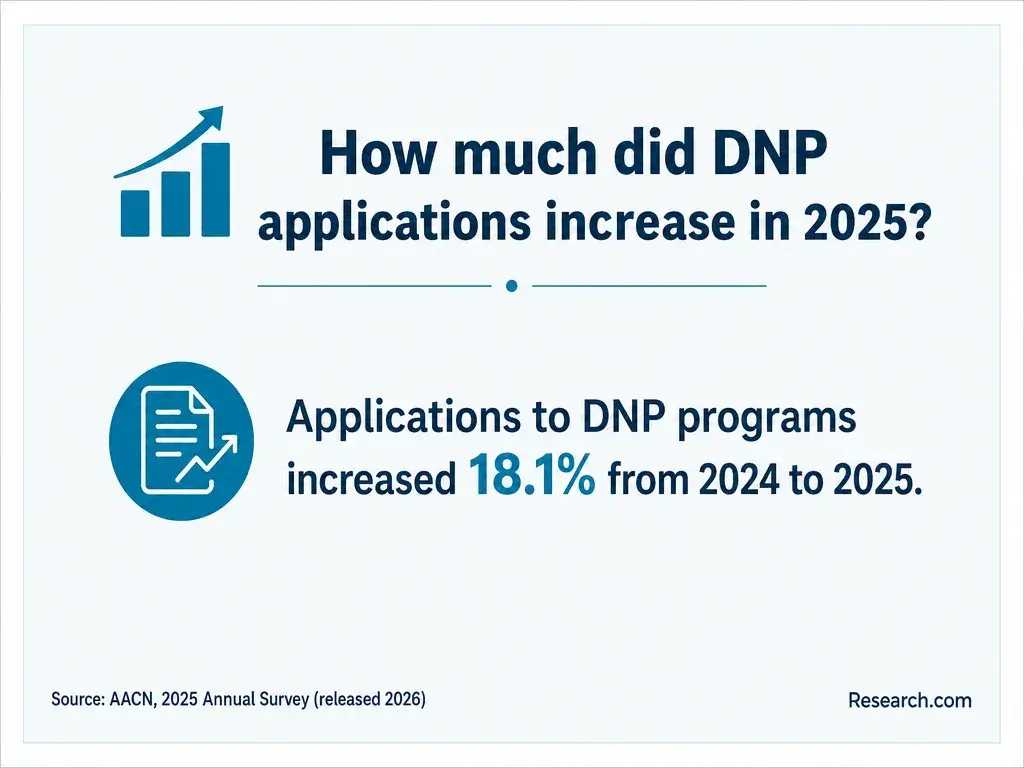
For graduate study, confirm the exact track rather than relying on the degree title. A non-APRN DNP does not prepare a graduate for NP licensure. Nurses comparing DNP eligibility requirements should ask each program which prior degree, license, specialty preparation, and practice experiences it requires - and whether its intended outcome matches their career goal.
Every nurse must maintain boundaries, but the situations differ by role. A school nurse may know a student's family socially; a home health nurse enters a patient's private space; an emergency nurse may meet relatives during a crisis. The core obligation remains patient-centered care, while the setting changes the risks and the communication plan.
The following comparisons help identify where additional orientation, experience, or formal preparation may be needed:
| Role or setting | Relationship challenge | Preparation to examine |
| New graduate RN in acute care | Managing family requests while learning unit routines | Preceptor support, privacy training, and escalation procedures |
| Community or school RN | Repeated contact and possible dual relationships | Setting-specific policy, documentation, and referral processes |
| Psychiatric-mental health NP | Sustained therapeutic relationships and disclosure decisions | Population-focused graduate education, supervised clinical work, certification eligibility, and state authorization |
| Nurse manager | Fairness, staff confidentiality, and conflicts of interest | Leadership experience, policy training, and organizational support |
A move into psychiatric-mental health advanced practice is not achieved through bedside experience alone. RNs assessing that transition may use an online mental health NP affordability guide to compare costs, but should first confirm that each track supports the required education, supervised clinical preparation, certification eligibility, and state practice goal.
How do nursing salaries and job outlook vary by role and education?
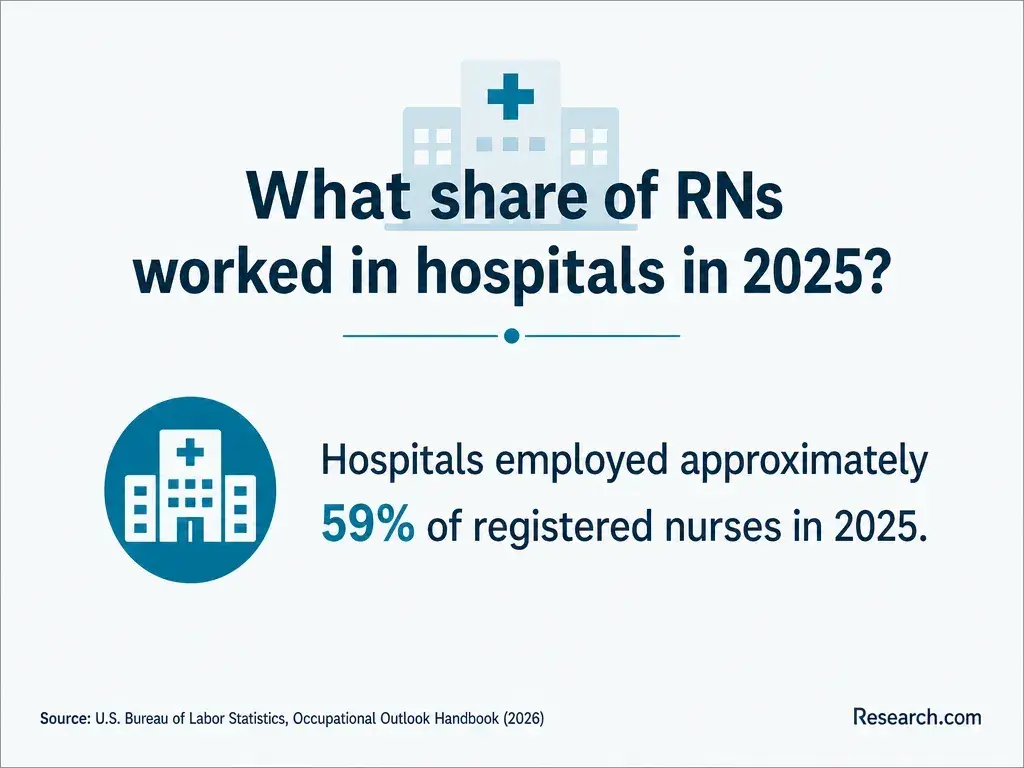
Pay and employment prospects depend on the occupation, location, employer, shift, and experience - not on a degree title alone. The U.S. Bureau of Labor Statistics reported a May 2024 median annual wage of $93,600 for registered nurses and $129,210 for nurse practitioners. Those occupation-wide medians are historical benchmarks, not starting offers or evidence that an additional degree will produce a particular raise. They also describe different licensed roles, not interchangeable outcomes of RN and graduate education.
For a nurse considering more education, compare the roles the program actually prepares you to seek. An RN-to-BSN degree may meet an employer preference without changing the nurse's license. An MSN may prepare a nurse for education or leadership, while an appropriately focused NP program can support a different, regulated practice role. Current local job postings and employer pay ranges are more useful than national medians for estimating a likely offer.
Calculate the decision using total tuition and fees, required travel and clinical costs, time away from paid work, and realistic job requirements. A nurse comparing online BSN-to-MSN program costs should confirm the award and track at each stage; a lower-cost bridge is not a good investment if it does not prepare the nurse for the intended position.
Other Things You Should Know About Nursing
Tell the charge nurse or supervisor about the connection before accepting care. Reassignment may be appropriate, but staffing and patient needs matter; follow workplace policy rather than leaving an assignment without a safe handoff.
Do not conduct care through the private account. Follow your employer's policy for preserving or reporting the message, and direct care-related communication to an approved channel.
No. The response depends on the conduct, harm, applicable rules, and the decisions of the employer or licensing board. Report concerns through the appropriate process instead of predicting the outcome yourself.
Yes, a patient can raise a concern or request a change. Notify the appropriate supervisor, maintain respectful care while a safe transition is arranged, and document facts according to policy.
- A nurse's guide to professional boundaries | nursingmidwiferyboard.gov.au https://www.nursingmidwiferyboard.gov.au/documents/default.aspx
- Telehealth Privacy and Security Tips for Patients | hhs.gov https://www.hhs.gov/hipaa/for-professionals/privacy/guidance/telehealth-privacy-security/index.html
- THERAPEUTIC COMMUNICATION AND THE NURSE-CLIENT... - NCBI https://www.ncbi.nlm.nih.gov/books/NBK617004/
- How Nurses Can Use Social Media Professionally | Nevada State University https://nevadastate.edu/son/rn-bsn/how-nurses-can-use-social-media-professionally/
- Nurse Patient Relationship - Importance of Trust | ANA https://www.nursingworld.org/content-hub/resources/becoming-a-nurse/nurse-patient-relationship-trust/
- The Power Imbalance | cno.org https://www.cno.org/protect-the-public/employer-resources/employer-resources/employers-toolkit-sexual-abuse-prevention/the-power-of-imbalance
- 2025 Code of Ethics for Nurses Provision 2.3 | ana.org https://codeofethics.ana.org/provision-2-3