2027 Post-Master's Pediatric Primary Care NP Certificates for Nurses in New Hampshire: Entry Routes and Clinicals
Audited and Verified:
Our Editorial and Data Verification Process
Research.com uses government datasets, official education statistics and primary institutional information to support its career and degree guides. Our review process checks factual accuracy, occupational definitions, source dates and the requirements associated with the credentials discussed.
How This Article Was Fact-Checked
Our editorial team verifies salary estimates, employment projections, education requirements and program information against original data providers and official organizations. Salary figures are checked against the relevant occupational definitions and reporting periods. Information about licensure, accreditation and required in-person training is reviewed separately.
Fact-checked and verified on:

Co-Founder and Chief Data Scientist
A post-master's certificate can help a New Hampshire nurse move into pediatric primary care, but the right route depends on prior graduate coursework, clinical preparation, and the program's ability to support placements in the state. This guide is for experienced RNs and APRNs evaluating that transition. It explains who may enter a certificate, how pediatric clinical hours and certification fit together, and what to verify before committing tuition or arranging a preceptor.
Key Things You Should Know
- A pediatric primary care NP certificate is a population-focused graduate pathway, not a substitute for an RN license, national certification, or New Hampshire APRN licensure.
- The Pediatric Nursing Certification Board's certification pathway calls for at least 500 supervised direct-care clinical hours in pediatric primary care; a program may require more, and prior hours are not automatically accepted.
- Before enrolling, obtain a written review of your graduate coursework, confirm New Hampshire enrollment and clinical-placement eligibility, and identify who secures approved pediatric preceptors.
What Is a Post-Master's Pediatric Primary Care NP Certificate?
A post-master's pediatric primary care nurse practitioner certificate is graduate education for a nurse who already holds a qualifying graduate nursing degree and needs preparation for the pediatric primary care NP population focus. The school awards a certificate, not another master's degree. Its coursework and supervised care should address pediatric patients from infancy through young adulthood, according to the program's curriculum and certification requirements.
The distinction between pediatric primary care and family primary care matters. A family NP program covers patients across the lifespan; a pediatric primary care program concentrates on children and adolescents. A nurse comparing short-format family NP certificates for graduate nurses should choose by the intended patient population and certification - not by the shorter advertised timeline alone. Pediatric acute care is also a separate NP preparation pathway.
Who Can Enter Pediatric Primary Care NP Certificate Programs?
Entry usually begins with an active RN license, an MSN or other qualifying graduate nursing preparation, and a school review of transcripts, syllabi, prior supervised hours, and current certification, if any. Schools differ on whether they admit graduates of non-APRN tracks and how much prior advanced pathophysiology, pharmacology, and health assessment they accept.
An already-certified FNP or other APRN may have relevant graduate courses, but the school must identify the remaining pediatric primary care competencies and supervised experiences. Pediatric RN employment is valuable preparation, yet it does not by itself replace graduate NP clinical education. A nurse whose graduate degree is in education or leadership may need substantially more coursework than an APRN changing population focus.
This certificate is not an initial nursing route for someone without an RN license or graduate nursing preparation. Admission requirements beyond TEAS and HESI should not be confused with the graduate-course and clinical review that determines certificate length. Ask for a written, individualized plan before relying on a projected completion date.
How Do New Hampshire Nurses Become Certified Pediatric Primary Care NPs?
For a New Hampshire nurse, the certificate, national certification, and state APRN authorization are separate milestones. The relevant national credential for pediatric primary care NPs is the Pediatric Nursing Certification Board's Certified Pediatric Nurse Practitioner-Primary Care (CPNP-PC). Check its current eligibility guide against the school's exact track before enrolling; completing a certificate does not automatically authorize an exam application.
After completing qualifying education and clinical preparation, a candidate applies to the certifying body, meets its examination requirements, and applies to the New Hampshire Board of Nursing for APRN licensure or the applicable change to an existing APRN license. Confirm the board's current application and recognition requirements directly, especially if the education or existing APRN license is from another state. An RN multistate practice privilege is not, by itself, New Hampshire APRN authorization.
Certification in another specialty does not authorize pediatric primary care practice. For example, accelerated PMHNP master's admissions and requirements concern psychiatric preparation, not CPNP-PC eligibility.
Check three distinct matters: the institution's accreditation, the nursing program's accreditation, and whether the school can enroll you and arrange required clinical education in New Hampshire. The Commission on Collegiate Nursing Education (CCNE) and the Accreditation Commission for Education in Nursing (ACEN) are nursing accreditors; verify the specific graduate program and certificate's accreditation status or coverage in the accreditor's directory and with the school. Institutional accreditation alone does not establish pediatric NP preparation.
Ask the program to confirm in writing that its pediatric primary care certificate is designed to meet current CPNP-PC educational eligibility and to support a New Hampshire APRN application. The school and state board answer different questions. Comparisons involving RN-to-BSN practice expectations cannot establish the accreditation scope or clinical suitability of a graduate NP certificate.
Course plans vary with prior preparation. A nurse may need graduate-level advanced assessment, pathophysiology, and pharmacology if earlier courses are missing or not accepted, followed by pediatric-focused diagnosis, management, health promotion, and clinical decision-making. Pediatric study commonly addresses growth and development, developmental and behavioral screening, immunization, common acute concerns, chronic-condition follow-up, family education, and referral decisions.
Coursework must translate into observed care under qualified supervision. A previously completed DNP project or general practice hours cannot simply be relabeled pediatric primary care encounters. Nurses comparing doctoral nursing projects and practice hours should distinguish scholarly or improvement work from the direct patient-care hours required for this NP population focus.
Online delivery can reduce travel for lectures, but it does not remove scheduled clinical shifts, faculty evaluations, skills activities, or possible campus visits. Campus-based study may offer more in-person contact, yet its pediatric sites may still be competitive or distant. Neither format guarantees a nearby preceptor in New Hampshire.
Compare programs by the commitments that affect your actual schedule: synchronous classes, required visits, clinical shift availability, the school's role in finding sites, and policies if a placement falls through. A short advertised calendar should be tested against course sequencing and placement lead times. Comparing shorter family NP training pathways may help frame scheduling questions, but their timelines do not establish how quickly a pediatric certificate can be completed.
There is no dependable single duration or price for every post-master's pediatric primary care NP certificate. A school's gap analysis determines required credits and clinical courses; part-time enrollment, course availability, and placement timing affect completion. Tuition may be charged per credit, while fees and clinical-related expenses are assessed separately.
Request a written cost estimate for your approved plan, including tuition, university and technology fees, background checks, immunizations, travel, required visits, certification and licensure applications, and any reduction in paid work. When reviewing nurse practitioner education on a budget, compare total completion costs and placement support - not only the advertised per-credit rate. Employer assistance may help, but verify eligibility and repayment conditions before counting it.
Clinical education must provide supervised, program-approved direct care appropriate to pediatric primary care. PNCB specifies a minimum of 500 supervised direct-care clinical hours for its CPNP-PC pathway; a school can require more. The receiving program decides whether any previously documented graduate hours fit its curriculum and competency requirements. RN work hours, simulation, orientation, and an unapproved self-arranged preceptorship do not automatically count.
Before accepting an offer, ask which pediatric settings and patient ages are acceptable, who approves preceptors, how faculty observe and evaluate performance, and whether placements can occur near your New Hampshire home or workplace. Find out when site agreements must be completed and what happens if a proposed practice cannot take students. A seemingly inexpensive program can become costly if clinical travel or delayed placement extends enrollment; psychiatric NP tuition comparisons, for example, cannot tell you what pediatric placement will cost.
With appropriate certification, New Hampshire APRN authorization, and employer credentialing, pediatric primary care NPs may work in pediatric practices, health-system outpatient clinics, community health centers, and other ambulatory settings serving children and families. Responsibilities can include preventive visits, assessment and management of common conditions, chronic-care follow-up, family education, and coordination with specialists. Specific duties depend on law, organizational privileges, and demonstrated competence.
A pediatric RN who wants this role but has not yet earned a graduate nursing degree needs a different academic entry route before a post-master's certificate is possible. Planning the cost of a BSN-to-MSN transition may be more relevant at that stage. An existing APRN should instead compare the certificate's added pediatric preparation with the jobs they actually intend to seek.
What Salary and Job Outlook Can New Hampshire Pediatric NPs Expect?
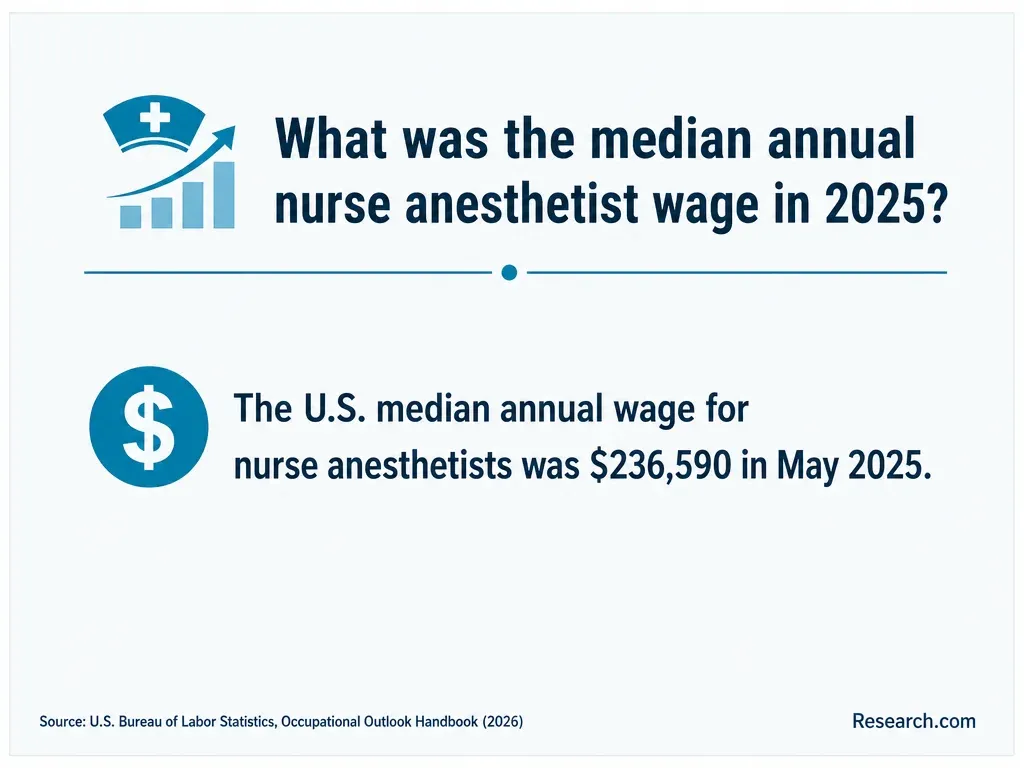
Public wage and projection data generally report nurse practitioners as an occupation, not New Hampshire pediatric primary care NPs as a distinct group. An occupation-wide median therefore cannot predict a certificate graduate's offer. Specialty demand can also vary by region: a job search centered on one community may yield fewer pediatric-only openings than a statewide search.
For a usable comparison, review current New Hampshire postings for the exact population focus, required experience, schedule, patient mix, benefits, and whether certification must be in hand at hire. Compare offers with your current compensation and the full certificate cost, including any lost earnings. Do not treat wages associated with another route - such as online direct-entry MSN program comparisons - as evidence of pediatric NP pay.
Other Things You Should Know About Nursing
No. RN practice privileges and APRN authorization are distinct; confirm the Board of Nursing's requirements for your circumstances.
It may inform a school's assessment of readiness, but the program decides which graduate courses and supervised NP experiences remain.
You can ask a practice about availability, but do not assume its hours will count until the program approves the site, preceptor, agreement, and learning plan.
No. They prepare nurses for different practice emphases and certification pathways; choose the track that matches the intended role.
- Applications for APRN | NH Office of Professional Licensure and Certification https://www.oplc.nh.gov/applications-aprn
- Post-Master's Certificate in Pediatric Primary Care Nurse Practitioner | Drexel University Catalog https://catalog.drexel.edu/graduate/collegeofnursingandhealthprofessions/pediatricprimarycarepractitionercert/
- Online Nursing Clinical Placement FAQs | Simmons University https://online.simmons.edu/nursing-faq/clinical-placement-faq/
- Pediatric Primary Care Nurse Practitioner Advanced Certificate Program | Stony Brook School of Nursing https://nursing.stonybrookmedicine.edu/childAdvanced
- Prepping for PNCB Nursing Certification | Regis College Online https://online.regiscollege.edu/blog/pncb-nursing
- Graduate Certificate: Pediatric Nurse Practitioner - Programs | umkc.edu https://online.umkc.edu/programs/graduate-certificate-pnp/index.php
- Post Master's Certificate - Pediatric Primary Care Nurse Practitioner | Herzing University https://www.herzing.edu/nursing/post-masters-certificate-pnp
- Pediatric Nurse Practitioner - Primary Care Graduate Certificate https://health-education-human-services.wright.edu/nursing/pediatric-nurse-practitioner-primary-care-graduate-certificate
- Post-Graduate Nursing Certificate Programs | Georgetown https://nursing.georgetown.edu/non-degree-certificates/post-graduate-certificate-in-nursing/
- Clinical Rotations FAQ - Online Nursing Programs https://online.nursing.georgetown.edu/academics/family-nurse-practitioner-fnp/admitted/clinical-placement-faq/