2027 Post-Master's Nurse Executive Certificates for Nurses in New Mexico: Leadership Study and Practicum
Audited and Verified:
Our Editorial and Data Verification Process
Research.com uses government datasets, official education statistics and primary institutional information to support its career and degree guides. Our review process checks factual accuracy, occupational definitions, source dates and the requirements associated with the credentials discussed.
How This Article Was Fact-Checked
Our editorial team verifies salary estimates, employment projections, education requirements and program information against original data providers and official organizations. Salary figures are checked against the relevant occupational definitions and reporting periods. Information about licensure, accreditation and required in-person training is reviewed separately.
Fact-checked and verified on:

Co-Founder and Chief Data Scientist
An MSN-prepared nurse in New Mexico may already lead a team but still need stronger preparation in budgeting, staffing, quality improvement, and organizational change. A post-master's nurse executive certificate can address those gaps without requiring another full degree - but only if its curriculum and practicum match the role you want. This guide explains what to verify before enrolling, how to assess online and out-of-state options, and when employer training or a professional certification may be the more direct investment.
Key Things You Should Know
- A nurse executive certificate is a post-master's, non-APRN academic award; it does not confer a new nursing license, management position, or professional certification.
- Compare programs on three separate points: whether you may enroll from New Mexico, who approves and arranges the practicum, and whether the coursework fills your specific leadership gaps.
- For a cost comparison, multiply required credits by the actual per-credit charge, then add fees, practicum expenses, and any reduction in paid work; a low advertised tuition rate is not the total price.
What Is a Post-Master's Nurse Executive Certificate in New Mexico?
A post-master's nurse executive certificate is graduate coursework for nurses who already hold a master's degree and want focused preparation for nursing administration. It may cover unit-level management, system-wide operations, or both. The school awards the certificate; an employer decides whether it meets a particular job requirement.
"In New Mexico" can describe the nurse's residence and practicum location, not necessarily the school's campus. An out-of-state program may be suitable if it accepts New Mexico residents and can approve the proposed local learning site. Confirm both before applying. This is not an initial nursing pathway: someone still working toward RN preparation should evaluate options such as comparing ABSN entry requirements instead.
The best fit is usually an MSN-prepared RN or APRN moving toward a defined administrative responsibility. If your goal is a first management appointment, compare the certificate with an internal leadership residency, mentored charge-nurse experience, or focused finance training. If your goal is executive oversight across a health system, check whether the certificate offers enough strategy, financial, and governance work rather than only introductory supervision courses.
What Are the Admission Requirements for Nurse Executive Certificate Programs?
Programs commonly ask for a completed nursing master's degree, an active RN license, graduate transcripts, and a résumé. Some also evaluate leadership experience, references, an interview, or a statement connecting the certificate to an intended role. Requirements vary: an APRN credential is not inherently necessary for a non-APRN leadership certificate, and a master's degree outside nursing may not satisfy a school's entry rules.
Ask admissions to review your exact degree and license before you pay an application fee. Also ask whether the program accepts your prior graduate courses toward the certificate, what documentation it needs, and whether admission depends on securing a practicum site. An applicant familiar with alternatives to HESI-based nursing admission should not assume those prelicensure entrance-exam considerations apply to post-master's study.
How Do Nurse Executive Certificates Prepare Nurses for Leadership Roles?
Effective preparation connects organizational decisions to patient care and staff conditions. A staffing proposal, for example, should address workload, skill mix, safety measures, budget constraints, and how leaders will evaluate the change. Coursework can develop that reasoning; supervised practice tests whether the nurse can communicate and apply it in an actual organization.
Leadership preparation is different from preparation to diagnose and treat patients as an advanced practice nurse. If the intended change is from an administrative role into family nurse practitioner practice, planning a one-year FNP pathway involves different education and supervised patient-care requirements. Neither leadership experience nor a nurse executive certificate substitutes for them.
Before choosing a program, identify one capability you need to demonstrate for your next role - such as managing a budget, leading a cross-unit improvement effort, or presenting a staffing case to senior leaders. Then ask how faculty assess that capability and what evidence you could appropriately take to an interview.
Check institutional accreditation and the status and scope of any nursing program accreditation, such as CCNE or ACEN accreditation. Do not assume that accreditation of a school, an MSN degree, or another nursing track automatically covers a particular post-master's certificate. Ask the institution which accredited nursing program, if any, includes the certificate and verify the claim with the accreditor.
Accreditation is separate from permission to enroll a New Mexico resident and to conduct an approved practicum at a New Mexico site. Obtain the school's answer for your entry term, proposed location, and placement arrangement. The distinction also matters when reviewing associate-degree RN to MSN options: accreditation of a bridge route does not establish the status or availability of a later executive certificate.
Course titles differ, but a useful curriculum usually combines nursing leadership with healthcare finance, workforce management, quality and safety, policy, and organizational change. Informatics or population-health content may be relevant when the target job oversees data-driven operations or services beyond one inpatient unit.
Read course descriptions rather than relying on titles. "Finance" might teach budget construction and variance analysis, or it might provide only an overview. "Quality" may require an assessed improvement proposal rather than proof that an intervention worked. Prior study also matters: nurses who completed RN-to-BSN programs without traditional clinical rotations should evaluate this graduate certificate on its own practicum requirements, not on the format of an earlier degree.
Request the course sequence and learning outcomes, then compare them with a position description for the role you want. A certificate that repeats your MSN coursework may offer less value than targeted employer-sponsored training.
A nurse executive practicum typically places the student in a supervised leadership setting to work toward defined administrative competencies. Its work might involve analyzing a staffing process, developing an implementation plan, or evaluating a quality measure. It is not the same as supervised direct patient-care hours required by an APRN specialty; for that different goal, review options such as family NP certificate options for MSN-prepared nurses.
Before enrollment, settle the practical questions with the program: who finds the site, what makes a preceptor eligible, whether your employer can serve as the site, how faculty supervise and assess the work, and which hours or activities count. An existing management job is useful access, but ordinary paid duties should not be assumed to satisfy practicum requirements.
For a New Mexico placement, also confirm the site's approval process and scheduling expectations. Obtain employer permission before using operational data; protect patient and staff information, and follow the organization's process for deciding whether a proposed activity needs quality-improvement, research, or other review. A portfolio may describe your methods and decisions without disclosing confidential results.
Length depends on required credits, course rotation, practicum scheduling, and whether the school accepts prior graduate work. A part-time plan may be easier to combine with employment, but a delayed practicum or a course offered infrequently can extend completion. Ask for a term-by-term plan for your intended start date rather than relying on an advertised minimum.
No single price accurately represents these certificates. To illustrate the calculation - not an actual program quote - consider a hypothetical 15-credit certificate charging $800 per credit. Its tuition would be $12,000 before other expenses. Build a comparable estimate for each school using these price components:
- Tuition: required credits multiplied by the rate applicable to your residency and enrollment status.
- Mandatory charges: program, technology, registration, graduation, and any per-term fees.
- Practicum costs: travel, site requirements, and time away from paid work, where applicable.
Ask whether employer assistance covers a certificate, requires a minimum grade or continued employment, and pays before or after the term. For perspective, planning the cost of PMHNP education concerns a different clinical pathway; its tuition or placement expenses are not a reliable proxy for executive study.
Online delivery can provide access to graduate leadership coursework while a New Mexico nurse remains employed, but the format alone does not establish educational quality or scheduling flexibility. Compare faculty feedback, the rigor of assessed work, opportunities to collaborate with leaders, and the school's oversight of a local practicum. An online course may still require scheduled meetings, group work, or occasional travel.
Choose based on the learning experience you can actually complete. A campus program may offer convenient relationships with local health systems; an online program may better suit a nurse who can secure an approved leadership preceptor nearby. Ask both programs for a typical weekly schedule and practicum calendar. Speed claims from other pathways, including MSN-PMHNP program length comparisons, should not be used to judge how quickly an executive certificate can be finished.
A school-issued certificate and a professional certification are separate credentials. Nurse leaders may consider the American Nurses Credentialing Center's Nurse Executive (NE-BC) or Nurse Executive, Advanced (NEA-BC) credential, depending on their education and leadership practice. The American Organization for Nursing Leadership also offers the Certified in Executive Nursing Practice (CENP) credential. Each awarding organization sets its own eligibility, examination, and renewal rules.
Do not assume graduation makes you exam-eligible. Compare your degree, current role, documented experience, and any continuing-education requirements against the certifier's current candidate guide before paying for preparation or applying. A professional credential may demonstrate specialized knowledge, but an employer still determines hiring and supervisory responsibilities. Likewise, psychiatric NP certificate length options describe academic preparation for a different role, not a nurse executive board certification.
What Careers, Salaries, and Job Outlook Follow Nurse Executive Training?
Relevant roles include nurse manager, director of nursing, service-line leader, and, for nurses with substantial organizational experience, senior executive positions. Their responsibilities differ: a unit manager may focus on staffing and daily performance, while a director may oversee multiple teams, budgets, and system-wide initiatives. A certificate can strengthen an application, but employers also weigh prior leadership results, organizational experience, and demonstrated judgment.
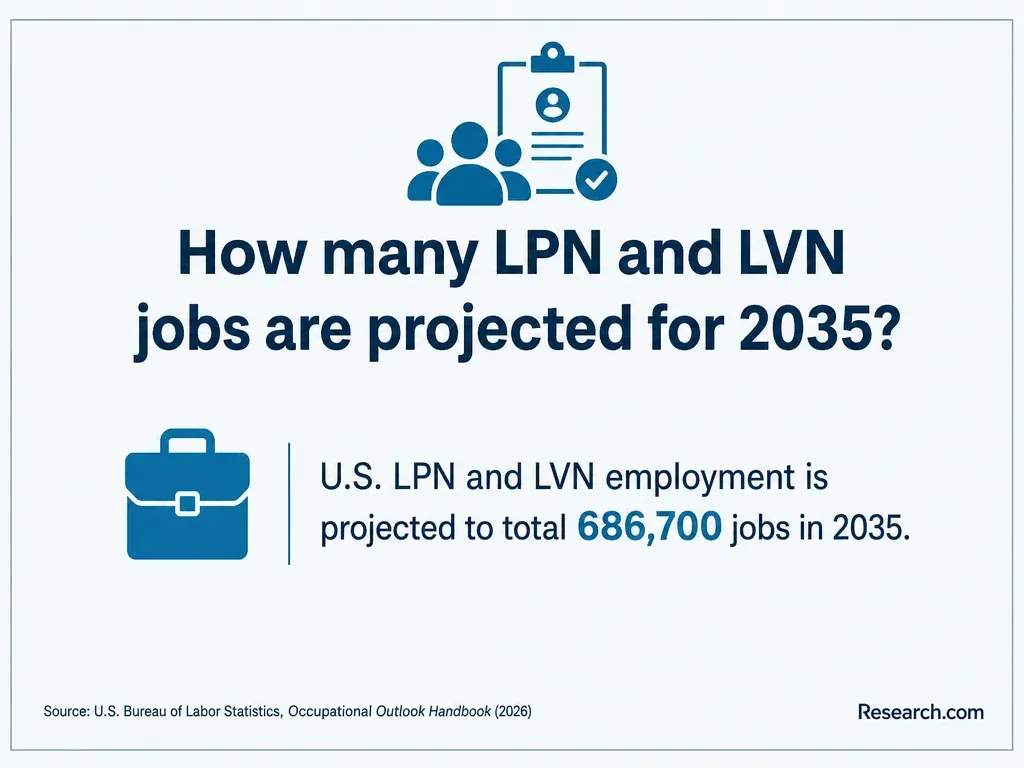
The U.S. Bureau of Labor Statistics groups many administrative positions under medical and health services managers. That occupation includes managers who are not nurses, so its published wages and employment projections cannot be treated as nurse executive certificate graduate outcomes or as a New Mexico offer. For a useful salary comparison, examine local postings for the exact title, setting, scope of responsibility, and required experience; also account for public-sector pay structures and benefits where relevant.
If you already qualify for the target job except for a specific skill, compare the certificate's total cost and time with employer mentoring or a focused course. If you lack the master's degree required by a particular employer, master's nursing education on a BSN graduate's budget addresses a different, earlier decision. The strongest next step is to match one real job description to your present qualifications, then ask programs exactly which remaining gaps their coursework and practicum will help you close.
Other Things You Should Know About Nursing
Potentially. Ask the program whether the facility, available preceptor, supervision plan, and proposed activities meet its requirements before committing to the site.
Only if the receiving school approves them. Submit transcripts and syllabi for a written evaluation showing which requirements, if any, they satisfy.
Usually you can discuss your role, methods, and lessons learned, subject to employer and school rules. Do not disclose protected patient information or confidential staffing, financial, or performance data.
Enrollment and nursing practice are separate questions. Ask the school which license it requires for admission and practicum participation, and confirm any practice-related requirements for the proposed site with the appropriate authorities.
- Quality Improvement Methods (LEAN, PDSA, SIX SIGMA) - NCBI https://www.ncbi.nlm.nih.gov/books/NBK599556/
- Clinical Leadership and Administration (Certificate) - ODUGlobal https://online.odu.edu/academics/programs/clinical-leadership-and-administration-certificate
- Estimated Cost of Attendance 2025-2026:: UNM Financial Aid Office | The University of New Mexico https://financialaid.unm.edu/coa/25-26/index.html
- Tuition & Fees - Online Programs - WNMU https://online.wnmu.edu/tuition/
- Cost of Attendance | New Mexico State University https://admissions.nmsu.edu/pay-for-school/
- Healthcare Administration Certificate | The College of St. Scholastica https://catalog.css.edu/programs-az/stender-business-leadership-professional-studies/management-business-studies/healthcare-administration-certificate/
- Approved Fieldwork Site Application Process | The University of New Mexico https://coehs.unm.edu/departments-programs/ifce/counselor-education/fieldwork.html
- Nursing Administration and Leadership (Post Master's Certificate) | University of Connecticut Academic Catalog https://catalog.uconn.edu/graduate/certificate-programs/nursing-administration-leadership-post-masters-certificate/
- Post-Master's Certificate in Nursing - UNM Catalog https://catalog.unm.edu/catalogs/2021-2022/colleges/nursing/graduate-program/postmaster-certificate-nursing.html
- Nursing Administration and Nurse Executive Leadership Post-Master's Certificate | shu.edu https://catalogue.shu.edu/graduate/college-nursing/executive-healthcare-administration-post-masters-certificate/